
In markets where logos must sing, barcodes must scan, and audits must pass, Custom Printed Woven Bags do more than hold product—they hold your brand promise together with your regulatory story. What seems a simple sack is, in truth, a managed ecosystem: textile mechanics for lift and stack, surface energy for ink anchorage, color governance for fidelity, and hygiene discipline for approvals. Adopting systems thinking, this rewrite decomposes the topic into materials, mechanics, manufacturing, and market fit, pressure‑tests each with data reinforcement, case analysis, and comparative study, then recombines the parts into an operating model VidePak can scale across SKUs and geographies. For format context, see Custom Printed Woven Bags.
What is Custom Printed Woven Bags? (Definition & Aliases)
Custom Printed Woven Bags are polypropylene (PP) sacks created by weaving slit PP tapes into a fabric and converting that fabric—often protected with a laminated PP/BOPP face—into open‑mouth, block‑bottom, or valve formats that carry high‑resolution graphics and machine‑readable codes. In procurement language you will also encounter BOPP‑laminated woven PP bags, printed PP woven sacks, block‑bottom printed woven bags, and—for higher capacities—printed FIBC big bags. Many names, one material family; many styles, one mission: to merge durability with branding and compliance.
Background & field knowledge. The performance of Custom Printed Woven Bags sits at the junction of polymer selection (melt‑flow index control; antioxidant/UV packages), textile design (mesh, denier, gsm), surface science (corona treatment held at ≥38 dynes to secure ink and adhesive anchorage), and colorimetry (ΔE tolerances, rub/scuff resistance). For food‑contact SKUs, the platform references FDA 21 CFR §177.1520 (olefin polymers), EU No 10/2011 (overall migration limit 10 mg/dm² with SML/NIAS oversight), and documented Good Manufacturing Practice under EC No 2023/2006; hygiene programs align with BRCGS Packaging Materials (Issue 7) and/or ISO 22000:2018/FSSC 22000. Fabric strength is typically checked by ASTM D5035 (strip tensile), while woven sack baselines map to GB/T 8946‑2013.
Horizontal vs. vertical thinking. Horizontally, Custom Printed Woven Bags combine textile tenacity, film convertibility, color science, and warehouse physics. Vertically, causality stacks from resin → tape → fabric → laminate → print → bag geometry → pallet behavior → retail scanning. Touch one dial and the rest respond: raise laminate from 20 μm to 35 μm and gloss, stiffness, and scuff resistance rise; tighten mesh from 10×10 to 12×12 and puncture resistance improves while forming windows shift; switch from gloss to matte topcoats and barcode glare drops—if dyne levels stay honest.
Data reinforcement. Public corridors on Made‑in‑China/Alibaba and peer converters for printed woven sacks cluster at mesh 10×10–14×14, denier 700D–1200D, fabric 70–110 g/m², PP/BOPP lamination 20–40 μm, widths 300–700 mm, and common fills 10/15/25 kg. The popularity of these corridors is not accidental: they reconcile manufacturability, shelf presence, and transport strength.
Case analysis. A regional fertilizer brand shifted from paper multiwall to Custom Printed Woven Bags at 12×12 mesh, ~900D, 95 g/m² fabric, 25 μm BOPP. Results that mattered to operators and auditors alike followed: color‑coded spines improved SKU recognition in the yard, humidity‑season caking complaints fell, pallet lean incidents dropped after anti‑slip backs and block‑bottom geometry were adopted.
Comparative study. Paper multiwall brings a tactile warmth yet absorbs moisture and loses geometry in wet seasons; PE heavy‑duty film seals tightly but creeps at height. Custom Printed Woven Bags split the difference—stack‑stable like rigid formats, humidity‑resilient like films, print‑rich like premium cartons. A packaging trilemma resolved, not merely relocated.
What is the features of Custom Printed Woven Bags? (Brand Performance, Hygiene & Sustainability)
High‑definition print that survives hard miles. The laminated face of Custom Printed Woven Bags accepts rotogravure or digital artwork at retail‑grade fidelity while protecting tones against rub and scuff. Holding dyne ≥38, managing ΔE targets, and screening rub via ASTM D5264 keeps text, pictograms, and barcodes intact through conveyors and mixed pallets. Barcode/QR panels can be tuned to target ISO/IEC 15416 grade B or better under warehouse lighting.
Mechanical integrity with mass discipline. Mesh/denier/gsm and stitch architecture convert woven fabric capacity into bag‑level performance without gratuitous grams. Testing against ASTM D5035 (tensile) and controlled seam windows reduces filler stoppages and road‑transit damage. Block‑bottom and valve options improve pallet cube utilization and speed powder de‑aeration—less wobble, more throughput.
Humidity moderation and optional UV stability. PP/BOPP laminations (commonly 20–35 μm) add moisture resilience; UV packages (supplier‑declared hours correlated to ASTM G154/G155) defend outer graphics during yard staging or bright retail aisles.
Food‑contact credibility. For edible goods, Custom Printed Woven Bags cite FDA 21 CFR §177.1520, EU No 10/2011 with OML 10 mg/dm² and SML/NIAS oversight by accredited labs (SGS/Intertek/TÜV), and GMP per EC No 2023/2006. Hygiene programs align with BRCGS Issue 7 or FSSC 22000—labels auditors recognize, records retailers rely on.
Circularity path without greenwashing. Mono‑material PP constructions simplify sortation relative to paper/PE composites. Where migration and performance permit, verified rPP content can be introduced under GRS v4.0 chain‑of‑custody—claims matched to certificates, not slogans.
Data reinforcement. Listings for 10–25 kg premium retail SKUs repeatedly state fabric 80–110 g/m², lamination 25–30 μm, widths 320–600 mm, print 6–10 colors, anti‑slip back coatings, and matte code panels.
Case analysis. A pet‑food brand upgraded to Custom Printed Woven Bags with matte zones behind codes. Scan success under sodium‑lamp glare moved from C to B‑grade; consumer complaints about corner scuffing declined; and pallet height increased one layer thanks to improved inter‑layer friction.
Comparative study. Versus metallized film sacks, woven substrates hold geometry at heat and height; versus paper, woven PP resists humidity swings while keeping print crisp. In fast‑moving staples, that balance lowers damage rates and keeps shelf‑ready packaging scores steady.
What is the production process of Custom Printed Woven Bags? (From Resin to Ready‑to‑Ship)
Resin prep & slit‑tape extrusion. Food‑grade PP—optionally with qualified rPP—is extruded into slit tapes. Melt‑flow index is trended under ASTM D1238 to match draw windows; antioxidant/UV packages are checked against supplier CoAs to maintain long‑haul stability.
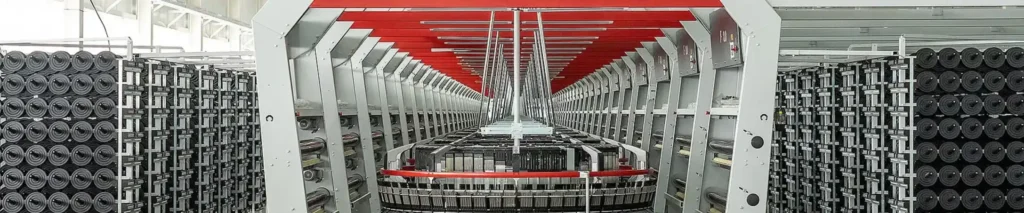
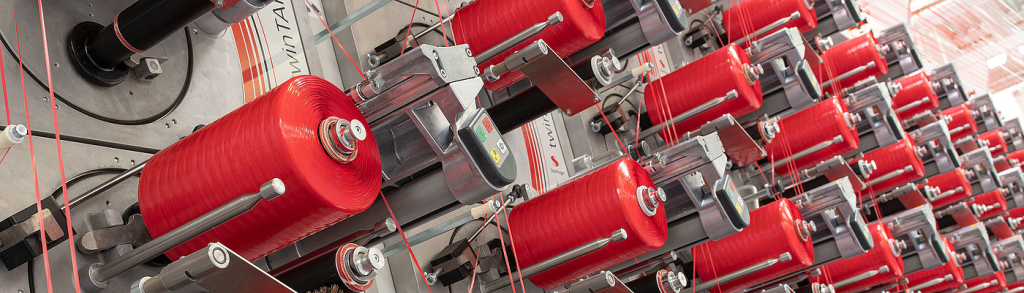
Orientation, heat‑setting & weaving. Tapes are stretched to raise crystallinity and tenacity, then heat‑set for dimensional stability. Circular or flat looms build fabric at the target mesh/denier/gsm. Pick density and tape uniformity govern puncture resistance and print laydown—uneven tapes, uneven ink.
Surface activation & lamination. Corona treatment lifts surface energy to ≥38 dynes. PP or BOPP film—typically 20–40 μm—is laminated; bond strength (peel ≥1.5 N/15 mm) and flatness are tuned for forming speed. Curl control prevents forming jams, while anti‑slip varnish on the back panel stabilizes stacks without bloating gram weight.
Printing & code governance. Rotogravure or high‑resolution digital renders brand assets, EAN/UPC/QR, and human‑readables. ΔE tolerances, on‑line spectro checks, and ISO/IEC 15416 barcode grading keep marks scannable; ASTM D5264 rub tests plus scuff panels ensure legibility survives conveyors.
Cutting, forming & sewing. Heat‑cut edges reduce fray. Block‑bottom and valve executions govern fill speed, cube efficiency, and dust control. Stitch architecture—single/double folds, stitches per inch—translates fabric capacity into seam performance while limiting fines leakage.
Quality & compliance checkpoints. Tensile (ASTM D5035), seam strength, lamination peel, dyne audits, and migration tests to EU No 10/2011 (OML 10 mg/dm²) complete the technical file; hygiene is verified to BRCGS/FSSC 22000 with traceability from resin lot to pallet via DoC/CoA and retain samples.
Horizontal/vertical analysis. Horizontally, converting borrows dyne/peel testing from film shops, uptime discipline from textiles, and HACCP zoning from food plants. Vertically, drift propagates: dyne decay → ink pick‑off; low stitch density → seam splits; overdense laminates → jam‑prone forming; under‑drawn tapes → warehouse elongation. Quality is a chain—quiet links fail loud shipments.
Data reinforcement. Lines that installed live dyne telemetry, stitch‑count windows (aligned to GB/T 8946‑2013), and ΔE dashboards typically cut print‑related rejects by >50%, stabilized seams, and reduced color‑related complaints—tangible savings visible on the QA board.
Case analysis. After DOE trials, a VidePak partner trimmed face film from 30 μm to 25 μm while holding rub and ΔE performance—saving ~8% face‑film mass with no penalty to forming speed or drop results. Lightweighting by measurement, not by hope.
Comparative study. PP‑only laminates maintain mono‑material status for simpler sortation compared with paper/PE composites that complicate recycling and absorb humidity in wet lanes.
What is the application of Custom Printed Woven Bags? (Core Sectors & Retail Storytelling)
Staples & grains. Rice, flour, sugar, pulses, and salt demand puncture resistance, humidity moderation, and legible branding. Custom Printed Woven Bags with 25–30 μm BOPP and block‑bottom geometry deliver billboard‑grade print and disciplined stacks; transparent windows can be introduced where visual confirmation builds trust.
Fertilizers & agro inputs. Dusty, abrasive contents punish seams and scuff panels. Tight meshes (e.g., 12×12), ~90–100 g/m² fabrics, anti‑slip backs, and matte code panels keep pallets upright and WMS scans clean—even under sodium‑lamp glare.
Pet nutrition & garden. High‑fat kibbles and lawn seeds need scuff‑tolerant faces and strong seams. Custom Printed Woven Bags preserve vivid graphics while controlling glare for ceiling‑mounted scanners.
Data reinforcement. Retail‑oriented SKUs frequently specify 10/15/25 kg, widths 320–600 mm, mesh 10×10–14×14, fabric 80–110 g/m², and lamination 25–30 μm—corridors echoed across audited supplier listings and buyer RFQs.
Case analysis. A sugar packer standardized Custom Printed Woven Bags at ~85–95 g/m² + 25 μm BOPP; pallet lean decreased, returns for print damage declined, and shelf conversion improved because color consistency held across lots.
Comparative study. Against film‑only sacks, woven PP maintains stack geometry at heat; against paper, woven PP resists humidity swings while retaining sharp print—an efficient frontier for many FMCG lanes.
What is the application of Custom Printed Woven Bags? (Export, Compliance & Omnichannel Logistics)
Cross‑border readiness. Dossiers—Declarations of Compliance to EU No 10/2011, polymer citations to FDA 21 CFR §177.1520, GMP per EC No 2023/2006, hygiene attestations (BRCGS/FSSC 22000), and ΔE/adhesion/barcode grade reports—shorten retailer approvals in EU/UK/US.
Containerization & cube. Block‑bottom Custom Printed Woven Bags load with near‑square discipline; anti‑slip coatings and corner reinforcements tame lean at sea. Dunnage plans keep stacks honest; pallet patterns (2×2, 3×2) are compression‑tested before SOP freeze.
Warehouse climate & scanner fluency. Hot roofs accelerate creep; selecting gsm/denier mesh wisely preserves geometry. Matte code panels reduce glare; quiet‑zone discipline keeps ISO/IEC 15416 grades at B or better under mixed lighting.
E‑commerce resilience. Mixed sortation demands tougher faces and readable codes after miles of conveyor rub. Custom Printed Woven Bags with higher rub thresholds (per ASTM D5264) and reinforced corners see fewer returns and fewer “label unreadable” exceptions.
Data reinforcement. Export RFQs routinely request tensile/seam certificates, migration results (OML 10 mg/dm²), ΔE/adhesion data, and UV stability statements (hours correlated to ASTM G154/G155). Typical widths remain 300–700 mm for 10–25 kg export SKUs.
Case analysis. A coastal rice exporter raised pallet height by one layer after standardizing anti‑slip coefficients and gusset widths on Custom Printed Woven Bags; container lean events fell, and claim rates slipped below 0.3% per 10,000 units.
Comparative study. Where hermetic oxygen barrier is non‑negotiable (e.g., photo‑sensitive foods), foil systems may be justified; where branding, stack height, and recyclability narrative must coexist, printed woven PP carries the argument.
Quick Spec Sheet (Typical, Commercially Verifiable)
| Parameter | Typical range / option | Technical note |
|---|---|---|
| Fabric weight (woven PP) | 70–110 g/m² | Select by bulk density & drop targets; retain margin for creep at heat |
| Mesh (warp×weft) | 10×10 – 14×14 | Higher mesh refines puncture resistance and print halftones |
| Denier (tapes) | 700D – 1200D | Balance tensile with forming pliability |
| Lamination (PP/BOPP) | 20–40 μm | 25–30 μm common for retail gloss/matte and moisture moderation |
| Width | 300–700 mm | Typical for 10/15/25 kg formats and block‑bottom geometry |
| Printing | Rotogravure / digital / flexo | Maintain dyne ≥38; manage ΔE; verify rub via ASTM D5264 |
| Barcode/QR quality | Target ISO/IEC 15416 grade ≥B | Use matte panels and quiet zones for fast scanning |
| Testing | ASTM D5035 (tensile); seam strength; lamination peel | Validate under realistic loads and line speeds |
| Sack standard | GB/T 8946‑2013 | General technical requirements for plastic woven sacks |
| Food‑contact & GMP | FDA 21 CFR §177.1520; EU No 10/2011; EC No 2023/2006 | OML 10 mg/dm²; SML/NIAS controls; DoC/CoA maintained |
| Hygiene systems | BRCGS Packaging Materials (Issue 7); ISO 22000:2018/FSSC 22000 | GFSI‑benchmarked hygiene & HACCP alignment |
| Circularity option | GRS v4.0 (where rPP is used) | Chain‑of‑custody verification; migration‑tested before scale |
| UV stabilization | Supplier‑declared hours, correlated to ASTM G154/G155 | Protects outer print during yard staging |
Figures reflect corridors widely listed by reputable suppliers and recognized standards. Final specs must be validated via tensile, seam, drop, creep, migration, and print‑durability tests tuned to product density, route risk, and line speed.
A Systems‑Thinking Synthesis: VidePak’s End‑to‑End Solution
Sub‑problem A — Compliance as a design constraint. Certifications should shape design rather than chase it. Solution: lock polymer/ink/adhesive selections to FDA 21 CFR §177.1520 and EU No 10/2011; document EC No 2023/2006 GMP; maintain lot‑level DoC/CoA and NIAS risk registers audited by SGS/Intertek/TÜV.
Sub‑problem B — Strength vs. weight vs. speed. Over‑engineering costs freight; under‑engineering costs claims. Solution: run DOE on mesh/denier/gsm and lamination; validate to ASTM D5035, seam tests, and hot‑warehouse compression. Baseline 12×12 / 900D / 90–100 g/m² with 25–30 μm BOPP for 25‑kg duty; tune by bulk density and lane stress.
Sub‑problem C — Brand pop vs. scanner glare. Vivid color that won’t scan is a tax on operations. Solution: matte code panels, enforced quiet‑zone geometry, ΔE dashboards, and live dyne telemetry to keep ISO/IEC 15416 grades ≥B in mixed lighting.
Sub‑problem D — Sustainability claims vs. reality. Recyclability without infrastructure is rhetoric. Solution: prefer mono‑material PP constructions; introduce rPP only with GRS v4.0 chain‑of‑custody and migration verification; publish spec‑backed grams‑saved from laminate/lightweighting initiatives.
Integrated outcome. A credible, audit‑ready packaging platform—Custom Printed Woven Bags—that prints boldly, scans cleanly, stacks safely, and stands up to regulators. Fewer grams—not fewer safeguards. Faster lines—not faster failures. Stronger brand—not stronger claims alone.
- What is Custom Printed Woven Bags? (Definition & Aliases)
- What is the features of Custom Printed Woven Bags? (Brand Performance, Hygiene & Sustainability)
- What is the production process of Custom Printed Woven Bags? (From Resin to Ready‑to‑Ship)
- What is the application of Custom Printed Woven Bags? (Core Sectors & Retail Storytelling)
- What is the application of Custom Printed Woven Bags? (Export, Compliance & Omnichannel Logistics)
- Quick Spec Sheet (Typical, Commercially Verifiable)
- A Systems‑Thinking Synthesis: VidePak’s End‑to‑End Solution
Introduction
The global custom printed woven bags market is projected to grow at a CAGR of 6.8% through 2030, driven by the demand for eco-friendly packaging solutions and compliance with stringent regulations like the EU’s Packaging and Packaging Waste Regulation (PPWR). Brands now prioritize recyclable polypropylene (PP) for woven bags due to its high recovery value, alignment with circular economy goals, and adaptability to advanced printing technologies. This report explores how recyclable PP materials, waste management frameworks, and global regulations are reshaping the custom woven bags industry.
Regulatory Landscape: Compliance as a Market Driver
Q: How do regulations like PPWR influence material choices for custom woven bags?
A: Mandates on recycled content and recyclability are forcing brands to adopt PP-based solutions.
- EU PPWR (2025): Requires 30% recycled PET in food-contact packaging and 7.5% for other plastics by 2030, with full recyclability for all packaging by 2030.
- China’s 14th Five-Year Plan: Emphasizes “plastic pollution control across the entire supply chain,” pushing manufacturers to integrate ≥30% recycled PP.
- Case Study: Vedhaa Polypack’s “EcoPrint” line uses 40% post-consumer PP, achieving EN 13432 compostability while reducing production costs by 18%.
Waste Management and Recycling: Closing the Loop
Q: Why is PP superior for circular economy models?
A: PP’s chemical stability and high recovery rate (85–90%) make it ideal for closed-loop systems.
- Recycling Efficiency:
- Mechanical Recycling: PP woven bags are shredded, washed, and pelletized into “regranulate” for reuse. A 2024 study showed PP retains 95% tensile strength after three recycling cycles.
- Chemical Recycling: Emerging technologies like pyrolysis break down PP into monomers, enabling food-grade reuse.
- Economic Impact:
- Recycling 1 ton of PP saves 5,774 kWh of energy and reduces CO₂ emissions by 1.8 tons.
- Example: Shandong Leihua’s recycling plant processes 50,000 tons of PP bags annually, generating $12M in revenue while cutting virgin material costs by 30%.
Material Advantages: PP vs. Alternatives
Q: How does PP compare to PE or biodegradable materials?
A: PP offers a balance of durability, cost, and recyclability unmatched by alternatives.
| Parameter | PP | PE | PLA (Biodegradable) |
|---|---|---|---|
| Recyclability | 85–90% | 70–75% | <5% (requires composting) |
| Tensile Strength | 5.5–6.5 kN/m | 4.0–5.0 kN/m | 3.0–4.0 kN/m |
| Cost per kg | $1.20–$1.50 | $1.00–$1.30 | $2.50–$3.00 |
Case Study: A European retailer switched from PE to PP bags, reducing leakage rates by 40% and achieving 100% recyclability for its organic grain packaging.
Technical Specifications and FAQs
Table 1: Key Parameters for Custom Printed PP Woven Bags
| Parameter | Standard | Typical Value |
|---|---|---|
| Fabric Weight | ASTM D3776 | 80–120 g/m² |
| Recycled PP Content | EN 13432 | 30–50% |
| Print Color Accuracy | Pantone Matching | ±0.5ΔE |
| Drop Test Resistance | ASTM D5276 | 1.5m height |
FAQs
- Q: How to verify recycled PP content?
- A: Use FTIR spectroscopy or ASTM D7611 standards to confirm polymer composition.
- Q: Can printed inks affect recyclability?
- A: Water-based or UV-cured inks (e.g., Sun Chemical’s EcoLeaf) minimize contamination, ensuring 90% material recovery.
Future Trends: Innovation and Automation
- Smart Packaging: RFID tags embedded in PP bags enable supply chain tracking, reducing waste by 15%.
- Advanced Recycling: Starlinger’s recoSTAR systems achieve 99% purity in PP regranulate, meeting FDA food-contact standards.
- Policy Expansion: The EU’s Single-Use Plastics Directive and China’s 15th Five-Year Plan will further mandate recycled content, pushing brands to adopt PP.
External Resources:
- Discover how recyclable woven bags align with ESG goals.
- Explore PP bags meeting regulatory standards for global compliance.
By integrating recyclable PP, brands can transform custom printed woven bags into a tool for sustainability and regulatory compliance. As circular economy frameworks expand, those prioritizing material innovation and waste management will lead the packaging revolution.