
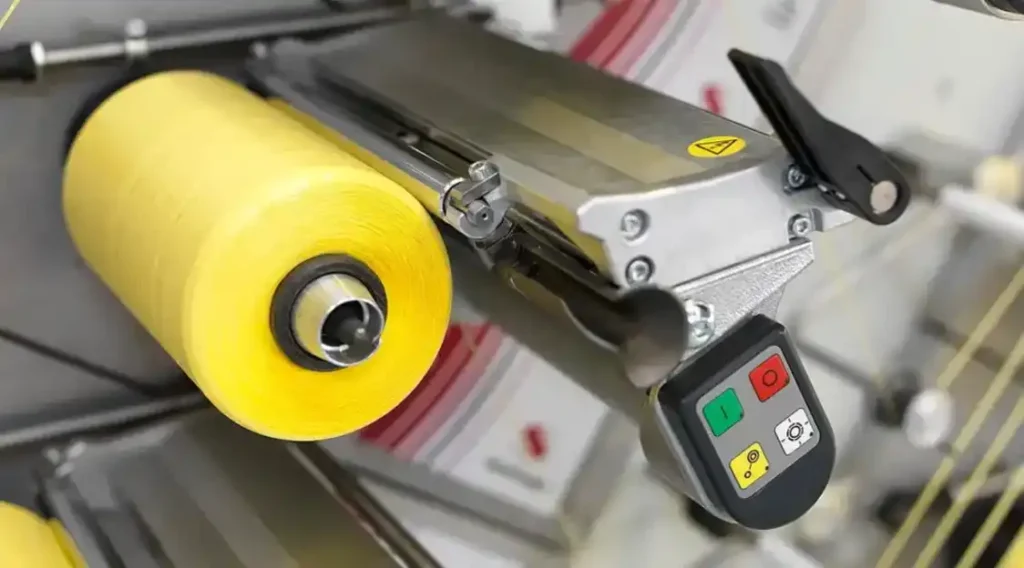
What are Tubular Woven Bags?
Tubular Woven Bags are industrial sacks produced from a continuous tube of woven polypropylene (PP) fabric made on circular looms. Because the base fabric is extruded into tapes, drawn for strength, and woven without a longitudinal side seam, the resulting package blends textile-like toughness with film-like moisture moderation. The tube is then converted by forming a bottom (often a block-bottom), preparing and sealing the mouth, and, where appropriate, integrating a valve or heat-sealable layer so the package runs on automated lines. In daily operations, Tubular Woven Bags routinely carry 10–50 kilograms of powders or granules (and far more in bulk variants), run cleanly on high-speed equipment, and stack into dense, stable unit loads for trucking, rail, and sea.
In RFQs and supplier catalogs you will find the same platform under different labels. To help engineering, procurement, and logistics align vocabulary, common aliases for Tubular Woven Bags include:
- Circular Woven PP Bags
- Tubular PP Woven Sacks
- WPP Circular-Loom Bags
- Block-Bottom Tubular Woven Bags
- Tubular Woven Valve Sacks
- Laminated Tubular Woven Polypropylene Bags
- BOPP-Laminated Tubular Woven Sacks
- Tubular Woven FFS Rollstock
- Coated Tubular Woven PP Sacks
- Heavy-Duty Tubular Woven Packaging
The Materials of Tubular Woven Bags: Resin, Architecture, and Interfaces
The anatomy of Tubular Woven Bags is more than a list of layers; it is a set of interlocking controls that prevent specific failures: a corner split on a dock, caking after a humid ocean leg, dust leakage during pneumatic filling, a bar code rubbing off on conveyors, or a mouth that springs closed under the filler. Below, each material choice is presented in terms of the failure it prevents, where it resides in the construction, and how it shifts cost.
Polypropylene resin (base polymer)
Most tape lines use homopolymer polypropylene for stiffness and a higher softening point; random copolymers appear when low-temperature flexibility matters. Melt flow rates typically sit around 2–4 g/10 min, a window that balances drawability with dimensional control during orientation. As tapes are drawn, semicrystalline domains align, trading thickness for tensile strength and tear resistance. PP’s non-polar chemistry yields low moisture uptake and broad compatibility with salts, fertilizers, minerals, and many commodity chemicals.
- Role: mechanical ceiling of the woven substrate; moisture moderation; chemical tolerance.
- Where used: warp and weft tapes across the entire tubular body.
- Cost levers: resin price dominates; energy and scrap rates affect long campaigns; dual-sourcing maintains price stability.
Additives, stabilizers, and color packages
A few grams per kilogram change field behavior. UV stabilizers protect stacks staged outdoors. Slip and anti-block packages tune coefficient of friction so layers neither slide off pallets nor snag in forming plows. White masterbatch boosts opacity so graphics and codes pop; carbon black strengthens UV stability but increases heat absorption—an issue in hot yards.
- Role: adapt PP to climate, handling, and brand needs without compromising mechanicals.
- Where used: compounded into tapes; sometimes in coatings or inner films.
- Cost levers: small mass share, large impact on claims and complaints.
Tape and fabric architecture (the seam-free tube)
Tapes slit from chilled film are drawn in staged ovens, then interlaced on circular looms to create a continuous tube. Denier sets potential strength; draw ratio converts that potential into reality; weave density (picks per inch) governs stiffness, de-aeration, and sifting. Typical builds for 10–50 kg sacks range from 10×10 to 12×12 tapes per inch with a fabric grammage around 75–110 g/m². Because the circular loom yields a body without a vertical side seam, one of the most failure-prone lines of a conventional bag simply does not exist.
- Role: structural backbone; puncture and tear resistance; predictable compressibility under pallet load.
- Where used: entire tubular body from base to mouth.
- Cost levers: grammage and weave density are the second-biggest BOM driver after resin.
Surface systems: coatings, laminations, and inner sealing layers
Many Tubular Woven Bags run uncoated when breathability is desired; most industrial powders and granules benefit from a surface system that smooths the print face, narrows WVTR, limits sifting, and enables heat sealing.
- Extrusion coating (PP or PE): 20–40 μm is a common window. Smooths the woven surface, moderates moisture transmission, and allows pinch-top or FFS heat sealing when the polymer is selected for sealability.
- BOPP lamination: 12–25 μm reverse-printed film bonded to fabric for photographic graphics and excellent rub resistance. Used selectively when retail display or heavy-duty brand presence is a priority.
- Tie-layers and primers: applied where adhesion between woven PP and the film layer needs reinforcement without embrittlement.
- Inner sealing film (FFS): a coextruded PE-rich layer inside the tube creates a forgiving seal window for FFS jaw sets. The film supplies hermeticity; the woven layer supplies drop strength.
Closures, valves, and options
Open-mouth sacks are sewn (chainstitch/lockstitch) or pinch-sealed; valve sacks integrate internal or external sleeves sized to the nozzle so trapped air can escape during fill. For FFS from tubular rollstock, sealing relies on the inner film and jaw profiles. Optional accessories include loose or attached PE liners (15–30 μm) for oils/odors, anti-slip stripes for pallet stability, antistatic finishes for fines, and micro-perforation near the fill zone to speed de-aeration while keeping seals clean.
Features of Tubular Woven Bags: From Capability to Measurable Outcomes
Features only matter when they change what happens on the dock, at the filler, or on the road. For Tubular Woven Bags, the consequential capabilities cluster around strength, speed, cleanliness, stack stability, and policy-readiness.
- Seam-free sidewalls: the tubular body removes a common failure plane, improving drop survival and reducing corner splits.
- Strength-to-weight efficiency: drawn PP tapes and balanced weaves yield high drop and tear performance per kilogram, lowering damage claims.
- Clean, fast filling: engineered venting (micro-perfs, porous zones, valve sleeves) releases trapped air without dust plumes, supporting higher BPM with lower housekeeping.
- Moisture moderation: PP’s low moisture affinity, optionally paired with coatings/laminations, helps prevent caking in humid lanes.
- Stack stability: block-bottom conversions build brick-like layers with predictable friction for robotic palletizers and sack clamps.
- Print and traceability real estate: large, durable panels carry barcodes, QR, and multilingual instructions that survive conveyors.
- Design-for-recycling pathways: mono-polyolefin builds (woven PP plus PP/PE sealing layers) support emerging recyclability schemes while prioritizing the bigger lever—preventing product loss.
Production Process: From Pellet to Pallet (and Roll to Ready Pack)
Great sacks are manufactured, not declared. The choreography is melt → slit → draw → weave → treat → coat/laminate (if needed) → print → convert → verify. Drift at any step becomes tomorrow’s complaint, so each step needs explicit windows and measurements.
- Film extrusion and slitting: PP pellets become film; die and chill-roll settings lock thickness; razor slitting yields tapes with controlled width and clean edges to minimize linting.
- Drawing (orientation): staged ovens stretch tapes to align chains; draw ratio matches resin MFR and target strength; over-draw embrittles, under-draw wastes potential.
- Circular weaving: warp and weft tapes interlace on circular looms to a target density (e.g., 10×10–12×12 tapes/in) producing a continuous tube with no side seam.
- Surface preparation: corona or flame treatment raises surface energy for inks and adhesives.
- Coating / lamination: a 20–40 μm PP/PE layer smooths the surface, moderates WVTR, and enables heat seals; BOPP lamination provides photographic graphics and superior rub resistance where retail presentation is key.
- Printing: water-based flexographic inks for coated faces or reverse-printed BOPP for lamination; OPV (matte/gloss) protects graphics.
- Conversion: tubes are cut; bottoms are formed (e.g., block-bottom); mouths are configured for sewing, pinch-seal, valve, or FFS. Valve sleeves match nozzle geometry; FFS relies on inner film jaws and thermal profiles.
- Quality checks: drop tests, seam/peel strength, WVTR or air-permeability, dimensional audits, print rub/coding checks, and traceability to machine parameters.
Applications of Tubular Woven Bags: Scenario Mapping
Markets are labels; applications are risks with countermeasures. Frame the scenario by the failure to avoid, then map features in Tubular Woven Bags that neutralize it.
Cement and dry mortar: dusty powders and pneumatic filling inflate the package. Use micro-venting around the fill zone, heat-sealable valve sleeves, coated exteriors, and block-bottom geometry for square stacks and clean pallets.
Fertilizer and seed: granular abrasion and outdoor UV demand resilience. Specify UV-stabilized tapes, anti-slip exteriors, large code panels, and denser weaves to minimize sifting.
Animal feed and pet food: aroma and light oils require barriers and neat tops. Choose thin PE liners and pinch-bottom closures with OPV-protected graphics.
Resins, salts, pigments: fines and static potential call for sift-tight seams, optional antistatic finishes, and precise dimensions for robotic palletizing.
Produce and bio-based fuels: airflow trumps barrier. Selectively perforated or mesh-window variants maintain ventilation without sacrificing handling strength.
- Dusty powders → block-bottom valve sacks with controlled venting.
- Retail-facing granules → pinch-top open-mouth with varnished print and EZ-open tape.
- Legacy lines → sewn open-mouth with crepe tape, reinforced hems, and strong fold geometry.
Tubular Woven Bags: Exploring the Benefits of Form-Fill-Seal (FFS) Technology
The headline sets an expectation: if the substrate is a woven tube, what does FFS unlock that pre-made bags do not? The short answer: higher speed, fewer touches, more consistent seals, smaller footprints, and better total cost of ownership. The long answer follows—organized as a set of levers you can actually pull.
Why FFS for a woven tube?
- Throughput: from roll to sealed pack in a single motion path; jaw windows engineered into the inner film give repeatable seals at speed.
- Labor: fewer manual touches than pre-made bag magazines and placers; fewer mis-picks and fewer injuries.
- Hygiene: an enclosed path from rollstock to sealed bag reduces contamination risk, especially with dusty powders.
- Footprint: one monoblock replaces bag placer, filler, sealer, and frequently a separate coder, which matters in brownfield sites.
- Inventory: rolls store more packs per cubic meter than pallets of pre-made bags; changeovers become recipe-driven rather than magazine swaps.
What makes FFS on woven PP technically credible?
Two facts: modern FFS equipment can tension, guide, and cut tubular substrates precisely; and woven PP tubes can include coextruded inner films that seal reliably across broad windows. When those facts meet, forming plows, nozzles, and jaws do not fight the material—they work with it.
Engineering the substrate for FFS
- Fabric stability: low skew and camber keep cut length aligned with target weights.
- Inner sealing layer: PE-rich coextrusion tuned to your jaw metallurgy for fast, forgiving seals; verify with peel and creep tests.
- Outer surface coefficients: smooth enough to feed through forming plows, grippy enough for downstream palletizing; place anti-slip patterns strategically.
- Venting strategy: perforate away from seal zones; for pneumatic fills, concentrate micro-perfs near the mouth to release trapped air quickly.
- Splice philosophy: specify splices your line can pass at speed; flag them for QA so outlier packs can be traced.
Pre-made tubular bags vs. tubular woven FFS rollstock
| Dimension | Pre-made tubular woven bags | Tubular woven FFS rollstock |
|---|---|---|
| Labor | Bag magazines, placement, mouth presentation | Integrated forming/filling/sealing reduces touches |
| Speed | Often operator-limited | Limited by product flow and seal cooling |
| Seal integrity | Depends on sewing/pinch quality | Thermal window engineered into inner film |
| Hygiene | More open handling paths | Enclosed path from roll to sealed pack |
| Changeover | Magazine swaps and placer tweaks | Recipe-driven (cut length, plow and jaw settings) |
| Inventory | Pallets of pre-made bags | Rollstock packs more units per cubic meter |
For a compact primer on continuous tubular substrates in heavy-duty packaging—and why the FFS logic is so compelling—see this concise overview of FFS tubular roll polyethylene bags. While the material there is PE rather than woven PP, the forming, filling, and sealing principles map directly onto Tubular Woven Bags that carry an inner sealing layer.
System Thinking: From Sub-Problems to a Single Specification
Move from adjectives to outcomes by decomposing the challenge, solving each small problem, then recomposing everything into one document your suppliers can actually quote.
A) Product physics
Bulk density, particle size distribution, oil/fat content, hygroscopic behavior, static potential. Map to: fabric grammage and weave density; liner need and thickness; venting strategy; antistatic package; choice of valve vs open mouth.
B) Filling-line dynamics
Gravity or pneumatic, nozzle diameter, target BPM, de-aeration window, jaw metallurgy. Map to: inner seal film selection, micro-perf count and placement, forming plow geometry, cut-length control, and seal jaw windows.
C) Distribution climate
Humidity cycles, temperature extremes, outdoor storage, ocean/rail legs, pallet height. Map to: UV package, coating thickness, anti-slip patterns, block-bottom geometry, wrap pattern and restraint.
D) Regulatory and brand requirements
Food/feed contact claims where relevant, labeling languages, barcode/data-matrix grading, QR to stewardship content, recycling marks consistent with local law. Map to: ink systems, OPV, panel size and contrast, mono-polyolefin design choices.
E) Warehouse automation and safety
End-effector friction, compressibility window, bag geometry tolerance, manual lift limits. Map to: anti-slip stripes, stiff-but-compliant block-bottoms, dimensional tolerances, and sack clamp compatibility.
Technical Tables and Quick-Use Cards
Construction options and recommended ranges
| Subsystem | Typical Options | Recommended range / notes |
|---|---|---|
| Woven PP fabric | Circular loom; 10×10–12×12 tapes/in | ~75–110 g/m²; denier and draw ratio set drop/tear strength |
| Coating (extrusion) | PP or PE topcoat | ~20–40 μm; enables heat-seal; improves sift and moisture control |
| Lamination film | BOPP gloss or matte | 12–25 μm; reverse-printed for rub resistance |
| Inner sealing film (FFS) | Coextruded PE-rich layer | Seal jaw window tuned by peel/creep tests |
| Valve geometry | Internal or external sleeve | Diameter matched to nozzle; heat-sealable variants reduce dust |
| Surface treatment | Corona or flame | Raises surface energy for inks/adhesives |
FFS set-up parameters (starting windows)
| Parameter | Typical starting window | Notes |
|---|---|---|
| Seal jaw temperature | 150–190 °C | Tune to inner film; validate with peel/creep |
| Seal dwell | 0.3–0.7 s | Balance throughput vs. seal cooling |
| Seal pressure | 3–6 bar (effective) | Enough to flow inner film without fabric imprint |
| Cut length control | ±1–2 mm | Correlate with check-weigher and bulk density |
| Venting (micro-perfs) | 8–24 small holes near mouth/valve | Release trapped air; keep seal area clean |
Application-tuned examples
| Use case | Capacity | Fabric (g/m²) | Surface / inner layer | Format | Notes |
|---|---|---|---|---|---|
| Cement / dry mortar | 25–50 kg | 90–110 | Coat 30–40 μm + inner seal film | FFS valve or OM | Micro-venting; anti-slip; sift-tight seams |
| Fertilizer / seed | 25–50 kg | 85–100 | Coat 25–35 μm + inner seal film | FFS OM or valve | UV package; large label panels |
| Animal feed | 10–25 kg | 80–95 | Coat 20–30 μm + optional liner | FFS pinch-top | EZ-open; aroma barrier |
| Resins / pigments | 20–25 kg | 90–110 | Coat 30–40 μm + antistatic | FFS valve | Traceability; sift control |
Performance targets (declare before RFQ)
| Test | Typical target | Purpose |
|---|---|---|
| Drop (25 kg) | ≥10 drops @ 1.0–1.2 m | Transit robustness |
| Seam/Seal strength | ≥85% of fabric strength or peel ≥ target N/15 mm | Avoid mouth and bottom failures |
| WVTR (where relevant) | Climate-specific limit | Prevent caking |
| Dust loss at filler | ≤ line-specific grams | Cleanliness and worker safety |
| Barcode grade | ≥ B under ISO/ANSI | Scan reliability in DC and retail |
Keyword Architecture and Long-Tail Phrasing
Place phrases where they clarify decisions—never to clutter copy. Primary keyword used consistently: Tubular Woven Bags. Helpful variants and long-tail terms that buyers actually search: tubular woven polypropylene bags; circular woven PP sacks; tubular woven valve bags; tubular woven FFS rollstock; laminated tubular woven polypropylene packaging; coated tubular woven bags; block-bottom tubular woven sacks; heavy-duty tubular woven packaging; recyclable mono-polyolefin tubular woven bags; form-fill-seal tubular woven bags; micro-perforated woven PP FFS sacks; heat-sealable circular woven bagging.
From Title to Outline to Finished Page: How This Was Composed
The starting cue—Tubular Woven Bags paired with FFS—drove the structure. First, define the product and reconcile its aliases so teams speak the same language. Next, connect materials to the failure modes they prevent. Then translate features into consequences you can measure at the filler and on the dock. After that, walk the manufacturing sequence with its control points, paying special attention to the FFS interface. Finally, decompose the spec with system thinking and recombine it into tables you can paste into an RFQ. Long sentences sit beside short ones; questions challenge claims; contrasts make choices obvious; repetition is used to emphasize what truly matters: seam-free strength, clean fast filling, square stacks, and seals that hold through the route.

- What are Tubular Woven Bags?
- The Materials of Tubular Woven Bags: Resin, Architecture, and Interfaces
- Features of Tubular Woven Bags: From Capability to Measurable Outcomes
- Production Process: From Pellet to Pallet (and Roll to Ready Pack)
- Applications of Tubular Woven Bags: Scenario Mapping
- Tubular Woven Bags: Exploring the Benefits of Form-Fill-Seal (FFS) Technology
- System Thinking: From Sub-Problems to a Single Specification
- Technical Tables and Quick-Use Cards
- Keyword Architecture and Long-Tail Phrasing
- From Title to Outline to Finished Page: How This Was Composed
- 1. Market Landscape: The Rise of FFS Technology in Tubular Woven Bags
- 2. VidePak’s Technological Leadership: Precision at Scale
- 3. Case Studies: Efficiency Meets Innovation
- 4. Material Science: Why Polypropylene Dominates
- 5. The Future: Smart Packaging and Traceability
- FAQs: Addressing Critical Concerns
- 6. Strategic Partnerships and Global Expansion
“The future of packaging lies in merging automation with sustainability—and FFS-enabled tubular woven bags are leading this revolution,”** declared Dr. Emily Zhou, a packaging technologist at the Global Packaging Summit 2024. This assertion captures the transformative potential of Form-Fill-Seal (FFS) technology in tubular woven bags, a sector where VidePak has emerged as a global leader. Combining high-speed automation, recyclability, and smart traceability features, these bags are redefining efficiency in industries ranging from agriculture to construction waste management.
1. Market Landscape: The Rise of FFS Technology in Tubular Woven Bags
The global woven packaging market is projected to reach $73.8 billion by 2027, driven by demand for cost-effective, durable solutions. FFS technology, which integrates bag formation, filling, and sealing into a single automated process, has seen a 22% annual growth rate since 2021, particularly in Asia-Pacific regions like China.
Key Drivers:
- Agricultural Demand: Tubular woven bags with FFS capabilities are critical for bulk grains, fertilizers, and animal feed, reducing manual labor by 40% while ensuring contamination-free storage.
- Construction Waste Management: Heavy-duty FFS bags with 1.5-ton load capacities are replacing traditional disposal methods, cutting transportation costs by 30%.
- Sustainability Mandates: China’s 14th Five-Year Plan prioritizes circular economy practices, favoring recyclable PP-based solutions that align with ESG goals.
2. VidePak’s Technological Leadership: Precision at Scale
Founded in 2008 and led by Ray Chen, VidePak leverages 30+ years of expertise to deliver innovative FFS solutions.
Production Infrastructure:
| Equipment | Quantity | Capability |
|---|---|---|
| Starlinger Circular Looms | 100+ | High-speed weaving (200 bags/minute) |
| Extrusion Lines | 16 | Seamless PP film production |
| FFS Automation Systems | 20 | Integrated filling/sealing (<5 sec/bag) |
This setup enables an annual output of 80 million bags, including BOPP-laminated bags for moisture-sensitive crops and PE-coated valve bags for construction debris.
3. Case Studies: Efficiency Meets Innovation
Case 1: Rice Storage in Jiangsu Province
A cooperative storing 500,000 tons of rice faced 10% losses due to pest infiltration. VidePak’s FFS bags with biodegradable liners reduced losses to 2%, while QR code integration enabled real-time inventory tracking.
Case 2: Smart Waste Management in Shenzhen
A demolition firm adopted VidePak’s FFS bags embedded with RFID tags, allowing municipalities to monitor waste volume and composition digitally. This innovation reduced illegal dumping incidents by 45% in six months.
4. Material Science: Why Polypropylene Dominates
VidePak’s use of virgin PP copolymer ensures:
- Durability: Tensile strength of 60 MPa, surpassing HDPE by 35%.
- Recyclability: PP bags achieve 95% material recovery rates, aligning with EU Circular Economy Action Plan targets.
- Cost Efficiency: At $0.15/unit, PP FFS bags are 25% cheaper than biodegradable alternatives, making them viable for budget-sensitive sectors.
5. The Future: Smart Packaging and Traceability
Emerging Trends:
- IoT Integration: QR codes and RFID tags enable supply chain transparency. For instance, VidePak’s collaboration with Alibaba Agri uses blockchain to track rice from farm to consumer.
- Self-Healing Materials: Research into PP composites with microcapsules (inspired by NIR-triggered drug delivery systems) could enable bags to repair minor punctures autonomously.
- Regulatory Compliance: Upcoming GB/T 2025 standards in China will mandate traceability features in industrial packaging, positioning FFS bags as a compliance-ready solution.
FAQs: Addressing Critical Concerns
Q: How do FFS bags withstand extreme conditions?
A: VidePak’s UV-stabilized PP retains integrity at -30°C to 90°C, validated by ISO 2233 testing.
Q: Can small farms afford customized FFS solutions?
A: Yes. Minimum orders start at 10,000 units, with 8-color digital printing for branding.
Q: What certifications ensure safety?
A: Bags meet FDA CFR 21 (food-grade) and ISO 14001 (environmental management) standards.
6. Strategic Partnerships and Global Expansion
VidePak’s collaboration with Starlinger ensures access to cutting-edge FFS automation, while partnerships with platforms like Alibaba Agri enhance rural market penetration. Additionally, innovations in smart construction waste solutions aim to capture 20% of China’s $2.1 billion construction packaging sector by 2026.
Conclusion
Tubular woven bags with FFS technology represent a synergy of efficiency, sustainability, and innovation. For VidePak, the integration of Starlinger’s automation and smart traceability features positions the company as a pioneer in the ESG-driven packaging landscape. As Ray Chen notes, “Our bags aren’t just containers—they’re catalysts for a smarter, greener future.” With 8,000 global clients and $80 million in annual revenue, VidePak exemplifies how technology and ethics can coexist in modern manufacturing.
This report synthesizes data from the China Packaging Association, Global Packaging Insights, and VidePak’s 2024 Sustainability Report. Technical references include ASTM D4632 and ISO 2233 standards.