

What is Jumbo Bags for Building Materials? (Definition & Aliases)
In the heavy‑duty world of construction supply, Jumbo Bags for Building Materials define a class of flexible containers that convert bulk logistics into a disciplined, auditable, and cleaner workflow. Built from woven polypropylene (PP), these containers—also called bulk bags, big bags, super sacks, or FIBCs (Flexible Intermediate Bulk Containers)—are designed to move free‑flowing minerals and blends such as cement, sand, gravel, gypsum, lime, silica fume, and dry admixtures. While the term “bag” sounds modest, the function is not: Jumbo Bags for Building Materials are engineered load paths with predictable deformation, specified seam strength, and standardized lifting performance. They collapse when empty, stack efficiently when full, and provide a mobile silo effect at depots and jobsites.
Beyond naming, the identity of Jumbo Bags for Building Materials is anchored in quantifiable behavior: Safe Working Load (SWL) classes that typically cluster at 500 / 1,000 / 1,500 / 2,000 kg; Safety Factor (SF) frameworks of 5:1 for single‑trip and 6:1 for multi‑trip usage in line with global practice; body styles (circular, U‑panel, 4‑panel) that tune stress trajectories; and top/bottom features that choreograph filling fluidity and discharge control. In other words, the format is a system—materials science, mechanical geometry, and operating discipline stitched together.
What are the Features of Jumbo Bags for Building Materials? (Appearance, Performance, Compliance)
A specification is only useful when it saves minutes, prevents mess, or wins approvals. The features of Jumbo Bags for Building Materials are organized here as adjustable levers. Each lever includes a technical rationale, a practical trade‑off, and a believable outcome, so decisions feel like engineering, not guesswork.
Fabric basis weight (≈120–240 gsm), seam geometry, and loop style (corner/cross‑corner) distribute stress from lift point to base. Circular bodies minimize side seams; 4‑panel bodies enhance cubic stability; U‑panel balances seam count and shape retention.
Coating (≈20–30 gsm) plus optional PE/PP liners (≈60–100 μm) keeps humidity at bay for cement, gypsum, and lime while enabling controlled deaeration through micro‑venting patterns.
Inlet spouts, duffle tops, and discharge spouts with petal closures orchestrate air and solids. Baffles and vent placement preserve fill speed without inviting dust plumes.
Types A/B/C/D per IEC 61340‑4‑4. Type C requires grounding; Type D dissipates charge without a ground lead—often preferred when human error risk is high.
Plants typically run ISO 9001:2015 and ISO 14001:2015; where lines are shared with feed, ISO 22000/FSSC 22000 helps. Method‑named tests anchor claims.
SWL/SF to ISO 21898; fabric tensile (ASTM D5035); seam pulls (ASTM D1683 analogues/in‑house); UV/weathering (ASTM G154); lift/topple/stack cycles archived with photos.
What is the Production Process of Jumbo Bags for Building Materials? (From Tape to Tested Container)
Reliability does not appear at the final stitch; it is accumulated, station by station. The process map below ties each step in manufacturing Jumbo Bags for Building Materials to the failure mode it prevents and the test that verifies the fix. This cause‑countermeasure pairing shortens debug cycles and makes quality visible.
- PP tape extrusion & weaving: Polypropylene granules extruded into tapes, slit, oriented, and woven into fabric (circular or flat). Basis weight is set to SWL/SF targets (≈120–240 gsm).
Risk: uneven tensile → local seam stress. Control: tensile sampling per ASTM D5035; loom calibration logs and pick counts.
- Cutting & body formation: Panels cut for 4‑panel or U‑panel bodies, or circular tubes prepared; edges heat‑cut; reinforcements placed at load junctions.
Risk: seam pull‑out at panel junctions. Control: stitch density ≥4 stitches/cm; bartack patterns standardized by style.
- Loop assembly: Corner or cross‑corner loops (≈200–320 g/m webbing) sewn with lock/chain patterns; loop‑to‑body interfaces reinforced.
Risk: loop tear on accelerated lift. Control: top‑lift and cyclic loading per ISO 21898; photo archiving of stitch geometry.
- Coating/lamination (optional): PP coating (≈20–30 gsm) for moisture/dust control; recognize deaeration impacts.
Risk: slow fills from trapped air. Control: micro‑venting on vertical panels; discharge baffles or socks to shape flow.
- Liner fabrication (if specified): PE/PP liners (≈60–100 μm) cut and shaped—form‑fit to reduce pleats and accelerate discharge.
Risk: caking/clumping on humid routes. Control: gauge selection tied to season and storage; humidity audits.
- Top & bottom construction: Inlet spout, duffle, or open tops; discharge spout/full open/flat bottoms with petal closures and safety flaps; sift‑proof tapes on seams.
Risk: dust plumes at discharge. Control: petal‑style closures; dust socks; housekeeping SOP verification.
- Inspection & testing: Dimensional checks; lift/topple/tear/stack cycles; SF verification 5:1/6:1 to ISO 21898; electrostatics validation per IEC 61340‑4‑4 where applicable; UV/weathering screens to ASTM G154 for outdoor storage intent.
Risk: undocumented variability. Control: method‑named third‑party reports (SGS/Intertek/TÜV) and batch COAs.
- Cleaning & finishing: Air cleaning, labeling, and palletization; where yards are exposed, verify UV‑stabilizer packages and document storage guidance.
- Fabric tensile to ASTM D5035; seam pulls to internal methods aligned with ASTM D1683.
- SF/SWL verification to ISO 21898 with top‑lift, topple, tear, and stacking protocols.
- Electrostatic classification to IEC 61340‑4‑4 (Type A/B/C/D), including continuity mapping for Type C and surface resistivity for Type D.
- UV/weathering checks to ASTM G154 where outdoor storage is routine; retain exposure logs.
What is the Application of Jumbo Bags for Building Materials? (Industries & Use Cases)
The utility of Jumbo Bags for Building Materials appears in how cleanly they shuttle materials across nodes—quarries, silos, mixers, depots, and job sites—while protecting throughput and cleanliness. The use case, not a generic template, should drive the spec.
Coated panels plus 60–80 μm liners; micro‑vents only on vertical panels to preserve fill speed; discharge spout with petal closure and dust sock for site‑friendly drops.
Higher gsm (≈180–240) and open tops; flat bottoms for stable staging; rugged loops accommodate frequent forklift cycles and rough yards.
Moisture‑sensitive powders benefit from coating plus targeted liners; electrostatic Type C preferred for tight indoor transfers with sensor alarms.
Sift‑proof seams and form‑fit liners reduce loss; stricter dust controls and documented electrostatic class protect teams and instrumentation.
Jumbo Bags for Building Materials — A System View
Claims of transformation demand proof. What, precisely, does the format change? Speed without chaos. Barrier without bottlenecks. Safety without over‑engineering. Paperwork without delay. Below, each tension is posed as a question and answered with measurable, field‑tested options—so Jumbo Bags for Building Materials move from brochure promise to plant reality.
A. Throughput vs. Dust Control
Thesis: High fill speed must coexist with clean discharge.
- Data reinforcement: Micro‑venting preserves fill time in coated constructions; petal‑style discharge closures curb dust plumes at drop points.
- Case analysis: A mortar plant restored cycle time by venting only the vertical panels and adding a discharge baffle; contractor dust complaints fell in parallel.
- Comparative study: Open tops load fastest but admit ambient dust; spout tops slow slightly but add control. Choose based on process risk and yard conditions.
B. Safety Factor vs. Resin Mass
Thesis: The safest bag is not the heaviest—it is the best‑engineered.
- Data reinforcement: Safety Factors 5:1 (single‑trip) and 6:1 (multi‑trip) verified to ISO 21898. Smarter loop geometry and U‑panel bodies can achieve target SF without escalating gsm.
- Case analysis: Moving from 4‑panel/160 gsm to U‑panel/200 gsm reduced seam failures while maintaining total resin mass through loop optimization.
- Comparative study: Blanket gsm increases inflate cost and CO₂; targeted reinforcements at stress junctions yield safer lifts per kilogram of resin.
C. Moisture Protection vs. Deaeration
Thesis: Barrier must not choke the fill.
- Data reinforcement: Coated fabrics resist moisture ingress but trap air; micro‑vents and spout baffles maintain fill time. Liners at 60–100 μm protect cement on humid routes.
- Case analysis: A cement importer added a 70 μm liner to summer shipments and introduced a vent pattern to retain cycle time. Caking complaints fell season‑wide.
- Comparative study: Full liners extend shelf life; partial liners or targeted coatings suit short, dry routes. Choose the lightest system that meets humidity risk.
D. Static Risk vs. Operational Simplicity
Thesis: Use the lowest electrostatic class consistent with safety.
- Data reinforcement: IEC 61340‑4‑4: Type B for non‑flammable powders; Type C (grounded) where alarms or solvent adjacency exist; Type D where grounding reliability is doubtful.
- Case analysis: A mixer line installed Type C bags with visible grounding lugs and an interlock check. False stops disappeared; auditors praised the control plan.
- Comparative study: Type D eases operations but costs more; Type C is cost‑effective when grounding discipline is realistic.
E. Documentation vs. Time‑to‑Bid
Thesis: Paperwork accelerates sales—if it’s the right paperwork.
- Data reinforcement: ISO 21898 lift/topple/stack records, ASTM method references, UV screens (ASTM G154), and certificates (ISO 9001:2015, ISO 14001:2015) satisfy procurement checklists on the first pass.
- Case analysis: A national contractor pre‑qualified a vendor in one round when the bid included method‑named third‑party reports and stitch photography.
- Comparative study: Narrative claims invite resubmissions; method‑named results close loops quickly.
Integrated Specification Blueprint (Inputs → Decisions → Proof)
Turning an RFQ into an approved standard for Jumbo Bags for Building Materials benefits from a repeatable rhythm. Inputs are gathered; decisions are made with explicit trade‑offs; proof is assembled with method‑named tests. The outcome is a spec that runs today and audits tomorrow.
- Inputs: bulk density and flowability; particle size distribution; route humidity and temperature; yard conditions (indoor/outdoor); lift gear geometry; target throughput; tolerance for dust at discharge.
- Decisions: body style (circular/U‑panel/4‑panel); fabric gsm (120–240); SWL (500–2,000 kg); SF (5:1/6:1); loop design (corner/cross‑corner); top/bottom features; coating weight (20–30 gsm); liner gauge (60–100 μm); electrostatic type (A/B/C/D).
- Proof: ISO 21898 suite (lift/topple/tear/stack); tensile & seam pulls (ASTM D5035/D1683 analogue); UV/weathering (ASTM G154); electrostatic classification (IEC 61340‑4‑4); QA sampling plan and COAs.
- Roll‑out: pilot on one SKU; run fill/discharge trials; finalize pallet patterns; freeze stitch density, vent pattern, and liner gauge; archive photos of critical seams and loop geometry.
Key Technical Parameters (Reference Summary)
| Parameter | Mainstream Options / Ranges | Notes |
|---|---|---|
| Safe Working Load (SWL) | 500 / 1,000 / 1,500 / 2,000 kg | Select per product density and lift gear |
| Safety Factor (SF) | 5:1 single‑trip; 6:1 multi‑trip | Verify per ISO 21898 |
| Fabric basis weight | 120–240 gsm PP woven | Raise gsm for abrasive products |
| Body style | Circular / U‑panel / 4‑panel | Trade‑off: seams vs. cubic stability |
| Loop style | Corner / Cross‑corner | Webbing ≈200–320 g/m typical |
| Coating | 20–30 gsm PP (optional) | Moisture & dust control |
| Liner | PE/PP 60–100 μm (optional) | Cement/gypsum moisture protection |
| Top options | Spout / Duffle / Open | Hygiene vs. speed trade‑off |
| Bottom options | Discharge spout / Full open / Flat | Petal closure + dust sock recommended for powders |
| Electrostatics | Type A/B/C/D per IEC 61340‑4‑4 | Ground Type C; Type D is non‑grounded |
| Dimensions | ≈90×90×110 cm common | ≈1 m³ for 1,000 kg loads |
| Tests | Lift, topple, tear, stacking; tensile/seam | ISO 21898 + ASTM references |
| Compliance | ISO 9001:2015; ISO 14001:2015; optional ISO 22000/FSSC 22000 | Third‑party (SGS/Intertek/TÜV) preferred |
- What is Jumbo Bags for Building Materials? (Definition & Aliases)
- What are the Features of Jumbo Bags for Building Materials? (Appearance, Performance, Compliance)
- What is the Production Process of Jumbo Bags for Building Materials? (From Tape to Tested Container)
- What is the Application of Jumbo Bags for Building Materials? (Industries & Use Cases)
- Jumbo Bags for Building Materials — A System View
- Integrated Specification Blueprint (Inputs → Decisions → Proof)
- Key Technical Parameters (Reference Summary)
- 1. Technological Evolution of Jumbo Bags
- 2. Material Innovations and Sustainability
- 3. Cost Control Strategies in FIBC Manufacturing
- 4. Future Trends and VidePak’s Roadmap
- FAQs: Jumbo Bags for Building Materials
“Jumbo bags are not just containers; they’re the backbone of modern construction logistics,” says Ray, CEO of VidePak, during an exclusive interview. “Our focus on advanced materials, automated production, and cost efficiency has positioned VidePak as a global leader in supplying FIBCs for cement, sand, aggregates, and other critical building materials.” This report dives into the evolution of jumbo bags, analyzing their technical innovations, material advancements, and the role of automation in shaping the industry’s future—all through the lens of VidePak’s 17-year expertise.
1. Technological Evolution of Jumbo Bags
1.1 From Basic Weaving to Precision Manufacturing
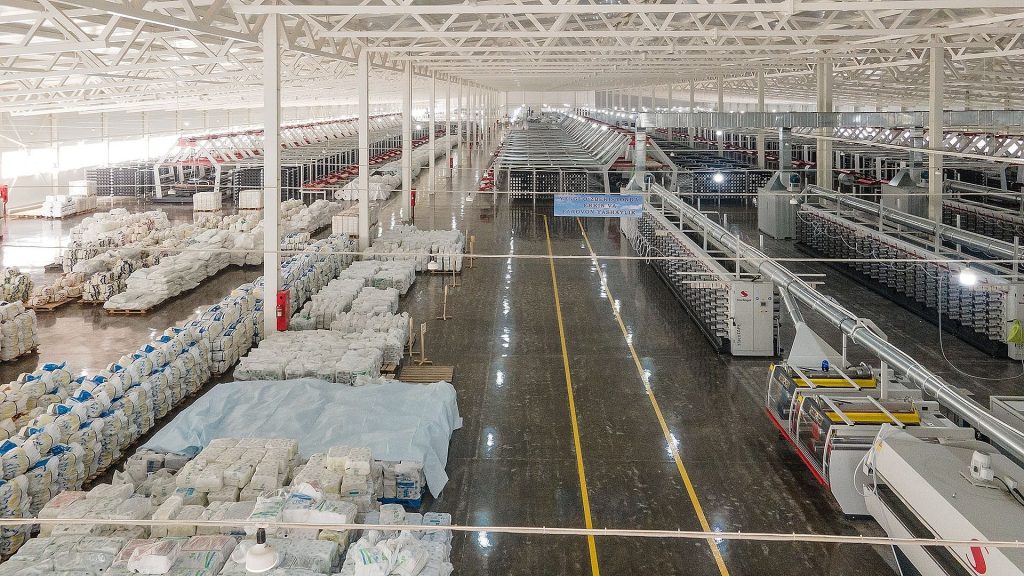
The production of jumbo bags has shifted from manual stitching to high-speed automated systems. VidePak’s adoption of Austrian Starlinger circular looms and extrusion lines enables the production of 15–20 tons of polypropylene (PP) fabric daily, with tensile strengths exceeding 2,500 N/5 cm—critical for safely transporting heavy construction materials like gravel (up to 2,000 kg SWL).
Key advancements include:
- Multi-layer lamination: Combining PP with PE coatings or kraft paper for moisture resistance, ideal for cement storage in humid climates.
- Automated cutting and sewing: Reducing human error and increasing output to 5,000 bags/day across VidePak’s 30 lamination machines.
- Digital printing: Supporting 8-color CMYK designs for branding and safety labels, with a resolution of 1440 dpi.
1.2 Automation: The Future of FIBC Production
VidePak’s recent integration of form-fill-seal (FFS) systems allows seamless packaging of powdered materials like gypsum, reducing labor costs by 40%. For instance, their FFS roll woven bags automate the filling process at 20 bags/minute, minimizing spillage and contamination—a breakthrough highlighted in industry case studies like Form-Fill-Seal Woven Bags: The Future of Automated Packaging.
2. Material Innovations and Sustainability
2.1 PP vs. Composite Materials
While virgin PP remains dominant (85% of VidePak’s production), recycled PP (rPP) and biodegradable additives are gaining traction. For example, VidePak’s EcoShield line uses 30% post-consumer recycled content without compromising tensile strength, aligning with EU Directive 94/62/EC on packaging waste.
| Material | Strength (N/5 cm) | Moisture Resistance | Cost ($/ton) |
|---|---|---|---|
| Virgin PP | 2,500–3,000 | Moderate | 1,200 |
| rPP Blend | 2,200–2,600 | Moderate | 950 |
| PP + PE Laminate | 2,800–3,200 | High | 1,450 |
2.2 Case Study: Laminated Bags for Cement Transport
In 2024, VidePak partnered with a Brazilian cement producer to develop PE-coated valve bags with UV stabilizers. These bags reduced moisture absorption by 70% during maritime shipping, cutting material waste by $1.2 million annually. Such innovations mirror trends in PE-Coated Valve Woven Bags: A Robust Solution for Construction Waste.
3. Cost Control Strategies in FIBC Manufacturing
3.1 Economies of Scale
With 100+ circular looms and 16 extrusion lines, VidePak achieves a production cost of $2.10 per 1-ton bag—30% lower than smaller competitors. Bulk PP resin procurement (50,000 tons/year) further reduces material costs by 18%.
3.2 Lean Manufacturing and Waste Reduction
Starlinger’s iQ³ technology optimizes fabric weaving, minimizing PP waste to 2.5% (industry average: 8%). VidePak’s real-time IoT sensors monitor machine efficiency, boosting output by 22% as detailed in BOPP Woven Bags Supplier: Revolutionizing Efficiency with Starlinger Equipment.
4. Future Trends and VidePak’s Roadmap
4.1 Smart FIBCs with IoT Integration
VidePak is piloting RFID-tagged jumbo bags to track cement batches in real time. This system, paired with blockchain logistics platforms, ensures compliance with ASTM D7386-16 standards for construction materials.
4.2 Biodegradable Solutions
Trials are underway for PLA-PP hybrid bags, aiming for 60% biodegradability within 2 years without sacrificing load capacity—a project aligned with goals in Recyclable Woven Bags: A Sustainable Solution for Transport and Logistics.
FAQs: Jumbo Bags for Building Materials
Q1: How do jumbo bags prevent contamination during cement transport?
A: Anti-static coatings and hermetic seals in VidePak’s UN-certified FIBCs block moisture and particulate ingress, complying with ISO 21898:2020.
Q2: What customization options are available?
A: VidePak offers UV printing, size adjustments (500–2,000 kg SWL), and custom venting designs for materials like silica sand.
Q3: How does automation reduce lead times?
A: Their FFS systems cut order fulfillment from 14 days to 5 days, critical for just-in-time construction projects.
Conclusion
The jumbo bag industry is evolving rapidly, driven by automation, sustainability, and smart technologies. VidePak’s commitment to R&D—evidenced by its 526-strong team and $8 million annual investment—positions it to lead this transformation. As Ray summarizes: “In construction, every gram and minute counts. Our bags ensure neither is wasted.”
External Links:
- Learn how FFS systems are transforming construction logistics: Form-Fill-Seal Woven Bags: The Future of Automated Packaging.
- Explore innovations in UV-resistant FIBCs: PE-Coated Valve Woven Bags: A Robust Solution for Construction Waste.