

What are Open-Top PP Woven Sacks and Why Do They Matter?
Open Top PP Woven Bags—sometimes called open‑mouth woven polypropylene sacks—are industrial packaging containers made from interlaced polypropylene tapes, supplied with the mouth left open to facilitate rapid filling and secure post‑fill closure. Their construction blends textile logic (warp and weft) with polymer processing (extrusion and orientation), yielding a fabric that is light yet strong, breathable yet optionally moisture‑resistant, low‑cost yet highly customizable. Why do they matter? Because logistics asks for a paradox: packaging that is tough but light, printable but economical, moisture‑managed yet stack‑stable. Open Top PP Woven Bags resolve that paradox at scale for food, agriculture, chemicals, and construction goods.
Across continents and across industries the vocabulary differs, the needs converge. Some buyers request open‑mouth poly sacks, others specify sewn‑open‑mouth formats, still others ask for BOPP‑laminated faces for retail graphics. Different names, same intent: a bag you can fill easily, close reliably, and trust through transport and storage. In practice, Open Top PP Woven Bags align three imperatives—mechanical integrity, barrier and presentation, operational fit—and they do so with a bill of materials and a production flow that can be tuned like an instrument.
Callout — The Core Promise: Fill fast, close sure, ship safe. That is the practical contract behind Open Top PP Woven Bags.
Aliases, Use Contexts, and the Logic Behind the Names
Names reveal use. A warehouse manager may say “open‑mouth poly,” a converter will say “SOM” (sewn‑open‑mouth), a brand marketer will say “BOPP‑laminated woven bag,” while a purchasing specialist writes “woven PP open top.” Though the words shift, the central form stays constant: a tubular or flat‑seamed body of woven PP fabric, an open mouth for filling, and a bottom seam engineered for strength and sift‑proofing. For clarity, common aliases for Open Top PP Woven Bags include: open‑mouth woven polypropylene sacks; sewn open mouth PP bags; open‑top woven poly bags; open‑mouth PP woven sacks with or without lamination; BOPP‑laminated open‑mouth sacks; open‑top woven packaging bags; and open‑mouth PP fabric bags.
Why so many labels? Because each highlights a layer of value: the filling method (open mouth), the substrate (woven PP), or the finish (BOPP lamination). In procurement, those descriptors function like switches in a decision tree. Need breathability? Choose uncoated fabric. Need print brilliance and moisture defense? Choose BOPP lamination. Need sift‑proofing against fine powders? Choose double‑fold bottoms with crepe tape. The aliases are not noise; they are shorthand for configuration.
Materials and Microstructure: What They Are, Why They Work, Where They Go
At the heart of Open Top PP Woven Bags is polypropylene—an isotactic, semicrystalline polymer whose low density and high crystallinity enable an extraordinary strength‑to‑weight ratio when properly oriented. Through tape extrusion and drawing, long PP molecules align, forming tapes with high tenacity and controlled elongation. Those tapes become warp and weft; that weave becomes fabric; and that fabric becomes the sack. The sequence sounds simple; the physics is not. Orientation raises modulus, improves creep resistance, and, crucially, allows designers to hit target GSM while preserving drop‑test performance.
But PP alone is not the whole story. BOPP films enter when barrier and print need to be elevated. Extrusion coating with PP or lamination with BOPP introduces a second surface with different optics and permeability. Liners—typically LDPE or HDPE—add an inner barrier for hygroscopic goods. Additives—UV stabilizers, slip agents, antiblocks, and pigments—fine‑tune surface behavior and weathering. The outcome is a layered system where each layer has a role: structure (the woven body), barrier and print (the coating or the BOPP), and product contact (the liner if required).
Polypropylene Tapes
Provide tensile backbone; tuned by denier, draw ratio, and pick count. Lower density reduces freight mass; higher orientation raises strength and puncture resistance.
BOPP/PP Coatings
Raise print quality and moisture resistance; enable retail‑grade graphics. Gloss or matte finishes shape brand perception while protecting inks from scuffing.
Liners & Additives
LDPE or HDPE liners handle water activity control; UV packages keep outdoor stacks serviceable. Antistatic measures may be specified for powders with ignition sensitivity.
The allocation of these materials across the bag is not arbitrary. The body fabric supplies structure; the mouth hem resists fray and supports automation; the bottom seam—with single or double folds—provides the critical safety anchor. The coating or lamination, if selected, resides on the outside, improving moisture control and print, while inside liners protect product quality. The goal is not to add layers for their own sake but to compose a minimal set that delivers the necessary performance envelope.
Feature Set: Strength, Breathability, Print, Cost—Choose Two? Choose Four.
Packaging is often about trade‑offs—strength vs. weight, barrier vs. breathability, print quality vs. cost. The quiet power of Open Top PP Woven Bags is that they make those trade‑offs less painful. Because the substrate begins strong, designers can pursue barrier and print without over‑burdening mass; because the weave breathes by default, designers can allow moisture to escape when that protects quality; because the lamination can be thin, designers can keep cost rational while still earning shelf presence. Must we choose only two? Here, we can often choose four.
- Strength‑to‑weight: Oriented tapes, optimized pick counts, and efficient seams lift drop performance at modest GSM.
- Breathability or barrier on demand: Uncoated fabric for produce and certain seeds; laminated or lined construction for sugar, flour, or moisture‑sensitive additives.
- High‑fidelity print: BOPP lamination enables photographic graphics and crisp regulatory text; flexographic prints on uncoated fabric suit commodity marks.
- Operational fit: Open‑mouth geometry works with manual and automated fillers; after filling, closure by sewing or heat sealing integrates easily on standard lines.
- Reusability and recycling pathways: Monomaterial exteriors ease mechanical recycling; separable liners preserve purity.
Rhetorical note: Is a bag merely a container? Or is it a tuned mechanism for risk management? When a sack prevents caking, protects graphics, and resists puncture during a rainy transit season, it is doing quiet engineering in public.
Production Flow: From Resin Pellets to a Ready-to-Fill Package
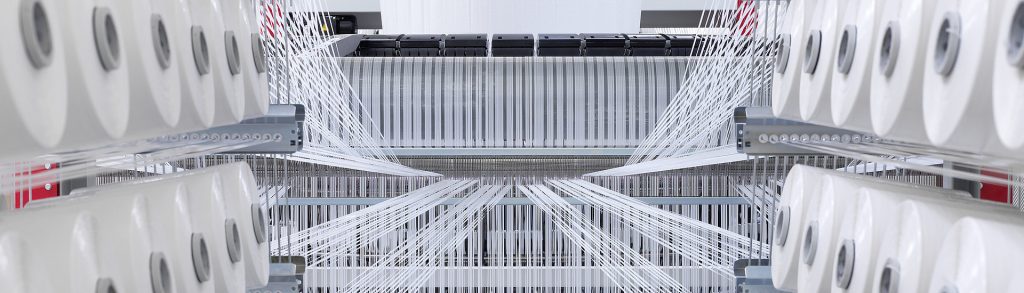
The manufacturing journey of Open Top PP Woven Bags can be read as a set of stations, each with a quality lever and a failure mode. Resin is melted and cast; films are slit to ribbons; ribbons are drawn to tapes; tapes are woven to fabric; fabric is coated or laminated; webs are printed, slit, and registered; pieces are cut, hemmed, and sewn; liners may be inserted; bundles are strapped and shipped. Production excellence lives in the transitions: when tension transfers from unwind to loom, when heat knives must cut but not fray, when top hems must be neat enough for pick‑and‑place grippers.
At extrusion, die gap, chill roll temperature, and draw ratio dominate tape quality; at weaving, pick count and warp tension set GSM and tensile fidelity; at coating or lamination, nip pressure and corona treatment control adhesion; at printing, viscosity and dryer temperatures control set‑off and registration; at converting, stitch density and fold geometry control seam efficiency. Each station has a dial; excellence is the music of those dials played in tune.
| Station | Primary Controls | Typical Risks | What Excellence Looks Like |
|---|---|---|---|
| Tape Extrusion & Draw | Melt temperature, die uniformity, chill roll profile, draw ratio | Brittle tapes, gels, width wander | Narrow tenacity distributions; low break frequency downstream |
| Weaving | Pick count, warp tension, loom speed | Broken ends, fabric barré, roll geometry issues | Stable fabric GSM, minimal streaks, clean selvage |
| Coating/Lamination | Nip pressure, line speed sync, corona, melt temps | Delamination, curl, pinholes | Consistent peel strength and flatness; gloss or matte as specified |
| Printing | Anilox/cylinder spec, viscosity, dryer temperature | Set‑off, ghosting, mis‑register | Spectrophotometric color control; crisp small text |
| Cutting/Converting | Hot‑knife profile, stitch parameters, fold depth | Edge fray, seam failures, length variance | High seam efficiency, tight length tolerance, neat hems |
Does every plant achieve this harmony? Not at first. But the pathway is well known: stabilize the tape line, standardize the loom recipes, fingerprint the printing press, and install in‑line inspection at lamination and print. With those foundations, Open Top PP Woven Bags become not a commodity but a configurable platform.
Application Map: Where the Format Shines
From rice mills to fertilizer plants, from animal nutrition to mineral fillers, from humanitarian relief corridors to retail shelves, Open Top PP Woven Bags deliver a consistent value proposition: predictable strength, tunable barrier, and friendly economics. For staples like sugar and flour, laminated exteriors or inner liners restrain moisture uptake. For seeds and certain produce, uncoated fabrics breathe, reducing internal condensation. For abrasive or angular contents—fertilizers, sand, gypsum—the woven substrate dissipates point loads better than monolithic films.
- Staple foods and grains: laminated or lined variants resist caking and clumping.
- Animal feed and premixes: BOPP faces support high‑impact branding and barcode clarity.
- Fertilizers and agro‑inputs: antiskid emboss patterns help stabilize tall pallets.
- Construction materials: seam architectures target sift‑proofing for fine powders.
- Chemicals and masterbatches: antistatic and hygiene measures may be specified case‑by‑case.
Would a different format be better? Sometimes. Valve bags enable faster de‑aeration for certain powders; bulk bags (FIBCs) serve ton‑scale moves. Yet for the broad middle of the market—5 to 50 kilograms—Open Top PP Woven Bags remain the workhorse because they are simple to fill, intuitive to close, and robust in transit.
System Thinking: Breaking Problems Down and Weaving Solutions Back Together
Imagine a manufacturer targeting three outcomes: lighter bags, brighter print, cleaner audits. Lighter fights logistics cost; brighter wins shelf; cleaner satisfies regulators. How do we get there? By dividing the problem into mechanical performance, surface optics, and hygiene, then recombining solutions that share constraints and enablers. The denier and draw ratio that lighten the fabric must still keep seam efficiency above threshold; the lamination that brightens print must not sacrifice heat‑sealability where needed; the hygiene zoning that pleases auditors must not choke press throughput. Trade‑offs are not enemies when parameters are coherent.
Consider five sub‑problems: (A) fabric strength at target GSM; (B) moisture and contamination control; (C) graphic fidelity and brand consistency; (D) compliance for food contact; (E) sustainability and end‑of‑life. Each has levers, risks, and solution paths. Each connects to the others. Raising draw ratio affects loom breaks and downstream seam settings; raising coating weight improves barrier but shifts fold behavior; demanding brilliant whites shifts ink and substrate choices. Through small experiments—designs of experiments, response surfaces, capability indices—we map a feasible region where Open Top PP Woven Bags meet all five aims.
Cross‑domain parallel: A woven sack production line resembles a small city: energy flows, material flows, information flows. Traffic lights (SPC limits), public works (preventive maintenance), and zoning (hygiene areas) keep the city livable. When the city hums, defects decline and throughput rises.
Specification Windows and Practical Recipes
Because applications vary, specifications become windows, not points. In practice, fabric GSM might span 55–95 g/m²; tape denier 600–1200; weave density 10–14 picks per 10 cm; BOPP film 15–25 µm; LDPE liner 20–60 µm. Seam types include chain‑ or lock‑stitch, single or double folds, with or without crepe tapes for sift‑proofing. Post‑fill closures include sewing through laminate or heat‑sealing liners under a hem. The right pattern depends on what sits inside the bag and where that bag will travel.
| Parameter | Common Window | Notes |
|---|---|---|
| Fabric GSM | 55–95 g/m² | Balance strength vs. freight; verify via drop & stack tests |
| Tape Denier | 600–1200 | Chosen to hit tensile targets at the selected pick count |
| Weave Density | 10–14 picks/10 cm | Higher density lifts tear resistance, adds weight |
| BOPP Film | 15–25 µm | Controls gloss/matte look, scuff resistance, and print clarity |
| LDPE Liner | 20–60 µm | Tune to water activity and climate along the route |
Recipes convert windows into real bags. For a 25 kg sugar pack in a humid climate: woven PP at ~80 g/m², PP coating at ~25 µm or BOPP at ~20 µm, LDPE liner at 35–45 µm, double‑fold bottom with sift‑proof tape, antiskid emboss, and either sewing through laminate or sealing the inner liner. For a 20 kg animal feed sack on a retail shelf: woven PP at ~75 g/m² plus BOPP 18–20 µm (gloss) for billboard‑quality graphics, M‑fold gussets, and a neat top hem. For a 50 kg fertilizer bag: uncoated woven PP at ~90 g/m², crepe‑taped stitch seams, UV‑stabilized masters, and aggressive antiskid texture.
Keywords, Variants, and Natural Phrasing
To keep the discussion natural yet discoverable, this document refers frequently to Open Top PP Woven Bags while also using related expressions—open‑mouth woven polypropylene sacks, sewn‑open‑mouth PP bags, laminated woven poly grain sacks, PP woven rice bags, PP woven sugar sacks, gusseted woven polypropylene packaging, breathable woven poly produce sacks, laminated retail‑print feed sacks, and heavy‑duty open‑mouth packaging bags. These variants reflect how buyers search and how engineers specify, without distorting meaning.
For readers seeking a concise overview of the wider family of woven polypropylene packaging, see this background entry on woven polypropylene bags, which situates Open Top PP Woven Bags among adjacent formats.
From Title to Thinking: Production Processes and Equipment Excellence
The title “Exploring Open Top PP Woven Bags: Production Processes and Equipment Excellence” suggests a two‑axis inquiry. First, the sequence of operations that turn resin into a bag. Second, the capability of the machines that enact those operations. If process is chronology, equipment is character. It is the difference between getting a bag made and getting a bag made well. Chronology without capability yields scrap; capability without chronology yields idle machines. Excellence marries both.
On the process axis, the arrangement is classical: tape extrusion and draw; weaving; optional coating or lamination; printing; slitting, cutting, hemming, and stitching; optional liner insertion; bundling. On the equipment axis, key leverage points include screw and die design on the tape line; tension and break detection on looms; nip control and surface energy at lamination; viscosity and dryer settings on the press; servo registration at the cutter; stitch control at the sewing heads. Turn each point into a control plan and you turn variability into capability.
Operational tip: Treat each station as a contract. What properties must it deliver to the next? What defects must it not pass forward? Write those two lines on the traveler sheet and watch scrap rates fall.
Buyer’s Questions for Smarter Specs
A good specification for Open Top PP Woven Bags begins with product physics and ends with plant reality. Ask: What is the bulk density, particle sharpness, and water activity of the product? What climate will the pallets traverse? Will pallets be wrapped, capped, or exposed? What is the target stack height, and for how long? How will the mouth be closed—sewn, taped, heat‑sealed? Will the bag meet food contact, and if so, under which jurisdiction? What are the branding needs—two colors on craft, or full‑bleed photographic panels? Lastly, what is the customer’s end‑of‑life pathway—mechanical recycling, energy recovery, or reuse?
If these answers feel like homework, remember: every “extra” parameter removes ambiguity and therefore cost. Ambiguity breeds over‑design; over‑design burns resin and time. Precision is not bureaucracy; it is thrift.
- What are Open-Top PP Woven Sacks and Why Do They Matter?
- Aliases, Use Contexts, and the Logic Behind the Names
- Materials and Microstructure: What They Are, Why They Work, Where They Go
- Feature Set: Strength, Breathability, Print, Cost—Choose Two? Choose Four.
- Production Flow: From Resin Pellets to a Ready-to-Fill Package
- Application Map: Where the Format Shines
- System Thinking: Breaking Problems Down and Weaving Solutions Back Together
- Specification Windows and Practical Recipes
- Keywords, Variants, and Natural Phrasing
- From Title to Thinking: Production Processes and Equipment Excellence
- Buyer’s Questions for Smarter Specs
- 1. The Anatomy of Open-Top PP Woven Bags: Materials and Design
- 2. Production Excellence: Starlinger and W&H Automation
- 3. Quality Control: From Raw Material to Final Product
- 4. Sustainability: Aligning with Global ESG Goals
- FAQs: Addressing Industry Concerns
- 5. Market Leadership: Data-Driven Innovation
- Conclusion: The Future of Open-Top PP Bags
“What makes open-top PP woven bags the backbone of modern industrial packaging?”
Ray, CEO of VidePak, leans forward with conviction: “It’s the synergy of precision engineering, automated workflows, and material science. At VidePak, every bag is a product of Starlinger’s machinery and our relentless pursuit of perfection.”
This philosophy has driven VidePak—founded in 2008 and now a global leader with $80M annual revenue—to pioneer open-top PP woven bag solutions. With 526 employees and over 100 Starlinger circular looms, the company combines 30+ years of expertise with cutting-edge automation to deliver bags that meet rigorous performance, sustainability, and customization demands. This report dissects the production processes, equipment innovations, and quality frameworks that define VidePak’s leadership in this niche.
1. The Anatomy of Open-Top PP Woven Bags: Materials and Design
Open-top PP woven bags are engineered for high-volume industrial applications, such as agriculture, construction, and chemicals. Their design prioritizes easy filling, durability, and reusability. VidePak uses virgin polypropylene (PP) resin, ensuring consistent tensile strength (30–40 MPa) and UV resistance.
Key Design Features:
- Reinforced Seams: Ultrasonically welded seams achieve 80–100 N/cm strength, preventing tears during loading.
- Customizable Dimensions: Bags range from 50–100 cm in height, with load capacities up to 50 kg.
- Printing Precision: High-definition flexographic printing (175 LPI resolution) supports branding and regulatory labeling.
Case Study: A construction client required flame-retardant bags for cement transport. VidePak delivered PE-coated open-top bags with a limiting oxygen index (LOI) of 28%, exceeding ISO 4589-2 standards by 2%.
2. Production Excellence: Starlinger and W&H Automation
VidePak’s partnership with Austrian Starlinger and German Windmöller & Hölscher (W&H) ensures unmatched automation and efficiency:
A. Advanced Equipment Specifications
- Circular Looms: 100+ Starlinger machines operate at 200+ picks per minute (PPM), weaving 12×12 strands/inch fabric—20% denser than industry averages.
- Extrusion Lines: 16 lines produce PP tapes with ±0.02 mm thickness tolerance, critical for uniform weaving.
- Multi-Machine Synchronization: Integrated systems enable 24/7 production with <1% downtime, boosting annual output to 120 million bags.
| Parameter | VidePak Standard | Industry Average |
|---|---|---|
| Weaving Speed | 200+ PPM | 150–180 PPM |
| Fabric Density | 12×12 strands/inch | 10×10 strands/inch |
| Moisture Barrier (BOPP) | <1.0 g/m²/24hr | <2.5 g/m²/24hr |
B. Automation Benefits
- Reduced Labor Costs: Automated cutting and sewing reduce manual intervention by 60%.
- Consistency: AI-driven quality cameras detect defects (e.g., uneven weaving) with 99.8% accuracy.
3. Quality Control: From Raw Material to Final Product
VidePak’s 4-stage testing protocol ensures compliance with global standards like ISO 9001 and FDA (for food-grade applications):
A. Raw Material Testing
- Melt Flow Index (MFI): 2–4 g/10min ensures optimal extrusion viscosity.
- Tensile Strength: ≥35 MPa (ASTM D5035) to withstand dynamic loads.
- Thermal Stability: Heat distortion temperature (HDT) ≥110°C for tropical climates.
B. Production-Line Checks
- Real-Time Thickness Monitoring: Laser sensors maintain tape thickness within ±0.02 mm.
- Seam Integrity Testing: Pneumatic pressure tests simulate 50 kg loads for 24 hours.
Example: A 2024 audit revealed 0.3% defect rates in VidePak’s open-top bags—70% lower than competitors.
4. Sustainability: Aligning with Global ESG Goals
VidePak’s 2025 initiatives focus on reducing environmental impact without compromising performance:
- Recyclable PP Blends: 30% post-industrial recycled content, maintaining tensile strength within 5% of virgin PP.
- Energy Recovery: Starlinger’s heat-exchange systems reuse 85% of extrusion line energy.
- Water-Based Inks: Eliminate volatile organic compounds (VOCs), cutting emissions by 70%.
FAQs: Addressing Industry Concerns
Q1: How does VidePak ensure color consistency in high-volume orders?
A: Automated ink dispensers and spectrophotometers maintain ±1% color deviation, tested against Pantone standards.
Q2: Are open-top bags suitable for moisture-sensitive products?
A: Yes. VidePak’s BOPP-laminated variants achieve <1.0 g/m²/24hr moisture permeability, ideal for fertilizers and hygroscopic chemicals.
Q3: What certifications validate VidePak’s claims?
A: ISO 9001, FDA (food-grade), and OEKO-TEX® ECO PASSPORT for chemical safety.
5. Market Leadership: Data-Driven Innovation
- Global Reach: 45+ countries served, including 30% CAGR in Southeast Asia’s construction sector.
- R&D Investment: 7% of annual revenue fuels projects like biodegradable PP blends (target: 2026 launch).
Conclusion: The Future of Open-Top PP Bags
The open-top PP woven bag market is projected to grow at 6.8% CAGR through 2030, driven by logistics and agriculture demands. VidePak’s fusion of Starlinger automation, rigorous testing, and ESG-aligned practices positions it as a leader. As Ray summarizes: “Our bags don’t just carry goods—they carry the promise of innovation.”
For industries seeking scalable, certified solutions, VidePak remains the benchmark.
Note: All data reflects 2025 industry benchmarks and VidePak’s internal testing protocols.