
What are valve bags and why do they matter now?
Powders and tiny granules behave like liquids when they flow and like solids when they settle, which is why packaging them has always been a paradox: you need speed without spillage, strength without bulk, breathability without product loss. Valve bags—engineered sacks with a one-way filling sleeve—solve this paradox by coupling rapid, dust-minimized charging with a closure that is either self-actuated by product pressure or sealed by heat, ultrasonic energy, or hot-melt. The result is cleaner filling halls, tighter pallets, and safer logistics. Compared with open-mouth alternatives, a valve bag accelerates throughput while controlling fugitive dust, making it a default choice for cement, mortar, gypsum, fertilizers, animal feed, food ingredients, pigments, minerals, and specialty chemicals. The “secret” is the hidden throat— the valve sleeve—calibrated to match the filler nozzle and the product’s aeration behavior.
Aliases and near-synonyms used by buyers and engineers: Valve PP Bags; Valve Woven Bags; Valve sacks; BOPP laminated valve bags; PP woven valve bags; block bottom valve bags; square bottom PP valve bags; polyethylene (PE) valve bags; Kraft paper composite valve bags. Each phrase highlights a material (PP, PE, BOPP, Kraft) or a structure (block/square bottom, pasted), yet the functional core is identical: a one-way sleeve that fills fast and closes reliably.
Guiding question: If powders behave like sand in motion but like stone at rest, what kind of bag must be both a funnel and a fortress? The valve bag, of course—built to receive fluidized product, then lock down as a compact, stack-stable brick.
From polymer tapes to laminates: the material science behind valve bags
At first glance, a valve bag seems simple: a woven shell, a square base, a short sleeve. In practice, it is a tuned composite whose behavior emerges from the interaction of substrates, adhesives, coatings, inks, and liners. The bill of materials is customized to performance goals—moisture barrier, drop energy tolerance, antistatic decay, regulatory compliance, print fidelity—and to the realities of the filling hall.
Woven polypropylene (PP) fabric
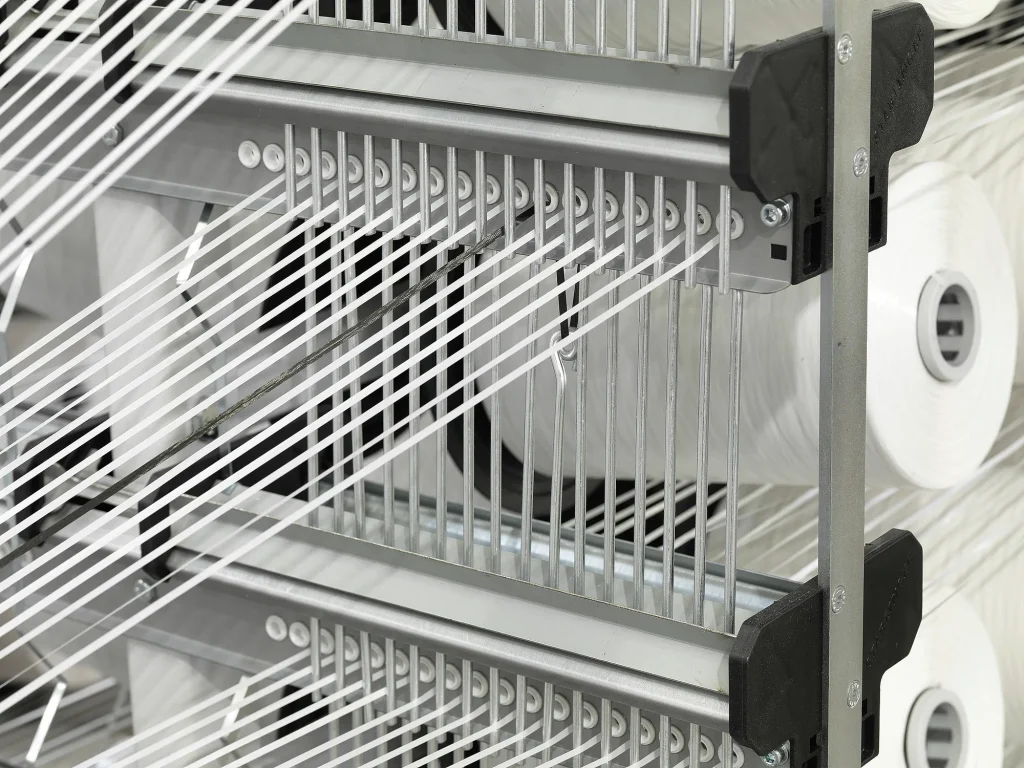
Drawn PP tapes (raffia) are woven into tubular or flat cloth. The substrate delivers high tensile strength-to-weight, excellent tear resistance, and tunable breathability via weave density and micro-perforation. With UV stabilizers, the fabric resists sunlight-induced embrittlement in outdoor supply chains.
BOPP printed laminate
Biaxially oriented polypropylene film provides a slick, printable face with gloss or matte finishes. Reverse printing protects ink behind the film; lamination improves scuff resistance and moisture barrier while unlocking photo-quality graphics for retail-adjacent categories like pet food and premium feed.
PE liners and coatings
LDPE/LLDPE or metallocene-PE liners give heat-sealability and moisture/grease resistance. Antistatic grades dissipate charge, improving operator comfort and reducing nuisance dust adhesion around fine powders.
Kraft paper and hybrids
High-strength Kraft, laminated to woven PP or used in multiwall composites, contributes stiffness for pallet stability and a premium, print-friendly surface when the market expects paper aesthetics.
The selection is not aesthetic alone; it is functional. Choose unlaminated fabric when breathability is king; choose laminated with a liner when moisture is the enemy. This is why the market splinters into named variants such as PP woven valve bags, BOPP laminated valve bags, polyethylene valve bags, and Kraft paper composite valve bags.
Functional signatures: what sets valve bags apart
Why do operators and EHS managers keep choosing valve bags? Because a short list of engineering signatures translates into daily, measurable advantages.
- High-speed, low-dust filling: a snug sleeve/nozzle interface plus engineered de-aeration pathways keep airborne particulates down while maintaining cycle rates.
- Closure options without cumbersome tying: self-collapse under product head, thermal bar sealing on PE-rich sleeves, ultrasonic sealing on laminates, or hot-melt patches on paper composites.
- Stack-stable geometry: especially with block bottom valve bags, which create brick-like units that interlock on pallets and reduce toppling incidents.
- Calibrated breathability and barrier: open weave and micro-perforations for cement and mortar; laminated skins plus PE liner for starch, flour, or salt.
- Strength with low mass: woven PP achieves drop resistance at weights that undercut traditional multiwall papers.
- Print surfaces that sell: the BOPP laminated valve bag turns an industrial sack into a marketing canvas without sacrificing durability.
- Regulatory adaptability: food-contact liners, migration-safe inks, and traceable coding schemes help meet stringent market rules.
- Sustainability levers: mono-PP paths for easier recovery, lightweighting, and, where regulations allow, controlled use of recycled content.
Rhetorical pause: Faster yet cleaner, lighter yet tougher, breathable yet sealed—contradictions on paper, reconciled in practice. Is that not the hallmark of good engineering?
How a valve bag is built: equipment, operations, and controls
A reliable valve bag is the sum of tightly controlled unit operations. VidePak deploys Austrian Starlinger and German W&H (Windmöller & Hölscher) platforms across extrusion, weaving, lamination, printing, converting, and bottoming. Uniformity at tape stretching and weaving cascades into fewer weak points; precise lamination and printing minimize delamination risk and registration drift. What follows is the canonical flow, adapted per specification.
- Pre-material qualification: Virgin PP resin (MFI, ash, moisture), BOPP film (thickness, haze, COF), Kraft paper (burst, tensile, Cobb), PE liners (WVTR and SIT), additives and masterbatches (UV stability, antistatic decay), and valve sleeve inputs (peel strength, stiffness) are verified lot-by-lot with traceability.
- Extrusion and tape orientation: PP pellets become a cast sheet, slit into tapes, then drawn and annealed to achieve target denier, crystallinity, and tensile.
- Weaving: Circular or flat looms convert tapes into fabric, with pick rate, GSM, and broken-end metrics watched continuously.
- Coating or lamination: PP/PE coating or reverse-printed BOPP is bonded to the weave, with bond strength, COF, and pinhole counts under control.
- Printing: Flexo or gravure delivers 6–8 colors, protecting color density, register, ink adhesion, and migration compliance.
- Cutter–creaser: Sheets or tubes are cut; square/rectangular bases are creased for square bottom PP valve bags.
- Valve sleeve fabrication and insertion: PE film, PP fabric, or paper sleeves with optional elastic cuffs are inserted with precise overlaps to match nozzle engagement.
- Pasting and seaming: Heat or hot-melt consolidates side seams and the block bottom; bond strength and flatness are validated so leak paths don’t arise.
- Perforation engineering: Micro-perf arrays or breathable windows are tuned to the powder’s aeration curve to protect filling speed without excessive dust.
- In-line inspection: Vision systems validate register, barcodes/QR, seam integrity, and dimensional conformity.
- Counting and baling: Finished bags are stacked, compressed, wrapped, and labeled for traceability.
Quality checkpoints close the loop: burst and drop testing across orientations; leak/tightness trials with overpressure; COF for machinability versus pallet stability; barrier verification (WVTR) when liners or laminates are specified; dimensional and weight audits; and, for food-contact SKUs, migration tests under applicable regulations. The intention is simple: give the filler a bag that behaves predictably—shift after shift, batch after batch.
Where valve bags excel: mapping use cases to constructions
Use cases are not monolithic. A formulation intended for coastal humidity, a pet-food blend that exudes oils, a cement grade that must de-aerate in seconds—each demands a different stack-up. Below, scenarios are paired with likely constructions, illustrating why Valve PP Bags and their siblings proliferate across industries.
| Valve bag type | Typical build | Strength & barrier | Breathability | Branding | Best-fit use cases |
|---|---|---|---|---|---|
| PP woven valve bag | Woven PP shell + valve sleeve | High strength; basic barrier | High, tunable | Good with coated prints | Cement, mortar, gypsum |
| BOPP laminated valve bag | Woven PP + BOPP + optional PE liner | Strong with better moisture barrier | Moderate (ventable) | Photo-quality panels | Feed, fertilizer, pet food |
| Block bottom valve bag | Woven PP + coating/lamination + pasted square base | Geometry boosts stack stability | Moderate to low | Excellent billboard faces | High pallet-density warehouses |
| Polyethylene valve bag | LD/LLDPE mono- or co-ex film + valve | Hygienic, heat-sealable | Low | Moderate (flexo) | Food ingredients, high hygiene |
| Kraft paper composite valve bag | Kraft laminate on woven PP | Stiff; premium shelf feel | Low (needs vents) | Excellent printability | Pigments, dry mixes demanding rigidity |
Practical note: When warehouse managers ask for fewer toppled pallets, engineers usually answer with block bottom valve bags. When marketing asks for glossy photography and stable colors, conversion teams answer with BOPP laminated valve bags. When hygiene dominates, procurement asks for polyethylene valve bags.
Standards, metrics, and the meaning of quality
Quality is not a slogan but a set of measurable behaviors. In flexible packaging, barrier values, coefficients of friction, drop matrices, and migration limits tell the story. Production built around documented methods—ISO, EN, ASTM, JIS—tends to replicate success. The following matrix captures typical methods invoked for valve bags and allied materials.
| Attribute | Typical method | Why it matters |
|---|---|---|
| Water vapor transmission (WVTR) | ASTM F1249 / ISO 15106 series | Predicts moisture pickup for hygroscopic powders; sets liner/laminate needs. |
| Friction (COF) | ASTM D1894 or local equivalents | Balances machinability on conveyors against pallet stability. |
| Drop performance | Multi-orientation, multi-cycle drop matrices | Assures integrity after transport shocks; validates corner/edge robustness. |
| Tightness/leak down | Leak mass-loss at overpressure | Confirms sleeve/nozzle fit and closure design for fine powders. |
| Migration (food-contact) | EU/FDA frameworks with GMP logs | Protects consumers and brand while enabling audits. |
Behind the acronyms, the message is straightforward: measure what matters and do it the same way every time. That is how the ordinary becomes exceptional.
Customization as engineering: matching powder, line, and market
Customization is often dismissed as cosmetics. In packaging powders, it is the opposite: a body of evidence-based choices. Valve geometry, sleeve material, closure method, bottom style, de-aeration design, print finish, and liner stack all correlate with measurable outcomes on the filling hall and in the field. Below is a compact framework for decision-making.
Valve geometry and closure
Pasted versus sewn; internal versus external; closure by self-collapse, thermal bar, ultrasonic, or hot-melt. Elastic cuffs and check flaps bolster tightness with fine powders.
Bottom architectures
Pillow bags favor simplicity and breathability; square bottom PP valve bags and other block-bottom designs maximize pallet density and retail-facing stability.
Breathability versus barrier
Open weave and micro-perfs for cement; laminated faces plus PE liner for hygroscopic or odor-bearing goods. Balanced de-aeration prevents both dust and pillow-effect.
Print and surface aesthetics
Reverse-printed BOPP in matte or gloss for photo-grade branding, with color management (Pantone, ΔE targets) across reorders.
Ergonomics and handling
Anti-slip textures for pallet stability without choking conveyors; corner reinforcements for rugged drops; tear-assist paths where appropriate.
Sustainability levers
Mono-PP pathways for recovery, down-gauging to reduce resin, and, where permitted, controlled recycled content in non-food SKUs.
Key long-tail phrases for readers and buyers: Valve PP Bags, PP woven valve bags, Valve Woven Bags, BOPP laminated valve bags, block bottom valve bags, square bottom PP valve bags, polyethylene valve bags, Kraft paper composite valve bags, valve sacks for cement, pet food valve bags, fertilizer valve bags, dust-free valve bags, leak-proof valve bags.
System thinking: decomposing the decision, recomposing the solution
Effective specification is more than a checklist; it is a process. Start by understanding the powder and the process. Layer on brand and regulatory demands. Consider sustainability claims. Then iterate with small pilots before locking the specification. The following staged pathway balances speed with rigor.
- Characterize the product: flowability, loose and tapped density, particle size distribution, hygroscopicity, sensitivity to oxygen and light.
- Map the filling line: nozzle outer diameter, de-aeration route, target bags per minute, acceptable dust at the operator zone.
- Understand the environment: humidity/temperature extremes, exposure to sunlight, road conditions, and pallet stack heights.
- Clarify the brand role: matte or gloss, photography or vector, tactile varnish or not, color tolerances across repeats.
- Frame regulatory boundaries: food-contact status, migration limits, documentation requirements, traceability conventions.
- Run a fast DFMEA: list potential failure modes—leak paths, delamination, corner splits, pallet slippage—and preempt them in the design.
- Pilot and measure: 500–2,000 bag trials on the actual line to capture cycle time, dust, closure quality, and pallet behavior.
- Lock the CTQs: materials, GSM, sleeve geometry, closure method, de-aeration strategy, print, and QA plan.
- Scale with control: SPC charts on tape denier, loom pick rate, lamination bond strength, print register; AQL sampling and retention samples.
- Review lifecycle: revisit down-gauging, recycled content, and regulatory updates every 6–12 months.
Risk modes and countermeasures
Every bag design trades between breathability and barrier, stiffness and machinability, graphics and friction. Recognizing the typical failure modes—and how to design them out—shortens time-to-stable production.
- Valve misfit and leaks: specify sleeve ID/length, trial sleeves on the customer nozzle, add elastic cuffs or check flaps for fine powders.
- Delamination on laminated faces: set bond strength targets, verify ink dryness and adhesive cure, manage web tensions during lamination and printing.
- Corner ruptures under drop: add corner reinforcements or step up GSM locally; validate with orientation-specific drop matrices.
- Pallet slippage: tune COF via coatings or anti-slip textures; audit patterns and stretch-wrap methods.
- Excessive dust at fill: refine micro-perfs, adjust weave openness, and ensure a snug nozzle fit.
- UV chalking outdoors: incorporate UV-stabilized masterbatch; set inventory rotation policies for sun-exposed yards.
Applications by sector: from cement to pet food
The same platform can serve radically different markets by tuning construction. Examples below illustrate the mapping.
Cement, mortar, and gypsum
Prefer breathable PP woven valve bags with engineered micro-perfs and block bottoms to accelerate de-aeration and maximize pallet density.
Dry construction chemicals
Tile adhesives and self-leveling compounds often demand liners and laminated skins to resist moisture pickup; square bottoms help retail presentation on pro-dealer floors.
Fertilizers and soil amendments
Use laminated faces with robust sealing; antistatic liners ease handling in dry climates; configure for 25 kg or 50 kg line norms.
Food ingredients
Starch, sugar, and flour benefit from food-contact liners and migration-compliant inks; laminated skins cut sifting and protect against humidity.
Pigments and minerals
Where powders are very fine or electrostatically active, add antistatic liners and check-flap sleeves to minimize leakage and dust clouds.
Pet food and treats
The hybrid retail–industrial niche: BOPP laminated valve bags with PE liners, tight seals to suppress grease/odor transfer, photo-grade panels for shelf appeal.
Equipment pedigree and why it matters
In woven-sack manufacturing, machines are not interchangeable commodities. Production platforms from Starlinger (tape stretching, circular and flat looms, coating) and W&H (printing, lamination, film sack bottoming) are industry benchmarks. They enable higher uptime, tighter tolerances, and more repeatable graphics—capabilities that echo across yield, cost, and brand consistency. Choosing a supplier that runs these platforms is not a luxury; it is a hedge against variability.
In practice, pedigree shows up as fewer broken ends at the loom, stronger lamination bonds, tighter print register, and cleaner block bottoms. Those minute improvements compound into fewer rejects, cleaner fills, and straighter pallets.
Specifying step-by-step: a working checklist
To turn needs into a workable specification, gather the following inputs and align decisions with measurable targets.
- Powder/granule description with PSD curve, angle of repose, and loose/tapped density.
- Filling line details: target cycle time, nozzle OD, de-aeration strategy, allowable dust.
- Logistics constraints: pallet height, transport durations, expected outdoor exposure.
- Regulatory scope: food contact yes/no, migration test plan, documentation.
- Brand and compliance: print coverage, varnish plan, color tolerances, traceability coding.
- Sustainability intent: mono-PP design, down-gauging plan, recycled content allowances.
- Performance targets: drops, leak/tightness threshold, COF window, UV hours, WVTR ceiling.
Callout: The fastest way to expose a weak spec is to pilot it on the real filler. A short run—500 to 2,000 bags—often teaches more than spreadsheets ever could.
Scenario playbook: when design choices change outcomes
Consider four common headaches and how tuned choices in Valve Woven Bags or their laminated counterparts remove the pain.
- Windy construction sites with leaky cement sacks: switch from pillow sacks to block bottom valve bags with higher GSM and micro-perfs; add a check-flap sleeve for tightness.
- Grease halos on pallets for pet food: move to BOPP laminated valve bags with liners and high-build varnish; ultrasonic sealing improves closure integrity.
- Fertilizer caking in coastal humidity: specify laminated skins with PE liner; verify WVTR; add anti-caking compatibility checks.
- Static issues in powder coating plants: add antistatic liner and defined grounding; maintain dust control via tuned perforations.
Related reading to broaden the decision space
For readers looking to connect adjacent packaging formats and design choices, the following internal resources are helpful. All links are set to pass ranking equity.
- Evolution of open-mouth PP sacks and how technology narrows the gap
- Printed BOPP woven options for high-impact brand panels
- Pasted valve formats and printing strategies that reduce dust
- Kraft–woven hybrids shaping the market
- Square-bottom valve designs for the construction sector
- When to step up to FIBCs for ingredients
- Why form–fill–seal roll bags matter in pet food
Keyword placement and semantic variety
To align with how buyers search while keeping the prose natural, this article uses a rotating set of semantically close phrases—Valve Bags, Valve PP Bags, PP woven valve bags, Valve Woven Bags, BOPP laminated valve bags, block bottom valve bags, square bottom PP valve bags, polyethylene valve bags, and Kraft paper composite valve bags—and anchors them to engineering decisions rather than scattershot repetition. The goal is clarity first, searchability second, and gimmicks never.
Why speed versus dust is the central trade
Fast filling can inflate the bag like a pillow, trapping air that must escape through the weave or perforations. Too little venting and the bag balloons; too much and you lose product as dust. The engineer’s job is to thread this needle by dialing weave openness, perf density, and sleeve fit. That is why cement lines lean toward breathable PP woven valve bags, while starch prefers laminated constructions with liners.
A useful mental model: imagine a vented bottle. You pour faster when the air finds a path out. A valve bag behaves the same way; engineered de-aeration lets powder enter quickly without back-pressure or dust plumes.
Color, graphics, and the case for BOPP
When industrial sacks earn shelf space in retailers, matte or gloss BOPP becomes persuasive: it protects high-saturation inks, resists scuffs, and elevates perceived quality. In BOPP laminated valve bags, the print hides behind the film, shielded from abrasion; the outer surface receives tactile coatings if needed. Combine this with block-bottom geometry and you have not just a container but a billboard.
From filling hall to freight: logistics considerations
Downstream, choices in COF, base geometry, and bale wrapping echo through the supply chain. Lower COF may glide on conveyors but slip in trucks; higher COF may grip pallets but jam automated lines. Square bottoms pack denser layers; smooth BOPP faces may require interlayers. Freight math is unforgiving: better cube utilization wins margins.
A balanced spec aligns handling physics with commercial realities. Go too far toward machine-friendly and the truck punishes you; swing too far toward pallet grip and the line slows. Middle paths exist—test them.
Sustainability without slogans
Sustainability is measurable. Valve bags can move toward mono-material PP to simplify recovery, cut resin by down-gauging thanks to high tensile properties, and—where regulations allow—include defined recycled content in non-food streams. Equipment platforms also matter: precise orientation and weaving lower tape breakage and waste; stable lamination and printing reduce rejects. Design what you can measure; claim what you can prove.
Frequently asked technical questions
Do block-bottom formats always win?
They win on pallet density and retail panels. But if breathability and minimal cost dominate, pillow valve sacks may still be optimal.
Best closure for reliability?
Thermal bars on PE-rich sleeves are robust and simple; ultrasonic excels for laminated sleeves. Self-closure alone may suffice for coarse powders but verify leak thresholds.
Can we claim recyclability?
Choose mono-PP designs (woven + BOPP + compatible tie layers), avoid paper laminates where claims require single stream, and document local recovery pathways.
How much print coverage is feasible?
Full-coverage is normal on BOPP. Control color with ΔE targets; validate rub resistance when pallets are tightly packed.
Putting the pieces together: a specification sketch
Use case: 25 kg tile adhesive in a humid coastal region aiming for retail-grade panels.
- Woven PP 80–90 g/m² with UV-stabilized masterbatch.
- BOPP 25 μm matte, reverse-printed in six colors.
- PE liner 30 μm with antistatic package.
- Block-bottom pasted seams; internal sleeve with elastic cuff.
- Engineered micro-perfs for controlled de-aeration.
- COF target 0.35–0.40; UV ≥ 1,600 h; leak ≤ 0.5%; five-drop pass at 1.2 m; ΔE ≤ 2 across reorder runs.
Outcome: fast, clean fills; rigid, retail-ready pallets; moisture control; robust handling; predictable color across campaigns.
November 25, 2025
- What are valve bags and why do they matter now?
- From polymer tapes to laminates: the material science behind valve bags
- Functional signatures: what sets valve bags apart
- How a valve bag is built: equipment, operations, and controls
- Where valve bags excel: mapping use cases to constructions
- Standards, metrics, and the meaning of quality
- Customization as engineering: matching powder, line, and market
- System thinking: decomposing the decision, recomposing the solution
- Risk modes and countermeasures
- Applications by sector: from cement to pet food
- Equipment pedigree and why it matters
- Specifying step-by-step: a working checklist
- Scenario playbook: when design choices change outcomes
- Related reading to broaden the decision space
- Keyword placement and semantic variety
- Why speed versus dust is the central trade
- Color, graphics, and the case for BOPP
- From filling hall to freight: logistics considerations
- Sustainability without slogans
- Frequently asked technical questions
- Putting the pieces together: a specification sketch
The global valve bag market is projected to grow at a CAGR of 5.2% by 2030, driven by increasing demand for efficient, eco-friendly, and industry-specific packaging solutions. At VidePak, we combine 30+ years of expertise with cutting-edge technology to deliver valve bags that prioritize recyclability, biodegradability, and hyper-customization for sectors ranging from agriculture to construction.
1. The Evolution of Valve Bags: From Functionality to Sustainability
Valve bags, designed for seamless filling and dust-free dispensing, have become indispensable in industries requiring precision and safety. However, modern challenges demand more than functionality—sustainability is now non-negotiable. VidePak addresses this through:
- Recyclable PP Materials: Our valve bags use 100% virgin polypropylene (PP) woven fabric, compatible with global recycling streams. For instance, our BOPP laminated valve bags achieve tensile strengths of 35–50 N/cm², ensuring durability while remaining fully recyclable.
- Biodegradable Additives: Partnering with material scientists, we integrate oxo-degradable additives that break down PP into harmless biomass under UV exposure, aligning with EU Directive 2019/904[citation:18].
- Lightweighting: By optimizing fabric density (40–200 g/m²), we reduce material use by up to 20% without compromising load capacity (up to 50 kg).
Case Study: A fertilizer manufacturer reduced its carbon footprint by 15% after switching to VidePak’s 90 g/m² biodegradable valve bags, customized with 6-color gravure printing for brand visibility.
2. Customization: Tailoring Valve Bags to Industry-Specific Needs
Valve bags are not one-size-fits-all. VidePak’s 100+ circular looms and 30 lamination machines enable precision customization:
Key Customization Parameters
| Parameter | Options | Industry Application |
|---|---|---|
| Material | PP woven, BOPP laminated, Kraft paper composite | Chemicals (BOPP for moisture resistance), Food (Kraft paper FDA compliance)[citation:28] |
| Printing | Up to 8 colors, flexo/gravure/screen | Agriculture (brand logos), Pharmaceuticals (safety instructions) |
| Valve Type | Pasted, block-bottom, inflatable | Construction (block-bottom for fine powders), Food (inflatable for liquid retention)[citation:23] |
| Lining | PE film, aluminum foil, non-woven | Petrochemicals (foil for static resistance), Animal feed (PE for moisture control) |
Example: For a Southeast Asian rice exporter, we developed BOPP laminated bags with 150D yarn density and PE liners, reducing spillage during maritime transport by 40%.
3. Future Trends: Where Innovation Meets Demand
A. Circular Economy Integration
- Closed-Loop Recycling: VidePak’s collaboration with European recyclers ensures 70% of post-consumer PP is reprocessed into new bags[citation:44].
- Bio-Based PP: Pilot projects using sugarcane-derived PP aim to cut fossil fuel dependency by 50% by 2027[citation:37].
B. Smart Packaging
RFID tags and QR codes are being embedded into valve bags for real-time tracking in pharmaceutical and high-value cargo supply chains[citation:50].
C. Regulatory Compliance
With stricter EU and US regulations on single-use plastics, our ISO 22000-certified production lines guarantee compliance, including REACH and FDA standards[citation:28].
4. VidePak’s Technical Edge
- Production Capacity: 300,000 bags/day, supported by 16 extrusion lines and 30 printing machines.
- Certifications: ISO 9001, ISO 22000, BRCGS[citation:28].
- Global Reach: Serving 85+ countries, with dedicated R&D teams in Germany and China.
FAQs: Addressing Procurement Concerns
Q1: What is the MOQ for customized valve bags?
A: VidePak’s MOQ starts at 10,000 bags, with bulk discounts for orders exceeding 100,000 units.
Q2: How do biodegradable bags compare in cost?
A: Biodegradable options cost 10–15% more than standard PP bags but offer long-term savings through regulatory compliance and brand equity.
Q3: Can valve bags withstand tropical climates?
A: Yes. Our UV-stabilized BOPP laminated bags maintain integrity at 90% humidity and 40°C.
Conclusion
Valve bags are no longer mere containers—they are strategic assets driving sustainability and efficiency. VidePak’s commitment to innovation, customization, and compliance positions us as the partner of choice for forward-thinking industries. Explore our BOPP laminated valve bags and eco-friendly woven solutions to elevate your packaging strategy.
References
- VidePak Company Profile (2025). PP Woven Bags Production and Sustainability Report.
- GlobalTextiles.com. PP/PE Woven Bags: Technical Specifications (2024).
- Made-in-China. Plastic Rice Bag BOPP Rice Bags PP Woven Laminated Bag (2015).
Contact VidePak:
- Website: https://www.pp-wovenbags.com/
- Email: info@pp-wovenbags.com