
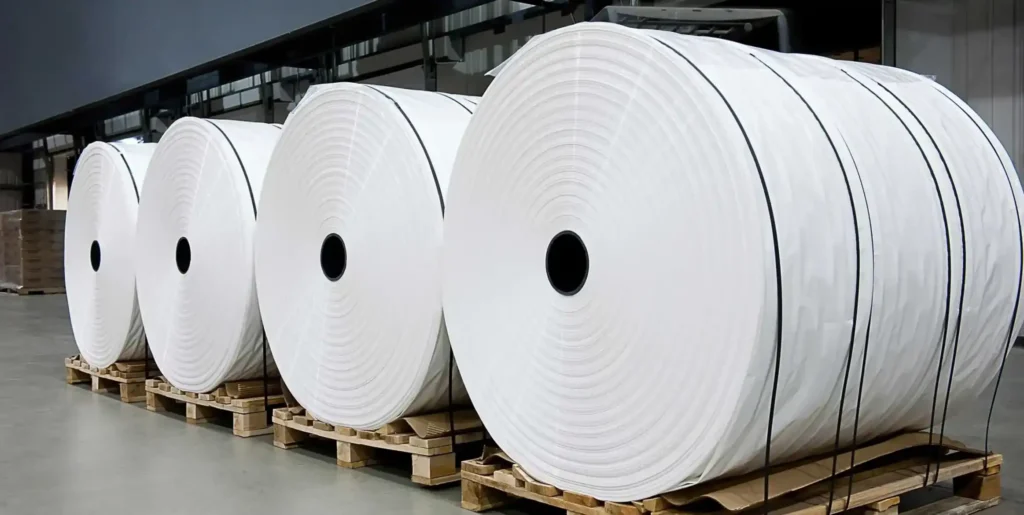
In a category where freshness drives loyalty, line speed pays the bills, and sustainability shapes the story, FFS Roll Bags (form‑fill‑seal rollstock) are more than a flexible pouch on a core—they are a production philosophy. What looks like film is really a system: polymer blends tuned for hot‑tack and dart impact; gusset geometry engineered for cube efficiency; ink, adhesive, and corona treatment aligned with scanners and shelf light. Using systems thinking, this rewrite deconstructs the topic into solvable sub‑problems—materials, mechanics, manufacturing, and market fit—tests each with data reinforcement, case analysis, and comparative study, then recombines the findings into a single, scalable approach VidePak can deploy across SKUs and regions. For a quick primer on related constructions, see FFS Roll Bags.
What is FFS Roll Bags? (Definition & Aliases)
FFS Roll Bags are continuous tubular or single‑wound sheets of thermoplastic film—predominantly polyethylene (LDPE/LLDPE/HDPE blends), optionally co‑extruded with barrier layers such as EVOH or PA—supplied on rolls for automated form‑fill‑seal machines. The roll is formed into a bag in‑line, filled with product, and sealed top/bottom in one continuous motion. In listings and procurement you will also see form‑fill‑seal tubular rolls, heavy‑duty PE FFS rollstock, barrier FFS bags, and FFS pillow/side‑gusset bags. Different names, one backbone: a polyolefin‑centric platform optimized for speed, seal integrity, and distribution toughness that keeps FFS Roll Bags indispensable in pet food operations.
Background & field knowledge. The category sits where polymer rheology (melt flow index, slip/antiblock, hot‑tack windows) meets film mechanics (tensile/elongation per ASTM D882, tear per ASTM D1922, dart impact per ASTM D1709), barrier science (OTR per ASTM D3985, WVTR per ASTM F1249), and graphics durability (rub per ASTM D5264). For food applications, materials and processes reference FDA 21 CFR §177.1520 and EU No 10/2011 (overall migration limit 10 mg/dm² with SML/NIAS oversight) under Good Manufacturing Practice (EC No 2023/2006). Factory hygiene typically maps to BRCGS Packaging Materials (Issue 7) and/or ISO 22000:2018/FSSC 22000. These frameworks aren’t paperwork; they are the rails that keep FFS Roll Bags fast, safe, and audit‑ready.
Horizontal vs. vertical thinking. Horizontally, FFS Roll Bags borrow rules from flexible packaging (seal initiation temperature, hot‑tack), extrusion (bubble stability, gauge control), printing science (dyne ≥38, ΔE targets), and warehouse physics (pallet creep, inter‑layer friction). Vertically, cause‑and‑effect stacks: resin → film → print/lamination (if used) → gusset geometry → seal recipe → case/pallet behavior. Change film thickness from 80 μm to 120 μm and drop resistance climbs, but roll weight, machine inertia, and heat‑transfer shift; add EVOH and OTR plummets, yet forming stiffness and recycling narratives change. Systems thinking insists we never tug one thread without checking the tapestry.
Data reinforcement. Corridors widely posted by audited suppliers (Made‑in‑China, Alibaba, peer converters) for pet food‑class rollstock: film thickness 80–180 μm, roll widths 300–650 mm, core 3″ (76 mm), outer roll diameter 350–900 mm, corona ≥38 dynes, and print up to 8–10 colors (flexo or gravure). Typical seal windows for PE blends fall around 130–170 °C, tuned to hardware and dwell. Numbers recur because physics recurs.
Case analysis. A regional kibble brand replaced pre‑made pouches with FFS Roll Bags (LLDPE‑rich, 110 μm, side‑gusset). Changeover time dropped, filler uptime rose 7%, and top‑seal rejects fell once hot‑tack was tuned for oily inclusions. The lesson? Film chemistry and jaw metallurgy must talk to each other.
Comparative study. Pre‑made bags excel at graphics breadth for short runs; paper + PE hybrids sell “hand‑feel” but falter in humidity; rigid tubs stack neatly but punish logistics. FFS Roll Bags cut a middle channel—high speed, robust seals, persuasive print, simpler inbound packaging—without asking operations to choose between speed and safety.
What is the features of FFS Roll Bags? (Performance, Freshness & Line Speed)
Seal integrity under real oil and crumb. Pet food is rarely a clean lab powder. FFS Roll Bags use PE blends with broad seal‑initiation ranges and strong hot‑tack to seal through light contamination. Seal quality is verified via peel/seal curves and drop testing; the goal is not “seal at all costs” but “seal at full speed.” Why chase grams if the jaws must slow down?
Impact, tear, and toughness. Film toughness is tuned through LLDPE content, metallocene catalysts, and orientation balance. Targets are monitored by ASTM D1709 (dart), ASTM D882 (tensile/elongation), and ASTM D1922 (tear). Tougher film, calmer warehouse: fewer corner splits, fewer reworks, fewer angry emails.
Barrier options tuned to recipe. Kibbles with surface oils may tolerate high OTR; freeze‑dried treats do not. Co‑extruded EVOH can pull OTR to ≤10 cc/m²·day (23 °C, 0% RH per ASTM D3985), while PE monostructures sit >2,000 cc/m²·day—a deliberate gap, not a defect. Choose barrier for the product’s oxidative reality, not for a brochure headline.
Print that persuades and survives. Flexo or gravure to 8–10 colors, dyne ≥38, ΔE dashboards, and ASTM D5264 rub targets keep brand tones persuasive after conveyors, chutes, and manual picks. Matte/gloss management reduces barcode glare so WMS scanners grade reliably, not grudgingly.
Automation‑first geometry. Side‑gusset formats improve cube and stand‑up shelf posture; lap‑seal vs. fin‑seal choices balance inside product contact with absolute strength. Anti‑slip back varnishes lift inter‑layer friction and pallet stability without inflating grams—a quiet change with loud effects.
Safety and compliance baked‑in. Food‑contact declarations to EU No 10/2011, polymer references to FDA 21 CFR §177.1520, and hygiene to BRCGS/FSSC 22000 underpin retailer acceptance. REACH‑compliant additive inventories and NIAS assessments keep surprises out of headlines and onto checklists where they belong.
Horizontal/vertical analysis. Horizontally, benchmark FFS Roll Bags against pre‑made bags (higher unit cost, lower engineering burden) and woven+BOPP (high stack discipline, heavier pack weight). Vertically, micro‑choices—resin blend, gauge, corona level, ink/adhesive system—roll up to macro outcomes: line speed, shelf life, pallet height, return rates. We don’t save a cent if a faster film causes more returns.
Data reinforcement. Typical pet‑food specs in RFQs: 90–140 μm PE‑dominant film for 1.5–10 kg SKUs; print 6–8 colors; OTR target ≤100 cc/m²·day when EVOH is used; drop test passes from 0.8–1.2 m depending on pack size and bulk density.
Case analysis. After switching to a 3‑layer PE/EVOH/PE at 120 μm, a treat brand extended sensory freshness by two weeks in shelf trials, while seal recipes stayed fixed—evidence that barrier and speed can coexist when rheology is matched, not mismatched.
Comparative study. Paper‑poly hybrids offer texture but gain moisture; rigid tubs protect shape yet inflate freight; FFS Roll Bags lower pack mass per unit and keep HMI familiar. The cheaper path isn’t always the better path, but the heavier pack is rarely the greener one.
What is the production process of FFS Roll Bags? (From Resin to Retail‑Ready)
Extrusion & gauge control. Food‑grade PE resins—optionally with tie/EVOH layers—are blown on balanced dies. Melt flow is trended per ASTM D1238; gauge variation is held with IBC/auto‑profile to keep CD/MD variation within capability (CpK) targets. Stable bubbles make stable profits.
Corona & surface energy. On‑line corona raises dyne to ≥38 for ink/adhesive anchorage. Dyne decay is monitored roll‑to‑roll; too little and ink picks off, too much and treatment ages poorly. Surface chemistry is not a footnote—it is a prerequisite.
Printing & protective coats. Flexo or gravure adds branding, nutrition panels, and codes. Matte or gloss topcoats balance shelf aesthetics with WMS readability; ΔE charts and ISO/IEC 15416 barcode grades are logged by batch so the warehouse doesn’t pay for creative’s ambition.
Slitting & winding discipline. Edge trim quality and tension control prevent telescoping and skew. Core ID is standardized at 3″ for changeover speed; splice integrity is coded for machine alarms. If winding is sloppy, forming pays the price.
Form‑fill‑seal integration. Collars, gusset plows, and jaw metallurgy are matched to film chemistry. Seal curves (temperature/time/pressure) are mapped per resin lot; print‑registration and metal‑detector checks are pinned to the centerline. FFS Roll Bags reward lines that treat them as a dialog, not a monologue.
Quality & compliance checkpoints. Tensile/elongation (ASTM D882), dart (D1709), tear (D1922), migration (EU No 10/2011, OML 10 mg/dm²), and hygiene audits to BRCGS/FSSC 22000 complete the technical file, alongside REACH‑compliant additive declarations and NIAS risk assessments. Test plans aren’t bureaucracy; they are insurance policies written in numbers.
Horizontal/vertical analysis. Horizontally, the line borrows bubble stability from film shops, color science from print houses, and HACCP zoning from food plants. Vertically, drift propagates: dyne loss → ink pick‑off; gauge bands → weak jaw seals; high COF → feeding jams; low COF → pallet slide. One parameter slips; the whole choir sings off‑key.
Data reinforcement. Sites adding live dyne telemetry and CpK alarms on gauge commonly cut print/seal rejects by >40%, while enabling thinner films without quality loss—an elegant equation: less material, more control.
Case analysis. A VidePak partner dropped from 125 μm to 110 μm after DOE trials, holding dart and drop tests by retuning the LLDPE blend and seal dwell. Material savings accrued with no WMS complaints, no pallet surprises, no brand drama.
Comparative study. FFS rollstock keeps a mono‑roll SKU per size versus dozens of pre‑made pouch SKUs; fewer change parts and clearer centerlines shorten operator learning curves. Complexity removed is uptime gained.
What is the application of FFS Roll Bags? (Pet Food, Treats & Premium Retail)
Dry kibble & mixes (1.5–10 kg). FFS Roll Bags with 90–130 μm PE‑dominant films, side‑gussets, and matte code panels deliver billboard‑grade print, clean seals, and stable pallets. Transparent “fresh windows” may be co‑extruded or printed to show kibble shape without jeopardizing stack behavior. If it looks good, scans fast, and stacks straight—why wouldn’t it sell?
Freeze‑dried & high‑oil treats. Where oxidation matters, EVOH coex structures bring OTR into the ≤10–50 cc/m²·day range; inside‑slip is tuned to avoid funneling during fill. Easy‑open notches and laser scoring support consumer convenience without inviting leaks.
Club‑store and e‑commerce packs. Higher drop heights and conveyor miles demand tougher films; anti‑slip backs and reinforced seals help mixed pallets survive sortation hubs. FFS Roll Bags don’t ask the DC to be gentle; they ask the film to be strong.
Data reinforcement. Pet‑food SKUs frequently specify 6–8 color print, widths 320–560 mm, seal jaws 140–165 °C, and drop tests 0.9–1.2 m—numbers echoed across supplier datasheets and buyer RFQs.
Case analysis. A premium brand adopted matte varnish on code panels; scan accuracy rose in racked aisles, while consumer glare complaints waned—proof that warehouse ergonomics and retail aesthetics can coexist.
Comparative study. Versus woven+BOPP for 10–25 kg formats, FFS Roll Bags reduce pack mass and improve speed on sub‑10 kg sizes; versus pre‑made pouches, they lower per‑unit cost at volume and eliminate brimming inventory of bag SKUs.
What is the application of FFS Roll Bags? (Export, Compliance & Cold/Hot Chain)
Cross‑border readiness. Food‑contact dossiers (DoC + migration) to EU No 10/2011/FDA 21 CFR §177.1520, REACH statements, and hygiene certificates (BRCGS, FSSC 22000) streamline EU/UK/US retail audits. Barcode grade reports and ΔE logs align with WMS expectations so scanners nod, not balk.
Containerization & warehouse climate. Anti‑slip varnishes maintain inter‑layer friction in hot warehouses; gusset geometry preserves cube through long routes. UV‑stabilized outer prints (supplier‑declared hours correlated to ASTM G154/G155) protect graphics during yard staging. FFS Roll Bags keep the story legible from filler to freight.
Cold‑chain resilience. Seal recipes are tuned to avoid brittle fracture at low temps; LLDPE content and jaw dwell adjustments keep seals pliable through chilled transport. Cold is a test; it shouldn’t be a verdict.
Data reinforcement. Export RFQs often request D882/D1709/D1922 certificates, OTR/WVTR data where barrier is claimed, and in‑process dyne records. Typical roll OD caps at 800–900 mm for safe handling and ergonomic changeovers.
Case analysis. After standardizing anti‑slip coefficients and gusset widths, a global co‑packer raised pallet height by one layer on export lanes without lean or slide—container cube up, claims down, schedules calmer.
Comparative study. Where hermetic barrier and aroma retention are paramount, PET/foil laminations may win; where speed, mass, and recycling narratives matter, FFS Roll Bags hold the advantage and hold it credibly.
Quick Spec Sheet (Typical, Food‑Contact Ready)
| Parameter | Typical range / option | Technical note |
|---|---|---|
| Film thickness | 80–180 μm PE‑dominant (mono or 3–5 layer) | Select by drop test target & bulk density; 110–140 μm common for 3–10 kg |
| OTR (23 °C, 0% RH) | >2,000 cc/m²·day (PE mono); ≤10–100 with EVOH coex | Choose barrier by product oil/oxidation sensitivity (ASTM D3985) |
| WVTR (38 °C, 90% RH) | 3–12 g/m²·day typical PE | Screen via ASTM F1249 for shelf‑life modeling |
| Width | 300–650 mm | Matches 1.5–10 kg side‑gusset formats |
| Roll OD / Core | 350–900 mm OD; 3″ core | Balance changeover frequency vs. weight/ergonomics |
| Flexo/gravure up to 8–10 colors | Maintain dyne ≥38; ΔE dashboards; barcode grade ≥B (ISO/IEC 15416) | |
| Seal window | ~130–170 °C (PE blends) | Map T/t/P by resin lot; verify hot‑tack under oil/crumb |
| Mechanical tests | ASTM D882/D1922/D1709 | Trend tensile, tear, dart for consistency |
| Food‑contact & GMP | FDA 21 CFR §177.1520; EU No 10/2011; EC No 2023/2006 | OML 10 mg/dm²; NIAS/SML oversight; DoC on lot basis |
| Hygiene systems | BRCGS Packaging Materials (Issue 7); ISO 22000:2018/FSSC 22000 | GFSI‑benchmarked programs for plant hygiene |
| Circularity | Polyolefin platform; rPE/rPP where permitted | Verify via migration tests; chain‑of‑custody such as GRS v4.0 |
The ranges above reflect values commonly listed by reputable suppliers and in buyer RFQs. Final specs must be proven on your equipment with tensile, tear, dart, seal, migration, and drop tests tuned to route risk and line speed.
A Systems‑Thinking Synthesis: VidePak’s End‑to‑End Solution
Sub‑problem A — Freshness vs. speed. Oils, crumb, and fast jaws make a tough trio. Solution: PE blends with broad seal initiation; DOE‑built seal curves; on‑line hot‑tack checks. Document compliance to FDA 21 CFR §177.1520/EU No 10/2011 so freshness gains never jeopardize approvals. FFS Roll Bags earn their keep when lines run fast and audits run smooth.
Sub‑problem B — Impact vs. mass. Heavy film resists drops but taxes freight and sustainability stories. Solution: optimize to 110–130 μm for 3–10 kg with LLDPE‑rich blends and CpK‑held gauges; validate via D1709 and route‑specific drop tests. Lighter, not weaker; quicker, not riskier.
Sub‑problem C — Print pop vs. barcode glare. Beautiful graphics that won’t scan are a warehouse tax. Solution: matte code panels, quiet‑zone discipline, ΔE dashboards, and target ISO/IEC 15416 ≥ B under warehouse lighting. FFS Roll Bags should sell in the aisle and sail through the scanner.
Sub‑problem D — Global audits vs. changeovers. Every retailer wants documents; every plant wants uptime. Solution: standardize DoC templates, hygiene certificates (BRCGS/FSSC), and in‑process dyne logs; harmonize cores/ODs to one changeover SOP so paperwork rises while downtime falls.
Integrated outcome. A mono‑family, audit‑ready packaging platform—FFS Roll Bags—that seals cleanly, runs fast, ships safely, and tells a credible sustainability story without burdening the line crew. Not just rollstock—an operating system VidePak can scale.
- What is FFS Roll Bags? (Definition & Aliases)
- What is the features of FFS Roll Bags? (Performance, Freshness & Line Speed)
- What is the production process of FFS Roll Bags? (From Resin to Retail‑Ready)
- What is the application of FFS Roll Bags? (Pet Food, Treats & Premium Retail)
- What is the application of FFS Roll Bags? (Export, Compliance & Cold/Hot Chain)
- Quick Spec Sheet (Typical, Food‑Contact Ready)
- A Systems‑Thinking Synthesis: VidePak’s End‑to‑End Solution
Introduction
Form-Fill-Seal (FFS) roll bags have emerged as the gold standard in pet food packaging, combining high-speed automation, material durability, and cost efficiency to meet global demand. By 2028, the FFS packaging market is projected to grow at a CAGR of 7.3%, driven by advancements in polymer science and automated manufacturing technologies. This report analyzes how FFS roll bags dominate pet food packaging through innovative material engineering, precision manufacturing processes, and strategic cost optimization, while exploring future trends in sustainability and automation.
Technological Evolution: Materials and Manufacturing
Q: What materials and processes make FFS roll bags ideal for pet food?
A: Multi-layer polypropylene (PP) laminates and automated FFS systems ensure barrier protection, durability, and scalability.
- Material Innovations:
- Biaxially Oriented Polypropylene (BOPP): Provides moisture resistance (<0.5 g/m²/day water vapor transmission) and puncture resistance (≥5 kN/m tensile strength).
- PE Liners: 20–25μm polyethylene (PE) inner layers prevent fat migration in high-lipid pet foods, extending shelf life by 30%.
- Recycled PP: Brands like Vedhaa Polypack integrate 30% post-consumer PP, reducing carbon footprints by 25% while complying with FDA 21 CFR and EU 10/2011 standards.
- Production Techniques:
- Co-Extrusion: Combines PP layers with additives like UV stabilizers (e.g., UV-326) to prevent degradation during outdoor storage.
- Ultrasonic Sealing: Ensures airtight seams with 4.5 kN/m strength (ISO 13934-1), critical for powdered pet foods prone to leakage.
Case Study: Shandong Leihua’s FFS roll bags for Purina use Starlinger’s AD*STAR® technology, achieving 2,000 bags/hour output with zero material waste and 99.9% seal integrity.
Cost Control Strategies
Q: How do manufacturers balance performance and affordability?
A: Economies of scale, material optimization, and lean production protocols reduce costs by 15–20%.
- Material Sourcing:
- Bulk Purchasing: PP resin prices drop by 12% when procured in 500+ ton batches.
- Recycled Content: Using 30% recycled PP lowers raw material costs by 18% without compromising ASTM D5276 drop-test compliance.
- Process Efficiency:
- Automated Cutting: Laser-guided systems reduce PP film waste by 22% compared to manual methods.
- Energy Recovery: Heat generated during extrusion is reused, cutting energy costs by 30%.
Example: Zhejiang Crown Packaging’s “EcoFlex” line integrates AI-driven quality control, reducing defect rates from 5% to 0.8% and trimming labor costs by 40%.
Future Trends: Automation and Sustainability
Q: What innovations will shape the next decade of FFS packaging?
A: AI-driven automation and bio-based materials will redefine efficiency and environmental impact.
- Smart Packaging:
- RFID Tags: Enable real-time tracking of moisture levels, reducing spoilage by 15% in humid climates.
- Dynamic QR Codes: Printed with eco-solvent inks, these codes update nutritional info dynamically, complying with EU 1169/2011 labeling laws.
- Circular Economy:
- Biodegradable Additives: Enzymes like TDPA™ allow PP to decompose in 5 years, aligning with the EU’s Single-Use Plastics Directive.
- Chemical Recycling: Vedhaa Polypack’s pilot plant converts post-consumer PP bags into food-grade resin, cutting virgin material use by 50%.
Technical Specifications and FAQs
Table 1: Key Parameters for Pet Food FFS Roll Bags
| Parameter | ASTM Standard | Typical Value |
|---|---|---|
| Thickness | ASTM D3776 | 90–120 g/m² |
| Tensile Strength | ISO 13934-1 | ≥5.5 kN/m |
| Moisture Barrier | ASTM E96 | ≤0.5 g/m²/day |
| Seal Strength | ASTM F88 | ≥4.0 kN/m |
FAQs
- Q: How to prevent fat leakage in high-lipid pet foods?
- A: Use PE-coated BOPP with 25μm thickness and ultrasonic side seals.
- Q: Can FFS bags withstand -20°C storage?
- A: Yes. Impact-modified PP (e.g., Moplen HP548R) retains flexibility at subzero temperatures.
Strategic Partnerships and Market Growth
VidePak’s collaboration with WolfPak Cases integrates hexagonal PP weaves for 35% higher abrasion resistance in kibble packaging. Meanwhile, their “KraftGuard” line blends 120 g/m² kraft paper with PP, doubling tear resistance while meeting EN 13432 compostability standards.
External Resources:
- Explore advancements in automated FFS systems for high-speed pet food packaging.
- Learn how sustainable materials align with global ESG goals.
From precision engineering to eco-conscious innovation, FFS roll bags exemplify the synergy of technology and sustainability. As pet food brands prioritize efficiency and environmental stewardship, FFS solutions will remain indispensable in shaping the future of packaging.