
What are FFS Roll Woven Bags? Identity, Synonyms, and Purpose
In automated bulk packaging, naming varies yet functions converge. FFS Roll Woven Bags—often called form‑fill‑seal woven rolls, PP woven FFS tubular rolls, or heavy‑duty FFS woven film—are continuous, machine‑grade webs of woven polypropylene designed for high‑throughput form‑fill‑seal systems. Rather than loading pre‑made sacks, the line unwinds a roll, forms a tube, meters product, and seals. The result is a repeatable package that fuses the mechanical resilience of woven PP with the cadence of automation—quick to run, slow to fail.
The Material System of FFS Roll Woven Bags: Substrate, Surface, Barrier
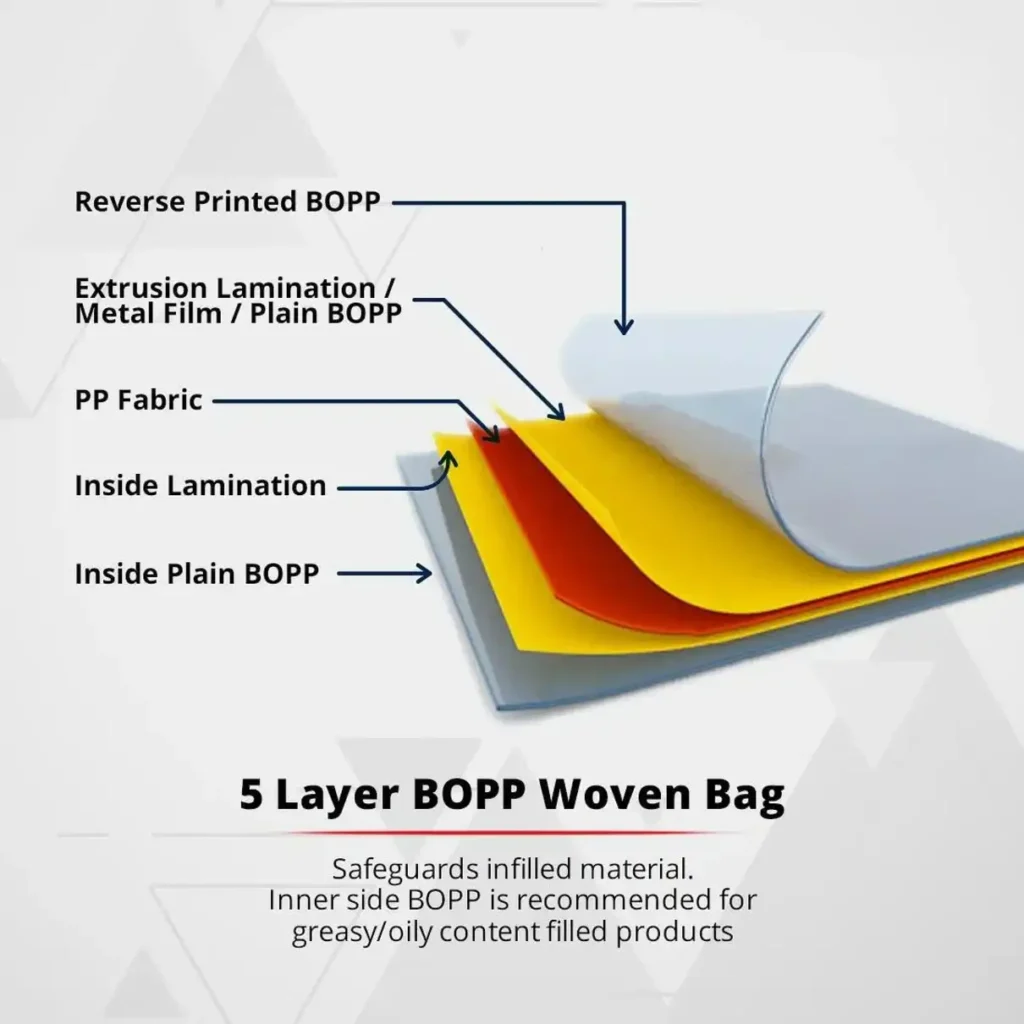
Material choices determine runnability, durability, and cost. The stack below is not a static recipe; it is a set of levers your team can tune by climate, chemistry, and throughput goals.
Woven PP Fabric (60–120 g/m²)
Extruded and drawn PP tapes—typically 700D–1200D—are woven into flat or circular fabric. Higher GSM lifts tear and puncture resistance but raises stiffness and bending memory, which can challenge forming collars. Balance denier, picks per inch, and GSM to the filler’s jaw geometry and target throughput.
Surface Finishes & Graphics
Reverse‑printed BOPP (18–35 μm) protects artwork behind the film, enabling photo‑quality graphics and abrasion resistance. Cost‑sensitive lines may use direct flexo on the fabric. COF can be tuned with matte/gloss coats and anti‑slip finishes, improving pallet stability without sacrificing line speed.
Barrier & Sealant Options
Coextruded PE sealant layers and optional LDPE/LLDPE liners (20–60 μm equivalent) reduce moisture ingress versus bare fabric. Hygroscopic powders often benefit from a 30–50 μm PE sealant web to harmonize MVTR with jaw‑seal reliability.
Stabilizers & Processing Aids
UV packages support outdoor depots; antistats reduce dust attraction; slip modifiers aid unwind stability; processing stabilizers protect thermal consistency during heat sealing.
Key Features of FFS Roll Woven Bags: What Changes on the Line and in the Warehouse
Performance shows up first on the HMI, then on the dock, finally on the P&L. The following traits translate materials into meaningful outcomes.
High‑Speed Automation
Continuous rolls feed VFFS/HFFS systems, enabling high BPM with fewer interruptions. Changeover time drops; operator exposure to dust drops with it.
Strength‑to‑Weight Advantage
Woven PP achieves tear and puncture resistance at lower mass than paper or mono‑film, cutting packaging weight without inviting failures.
Moisture Management
Optional liners or coextruded sealant webs lower MVTR compared to uncoated woven fabric, stabilizing powder flowability through humid seasons.
Print Real Estate
Reverse‑printed BOPP can carry 8–10 colors and lock art behind film for abrasion resistance; direct flexo offers a thrifty alternative for internal SKUs.
Pallet Stability
Outer COF tuning and gusseting at the FFS stage shape cube efficiency and reduce slide, especially on smooth stretch wrap.
Recycling Pathways
Polyolefin‑dominant designs align with regional recovery streams. When mono‑material PP is possible, routes to recycling simplify.
How FFS Roll Woven Bags Are Produced: From Resin to Ready Roll
Processes are policy in motion. Each step reflects a decision about cost, capability, and risk.
- PP Tape Extrusion & Drawing. Resin choice governs drawability and gel incidence; draw ratio calibrates tensile strength and elongation at break.
- Weaving. Flat or circular looms set porosity and stiffness via denier and picks per inch; loom health shows up later as lamination quality.
- Surface/Print. Reverse rotogravure on BOPP stores inks behind film; direct flexo reduces cost but exposes art to abrasion.
- Lamination/Coating. Extrusion or adhesive bonding defines peel strength; choose based on artwork heat sensitivity and abrasion risk.
- Slitting & Rewinding. Edge trimming, OD control, and tension profiling determine changeover cadence and unwind stability.
- QA. Tensile and seam tests (ASTM/ISO), COF per ASTM D1894, dart impact per ASTM D1709, and web flatness checks for trouble‑free feeding.
Where FFS Roll Woven Bags Excel: Use Cases That Reward the Format
Applications are specific. Think chemistry, climate, and cadence.
Chemical Powders & Granules
Calcium carbonate, silica, PVC resin, masterbatches—abrasive, dust‑prone, sometimes hygroscopic. Specify liner gauge and COF together.
Fertilizers
Urea and NPK blends benefit from puncture‑resistant fabrics and humidity‑aware sealant webs.
Construction Materials
Dry mortar and tile adhesive reward line speed and pallet discipline. Reverse‑printed BOPP keeps branding legible to end users.
Petrochemical Pellets
Edge‑tear resistance and web stability outrank extreme moisture barrier; antistatic packages can reduce fines adhesion.
Structured Thinking — FFS Roll Woven Bags: Advanced Technology and Global Trends
Below is a structured reasoning path used to plan this content: define terms, audit materials, extract features, tie to processes, match to applications, codify parameters, cite standards, and surface macro trends.
Typical ranges: roll width 300–650 mm, fabric 70–100 g/m² for 25–50 kg fills, BOPP 20–30 μm, sealant 30–50 μm. Benchmarks: ISO 21898, GB/T 8946, ASTM D1709, ASTM D1894.
A calcium carbonate line moved from pre‑made paper sacks to this format, raised throughput, and cut ruptures after COF and edge trimming were tuned.
Versus pre‑made sacks: fewer changeovers and lower labor but requires suitable FFS hardware. Versus paper or PE mono‑film FFS: better puncture/edge‑tear for abrasive goods; PE mono‑film can win on absolute barrier.
Key Parameters & Color‑Coded Table
Use the matrix below as a decision scaffold.
| Parameter | Typical Range / Option | Why it Matters |
|---|---|---|
| Roll width | 300–650 mm | Matches bag size and forming collar |
| Fabric GSM | 60–120 g/m² | Tear/puncture vs. machinability |
| BOPP thickness | 18–35 μm | Print fidelity and scuff resistance |
| Sealant / liner | 30–50 μm PE equivalent | Moisture barrier and seal reliability |
| COF (outer) | 0.25–0.40 | Pallet stability/safe stacking |
| Core size | 3″ or 6″ | Machine compatibility and handling |
| Tests | ASTM D1709, ASTM D1894, ISO 21898, GB/T 8946 | Predicts field performance |
Compliance & Third‑Party Anchors
Align to recognizable identifiers so audits are efficient and purchases defensible: ISO 9001:2015, ISO 14001:2015, ISO 21898, GB/T 8946, REACH (EC 1907/2006), RoHS 2011/65/EU. Third‑party labs such as SGS/Intertek routinely verify COF, dart impact, and seal integrity.
Global Trends That Shape FFS Roll Woven Bags
Automation adoption to counter labor gaps. Sustainability via mono‑material designs and downgauging with higher‑strength tapes. Regionalization of specs: humidity‑proofing in tropical lanes, UV packages for open‑air depots, antistatic for powder plants. Each trend pulls on the same fabric, and together they weave tomorrow’s standard.
Why VidePak for FFS Roll Woven Bags
VidePak helps teams translate route humidity, resin choices, and line mechanics into roll specifications that run fast, stack straight, and pass audits. When stakes are high, coherence beats complication.
FFS Roll Woven Bags represent a significant advancement in the packaging industry, offering a combination of strength, efficiency, and versatility that meets the needs of various markets around the world. The development and production of these bags involve sophisticated technology and equipment, particularly from global leaders like Starlinger. This article explores how the integration of cutting-edge equipment in the manufacturing of FFS Roll Woven Bags enhances product quality and efficiency, while also analyzing trends and practices in key markets including Europe, the United States, India, and Southeast Asia.
Understanding FFS Roll Woven Bags
FFS Roll Woven Bags are designed for high-performance applications, often used in industries that require durable and reliable packaging solutions. These bags are produced using a combination of tubular woven fabric and advanced film technology, making them suitable for a range of products, including bulk materials and granular substances.
- Tubular Woven Fabric:
The core of FFS Roll Woven Bags is the tubular woven fabric, made from polypropylene (PP). This fabric provides the necessary strength and durability, making the bags resistant to tearing and puncturing. The tubular design also allows for efficient, continuous production, as the fabric is extruded and woven into long rolls that are later cut and converted into bags. - Advanced Film Technology:
To enhance the functionality of these bags, various films and coatings can be applied, including lamination, coating, and extrusion. These additional layers provide moisture resistance, UV protection, and improved printability. The integration of these features ensures that the bags not only perform well in challenging conditions but also offer a high-quality appearance for branding purposes.
Starlinger’s Role in Quality and Efficiency
The production of FFS Roll Woven Bags involves several key stages, including extrusion, weaving, printing, coating, and laminating. Starlinger, a global leader in packaging machinery, plays a critical role in each of these stages, providing state-of-the-art equipment that ensures high-quality production and operational efficiency.
- Extrusion Technology:
Starlinger’s extrusion equipment is used to create the polypropylene film that forms the base of the woven fabric. This process ensures that the film has the correct thickness and strength, which are crucial for the durability of the final product. The precision of Starlinger’s extrusion technology contributes to consistent product quality and performance. - Circular Looms:
For weaving the tubular fabric, Starlinger’s circular looms are employed. These machines are known for their high speed and reliability, allowing for the production of large quantities of fabric with minimal downtime. The use of advanced circular looms ensures that the woven fabric is strong, uniform, and free from defects. - Printing and Coating:
Starlinger’s printing and coating machines are used to apply designs, logos, and protective layers to the woven fabric. These machines are equipped with the latest technology to deliver high-resolution prints and consistent coatings. This is particularly important for creating visually appealing bags that can withstand environmental stressors. - Lamination and Film Technology:
Finally, Starlinger’s lamination and film technology add additional layers of protection and functionality to the bags. This includes moisture barriers, UV protection, and enhanced printability. The precision and quality of these processes are essential for producing bags that meet the stringent requirements of various industries.
Global Market Analysis
The adoption of FFS Roll Woven Bags varies across different regions, influenced by local market conditions, regulatory requirements, and industry needs. Here’s an overview of how these bags are being used and manufactured in key markets:
- Europe:
In Europe, there is a strong emphasis on sustainability and quality in packaging solutions. FFS Roll Woven Bags are widely used in industries such as agriculture, chemicals, and construction. European manufacturers prioritize high-quality materials and advanced technology to meet rigorous environmental standards. The use of Starlinger equipment is prevalent in Europe, as it supports the production of durable and eco-friendly bags. The trend towards sustainable packaging is driving innovations in lamination and coating technologies to reduce plastic use and improve recyclability. - United States:
The U.S. market for FFS Roll Woven Bags is driven by the need for efficient and reliable packaging solutions in sectors such as food and beverage, chemicals, and construction. American manufacturers are adopting advanced technologies to enhance production efficiency and meet the high demands of the market. The integration of Starlinger’s equipment helps ensure that the bags produced are of high quality, with consistent performance and appearance. The focus on operational efficiency and cost-effectiveness is a key driver in the U.S. market. - India:
India is experiencing rapid growth in the packaging industry, driven by increasing industrialization and a growing consumer market. FFS Roll Woven Bags are becoming popular in the packaging of products like fertilizers, grains, and chemicals. Indian manufacturers are investing in advanced machinery, including Starlinger’s equipment, to improve production quality and efficiency. The focus on durability and moisture resistance is crucial in the Indian market, where climatic conditions can be challenging. Additionally, the trend towards high-quality printing and branding is influencing the adoption of advanced printing and coating technologies. - Southeast Asia:
In Southeast Asia, FFS Roll Woven Bags are widely used in the packaging of agricultural products, construction materials, and chemicals. The region’s hot and humid climate presents specific challenges for packaging, making moisture resistance a critical feature. Manufacturers in Southeast Asia are increasingly turning to advanced technologies and machinery to enhance the performance of their bags. Starlinger’s equipment is helping producers meet these challenges by offering high-quality, reliable solutions that improve both product performance and production efficiency.
Advantages of FFS Roll Woven Bags with Advanced Technology
The use of advanced technology, such as that provided by Starlinger, offers several advantages for the production of FFS Roll Woven Bags:
- Enhanced Durability:
The combination of high-quality polypropylene, advanced weaving techniques, and robust film technologies results in bags that are exceptionally durable. This is crucial for applications where the bags are subject to heavy loads and rough handling. - Improved Moisture and UV Resistance:
The application of advanced coatings and laminations ensures that FFS Roll Woven Bags offer excellent protection against moisture and UV exposure. This is particularly important in markets with challenging environmental conditions, such as Southeast Asia and India. - High-Quality Printing:
Advanced printing technology allows for high-resolution graphics and vibrant colors, enhancing the visual appeal and branding potential of the bags. This is especially beneficial in competitive markets where packaging aesthetics play a significant role in consumer perception. - Operational Efficiency:
The use of state-of-the-art machinery from Starlinger increases production efficiency by reducing downtime, improving consistency, and enabling high-speed manufacturing. This helps manufacturers meet market demands while maintaining cost-effectiveness.
Industry Trends and Future Outlook
The future of FFS Roll Woven Bags is shaped by ongoing advancements in technology and evolving market demands. Key trends include:
- Sustainability:
There is a growing focus on sustainability in packaging, with manufacturers exploring ways to reduce plastic usage and improve recyclability. Innovations in film technology and the use of recycled materials are likely to play a significant role in this trend. - Customization:
The demand for customized packaging solutions is increasing, driven by consumer preferences and branding requirements. Advanced printing and lamination technologies will continue to evolve to meet these needs. - Efficiency and Automation:
The drive for greater efficiency and automation in production processes will continue to influence the industry. Investments in advanced machinery and technology will help manufacturers improve production speed and reduce costs. - Globalization:
As global trade and supply chains become more interconnected, the need for high-quality, reliable packaging solutions will grow. FFS Roll Woven Bags will play a crucial role in meeting these demands across diverse markets.
In summary, FFS Roll Woven Bags are a sophisticated and versatile packaging solution that benefits from advanced manufacturing technologies. The integration of Starlinger’s equipment ensures high-quality production and efficient operations, making these bags suitable for a wide range of applications. As global markets continue to evolve, the adoption of cutting-edge technology and sustainable practices will drive innovation and growth in the packaging industry.