
What Are FFS Roll Woven Bags?
FFS Roll Woven Bags are polypropylene (PP) woven structures supplied as continuous rollstock for automated Form‑Fill‑Seal packaging lines. Instead of shipping discrete sacks, converters deliver a heat‑sealable tubular web—or a center‑folded sheet—wound on a core. On the machine, the web is formed, sealed, filled, and cut in a single cadence, turning material science into throughput. In trade parlance they are also described as PP woven FFS rollstock, coated PP woven FFS tubes, laminated woven roll bags, and FFS tubular woven film. Names differ; the logic is constant: textile‑like toughness meets film‑like sealability, optimized for speed.
To ground expectations, procurement teams browsing FFS Roll Woven Bags will see familiar roll geometries (e.g., 320–650 mm tube widths, 3″/6″ cores), fabric weights tuned for 5–50 kg SKUs, and finishing choices that balance machine stability with shelf presence.
Background & domain knowledge. PP is extruded as film, slit into tapes, drawn for strength, and woven to form a low‑stretch, high‑tenacity fabric. A clear PP coating or BOPP/PP lamination closes inter‑yarn gaps to create a sealable face for hot bars or impulse systems. Result: fewer leak paths than pre‑made side‑seam sacks and far higher cadence than manual loading. Logistics teams call it cleaner pallets; finance calls it OEE; quality calls it repeatability.
Horizontal & vertical thinking. Horizontally, FFS Roll Woven Bags bridge heavy‑duty film converting (registration, eye‑marks, tension) and technical textiles (denier, mesh, warp/weft balance). Vertically, behavior cascades: resin grade → tape drawing → mesh/denier → coating weight → print strategy → slitting/winding → sealing recipe → cut geometry. Change one dial and downstream metrics shift—haze, seal curve, web tracking, stack height. Systems design, not guesswork.
(数据强化 / Data reinforcement) Typical, verifiable windows in public supplier catalogs show woven fabric ≈ 70–130 g/m², meshes 10×10–12×12, tape 800D–1200D, coatings 15–30 μm, clear BOPP 12–25 μm, roll widths 320–650 mm, core IDs 76 mm (3″) or 152 mm (6″), roll OD 800–1200 mm, and practical fill masses 5–50 kg (engineered builds approaching ~120 kg with uprated closures).
(案例剖析 / Case analysis) A gypsum filler plant moved from pre‑made sacks to FFS Roll Woven Bags and saw speed rise from ~16 to ~28 bags/min with no spike in rejects. A seed processor eliminated seasonal leaks by increasing coating from 18 to 24 μm and standardizing heat‑cut edges at slitting; QA interventions dropped.
(对比研究 / Comparative study) Against PE heavy‑duty FFS film, woven rolls deliver superior tear and scuff resistance at similar mass; against pre‑made woven sacks, they win on automation and seal consistency, though manual depots may still prefer ready‑made bags for small SKUs.
What Are the Features of FFS Roll Woven Bags?
Automation‑ready strength. The woven backbone of FFS Roll Woven Bags absorbs drop energy and resists seam propagation; the coated or laminated face provides a clean, repeatable heat‑seal layer. Protection and presentation do not argue here—they cooperate.
High‑speed registration that sells. Reverse‑printed BOPP (≈12–25 μm) and PP coatings (≈15–30 μm) deliver crisp eye‑marks, steady color, and tight repeats. When registration holds, graphics hold. When graphics hold, brands win—at the knife, on the shelf, and online.
Leak control without dust storms. Continuous tubes deny fine powders the side‑seam escape route. Multi‑bar bottoms or fold‑and‑seal designs, paired with tuned micro‑perforation, vent trapped air without snowing the line in dust.
Machine‑centric and human‑centric handling. Operators need rolls that don’t telescope; OEMs need web tension that doesn’t wander. Basis weight (70–130 g/m² fabric), denier (800D–1200D), and mesh (10×10–12×12) tune stiffness so webs track across forming shoulders yet conform to pallet corners after fill.
Design‑for‑recycling options. Mono‑PP builds (woven PP + PP coating or PP/BOPP) keep the structure within PP streams where sortation exists; matte PP effects can emulate kraft without introducing incompatible fibers.
(数据强化 / Data reinforcement) COF targets on the outer face often land between 0.25–0.45 (ASTM D1894), corona levels ≥38 dyn/cm support ink anchorage, and common print repeats fall in the 400–900 mm band for blade registration. Many suppliers quote splice densities ≤2/1000 m and web break rates ≤1/10,000 m.
(案例剖析 / Case analysis) A masterbatch line gained two bags/min by shifting to darker eye‑marks and a 750‑mm repeat—false triggers vanished. Another plant halved rub‑off complaints by raising post‑treatment dyne from 36 to 40 without changing inks.
(对比研究 / Comparative study) Compared with glossy PE film, FFS Roll Woven Bags resist pallet rub and fork scuffs; compared with unlaminated woven sacks, they deliver cleaner seals and billboard‑grade graphics; compared with multi‑wall paper, they keep composure in humidity and under compression.
What Is the Production Process of FFS Roll Woven Bags?
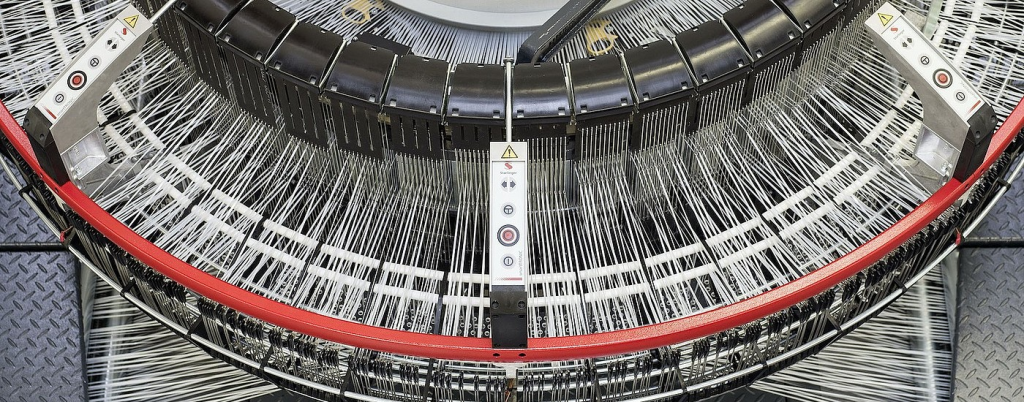
From resin to woven substrate. PP pellets are melted, cast as film, slit into tapes, and drawn to orient chains for strength. Tapes are woven on circular or flat looms; mesh and denier establish tensile and tear baselines.
Sealability via coating or lamination. Corona‑treated fabric receives PP extrusion coating (≈15–30 μm) or BOPP/PP lamination (≈12–25 μm). This continuous film layer defines the seal window for hot bars or impulse systems—too light and seals fail, too heavy and shoulders struggle.
Printing & web preparation. Flexo or gravure applies branding and eye‑marks. Slip and anti‑block masterbatches tune COF; matte/gloss finishes guide shelf tone. Webs are slit, edge‑trimmed, and wound to 76 mm or 152 mm cores with OD caps (≤1200 mm) to protect run length without overloading mandrels.
Conversion details the OEM cares about. Web path (inside/outside print), unwind direction, mark color/placement, print repeat, perforation density (50–200 holes/m²), and gusset pre‑creases all affect machine stability. Publish them; protect OEE.
Quality gates. Tape tensile and loom tension logs, dyne certificates (≥38 dyn/cm), seal curves mapped across temperature/pressure/time, COF by ASTM D1894, fabric tensile ASTM D5034/D5035, and routine drop/stack simulations. Plants typically run under ISO 9001:2015; food‑adjacent lines add BRCGS Packaging Materials Issue 7 or ISO 22000. Polymer contact anchors to 21 CFR 177.1520 (olefin polymers) and EU No 10/2011 where relevant.
(数据强化 / Data reinforcement) Typical roll lengths span 400–1200 m depending on thickness; eccentricity specs of <3 mm and edge‑profile limits keep webs from walking. Eye‑mark readability above 99.5% at rated speed is a practical, published target among top converters.
(案例剖析 / Case analysis) A minerals packer reduced mis‑cuts by standardizing mark color to high‑contrast black and shifting repeat to match blade distance. Another site fixed intermittent leaks by extending bottom‑seal dwell 40 ms—no material changes, but a stable seal curve.
(对比研究 / Comparative study) Extrusion coating simplifies mono‑PP narratives and keeps mass down; BOPP unlocks photographic print and rub life. Tubular webs remove a side seam and simplify sealing; center‑folded sheets enable broader widths and sometimes suit legacy shoulders.
What Is the Application of FFS Roll Woven Bags? (Industrial & B2B)
Throughput when cargo pushes back. FFS Roll Woven Bags are specified for fertilizers, soil amendments, gypsum, calcium carbonate, cement additives, resins, masterbatch, animal feeds, and construction chemicals. Abrasive contents meet robust panels; long routes meet long runs.
(数据强化 / Data reinforcement) Industrial programs cluster at 5/10/25/50 kg fills. Tube widths 320–650 mm map to those masses. UV‑stabilized tapes extend yard life; anti‑slip outer faces tame pallet glide; venting recipes suppress airborne dust at the hopper.
(案例剖析 / Case analysis) A fertilizer exporter reported visibly cleaner pallets after upgrading to matte‑laminated FFS Roll Woven Bags—scuff marks fell during sea transit and depot handling. A resin compounder stabilized pellet color checks at the spout and raised speed after tightening web tension specs from ±8% to ±4%.
(对比研究 / Comparative study) Against FIBCs (ISO 21898 governs big bags) the format occupies the manual‑handling middle—no hoist needed, but still heavy‑duty. Against pre‑made woven sacks it wins on labor and sealing repeatability; against PE FFS it wins on scuff life and stack geometry, ceding some conformability on tight shoulders.
What Is the Application of FFS Roll Woven Bags? (Food, Retail & Branding)
Automation plus persuasion. Premium rice, specialty flours, pulses, pet foods, BBQ fuels, DIY consumables—categories that sell with their eyes and travel far—benefit from FFS Roll Woven Bags. BOPP faces enable billboard‑grade imagery, while coated PP seals keep dust inside and reviews positive.
(数据强化 / Data reinforcement) Practical stacks pair clear or matte BOPP 12–25 μm with woven substrates 80–120 g/m²; target outer‑face COF 0.25–0.40 for case packing; maintain dyne ≥38 dyn/cm for print adhesion. Food‑adjacent lines align to BRCGS Packaging Materials Issue 7 or ISO 22000; polymer contact is referenced to 21 CFR 177.1520 / EU 10/2011.
(案例剖析 / Case analysis) A premium rice brand cut planogram defects by specifying pre‑creased gussets; faces stood flatter on shelf and in e‑commerce cartons. A pet‑food SME added EZ‑open notches to the top seal—unboxing improved while dust barriers remained intact.
(对比研究 / Comparative study) Compared with glossy PE bags, woven FFS packs feel sturdier and resist crease whitening; compared with coated paper sacks, they hold seam integrity in humid backrooms; compared with pre‑made woven sacks, they allow on‑HMI length changes and consistent seal geometry.
Specifications & Compliance Sheet (selected, supplier‑verifiable)
| Parameter | Typical range / option | Engineering note |
|---|---|---|
| Woven fabric GSM | 70–130 g/m² | Balance forming ease with drop survival |
| Mesh (warp×weft) | 10×10 – 12×12 | Tighter meshes for powders; moderate for grains/resins |
| Tape denier | 800D – 1200D | Higher denier ↑ tear & seam strength |
| Lamination / coating | BOPP 12–25 μm; PP coat 15–30 μm | Print fidelity, seal window, scuff life |
| Roll width (tube) | 320–650 mm | Maps to 5–50 kg formats |
| Core ID | 76 mm (3″) / 152 mm (6″) | Match OEM mandrels |
| Max roll OD | 800–1200 mm | Longer runs, fewer stops |
| Typical roll length | 400–1200 m | Depends on thickness/OD limits |
| Corona level | 38–42 dyn/cm | Ink/adhesion target |
| COF (outer face) | 0.25–0.45 | Case packing & pallet friction |
| Perforation density | 50–200 holes/m² (optional) | Deaeration vs. dust control |
| Print repeat | 400–900 mm | Registration on FFS blades |
| Bag capacity | 5–50 kg (engineered ~120 kg) | Confirm with closure recipe |
| Food contact (polymer) | 21 CFR 177.1520; EU No 10/2011 | Regulatory anchors for PP |
| Woven sack standard | GB/T 8946‑2013 | General technical requirements |
| Quality systems | ISO 9001:2015; BRCGS Packaging Materials (Issue 7) | Plant governance & hygiene |
| Tensile references | ASTM D5034 / D5035 | Third‑party test methods |
Note: Ranges reflect common supplier data and peer practice. Validate through sampling, seal‑curve mapping, drop/stack tests, and on‑line sifting audits before scale‑up.
Systems Synthesis: From Sub‑Arguments to One VidePak Blueprint
Performance node → protect & present. Baseline FFS Roll Woven Bags at 10×10 mesh / 900D / 90 g/m² for 25–50 kg; escalate to 12×12 / 1100D / 110 g/m² for powders or tall stacks. Choose PP coat 20–24 μm for broader seal windows; select matte vs. gloss to control rub and visual tone.
Precision node → OEM fit. Publish the whole roll spec: width, OD, core ID, unwind direction, web path, eye‑mark position/color, print repeat, perforation density. Target dyne ≥38 dyn/cm, COF 0.25–0.40, splices ≤2/1000 m, and eccentricity <3 mm. Small numbers, big OEE.
Compliance node → license to sell. Operate under ISO 9001:2015; for food‑adjacent runs, align to BRCGS Packaging Materials Issue 7 or ISO 22000; reference 21 CFR 177.1520 / EU No 10/2011; document tensile with ASTM D5034/D5035, friction with ASTM D1894, and keep drop/stack protocols on file.
Recyclability node → design‑for‑recycling. Stay mono‑PP, minimize non‑PP labels, and provide PP‑stream sortation guidance. Where infrastructure is limited, lighten coating mass and communicate disposal guidance clearly.
Sourcing node → assurance. Demand resin COAs, batch traceability, UV packages for yard storage, and roll‑to‑roll ΔE limits on color. Lock transport specs—edge protectors, wrap type, moisture barriers—so rolls arrive machine‑ready.
Integrated configuration (VidePak‑ready). Two lamination lanes (extrusion‑coated mono‑PP for simplicity; BOPP‑laminated for premium branding). Parameter presets (10×10 / 900D / 90 g/m² / PP coat 20 μm baseline; 12×12 / 1100D / 110 g/m² / PP coat 24 μm for powders). Roll geometry (core 3″ or 6″, OD ≤ 1100 mm, length ~800 m typical). Validation kit (seal‑curve DOEs, drop/stack at target heights, rub/ink adhesion checks, and sifting audits).
Engineered this way, FFS Roll Woven Bags stop being mere rollstock and become a production system—fast, dust‑tight, brand‑ready, and tuned to the global market’s cost‑to‑value reality.
- What Are FFS Roll Woven Bags?
- What Are the Features of FFS Roll Woven Bags?
- What Is the Production Process of FFS Roll Woven Bags?
- What Is the Application of FFS Roll Woven Bags? (Industrial & B2B)
- What Is the Application of FFS Roll Woven Bags? (Food, Retail & Branding)
- Specifications & Compliance Sheet (selected, supplier‑verifiable)
- Systems Synthesis: From Sub‑Arguments to One VidePak Blueprint
In the fast-evolving packaging industry, the demand for efficient, durable, and customizable packaging solutions has led to the increasing popularity of FFS (Form Fill Seal) roll woven bags. These bags, primarily used in industries requiring high-volume, large-scale packaging, have become an essential part of global logistics, particularly in sectors like agriculture, chemicals, food, and construction. This article delves into the features, production processes, and market relevance of FFS roll woven bags, along with a closer look at how they align with current industry needs and trends.
What Are FFS Roll Woven Bags?
FFS roll woven bags are a type of polypropylene (PP) woven bag designed for use with Form Fill Seal machines. The bags are produced in rolls, ready to be formed, filled, and sealed by automated machinery in high-speed packaging lines. They are often used for packaging bulk products like grains, fertilizers, and chemicals due to their strength, versatility, and ability to withstand harsh handling and transportation conditions.
Key Features and Benefits
FFS roll woven bags are known for several key features that make them stand out in the packaging industry:
| Feature | Description |
|---|---|
| Durability | Made from woven polypropylene, which is highly durable and resistant to tears. |
| High Strength | FFS bags are designed to handle heavy loads, making them ideal for bulk products. |
| Customization | These bags can be customized with various printing options, including logos, product information, and more. |
| Moisture Resistance | They provide a degree of moisture resistance, making them suitable for a variety of industries, including agriculture. |
| Cost-Effectiveness | Compared to other packaging options like paper bags, FFS roll woven bags offer an affordable solution for bulk packaging. |
| Sustainability | Many FFS bags are recyclable, aligning with sustainability trends in packaging. |
Manufacturing Process
The production of FFS roll woven bags involves several advanced steps:
- Material Selection: High-quality polypropylene (PP) is selected for its durability, strength, and resistance to environmental factors. The material is typically extruded into long threads, which are woven into fabric.
- Weaving: The PP threads are woven using specialized looms. The result is a fabric that is both strong and flexible, ideal for high-stress applications like bulk packaging.
- Lamination: In some cases, the woven fabric is laminated with additional layers to enhance properties like moisture resistance or to provide extra strength.
- Printing: FFS roll woven bags can be printed with custom designs, ensuring branding and product information is clearly visible.
- Roll Formation: Once the bags are printed and finished, they are rolled into large rolls that are ready to be fed into Form Fill Seal machines.
- Forming, Filling, and Sealing: The Form Fill Seal machines automatically form the bags, fill them with product, and seal them. This process ensures that bags are filled quickly and consistently, reducing labor costs and increasing efficiency.
Types of FFS Roll Woven Bags
FFS roll woven bags come in a variety of forms to suit different industries and packaging needs. Some of the most common types include:
- Standard FFS Roll Bags: These are used in a wide range of industries and can be customized in terms of size and printing.
- Kraft Paper-Laminated FFS Bags: Combining the durability of woven PP with the natural appearance of kraft paper, these bags are often used for premium packaging in agricultural and retail applications.
- Anti-Static FFS Bags: Designed for packaging sensitive electronic components or chemicals that require anti-static properties to prevent damage.
- BOPP (Biaxially Oriented Polypropylene) Laminated FFS Bags: These bags are laminated with a thin film of BOPP for added strength and printability.
Global Market Trends and Demands
The global packaging industry is undergoing significant transformations, influenced by technological advancements, consumer preferences, and sustainability concerns. FFS roll woven bags are well-positioned to meet these evolving market demands due to the following factors:
1. Sustainability Initiatives
As businesses and governments continue to push for more sustainable practices, FFS roll woven bags have become a preferred choice in the packaging sector. The fact that these bags are recyclable and can be produced with minimal environmental impact makes them highly attractive to companies aiming to reduce their carbon footprint.
2. Automation and Efficiency
Automation in manufacturing and packaging is a key driver of efficiency. FFS roll woven bags, being designed for use with Form Fill Seal machines, fit perfectly into automated packaging lines. These systems enable high-speed packaging with minimal manual labor, reducing overall costs and increasing productivity.
3. Customization and Branding
With increasing competition across industries, businesses are looking for packaging solutions that can help them stand out. FFS roll woven bags offer ample opportunities for customization. Companies can use high-quality printing techniques to add logos, labels, and product details, which enhances brand visibility in a crowded marketplace.
4. Packaging for Bulk Products
The need for packaging solutions for bulk products, particularly in industries like agriculture, chemicals, and construction, is growing. FFS roll woven bags are ideal for these applications due to their strength, capacity, and ease of handling.
Applications of FFS Roll Woven Bags
FFS roll woven bags are versatile and used across various sectors. Some of the key industries utilizing these bags include:
| Industry | Application |
|---|---|
| Agriculture | Packaging grains, seeds, and fertilizers. |
| Food Industry | Packaging food ingredients, spices, and snacks. |
| Chemicals | Storing and transporting chemicals and fertilizers. |
| Construction | Packaging cement, sand, and other construction materials. |
| Retail | Packaging consumer goods and bulk items for retail. |
FAQs
Q1: What is the maximum weight that FFS roll woven bags can carry?
FFS roll woven bags can typically carry up to 50 kilograms (110 pounds), depending on the thickness and design of the bag. For heavier products, thicker bags with reinforced stitching can be used.
Q2: Are FFS roll woven bags resistant to water and moisture?
While FFS roll woven bags are moisture-resistant, they are not fully waterproof. For products requiring complete protection from moisture, laminated FFS bags are often used.
Q3: Can FFS roll woven bags be reused?
Yes, these bags are durable and can be reused multiple times, especially in non-food applications. Many bags are also recyclable, further enhancing their sustainability profile.
Q4: What are the environmental benefits of FFS roll woven bags?
FFS roll woven bags are typically made from polypropylene, which is recyclable. Their durability ensures that they can be used multiple times, and many manufacturers are focusing on minimizing the environmental impact of production processes.
Conclusion
FFS roll woven bags are an integral part of the global packaging industry, offering a blend of strength, versatility, and efficiency. As businesses increasingly look for sustainable and cost-effective packaging solutions, FFS bags meet the demands of high-volume industries across the world. With customization options and alignment with the latest trends in automation and sustainability, FFS roll woven bags continue to be a preferred choice in a wide range of sectors.
For further exploration on advanced packaging solutions, consider reading more on optimizing packaging with FFS roll bags and the role of packaging in meeting market demands.