
The effectiveness of FFS Tubular Woven Bags in flood prevention and management is a testament to their robust design and functionality. These bags, utilizing the Form-Fill-Seal (FFS) system, are crucial in creating sandbags used for building flood barriers and protecting critical areas from water damage. At VidePak, we harness advanced technology to produce high-quality FFS Tubular Woven Bags tailored to meet rigorous demands in flood management applications.
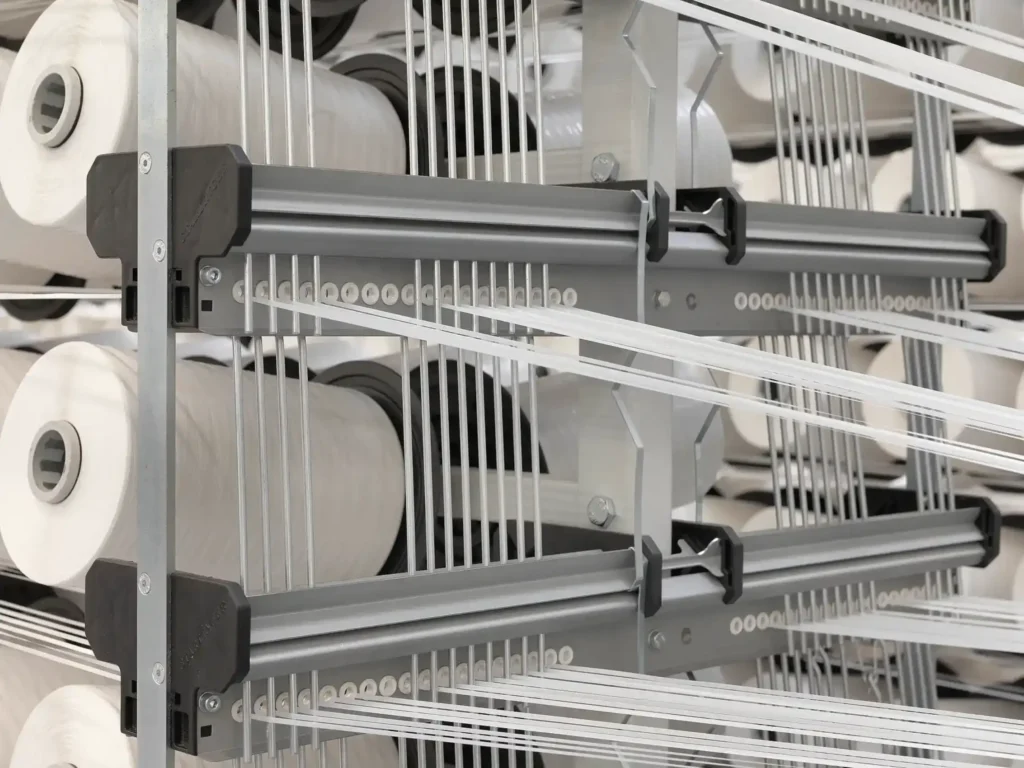
In operations where uptime must convert into payback, where clean seals protect freshness and reputation, and where pallets cross oceans without drama, FFS Tubular Woven Bags act less like packaging and more like a production doctrine. They translate small engineering choices—mesh count, denier, coating gauge, corona energy—into big commercial outcomes: faster fills, squarer stacks, easier audits. When done right, they don’t just move product; they move KPIs. For adjacent construction context and substrate families, see FFS Tubular Woven Bags.
What is FFS Tubular Woven Bags? (Definition & Aliases)
FFS Tubular Woven Bags are continuous rollstock made from circular‑woven polypropylene (PP) fabric that already forms a tube. A thin extrusion‑coated heat‑seal skin—typically PE or a PP/PE blend—lets automated form‑fill‑seal equipment create a bag, meter product, and close the top in one uninterrupted motion. The tube can be gusseted, micro‑perforated for de‑aeration, or printed inline, turning a simple roll into a finely tuned system. In supplier catalogs and RFQs you’ll also meet tubular woven FFS rollstock, PE‑coated tubular PP fabric, and heavy‑duty tubular FFS sacks—different labels, same ambition: high‑speed automation with stack‑safe mechanics.
Background & field knowledge. Behind FFS Tubular Woven Bags sit several disciplines working in chorus: polymer science (melt‑flow index control, antioxidant/UV packages), textile mechanics (mesh, denier, gsm, loom balance), converting science (extrusion coating 25–40 μm, corona ≥38 dynes, target COF), and the physics of automation (jaw metallurgy, residence time, registration control). For food and feed, the material file typically cites FDA 21 CFR §177.1520 for olefin polymers, EU No 10/2011 with an overall migration limit of 10 mg/dm² under NIAS/SML oversight, and GMP under EC No 2023/2006; hygiene programs are commonly certified to BRCGS Packaging Materials (Issue 7) or ISO 22000:2018/FSSC 22000. Fabric strength is usually validated with ASTM D5035 (strip tensile) and general sack requirements mapped to GB/T 8946‑2013.
Horizontal and vertical thinking. Think sideways, then think upward. Horizontally, FFS Tubular Woven Bags blend woven‑sack know‑how (tenacity, seam logic), film‑layer behavior (seal initiation, hot‑tack), and powder rheology (bulk density, aeration, angle of repose). Vertically, causality climbs: resin → slit tape → circular‑woven fabric → extrusion‑coated seal layer → print/varnish → FFS seal curves (temperature/time/pressure) → pallet behavior. Touch one dial and the orchestra responds—raise mesh from 10×10 to 12×12 and puncture resistance climbs while forming windows tighten; thicken coating from 25 μm to 35 μm and seal margin widens as curl risk shifts; alter COF from 0.25 to 0.40 and feed reliability improves while pallet slide diminishes.
Data reinforcement. Corridors repeatedly published by reputable makers (Made‑in‑China, Alibaba, peer converters) converge on: mesh 10×10–14×14, denier 800D–1100D, fabric 70–110 g/m², extrusion‑coated seal layer 25–40 μm (PE or PP/PE), roll flat‑widths 300–700 mm, 3″ (76 mm) cores, roll OD 400–900 mm, corona ≥38 dynes, and line seal windows around ~130–170 °C for PE‑rich skins with 6–10 color flexo/gravure options. These aren’t arbitrary bounds; they are the stable neighborhoods where manufacturability, strength, and speed coexist.
Case analysis. A salt producer retiring premade pillow sacks shifted to FFS Tubular Woven Bags (12×12 mesh, ~90–95 g/m² fabric, 30 μm PE coat). Machine uptime rose 6.8% thanks to fewer feed stoppages; square‑shouldered stacks reduced leaning in transit; barcode reliability improved after matte panels were added behind codes. Small choices, large dividends.
Comparative study. Film‑only heavy‑duty rolls run very fast and can be crystal clear, yet they creep at height and heat; paper multiwall feels premium but invites moisture regain and corner bursts. FFS Tubular Woven Bags occupy the pragmatic middle: fast on jaws, stoic on pallets, credible in audits.
What is the features of FFS Tubular Woven Bags? (Speed, Sealability & Warehouse Discipline)
Automation‑first geometry. Because FFS Tubular Woven Bags start as a tube, one longitudinal seam disappears. That symmetry around the forming shoe cuts skew, corrects “banana” bag visuals, and stabilizes registration. With COF tuned so webs feed yet layers grip, roll handling becomes calmer and pallet stability improves.
Seal integrity at line pace. The PE or PP/PE coating yields a broad seal‑initiation window—commonly ~130–170 °C—which is vital when jaws cycle fast and powders shed dust. Seal curves (temperature × time × pressure) are mapped by lot, hot‑tack is checked at real speeds, and seals are re‑verified after oily or dusty trials. Speed without seal strength? That’s theater, not packaging.
Strength without gratuitous grams. Woven PP provides tensile capacity and controlled elongation, enabling FFS Tubular Woven Bags to resist long‑term creep in warm warehouses. Fabric and seam performance are trended against ASTM D5035 data, while block‑bottom add‑ons, where specified, lift cube efficiency. Anti‑slip backs increase inter‑layer friction—more grip, less mass.
Venting that respects rheology. Micro‑perforations or breathable back panels accelerate de‑aeration and reduce “pillow” effects. Here, horizontal thinking shines: powder behavior meets fabric physics so that settle time shrinks and dust halos at the spout subside.
Print fidelity and scanner fluency. Corona to ≥38 dynes stabilizes ink anchorage; ΔE dashboards keep tones honest across lots; ASTM D5264 rub tests make graphics survive conveyor miles. Barcode grades are disciplined with matte panels and quiet‑zones to target ISO/IEC 15416 grade B or better in mixed lighting.
Compliance that travels. For edible or feed SKUs, FFS Tubular Woven Bags are specified with FDA 21 CFR §177.1520 and EU No 10/2011 documentation, NIAS/SML managed, GMP under EC 2023/2006, and hygiene certified to BRCGS/FSSC 22000—a dossier retailers recognize.
Data reinforcement. RFQs for 10–25 kg corridors repeatedly cite mesh 12×12, fabric 80–100 g/m², coating 25–35 μm, flat‑width 320–600 mm, seal setpoints 140–165 °C, anti‑slip backs, and matte code panels.
Case analysis. A fertilizer co‑packer deployed FFS Tubular Woven Bags with targeted micro‑perfs. De‑aeration time fell, spout dust dropped, and WMS scans accelerated as code glare was tamed.
Comparative study. Premade valve sacks can be elegant, yet they inflate SKU counts and change parts; kraft composites promise “paper touch” but surrender in humidity. FFS Tubular Woven Bags keep speed, strength, and print resilience in a single roll family.
What is the production process of FFS Tubular Woven Bags? (From Resin to Ready‑to‑Run)
Resin prep & slit‑tape extrusion. Food‑grade PP—optionally with qualified rPP—is extruded into slit tapes. Melt‑flow is trended per ASTM D1238 to match draw windows; antioxidant/UV packages are confirmed against supplier CoAs so strength isn’t quietly traded for speed.
Orientation & circular weaving. Tapes are stretched to raise crystallinity and tenacity, then heat‑set for stability. Circular looms weave tubes to a target mesh/denier/gsm; pick density and tape uniformity govern puncture resistance and flat lay—foundations for crisp printing and predictable forming.
Extrusion coating (heat‑seal skin). PE or PP/PE layers—typically 25–40 μm—are applied to the tube or to flattened fabric that is later re‑tubed. Controls include bond strength (peel ≥1.5 N/15 mm), curl/flatness, retained dyne ≥38, and target COF for a feed‑friendly yet stack‑safe surface.
Printing & protective coats. Flexo or gravure renders branding and machine‑readables. Color ΔE tolerances, ASTM D5264 rub resistance, and barcode grading keep marks readable after conveyors and pallet rides. Topcoats—matte or gloss—are chosen to balance shelf pop with scan accuracy.
Slitting, gusseting & winding discipline. Clean edges, correct tension, unshakable splices, and uniform roll OD prevent telescoping and mid‑seal surprises. Standard 3″ cores accelerate changeovers and simplify storerooms.
FFS integration & centerlines. Forming collars are matched to coating chemistry; jaw metallurgy and dwell are mapped by lot. Micro‑perf patterns are tuned to bulk density; vision systems hold registration; centerlines are documented so operators repeat success rather than rediscover it.
Quality & compliance checkpoints. Tensile (ASTM D5035), peel, color ΔE, dyne audits, and migration tests to EU No 10/2011 (when applicable) complete the technical file. Hygiene to BRCGS/ISO 22000/FSSC 22000 and full traceability from resin/tape/ink lot to pallet (DoC/CoA + retains) make audit rooms quiet.
Horizontal and vertical analysis. Horizontally, the line borrows peel/dyne testing from film converting, uptime discipline from textiles, and HACCP zoning from food plants. Vertically, drift propagates: low dyne → ink pick‑off; high COF → feeding jams; low COF → pallet slide; weak peel → delamination. Quality is a chain; the quietest link sets the limit.
Data reinforcement. Converters who implemented live dyne telemetry, peel‑strength SPC, and COF monitoring reported >40–50% fewer lamination/print defects and smoother forming—evidence that instrumentation buys both speed and safety.
Case analysis. After DOE, a partner trimmed coating from 30 μm to 25 μm while holding peel and drop metrics—~8% mass saved, less curl, faster threading.
Comparative study. One tubular roll per size replaces a tangle of premade SKUs—fewer change parts, cleaner SOPs, shorter training cycles, tidier warehouses.
What is the application of FFS Tubular Woven Bags? (Core Sectors & Retail/E‑Commerce)
Salt, sugar, and grains (10–25 kg). With ~85–100 g/m² fabric and 25–30 μm PE coats, FFS Tubular Woven Bags run cleanly on jaws, seal through modest dust, and stack square. Optional clear windows assist visual verification where storytelling by sight adds trust.
Fertilizers & agro inputs. Abrasive and dusty goods favor tighter meshes (e.g., 12×12) and anti‑slip backs. Micro‑perfs shorten settle; woven substrates keep geometry under hot roofs when films alone would creep.
Pet food & feed premixes. PE‑rich skins seal across crumbs and oils; matte code panels preserve WMS speed; square stacks survive sortation and mixed pallets—a logistics tax avoided.
Data reinforcement. Commercial specs for retail/industrial corridors frequently cite widths 320–600 mm, 80–100 g/m² fabrics, 25–35 μm coatings, and export weights of 10/15/25 kg—ranges echoed across audited supplier pages and buyer RFQs.
Case analysis. A lawn‑seed brand’s switch to FFS Tubular Woven Bags with anti‑slip backs lifted pallet height by one layer without lean and cut corner‑split claims materially.
Comparative study. Film‑only rolls promise clarity yet drift under load; paper multiwall reads “natural” but surrenders in humidity. The tubular woven format balances speed, strength, and shelf‑ready print in a single, scalable platform.
What is the application of FFS Tubular Woven Bags? (Export, Compliance & Warehouse Physics)
Cross‑border readiness. Approval packets—Declarations of Compliance to EU No 10/2011 (where food/feed), polymer citations to FDA 21 CFR §177.1520, GMP under EC 2023/2006, and hygiene certificates (BRCGS/FSSC 22000)—shorten EU/UK/US onboarding. For bulk cousins (FIBCs), performance aligns with ISO 21898:2024; the traceability philosophy remains the same.
Containerization & cube. Tubular geometry supports clean pillow or block‑bottom conversions that load efficiently. Anti‑slip backs tame lean at sea. Compression trials (ASTM D642) and route‑specific drops (ASTM D5276) freeze SOPs before scale so surprises happen in the lab, not on the quay.
Warehouse climate & safety. Hot roofs accelerate creep; choosing mesh/denier/gsm wisely preserves geometry. Optional antistatic finishes—screened by ASTM D257—mitigate dust risks. UV packages (supplier‑declared hours correlated to ASTM G154/G155) defend print during yard staging.
WMS & scanner fluency. Matte code panels, contrast spines, and disciplined quiet‑zones keep ISO/IEC 15416 barcode grades at ≥B under mixed lighting, which prevents the silent tax of dockslow.
Data reinforcement. Export RFQs often request ASTM D5035 tensile, lamination peel, ΔE/adhesion reports, dyne logs, and—where relevant—migration results (OML 10 mg/dm²). Dimensions cluster around 350–580 mm flat‑width and roll ODs ≤800–900 mm for ergonomic handling.
Case analysis. A coastal rice exporter standardized roll OD and COF on FFS Tubular Woven Bags; changeovers shortened, container lean incidents dropped, and claims slid below 0.3% per 10,000 units.
Comparative study. When absolute oxygen or aroma barrier is non‑negotiable, foil systems may rule; when line speed, stack height, and a credible recyclability narrative must live together, FFS Tubular Woven Bags carry the argument.
Quick Spec Sheet (Typical, Commercially Verifiable)
| Parameter | Typical range / option | Technical note |
|---|---|---|
| Fabric weight (circular‑woven PP) | 70–110 g/m² | Select by bulk density & drop targets; retain margin for creep at heat |
| Mesh (warp×weft, equivalent) | 10×10 – 14×14 | Higher mesh refines puncture resistance and print halftones |
| Denier (tapes) | 800D – 1100D | Heavier denier for abrasive contents or taller stacks |
| Extrusion coat (PE / PP‑PE) | 25–40 μm | 25–30 μm common for sealability & curl control; verify peel ≥1.5 N/15 mm |
| Flat‑width (roll) | 300–700 mm | Aligns to 10/15/25 kg formats |
| Roll core / OD | 3″ (76 mm) core; 400–900 mm OD | Balance changeover frequency vs. weight |
| COF (outside / inside) | Tuned to lane (e.g., 0.25–0.45) | Feed reliably yet stack without slide |
| Corona (print face) | ≥38 dynes | Stabilizes ink/adhesive anchorage |
| Printing | Flexo / gravure up to 6–10 colors | Manage ΔE; verify rub via ASTM D5264 |
| Seal window (PE‑rich layer) | ~130–170 °C | Map T/t/P per lot; verify hot‑tack under dust/oil |
| Mechanical tests | ASTM D5035 tensile; seam; ASTM D5276 drop; ASTM D642 comp | Validate under realistic loads & warehouse climates |
| Food‑contact & GMP (where needed) | FDA 21 CFR §177.1520; EU No 10/2011; EC 2023/2006 | OML 10 mg/dm²; SML/NIAS controls; DoC/CoA retained |
| Hygiene systems | BRCGS Packaging Materials (Issue 7); ISO 22000/FSSC 22000 | GFSI‑benchmarked hygiene & HACCP alignment |
| UV/antistatic (optional) | Supplier‑declared hours; ASTM D257 for resistivity | Protect print and manage dust in dry lanes |
Values reflect corridors widely posted by audited suppliers and recognized standards. Always prove the spec on your own line with tensile, seam, drop, compression, migration, and print‑durability testing tuned to your bulk density, climate, and route risk.
A Systems‑Thinking Synthesis: VidePak’s End‑to‑End Playbook
Sub‑problem A — Line speed vs. seal quality. Fast jaws and dusty powders rarely shake hands. Solution: PE‑rich coatings with broad seal initiation; lot‑level seal curves; hot‑tack checks at real cadence; documentation to FDA 21 CFR §177.1520/EU No 10/2011 so speed never trades away approvals.
Sub‑problem B — Strength vs. weight vs. cube. Too heavy, and freight swells; too light, and claims do. Solution: baseline 12×12 / 900D / 85–100 g/m² fabric with 25–30 μm coats; validate via ASTM D5035, D5276, D642, plus hot‑warehouse creep trials.
Sub‑problem C — Print pop vs. scanner glare. Rich color that won’t scan is a tax on operations. Solution: matte code panels, disciplined quiet‑zones, ΔE dashboards, and live dyne telemetry to keep ISO/IEC 15416 ≥ B under mixed lighting.
Sub‑problem D — Inventory sprawl vs. audit readiness. Too many SKUs slow training; too little paperwork slows approvals. Solution: harmonize core/OD and flat‑width families; standardize DoCs, dyne logs, and hygiene certificates (BRCGS/FSSC); hold genealogy from resin/tape/ink lot to pallet with retains and CAPA.
Integrated outcome. When the pieces are orchestrated, FFS Tubular Woven Bags deliver a mono‑family, automation‑first platform that fills cleanly, stacks squarely, prints boldly, and walks into audits without drama—faster lines, not faster failures; fewer grams, not fewer safeguards; stronger bags, stronger brand.
Advantages of FFS Tubular Woven Bags
FFS Tubular Woven Bags stand out due to several key attributes that make them ideal for flood protection:
- Robust Construction: The tubular design combined with woven polypropylene provides exceptional strength and durability. This ensures that the bags can withstand the pressure and weight of materials like sand, making them effective in flood barriers.
- Form-Fill-Seal System: The FFS system streamlines the production process, allowing for high-speed manufacturing of consistently high-quality bags. This system ensures that the bags are formed, filled, and sealed in a single automated process, enhancing efficiency and reducing production costs.
- Versatility: Beyond flood management, these bags are versatile and can be adapted for various other uses, such as in agriculture and construction. Their ability to handle different materials and conditions adds to their practicality.
The Form-Fill-Seal Process
The FFS system is a critical component in the production of Tubular Woven Bags. Here’s a detailed look at how this process works:
- Forming: The process begins with creating the tubular shape of the bag. The polypropylene fabric is fed through a series of machines that shape it into the desired dimensions. This step ensures that the bags have a consistent size and shape, which is crucial for applications requiring precise dimensions.
- Filling: Once the tube is formed, it is automatically filled with the desired material, such as sand for flood control. The FFS system allows for precise control over the amount of material added, ensuring that each bag meets the required specifications for weight and capacity.
- Sealing: The final step involves sealing the bag to secure the contents. The FFS system uses heat or ultrasonic sealing methods to ensure that the bags are tightly closed and can withstand the rigors of transportation and use.
Customization Options for FFS Tubular Woven Bags
At VidePak, we offer various customization options for FFS Tubular Woven Bags to meet specific needs:
- Size and Dimensions: We provide flexibility in bag sizes to accommodate different requirements. Whether you need large bags for extensive flood barriers or smaller ones for specific applications, we can tailor the dimensions accordingly.
- Material Strength: We offer different thicknesses and strengths of polypropylene fabric to ensure that the bags can handle the required loads and conditions. This customization helps in achieving the desired durability and performance.
- Printing and Branding: Custom printing options are available to add branding, instructions, or other relevant information to the bags. This feature is particularly useful for identifying and tracking the bags during and after deployment.
- Additives and Treatments: We can incorporate special additives or treatments to enhance the properties of the bags, such as UV resistance or water repellency. These treatments are important for ensuring that the bags perform well in harsh environmental conditions.
Applications in Flood Management
FFS Tubular Woven Bags are primarily used for flood management due to their strength and durability. Here are some key applications:
- Sandbags: These bags are commonly used as sandbags for creating flood barriers. Their robust construction allows them to hold large quantities of sand, which can be deployed quickly to block or divert floodwaters.
- Barrier Construction: In flood-prone areas, these bags are used to construct temporary barriers and levees. Their ability to withstand pressure and stay intact under stress makes them ideal for creating effective flood defenses.
- Storage and Transport: After being used for flood management, the bags can also be used for storing and transporting sand or other materials. Their durability ensures that they continue to be useful even after initial deployment.
VidePak’s Commitment to Quality
At VidePak, we are committed to producing FFS Tubular Woven Bags that meet the highest standards of quality and performance. Here’s how we ensure excellence in our products:
- Advanced Equipment: We utilize state-of-the-art machinery from leading suppliers like Starlinger to produce our bags. This advanced equipment ensures precision and consistency in every bag we manufacture.
- Stringent Quality Control: Our quality management system encompasses rigorous checks and tests at every stage of production. From initial material inspection to final product testing, we ensure that our bags meet strict quality standards.
- Expert Team: Our team of experts brings years of experience and knowledge to the production process. We work closely with clients to understand their needs and provide tailored solutions that deliver superior performance.
Conclusion
FFS Tubular Woven Bags play a crucial role in flood management, offering strength, versatility, and efficiency. At VidePak, our expertise in producing high-quality bags using the latest technology ensures that our products meet the demands of flood control applications and beyond. With customization options and a commitment to quality, we provide solutions that effectively address the challenges of flood prevention and management.