
What is FIBC Bags? definition, common aliases, and why the format matters now
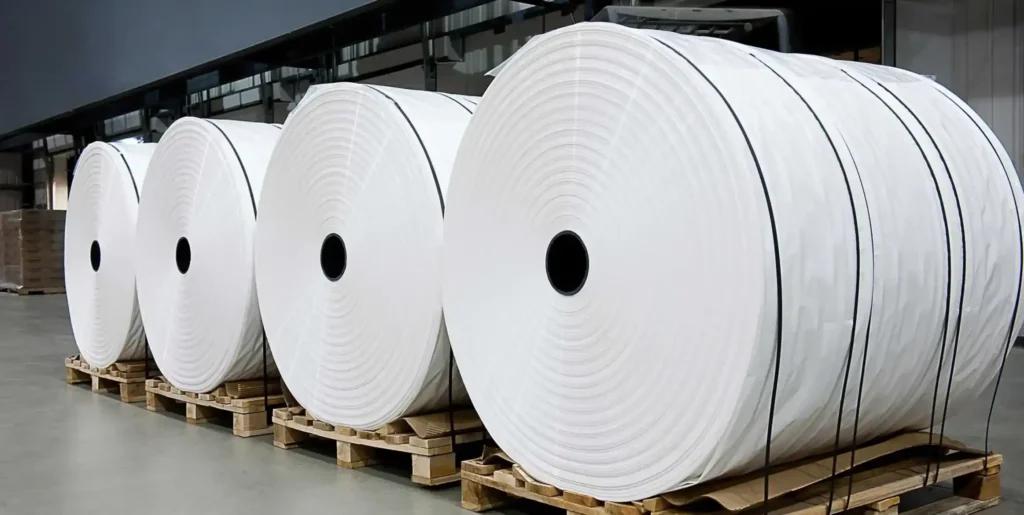
FIBC Bags—the shorthand for Flexible Intermediate Bulk Containers—are large-capacity, liftable packaging systems engineered to move, store, and dispense dry flowable materials in the 500–2,000 kg range. In procurement and plant-floor conversations they are also called bulk bags, big bags, super sacks, IBC sacks, woven PP FIBCs, and sometimes UN-rated woven plastic containers when hazardous goods are involved. Safety literature further classifies the format into electrostatic Types A, B, C, and D to align with the ignition risk profile of powders and vapors. A simple shell with loops? Not quite. The working reality is a composite of woven polypropylene fabrics, optional coatings and liners, stitched or woven lifting systems, and purpose-built spouts whose geometry must match product physics and line constraints.
Why has the last year put a spotlight on FIBC Bags? Because these containers sit at the intersection of three pressures that dominate modern supply chains: measurable safety, credible sustainability, and relentless efficiency. They unitize tons of material in a single lift. They can be specified for food, chemicals, and pharmaceuticals. They leave a paper trail—literally printed on the bag—that auditors can read, question, and verify. In other words, they concentrate both value and scrutiny.
The material of FIBC Bags — composition, behavior, and cost levers
Designing FIBC Bags is less about picking parts and more about orchestrating roles: structural strength, barrier performance, electrostatic control, and hygienic handling. The architecture below reflects common practice, with options that can be combined to meet sector-specific demands.
Woven polypropylene fabric (structural backbone)
Extruded tapes are drawn to orient chains, then woven into circular or flat fabrics ranging ~120–230 g/m². Orientation boosts tensile per gram; weave geometry tunes breathability for de‑aeration or sifting control. Outdoor duty calls for UV stabilizers; without them, retained strength can plummet under sunlight.
Cost drivers: resin index, draw ratio (yield vs. break risk), loom uptime, fabric gsm.
Coatings & laminations (sift and moisture control)
PP/PE extrusion coatings or laminated films reduce sifting and improve wipe‑down hygiene. They are not substitutes for liners when water activity control is critical, but they meaningfully cut dusting and label staining.
Trade‑off: coating reduces breathability, so fast filling may require venting strategies.
Liners (barrier and hygiene)
Loose, attached, or form‑fit liners in LDPE/LLDPE, HDPE, or coex films (optionally with EVOH) create a continuous sealable surface, provide gas and moisture control, and act as the primary food‑contact layer when applicable. Antistatic additives may be included.
Cost drivers: film type and gauge, barrier layers, antistatic packages, form‑fit fabrication.
Lifting loops & slings (handling safety)
Four‑loop designs are standard; one‑ and two‑loop agricultural styles trade handling flexibility for cost. Cross‑corner loops ease tine entry; tunnel‑lift systems allow precise insertion in tight aisles. Stitch density, thread selection, and seam design underpin safety factors.
Spouts, closures & bases (process efficiency)
Filling duffles, conical or tubular spouts, discharge star‑closures or petal closures, flat or conical bases—all determine filling speed, dust control, discharge completeness. Baffle walls preserve squareness and storage density.
Electrostatic safety (Types A/B/C/D)
Static behavior is not a detail. Type A: no protection; Type B: low breakdown voltage; Type C: conductive/groundable; Type D: dissipative without earthing. Selection must track minimum ignition energy and ambient vapors.
What are the features of FIBC Bags? outcomes that plants, auditors, and operators can measure
Feature lists become meaningful when translated into outcomes. The right specification for FIBC Bags will ship more safely, stack more densely, run faster on the line, and document compliance with less friction.
Logistics & cube efficiency
- Baffles curb bulging, keeping a nominal 1,000 × 1,000 mm footprint close to spec under dynamic loads.
- Unitization reduces pallet and stretch-film use; fewer handling touches per tonne means fewer opportunities for drops.
Mechanical safety & durability
- Fabric strength, seam efficiency, and loop design combine to deliver 5:1 or 6:1 safety factors under lift, topple, and cyclic tests.
- UV-stabilized tapes maintain integrity during unavoidable outdoor storage windows.
Hygiene & food-contact readiness
- When paired with compliant liners and low‑migration inks/adhesives on labels, bags can carry food ingredients and nutraceutical precursors.
- Cleanroom‑adjacent areas and controlled air handling support microbiological expectations.
Electrostatic control
- Type C requires grounding continuity; Type D dissipates charge without earthing. Selection is tied to product MIE and zone class, not brand preference.
- Correct selection averts dust explosions and solvent vapor ignition.
Process efficiency
- Form‑fit antistatic liners accelerate filling and reduce bridging; conical bases and star‑closures cut residual heel.
- Discharge aids—vibration, massagers—can be integrated into SOPs for cohesive powders.
Communication & traceability
- Large panels carry hazard symbols, regulatory statements, QR-linked certificates, and batch IDs.
- Serialization connects a physical bag to its dossier, easing audits and recalls.
What is the production process of FIBC Bags? choreography with consequences
From resin to squared geometry, the sequence is unforgiving: early variability becomes late failure. Below, each step lists the decision points that move safety, speed, and auditability.
- Tape extrusion. Pellets are melted, slit into tapes, drawn for strength, and wound for weaving.
Control: tape width/thickness, draw ratio, shrinkage/crystallinity, defect counts. - Weaving. Circular or flat looms set warp/weft densities for gsm and permeability.
Control: gsm, pick count, dimensional stability, airflow for de‑aeration. - Coating/lamination (optional). Extrusion or adhesive systems apply films; corona/plasma boosts adhesion.
Control: dyne level, coatweight, bond strength, pinhole density. - Cutting & printing. Panels and labels prepared; low‑migration inks for food/pharma contexts.
Control: register, rub resistance, long-distance legibility of hazard icons. - Sewing & assembly. Loops integrated, spouts applied, baffles sewn; thread and stitch chosen for load profile; needle control enforced.
Control: seam efficiency, loop strength, dimensional conformity; continuity checks for Type C. - Liner fabrication & insertion. Blown film produced and sealed into tubes with spouts; antistatic/barrier options; form‑fit reduces folds.
Control: thickness, seal strength, pinhole frequency, cleanliness metrics. - Testing & certification pack. Top lift, drop, topple, cyclic loads; UN tests where applicable; IEC electrostatic tests; documentation compiled with lot coding.
Control: CoA content, sampling plan, traceability marks, certificate mapping to SKUs.
What is the application of FIBC Bags? sectors, physics, and choices
Applications reveal the real selection logic: start with physics (particle size, cohesion, bulk density, moisture sensitivity, MIE), match the line (fill method, target rate, equipment), then consider context (sun, rain, cleanliness, reuse ambitions). A few patterns recur.
Chemicals & minerals
Calcium carbonate, kaolin, TiO₂, silica, alumina, fertilizers, and salts favor valve‑less filling with dust socks, conical discharges, and baffles. Hazardous classes require UN marks and performance tests. Abrasion argues for reinforcement at spouts and bases.
Food ingredients & agriculture
Sugar, rice, pulses, grains, starches, and feed premixes use food‑contact liners with declarations. Metal‑free zones and sieve‑safe stitching protect downstream processes. For seeds, antistatic control prevents ignition; UV packages extend seasonal storage life.
Pharmaceuticals & nutraceuticals
APIs and excipients need controlled-environment liners, double‑bagging, and serialized traceability. Deviations become easier to investigate when each bag is a data point.
Waste, recycling & regrind
Metal turnings, plastic regrind, and textile scraps demand abrasion resistance and robust loops. Where vapors may be present, Type C or D is the default, not an upgrade.
FIBC Bags: aligning with ESG standards — a structured roadmap
ESG alignment is not a slogan; it is a sequence that can be audited. The system below breaks environmental, social, and governance dimensions into actionable levers and recombines them into a playbook.
Environmental — materials, waste, and carbon
- Material efficiency. Right‑weight fabric; use baffles to improve stacking and reduce secondary packaging.
- Recycled content. Consider mechanically recycled PP in non‑critical components where regulation allows; evaluate ISCC PLUS mass‑balance routes where customers request certified content.
- End‑of‑life. Design for disassembly—clearly mark liners and shells, enable separation, and publish sorting guidance.
- Carbon accounting. Report kg CO₂e per bag and per tonne moved to enable fair comparisons across platforms.
Social — worker safety, community impact, product stewardship
- Factory safety. Guarding, ergonomics, needle control logs, and chemical handling procedures for coatings and inks.
- Operator safety. Print grounding pictograms for Type C; state loop and seam ratings plainly; harmonize iconography across SKUs.
- Community protection. Dust control in storage and transit; UV-stable materials to avoid mid‑supply failures and litter.
Governance — standards, auditability, and claims
- Conformance. Use current editions of ISO 21898, IEC 61340‑4‑4, UN 13H codes, and food‑contact frameworks as applicable.
- Document control. Drawings, BoMs, test reports, CoAs, migration declarations—each tied to lot codes and change control.
- Claims discipline. Recyclability and recycled content claims scoped by geography and infrastructure; avoid over‑promising.
Integration principle: Let physics, the filling line, and local waste systems vote with equal weight when selecting FIBC Bags architectures.
Standards & identifiers that make FIBC Bags auditable
A credible program references specific, current standards and ties them to SKUs and lots: ISO 21898 for performance; UN Model Regulations (13H1–13H4) for dangerous goods; IEC 61340‑4‑4 for electrostatics; EU 10/2011 with EN 1186 for food‑contact migration; FDA 21 CFR 177.1520 and 175.105 for U.S. declarations; ISO 9001 and 14001 for management systems; FSSC 22000 or ISO 22000 where food-contact liners and cleanroom controls are relevant; GMP (EC) 2023/2006 for materials intended to contact food. Where carbon and circularity claims are requested, ISCC PLUS and ISO 14067 often appear in contracts.
| Dimension | Typical Method | Indicative Target / Notes |
|---|---|---|
| Safety factor | ISO 21898 (top lift, topple, cyclic) | 5:1 single‑trip; 6:1 multi‑trip |
| Fabric weight | Gravimetric (gsm) | 140–230 g/m² per SWL and abrasion profile |
| Seam efficiency | Tensile vs. fabric baseline | ≥ 67% typical for lockstitch |
| Loop strength | Proof vs. SWL | Pass at 2× SWL without permanent deformation |
| Liner thickness | Micrometer (µm) | 60–120 µm; barrier only when justified |
| Electrostatic type | IEC 61340‑4‑4 | A/B/C/D selection by MIE and zone |
| UN performance | UN tests; ADR/IMDG | Drop, topple, stacking; 13H code marking |
| Food contact | EN 1186; EU 10/2011; 21 CFR 177.1520 | OML ≤ 10 mg/dm²; SMLs respected |
| Carbon footprint | ISO 14067 / GHG Protocol | Report per bag and per tonne moved |
| Recycled content | ISCC PLUS (where used) | Mass-balance documentation; claim limits by region |
Market context for FIBC Bags — the last 12 months in practice
Policy clarity around design‑for‑recycling and EPR nudged buyers toward mono‑material shells with separable liners and toward honest, geography‑aware claims. Carbon accounting matured: many RFQs now request emissions per bag and normalized per tonne shipped so platforms can be compared fairly. Attention to electrostatics intensified as dust incidents made headlines, prompting more consistent use of Type C and Type D where warranted.
Resin markets stabilized relative to prior volatility, enabling procurement to lock grammages and liner gauges for multi‑quarter stretches. Digital traceability also scaled: QR codes link a bag to its dossier—drawings, test reports, declarations, and ESG data—shrinking the administrative burden for both customer and converter.
Worked scenarios — translating requirements into FIBC Bags structures
Food‑grade starch (export)
Physics: fine, mildly hygroscopic. Design: 160 g/m² fabric, baffles, form‑fit antistatic LDPE liner (90 µm), coated outer, cross‑corner loops. ESG: separable components, ISO 14001 and FSSC 22000 plant, footprint declared per tonne moved.
Titanium dioxide (dusting hazard)
Physics: fine particulate with ignition risk depending on MIE. Design: 200 g/m² fabric, conical base, antistatic liner, Type C grounding, reinforced spout seams. ESG: incident prevention dominates claims.
Seed distribution (seasonal)
Physics: granular, weather‑exposed in season. Design: 180 g/m² UV‑stabilized fabric, tunnel‑lift, coated exterior, optional zip‑in liner for rainy seasons. ESG: only add liner when season warrants; durability reduces community litter risk.
Procurement playbook for ESG‑aligned FIBC Bags
A repeatable, defensible sequence saves time and strengthens records.
- Define the job. Physics, hazards, shelf life, electrostatic zone.
- Select the platform. Mono‑PP shell; separable food‑contact liner; barrier liner only when data demands.
- Specify tests. ISO 21898, IEC 61340‑4‑4, liner WVTR/OTR if relevant; UN performance for dangerous goods.
- Request documentation. Drawings, BoM IDs, CoAs, migration declarations, management certificates (ISO 9001/14001, FSSC 22000/ISO 22000).
- Pilot and measure. Fill time, dust loss, discharge completeness, pallet stability, operator interventions.
- Decide with impact data. Price plus kg CO₂e per tonne moved, end‑of‑life waste, incident rates.
- Lock and monitor. Change control; KPIs for drops, dust complaints, near‑misses, and separation rates for liners vs. shells.
Risk register for FIBC Bags — pitfalls and mitigations
- Static ignition. Select correct electrostatic type; verify continuity (Type C) or dissipation (Type D); train operators; print clear pictograms.
- UV degradation. Match stabilizer package to exposure; monitor retained strength via accelerated or field tests.
- Seam failure. Validate seam efficiency; standardize stitch patterns; qualify thread; run cyclic load tests.
- Liner puncture. Choose appropriate gauge; insist on form‑fit for sharp or cohesive products; smooth interior seams.
- Greenwashing. Scope claims by geography; enable liner separation; document mass‑balance where claimed.
- Regulatory misses. Maintain substance registers; execute worst‑case migration tests; link declarations to lot codes.
Learn more about FIBC Bags
For an at-a-glance catalog view and adjacent formats, see FIBC Bags in a broader bulk-bag portfolio context. This internal link anchors the keyword to a practical resource without breaking the reading flow.
- What is FIBC Bags? definition, common aliases, and why the format matters now
- The material of FIBC Bags — composition, behavior, and cost levers
- What are the features of FIBC Bags? outcomes that plants, auditors, and operators can measure
- What is the production process of FIBC Bags? choreography with consequences
- What is the application of FIBC Bags? sectors, physics, and choices
- FIBC Bags: aligning with ESG standards — a structured roadmap
- Standards & identifiers that make FIBC Bags auditable
- Market context for FIBC Bags — the last 12 months in practice
- Worked scenarios — translating requirements into FIBC Bags structures
- Procurement playbook for ESG‑aligned FIBC Bags
- Risk register for FIBC Bags — pitfalls and mitigations
- Learn more about FIBC Bags
- 1. ESG-Driven Market Shifts in China
- 2. VidePak’s Brand Differentiation Strategy
- 3. Technological Innovations Shaping FIBCs
- FAQs: FIBC Bags and ESG Compliance
“ESG isn’t a trend—it’s the new baseline for industrial packaging,” declares Ray, CEO of VidePak, during a factory audit. “By integrating recycled polypropylene (rPP) blends and solar-powered production, we’ve reduced carbon emissions per FIBC bag by 28% while maintaining UN-certified load capacities of 2,000 kg—a testament to our commitment to quality and sustainability.” This report explores how FIBC (Flexible Intermediate Bulk Container) bags are evolving to meet global ESG demands, with a focus on China’s market dynamics, VidePak’s brand differentiation strategy, and the fusion of technical innovation with ethical manufacturing practices.
1. ESG-Driven Market Shifts in China
1.1 Regulatory Landscape and Consumer Demand
China’s FIBC market, projected to grow at a 6.2% CAGR through 2030, is increasingly shaped by ESG policies such as the Dual Carbon Policy (carbon peaking by 2030, neutrality by 2060) and the GB 4806.7-2020 standard limiting antioxidant migration to ≤0.05 mg/kg. VidePak’s EcoShield PP5500 resin exceeds these requirements, achieving a tensile strength of 2,800 N/5 cm and oxidation induction time (OIT) of 45 minutes—critical for chemical and food-grade applications.
Case Study: A 2024 partnership with a Jiangsu-based fertilizer producer utilized UV-stabilized FIBCs with 30% rPP content, reducing carbon footprint by 22% while complying with EU REACH and China’s Green Packaging Certification.
1.2 Regional Adoption Patterns
- Coastal Zones (e.g., Guangdong): Prioritize moisture-resistant FIBCs with PE liners (WVTR <0.5 g/m²/day) for maritime logistics.
- Inland Industrial Hubs (e.g., Sichuan): Demand anti-static FIBCs (surface resistivity 10⁶–10⁸ Ω/sq) for explosive material transport.
| Region | Key Requirement | VidePak Product | ESG Compliance |
|---|---|---|---|
| Eastern China | High humidity resistance | PE-coated FIBCs | ISO 14044-certified |
| Western China | Explosive material safety | Carbon-black FIBCs | ISO 80079-36 |
2. VidePak’s Brand Differentiation Strategy
2.1 Quality Over Cost: A Long-Term Vision
While 60% of Chinese FIBC manufacturers compete on price, VidePak invests in Austrian Starlinger CX6 machines to achieve:
- Precision Weaving: ±0.02 mm fabric tolerance, reducing seam failure rates by 90%.
- Automated Quality Control: IoT sensors detect defects at 120 bags/minute, surpassing industry averages by 40%.
Case Study: In 2024, VidePak’s Block Bottom Valve Bags for a German chemical client achieved zero leakage during 1,500 km rail transport, validated by ASTM D7386 tests.
2.2 Building Brand Equity Through Sustainability
- Solar-Powered Production: A 2MW rooftop photovoltaic system covers 80% of energy needs, with excess sold to China’s grid—offsetting 15% of operational costs.
- Closed-Loop Recycling: 40% of production scrap is reprocessed into rPP, reducing virgin material consumption by 18% annually.
3. Technological Innovations Shaping FIBCs
3.1 Smart FIBCs for Supply Chain Transparency
VidePak’s SmartTrack Series integrates:
- RFID Tags: Monitor real-time humidity/temperature during transit, cutting spoilage by 25% in perishable goods logistics.
- Blockchain Traceability: QR codes link to carbon footprint data, aligning with EU’s CSRD disclosure mandates.
3.2 Material Science Breakthroughs
- PLA-PP Hybrids: Biodegradable blends achieving 60% compostability in 2 years (EN 13432-certified).
- Graphene Coatings: Self-healing films extend bag lifespan by 300% in abrasive environments.
FAQs: FIBC Bags and ESG Compliance
Q1: How do FIBCs reduce carbon emissions vs. traditional packaging?
A: VidePak’s rPP-30 blend cuts CO₂ by 1.2 kg per bag versus virgin PP, validated by ISO 14044 LCA.
Q2: Can FIBCs handle food-grade applications?
A: Yes—VidePak’s FoodSafe FIBCs use FDA-compliant adhesives and achieve <10 CFU/cm² microbial counts (ISO 4833-1).
Q3: What’s the ROI of switching to ESG-aligned FIBCs?
A: Clients report 18-month payback via 30% waste reduction and carbon credit earnings.
Conclusion
The FIBC industry’s future lies in circularity and digital integration. VidePak’s $8 million R&D investment targets AI-driven defect detection and 100% recyclable FIBCs by 2026. As Ray concludes: “In ESG, you either lead or become obsolete. We choose to lead.”
External Links:
- Explore sustainable FIBC production practices: Sustainable Practices with FIBC Bags.
- Learn how BOPP lamination enhances branding: BOPP Laminated Woven Bags: Branding and Market Dynamics.