FIBC Bags: An Essential Packaging Solution for Chemical Raw Materials

What are FIBC Bags and why do chemical plants rely on them?

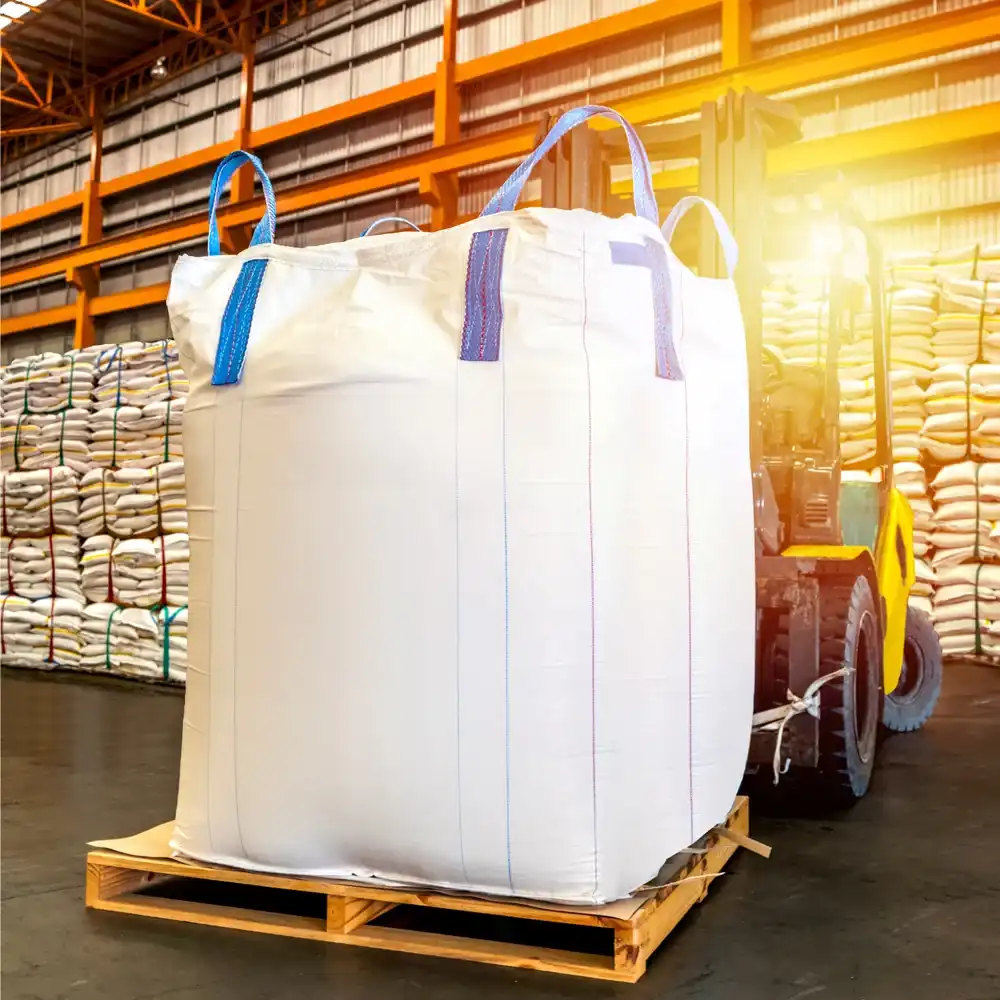
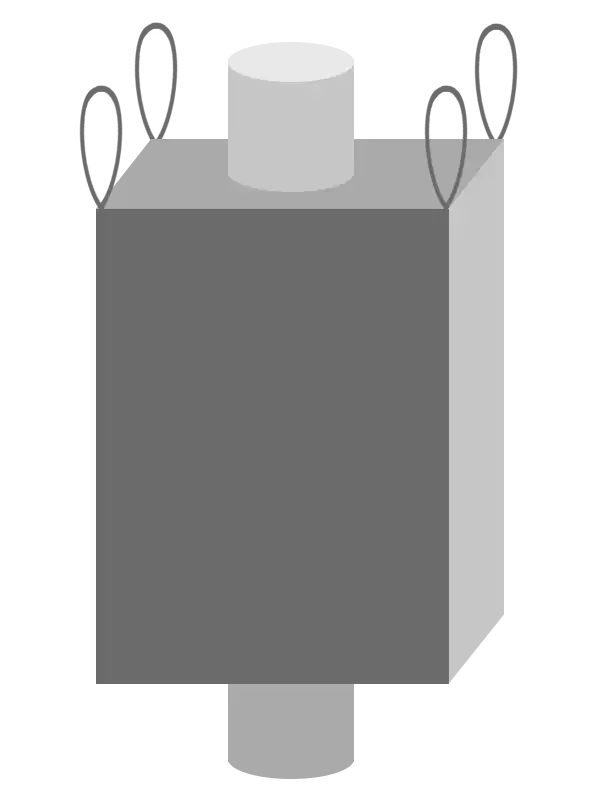
Across chemical warehousing, mixing halls, and bulk terminals, FIBC Bags—Flexible Intermediate Bulk Containers—have become the workhorse container for solids in the 500–2,000 kg range. Each bag is a carefully engineered assembly: a woven polypropylene shell carries the load, lifting loops translate tonnes into safe crane or forklift handling, and optional liners govern moisture and dust. The result is a container that collapses flat when empty, stacks like a cube when full, and moves quickly through filling and discharge stations without the cleaning burden of rigid vessels. In polymer resin logistics, pigments and mineral fillers, specialty salts, adsorbents, and catalysts, FIBC Bags deliver a blend of strength, speed, and compliance that explains their dominance in 2024–2025.

Working definition A FIBC Bags platform is a family of woven polypropylene bulk containers with integrated lifting elements and optional liners/coatings, certified to lift a specified safe working load (SWL) at a defined safety factor and compatible with standard filling and discharge equipment.

Because departments and regions speak different dialects, the market is full of near‑synonyms. Aligning on language prevents procurement errors and certification surprises.

Aliases you will encounter (useful for RFQs and drawings)
  1. Flexible Intermediate Bulk Containers
  2. Bulk bags
  3. Jumbo bags
  4. PP big bags
  5. One‑ton bags
  6. Super sacks
  7. UN certified big bags (dangerous goods variants)
  8. Baffle or Q‑bags (for square profile with internal panels)

What materials build an FIBC and how does the stack perform?

Materials in FIBC Bags are chosen like components in a pressure vessel—each with a job, each with a failure mode. Understanding the stack lets engineers dial performance without simply adding grams.

Woven PP fabric — the tensile shell

Polypropylene tapes, slit from cast film and drawn 5–7×, are woven into circular or flat fabrics. Typical basis weights span ~140–230 g/m² for 5:1 designs and higher for 6:1 reuse programs. Coatings close interstices to reduce dust egress and moisture ingress; uncoated fabrics vent air during fast fills. Fabric quality—pick density, draw ratio consistency, and UV stabilization (200–1,600 h)—directly governs seam efficiency and top‑lift performance.

Lifting elements — loops, patches, body geometry

Corner loops, cross‑corner loops, or single‑point lifts provide rigging points. Reinforcement patches spread loads into the body. Body styles—four‑panel, U‑panel, circular, and baffle (Q‑bag)—trade conversion cost against shape control and cube efficiency. Baffles preserve a near‑square footprint for container fill and pallet stability.

Liners and films — dust and barrier control

Lay‑flat LDPE liners (60–150 μm) address dust and modest moisture. Form‑fit liners put material against walls for cleaner discharge. Coextruded PE/EVOH/PE liners raise oxygen barrier for sensitive organics; antistatic/conductive liners align with electrostatic type selection (B/C/D).

Seams, closures, and discharge features

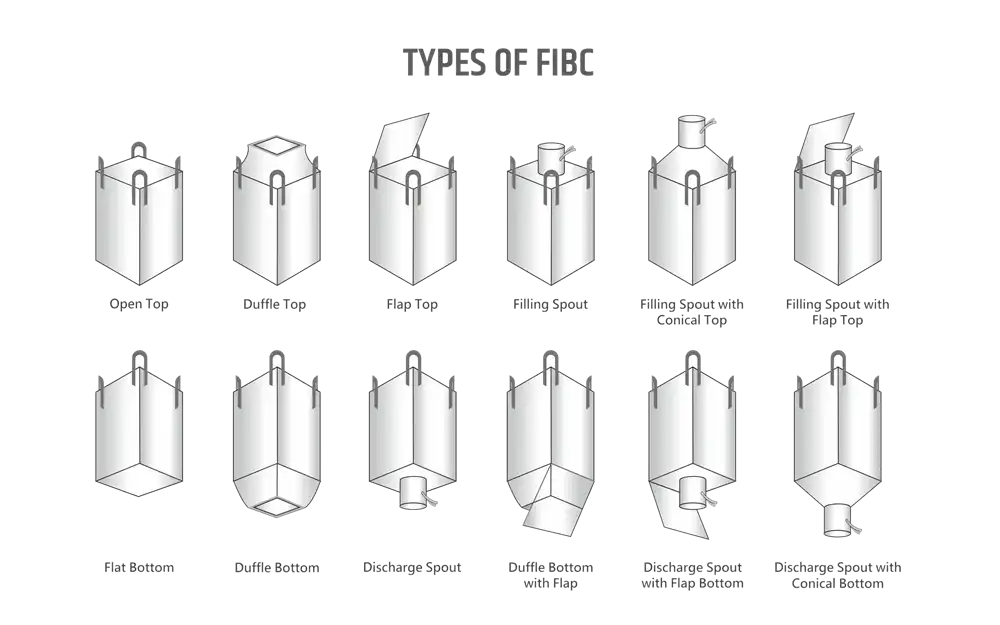
Double‑chain lock seams with correct stitch density convert fabric strength into container strength. Sift‑proof cords close needle holes for fine powders. Top options include fill spouts with petal covers or full duffles; bottom options range from conical spouts with star/iris safety to full discharge doors.

Additives and print — life extension and clarity

UV masterbatch extends yard life; antistatic packages control surface resistivity. Flexographic prints and durable placards carry product codes, handling pictograms, and regulatory marks. QR labels support digital traceability and reuse inspection logs.

Think of the stack as a negotiation: fabric wants tenacity, liners want cleanliness, loops want load paths, and the plant wants speed. The right specification gives each party enough without overpaying in mass or complexity.

Which features actually matter on the floor?

Operators judge FIBC Bags under forklifts and above hoppers. The following capabilities consistently separate reliable programs from costly ones.

  • High payload at low tare: 500–2,000 kg SWL with a container mass often 1.2–3.5 kg, reducing freight per tonne compared to drums.
  • Cube efficiency and stack stability: baffle designs hold geometry for dense container and pallet utilization.
  • Dust and moisture discipline: coated fabrics, sift‑proof seams, and liners protect hygroscopic powders during long dwell and ocean routes.
  • Fast, clean filling and discharge: matched spout diameters, vent patches, and air‑evac sleeves increase bags/hour while controlling dust.
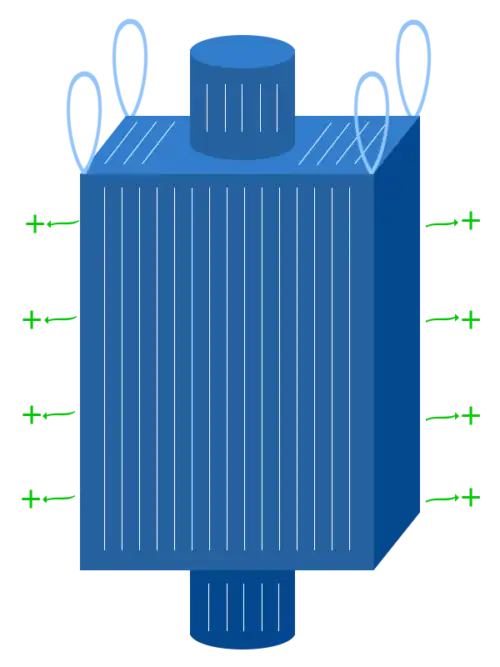
  • Electrostatic safety choices: Type A/B/C/D options align to area classification and product MIE.
  • Compliance headroom: UN 13H series designs and documented testing open lanes for dangerous goods where applicable.
  • Reusability where routes allow: 6:1 designs plus inspection criteria unlock multiple turns and lower total impact.
“A container is not a bag of fabric; it is a map of forces.” Loops, seams, and liners must agree on that map—or the floor will disagree for you.

How are FIBC Bags produced—station by station?

Production is modular: extrusion, weaving, coating, cutting, sewing, liner insertion, cleaning, and certification. Each station has dials that move quality and cost.

  1. Tape extrusion & draw PP is extruded, slit, and oriented. Consistent draw ratio and winding quality determine weaving uptime and fabric uniformity.
  2. Weaving & coating Circular or flat looms set pick density; optional PP coating closes pores and improves printability.
  3. Cutting & printing Panels, spouts, skirts, and baffles are cut. Flexo printing adds identification and regulatory marks on coated faces.
  4. Sewing & assembly Double‑chain seams, loop insertion, reinforcement patches, sift‑proof cords, and baffle attachment build structure.
  5. Liner production & insertion Lay‑flat or form‑fit liners are blown, gusseted, and inserted; antistatic/conductive grades are matched to bag type.
  6. Cleaning & finishing Vacuum, air knives, and metal detection (for high‑hygiene variants) remove debris before folding.
  7. Testing & certification Top lift, cyclic lift, topple, drop, stacking, and electrostatic tests validate performance; UN reports are issued as needed.
  8. Packing & dispatch Finished bags are palletized, stretch‑wrapped, and labeled with lot and inspection instructions.

Where do FIBC Bags fit—chemicals and beyond?

FIBC Bags thrive wherever solids flow in tonnes and cleanliness matters: inorganic powders (TiO₂, CaCO₃, silica, alumina, salts), polymer pellets and masterbatch, specialty chemicals (catalysts, adsorbents), fertilizers, and adjacent sectors like food ingredients or battery materials with the right liner/static class. The selection key is simple: match body style to cube needs, electrostatic class to hazard, and liner architecture to moisture or oxygen sensitivity.

Inorganics

Titanium dioxide, silica, alumina, soda ash, pigments—dust discipline and moisture control are decisive; baffle bodies improve stacking for container fill.

Organics & resins

Polymer pellets and masterbatch benefit from high SWL at low tare, clean discharge, and potential reuse in closed loops with molders.

Specialties

Catalysts and adsorbents often require form‑fit antistatic liners and strict hygiene; discharge geometry avoids hang‑ups that waste high‑value product.

Adjacencies

Food ingredients and nutraceuticals use food‑grade cleanroom sewing and documented migration compliance; energy materials leverage antistatic or conductive architectures.

FIBC Bags: An Essential Packaging Solution for Chemical Raw Materials

Why does this format dominate? Because FIBC Bags compress cost and risk across the chain. They reduce touchpoints compared to 25‑kg sacks, slash tare against drums, and avoid tank‑cleaning headaches of rigid IBCs. Electrostatic classes align to hazardous zones; liners solve for moisture and oxygen; baffles unlock container cube. In an era of tighter labor and stricter compliance, the format’s ability to marry speed with safety is the quiet reason it keeps winning bids.

Treat liner choice, electrostatic class, and body style as your three master dials. Most chronic problems trace back to mis‑setting one of them.

System thinking: decompose the decision and recombine into a plan

Specifying FIBC Bags rationally means breaking the decision into interlocking subsystems, solving each with local constraints, and synthesizing the answers into a single, testable specification.

A. Product physics & hazard

PSD, bulk density, hygroscopicity, MIE, and Kst shape spout size, venting, liner gauge, and electrostatic class. Measure first; guess never.

B. Equipment & layout

Filler spouts, densification, air evacuation, hoists, forklifts, and hopper design frame feasible bag geometries and seam/loop choices.

C. Mechanics & envelope

Set SWL and safety factor; pick seam architecture; reinforce loop roots; decide on baffles for cube and long dwell stacks.

D. Barrier & cleanliness

Choose lay‑flat vs form‑fit; set liner thickness; add EVOH only if oxygen truly matters; lock sift‑proof cords and needle choice.

E. Certification

UN 13H series when required; IEC/ISO electrostatic tests for C/D; label architecture with placards and QR for traceability.

F. Sustainability

Favor PP fabric + PE liner for separability; target reuse where reverse loops exist; document PP content for EPR optics.

G. Climate & logistics

Map humidity and yard sun. Desiccants and pallet hoods for ocean; UV hours for yards; pallet patterns to avoid overhang.

H. Economics & OEE

Instrument bags/hour, first‑pass yield, residual heel, and return rates; these move P&L more than shaving 100 g of fabric.

Recombine: profile product and hazard (A), map equipment (B), set mechanics (C), choose liner/barrier (D), lock certification (E), embed end‑of‑life (F), stress‑test against climate/logistics (G), and pilot for OEE (H).

Technical tables your team can act on

Electrostatic Type Control Principle Grounding Typical Zone Example Use
Type A Plain PP; no static control Not applicable Non‑flammable areas Salts, minerals in safe zones
Type B Low breakdown voltage fabric to block propagating discharges No Combustible dust without vapors Inert powders with moderate MIE
Type C Conductive grid to ground charge Mandatory Flammable vapors or low‑MIE dust Carbon black, fine organics
Type D Static dissipative fabric neutralizes charge No (per OEM guidance) Zones similar to Type C where grounding is impractical Mobile operations with mixed hazards
UN Code Description Typical Construction
13H1 Woven PP without coating/liner Fabric only, uncoated
13H2 Woven PP coated Coated fabric, no separate liner
13H3 Woven PP with liner Uncoated fabric + separate liner
13H4 Woven PP coated with liner Coated fabric + separate liner
Body Style Shape Control Best For Notes
Four‑panel Moderate General chemicals Economical; more vertical seams
U‑panel Better seam efficiency Heavier loads Fewer vertical seams than four‑panel
Circular Seamless body Fine powders Requires base/top panels
Baffle (Q‑bag) Excellent (near‑cube) Container/pallet cube Ensure baffle seam integrity
Performance Metric Typical Target Why It Matters Lever
SWL 500–2,000 kg Payload planning Fabric weight; loop design
Safety factor 5:1 single, 6:1 reusable Compliance and reuse Seam spec; patches; QA testing
Residual heel < 0.5–1.0% Waste reduction Form‑fit liners; spout geometry
UV stability 200–1,600 h Yard storage Masterbatch; covers; pallet hoods
COF (outer) 0.25–0.45 Stack vs flow balance Coatings; OPV bands

Professional details: pitfalls and practical fixes

Seam efficiency

Double‑chain lock with correct stitch density often beats adding fabric weight. Wrong needles cut monofilaments and create leak paths—pair needle geometry with filler cords for fine powders.

Electrostatics discipline

Type C must be grounded—every fill, every discharge. Install test points; train operators; audit continuity. Where grounding is infeasible, Type D may be justified, subject to OEM guidance and zone rules.

Container condensation

Ocean routes demand desiccants, pallet hoods, and appropriate liner gauges. Acclimatize before opening to avoid moisture shock.

Reusability is a program

6:1 ratings fail without inspection checklists (loops, seams, abrasion), cleaning SOPs, and retirement triggers. Treat reuse like equipment, not a slogan.

Label architecture

Reserve quiet zones for barcodes and QR. Use durable placards and multi‑language panels; verify scan rates after handling.

Alternatives in plain language

Compared with drums, FIBC Bags shed dead weight and accelerate handling for benign solids. Compared with rigid IBCs, they avoid tank cleaning and collapse flat when empty. Compared with 25‑kg sacks, they eliminate many touchpoints and dust sources. The choice is rarely ideological; it is about matching failure modes to value at risk.

Economics that actually move the P&L

Unit price per bag is not the main lever. Bags/hour on the filler, first‑pass yield, discharge time, and the percentage of product left as residual heel move real money. A 20‑second faster discharge or a one‑point rise in first‑pass yield often beats saving 100 g of fabric. Track these metrics and adjust specifications where they live: spout geometry, vent strategy, liner form, seam architecture.

Operational levers worth piloting
  • Match spout diameter and length to filler and hopper; add vent patches where densification traps air.
  • Specify form‑fit liners for products with high residual risk; measure heel percentage after trials.
  • Standardize label locations and quiet zones to protect scannability and speed QA.
  • Codify UV hours and yard cover policy instead of over‑specifying film or coating grams.

Scenario cards: converting variables into ready specs

Carbon black pellets with vapor hazard

Type C conductive grid with mandatory grounding; coated fabric 180–200 g/m²; form‑fit antistatic liner; conical discharge with iris safety; UN 13H2 if needed.

Titanium dioxide, ocean export

Baffle body for cube; coated fabric; 120 μm lay‑flat liner; pallet hoods; desiccant packs; UV 400–800 h.

Polymer pellets in a closed loop

6:1 reusable U‑panel; reinforced loops; label pocket; no liner; inspection checklist per return.

Fine silica, indoor fill/outdoor dwell

Circular body with coated fabric; sift‑proof seams; antistatic Type B; 80–100 μm liner; UV 800–1,200 h; spout cap.

Copy‑ready specification checklist

Product name; PSD; bulk density; MIE; hygroscopicity. Style four‑panel / U‑panel / circular / baffle. SWL & Factor 500–2,000 kg @ 5:1 or 6:1. Fabric g/m²; coated/uncoated; UV hours. Loops corner/cross‑corner/single‑point; patching. Liner lay‑flat/form‑fit; gauge; antistatic or barrier. Top/Bottom fill spout or duffle; discharge spout with star/iris safety or full open. Electrostatics Type A/B/C/D; grounding protocol if Type C. Compliance UN 13H code; labels and QR. Pallet Pattern bag footprint; layers; wrap; hooding. QA top lift, cyclic, drop, topple, stack; AQL. Docs CoC, test reports, food/pharma declarations as needed.

Contextual link for terminology alignment

For a concise overview of closely related formats, see FIBC bulk bags, which summarizes body styles, fabrics, and handling considerations adjacent to FIBC Bags.

A human cadence to close (no formal conclusion)

Ask what fails first—the loop root, the seam, or the discharge? If you save 100 grams of fabric but leave 0.5% of product as residual heel, did you save anything? Should a Type D replace a Type C where grounding is sloppy, or should you fix grounding discipline first? Will 400 hours of UV masterbatch beat one tarp that costs less than a ruined pallet? The dials on FIBC Bags—fabric weight, seam architecture, liner gauge, electrostatic class, baffle width—are simple to turn and bluntly honest in feedback. Turn one. Test. Observe. Adjust. Then document so the next shift inherits skill, not luck.

<

A Dialogue with Ray, CEO of VidePak:
Client: “We need bulk packaging for chemical raw materials like resins and solvents that can handle both safety and logistics challenges. What makes FIBC bags superior to traditional options?”
Ray:FIBC (Flexible Intermediate Bulk Container) bags are engineered for heavy-duty chemical transport, offering UN-certified safety, customizable liners, and load capacities up to 2,500kg. At VidePak, our Starlinger machines produce bags with 99.8% seam integrity, reducing spillage risks by 40% while cutting logistics costs by 25%. Let’s explore how these solutions address your specific needs.”


1. The Critical Role of FIBC Bags in Chemical and Construction Logistics

FIBC bags, made from woven polypropylene (PP), are indispensable for safely transporting bulk materials like cement, gypsum, and chemical powders. With tensile strengths exceeding 50 N/cm² and moisture barriers as low as 0.05 g/m²/day, they outperform traditional jute or PE bags in harsh environments. VidePak’s global production network—powered by 100+ circular looms and 30+ lamination machines—delivers 15 million FIBC bags annually, tailored to meet ISO 21898 and UN safety standards for hazardous materials.


2. Material Advantages: Polypropylene’s Dominance in Packaging

2.1 Performance Metrics Across Key Industries

MaterialTensile StrengthMoisture BarrierTear ResistanceKey Application
PP Woven50–60 N/cm²0.05–0.1 g/m²/day20–25 NCement, solvents
BOPP Laminate45–55 N/cm²0.03 g/m²/day18–22 NHygroscopic powders
PE-Coated PP35–45 N/cm²0.1 g/m²/day15–18 NNon-reactive additives

Case Study: Cement Packaging for a Middle Eastern Supplier
A client required FIBC bags to withstand 50°C desert storage and 85% humidity. VidePak engineered a 4-layer structure:

  1. UV-stabilized PP outer layer (120 g/m²).
  2. Aluminum foil composite for thermal insulation.
  3. Anti-static PE liner (60µm).
  4. Reinforced baffles for 1,500kg Safe Working Load (SWL).
    This solution reduced transport damage by 35% and achieved ASTM D5635-19 compliance.

3. Optimizing FIBC Bags for Construction Materials

3.1 Product-Specific Design Criteria

  • Cement: Hydroscopic properties demand PE liners (≥50µm) and UV-resistant coatings to prevent hardening during outdoor storage.
  • Gypsum Powder: Requires anti-static liners (surface resistivity ≤10⁹ Ω) to minimize dust explosions during filling.
  • Joint Compounds: Abrasion-resistant fabric (≥150 g/m²) with double-stitched seams to withstand sharp particles.

3.2 Key Parameters for Selection

ParameterCementGypsum PowderChemical Additives
Fabric Weight120–150 g/m²100–120 g/m²90–110 g/m²
Liner TypePE (50µm)Anti-static PEChemical-resistant PP
Load Capacity1,000–2,500kg500–1,500kg300–1,000kg
CertificationsUN 13H3ISO 21898REACH, FDA 21 CFR

4. VidePak’s Technological Edge: Precision and Compliance

Leveraging Austrian Starlinger machinery, VidePak ensures:

  • Multi-Wall Construction: 3–5 layers for hazardous chemicals, exceeding UN Packaging Group II requirements.
  • Custom Printing: 8-color HD branding resistant to chemical exposure, using non-toxic inks compliant with EU 10/2011.
  • Sustainability: 100% recyclable PP reduces landfill waste, aligning with the EU Circular Economy Action Plan.

5. FAQs: Addressing Industry Concerns

Q1: How do FIBC bags prevent static discharge in flammable environments?
A: Conductive threads woven into the fabric dissipate static electricity, tested per ISO 284:2012 for explosive atmospheres.

Q2: What’s the cost difference between FIBC and traditional drums?
A: FIBC bags cost 30% less per cubic meter and reduce storage space by 50%, with ROI achieved in 8–12 months.

Q3: Can bags withstand maritime humidity?
A: Yes. BOPP lamination (25–30µm) reduces moisture ingress to ≤0.1 g/m²/day, compliant with ISO 2233:2000.


6. Future Trends: Smart and Sustainable FIBC Solutions

VidePak is pioneering:

  • RFID Tracking: Embedded tags monitor real-time location and environmental conditions during transport.
  • Bio-Based PP: 30% plant-derived resin blends, targeting carbon neutrality by 2030 per ISO 14067.

External Resources:


Conclusion
FIBC bags are revolutionizing bulk material logistics through unmatched safety, customization, and cost efficiency. By integrating VidePak’s Starlinger-driven manufacturing and compliance expertise, industries can achieve both operational excellence and sustainability—proving that robust packaging is the backbone of modern supply chains.

Leave a Comment

Your email address will not be published. Required fields are marked *

Scroll to Top