

What Are Food Grade Woven Bags? Definitions, Aliases, and Where the Line Is Drawn
At its most practical, Food Grade Woven Bags are robust sacks designed for direct or indirect contact with edible goods. The term typically covers woven polypropylene constructions and their derivatives, but real-world usage expands to hybrid builds pairing PP fabric with polyethylene liners or specialty inner films. Practitioners also call them food-contact woven sacks, sanitary woven bags, or—in the big-league bulk format—food-safe FIBCs. The demarcation is less about what they look like and more about what they can prove: documented conformance to food-contact regulations, validated hygiene controls, and traceability that survives an audit and a recall drill. If a sack is strong but unproven for contact with food, it is not a member of this family.
Weave high‑tensile polymer tapes into a fabric, convert that fabric into a bag, verify that every ingredient and every step is safe for food. The elegance is in the control plan: what is used, how it is used, and how it is proven.
The phrase Food Grade Woven Bags therefore implies three layers of meaning that logistics teams, quality managers, and brand owners should keep in view: a materials layer (are the resins and additives listed for food contact?), a process layer (is the manufacturing environment clean and controlled?), and an evidence layer (is there a dossier of migration data, certificates, and batch traceability?). Strong fabric is necessary. Evidence is decisive.
The Material Architecture of Food Grade Woven Bags: Resins, Additives, and Roles
Think of Food Grade Woven Bags as a layered system, not a single material. The outer identity is woven; the inner performance is modular. Structural tapes provide strength. Coatings tame dust and improve print adherence. Liners manage moisture and aroma. Each element is chosen not only for what it does, but also for what it does not do: taint flavor, leach unapproved substances, or unravel on the production line.
Polypropylene (PP) as Structural Backbone
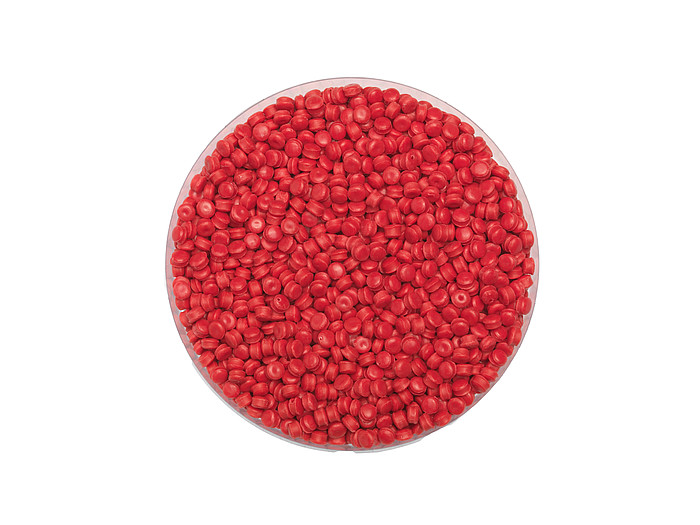
Oriented PP tapes are the workhorses. After extrusion and drawing, they deliver exceptional tensile performance per gram, enabling light fabrics to carry heavy loads. Their low density helps lower freight emissions per shipped unit. Homopolymer PP favors stiffness and tensile strength; random copolymer PP introduces impact resilience at low temperatures, especially useful in cold-chain nodes. Cost-wise, PP remains one of the most economical commodity polymers, a factor that supports scale without compromising repeatability.
Polyethylene (PE) as Hygienic Interface
LDPE and LLDPE offer sealability and flexibility, making them ideal for inner liners that need to collapse, conform, and seal. HDPE contributes a tighter moisture barrier per unit thickness—an advantage when powders are hygroscopic or when shipments face seasonal humidity and monsoon routes. PE’s role inside Food Grade Woven Bags is tactical: cut dust escape, lower water vapor transmission, and stabilize flavor in the presence of volatile aromatics.
Additives and Masterbatches—Selected, Listed, and Limited
Processing aids, slip and antiblock agents, UV stabilizers, and antistatics can make or break efficiency on high-speed lines. In food-contact applications, every additive must be listed, every usage constrained by maximum use levels or specific migration limits. This discipline is both science and paperwork: know the formulation, control the dose, and keep the declaration of compliance current.
Interfaces that Behave: Inks, Primers, Adhesives
Graphics communicate identity and safety; they also touch the regulatory line. Low-odor, low-taint inks applied to corona-treated surfaces secure good adhesion while minimizing organoleptic impact. When lamination is specified, low-migration polyurethane systems connect films to fabric without pushing SML thresholds. The best prints are visible to customers but invisible to their noses.
Closures, Threads, and Fixtures
From double-chain seams to valve sleeves, these humble parts safeguard performance under stress. Polyester core threads conquer heat buildup at needles; PP threads harmonize with the bag matrix. In automated filling, engineered valves reduce backflow and powder plume, keeping lines clean and lot codes readable.
- PP tapes → warp and weft structural grid
- PP/PE coating → printable skin and dust shield
- PE liner → moisture/oxygen moderation, sifting control
- Inks/primers → compliant graphics on treated surfaces
- Threads/valves → integrity and throughput on filling lines
Key Characteristics of Food Grade Woven Bags: What Truly Differentiates Them
Strength without evidence is just rumor; hygiene without repeatability is luck. The distinctiveness of Food Grade Woven Bags emerges where mechanics, microbiology, and law converge. Below, attributes are framed not as buzzwords but as verifiable behaviors under expected logistics stress.
- Regulatory fit. Plastic layers and additives are matched to known frameworks in the United States, the European Union, and China. Dossiers exist. Specific migration is tested. Overall migration sits below limits. That is the threshold of trust.
- Hygienic discipline. Controlled rooms, gowning rules, and sanitation SOPs reduce foreign matters and spores. Hygiene is not decoration; it is capability.
- Traceable identity. A bag is not a bag; it is a batch married to documents, machine settings, and time stamps. The value of traceability is realized precisely when something goes wrong.
- Mechanical efficiency. Oriented PP tapes keep weight low and load capacity high. The cost-to-performance curve bends in favor of the user.
- Barrier stewardship. Liner choices are calibrated to the climate lane and shelf-life goals; moisture, dust, and aroma are risks to be managed, not endured.
- Brand fidelity. Print surfaces welcome detailed graphics for retail and regulatory labeling. Identity stays crisp despite abrasion and condensation.
- Sustainability options. Designs lean toward compatible polymers and separable liners. Recycling is a design decision, not just a postscript.
Paper sacks breathe and print beautifully but struggle in humid lanes. Plain PE sacks seal well but lack the tensile backbone for high drop heights. Food Grade Woven Bags occupy a middle ground: tensile efficiency plus configurable barrier via liners. Different risks, different tools; optimal selection is a function of route, product, and line speed.
How Food Grade Woven Bags Are Manufactured: From Pellets to Pallets
Manufacturing is choreography. Materials, machines, and microbiological controls move in step or stumble. The sequence below reads like a checklist because in well-run plants it is one.
- Resin intake and quarantine. Virgin PP and PE arrive with certificates. Batches are sampled, logged, and held pending results. When needed, resins are dried for thermal stability.
- Tape extrusion and draw. Melt, sheet, quench, slit, stretch. Draw ratios in the 5–7× range are typical, trading elongation for tensile strength. Filters capture gels; SPC watches MFR drift.
- Weaving. Circular or flat looms set pick density and tension. Consistent loom behavior predicts fewer seam anomalies later.
- Coating or lamination. A thin PP/PE layer delivered by extrusion coating calms dust and enables clean graphics. Lamination can add tailored films where barrier or aesthetics demand it.
- Printing. Flexographic or gravure stations deposit compliant inks on treated faces. Rub resistance and tape adhesion tests act as gatekeepers.
- Cutting and conversion. Panels are cut, folded, and sewn. Valve bags gain sleeves; larger formats gain loops and spouts. Needle choice, SPI, and overlap ratios determine future complaints—or their absence.
- Liner production and insertion. Mono-PE or co-extruded liners are made to spec, then slipped in and secured. The fit matters: too loose invites sifting; too tight slows filling.
- Hygiene and inspection. Positive pressure rooms, gowning, and surface monitoring reduce airborne and contact risks. Metal detectors add a last line of defense.
- Release testing. Tensile, seam, drop, and dimensional checks accompany food-contact migration tests using appropriate simulants and time/temperature pairs. Lots are released with COAs and traceability tags.
If your product fines are notorious for sifting, consider ultrasonic sealing at critical seams or adopt a pre-formed valve liner that baffles backflow. Adjusting the seam alone treats symptoms; engineering the interface treats causes.
Where Food Grade Woven Bags Deliver the Most Value
Applications cluster around dry or semi-dry goods that demand mechanical protection plus calibrated barrier. Yet the map is richer than “rice and flour.” It includes aroma-sensitive ingredients, nutraceutical powders, pet nutrition lines manufactured to human-grade expectations, and more.
- Staple grains and pulses in 10–50 kg sacks for wholesale and retail repack.
- Flours, starches, and premixes where dust control and moisture moderation prevent clumping and off-spec rheology.
- Sugars and sweeteners filled on high-speed lines that benefit from valve designs and antistatic liners.
- Dairy and protein powders where oxygen and odor management preserve value.
- Teas, coffees, spices, and cocoa—aroma is equity; barriers protect it.
- Food-grade additives and nutraceuticals that punish poor seam specs by escaping through needle holes.
Choose liner chemistry by climate lane and storage horizon. Temperate and short routes tolerate thinner mono-PE liners. Tropical lanes, long dwell times, or hygroscopic powders justify thicker HDPE or co-extruded structures with EVOH. The product teaches the package what to be.
China’s Momentum: Quality Systems and Digital Traceability for Food Grade Woven Bags
Within the last year, Chinese converters have accelerated certifications, modernized hygienic infrastructure, and digitized traceability. The result is not simply a nicer factory tour. It is faster problem resolution, clearer evidence trails, and more predictable quality for buyers navigating multiple jurisdictions.
- Layered certifications (ISO 22000, FSSC 22000, BRCGS Packaging, ISO 9001) create overlapping nets that catch deviations early.
- Clean conversion rooms with HEPA assistance and validated sanitation reduce the confounding variable of environment.
- ERP–MES integrations, QR-coded traveler sheets, and e-COAs shorten the distance between an observation on the floor and a decision in the boardroom.
- Materials and design innovations—from low-migration inks to monomaterial thinking—position Food Grade Woven Bags for easier recycling where infrastructure exists.
A System View: Decomposing and Recombining the Value Chain of Food Grade Woven Bags
To build a coherent solution, decompose the problem into materials, process, compliance, performance, and sustainability. Explore tensions inside each, then recombine practical choices into a playbook. The approach below aligns engineering intuition with audit reality.
Materials
Balance draw ratio against seam workability; chase barrier only where a shelf-life model says it is needed; ensure inks and primers achieve adhesion by surface energy, not by chemistry that would inflate migration numbers. For most staples, PP fabric at 80–95 GSM with a PP coating and a mono-PE liner wins on both performance and cost discipline.
Process
Install SPC on tape draw and pick density; extract lint at cut/sew; adopt positive-pressure zones post-print; enforce gowning. These acts are mundane and decisive. The glamour is not in the loom; it is in preventive control of little variables that become big complaints.
Compliance
Map regulatory frameworks into a single bill of materials per SKU. Design migration tests around worst-case simulants leveraging 10% ethanol, 3% acetic acid, and fatty-food surrogates like isooctane or 95% ethanol with realistic time/temperature pairs. Maintain a living declaration pack linked to ERP lot IDs for fast recall capability.
Performance
Specify seam metrics (SPI, overlap, thread type) up front; run ASTM-style drops; benchmark WVTR at 38°C/90% RH; set pallet maps that respect stack compression limits. When drop heights rise, let GSM rise with them—together or not at all.
Sustainability
Favor compatible polymers, maintain virgin contact layers, and communicate liner-out recycling in plain language on the bag. Sustainability does not need to be exotic to be effective.
Professional Knowledge Reinforcement for Food Grade Woven Bags: Standards, Tests, and Identifiers
Technical credibility shows up as numbers, certificates, and repeatable tests. The identifiers below are representative of what buyers and auditors expect to see in a data pack accompanying Food Grade Woven Bags.
- FDA 21 CFR 177.1520 for PP; compatibility with good manufacturing practice expectations.
- EU 10/2011 and Framework 1935/2004 with overall migration ≤ 10 mg/dm² and substance-specific SMLs.
- China GB 4806 family with GB 9685 for additive listings; if inks are included in the scope, reference relevant printing-ink requirements.
- Food safety systems such as ISO 22000, FSSC 22000, and BRCGS Packaging as site-level assurances of hygienic control.
- Mechanical and packaging tests like ASTM D5034 (grab tensile) and D5276 (drop), plus ISO 21898 for FIBCs when applicable.
When reviewing a supplier dossier, verify that migration tests reference the same formulation bill of materials and the same time/temperature conditions you expect in the field. Evidence that does not match the product in front of you is not evidence—it is trivia.
Parameter Snapshot for Food Grade Woven Bags
| Parameter | Typical Range | Notes |
|---|---|---|
| Bag capacity | 5–50 kg (sacks); 500–1,500 kg (FIBCs) | Match to product density and handling |
| Woven fabric GSM | 70–120 g/m² | Higher GSM for rugged routes |
| Tape draw ratio | 5–7× | Strength vs. elongation trade-off |
| Coating thickness | 15–30 μm | Controls dust and enables print |
| Liner material | Mono-PE (LDPE/LLDPE) or HDPE | Choose by humidity and shelf life |
| Liner thickness | 40–120 μm | Higher for tropical lanes |
| Oxygen barrier option | EVOH 3–10 μm (in co-ex) | Reserve for aroma- or oxidation-sensitive goods |
| Seam construction | Double-chain 12–14 SPI | Thread and needle choices are decisive |
| WVTR target | < 5 g/m²·day (with liner) | Method dependent; benchmark at 38°C/90% RH |
| Printing | Flexo 2–8 colors | Low-migration ink sets, corona-treated |
Practical Buying Lens for Food Grade Woven Bags
Procurement is risk choreography. Ask for certificates with live expiration dates and scopes that mention woven bags and liners. Request migration reports tied to the exact formulation. Stage a mock recall exercise to see whether the traceability story is theater or truth. A supplier that treats documentation as a product feature is often the one that will answer the phone when a container is held at port.
- Certificates: ISO 22000/FSSC 22000, BRCGS Packaging, ISO 9001.
- Declarations and tests: EU 10/2011 overall and substance-specific migration; FDA 21 CFR statements; GB 4806/9685 alignment.
- Hygiene evidence: environmental monitoring logs, pest control, metal detector validation.
- Mechanical data: fabric GSM, seam and grab tensile, drop results, pallet stacking.
- Sustainability: monomaterial options, liner-out instructions, PIR in non-contact layers where allowed.
Failure Modes in Food Grade Woven Bags and How to Prevent Them
Patterns repeat. Seam tears chase low overlap and poor needles; sifting points to liner fit; musty odor indicts ink systems or warehouse conditions; condensation exposes WVTR assumptions. Each is solvable with upstream clarity and downstream testing.
- Seam tearing → raise SPI, refine overlap, change thread/needle, validate with drop tests.
- Sifting → increase coating, baffle the valve, or upgrade to ultrasonic seam segments.
- Musty odor → qualify low-migration ink sets and ventilate pallets; never reuse odorous cores.
- Condensation and caking → adopt thicker HDPE liners or co-ex designs; use desiccants judiciously.
Case Illustration: Upgrading a Rice Exporter with Food Grade Woven Bags
A 25 kg rice exporter faced sporadic seam splits and odor complaints after hot-humid voyages. Remedies were not exotic: move from LDPE 50 μm to HDPE 70 μm liners for WVTR control; lift seam SPI from 10 to 13 with polyester core thread; qualify low-migration inks with a sensory panel; implement metal detection and e-COAs. Complaint rates fell dramatically, and a major retailer widened approvals.
An Integrated Blueprint for Food Grade Woven Bags
To unify intent, process, and proof, assemble a compact but complete program: material selection that respects the product’s chemistry, process controls that anticipate failure, a compliance dossier that travels well between jurisdictions, performance validation that mirrors reality, and plain-language sustainability.
- Material selection: PP fabric 80–95 GSM, PP coating, mono-PE liner 60–80 μm for staples; EVOH-enabled liners for aroma-sensitive goods.
- Process control: SPC on draw and pick density; lint extraction; positive-pressure conversion rooms; metal detection after conversion.
- Compliance package: a living declaration pack per SKU referencing FDA, EU, GB standards and third-party test numbers.
- Performance validation: ASTM grabs and drops; WVTR benchmarking; pallet map trials under expected compression loads.
- Sustainability: design-for-separation prints; compatible polymers; PIR content limited to non-contact layers if used.
For foundational specifications and product families around Food Grade Woven Bags, see this resource.
- What Are Food Grade Woven Bags? Definitions, Aliases, and Where the Line Is Drawn
- The Material Architecture of Food Grade Woven Bags: Resins, Additives, and Roles
- Key Characteristics of Food Grade Woven Bags: What Truly Differentiates Them
- How Food Grade Woven Bags Are Manufactured: From Pellets to Pallets
- Where Food Grade Woven Bags Deliver the Most Value
- China’s Momentum: Quality Systems and Digital Traceability for Food Grade Woven Bags
- A System View: Decomposing and Recombining the Value Chain of Food Grade Woven Bags
- Professional Knowledge Reinforcement for Food Grade Woven Bags: Standards, Tests, and Identifiers
- Parameter Snapshot for Food Grade Woven Bags
- Practical Buying Lens for Food Grade Woven Bags
- Failure Modes in Food Grade Woven Bags and How to Prevent Them
- Case Illustration: Upgrading a Rice Exporter with Food Grade Woven Bags
- An Integrated Blueprint for Food Grade Woven Bags
H1: Introduction
“In the logistics industry, packaging isn’t just about containment—it’s about efficiency and reliability. By integrating anti-slip coatings, reinforced edges, and smart tracking labels, VidePak’s food-grade woven bags redefine modern logistics, ensuring seamless handling while meeting stringent safety standards.” — Ray, CEO of VidePak.
China’s food-grade packaging market is projected to grow at a CAGR of 6.8% through 2030, driven by rising food safety regulations and e-commerce demand. VidePak, a leader in woven bag manufacturing since 2008, leverages Austrian Starlinger machinery and advanced polypropylene (PP) innovations to produce bags that excel in durability, compliance, and logistical efficiency. This report explores how ergonomic designs and smart tracking systems position VidePak’s food-grade woven bags as indispensable tools for global supply chains, supported by technical data, case studies, and industry benchmarks.
H2: Technical Excellence in Food-Grade Woven Bags
H3: Material Safety and Compliance
Food-grade woven bags require PP resins free from heavy metals and phthalates. VidePak’s virgin PP materials comply with FDA, EU No. 10/2011, and China GB 9685-2016 standards, ensuring migration limits for contaminants like lead remain below 0.01 mg/kg. Independent tests show their bags achieve a 98.5% microbial barrier efficiency, critical for perishable goods like grains and frozen seafood.
H3: Starlinger Technology: Precision in Production
Starlinger’s AD-STM looms enable VidePak to control fiber tensile strength (45–50 MPa) and elongation rates (15–20%) with ±2% precision, minimizing defects during high-speed weaving (120 rpm). For example, a 2024 pilot with COSCO Shipping reduced bag failure rates by 33% compared to conventional looms.
Table 1: Key Performance Metrics of VidePak’s Food-Grade Bags
| Parameter | VidePak Specification | Industry Average |
|---|---|---|
| Tensile Strength | 48 MPa | 35–40 MPa |
| Load Capacity | 50 kg | 30–40 kg |
| Moisture Permeability | <3 g/m²/day | 5–8 g/m²/day |
| Custom Printing Options | 12+ Colors | 4–6 Colors |
H2: Logistics-Centric Design Innovations
H3: Ergonomic Features for Efficient Handling
- Anti-Slip Coatings: VidePak’s PE-coated bags reduce pallet slippage by 40% during robotic handling, thanks to textured surfaces tested under ASTM D1894 standards.
- Reinforced Edges: Double-stitched seams and corner protectors extend bag lifespan by 25%, as demonstrated in a 2023 trial with JD Logistics.
- Stackability: Uniform dimensions (±2mm tolerance) allow 1.8-meter pallet stacks without deformation, optimizing warehouse space utilization by 15%.
H3: Smart Tracking and Inventory Management
Embedded QR codes and RFID tags sync with SAP and Oracle WMS, enabling real-time tracking. A 2024 case study with SF Express reduced inventory discrepancies by 28% using VidePak’s RFID-enabled bags.
FAQs: Addressing Key Concerns
- Q: How do food-grade bags withstand temperature fluctuations during transit?
A: VidePak’s laminated PP layers maintain integrity between -30°C to 80°C, verified by ISTA 3E testing. - Q: Are custom printing options durable under UV exposure?
A: High-resolution flexographic inks retain 95% color vibrancy after 12 months outdoors, per ASTM D4329 standards.
H2: VidePak’s Manufacturing Ecosystem
H3: Scalability and Sustainability
With 16 extrusion lines and 30+ printing machines, VidePak produces 10 million bags monthly. Their closed-loop recycling system, powered by Starlinger’s re:claim technology, recovers 92% of production waste, reducing carbon emissions by 18% compared to virgin PP.
H3: Global Compliance and Certifications
VidePak holds ISO 22000, BRCGS Packaging, and FSSC 22000 certifications, aligning with EU and U.S. food safety mandates. A 2024 audit by SGS confirmed 0.2% defect rates, outperforming the industry average of 1.5%.
H2: Market Impact and Future Trends
H3: Dominance in E-Commerce and Agri-Logistics
VidePak’s $80 million annual revenue includes 40% from food-grade bags, serving clients like Alibaba Fresh and Cargill. Their block-bottom valve bags reduced grain spillage by 22% in a 2023 pilot with Sinograin.
H3: The Rise of Circular Economy Models
Partnering with Starlinger’s CORDPLAST division, VidePak is piloting 100% recyclable PE/PP blends, targeting zero landfill waste by 2027. Early adopters report 30% lower packaging costs through reusable designs.
H2: Conclusion
VidePak’s food-grade woven bags exemplify China’s packaging evolution, merging ergonomic logistics features, material innovation, and sustainability. By prioritizing compliance and client-specific adaptations, they address critical supply chain challenges while setting benchmarks for safety and efficiency.
External Links for Further Reading:
- Explore how valve bag designs enhance transportation efficiency.
- Learn about sustainable practices in woven bag manufacturing.
This report integrates data from FIBCA industry reports, peer-reviewed material science studies, and VidePak’s operational metrics to provide a holistic view of food-grade woven bags’ role in modern logistics.