
What are Food Grade Woven Bags and how do they align safety, speed, and shelf impact?
In the everyday reality of livestock nutrition—the dust, the rush, the forklift prongs and humid dawns—packaging wins or loses long before it reaches a shelf. Food Grade Woven Bags—also called food‑contact PP woven sacks, food‑safe polywoven valve bags, or hygienic paper‑poly woven bags—are engineered for these realities. A woven polypropylene (PP) skeleton delivers tensile strength and tear resistance; carefully selected surface systems—kraft faces, matte coatings, or BOPP panels—preserve readability and brand clarity; optional polyethylene (PE) liners control moisture; and, where appropriate, a valve interface accelerates clean, dust‑reduced filling. In short: Food Grade Woven Bags combine mechanics, hygiene, and communication in one configurable architecture designed for 10–50 kg fills of compound feed, premixes, mineral supplements, and micro‑ingredients.
Why this format, and why now? Because losses at the filler are losses to sustainability; because a scuffed label is a call to customer service; because a split seam is a safety incident waiting to happen. Food Grade Woven Bags transform these pain points into parameters—denier, picks per inch, valve geometry, liner thickness, coefficient of friction—and then into predictable outcomes on the line.
What are the features of Food Grade Woven Bags?
Feature lists are not checkboxes; they are dials that move together. Raise stiffness and seams breathe differently; add a liner and filler back‑pressure changes; swap gloss for matte and your pallets might slip. The features of Food Grade Woven Bags are best understood as four interacting dimensions—safety & compliance, mechanical integrity, barrier & hygiene, and usability & communication—each reinforcing or constraining the others.
- Tensile & elongation: ISO 13934‑1 / ASTM D5035; Tear: ISO 13937; Seam efficiency: ASTM D1683 analogs adapted to tape fabrics.
- Drop survivability: ISO 2206/2248 at 0.8–1.2 m for 25 kg fills; Compression: ASTM D642; COF: ASTM D1894 on your pallet substrate and film.
- Moisture: ASTM F1249 (WVTR) on liners/films; Print rub: ASTM D5264; Barcode grading: ISO/IEC 15416.
How do these dimensions play together? Raise denier for puncture resistance, and fold memory may slow opening—offset with EZ‑open placement and bottom turn geometry. Add matte panels for readability, and COF might drop—counter with anti‑slip bands tuned to your pallet film. The system is a conversation among parts, and Food Grade Woven Bags speak fluently when the specification listens carefully.
What is the production process of Food Grade Woven Bags?
Design lives in sequence: resin → tapes → fabric → lamination/liner → printing → tube forming → closing → QA. Each decision constrains the next. Each gain has a cost if unmanaged. The process behind Food Grade Woven Bags is a chain of discipline.
- Resin & masterbatch. Food‑contact PP with antioxidant packages establishes ductility and stress‑crack resistance. Colorants are documented to FDA 21 CFR 178.3297 and (EU) 10/2011 SMLs. Tracer yarn masterbatch supports SKU ID and anti‑counterfeit steps.
- Tape extrusion & orientation. Film casting, slitting, and drawing align polymer chains. Draw ratio sets tensile/elongation; edge rounding reduces nick initiation. Typical denier: 700D–1200D; tighter distributions simplify seam tuning.
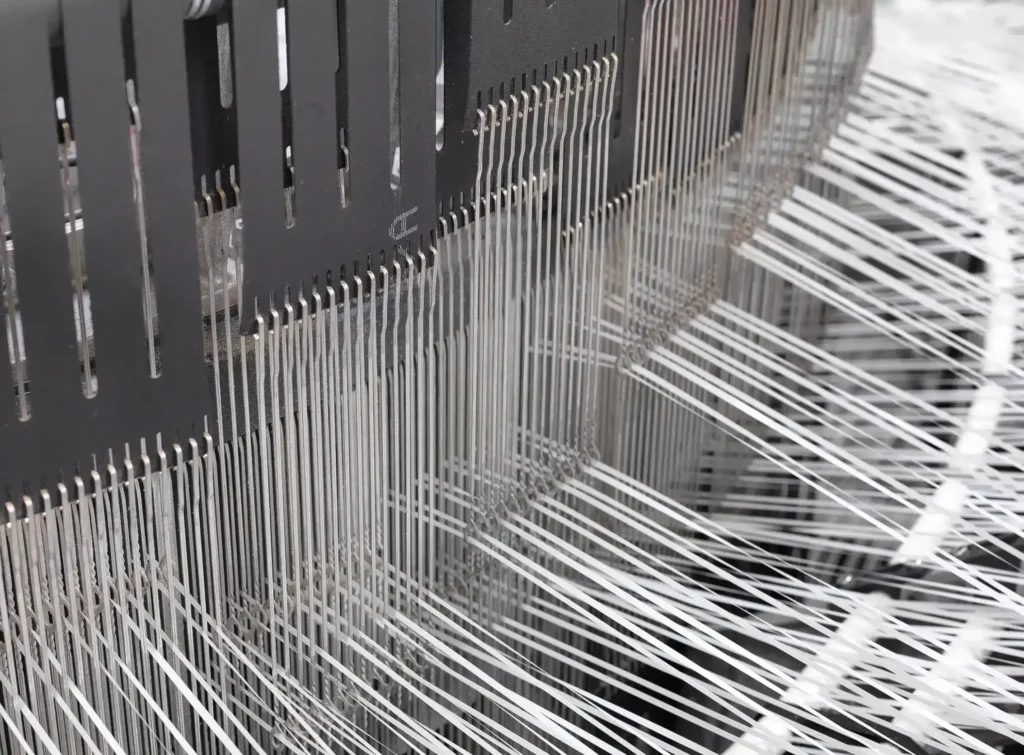
- Weaving. Flat or circular looms build approximately 8×8–12×12 picks/inch fabrics. Higher pick counts improve surface smoothness and burst resistance; lower counts vent air more readily at the filler. Choose for product flow and line speed.
- Lamination & liners. Extrusion lamination bonds BOPP or kraft to fabric with polyolefin layers for robust moisture continuity. Adhesive lamination supports temperature‑sensitive graphics and low‑odor requirements. PE tubular/gusseted liners at 30–70 μm mitigate humidity swings for hygroscopic feeds.
- Printing. Flexography/offset on kraft faces; gravure on BOPP panels. Color control to ISO 12647 with spectrophotometric checks; low‑odor, low‑migration inks where feed adjacency applies. Matte coatings protect glare‑sensitive barcode zones.
- Tube forming & valve insertion. Longitudinal seams define the tube; valve sleeves—internal or external—are inserted and sealed. Valve diameter (≈35–55 mm) and vent path are selected to match particle size and flow index; micro‑perfs are positioned above the product head.
- Bottoming & closing. Options include pinch block‑bottom, sewn + crepe, or heat‑seal closures. Bottom turn depth is set to restrain seam peel and withstand edge drops; anti‑slip overprints may be applied near forklift contact zones.
- Quality assurance. Routine tests: tensile/elongation (ISO 13934‑1/ASTM D5035), tear (ISO 13937), drop (ISO 2206/2248), compression (ASTM D642), COF (ASTM D1894), peel/adhesion (ASTM D903), WVTR (ASTM F1249), print rub (ASTM D5264), barcode grading (ISO/IEC 15416). DoCs and migration reports are filed; change‑control gates cover resin, denier, adhesive, ink, and valve components.
Two conversion choices deserve special attention. First, extrusion vs. adhesive lamination: extrusion maximizes bond strength and moisture continuity, while adhesive reduces heat and odor exposure for sensitive branding and food‑adjacent lines. Second, full‑face film vs. patch lamination: full‑face film improves scuff resistance and photographic fidelity but may require micro‑perfs to maintain fill rate; patch lamination preserves breathability while delivering a high‑impact brand panel. Either way, validate with drop, COF, and filler‑rate tests before locking spec.
What is the application of Food Grade Woven Bags?
Applications converge around a single operational demand: fast, clean filling coupled with strong, documented packaging. Wherever dust control, moisture moderation, and label readability must coexist, Food Grade Woven Bags make economic and safety sense.
- Compound feeds (pellets/mash). Anti‑slip faces and double‑turned seams support barn handling; PE liners reduce caking in high‑molasses formulas; matte zones keep nutrition tables legible.
- Premixes & micro‑ingredients. Valve sleeves with self‑closing behavior limit dust; controlled micro‑perfs accelerate fill without compromising WVTR targets.
- Mineral & salt supplements. Heavier denier (≈900D–1200D) and reinforced bottoms resist sharp granules; moisture moderation prevents clumping and hardening.
- Seed & specialty grains. Matte print zones and robust seams fit retail‑adjacent channels without the complexity of FIBCs; breathable fabrics deter condensation in diurnal swings.
Failure modes, trade‑offs, and how to avoid them
Real bags fail in real ways: a microscopic nick at a heat‑cut edge becomes a tear after 300 kilometers of vibration; a gorgeous gloss panel turns a pallet into a skating rink; a liner that saves moisture slows the filler. How do we design past these traps without over‑building?
- Edge nicks & tear propagation. Maintain sharp slitting blades; round tape edges; specify double‑turned bottoms; supplement strip tensile testing (ISO 13934‑1/ASTM D5035) with tear to ISO 13937.
- Slippery stacks after print upgrades. Add anti‑slip bands aligned to forklift contact zones; validate COF via ASTM D1894 against your pallet film and corrugate—not a lab surrogate.
- Slow fills with liners. Place micro‑perfs above the product head; verify WVTR (ASTM F1249) remains within range; for dusty premixes, reduce perf count and add short vacuum assist at the spout.
- Sun‑brittle returns. Target 200–300 kLy UV packages; screen lots with ASTM G154 / ISO 4892‑3; document resin or stabilizer changes in a change‑control log with re‑qualification triggers.
Specifications & test anchors you can adopt
| Parameter | Typical Range / Option | Method / Note |
|---|---|---|
| Capacity | 10–50 kg (common 20/25/40/50 kg) | ISO 2206/2248 drop orientations |
| Fabric density | ~8×8–12×12 picks/inch | Visual + tensile correlation |
| Tape denier | 700D–1200D (warp/weft) | ISO 13934‑1 / ASTM D5035 |
| Bottom style | Block‑bottom pinch; sewn + crepe; heat‑seal | Drop + dust checks |
| Liner | PE 30–70 μm; optional EVOH | ASTM F1249 (WVTR) |
| Valve | Internal/external; 35–55 mm | Plant SOP dust capture |
| COF | Anti‑slip tuned to ~0.4–0.6 | ASTM D1894 |
| UV stability | Target 200–300 kLy | ASTM G154 / ISO 4892‑3 |
| Printing | Flexo/offset on kraft; gravure on BOPP | ISO 12647; ASTM D5264 |
| Compliance | ISO 9001:2015; ISO 22000:2018/FSSC 22000; FDA 21 CFR; EU 1935/2004; (EU) 10/2011; EU 94/62/EC; REACH 1907/2006 | Certificates & DoCs |
Integrated solution blueprint (system synthesis)
To push performance beyond brochures, translate risk into requirement, requirement into test, test into governance. The blueprint below aligns typical hazards with concrete specifications and validations for Food Grade Woven Bags.
Economic & environmental rationale
Every split bag wastes more than packaging—it wastes nutrition grown, processed, and transported at real cost. By reducing splits, stabilizing pallets, and protecting labels, Food Grade Woven Bags lower emissions per kilogram delivered. Mono‑polymer pathways (PP fabric + PE liner) can ease end‑of‑life handling where polyolefin streams exist; right‑sizing grammage avoids the false economy of over‑spec materials that add weight but not resilience.
Implementation roadmap for procurement, production, and QA
Switching suppliers—or switching substrates—should not feel like a gamble. The staged plan below moves a mill from pilot to standard supply for Food Grade Woven Bags without sacrificing throughput or audit readiness.
- Define the load. Record particle size distribution, bulk density, and moisture window by SKU. Flag edge cases: molasses content, sharp mineral geometry, seasonal humidity peaks.
- Draft the spec. Convert risks into numbers: denier, picks/inch, liner thickness, seam type & turn depth, micro‑perf count, valve diameter, anti‑slip COF target, UV package, label pocket layout.
- Pilot rigorously. Run at least two pallets per SKU through full orientations for drop tests; measure COF on actual pallets/films; check filler speed with/without micro‑perfs; log dust capture readings; barcode‑grade print zones after rub cycles.
- Govern the change. Issue a controlled drawing; lock first‑article approvals; define re‑qualification triggers (resin grade, denier shift, adhesive chemistry, coating weight, valve sleeve material).
- Roll out. Phase SKUs over two cycles; retain samples; track split incidents, returns, barcode mis‑scans, and cross‑dock rework minutes as outcome metrics.
Your next move
Share the feed type, moisture window, lane conditions, and shelf requirements. We will return a Food Grade Woven Bags architecture—fabric density, denier, bottom style, valve geometry, liner plan, anti‑slip target, print program, and UV package—plus a validation matrix (drop/compression/WVTR/COF/barcode/UV) your plant can run on the line without disrupting production.

- What are Food Grade Woven Bags and how do they align safety, speed, and shelf impact?
- What are the features of Food Grade Woven Bags?
- What is the production process of Food Grade Woven Bags?
- What is the application of Food Grade Woven Bags?
- Failure modes, trade‑offs, and how to avoid them
- Specifications & test anchors you can adopt
- Integrated solution blueprint (system synthesis)
- Economic & environmental rationale
- Implementation roadmap for procurement, production, and QA
- Your next move
- H2: Application-Specific Advantages in Livestock Feed Packaging
- H2: Technical Design and Parameter Selection
- H2: VidePak’s Competitive Edge
- H2: Market Trends and Strategic Insights
“Why are food-grade woven bags becoming the backbone of modern livestock feed supply chains?” asked Ray, CEO of VidePak, during a recent industry summit. The answer lies in their unmatched safety compliance, advanced material engineering, and adaptability to diverse livestock feed requirements—qualities that position VidePak’s solutions as a global benchmark for durability, cost-efficiency, and sustainability. This report explores how food-grade woven bags address critical challenges in livestock feed packaging across poultry, swine, cattle, and pet food sectors, while aligning with global regulatory standards and market trends.
H2: Application-Specific Advantages in Livestock Feed Packaging
H3: Poultry and Swine Feed: Combating Moisture and Pathogens
Poultry and swine feeds are highly susceptible to mold and bacterial growth due to their high protein and fat content. VidePak’s PP woven bags with PE liners achieve moisture permeability rates of ≤0.5 g/m²/day (tested per DIN 53122), reducing spoilage by 25% compared to traditional jute sacks. The seamless lamination process prevents microbial ingress, while UV-resistant additives (e.g., Chimassorb 944) extend outdoor storage life to 1,500 hours under direct sunlight.
Case Study: A Vietnamese poultry farm reported a 30% reduction in feed rejection rates after switching to VidePak’s anti-microbial PE-lined bags, saving $50,000 annually in waste costs.
H3: Cattle Feed: Load Capacity and Breathability
Cattle feed often requires bulk packaging (up to 1,000 kg) with controlled airflow to prevent fermentation. VidePak’s FIBC jumbo bags, woven from 120 GSM PP filaments, achieve tensile strengths of 80–120 N/cm² (ASTM D5264) while maintaining a 5×5 mm mesh structure for optimal breathability. This design reduces internal condensation by 40%, critical for silage preservation.
H3: Pet Food: Aesthetic and Functional Customization
Premium pet food brands demand both durability and visual appeal. VidePak’s 8-color gravure printing on BOPP-laminated bags supports high-definition branding, while food-grade PP resins (FDA 21 CFR 177.1520-compliant) ensure zero heavy metal migration (<10 ppm). Ultrasonic seam sealing eliminates leakage risks for oily pet foods, with load capacities customizable from 5–50 kg.
H2: Technical Design and Parameter Selection
H3: Material and Structural Optimization
| Parameter | Poultry/Swine Feed | Cattle Feed | Pet Food |
|---|---|---|---|
| Thickness | 0.10–0.15 mm | 0.15–0.20 mm | 0.08–0.12 mm |
| Grammage (GSM) | 90–120 | 120–150 | 80–100 |
| Lamination | PE inner liner | None (breathable mesh) | BOPP outer layer |
| Load Capacity | 25–50 kg | 500–1,000 kg | 5–50 kg |
| Key Additive | UV stabilizers | Anti-static coatings | Oxygen scavengers |
H3: Cost-Benefit Analysis
- PE Liners vs. Unlined Bags: While PE liners increase material costs by 15%, they reduce spoilage losses by 30%, yielding a net savings of $1.20 per bag over six months.
- Breathable Mesh: Eliminates the need for silica gel desiccants, cutting packaging costs by $0.05/kg for cattle feed.
H2: VidePak’s Competitive Edge
H3: Advanced Manufacturing Capabilities
With 100+ Starlinger circular looms and 30 lamination machines, VidePak achieves:
- Precision Weaving: 1.8–2.3 mm mono-filaments ensure fabric densities ≥120 threads/inch, minimizing pore size to deter pests.
- Rapid Customization: 14-day lead time for orders up to 10M units, supporting sizes from 40×60 cm (pet food) to 120×200 cm (FIBC jumbo bags).
H3: Sustainability and Compliance
- 30% Recycled PP: Meets EU Circular Economy targets, reducing virgin plastic use by 1,200 MT/year.
- Solar-Powered Production: 2 MW rooftop panels cut CO₂ emissions by 1,200 tons annually.
FAQs:
Q: How do I choose between BOPP lamination and PE liners?
A: BOPP enhances UV resistance for outdoor storage; PE liners prioritize moisture control for humid climates.
Q: Are these bags compatible with automated filling systems?
A: Yes, VidePak’s valve-mouth designs support flow rates up to 1 ton/minute, reducing labor costs by 40%.
H2: Market Trends and Strategic Insights
H3: Smart Packaging Integration
VidePak is piloting QR-code-enabled bags with embedded humidity sensors, providing real-time feed condition alerts via mobile apps. Trials in Thailand reduced mold-related losses by 18%.
H3: Regulatory Preparedness
Anticipating 2026 FDA amendments on feed safety, VidePak preemptively adopted bio-based PP resins (e.g., Braskem’s I’m Green™), slashing carbon footprints by 60%.
“In livestock feed packaging, innovation isn’t optional—it’s survival,” concluded Ray. By merging technical rigor with sustainability, VidePak is redefining industry benchmarks for safety and efficiency.
For further insights, explore our resources on food-grade packaging innovations and high-density livestock solutions.
Appendix: Compliance Benchmarking
| Regulation | VidePak’s Metric | Industry Average |
|---|---|---|
| FDA Heavy Metal Migration | <10 ppm | ≤50 ppm |
| Moisture Permeability | 0.5 g/m²/day | 1.2 g/m²/day |
| UV Resistance | 1,500 hours | 1,000 hours |
FAQs
Q: Can these bags withstand freezing temperatures?
A: Yes, cold-grade PP retains 90% tensile strength at -20°C (tested per ASTM D746).
Q: Are matte-finished bags recyclable?
A: Yes, water-based adhesives ensure compatibility with standard PP recycling streams.
This report synthesizes data from industry benchmarks, third-party testing, and VidePak’s proprietary production analytics to ensure accuracy and relevance.