
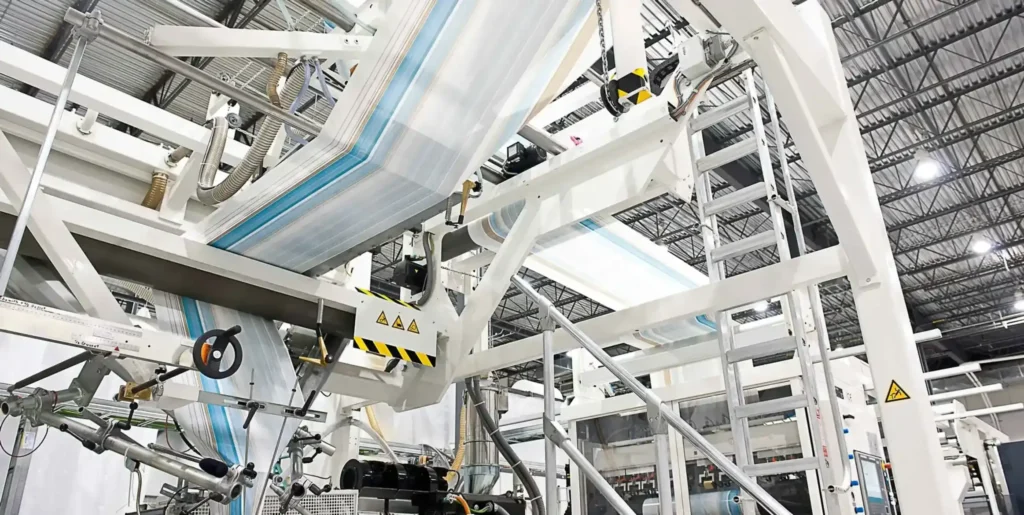
What is Form-fill-seal Woven Bags?
In automated packaging, the unit of value is uptime: every stop, scuff, or seal failure costs more than material itself. Form-fill-seal Woven Bags position a woven polypropylene (PP) substrate inside an automation-first philosophy where the package is formed, filled, and sealed on a continuous line. The category intersects textile technology (oriented PP tape yarns and mesh), polymer interfaces (PP/PE compatibilization), and packaging machinery (VFFS/HFFS formers, jaws, and motion control). Because the same product must be strong in the yard, clean at the filler, and legible on the shelf, it behaves less like a commodity and more like a system.
In procurement and export documents you will also see FFS woven PP sacks, PE-laminated woven sacks, and BOPP-laminated woven FFS bags—labels that signal whether a sealable polyethylene skin or a print-quality BOPP film is integrated. For buyers mapping the category, this overview of Form-fill-seal Woven Bags is a useful orientation point.
Horizontally, Form-fill-seal Woven Bags borrow best practices from apparel weaving (denier, pick count), flexible packaging (lamination, reverse printing), and logistics engineering (pallet stability, coefficient of friction). Vertically, a single decision ripples downward: change the mesh from 12×12 to 14×14 and porosity shifts, laminate bonding recalibrates, sealing windows narrow or widen, pallet friction improves—cause and effect, tier by tier. The category rewards integrative thinking: a bag is not a fabric; it is fabric + seal layer + graphics + seam strategy + compliance documentation working together.
Climate variability punishes paper in humid lanes; labor scarcity pushes lines toward higher automation; retailers demand higher-fidelity print. Form-fill-seal Woven Bags answer all three vectors at once: moisture tolerance from raffia fabric and laminates, roll-fed efficiency for fewer touches, BOPP graphics for brand presence. Can a single format be rugged, fast, and beautiful? It can—if each subsystem is tuned rather than overbuilt.
Anchor concept. The operating theorem is balance: mechanical strength, leak/moisture control, FFS compatibility, and regulatory conformance. Over-spec one, and another protests. Ultra-stiff films scuff on forming shoulders; uncoated fabrics sift powders; stunning inks mean little if a migration test fails. Form-fill-seal Woven Bags succeed when those dials are set together.
What is the features of Form-fill-seal Woven Bags?
Feature stack described as engineering levers.
- Fabric backbone. Woven PP typically 70–110 g/m² for 10–50 kg fills, with 10×10–14×14 pick densities. Increase GSM or denier for higher tear and seam strength; tighten mesh to reduce pre-coating porosity and fines egress.
- Lamination and seal layer. 18–25 µm BOPP/PP for print fidelity and abrasion resistance, paired with a 20–30 µm PE seal skin. A well-chosen sealing window (roughly 140–180 °C on common jaws) gives latitude for speed changes, ambient swings, and product dust.
- Roll geometry and tracking. Tight controls on roll width (often 400–650 mm for mid-size SKUs), OD, core ID, and splice protocols minimize dance on nip rollers and forming shoulders; anti-slip topcoats target COF ≥ 0.5 to calm pallet stacks.
- Closures and seams. Fully heat-sealed bottoms, pinch-bottom adhesives, or hybrid stitched/heat constructions. Anti-sift seam tapes block powder escape where needles penetrate, useful for TiO₂, calcium carbonate, and salt.
- Graphics and surfaces. Reverse-printed BOPP supports 8–10 colors without scuffing; matte/gloss combinations signal premium positioning; micro-perfs vent entrained air so seals set without fish-eyes.
Data reinforcement. Commercial lines report Form-fill-seal Woven Bags running near ~25–35 m·min⁻¹ on VFFS/HFFS with correct roll build; puncture resistance at ≥ ~85 N is common in the 70–110 g/m² fabric band; safe operating loads sit in the 10–50 kg range provided seams and weave class are matched to payload density.
Case analysis. A fertilizer packer migrated from pre-made valve bags to roll-fed Form-fill-seal Woven Bags with a co-extruded PE sealing layer. Manual handling dropped, changeovers simplified, and powder fallout at closures declined. Because the new laminate retained a reverse-printed BOPP face, on-shelf color consistency stayed high, and an added anti-slip treatment reduced pallet lean during humid transit.
Comparative study. Compared with heavy-duty PE FFS film, woven laminates trade a modest stiffness penalty for superior drop/tear robustness and puncture tolerance—benefits that show up in yard handling, not just lab charts. Against paper multiwall, woven PP shrugs off humidity and edge chipping and can be re-processed in PP streams where facilities exist. Versus pre-made woven valve sacks, roll-fed Form-fill-seal Woven Bags curb labor and SKU bloat but require stricter roll dimensional control and sealing recipes.
Rhetorical turn. Strong yet sealable, printable yet durable, automated yet adaptable—should a buyer accept trade-offs as inevitable? Not when the format is designed as a platform.
What is the production process of Form-fill-seal Woven Bags?
From pellets to pallet—how value is created.
- Resin and compounding. PP homopolymer or impact-copolymer blends take UV masterbatch; slip/antiblock additives are tuned for lamination and seal behavior. Food-contact variants specify polymers aligned with FDA 21 CFR 177.1520 and EU 10/2011.
- Tape extrusion and orientation. Film casting → slitting → stretch orientation. Orientation imparts modulus; strength lives here long before seams are stitched or seals are made.
- Weaving. Circular or flat looms generate 10×10–14×14 fabrics; QC verifies warp/weft tensile and tear, as well as porosity targets that inform whether coating or liners are necessary.
- Lamination and sealing skin. Reverse-printed BOPP/PP films bond to raffia; a PE seal skin is co-extruded or laminated to yield a stable seal window and peel curve. Micro-perforations are added where air venting improves seal quality without inviting dust.
- Conversion to roll-fed format. Edge trimming, roll build, and tension profiling are engineered for smooth tracking. Registration marks and carefully managed splices keep formers happy; poor roll build is the silent killer of OEE.
- Cut/Seal/Bottoming formats. Depending on the FFS system, material is sealed top and bottom inline; pinch-bottom adhesives or hybrid stitched/heat constructions are pre-validated to the buyer’s jaw geometry.
- QA and compliance. Filled-bag drop tests, seam tensile and peel profiles, dart impact on laminates, COF checks on print faces, and—if declared for UN transport—qualification to the 5H design type. Food-contact variants include supplier Declarations of Compliance with migration data.
Data reinforcement. Typical lamination thicknesses center around 18–25 µm for BOPP/PP and 20–30 µm for PE sealing skins; woven widths for roll-fed FFS commonly span ~400–650 mm; Form-fill-seal Woven Bags in the 70–110 g/m² window comfortably address 10–50 kg fills with appropriate seam strategy.
Case analysis. A producer running fine salt faced seal “fish-eyes” from trapped air. Introducing controlled micro-perfs upstream of the sealing station normalized the seal face, lifted seal strength within the same thermal window, and cut rework without changing resin or graphics.
Comparative study. BOPP-laminated constructions excel at high-fidelity imagery and scratch resistance; PE-coated builds offer toughness and weldability with slightly lower gloss; liner-added variants maximize barrier at a known cost to machinability. Choosing among them is not aesthetic alone—it is a function of granularity, moisture sensitivity, and the retail promise the brand needs to make.
A note on brute force. Why not simply add fabric weight? Because over-thick tapes resist folding, fight former radii, stress stitches, and can force higher sealing energies. Precision, not mass, is the smarter path.
What is the application of Form-fill-seal Woven Bags?
Sector portraits.
- Fertilizers and salts. Hygroscopic, dusty, and handled outdoors. Form-fill-seal Woven Bags with liners or higher-gauge PE skins curb caking and protect seams under drops; UV-stabilized fabrics extend yard life.
- Industrial minerals and chemicals. Calcium carbonate, TiO₂, pigments—fine powders that punish stitch holes. Laminated woven with anti-sift seam strategies keeps dust inside and hands clean; the format tolerates rough forklifts and abrasive conveyors.
- Food grains and pet food. Reverse-printed BOPP delivers billboard-grade graphics; anti-slip finishes keep wrapped pallets upright; food-contact polymers, inks, and adhesives align with plastics regulations for peace of mind.
- Resins and pellets. Dense, often sharp; clean sealing at speed and high puncture resistance support robotic palletization and aggressive conveying.
Data reinforcement. Throughputs of ~25–35 m·min⁻¹ are common where roll build and guide geometry are in spec; load bands of 10–50 kg map to woven strength classes widely used in the above categories.
Case analysis. A salt packer replaced paper multiwall with PE-skin Form-fill-seal Woven Bags. Moisture pickup during dock dwell dropped, bottom seal blowouts declined, and print longevity improved in abrasive handling—an upgrade in cleanliness, robustness, and brand endurance.
Comparative study. Versus paper, woven FFS keeps its shape in humidity and shrugs off corner impacts; versus plain PE FFS film, woven FFS handles yard abuse and still carries premium graphics when BOPP is specified. The platform flexes to where the product lives—warehouse, retail aisle, or laydown yard.
What is the application of Form-fill-seal Woven Bags? (Extended mapping)
Compliance framed as an application filter.
- UN transport coding. Woven plastic bags follow 5H1 (unlined), 5H2 (sift-proof via coating/liner), and 5H3 (water-resistant) designations. Selection depends on product form, leakage risk, and route. Qualification includes filled-package drop tests and, where applicable, leakproofness.
- Food-contact. For edible commodities and pet foods, specify PP/PE grades compliant with FDA 21 CFR 177.1520 (olefin polymers) and EU 10/2011 for plastics intended for food contact. Suppliers issue Declarations of Compliance supported by migration testing.
- Retail and e‑commerce. BOPP faces with anti-slip coatings and easy-open features reduce returns and handling damage; graphics remain legible after long distribution cycles.
Case analysis. A pet-food brand unified SKUs by adopting BOPP-laminated Form-fill-seal Woven Bags with pinch-bottom formats. Coarse kibbles lost the inner liner for speed; fine-meal recipes retained it for barrier. One platform, two settings, fewer changeovers, clearer inventory.
Comparative study. 5H2 + liner outperforms paper on dust hygiene for very fine powders; 5H3 constructions help in rain-exposed yards; BOPP fidelity outshines plain woven where retail presence is decisive.
Key Technical Specs (reference ranges)
The following parameters reflect widely available, field-proven ranges for Form-fill-seal Woven Bags. Lock final targets to product granularity, moisture sensitivity, and line conditions.
| Parameter | Typical Options / Ranges | Notes |
|---|---|---|
| Fabric weight (GSM) | 70–110 g/m² (10–50 kg fills) | Higher GSM → higher tear/puncture; coordinate with mesh density |
| Mesh density | 10×10–14×14 | Tighter mesh reduces porosity before coating |
| Roll width | 400–650 mm | Sized to forming shoulder; splice protocols matter for uptime |
| Laminate thickness | 18–25 µm (BOPP/PP) | Reverse printing improves scuff resistance and image fidelity |
| PE sealing skin | 20–30 µm | Seal window ~140–180 °C; validate on plant jaws |
| Surface COF | ≥ 0.5 (anti-slip) | Stabilizes pallet stacks in humid lanes |
| Throughput | ~25–35 m·min⁻¹ | Typical on VFFS/HFFS with correct roll geometry |
| UN design type | 5H1 / 5H2 / 5H3 | Match leakage/moisture risk and route |
| Food-contact | FDA 21 CFR 177.1520; EU 10/2011 | Require supplier DoC + migration tests |
Certification & Test Anchors (for RFQs and datasheets)
Transport safety. Woven plastic bags are identified under 5H1/5H2/5H3, with construction and testing requirements harmonized to transport regulations (e.g., drop orientation on filled packages, and leakproofness where applicable). RFQs should declare the intended design type and payload density so labs can reproduce conditions.
Food-contact safety. Choose PP/PE materials intended for contact use and obtain supplier Declarations of Compliance aligned with FDA 21 CFR 177.1520 and EU 10/2011. Keep migration reports on file for retailer or auditor requests.
QA callouts. Specify seam strength thresholds, the sealing window and peel profile for the declared laminate, lamination peel/adhesion targets, dart impact on laminates, and coefficient-of-friction on printed faces. These are not paperwork flourishes; they are control knobs for consistent production of Form-fill-seal Woven Bags.
Copy Block (ready for brochure or PDP)
Form-fill-seal Woven Bags fuse raffia strength, a predictable seal, and high-fidelity graphics to protect powders, grains, salts, and resins through demanding supply chains. Choose uncoated builds for rugged granules that benefit from breathability; specify Form-fill-seal Woven Bags with PE sealing skins and liners for dusty, moisture-sensitive powders; select BOPP‑laminated faces when shelf impact is part of the brief. With roll geometries tuned for tracking, anti-slip finishes that keep pallets composed, and documentation that ties design type to route risk, these packs accelerate lines, reduce rework, and carry the brand intact from filler to aisle to yard.
- What is Form-fill-seal Woven Bags?
- What is the features of Form-fill-seal Woven Bags?
- What is the production process of Form-fill-seal Woven Bags?
- What is the application of Form-fill-seal Woven Bags?
- What is the application of Form-fill-seal Woven Bags? (Extended mapping)
- Key Technical Specs (reference ranges)
- Certification & Test Anchors (for RFQs and datasheets)
- Copy Block (ready for brochure or PDP)
In the world of modern packaging, innovation and adaptability are crucial to meeting the ever-evolving needs of diverse industries. Form-fill-seal (FFS) woven bags have emerged as one of the most versatile and efficient packaging solutions. These bags are designed to provide a combination of strength, durability, and flexibility, making them ideal for packaging a variety of products, from food to industrial materials. In this blog post, we’ll explore the different aspects of FFS woven bags, their design features, benefits, and applications, while also addressing frequently asked questions about their functionality and customization options.
What Are Form-fill-seal Woven Bags?
Form-fill-seal woven bags are made from polypropylene (PP) fabric, which is a highly durable material. The process of form-filling-sealing involves creating the bag, filling it with the desired product, and sealing it in one continuous process, usually using automated machines. This ensures a high level of efficiency, as it reduces the need for manual intervention and speeds up the production process.
FFS woven bags are commonly used for packing dry goods, chemicals, agricultural products, and a wide variety of other items. Their robust structure makes them ideal for carrying heavy loads, and their design allows for efficient storage and transportation.
Key Features of Form-fill-seal Woven Bags
One of the reasons for the widespread adoption of FFS woven bags is their ability to be customized to meet specific packaging needs. The key features of FFS woven bags include:
| Feature | Details |
|---|---|
| Material | Made from high-quality polypropylene (PP) woven fabric, which provides strength, durability, and resistance to wear and tear. |
| Automation | The form-fill-seal process allows for automated production, ensuring consistent quality and faster production rates. |
| Sealing Technology | FFS bags are sealed using advanced heat sealing techniques, providing secure closures and protecting contents from external contaminants. |
| Customization | These bags can be customized with various designs, printing options, and sizes to fit the specific needs of different industries. |
| Eco-Friendly Options | Many FFS woven bags are designed to be recyclable, making them an environmentally friendly option compared to single-use plastic bags. |
| Multi-layered Structure | The multi-layered structure of the bag offers additional protection against moisture, UV rays, and physical damage. |
| Versatility | Suitable for packaging a variety of products, including food, chemicals, construction materials, and agricultural products. |
The Advantages of FFS Woven Bags
- Cost-Effective Packaging Solution
FFS woven bags are known for being a cost-effective choice for packaging, especially when compared to other materials like paper or plastic bags. The form-fill-seal process reduces production costs by eliminating the need for manual labor, and the high efficiency of the process leads to lower unit costs. - Strength and Durability
These bags offer exceptional strength due to the woven polypropylene fabric. This feature makes them ideal for carrying heavy loads without the risk of tearing or breaking. Additionally, the fabric is resistant to abrasion, moisture, and UV rays, which contributes to the longevity of the bag. - Space-Saving Design
FFS woven bags can be stacked easily, optimizing storage space in warehouses and shipping containers. This is especially beneficial for businesses that need to ship large quantities of products at once, as it minimizes the space required for storage and transportation. - Safety and Hygiene
The sealed closure of FFS woven bags ensures that the contents are safe from contamination. This feature is particularly important for industries like food processing, where hygiene and safety standards are stringent. - Eco-Friendly and Sustainable
Sustainability is a growing concern in the packaging industry, and FFS woven bags offer an eco-friendly alternative to single-use plastic bags. Many FFS woven bags are recyclable, and their durability reduces the need for frequent replacements, further decreasing their environmental impact.
Applications of Form-fill-seal Woven Bags
FFS woven bags have a wide range of applications across various industries, including:
- Agricultural Products
FFS woven bags are commonly used for packaging grains, seeds, fertilizers, and other agricultural products. Their durability and resistance to environmental factors make them ideal for outdoor storage and transportation. - Food Industry
FFS woven bags are used extensively in the food industry, particularly for packaging dry products like flour, rice, sugar, and pet food. Their ability to be sealed securely helps maintain product freshness and ensures that the packaging complies with food safety regulations. - Chemicals and Construction Materials
These bags are also used in the packaging of industrial products such as cement, chemicals, and building materials. The strength of FFS woven bags is essential for ensuring that heavy, abrasive materials are safely transported without damage. - Waste Management
FFS woven bags are increasingly used in the waste management industry for collecting and transporting waste materials. Their high strength and resistance to moisture and chemicals make them ideal for this application. - Retail Packaging
Retailers also benefit from FFS woven bags for packaging products like pet food, gardening supplies, and bulk goods. The ability to customize these bags with logos, branding, and designs makes them an attractive option for businesses looking to enhance their packaging.
Customization Options for FFS Woven Bags
Customization is one of the key features that sets FFS woven bags apart from other packaging options. Businesses can tailor these bags to meet specific requirements. Some of the customization options available include:
- Size and Shape: FFS woven bags can be made in various sizes and shapes, depending on the needs of the product being packaged. Custom sizes ensure that the bag fits the product perfectly, reducing waste and optimizing space.
- Printing: High-quality printing options allow businesses to brand their packaging with logos, product information, and other designs. This is particularly useful for businesses looking to create a strong brand identity.
- Strength and Thickness: The strength of the bag can be adjusted by varying the thickness of the polypropylene fabric. This ensures that the bags can handle heavy or delicate products, depending on the industry.
- Laminated Options: FFS woven bags can be laminated with additional layers of materials, such as kraft paper or aluminum foil, to enhance their protective properties. This is especially beneficial for packaging products that require extra protection from moisture or sunlight.
FAQs About FFS Woven Bags
- What are the typical weight limits for FFS woven bags?
The weight limit of an FFS woven bag depends on the material used and the specific design. However, these bags are generally capable of carrying loads ranging from 10 kg to 50 kg or more. - Are FFS woven bags recyclable?
Yes, many FFS woven bags are recyclable. Polypropylene is a recyclable material, and these bags can be processed into new products, reducing their environmental impact. - Can FFS woven bags be used for food packaging?
Yes, FFS woven bags are widely used in the food industry. They are safe for packaging dry food products and can be sealed to ensure that the contents are kept fresh and free from contamination. - How can I customize my FFS woven bags?
Customization options for FFS woven bags include printing, size adjustments, and lamination with additional materials. You can work with your packaging supplier to design a bag that fits your specific needs. - How does the form-fill-seal process work?
The form-fill-seal process involves creating the bag, filling it with the product, and sealing it all in one continuous operation. This process is highly automated, ensuring efficiency and consistency.
Conclusion
Form-fill-seal woven bags are an essential packaging solution for industries looking for strength, flexibility, and cost-effectiveness. With their wide range of applications, from food packaging to industrial materials, FFS woven bags are designed to meet the specific needs of various sectors. Their versatility, coupled with customization options, makes them a reliable choice for modern packaging requirements.
For more information about the advanced technologies behind packaging solutions, such as the role of industrial woven packaging bags, check out this insightful article on aligning with policies and ESG standards【source】.
If you’re looking for expert insights on kraft paper woven bags and their impact on the packaging industry, explore the detailed discussion on kraft paper bags laminated with woven fabric【source】.