
What are HDPE Fabric Bags?
HDPE Fabric Bags—short for high‑density polyethylene woven fabric bags—are lightweight, high‑strength flexible containers engineered to move and protect dry flowable goods, agricultural produce, industrial minerals, chemicals, and retail staples with a dependable strength‑to‑weight ratio. In procurement sheets and factory‑floor jargon, they are frequently described as HDPE woven sacks, HDPE woven poly bags, HDPE cloth bags, laminated HDPE woven bags (when a film layer is bonded to the fabric), and valve‑style HDPE woven sacks (for certain block‑bottom/AD*STAR‑type formats). Across these labels, the engineering core remains constant: a lattice of oriented HDPE tapes woven into fabric, optionally laminated or coated, then converted into an open‑mouth or valve bag with closures, features, and print calibrated to product physics and filling‑line realities.
Buyers are asked to do three things at once: reduce damage in distribution, increase traceability and brand presence, and document environmental & safety performance. HDPE Fabric Bags offer tensile efficiency per gram, tunable porosity for de‑aeration, improved scuff resistance when laminated, and compatibility with widely recognized tests and certifications. They sit between paper (excellent print, lower wet strength) and all‑film (excellent barrier, higher stretch for heavy sacks) and, when specified clearly, avoid the pitfalls of both.
The material of HDPE Fabric Bags
Designing HDPE Fabric Bags is the discipline of purposeful layering. Each ingredient earns its place by moving a measurable KPI: tensile per gram, drop performance per seam, WVTR per micron of film, run‑rate per sealing window. Below is a decomposition of the material stack and its economic levers.
1) High‑Density Polyethylene (HDPE) Resin
What it is. A semi‑crystalline polyolefin (density ~0.940–0.970 g/cm³) with high chain linearity. Compared with LDPE/LLDPE, HDPE exhibits higher stiffness, better stress‑crack resistance in suitable grades, and a higher modulus at equivalent mass.
Why here. Extruded‑drawn into tapes, HDPE aligns crystalline lamellae, producing high tensile strength and low creep. Compared with PP tapes at similar draw ratios, HDPE’s lower elasticity benefits shape retention but demands narrow process control to prevent brittle splits.
Cost levers. Regional resin indices (ethylene & energy), MFR grade (lower for tapes), antioxidant/UV packages for outdoor storage, and masterbatch choices for opacity/whiteness. Fabric gsm dominates resin usage; downgauging saves cost but narrows the process window.
2) Tape Extrusion & Orientation
Sheet is slit into tapes, reheated, then drawn ≥5× to align chains; surfaces may be micro‑embossed for loom traction. Typical widths: 2.5–5 mm. Weak tapes become weak fabrics; rigorous control over draw ratio, anneal, and gel dispersion prevents tear initiators.
3) Woven Fabric
Circular or flat looms interlace tapes at a prescribed pick density. Grammage typically spans 60–120 g/m² (retail/light industrial) to 90–160 g/m² (minerals/fertilizer). Weave openness tunes air permeability—tight for fines (less sifting), slightly open for faster de‑aeration on high‑speed fills.
Economics. Loom uptime, pick density, changeover waste, and warp prep quality drive cost. Fabric gsm is the largest BOM lever after resin.
4) Coatings & Laminates
Optional but common. For mono‑material claims, HDPE/MDPE coatings via extrusion lamination are favored. For graphics & abrasion resistance, BOPP (15–35 µm) is popular. LDPE/LLDPE inner skins simplify heat sealing; dispersion coatings add grease/moisture resistance in paper‑hybrids.
Why they matter. Reduced sifting, improved wet‑rub & scuff, higher print fidelity, and a controlled seal window. Metallized films or EVOH coex liners are reserved for aroma‑critical goods.
5) Liners, Valves & Closures
Liners. LDPE/LLDPE (60–120 µm) loose, tab‑tacked, or form‑fit; EVOH options where oxygen sensitivity is proven.
Valves. Paper/PE/HDPE sleeves enable clean, fast powder fills; self‑sealing valves reduce dust loss.
Closures. Pinch‑bottom hotmelt, sewing with crepe tape, heat‑seal, or ultrasonic—chosen for dust control, line hardware, and reuse intent.
6) Add‑Ons that Prevent Common Complaints
Anti‑slip exteriors (varnish, micro‑emboss) increase friction and curb pallet collapse; protective varnishes guard high‑rub zones; micro‑perforations release trapped air and reduce “pillowing.”
What is the features of HDPE Fabric Bags
Features only matter when they change outcomes: fewer stoppages, fewer returns, safer handling, cleaner shelves. Reframed that way, the signature attributes of HDPE Fabric Bags look like this.
- Logistics geometry & pallet behavior. Block‑bottom and gusseted forms hold a rectangular footprint that packs like a brick. Anti‑slip exteriors keep stacks intact under braking, cornering, or maritime sway. Reinforced corners and mouth patches defend labels against scuffing on export routes.
- Strength‑to‑weight efficiency. Drawn HDPE tapes deliver tensile at low mass; the woven lattice spreads load across warp and weft. Compared with paper‑only sacks, HDPE Fabric Bags retain strength in humidity and recover shape more consistently after compression.
- Print & surface durability. Clear films (e.g., BOPP) or printable HDPE/LDPE coats enable photo‑grade graphics via rotogravure or HD‑flexo. Wet‑rub resistance and scuff protection maintain hazard icons and batch codes through long chains of handling.
- Hygiene & food‑contact readiness. With low‑migration inks/adhesives (on labels/laminates) and compliant liners, HDPE Fabric Bags serve food staples and feed premixes; wipe‑clean exteriors reduce visible soil.
- Fill & discharge velocity. Valve sleeves + micro‑perfs tune de‑aeration for fast powder fills without dust clouds; conical bases and smooth interior seams minimize heel for cohesive products; open‑mouth sealing windows are matched to existing jaws.
- Traceability real estate. Large panels accommodate QR‑linked certificates, batch IDs, handling pictograms, and disposal guidance—as audits tighten, packs that carry their own proof move faster through reviews.
What is the production process of HDPE Fabric Bags
Conversion is choreography. A dyne point too low on a film or a valve sleeve 1 mm tight—small deviations that later become downtime and claims. The sequence below isolates control points that most reliably predict field performance.
- Tape extrusion. HDPE pellets are melted and cast into a thin sheet, slit into tapes, reheated, and drawn. Additives include antioxidants, UV stabilizers, and slip/antiblock agents tuned for looms. Controls: tape width/thickness CV%, draw ratio, anneal/shrink, gel count.
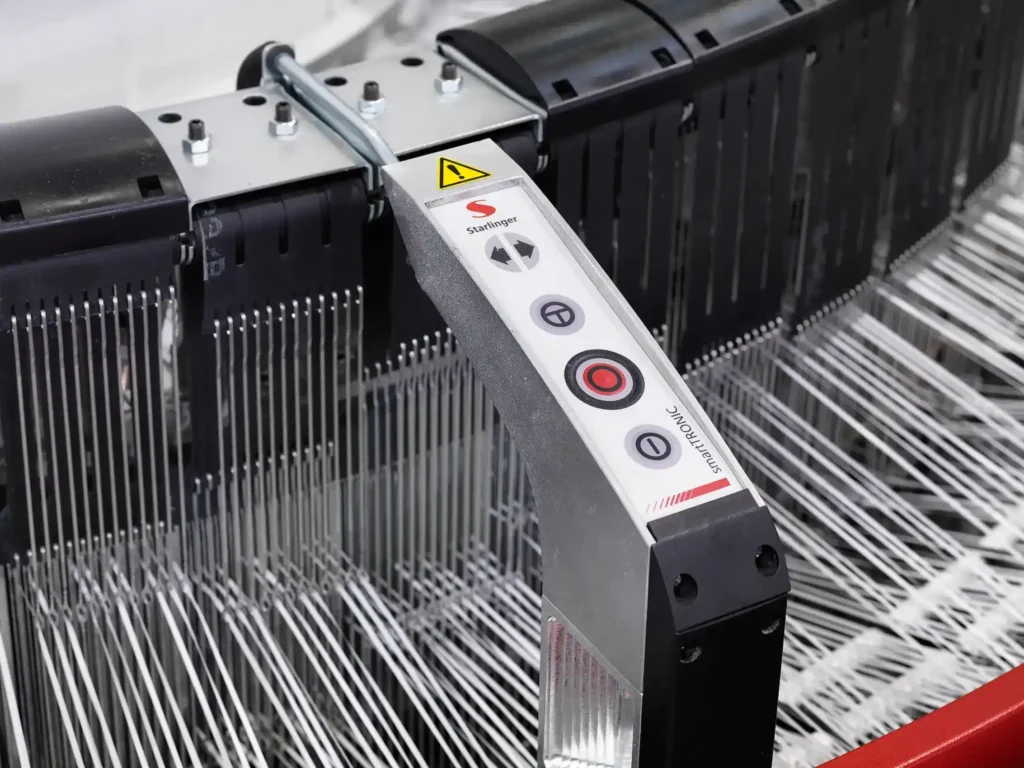
- Weaving. Circular or flat looms interlace tapes at specified pick densities. Tension and alignment determine dimensional stability and crisp block‑bottom corners. Controls: fabric gsm, pick density, air permeability, off‑loom defect mapping.
- Printing & surface prep (if laminated/coated). Films are corona‑treated or primed; rotogravure or HD‑flexo prints brand assets. Controls: dyne (pre/post), register tolerance, cross‑hatch adhesion, wet rub indices.
- Lamination or coating. Extrusion lamination with HDPE/MDPE/LDPE tie layers for mono‑material composites; or solvent‑free PU/water‑borne adhesive lamination for BOPP. Controls: bond peel strength, coatweight uniformity, curl/flatness, residual solvent (if any).
- Slitting & tubing. Laminated/coated webs are slit; tubers form side seams by hot air, ultrasonic, or hotmelt. Valve sleeves are positioned for valve bags; pinch‑bottom geometries are set for open‑mouth. Controls: seam shear/T‑peel, tube circumference tolerance, valve alignment.
- Bottoming & features. Block‑bottom or pinch‑bottom formation; micro‑perfs, anti‑slip, easy‑open notches, and reclose features applied. Controls: base squareness, compression integrity, CoF, perforation density.
- QA & release. Dimensional, seam/bond, drop tests on filled samples; rub/abrasion; food‑contact documentation where relevant. Retained samples and CoAs tie to lot codes; nonconformities trigger corrective action and requalification.
What is the application of HDPE Fabric Bags
Applications begin with physics—particle size, bulk density, cohesion, hygroscopicity, and minimum ignition energy (MIE) for dusts—then proceed to line realities (fill rate, de‑aeration, sealing) and finally to context (outdoor storage, retail scuff, reuse ambitions).
Agricultural Produce & Staples
Rice, pulses, grains, sugar, and flour adopt HDPE Fabric Bags for the strength/moisture balance. Matte laminates mimic paper aesthetics; compliant liners and low‑migration print systems support food‑adjacent use.
Fertilizers & Soil Amendments
Abrasive, often hygroscopic products (urea, NPK, potash) benefit from tight weaves, anti‑slip coats, and reinforced seams that minimize leaks and pallet collapse during hot, extended storage.
Minerals & Building Materials
Cement, white cement, calcium carbonate, kaolin, silica sand, and barite use valve designs with controlled micro‑perfs for fast fills and cube‑stable pallets on export routes.
Feeds & Pet Nutrition
Dry kibble/compound feed requires grease resistance, puncture tolerance, and high‑fidelity print; reclose features aid at‑home use; liners manage aroma without overspecifying oxygen barrier.
Chemicals & Additives
Colorants, stabilizers, dry intermediates need clean handling and, in dusty zones, occasional antistatic considerations. Lined builds provide predictable seals; open‑mouth pinch‑bottoms simplify partial discharge.
E‑commerce & Retail Logistics
For bulky, scuff‑prone goods (animal bedding, pellets, lawn inputs), HDPE Fabric Bags combine scuff resistance, cube‑stable stacking, and durable on‑pack labeling. QR labels link the physical bag to live specs and disposal cues.
HDPE Fabric Bags: Applications and Global Insights (2024–2025)
Across the last year, tightening expectations in compliance, operations, and branding have changed how HDPE Fabric Bags are specified and sourced. The following insight cards translate those pressures into practice.
Mono‑polyolefin stacks are preferred where collection exists. HDPE‑on‑HDPE laminations simplify claims; if BOPP is required for print, keep the build all‑polyolefin and test de‑inking/wash‑off. Geographic claim‑scoping avoids regulatory pushback.
Inline cameras and coatweight sensors enable resin reduction without sacrificing drop or rub performance, especially on stable high‑volume SKUs. Less mass, same outcome.
Solvent‑free PU laminations and high‑solids water‑based inks lower VOCs and odor risk. Plants align ISO 9001 (quality) with ISO 14001 (environment) and FSSC 22000/ISO 22000 where food‑adjacent work is performed.
SKU fragmentation favors HD‑flexo optimization and selective digital over‑printing for regional codes and seasonal art. Obsolescence waste falls as artwork cycles tighten.
RFQs demand live dossiers: drawings, BoM IDs, drop & seam data, WVTR/OTR (when liners are used), migration declarations for food SKUs, and environmental metrics (kg CO₂e per bag and per tonne moved). QR on‑pack links to the file.
Systems thinking: decomposing the problem and recombining a solution
Specification creep is real. To keep control, treat the challenge as four interacting subsystems—each with a problem statement, analysis, and targeted response. Then integrate them into a platformed portfolio.
Subsystem A — Functional Performance (barrier, strength, machinability)
Problem. Deliver moisture control, stack stability, and high fill rates without needless mass.
Analysis. Moisture‑only threats justify HDPE skins/laminations; oxygen‑sensitive goods require liners (EVOH only with shelf‑life data). Pallet stability improves more with anti‑slip and block‑bottom geometry than heavier fabrics in many routes.
Solution. Three tiers: (1) mono‑HDPE standard for minerals/fertilizers; (2) food‑grade lined for staples/feed; (3) enhanced‑barrier lined for aroma‑sensitive goods—each with documented seal windows and drop metrics.
Subsystem B — Compliance & Auditability
Problem. Different destinations, different rules; keep claims true and paperwork painless.
Analysis. Tie raw materials to identifiers recognizable in audits: U.S. FDA 21 CFR 177.1520 (olefin polymers), 21 CFR 175.105 (adhesives); EU 10/2011 with EN 1186 migration tests. For transport risk, map to UN bag codes 5H1/5H3 as relevant. Keep recyclability claims bound to real collection pathways in the sale region.
Solution. Per‑SKU dossiers with change‑controlled drawings and BoMs, QR‑linked on pack; harmonized artworks by region.
Subsystem C — Cost & Carbon
Problem. Lower delivered cost while demonstrating emissions progress.
Analysis. Downgauging is the prime lever but demands process capability; solvent‑free lamination reduces oven energy; block‑bottom geometry increases pallet density and trims transport emissions per tonne.
Solution. Track kg CO₂e per bag and per tonne moved; bring the metric to the same table as unit price when approving BOM changes.
Subsystem D — Brand & User Experience
Problem. Create shelf differentiation that survives distribution and make opening/closing intuitive.
Analysis. Matte finishes with tactile varnish mimic paper; selective gloss adds premium cues. Tear notches and reclose devices reduce tool dependence; iconography helps universal handling.
Solution. Finish libraries with tested rub/scuff indices and standardized handling/disposal icons; validate legibility and opening forces after distribution simulations.
Professional standards, certification identifiers, and test methods
A credible HDPE Fabric Bags program references norms auditors recognize:
- FDA 21 CFR 177.1520 (olefin polymers) and 21 CFR 175.105 (adhesives) for U.S. food‑contact declarations.
- EU 10/2011 with EN 1186 (OML ≤ 10 mg/dm²; SMLs per substance) for EU food‑contact layers.
- GMP Regulation (EC) No 2023/2006 for hygiene and documentation in materials intended to contact food.
- ISO 9001 (quality) and ISO 14001 (environment) for plant systems; FSSC 22000 / ISO 22000 where food‑contact liners or controlled environments are used.
- ISO 7965‑2 and ISO 2248 for filled sack drop methods; ASTM D1709 (dart impact) for film puncture toughness.
- ASTM F88/F88M for peel strength; ASTM F1249 / ASTM D3985 for WVTR/OTR of liners when relevant.
- UN 5H1 / 5H3 codes from the UN Model Regulations (woven plastics bags without/with water resistance), with modal adoption under ADR/IMDG/IATA as applicable.
Technical summary tables
| Layer / Feature | Typical Options | Indicative Range | Purpose |
|---|---|---|---|
| Fabric (gsm) | HDPE woven fabric | 60–120 (general), 90–160 (heavy‑duty) | Tensile, drop, puncture |
| Film laminate | BOPP; HDPE/MDPE; LDPE/LLDPE | 15–35 µm (films); 10–20 g/m² (coatings) | Print, scuff, seal window |
| Liner | LDPE/LLDPE; optional EVOH | 60–120 µm | Moisture/aroma barrier, seal |
| Valve sleeve | Paper; PE; HDPE | — | High‑speed filling |
| Anti‑slip | Varnish; micro‑emboss | Add‑on 1–3 g/m² | Pallet stability |
| Dimension | Method | Indicative Target / Rationale |
|---|---|---|
| Drop performance | ISO 7965‑2 / ISO 2248 | No rupture at specified height/mass relevant to SKU |
| Seal/laminate peel | ASTM F88/F88M | > 2.0 N/15 mm typical; higher for rough handling |
| WVTR (38°C/90% RH) | ASTM F1249 | 5–15 g/m²·day unlined; ≤ 5 with liners |
| OTR (23°C/50% RH) | ASTM D3985 | Only for barrier liners; set by shelf‑life data |
| CoF (static/dynamic) | In‑house / ASTM D1894 | Tuned to prevent pallet slip for route profile |
| Wet rub resistance | In‑house rub tester | Legibility retained after defined cycles |
Worked scenarios — translating requirements into structures
Scenario A — 25 kg White Cement (Export)
Objective. High valve fill rate, minimal dust, cube‑stable pallets for sea and road.
Structure. 100 g/m² HDPE fabric; gloss film laminate; micro‑perfs; block‑bottom valve; anti‑slip varnish.
Targets. ISO 7965‑2 drop at 1.2 m; valve leakage < 0.5% mass after vibration; stable pallet through intermodal simulation.
Why it works. Valve + micro‑perfs enable clean de‑aeration; anti‑slip protects stacks; gloss film resists scuff.
Scenario B — 10 kg Basmati Rice (Retail)
Objective. Premium shelf presence and six‑month moisture control.
Structure. 85 g/m² fabric; matte laminate; 80 µm LDPE form‑fit liner; pinch‑bottom; easy‑open notch.
Targets. WVTR ≤ 5 g/m²·day; zero seal leaks at 200 mm water column; rub index retained post‑distribution test.
Why it works. Matte cues quality; liner secures moisture; pinch geometry manages sifting.
Scenario C — 15 kg Dry Dog Food (Grease/Aroma)
Objective. Grease resistance, controlled aroma, durable graphics.
Structure. 95 g/m² fabric; matte laminate; 90 µm LLDPE liner; zipper reclose; anti‑scuff varnish.
Targets. No grease strike‑through; consumer‑friendly opening force; OTR minimized by liner while end‑of‑life claims stay honest.
Why it works. Liner supplies seal integrity; reclose improves UX; varnish guards brand zones where handling is roughest.
Procurement & qualification checklist
- Define physics. Particle size, bulk density, cohesion/abrasiveness, moisture/oxygen sensitivity, MIE if combustible dust may occur.
- Map the line. Filling method, target rate, de‑aeration, sealing tech, pallet pattern, and downstream handling.
- Pick the platform. Mono‑HDPE standard; food‑grade lined; enhanced‑barrier lined. Add anti‑slip/baffles as needed.
- Demand the stack. Layer‑by‑layer gauges and coatweights; valve material; liner specs with drawings.
- Request proof. Drop & seam data, peel strength, WVTR/OTR (if relevant), CoF, wet‑rub indices, food‑contact declarations tied to lots.
- Pilot. Run on actual lines; capture fill time, dust loss, discharge completeness, pallet stability, scuffing, and operator interventions.
- Lock & monitor. Freeze drawings and BoMs; set KPIs (returns, breakage, complaints, pallet collapse incidents); manage changes via ECNs with requalification triggers.
Risk register and mitigations
- Delamination under stress. Maintain dyne; hold adhesive cure windows; routine peel tests per ASTM F88.
- Pallet slip. Specify anti‑slip; verify static/dynamic friction on filled bags with route‑specific thresholds.
- Scuffing/print loss. Varnish high‑rub zones; validate wet‑rub cycles that mimic your distribution chain.
- Valve dust leakage. Tighten sleeve tolerance; trial self‑sealing valves; tune micro‑perfs to the powder’s air release rate.
- Over‑claiming recyclability. Scope claims to real collection pathways; publish disassembly guidance for lined builds.
- Food‑contact non‑conformance. Maintain substance registers; perform worst‑case migration tests; tie declarations to lot codes.
Strategic outlook — near‑term moves that matter
In the near term, success will favor specifications that are (1) platformed (mono‑HDPE; lined food grade; enhanced‑barrier only when justified), (2) documented (QR‑linked dossiers carrying drawings, tests, and declarations), (3) capability‑driven (downgauging backed by inline inspection, not hope), and (4) honest about end‑of‑life (claims scoped by geography and paired with disassembly instructions). That is how teams ship faster, waste less, and withstand audits—while keeping product safe and brands intact.
- What are HDPE Fabric Bags?
- The material of HDPE Fabric Bags
- What is the features of HDPE Fabric Bags
- What is the production process of HDPE Fabric Bags
- What is the application of HDPE Fabric Bags
- HDPE Fabric Bags: Applications and Global Insights (2024–2025)
- Systems thinking: decomposing the problem and recombining a solution
- Professional standards, certification identifiers, and test methods
- Technical summary tables
- Worked scenarios — translating requirements into structures
- Procurement & qualification checklist
- Risk register and mitigations
- Strategic outlook — near‑term moves that matter
- 1. Material Superiority in Construction Waste Management
- 2. Global Market Dynamics and Regulatory Compliance
- 3. VidePak’s Manufacturing Excellence
- FAQs: HDPE Bags in Construction Waste Management
“HDPE fabric bags are redefining durability in construction waste management,” asserts Ray, CEO of VidePak, during a factory audit. “By leveraging high-density polyethylene’s unmatched tensile strength and chemical resistance, our bags reduce leakage rates by 98% while cutting transportation costs by 30%—critical for contractors handling abrasive debris like concrete and steel shavings.” This report explores the technical advancements, market dynamics, and sustainability imperatives driving the global adoption of HDPE fabric bags, with a focus on construction waste logistics and VidePak’s 17-year expertise in industrial packaging solutions.
1. Material Superiority in Construction Waste Management
1.1 HDPE vs. Traditional Materials
High-density polyethylene (HDPE) outperforms conventional packaging materials in three key areas critical for construction waste:
- Tensile Strength: HDPE fabric achieves 20–35 MPa tensile strength, 2x higher than LDPE, enabling safe transport of sharp debris (e.g., rebar fragments) without rupture.
- Chemical Resistance: Resists corrosion from alkaline concrete dust (pH 12–13) and acidic demolition residues, complying with ASTM D5322 immersion tests.
- Cost Efficiency: At $0.15–$0.30/m², HDPE bags are 40% cheaper than woven PP alternatives while offering comparable load capacities (up to 2,000 kg).
| Material | Tensile Strength (MPa) | Chemical Resistance | Cost ($/m²) |
|---|---|---|---|
| HDPE | 20–35 | High | 0.15–0.30 |
| LDPE | 10–15 | Moderate | 0.20–0.40 |
| Woven PP | 25–30 | High | 0.25–0.50 |
Case Study: A Shanghai demolition contractor reduced bag replacement costs by 45% after switching to VidePak’s TitanShield HDPE bags, which withstand 500+ cycles of gravel transport without seam failure.
1.2 Design Innovations for Construction Sites
- Anti-Static Coatings: Carbon-black additives (1.5–2.0% concentration) lower surface resistivity to 10⁶–10⁸ Ω/sq, preventing dust explosions during waste compaction.
- UV Stabilization: HALS additives extend outdoor usability from 6 to 24 months under 500 kWh/m² UV exposure, ideal for uncovered landfill staging areas.
2. Global Market Dynamics and Regulatory Compliance
2.1 Regional Demand Drivers
- Asia-Pacific: Accounts for 55% of global demand, fueled by China’s annual 3.5 billion tons of construction waste and strict landfill containment policies under GB 16889-2008.
- Europe: EU Directive 94/62/EC mandates 65% recyclability for packaging materials, accelerating adoption of HDPE blends with 30% post-industrial recycled content.
VidePak’s EcoCycle HDPE line meets both standards, achieving a carbon footprint reduction of 22% (ISO 14044-certified) while maintaining 2,500 N/5 cm tensile strength.
2.2 Cost-Benefit Analysis for Contractors
- Operational Savings: Bulk purchasing (100pcs/roll at $0.18/m²) cuts per-unit costs by 25% vs. retail packaging.
- Waste Reduction: Laser-perforated microvents (0.3 mm diameter) enable 0.5 CFM/ft³ airflow, reducing moisture-induced spoilage by 40% in organic debris storage.
3. VidePak’s Manufacturing Excellence
3.1 Starlinger-Driven Production
With 100+ circular looms and 30 lamination machines, VidePak achieves:
- Precision Extrusion: ±0.02 mm HDPE film uniformity, critical for load-bearing seams in 1-ton debris bags.
- High-Speed Customization: 10-color CMYK printing at 1440 dpi for OSHA/GHS-compliant hazard labels, supporting brands like Caterpillar and Komatsu.
Case Study: A 2024 partnership with a German construction firm utilized RFID-tagged FIBC bags to automate inventory tracking, reducing logistics errors by 25%.
3.2 Sustainability Integration
- Closed-Loop Recycling: 40% of production scrap is reprocessed into rHDPE, slashing raw material costs by 18%.
- Solar-Powered Facilities: 2MW rooftop photovoltaic systems offset 15% of energy needs, aligning with China’s 2060 carbon neutrality goals.
FAQs: HDPE Bags in Construction Waste Management
Q1: How do HDPE bags prevent chemical leaching in landfills?
A: Multi-layer laminates with PE liners achieve <0.01 g/m²/day WVTR, blocking heavy metal migration per EPA 9095B.
Q2: Can HDPE bags handle extreme temperatures?
A: Yes—VidePak’s ArcticShield series retains flexibility at -60°C, tested per ASTM D746 for Siberian infrastructure projects.
Q3: What’s the ROI of switching to HDPE?
A: Clients report 18-month payback via 30% waste reduction and carbon credit earnings.
Conclusion
The HDPE fabric bag market is poised to grow at 7.2% CAGR through 2030, driven by urbanization and ESG mandates. VidePak’s R&D pipeline targets graphene-reinforced barriers and blockchain-tracked recycling—positioning it to lead the $12.5 billion construction packaging sector. As Ray summarizes: “In waste management, durability isn’t optional. It’s the foundation of sustainable progress.”
External Links:
- Explore heavy-duty construction waste solutions: PE-Coated Valve Woven Bags: A Robust Solution for Construction Waste.
- Learn about recyclable material innovations: Recyclable Woven Bags: A Sustainable Solution for Transport and Logistics.