What are HDPE Valve Woven Bags and why do they matter?
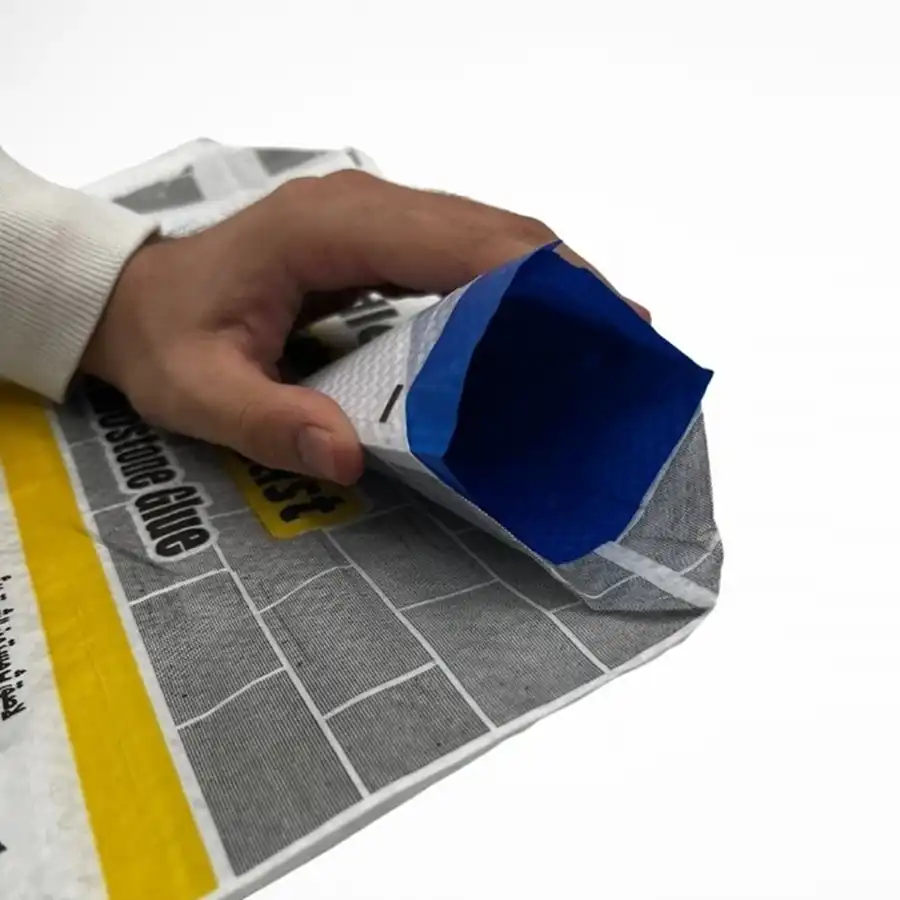
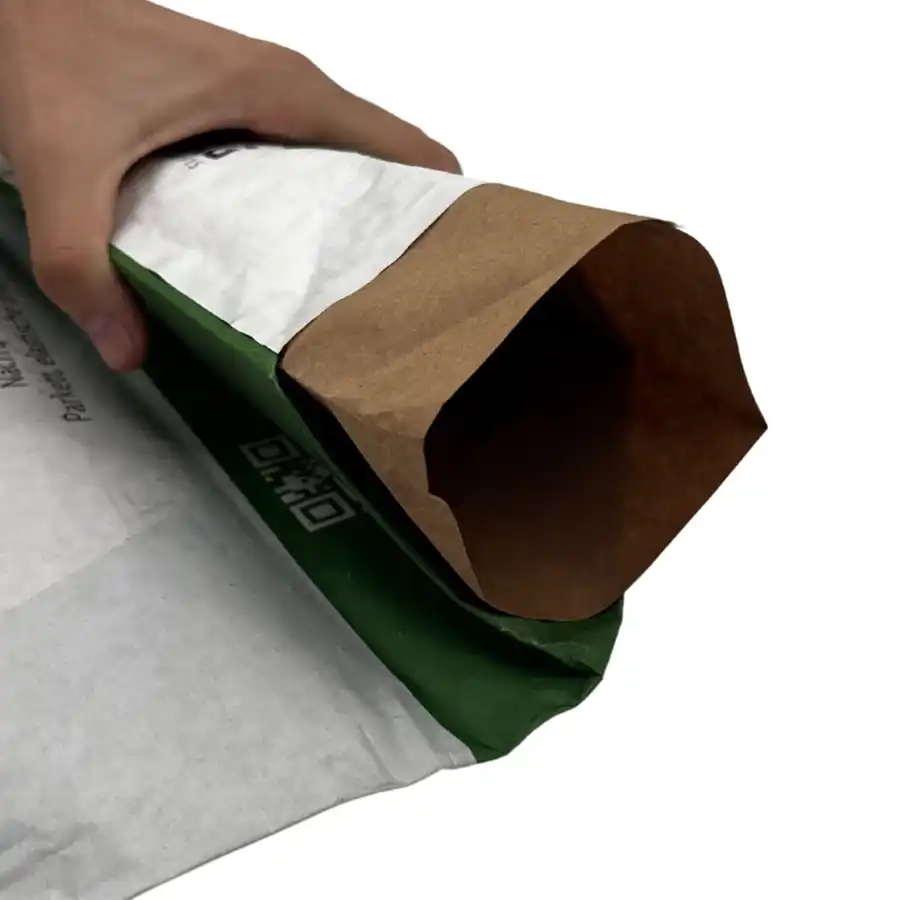
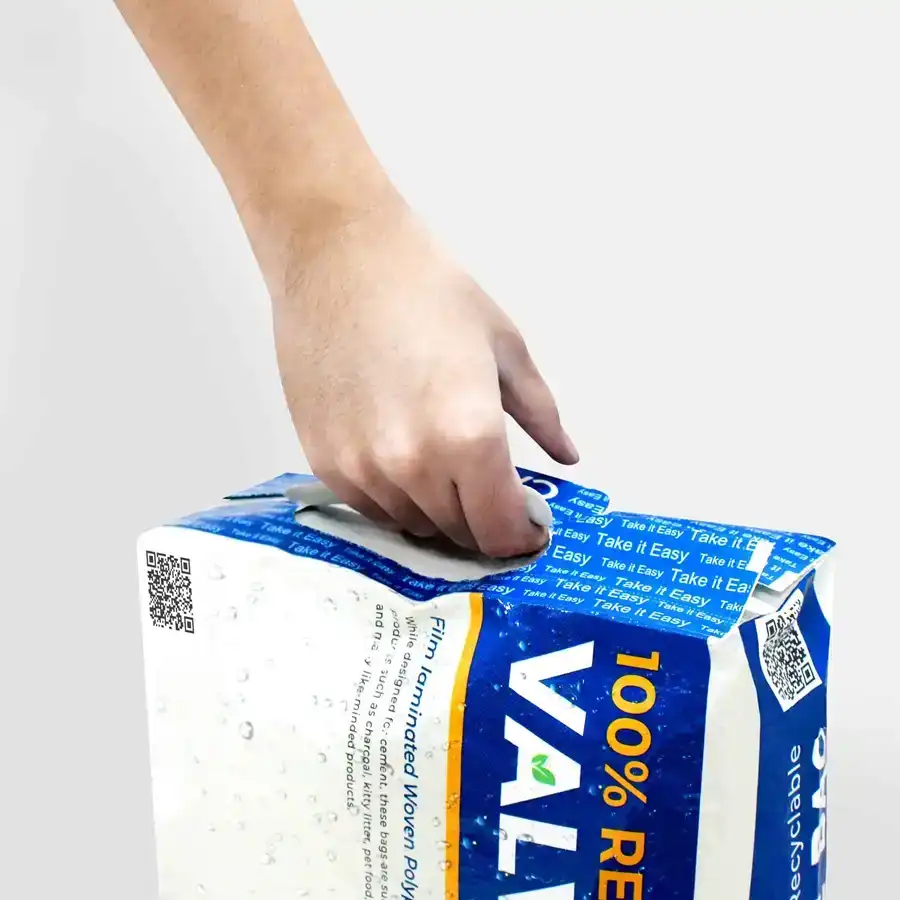
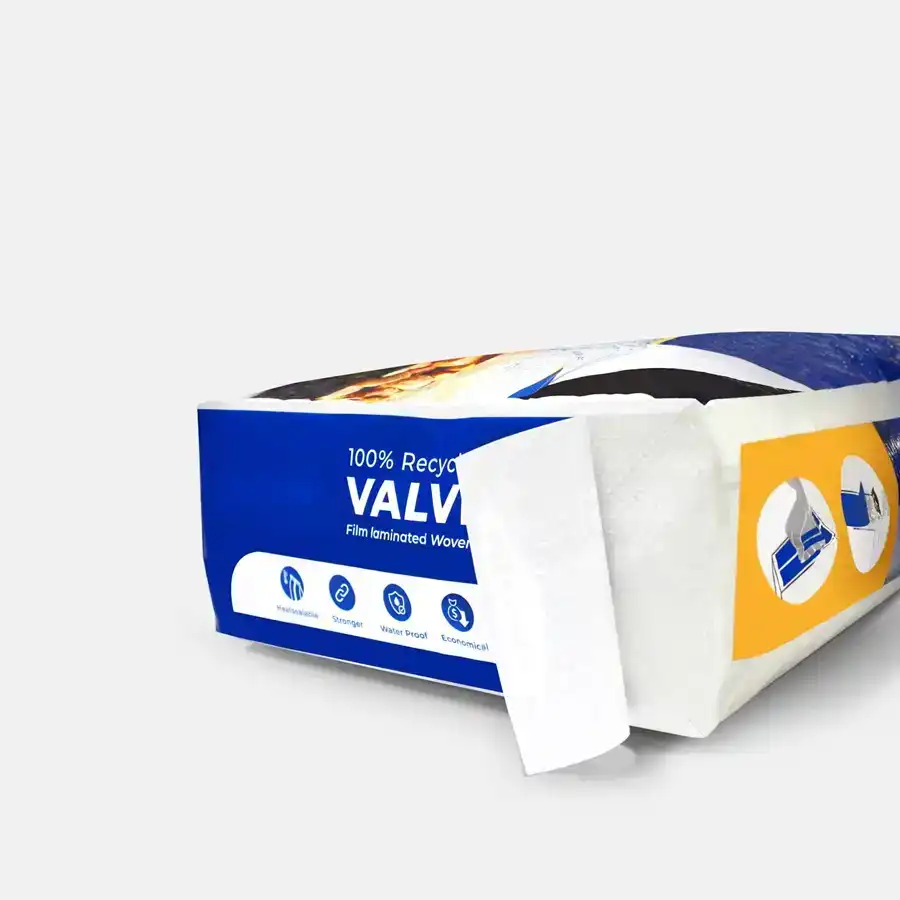
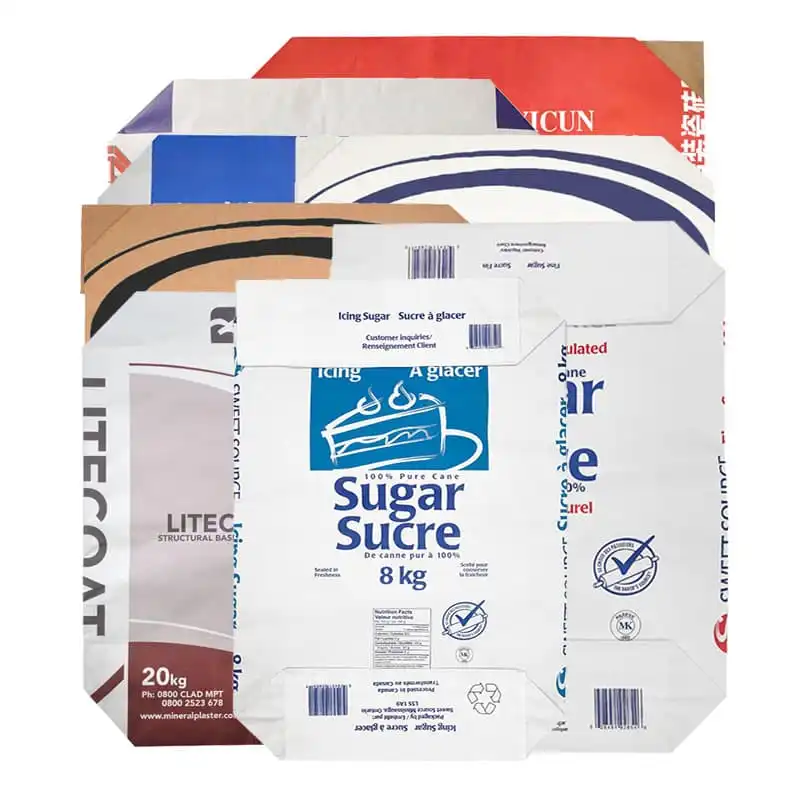
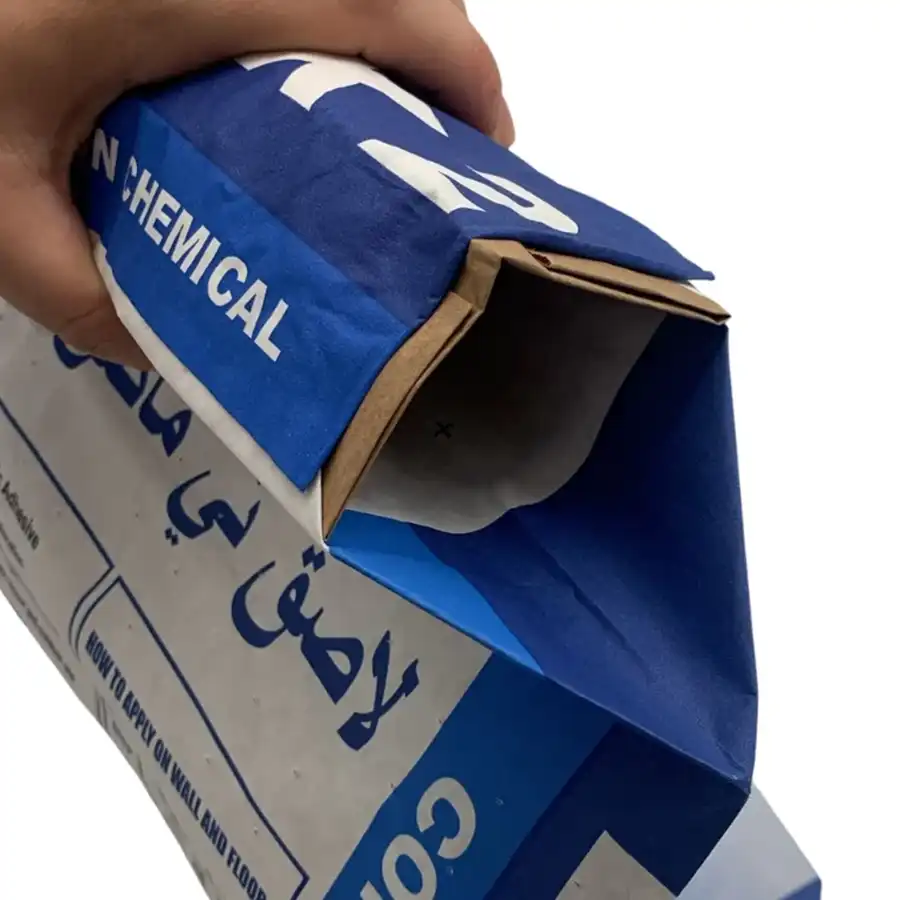
HDPE Valve Woven Bags are industrial sacks engineered from woven high‑density polyethylene tapes, shaped into a tube or block‑bottom form, and fitted with a self‑closing valve sleeve that enables rapid filling and controlled sealing for powders and granules. In different regions and supply chains, they are also known as valve‑type woven sacks, block‑bottom valve sacks, and woven poly valve bags. The woven body delivers high tensile and tear resistance at low weight; the valve architecture supports fast, clean filling; the coating or lamination layer tunes moisture control, print quality, and sealing behavior. In short: they carry heavy loads; they resist abuse; they fill fast; they keep pallets clean. When a packaging engineer, a plant manager, and a quality director look at the same bag, they see different priorities—throughput, survivability, compliance—yet the same product meets them all.
Seen through operations, HDPE Valve Woven Bags shrink manual steps and dust, which means fewer stoppages and safer working conditions. Seen through logistics, they create a brick‑like footprint that stacks neatly and travels well. Seen through compliance, they can be built as mono‑polyolefin structures that align with modern recycling streams while maintaining stringent quality gates. The result is not a mere container but a systems component; it is engineered to perform within a network of equipment—filler spouts, palletizers, conveyors, forklifts, trucks—and within a framework of rules that govern how it is made, tested, and documented.
Material composition and part‑to‑property mapping
Every functional area in HDPE Valve Woven Bags corresponds to a specific material stack with a measurable purpose. Thinking this way—part to property, property to performance—helps unify language between design engineers, sourcing managers, and production teams.
Consider four lenses while reading the following map: mechanical strength (how it carries load), environmental resilience (how it resists moisture, UV, chemicals), processability (how it runs on extrusion/coating/printing/conversion lines), and compliance (how it fits food‑contact, safety, and labeling rules). Each lens overlaps with the others; trade‑offs are explicit.
| Part | Typical Materials | Primary Properties | Cost & Notes |
|---|---|---|---|
| Woven body fabric | Oriented HDPE tapes (raffia), 25–60 µm thick, 2–4 mm wide; UV stabilizer and antioxidant packages as required | High tensile and tear resistance, low creep, good puncture resistance, low moisture uptake | Largest share of mass and cost; GSM optimization has the strongest cost impact |
| Coating / lamination | LDPE/LLDPE or thin HDPE extrusion coat; optional BOPP print film; corona treatment for ink adhesion | Moisture management, sealability, printability, scuff resistance | Tune thickness to product sensitivity; micro‑perforation where controlled venting is needed |
| Valve sleeve | Multi‑ply PE film (HDPE or LLDPE), optional paper/nonwoven stiffener, hot‑melt or ultrasonic bonding | Self‑sealing behavior under product pressure, dust control, compatibility with filler spouts | Small cost share but a critical performance lever; geometry must match product and spout |
| Optional inner liner | HDPE or LLDPE tubular liner; antistatic grades; selective barrier (e.g., EVOH) in niche cases | Enhanced moisture and dust containment; improved hygiene; direct contact compatibility | Adds 5–15% material cost; tune perforation to evacuate air without compromising barrier |
| Additives and inks | UV stabilizers, antioxidants, slip/antiblock, antistatic masterbatch; solvent‑ or water‑based flexo inks | Durability, process safety, print legibility, regulatory compliance | Small mass fraction with outsized impact on shelf life and safety |
Material choice is not purely physical; it is economic and regulatory. Lower GSM reduces resin use yet demands tighter process control to preserve drop performance. A switch from BOPP lamination to direct flexo on PE coatings trims complexity but trades away photographic print fidelity. An antistatic package transforms a dusty line into a safer one when powders are combustible. Every change bends the triangle of cost, performance, and compliance—and HDPE Valve Woven Bags are the quintessential proof that smart design can rebalance that triangle toward advantage.
Signature characteristics in use and in motion
How do HDPE Valve Woven Bags behave when they leave the design spreadsheet and hit concrete floors, steel chutes, and the back of a truck? The answers live in motion: powders flowing, air evacuating, pallets settling, forklifts braking. Several characteristics define everyday success.
Is there a trade‑off? Certainly. More venting can mean less water barrier; heavier coatings can mean more energy in extrusion; thicker sleeves can mean stiffer handling on the spout. Yet a product that is explicitly engineered for its flowable contents can thread those needles. That is why packaging teams advocate pilot trials: they measure spillage after ten minutes of vibration, document drop heights by orientation, scan pallets for dust after a truck run. Evidence replaces anecdote; process replaces guesswork.
From polymer pellet to finished sack: a production storyline
The production route for HDPE Valve Woven Bags is a choreography of extrusion, orientation, weaving, coating, printing, and conversion. Each step shapes a distinct performance attribute and opens a lever for improvement.
- Tape extrusion and drawing
HDPE resin is melted, extruded as a thin film, slit into tapes, and drawn at controlled temperatures. Draw ratio defines tensile modulus; melt flow index defines processing window; additive packages set UV life and cleanliness. A small deviation in draw temperature can increase tape split rates; a minor shift in MFI can ripple into coating adhesion. Monitoring is non‑negotiable. - Weaving on circular looms
Tapes become fabric on looms where picks per inch and warp/weft balance tune GSM and porosity. Tension must be even; smiles or flares in the fabric translate into conversion headaches. Loom operators listen for subtle shifts in sound that signal alignment issues: production is sensory before it is statistical. - Coating or lamination
Extrusion coaters lay down LDPE/LLDPE/HDPE; optional print films add graphics fidelity. Corona treatment raises surface energy for ink adhesion. Micro‑perforation may follow. Coat thickness seems mundane—until condensation appears in monsoon season or pinholes form on rough pallets. - Printing
Flexographic presses add branding, safety icons, and traceability. Ink systems must match the coating; rub resistance and tape‑pull are checked. Clarity of a hazard icon is not cosmetic; it is liability management. - Valve insertion and bottom forming
Sleeves are cut, formed, and welded into the corner; the bottom is folded and bonded to create a brick that stands. This is where dust either escapes or is contained; a few millimeters of sleeve protrusion can make or break a self‑seal in use. - Final inspection and palletization
Dimensions are gauged, seams are tested, drop trials are executed, and pallets are wrapped. Lot labels carry traceability hypotheses that should be proven in mock recalls.
Where they work: sectors, products, and edge cases
Because HDPE Valve Woven Bags balance strength, cleanliness, and speed, they thrive in dry bulk environments where those traits are revenue‑critical.
- Cement and minerals: Micro‑perforation vents air on fill; block‑bottom geometry builds reliable pallets; valve sleeves curb dust. Line speeds matter; so do clean pallets in retail‑adjacent yards.
- Fertilizers and agricultural inputs: Granular urea and NPK blends demand moisture care; anti‑slip exteriors and tuned COF stabilize stacks in hot, humid climates.
- Chemicals and pigments: Titanium dioxide, carbon black, masterbatches—each with its own dust behavior and EHS profile—drive antistatic choices and valve flap designs.
- Food ingredients and animal nutrition: Sugar, flour blends, starches, mineral premixes often require stringent hygiene; liners and compliant inks become the focus.
- Construction adhesives and dry mortar: Brick‑like sacks translate into tidy shelves and fewer damaged corners; graphics clarity supports brand differentiation in crowded yards.
Quality by design, quality by habit: management systems that hold the line
One thing is certain: HDPE Valve Woven Bags succeed when specifications are explicit and when habits are institutional. The right documents, the right audits, the right tests—these structures transform intention into repeatability.
| Domain | What to formalize | Why it matters |
|---|---|---|
| Design records | Drawings, valve sleeve specs, GSM/PPI targets, coating thickness, micro‑perf pattern | Removes ambiguity; enables supplier alignment; accelerates root‑cause analysis |
| Process control | SPC on tape draw ratio and GSM; coat weight control; corona level checks; seam peel windows | Catches drift before failure; preserves cost and performance simultaneously |
| Verification | Drop testing by orientation, valve leak under vibration, COF, rub resistance, UV aging | Validates survival in distribution; confirms hygiene and label persistence |
Cross‑disciplinary reasoning: physics, operations, economics, compliance
Why frame HDPE Valve Woven Bags across multiple disciplines? Because a bag that ignores physics will split; a bag that ignores operations will slow the line; a bag that ignores economics will be specified but never purchased; a bag that ignores compliance will be purchased but later rejected. The only correct view is a layered one.
Physics: Oriented tapes behave like tension members in a truss. The weave pattern diffuses stress, while coating layers resist abrasion. Micro‑perforation changes air‑flow regimes during filling; too little venting leads to puffing and poor densification; too much venting invites water ingress and dust emission. The valve sleeve geometry controls a small fluid‑structure interaction: powder flow, trapped air, and sleeve flex form a self‑sealing mechanism.
Operations: Fill rate is limited by spout design, product bulk density, and the bag’s ability to breathe. Housekeeping labor is proportional to dust escape. Pallet damage in transit tracks with COF and block‑bottom integrity. A plant manager reads bags as time: seconds per fill, minutes per cleanup, hours per claim.
Economics: GSM dominates resin cost; energy use rises with coating thickness and line speed; graphics choices swing ink and solvent consumption. Downtime is cost. Warranty claims are cost. Rework is cost. An optimized bag lowers all three by design.
Compliance: For food ingredients and animal nutrition, hygiene practices, ink selection, and traceability tests must be formalized. For hazardous powders, antistatic choices and labeling are safety measures, not accessories. For sustainability, mono‑material structures and right‑weighting demonstrate stewardship without crippling performance.
Rhetorical pause:
What is a bag? A surface with seams? Or the visible edge of an invisible system? When a sack fills cleanly, stacks squarely, rides quietly, arrives intact—was that accident or architecture? The answer shapes budgets, specs, and everyday habits.
Testing philosophies and numeric targets
Tests are stories told in numbers. For HDPE Valve Woven Bags, the narrative spans drop heights, seam peels, leak scores, and pallet stability. Exact figures vary by product mass and distribution hazards, yet rational bands can anchor discussion and contracts.
- Filled free‑fall drop: five orientations (flat, top, bottom, and two corners) at heights calibrated to mass (e.g., 1.0–1.2 m for 25 kg cement).
- Valve leak under vibration: dust mass loss below a defined threshold after a set duty cycle (e.g., 30 minutes at transport‑representative frequency).
- Seam/bottom peel: minimum peel strength exceeding body tensile by a safety factor (e.g., ≥1.1×).
- COF control: outside COF between roughly 0.30 and 0.45 balances stackability and handling.
- UV aging: a specified QUV exposure without embrittlement or significant loss of tensile properties where outdoor dwell is expected.
Risk thinking: failure modes and prevention
Failures in HDPE Valve Woven Bags rarely arrive unannounced. They whisper in SPC charts, in a slight rise of seam peel scatter, in the way dust hangs in the air by the filler. Turning these whispers into actions is the heart of preventive quality.
| Failure mode | Likely root causes | Prevention and detection |
|---|---|---|
| Corner splits after drops | Low GSM, under‑drawn tapes, weak bottom fold geometry, over‑perforation | DOE on bottom geometry; higher draw ratios; targeted reinforcements; re‑balance venting |
| Valve dust leakage | Sleeve mis‑match to spout, poor flap design, insufficient sleeve stiffness | Go/no‑go gauges; redesign sleeve angle/length; stiffer laminates; vibration qualification |
| Seam peel at bottom | Low weld energy, contamination, misaligned folds | Validate heat/ultrasonic windows; cleanliness checks; jigging improvements |
| Scuff‑through on pallets | Rough surfaces, thin coating, low abrasion resistance | Raise coat thickness; abrasion‑resistant masterbatch; pallet board quality checks |
Cost structure and levers that actually move the needle
It is easy to talk about saving cost; it is harder to do it without harming performance. In HDPE Valve Woven Bags, several levers matter more than others.
- GSM optimization: Often the largest single lever. Lower GSM quietly taxes drop performance unless draw ratios and weave density are co‑tuned. Smart reductions are designed, not guessed.
- Valve geometry standardization: Families of sleeves reduce changeover and scrap; geometry tuned to a plant’s spouts stabilizes fill speeds and self‑seal reliability.
- Ink and print strategy: Direct flexo on PE coatings cuts lamination cost; target rub resistance via varnish selection rather than heavier ink laydowns.
- Energy monitoring: Extrusion, coating, and drying steps consume the most kWh/kg; small optimizations accumulate surprisingly fast on annualized tonnage.
Sustainability without euphemisms
Promises are easy; measurable improvements are not. With HDPE Valve Woven Bags, several actions are both practical and material.
Prefer mono‑polyolefin designs (HDPE body + PE coatings/liners) to simplify recycling; right‑weight using DOE so survival rates are proven; adopt low‑VOC inks and restricted‑substance lists; meter energy and publish kWh/kg; offer guidance to end‑users on sack disposal or recovery. Sustainability communicated as a datasheet, not a slogan.
Case‑style scenarios to pressure‑test design choices
Scenarios sharpen thinking. Here are concise stress tests for HDPE Valve Woven Bags—each highlights a trade‑off and a likely resolution.
- Monsoon logistics for cement: Barrier is paramount. Increase coating thickness modestly, maintain micro‑perfs for venting, add pallet wrap with corner boards. Validate with humidity chamber dwell then drop tests.
- Carbon black packaging with EHS sensitivity: Prioritize antistatic masterbatch and sleeve geometry that resists puffing; consider liner with controlled perforation. Document surface resistivity targets and dust loss thresholds.
- Retail‑adjacent mortar with brand visuals: High‑fidelity graphics matter. Either adopt BOPP lamination or raise flexo sophistication; guard COF to prevent sliding displays; inspect rub resistance rigorously.
- Cost‑urgent fertilizer lines: Right‑weight GSM via DOE; accept modest graphic simplification; pay attention to pallet COF during hot‑weather transport to avoid stack creep.
Integration with filling lines and the choreography of throughput
Packaging does not live alone; it lives on lines. HDPE Valve Woven Bags reward plants that harmonize spout design, product aeration, and bag venting. A spout that is too large distorts the sleeve and invites leakage; one that is too small restricts flow and prolongs exposure. Air evacuation must be sufficient to densify, yet not so aggressive that it becomes dust ejection. Downstream, palletizers crave consistent geometry; upstream, hoppers crave steady flow. When each unit operation is tuned, the bag stops being a potential bottleneck and becomes a performance multiplier.
Data discipline: what to measure, how to react
No measurement, no improvement. For HDPE Valve Woven Bags, practical dashboards can be refreshingly simple yet profoundly effective.
- GSM mean and Cp/Cpk by fabric roll; alarm when drift exceeds ±3%.
- Coat weight and thickness uniformity; flag edges versus center variance.
- Corona dyne level before printing; re‑treat or quarantine when below threshold.
- Seam peel strength trending; investigate contamination when variance widens.
- Drop pass rate by orientation and by shift; if corners suddenly fail, inspect fold geometry.
- Dust loss grams per pallet in simulated vibration; hold shipments when spikes appear.
People and habits: why culture finishes what design begins
Specifications start journeys; habits complete them. A loom operator who stops a line when the fabric “sounds wrong,” a printer who rejects an ink that rubs off in their hand, a converter who interrupts production to re‑set valve weld energy—these acts are not romantic; they are statistical. They prevent tails in the distribution from hurting customers. In factories where HDPE Valve Woven Bags achieve legendary consistency, such habits are systematized through training, checklists, and praise for preventive action.
A precise phrase revisited: Ensuring Quality with Comprehensive Management Systems
It is a strong phrase, and it ought to be earned. For HDPE Valve Woven Bags, a comprehensive system means alignment across specification, process, verification, and learning. Start with a drawing that fixes valve geometry and micro‑perf density. Continue with SPC on tapes and coating. Verify with drop and leak tests pegged to mass and climate. Learn with CAPA that edits the spec when reality proves wiser. The loop is small, fast, and honest.
A compact specification template to operationalize
Use this outline when writing or auditing a specification for HDPE Valve Woven Bags. It is terse by design; it forces clarity.
- Capacity & dimensions: Target mass; width × length × gusset; block‑bottom yes/no; valve sleeve angle/length/protrusion.
- Materials: Fabric GSM and PPI; coating polymer and thickness; liner yes/no and thickness; additives (UV hours, antistat target resistivity); dyne level before print.
- Printing: Colors; ink system; rub resistance grade; artwork controls; regulatory icons.
- Performance tests: Drop heights by orientation; valve leak vibration cycle; seam peel minimums; COF window; UV aging hours.
- Compliance and documentation: Management system scope; traceability scheme; mock recall cadence; change control workflow.
- Packing & logistics: Pallet pattern; stack height; wrap spec; corner protection; label content.
Closing reflection without a bow
HDPE Valve Woven Bags are neither glamour nor mystery; they are craft. They are design made visible in how quietly a line runs and how squarely a pallet stacks. They are accountability printed in ink that does not rub off and in valves that do not leak. They are data when gauges hold steady, and they are culture when a shift leader chooses to intervene before a defect is born. If these sacks seem simple, good—they should. Simplicity, when earned, is the surest sign that complexity has been properly handled elsewhere.
In the world of industrial packaging, durability and reliability are paramount. Products like cement, chemicals, and fertilizers require robust packaging that can withstand harsh conditions during transportation and storage. This is where Valve Woven Bags come into play. These bags, often made from High-Density Polyethylene (HDPE) or Polypropylene (PP), offer a high level of strength, durability, and versatility, making them the preferred choice for industries that deal with bulk materials. At VidePak, as a leading valve bags manufacturer, we are committed not only to producing high-quality valve sacks but also to maintaining rigorous quality control standards across every stage of production. This ensures that our clients receive reliable and consistent products with every order.
The Importance of Valve Woven Bags
Valve Woven Bags are a type of industrial packaging known for their unique design, which includes a self-sealing valve at one end. This design makes them especially convenient for the quick and efficient filling of powders and granular materials such as cement, flour, or fertilizers. Once filled, the valve automatically closes, preventing the contents from spilling and ensuring safe transport and storage.
Manufacturers, especially those in industries dealing with construction materials or chemicals, rely on these bags for their resilience and ease of use. Valve PP Bags (polypropylene) are popular due to their lightweight yet strong structure, while Valve HDPE Woven Bags offer extra durability, especially when exposure to harsh environmental conditions is expected.
However, while the design of valve woven bags provides functional benefits, the quality of the material and the manufacturing process are equally critical. Substandard bags can result in spillage, contamination, and potential loss of product, not to mention increased costs for businesses.
Quality Control in Valve Woven Bags Production
At VidePak, we have implemented a comprehensive quality management system that covers every stage of the production process. From the moment raw materials arrive at our facility to the final inspection before shipment, our quality control (QC) protocols are designed to ensure that every valve woven bag meets the highest industry standards. Here’s how our quality management system works:
1. Incoming Quality Control (IQC)
Before any raw materials are approved for use, our IQC team rigorously tests and inspects each batch. For valve bags, the primary raw materials are HDPE or PP, which are checked for consistency in texture, purity, and tensile strength. HDPE and PP must be of high quality to ensure that the final product will have the durability and resistance expected by customers.
To guarantee the consistency of our raw materials, we conduct tests on:
- Polymer quality: To ensure it meets our specific standards for strength and flexibility.
- Additives and masterbatch: Ensuring color consistency and UV stabilization.
- Moisture content: Keeping it within acceptable limits to avoid complications during the extrusion process.
Every batch is randomly sampled for these checks, and any materials that don’t meet our stringent requirements are rejected and returned to the supplier. This meticulous approach ensures that we begin our manufacturing process with only the best materials.
2. In-Process Quality Control (IPQC)
Once the raw materials are approved, our attention shifts to the manufacturing process. Our IPQC measures are designed to monitor product quality at every stage of production. This includes:
- Extrusion and weaving: We ensure that the PP or HDPE material is extruded uniformly, with consistent thread thickness, before it is woven into fabric. Variations in this stage can lead to weak spots in the fabric, compromising the overall strength of the bag.
- Lamination: Lamination is crucial for moisture resistance in Valve PP Bags. We ensure that the lamination process adheres evenly across the fabric, with no air bubbles or areas where the lamination is too thin or too thick.
- Cutting and stitching: The cutting and stitching of valve sacks are checked to ensure precise dimensions, strong seams, and no loose threads.
3. Product Quality Control (PQC)
During production, our PQC team is responsible for testing the semi-finished and finished bags for:
- Thickness: Ensuring uniformity to guarantee each bag’s strength and durability.
- Tensile strength: Testing the woven fabric’s ability to withstand tension without tearing or stretching beyond acceptable limits.
- UV resistance: For bags expected to endure outdoor exposure, we test their ability to resist degradation from ultraviolet rays. UV stability is critical for preventing the bags from becoming brittle and tearing when exposed to sunlight for prolonged periods.
- Appearance and branding: Printed graphics, logos, and product information on Printed Valve Woven Bags are inspected to ensure clarity and adherence to the customer’s specifications.
4. Final Quality Control (FQC)
Before any batch of bags leaves our facility, our FQC team conducts thorough inspections of the finished products. These final checks focus on:
- Load testing: We subject random samples of finished bags to load testing, where they are filled to capacity and tested for structural integrity. This simulates real-world conditions to ensure the bags will perform reliably during use.
- Drop testing: To ensure the bags can withstand rough handling during shipping, we conduct drop tests from various heights.
- Valve functionality: For valve woven bags, we ensure that the valve is functioning as intended — closing securely after filling to prevent spillage and contamination.
Our FQC system ensures that only products meeting our stringent criteria are shipped to customers, giving them confidence that their valve woven sacks will meet all functional and quality expectations.
5. Outgoing Quality Control (OQC)
Before the products are dispatched, our OQC team performs a final inspection on the packaged goods to ensure:
- Consistency in packaging: Ensuring the products are correctly packed in the right quantities with all required documentation.
- Correct labeling: Making sure that all labeling meets the customer’s specifications and adheres to regulations.
Raw Material and Finished Product Testing
At VidePak, we take pride in our ability to deliver the highest quality valve woven bags to our customers. One key element of our quality management system is our focus on both raw material testing and finished product testing. Here’s a closer look at each:
- Raw Material Testing: As mentioned earlier, our IQC process involves testing every batch of HDPE and PP materials for purity, consistency, and moisture content. This ensures that the bags are durable and resistant to environmental factors. Testing for UV resistance in raw materials is especially critical, as it determines how well the bags will perform in outdoor storage conditions.
- Finished Product Testing: Once the bags are produced, we conduct a series of tests on the finished products. This includes tests for:
- Thickness: To ensure that the bag’s walls are consistent and thick enough to prevent punctures.
- Tensile strength: Testing to confirm the bags can withstand heavy loads without tearing.
- UV stability: Ensuring the bags will not degrade when exposed to sunlight.
- Drop resistance: Simulating real-world handling conditions by dropping filled bags from various heights to test for durability.
- Visual inspection: Ensuring that the bags are free from defects like loose stitching, poor printing, or uneven lamination.
Comparison with Competitors
In an industry as competitive as industrial packaging, maintaining strict quality control is what sets companies apart. While many valve bags manufacturers offer similar products, not all can guarantee consistent quality. Some manufacturers may focus solely on cost reduction, compromising on raw material quality or cutting corners in the production process. This can result in bags that are prone to tearing, leaking, or failing to protect the product adequately.
At VidePak, our commitment to quality is unmatched. By implementing a multi-dimensional quality control system (IQC, IPQC, PQC, FQC, and OQC), we ensure that our products meet and exceed customer expectations. Our investments in state-of-the-art equipment and our rigorous QC protocols allow us to maintain a leading position in the industry. Competitors may offer lower prices, but they cannot match the peace of mind that comes from knowing every batch of Valve PP Bags is meticulously inspected and tested before it reaches the customer.
The VidePak Difference
As a trusted valve bags manufacturer, VidePak delivers quality, durability, and reliability through our comprehensive quality management system. Our focus on using top-grade raw materials, combined with our multi-layered QC approach, ensures that every valve woven bag we produce meets the highest standards. With VidePak, you’re not just getting a product — you’re investing in a solution that will protect your materials and improve your business operations.