
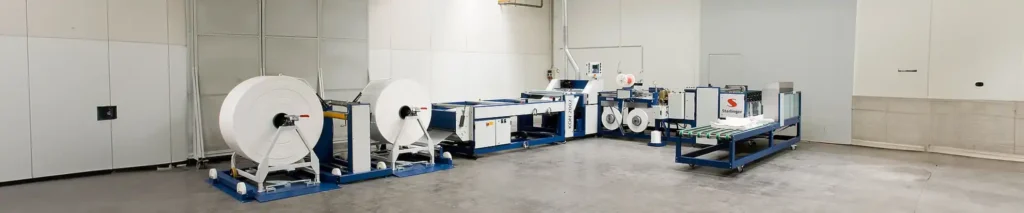
- What Are Heat Sealed Woven Bags?
- Why Heat Sealing Changes the Game: Problem → Method → Outcome
- System Thinking: Decomposing the Bag into Solvable Sub‑Problems
- Production Flow in Depth — From Resin to Ready Pallets
- Application Landscapes and Use Cases
- Interface Engineering: Seals, Valves, and Deaeration Maps
- Printing, Identity, and Traceability
- Compliance and Safety Frameworks
- Typical Specifications and Options (Guidance Ranges)
- Case Study — From Stitched to Heat‑Sealed
- Practical Q&A
- Bringing It All Together — A Working Blueprint
- What Are Heat Sealed Woven Bags?
- Building a Closed Logic Loop: From Problem to Method to Result to Discussion
- Sub‑System 1: Mechanical Integrity Without Excess Tare
- Sub‑System 2: Interfaces—Where Heat Becomes Structure
- Sub‑System 3: Information—Making Every Bag a Data Carrier
- Sub‑System 4: Compliance—From Materials to Documents
- Choosing Formats: Pinch‑Top or Valve? Open‑Mouth or Block‑Bottom?
- Parameters Table—Guidance Ranges You Can Build On
- Preventing Downtime: Upgrades That Pay for Themselves
- Typical Application Scenarios—Short Field Notes
- Discussion: Horizontal and Vertical Thinking in One Package
- References
What Are Heat Sealed Woven Bags?
Heat Sealed Woven Bags are heavy‑duty industrial sacks built on a polypropylene (PP) woven backbone and closed by thermal energy rather than stitching. In a typical build, oriented PP tapes are woven into a high‑tenacity fabric, then faced with a sealable layer—such as PE extrusion coating or reverse‑printed BOPP film—and finally heat‑sealed along the mouth, the bottom, or both. The purpose is deceptively simple and profoundly useful: remove stitch perforations (and their dust paths), tighten geometry, and create a cleaner, more predictable package for powders and granules.
You may encounter Heat Sealed Woven Bags under several aliases, including heat‑sealed woven sacks, pinch‑top heat‑seal bags, block‑bottom heat‑seal valve bags, BOPP‑laminated heat‑seal bags, and PE‑coated PP woven bags. Different names, one family—thermally bonded closures on a woven PP chassis.
Key features of Heat Sealed Woven Bags derive from this architecture: high tensile and puncture resistance from the PP weave; low porosity and scuff‑tough print faces from the laminate; disciplined, brick‑like stacking from pinch or block‑bottom heat‑sealed seams; and cleaner operations thanks to the absence of needle holes. Optional LDPE/HDPE liners (≈20–80 µm) add a second moisture or hygiene barrier for hygroscopic products.
Production overview. Virgin PP resin is slit into tapes and drawn at roughly 5:1–7:1 to align polymer chains and raise modulus. Tapes are woven on circular or flat looms to densities such as 10×10–14×14 threads/inch. A sealable face—PE extrusion coat (≈20–35 µm) or BOPP film (≈15–35 µm) with reverse printing—is applied. Webs are cut, tubed, gusseted, and formed into open‑mouth pinch‑top or block‑bottom valve profiles, then closed with mapped temperature/pressure/time profiles to create durable heat‑seals.
Where they are used. The closure method suits cement and mineral blends, fertilizers (urea/NPK), chemicals and intermediates (resins, pigments, masterbatch), food staples such as salt and sugar (with validated food‑contact stacks), animal feed and premixes, charcoal/pellet fuels/soil mixes, and waste‑to‑energy materials. If your operation wants less dust, straighter pallets, clearer barcodes, and fewer repalletization events, Heat Sealed Woven Bags belong in the short list. For a quick category touchpoint, see Heat Sealed Woven Bags.
Why Heat Sealing Changes the Game: Problem → Method → Outcome
Packaging choices make or break the day at a filler. Stitch holes leak; glossy labels glare; soft stacks creep. A heat‑seal strategy tackles these pain points with a tidy chain of cause and effect.
Dust control and hygiene. Stitching introduces perforations. Under high‑velocity fills, entrained air escapes through those holes and carries fines with it, fogging artwork and floors. Heat Sealed Woven Bags trade punctures for fused seams. On valve styles, a heat‑sealed (or co‑extruded) sleeve mates tightly to the spout, enabling closed‑system dosing and engineered deaeration via micro‑perfs placed away from label zones. Outcome: cleaner faces, higher first‑pass GS1/QR decode rates, safer aisles.
Pallet stability and transport safety. Small geometry errors become big troubles across a three‑day haul. Heat‑sealed pinch‑tops and block‑bottoms create flat, square footprints. Anti‑skid back coats target bag‑to‑bag COF ≈ 0.35–0.55 (ASTM D1894), curbing “skating” columns. Result: straighter stacks, calmer trailers, fewer claims.
Moisture moderation and print durability. Hygroscopic SKUs cake under humidity; labels scuff under rub. With Heat Sealed Woven Bags, PE coats provide heat‑sealable, low‑porosity skins; BOPP laminates protect reverse‑printed art; liners add hygiene; matte windows over barcodes tame glare. Net effect: stable bulk density, legible codes from mill to market.
Compliance across borders. Food contact rules differ between the EU and US; label and hazard systems vary region to region. A polyolefin‑centric build (PP fabric + PP/PE ties + BOPP/PE face) aligns with EU 10/2011 and FDA 21 CFR 177.1520 baselines, supported by migration plans and heavy‑metal screening. More documentation, fewer delays.
System Thinking: Decomposing the Bag into Solvable Sub‑Problems
Treat Heat Sealed Woven Bags as a system of four subsystems—mechanics, interfaces, information, and compliance—each with its own levers.
Mechanics — Strength Without Mass
Background. Oriented PP tapes behave like tiny trusses; woven into fabric, they spread local stresses at modest grammage. The laminate contributes rub resistance and a consistent sealing surface.
Sub‑problems. Edge splits during drops, puncture on forklift tips, stack creep in heat.
Approach. Increase tape draw ratio to raise modulus; hold weave flatness inside tight bands; choose laminate caliper for rub without curl; design block‑bottom geometry for cube retention; specify anti‑skid to reach COF targets. Typical drop references sit at 0.8–1.2 m for 25–50 kg sacks on conditioned samples (ISO 7965‑2 practice).
Result. Fewer split corners, fewer pallet interventions, preserved label faces.
Interfaces — The Heat‑Seal Joint
Background. The seal is a bond between layers with different thermal behaviors and melt ranges.
Sub‑problems. Delamination under vibration, gloss burn from over‑heat, narrow windows on mixed films.
Approach. Map peel‑vs‑temperature curves (ASTM F88‑like) on production laminates; use thermocouple‑mapped bars; design multi‑point tacks to prevent sleeve creep on valve builds; set seal initiation temperature windows around ≈130–170 °C based on PE/PP grade.
Result. Repeatable seals across shifts and seasons with predictable opening forces.
Information — Identity and Traceability
Background. Labels must survive the route and be machine‑readable at a glance.
Sub‑problems. Glare, dust, and smudge degrade codes; lot visibility is fragmented across sites.
Approach. Reverse print under BOPP and reserve matte code panels; use GS1 identifiers and verify to ISO/IEC 15416/15415; serialize pallets with SSCC; consider RAIN UHF RFID at pallet or layer level for hands‑off counting.
Result. Faster inbound verification, cleaner audits, simplified recalls.
Compliance — Proving Fitness for Use
Background. Cross‑border programs traverse plastics, inks, adhesives, and labeling rules.
Sub‑problems. Mixed materials complicate EPR statements; food‑contact proofs vary; hazard communication must be accurate and durable.
Approach. Keep structures within the PP/PE family to align with PP (#5) recovery where available; maintain Declarations of Compliance for EU 10/2011 and FDA 21 CFR 177.1520; screen inks/adhesives for migration; print GHS pictograms and GS1 codes on matte panels.
Result. Predictable customs outcomes and buyer approvals for salt, sugar, and feed lots.
Production Flow in Depth — From Resin to Ready Pallets
1) PP tape extrusion & orientation. Virgin PP is melted, slit, drawn (≈5:1–7:1), and annealed. UV and slip/anti‑block packages are dosed to storage and handling conditions, ensuring woven fabric retains strength through outdoor staging.
2) Weaving. Circular or flat looms target 10×10–14×14 picks/inch. Electronic let‑off and take‑up keep tension stable, which stabilizes weave flatness and later seam efficiency.
3) Surface engineering. Two common faces for Heat Sealed Woven Bags:
• PE extrusion coating (≈20–35 µm) for heat‑sealable, rugged, flexo‑friendly skins.
• BOPP lamination (≈15–35 µm) reverse‑printed for photo‑quality art protected under film, with corona treatment in the ≈38–42 dynes range to improve adhesion.
4) Printing. Flexographic on PE/kraft faces or rotogravure (reverse) on BOPP. Registration control protects GS1 quiet zones; matte/gloss zoning tames glare where scanners work.
5) Forming & heat sealing. Webs are cut, tubed, and gusseted. Profiles include open‑mouth heat‑seal pinch‑top and block‑bottom heat‑seal valve designs. Temperature/pressure/time are mapped to the laminate; optional easy‑open tapes and anti‑wicking hems are integrated.
6) Inspection & release. COF (ASTM D1894), drop (ISO 7965‑2), dart (ASTM D1709), tear (ASTM D1922), barcode verification (ISO/IEC 15416/15415), and peel curves (ASTM F88‑like) are checked. Lots are quarantined and root‑caused if drift is detected.
7) Palletization. Strap and wrap with corner protection; apply GS1 SSCC labels; optional RAIN RFID on layer cards for portal readers.
Application Landscapes and Use Cases
Cement, mortar & minerals. Abrasive powders punish weak edges; dust fouls scanners. Heat Sealed Woven Bags with block‑bottoms resist rub and hold square stacks along long conveyors.
Fertilizers (urea, NPK) & soil amendments. Hygroscopic pellets demand moisture moderation and pallet discipline. Linered variants and anti‑skid backs keep bulk density stable and stacks straight in humid depots.
Chemicals & intermediates. Resins, pigments, and masterbatch favor dust‑tight filling and scuff‑resistant BOPP faces for readable QR/GS1 codes in automated warehouses.
Food staples & feed (where compliant). Salt, sugar, rice, and premixes use food‑contact laminates aligned with EU/FDA rules. Heat‑sealed seams reduce fiber shedding at the closure.
Energy & industrial by‑products. Charcoal, pellet fuels, RDF, ash, and lime travel cleaner; cubic pallets improve trailer utilization and dock flow.
Interface Engineering: Seals, Valves, and Deaeration Maps
The closure interface defines the bag’s behavior at the filler.
Pinch‑top heat‑seal (open‑mouth). A continuous thermal bond across the top creates an airtight closure after dosing. Ideal for granules and pellets, net weighers, and lines that change SKUs frequently.
Block‑bottom heat‑seal valve. A self‑closing sleeve—heat‑sealed or co‑extruded—mates to the spout for closed‑system dosing. Zoned micro‑perfs vent entrained air during fill but are placed away from barcode panels. Best for powders and fines.
Design levers. Sleeve diameter, angle, and stiffness control flow and self‑closing action. Seal windows must match laminate chemistry; multi‑point tacks prevent sleeve creep. On the bag face, anti‑wicking hems reduce edge absorption in rainy depots.
Printing, Identity, and Traceability
Reverse printing under BOPP guards the artwork; matte windows reserve scan‑friendly zones; GS1 identifiers (1D/2D and SSCC) anchor lot identity; optional RAIN UHF RFID at pallet level enables hands‑off counts. With Heat Sealed Woven Bags, the print face is not just a billboard—it is a data surface. When dyne levels are kept honest and registration is held, first‑pass decode rates routinely exceed 99% in scan tunnels.
Compliance and Safety Frameworks
Programs that span regions must satisfy plastics, inks, adhesives, and labeling requirements. Heat Sealed Woven Bags can be designed to align with EU 10/2011 (for plastics in contact with food) and FDA 21 CFR 177.1520 (polypropylene). Seal strength is monitored with ASTM F88‑like profiles; film toughness references ASTM D1709 and ASTM D1922; skid behavior references ASTM D1894; drops reference ISO 7965‑2. Clear documentation makes audits faster and border crossings quieter.
Typical Specifications and Options (Guidance Ranges)
Values reflect widely reported ranges across manufacturer catalogs and peer implementations. We tailor final specs to your filler hardware, product flow behavior, climate, and route risk.
| Group | Parameter | Typical Options / Range |
|---|---|---|
| Structure | Fabric GSM | ≈70–110 g/m² PP woven (application‑dependent) |
| Weave Density | 10×10 to 14×14 (warp×weft, threads/inch) | |
| Laminate | PE 20–35 µm coat or BOPP 15–35 µm (reverse‑printed) | |
| Closure Style | Pinch‑top heat‑seal, block‑bottom heat‑seal valve, open‑mouth heat‑seal | |
| Liner Options | LDPE/HDPE 20–80 µm loose liners | |
| Mechanics | COF (bag‑bag) | ≈0.35–0.55 with anti‑skid (ASTM D1894) |
| Drop Reference | 0.8–1.2 m on conditioned samples (ISO 7965‑2 practice) | |
| Dart Impact | ≈400–1000 g F50 (ASTM D1709) — laminate layer dependent | |
| Elmendorf Tear | MD ≈100–300 g; TD ≈300–800 g (ASTM D1922) | |
| Sealing | SIT Window | ≈130–170 °C (PE/PP grade dependent) |
| Seal Strength | Mapped via ASTM F88‑like peel profiles | |
| Printing | Methods | Flexographic (PE/kraft) or rotogravure (reverse on BOPP); matte/gloss zoning |
| Barcode | GS1 1D/2D; verification ISO/IEC 15416/15415 | |
| Compliance | Food Contact | EU 10/2011, FDA 21 CFR 177.1520 (polypropylene); migration plans via third‑party labs |
| Environment | REACH/RoHS screening as required; PP (#5) end‑of‑life logic where infrastructure exists |
Case Study — From Stitched to Heat‑Sealed
Background. A fertilizer blender shipped 25 kg NPK in stitched PP sacks. Dust at the filler fouled scanners; humidity softened stacks; complaints rose in the rainy season.
Intervention. The team migrated to Heat Sealed Woven Bags with block‑bottom valves: PP woven 90 g/m²; BOPP 25 µm reverse‑printed face; anti‑skid back for COF ≈0.45; matte barcode window; LDPE 40 µm liner. Seal curves were mapped and hot‑bar settings locked with alarms.
Outcome. First‑pass decode rates increased from ≈97% to >99.5%; repalletization events dropped ≈30%; wet‑pack claims decreased materially through the monsoon quarter. Throughput improved because knife use disappeared at closures and cleanup time shrank.
Practical Q&A
Are Heat Sealed Woven Bags recyclable? Structures kept within the PP/PE family align with PP (#5) recovery where infrastructure exists. Paper‑poly hybrids complicate sorting but can be selected when a fiber cue is required by the market.
What’s the right style for fast filling? For powders and fines, a block‑bottom heat‑seal valve design usually delivers the best combination of closed‑system dosing and pallet geometry. For granules or pellets, open‑mouth pinch‑top builds pair well with net weighers.
Can these bags meet food‑contact rules? Yes—film/ink/adhesive stacks can be aligned to EU 10/2011 and FDA 21 CFR 177.1520, with third‑party migration testing on request. The heat‑sealed seam reduces fiber shedding relative to stitching, which is helpful around open food lines.
How do I maximize barcode reliability? Reserve a matte window, manage dyne levels, and verify to ISO/IEC 15416/15415. Keep QR/GS1 panels away from micro‑perf maps and high‑rub corners.
Bringing It All Together — A Working Blueprint
At the filler: lock seal windows, match sleeve geometry to spout, and place matte code windows. In converting: hold lamination caliper and registration via SPC; choose anti‑skid to reach target COF; adopt anti‑wicking hems for humid depots. In logistics: apply pallet SSCC and, where justified, RAIN UHF RFID for hands‑off counts. In compliance: maintain EU/FDA Declarations, verify barcodes to ISO/IEC, and document COF/tear/dart/drop.
Run this blueprint and Heat Sealed Woven Bags stop being “just bags.” They become predictable, engineered components of your wider system—carrying product, carrying brand, carrying data—while lowering rework, claims, and total cost of ownership.
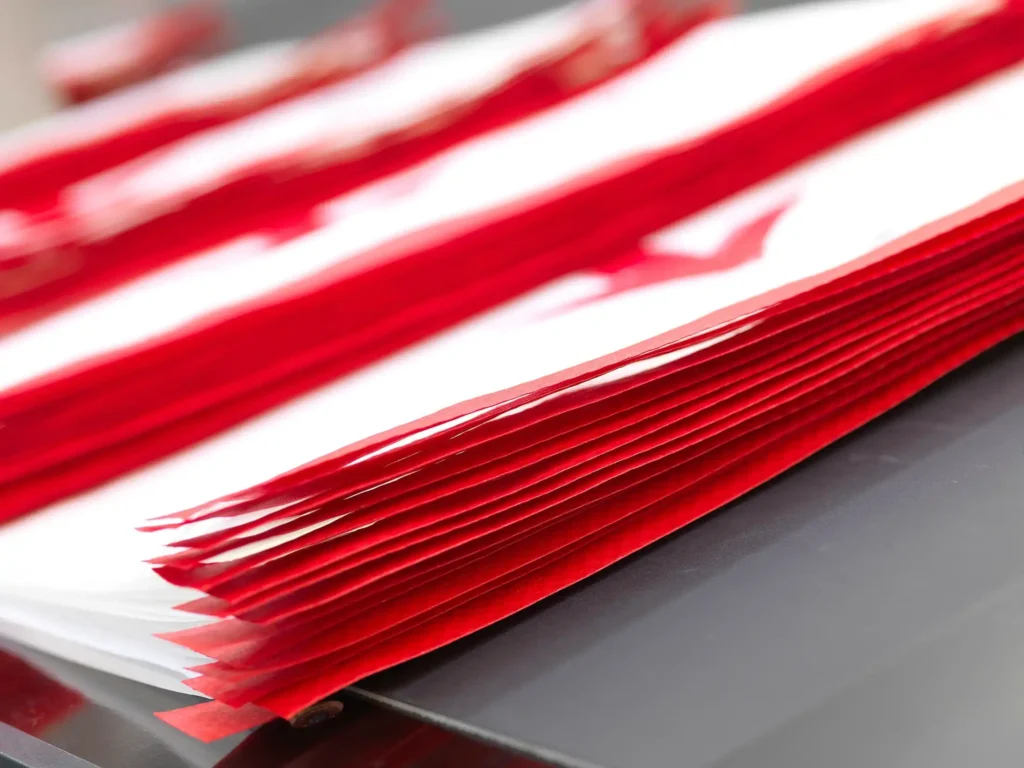
What Are Heat Sealed Woven Bags?
Heat Sealed Woven Bags are industrial packaging sacks built on a polypropylene (PP) woven fabric and closed by thermal bonding rather than stitching. The heat—applied to the mouth, the bottom, or both—melts compatible film layers to create a continuous seam, cutting off needle-hole leak paths. In different markets you’ll also hear heat‑sealed woven sacks, pinch‑top heat‑seal bags, block‑bottom heat‑seal valve bags, and BOPP‑laminated heat‑seal bags—different names that point to the same idea: a strong woven skeleton, a sealable film skin, and a hygienic, dust‑controlled closure.
Features at a glance. The woven PP core converts molecular orientation into high tensile strength and puncture resistance; the laminate (PE extrusion coat or reverse‑printed BOPP) lowers porosity and protects graphics; and the heat‑sealed seam delivers consistent geometry that stacks like bricks. In practice, Heat Sealed Woven Bags tend to produce cleaner fills, squarer pallets, and scan‑ready labels.
How they are produced. Virgin PP resin is slit into tapes, drawn (typically 5:1–7:1) for modulus, and woven to densities such as 10×10–14×14 threads/inch. A sealable face—PE (≈20–35 μm) or BOPP (≈15–35 μm)—is applied. Webs are cut, tubed, gusseted, and formed into open‑mouth pinch‑top or block‑bottom valve formats, then heat‑sealed with mapped time/temperature/pressure profiles. Options include loose liners (LDPE/HDPE 20–80 μm), anti‑wicking hems, and anti‑skid backs.
Where they’re used. Heat Sealed Woven Bags prove their worth in dusty or hygiene‑sensitive applications: cement and mineral blends; fertilizers such as urea/NPK; resins, pigments, and masterbatch; salt, sugar, and grains (with food‑contact constructions); animal feed and premixes; charcoal and pellet fuels; waste‑to‑energy materials. To explore format choices, see Heat Sealed Woven Bags.
Building a Closed Logic Loop: From Problem to Method to Result to Discussion
The most persuasive way to evaluate Heat Sealed Woven Bags is to turn field complaints into solvable sub‑problems, choose methods that match those problems, observe results, then discuss trade‑offs. This keeps us honest and keeps the factory moving.
Sub‑System 1: Mechanical Integrity Without Excess Tare
Problem. Dense, abrasive powders punish edges, and long conveyor runs scuff ordinary print faces. If geometry creeps, pallets lean; if surfaces glaze, codes misread.
Method. Specify woven fabric in the ≈70–110 g/m² range with draw ratios ~5:1–7:1 for higher modulus. Choose a laminate that balances sealability and rub resistance—PE coats for rugged heat windows, BOPP for protected reverse print. Engineer block‑bottom bases for form stability and target bag‑to‑bag COF ≈0.35–0.55 using anti‑skid back coats.
Result. Fewer split corners, calmer trailers, cleaner panels. Drop behavior typically sits at 0.8–1.2 m for 25–50 kg fills on conditioned samples; barcode panels arrive intact.
Discussion. Compared with multiwall paper sacks, Heat Sealed Woven Bags hold shape better in humid depots; compared with monolayer film bags, the woven core adds puncture defense at similar tare. Strength without mass, order without over‑build: that’s the duology.
Sub‑System 2: Interfaces—Where Heat Becomes Structure
Problem. Stitching adds perforations; open‑mouth formats shed fines during fast fills; poor seals compromise hygiene.
Method. Replace sewing with heat. On pinch‑top styles, apply a continuous thermal seal over a sealable face. On valve bags, thermally bond (or co‑form) the sleeve so the spout mates tightly and deaeration happens through mapped micro‑perfs away from code panels. Map peel‑vs‑temperature curves (ASTM F88‑like) and lock seal windows (≈130–170 °C depending on film grade).
Result. Dust plumes shrink, code readability improves, housekeeping accelerates. Operators handle fewer knives; auditors see fewer fines on the floor.
Discussion. The seal is a joint and a promise. Over‑heat invites gloss burn; under‑heat invites peel. A disciplined window—measured, not guessed—keeps output predictable across shifts and seasons.
Sub‑System 3: Information—Making Every Bag a Data Carrier
Problem. Glare, dust, and warp degrade scan quality; lot histories vanish across hand‑offs; recalls become treasure hunts.
Method. Use reverse print under BOPP, reserve matte windows for GS1/QR, and verify to ISO/IEC 15415/15416. Serialize pallets (SSCC) and lots; consider adding RAIN UHF RFID at pallet or layer cards for hands‑off counting.
Result. First‑pass decode rates rise; inbound moves faster; disputes over “which lot went where” decline.
Discussion. 2D codes are cheap and universal (phones read them); RFID is frictionless and fast. Hybrid strategies—QR for item/lot, RFID for pallet—fit Heat Sealed Woven Bags without disrupting the line.
Sub‑System 4: Compliance—From Materials to Documents
Problem. Cross‑border loads face mismatched rules for plastics, inks, adhesives, and labels; sustainability statements invite scrutiny.
Method. Keep stacks within the PP/PE family to align with PP (#5) recovery where infrastructure exists. For food‑contact variants, align with EU 10/2011 and FDA 21 CFR 177.1520; verify migration via third‑party labs. Mark hazards using GHS pictograms; confirm barcode quality to ISO/IEC standards.
Result. Smoother vendor audits, predictable customs outcomes, fewer back‑and‑forths with buyers.
Discussion. Mono‑polyolefin builds simplify recycling logic; kraft‑poly hybrids can be used where a paper look is essential, but should be disclosed clearly in declarations.
Choosing Formats: Pinch‑Top or Valve? Open‑Mouth or Block‑Bottom?
Pinch‑top (open‑mouth). Best for granules and pellets on net weighers; fast to close; minimal dust release.
Block‑bottom valve. Best for powders/fines needing closed‑system dosing; self‑standing, cube‑efficient stacks; fewer airborne fines around intake pits.
Gussets and hems. Gussets widen throats for faster fills; anti‑wicking hems reduce edge moisture creep. Each element is a lever; together they form a system.
Parameters Table—Guidance Ranges You Can Build On
| Group | Parameter | Typical Options / Range |
|---|---|---|
| Structure | Fabric GSM | ≈70–110 g/m² woven PP (application‑dependent) |
| Weave Density | 10×10 to 14×14 (warp×weft, threads/inch) | |
| Laminate Face | PE 20–35 μm coat or BOPP 15–35 μm (reverse‑printed) | |
| Closure Styles | Pinch‑top heat‑seal, block‑bottom heat‑seal valve | |
| Liner Options | LDPE/HDPE 20–80 μm loose liners | |
| Mechanics | COF (bag‑bag) | ≈0.35–0.55 with anti‑skid (ASTM D1894) |
| Drop Reference | 0.8–1.2 m on conditioned samples (ISO 7965‑2 practice) | |
| Dart Impact | ≈400–1000 g F50 (ASTM D1709) | |
| Elmendorf Tear | MD ≈100–300 g; TD ≈300–800 g (ASTM D1922) | |
| Sealing | SIT Window | ≈130–170 °C (film grade dependent) |
| Seal Strength | Mapped via ASTM F88‑like peel curves | |
| Printing | Methods | Flexographic (PE/kraft) or rotogravure (reverse on BOPP); matte/gloss zoning |
| Barcode | GS1 1D/2D; verification ISO/IEC 15416/15415 | |
| Compliance | Food Contact | EU 10/2011, FDA 21 CFR 177.1520 (polypropylene) |
| Environment | REACH/RoHS screening as required; PP (#5) logic where infrastructure exists |
Preventing Downtime: Upgrades That Pay for Themselves
Anti‑skid back coats. Raising COF into the 0.35–0.55 window cuts repalletization—small chemistry, large return.
Matte code windows. A postage‑stamp of matte over a QR can recover minutes per truck at inbound.
Valve sleeve geometry. Diameter, angle, and stiffness are not trivia; they control deaeration and closure behavior. Heat‑sealed sleeves eliminate fiber shed and reduce rework.
Edge hygiene. Anti‑wicking hems and sealed bottoms make tropical depots less dramatic.
Every upgrade is a hypothesis; plant data turns it into policy.
Typical Application Scenarios—Short Field Notes
Cement & mortar. Abrasive powders; long belts. Heat‑sealed block‑bottom valves deliver square stacks and cleaner tunnels.
Fertilizers. Hygroscopic pellets; humid depots. Linered, matte‑zoned Heat Sealed Woven Bags preserve readability and limit caking.
Resins & masterbatch. Dense granules; dust sensitivity at fillers. Heat‑sealed pinch‑tops keep floors cleaner and labels crisp.
Food staples & feed (where compliant). Salt/sugar/premix bags with food‑aligned films and inks; sealed seams mean fewer fibers and fewer foreign‑matter flags.
Discussion: Horizontal and Vertical Thinking in One Package
Horizontally, Heat Sealed Woven Bags blend strengths from different domains:
From structures, a woven truss that trades mass for modulus; from films, sealable skins that tame dust and carry art; from information science, barcodes and optional RFID that turn a sack into a database entry.
Vertically, cause and effect cascade: draw ratio → fabric flatness → laminate bond → seal efficiency → pallet stability → scan reliability → audit speed. Change a denier here, and six steps downstream a warehouse looks tidier there. That’s the logic loop we build for.
References
- ISO 7965‑2: Sacks—Drop Test—Part 2: Sacks Made from Thermoplastic Flexible Film.
- ASTM D1894: Standard Test Method for Static and Kinetic Coefficients of Friction of Plastic Film and Sheeting.
- ASTM D1709: Standard Test Methods for Impact Resistance of Plastic Film by the Free‑Falling Dart Method.
- ASTM D1922: Standard Test Method for Propagation Tear Resistance of Plastic Film and Thin Sheeting by Pendulum Method (Elmendorf).
- ASTM F88/F88M: Standard Test Method for Seal Strength of Flexible Barrier Materials.
- ISO/IEC 15415 & 15416: Bar Code Print Quality Test Specifications for 2D and Linear Symbols.
- EU Regulation No. 10/2011 on plastic materials and articles intended to come into contact with food.
- FDA 21 CFR 177.1520—Olefin polymers (polypropylene) for food contact applications.
- GS1 General Specifications & EPCIS 2.0 guidelines for identification and event capture.
- REACH & RoHS screening guidance from third‑party labs (e.g., SGS, Intertek).