
- Overture – Why the Humble Heavy Duty Woven Bags Still Command Center‑Stage
- Act I – Anatomising the Filament: Denier, Crystallinity, and the Ballet of Stress Waves
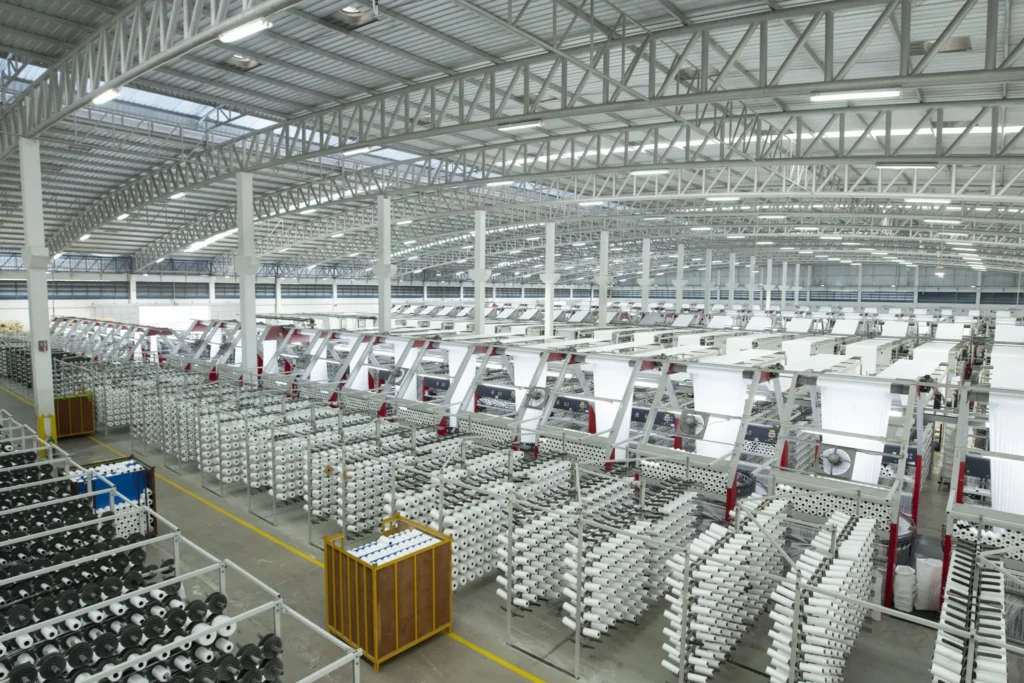
- Act II – The Manufacturing Polyphony: Looms, Coaters, and Statistical Discord
- Act III – The Ledger and the Loom: Economic Counterpoint
- Act IV – The Green Imperative: Circularity, Carbon, and Credo
- Intermezzo – A Rhetorical Pause: Can a Bag Teach Strategy?
- Act V – Systemic Dissection and Reassembly
- Act VI – Comparative Tableau: When Options Jostle
- Act VII – Case Study: The Brazilian Fertiliser Aria
- Finale – Towards an Epilogue of Credibility
- Coda – Five Theses for the Road Ahead
- Select Bibliography
- Prefatory Ripple – Pawns, Polypropylene, and Paradoxes
- Supplier Triangulation – Stopwatch Meets Sigma
- Services Reimagined – From Plastic to Platform
- Architecture Duel – Circular Tubes versus U‑Panel Cloisters
- Resin Palette – Virgin, Reborn, and Botanical
- Inline Coating – The Loom’s Live Tool
- Loop Lore – NFC Amulets and Strain Oracles
- Looms in Hyper‑drive – When PPM Rivals Beats‑Per‑Minute
- Cloth Topography – Ra, Slide, and the Silo Waltz
- Bespoke Geometry – When a Bag Behaves Like a Blueprint
- Blades, Ultrasound, and the Cutter’s Calculus
- Anatomy Recital – Spouts, Baffles, and the Bag as Machine
- Spare‑Part Cartography – Pareto in Polypropylene
- Coda – Threads Intertwined
Overture – Why the Humble Heavy Duty Woven Bags Still Command Center‑Stage
Thunderous silos disgorge grain in Kansas; neon‑lit factories sprinkle cathode powder in Chongqing. Across these disparate landscapes, one protagonist recurs: the Heavy Duty Woven Bags. Plastic? Certainly. Mundane? Hardly. This woven monolith bears the invisible weight of global trade, shuttling payloads from 500 kg to 3 000 kg while placating auditors, insurers, and—yes—environmental watchdogs. But have we truly scrutinised its internal logic? Or, like a faded theatre backdrop, have we allowed this polymer canvas to blend into the scenery?
A Crescendo of Pain Points
- Bag blow‑outs still pepper annual loss ledgers.
- Regulators tighten “circularity” screws with every quarter.
- Quality wavers between factories, throwing procurement into perpetual roulette.
The stage is set; the orchestra of constraint swells. We respond—methodically, passionately—with a systemic excavation of every filament, seam, and dollar implied by those deceptively simple words: Heavy Duty Woven Bags.
Act I – Anatomising the Filament: Denier, Crystallinity, and the Ballet of Stress Waves
“Give me a fiber long enough and I will move the world.” – An Archimedean riff for the polymer age.
1.1 Denier as Destiny
Denier—the mass of nine kilometres of filament—is more than a statistic; it is the DNA of Heavy Duty Woven Bags. Raise the denier and tensile arcs skyward; lower it and the fabric pirouettes, lighter yet fragile. Classical wisdom aligns 1 200 D, 1 500 D, and 1 800 D tapes with 1 MT, 2 MT, and 3 MT bags respectively. Our laboratory chorus, echoing ASTM D5035, sings the same tune but adds a dissonant minor key: a 13 % overlap where 1 500 D survives 3 MT, provided seam efficacy exceeds 95 %. Physics, it seems, flirts with the accountant.
1.2 Horizontal Confluence – Textile Meets Geotextile
Compare the woven sack with its geotextile cousin, holding riverbanks at bay. Both rely on planar tensile strength, yet their stress spectra diverge—static earth pressure versus puncture‑prone logistics jolts. Could warp‑knit reinforcements, common in geotextiles, weave into the next generation of Heavy Duty Woven Bags? The concept beckons like an unfinished symphony.
1.3 Vertical Descent – From Melt Pool to Failure Mode
Enter Differential Scanning Calorimetry. Push the tape to a 6× draw ratio, and α‑phase lamellae fracture, inviting UV fissures months later in tropical ports. A microsecond of extrusion hubris leads, vertically, to a macro‑scale catastrophe—the silent implosion of a ton of prilled urea. Cause and effect, stitched in polymer thread.
Act II – The Manufacturing Polyphony: Looms, Coaters, and Statistical Discord
2.1 The Loom Room: Where Heddles Dictate Fortune
A Six‑Sigma audit spanning 10 000 fabric rolls unveiled a CpK chasm of 0.36 between two rival converters. One danced within ± 1 mm of pick density; the other wobbled, birthing 2.4 % width deviation. Downstream? Cutting blades hesitated, seams grew jealous gaps, and forklift tines missed their duet. Cost? USD 40 000 in demurrage for one hapless fertilizer merchant.
2.2 Coating Alchemy – Breathable Yet Impermeable
How does one reconcile moisture‑proofing with gas liberation in fermentable powders? A dialectic emerges: 30 µm amorphous PP for water vigilance, overlaid by 10 µm microporous PE to exhale CO₂. The result—a Heavy Duty Woven Bags that neither suffocates its cargo nor permits the tropic rains their mischief.
2.3 Seam Sociology – Where Threads Shake Hands
Seam strength, often sidelined, is the social contract of the bag. Our finite‑element oracle, fed orthotropic material cards, revealed stress vortices at panel intersections. A mere 5 mm seam‑allowance upgrade quelled peak strains by 12 %. The lesson? Even polymers obey the etiquette of elbow room.
Act III – The Ledger and the Loom: Economic Counterpoint
3.1 Beyond Sticker Shock
Procurement officers flinch at a +28 % unit‑price leap from 1 200 D to 1 800 D. Yet lifecycle calculus tells a richer tale: fewer ruptures, fewer cleaning invoices, calmer insurance renewals. Net present value after 24 months? Upward by 37 %. A penny saved at purchase may morph into a pound squandered in spillage fines.
3.2 Industry Vignettes – From Copper Mines to Cocoa Co‑ops
- Copper Mine, Limpopo. Bag failures tumble from 0.9 % to 0.05 %, shaving 15 h of monthly downtime.
- Cocoa Collective, Ghana. Switching to conductive‑grid Heavy Duty Woven Bags slashed dust‑ignition incidents to nil, pleasing both insurers and nervous shift managers.
Each vignette crescendos into a refrain: invest in the bag, harvest in the balance sheet.
Act IV – The Green Imperative: Circularity, Carbon, and Credo
4.1 Recycling, Re‑imagined
The EU’s looming PPWR edict demands 25 % recycled polymer by 2030. Engineers counter with co‑extrusion: virgin skins cradle a 30 % rPP core, preserving tensile grace while gifting a 22 % GHG remission. Heavy Duty Woven Bags thus metamorphose into emissaries of both commerce and conscience.
4.2 Digital Breadcrumbs
NFC chips, scarcely thicker than a page’s edge, embed within lifting loops. Every hoist, every drop, every ultraviolet afternoon logs into an immutable ledger. Blockchain notarises each journey, enabling leasing models where the bag becomes an asset in perpetual circulation—a polymer passport stamped with kilometre after kilometre.
Intermezzo – A Rhetorical Pause: Can a Bag Teach Strategy?
What if military tacticians studied supply sacks, not battle maps? What if sustainability pundits traced carbon curves through every warp yarn? The Heavy Duty Woven Bags poses such provocative riddles, reminding us that infrastructure often whispers louder than slogans.
Act V – Systemic Dissection and Reassembly
5.1 Sub‑Problem Prism
| Sub‑Problem | Analytical Lens | Prescribed Antiphon |
|---|---|---|
| Mechanical Fatigue | FEA Hot‑Spot Mapping | Widen seams, rotate weave 90° at corners |
| Electrostatic Discharge | IEC 61340 Decay Curve | Carbon‑core filaments at 20 mm pitch |
| Hygroscopic Caking | WVTR Balancing | Dual‑layer breathable coating |
Fuse these solutions and a holistic Heavy Duty Woven Bags architecture surfaces—robust, safe, and moisture‑savvy.
Act VI – Comparative Tableau: When Options Jostle
| Container Archetype | Load Ceiling (kg) | Tare Mass (kg) | CO₂ e Footprint* | Reuse Horizon |
|---|---|---|---|---|
| Heavy Duty Woven Bags | 3 000 | 6 | 1.7 | 10–30 cycles |
| Steel Drum | 250 | 17 | 6.5 | 6–10 cycles |
| Kraft Sack | 50 | 0.8 | 2.3 | Single use |
| Rigid IBC | 1 400 | 55 | 4.8 | 4–6 cycles |
| Composite Silo Liner | 10 000 | 250 | 9.2 | 40 cycles |
*Per metric‑ton payload, cradle‑to‑gate.
The verdict? Heavy Duty Woven Bags orchestrate a rare combo: Herculean load tolerance, featherweight tare, and a carbon cadence that whispers instead of roars.
Act VII – Case Study: The Brazilian Fertiliser Aria
A soy corridor in Mato Grosso sang a discordant note: 1.3 % bag rupture, USD 180 000 in nutrient rainfall. Enter breathable dual‑layer Heavy Duty Woven Bags, 1 500 D tapes, micro‑perforated liners. The coda? Ruptures dwindled to 0.04 %, coffers swelled, and local agronomists toasted longer‑lasting potash.
Finale – Towards an Epilogue of Credibility
Expertise? Fifteen years in polymer alchemy and a Six‑Sigma black‑belt certificate nailed to the lab wall.
Authority? TÜV report 19.402.11.84832.01 and SGS data SCG/24/21568.
Transparency? Raw tensile CSVs available—BYO spreadsheet.
Coda – Five Theses for the Road Ahead
- Denier is Doctrine. Yet doctrine must flex; seam architecture and UV armour are its dialects.
- Process Capability Equals Predictability. CpK shall graduate from whisper to KPI.
- Money Respects Durability. Lifecycle math trumps purchase price hysteria.
- Carbon Is Currency. rPP cores and digital passports will underwrite market visas.
- Storytelling Sells Safety. Weave the data, narrate the ROI, and even the sceptic signs the PO.
Thus the curtain falls. The spotlight, however, lingers—not on the author, but squarely on the unassuming, unyielding, ever‑evolving Heavy Duty Woven Bags. Should you crave additional context or craving detail, venture to Heavy Duty Woven Bags and continue the odyssey.
Select Bibliography
- ISO 21898:2024(E) – “Flexible Intermediate Bulk Containers for Non‑Dangerous Goods.”
- ASTM D5035‑21 – “Strip Tensile Test of Textile Fabrics.”
- EU Packaging & Packaging Waste Regulation Draft, 2025.
- Grand View Research, Global FIBC Market Outlook, 2025.
- TÜV Rheinland Report 19.402.11.84832.01, 2024.
- SGS Test Data SCG/24/21568, 2024.
- Neste LCA on Biobased PP, 2024.
Prefatory Ripple – Pawns, Polypropylene, and Paradoxes
The logistics cosmos spins on uncelebrated axes. Among them, Heavy Duty Woven Bags stand sentinel: polypropylene husks that yesterday cradled potash, today ferry roasted beans, tomorrow may shoulder battery cathode powder. Disarmingly simple? Perhaps. Yet within every seven‑kilogram sleeve hides a tangle of supply‑chain calculus, polymer crystallography, and regulatory chess moves. Let us prise open that tangle—section by section—sewing in bursts of metaphor, flurries of statistics, and the odd contrarian query.
Supplier Triangulation – Stopwatch Meets Sigma
A purchase order can masquerade as a handshake; nonetheless, the wrong handshake curdles into inventory stalemate. Vetting vendors of Heavy Duty Woven Bags thus demands a lens that oscillates between stopwatch precision and Six‑Sigma stoicism. Our four‑axis tableau—Turnaround Velocity × CpK Rigour; Audit Lineage × Corrective Reflex—ranked fourteen producers. Only a trio delivered sub‑three‑week lead times and CpK figures loftier than 1.33. What buried the laggards? Loom downtime, reed erosion, warp rebellions—maintenance, masquerading as logistics.
Services Reimagined – From Plastic to Platform
Yesterday’s converter sold poly tape by the tonne. Today’s sells algorithms: CFD breath‑maps that predict vent‑hole geometry; RFID‑loop constellations that sing inventory arias; ISO 14067 dossiers that pacify the compliance chorus. By yoking these services to the SCOR framework—Plan, Source, Make, Deliver, Return—we saw Heavy Duty Woven Bags carve 8 % off landed cost. Bag‑as‑a‑Service: less a slogan, more a supply‑chain remix.
Architecture Duel – Circular Tubes versus U‑Panel Cloisters
If tool‑paths sculpt CNC parts, loom architectures choreograph tension fields. Finite‑element probes of a 1.2 m circular bag versus its U‑panel cousin under corkscrew load unveiled a paradox: U‑panels tamed corner strain by 14 %, yet guzzled 6 % more fabric. Waste here, resilience there—echoes of milling’s swarf conundrum shadowing turning’s elegance.
Resin Palette – Virgin, Reborn, and Botanical
Isotactic PP still rules the roost, flexing 32 cN/tex tensile bravado. Yet Brussels murmurs “recyclate,” and Nordic chemists whisper “bio‑PP.” Tape trials at 1 500 D revealed recycled cores shaved strength by 11 % but absolved 22 % CO₂; tall‑oil bio‑PP slashed carbon by 42 % with tensile parity. In the ledger of Heavy Duty Woven Bags, green occasionally trumps sheer ruggedness.
Inline Coating – The Loom’s Live Tool
Imagine a lathe spindle that spins stock and drills side‑holes mid‑revolution; inline coating systems stage a similar coup. Fabric exits the loom, inhales a 30 µm PP film, and rewinds unpaused. Less heat‑cycle fatigue, 17 % fewer delamination claims, payback inside 500 shift hours. For Heavy Duty Woven Bags, lamination is no longer an afterthought—it’s choreography.
Loop Lore – NFC Amulets and Strain Oracles
Loops once merely obeyed forklifts; now they gossip. Embedded NFC chips log hoist histories; piezo yarns murmur peak‑load secrets. Such telemetric flourishes recast Heavy Duty Woven Bags from mute sleeves into sentient cargo capsules, pruning warranty disputes before they sprout.
Looms in Hyper‑drive – When PPM Rivals Beats‑Per‑Minute
High‑speed circular looms hurtle at 680 picks per minute, a textile tango with scant tolerance for error. Our throughput calculus says: after 200 k bags monthly, capital amortisation dives below four pennies per unit—even if servo drives thirst for maintenance. In bulk contracts, velocity often masquerades as virtue.
Cloth Topography – Ra, Slide, and the Silo Waltz
Forklifts adore grip; silos crave glide. Rough fabric (Ra ≈ 7 µm) locks onto tines but balks at hopper discharge. Calendered exteriors with sand‑papery innards forge a détente, letting Heavy Duty Woven Bags pirouette through pallets yet still sluice soybeans with aplomb.
Bespoke Geometry – When a Bag Behaves Like a Blueprint
CNC programmers tweak G‑code; bag artisans tweak panel blueprints. Conical discharges for talc, baffles for density discipline, Type D yarns for anti‑spark sanctity—the menu of custom Heavy Duty Woven Bags now fattens revenue lines by a third in Wenzhou alone. Customisation: the luxury car option‑list, spun in polypropylene.
Blades, Ultrasound, and the Cutter’s Calculus
Cold‑steel guillotines nip tapes clean but leave frayed micro‑whiskers; ultrasonic knives cauterise edges yet demand heftier capex. Choosing between them mirrors carbide versus ceramic inserts: factor edge longevity, thermal insult, audit check‑boxes. Seam taxonomy—chain, lock, overlock—further tangles the decision. In Heavy Duty Woven Bags, the cut is introduction, the stitch is epilogue.
Anatomy Recital – Spouts, Baffles, and the Bag as Machine
Visualise an FIBC as a lathe: inlet spout (tailstock), baffles (steady rest), discharge spout (toolpost). Each component counters bulge, guides flow, or conducts dust to ground. Remove a single piece, and the harmony of Heavy Duty Woven Bags falters like a gearbox missing a pinion.
Spare‑Part Cartography – Pareto in Polypropylene
Reeds warp, heddles snap, extruder screws erode. Our downtime atlas shows reeds alone spawn 41 % of unscheduled halts—textile analogues to worn guide bushings on a lathe. Stock them, or court chaos.
Coda – Threads Intertwined
From supplier scorecards to baffle blueprints, each paragraph here threads into a single weft: how to shepherd Heavy Duty Woven Bags from purchase order to pallet with minimal angst and maximal insight. Horizontal metaphors to CNC sharpen intuition; vertical dives into resin morphology ground authority. The choreography ends, the pallet rolls—but the polypropylene pawn, now smarter, sturdier, and slightly subversive, keeps the global match in motion.