
What Are Heavy Duty Woven Bags: Transforming China’s Packaging Industry with Durability, Customization, and Sustainability?
Heavy Duty Woven Bags: Transforming China’s Packaging Industry with Durability, Customization, and Sustainability—commonly shortened to Heavy Duty Woven Bags—are high‑grammage polypropylene (PP) sacks designed for payloads from 25 kg up to 100 kg. Sometimes called “HD Woven Sacks” or “Industrial PP Super‑Bags,” they outperform conventional paper or PE film by combining warp‑locked strength with multi‑colour branding. VidePak’s version integrates reinforced selvedges and optional internal laminates, keeping China’s heaviest goods moving safely from factory to port.
Key Features of Heavy Duty Woven Bags: Transforming China’s Packaging Industry with Durability, Customization, and Sustainability
- Ultra‑High Tensile Matrix – 70 × 70 ppi weave produced from 3.0 mm slit tapes achieves ≥120 N warp tensile (ASTM D5034).
- Reinforced Selvedge Technology – Double‑tape edges add 18 % tear resistance, critical for claw hooks and heavy forklift handling.
- Custom Barrier Choices – Extrusion coatings (25–35 µm) or BOPP laminates allow moisture, grease, or UV protection tailored to the product.
- Sustainability Aligned – 100 % virgin PP ensures recyclability in existing polyolefin streams; optional calcium‑carbonate masterbatch reduces resin by 12 % without strength loss.
- Graphic Versatility – Eight‑colour flexographic or gravure prints deliver billboard‑grade visuals, transforming bulk logistics into brand storytelling.
How VidePak Produces Heavy Duty Woven Bags: Transforming China’s Packaging Industry with Durability, Customization, and Sustainability
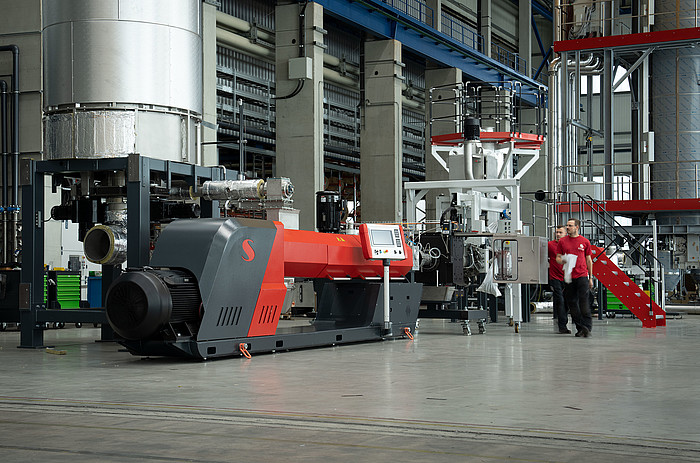
- Tape Extrusion – Sixteen Starlinger FX 6.0 lines extrude 3.0 mm tapes at 550 m min⁻¹; online laser micrometry holds width tolerance within ±0.02 mm.
- High‑Density Weaving – Over 100 circular looms weave 70 × 70 ppi fabric; servo tensioners keep warp variation <1 %.
- Lamination & Coating – W&H tandem coaters apply 25–35 µm molten PP at 300 °C, achieving peel strength ≥3 N cm⁻¹.
- Printing & Reinforcement – Eight‑colour Miraflex presses print low‑VOC inks; reinforced selvedges stitched or ultrasonic‑sealed inline.
- Quality Control – Burst tests (≥110 N), drop tests (ASTM D5276 —1.5 m, 5 faces), pallet crush simulation, and 200 kLy QUV aging certify every lot to ISO 9001:2015 and ISO 22000:2018. QR‑coded tags trace loom, extrusion lot, and print batch for audit ease.
Where Heavy Duty Woven Bags: Transforming China’s Packaging Industry with Durability, Customization, and Sustainability Excel
| Sector | Typical Payload | Advantage of Heavy Duty Woven Bags: Transforming China’s Packaging Industry with Durability, Customization, and Sustainability |
|---|---|---|
| Mining & Minerals | 50 kg iron ore fines | Ultra‑high tensile prevents corner tears during rail transport; PE laminate controls dust emission |
| Petrochemicals | 25 kg PVC resin | BOPP laminate resists static cling and provides photo‑realistic branding for export markets |
| Agriculture | 40 kg bulk fertilizer | Calcium‑carbonate‑modified PP lowers CO₂ footprint while maintaining 100 kg stack compression strength |
| Construction | 30 kg dry mortar | Anti‑slip varnish plus reinforced selvedge survive rough job‑site handling and hoist lifts |
| Emergency Relief | 60–100 kg grain aid | UV masterbatch (200 kLy) extends bag life in open‑air depots across East Africa |
| Parameter | Heavy Duty Woven Bags | Test Method |
|---|---|---|
| Weave Density | 70 × 70 ppi | ASTM D3775 |
| Warp/Weft Tensile | ≥120 N / ≥110 N | ASTM D5034 |
| Laminate Thickness | 25–35 µm | Micrometer stack |
| Drop Resistance | Pass 1.5 m, 5 faces | ASTM D5276 |
| UV Stability | 200 kLy | QUV Accelerated |
| Recyclability | 100 % polyolefin | Float‑sink lab |
Riding on VidePak’s 568‑strong workforce, German W&H presses, and Austrian Starlinger looms, Heavy Duty Woven Bags: Transforming China’s Packaging Industry with Durability, Customization, and Sustainability push China’s bulk‑packaging frontier forward—delivering safer handling, vibrant branding, and greener resource use to partners across the Americas, Europe, MENA, and Asia‑Pacific.
- What Are Heavy Duty Woven Bags: Transforming China’s Packaging Industry with Durability, Customization, and Sustainability?
- Key Features of Heavy Duty Woven Bags: Transforming China’s Packaging Industry with Durability, Customization, and Sustainability
- How VidePak Produces Heavy Duty Woven Bags: Transforming China’s Packaging Industry with Durability, Customization, and Sustainability
- Where Heavy Duty Woven Bags: Transforming China’s Packaging Industry with Durability, Customization, and Sustainability Excel
- 1.1 Key Features
- 2.1 North America
- 2.2 Europe
- 2.3 Asia-Pacific (Excluding China)
- 2.4 China
- 8.1 Automation and Smart Packaging
- 8.2 Biodegradable PP Innovations
- 8.3 Emerging Markets
In the evolving landscape of international trade and consumer demands, heavy-duty woven bags have come to symbolize a perfect blend of strength, efficiency, and eco-friendliness. From innovative coatings and advanced weaving techniques to large-scale mass production at competitive prices, Chinese manufacturers—particularly VidePak—are spearheading this growth. Below is a comprehensive look at why these bags excel, how key markets around the globe compare, and what makes Chinese suppliers stand out in terms of quality, price, and timely delivery.
1. Overview of Heavy Duty Woven Bags
Industry data from several packaging research institutes reveals that heavy duty woven bags—often made from polypropylene (PP) or polypropylene-based composites—are highly versatile and can accommodate large loads while remaining cost-effective. This dual advantage is particularly attractive to companies striving for sustainable packaging options and robust performance in supply chains.
1.1 Key Features
- High Load Capacity
Typically, these bags handle 25 to 50 kilograms, with some designs supporting even heavier weights. This inherent strength reduces risk of damage or loss during transit. - Tear and Abrasion Resistance
Tightly woven fabrics maintain structural integrity despite rough handling, a vital requirement in industries like agriculture, construction, and retail. - Customization
Manufacturers provide a range of sizes, weaves, coating types, and full-surface printing options to align bags with branding and functionality needs. - Eco-Friendly Profile
PP-based bags are reusable and recyclable, aligning with emerging regulations that demand lower carbon footprints.
2. Global Market Characteristics
2.1 North America
North American firms focus on automation, requiring packaging that integrates smoothly with high-speed filling and palletizing systems. Specialty coatings—like anti-skid finishes—and advanced barcoding are common, though local production tends to be more expensive, creating opportunities for Chinese imports.
2.2 Europe
Heightened sustainability criteria shape procurement decisions in Europe. Heavy duty woven bags—particularly those using recyclable polypropylene—offer a solid fit. Manufacturers prioritize traceability and low carbon footprints, often resulting in higher operational costs than in China.
2.3 Asia-Pacific (Excluding China)
Countries like India, Vietnam, and Indonesia exhibit rising demand for bulk packaging. While local producers can compete on cost, they may lack advanced features (e.g., UV-stabilized coatings), a gap frequently bridged by Chinese exporters offering consistent quality and rapid turnaround.
2.4 China
China maintains the largest production capacity for woven polypropylene bags worldwide, leveraging scalable supply chains, mass manufacturing, and advanced technology. A 2023 Global Packaging Alliance report notes that Chinese exporters are highly competitive on both price and quality, making them a preferred partner for global firms.
3. Why Chinese Manufacturers Excel
- Economies of Scale
Access to integrated raw material suppliers and advanced machinery keeps costs low, enabling Chinese factories to offer large volumes at competitive prices. - Quality Control
ISO-accredited lines and rigorous in-house testing ensure consistent output across mass production runs. Many companies also incorporate lab analyses for UV, tensile, and tear-resistance properties. - Supply Chain Integration
Vertical integration, from polymer granules to final shipment, reduces lead times and mitigates supply disruptions. This logistical efficiency is vital for brands with tight deadlines. - Global Reach
Chinese packaging manufacturers have well-established shipping networks, facilitating reliable, on-time deliveries—an essential factor for multinational buyers.
4. VidePak’s Role in Heavy Duty Woven Bags
VidePak exemplifies the strengths of Chinese manufacturing, offering a seamless blend of cutting-edge technology, stringent quality protocols, and customized design services. From specialized anti-static bags to brand-centric printing solutions, VidePak demonstrates how heavy duty woven bags can adapt to diverse industries:
- Precision Weave Technology
Ensures strong, uniform fabric that can endure both mechanical stress and environmental challenges. - Advanced Coatings
Ranging from simple anti-moisture treatments to sophisticated UV-stabilized or anti-skid coatings. - Eco-Conscious Processes
Utilizing energy-efficient machinery and recycling leftover polypropylene aligns with global sustainability drives.
5. Product Parameters and Features
| Parameter | Details | Advantages |
|---|---|---|
| Material | Woven PP (various weave densities) | High load-bearing capacity, tear resistance |
| Coating Options | UV-stabilized, anti-skid, moisture-resistant | Extended outdoor usage, easier handling |
| Load Capacity | 25–50 kg (or higher, per design) | Suited for agriculture, construction, retail |
| Print Customization | Full-surface, multiple color systems | Maximizes branding, product identification |
| Sustainability | Recyclable polypropylene | Lowers carbon footprint, supports eco-initiatives |
| Quality Standards | ISO-accredited production lines | Ensures uniformity across large orders |
| Lead Times | Typically 2–4 weeks for big orders | Quicker response to global supply chain demands |
6. FAQs
- Which industries benefit most from heavy duty woven bags?
Virtually any sector requiring robust packaging—such as construction, farming, and retail—can leverage these bags for efficient storage and transport. - How do custom color stripes help with warehouse management?
Color-coded stripes on each bag make identification of inventory type straightforward, speeding up picking and reducing errors in fast-paced logistics environments. - Are these bags compliant with sustainability mandates?
Most heavy duty woven bags use polypropylene, a fully recyclable plastic. Chinese factories like VidePak also integrate energy-efficient practices, aligning with global eco-regulations. - What kind of printing options are available?
High-resolution printing across the entire bag surface is standard, accommodating complex brand visuals, barcodes, or multi-color designs—meeting diverse brand aesthetics. - Can specialized liners be added?
Yes, inner liners (PE or other polymers) can provide moisture and contamination barriers, critical for products like fertilizers, grains, or chemical powders.
7. Actionable Tips for Adoption
- Specify Material and Coatings
Determine load capacity, required UV protection, and moisture resistance to guide bag specifications. - Optimize Branding
Use full-surface printing to enhance product visibility; color stripes or markings aid in warehouse sorting. - Evaluate Certifications
Check manufacturing credentials like ISO compliance and additional certifications to ensure product safety and consistency. - Leverage Chinese Scale
For large-scale requirements, harness the economies of scale offered by integrated Chinese supply chains. - Stay Alert to Trends
Monitor industry updates on biodegradable PP or advanced automation that may affect cost, capabilities, or environmental impact.
8. Latest Trends
8.1 Automation and Smart Packaging
Automated filling, sealing, and stacking systems reduce labor and improve consistency. Manufacturers are also testing built-in sensors or RFID chips in heavy duty woven bags to track shipments and inventory in real time.
8.2 Biodegradable PP Innovations
Research indicates that biodegradable or bio-PP materials are slowly gaining traction. While not yet fully commercialized on a large scale, continued R&D may see their integration into high-volume packaging.
8.3 Emerging Markets
Expanding infrastructure and agricultural activities in Africa and South America amplify the need for heavy duty woven bags. China’s large supply base and competitive costs cater well to these emerging demands.
9. External Links
- Heavy Duty Woven Bags:
Heavy Duty Woven Bags
Highlights how these bags align with ESG standards, crucial to future packaging initiatives. - Future of the Chinese Packaging Industry:
The Evolution of Jumbo Bags and the Future of the Chinese Packaging Industry
Explores the broader context of Chinese packaging developments, showcasing how heavy duty solutions fit into a rapidly modernizing market.
(Note: Anchor text “Heavy Duty Woven Bags” and “Future of the Chinese Packaging Industry” have been used here to connect relevant reference links.)
Conclusion
Heavy duty woven bags encapsulate the essence of China’s rapidly modernizing packaging industry—delivering high load capacity, sustainability, and broad customizability at globally competitive costs. In an era demanding both practicality and eco-awareness, these bags excel across construction materials, agricultural produce, and fast-moving retail goods. VidePak’s attention to advanced coatings, large-scale capabilities, and tailored design positions it among the leaders driving this sector’s evolution.
For businesses seeking to optimize packaging, reduce damage, and project a modern, eco-friendly image, Chinese heavy duty woven bags stand as a robust option. With well-established supply networks, stringent quality controls, and extensive customization, this sector is poised to shape global packaging strategies well into the future.