
What Are **Industrial Woven Bags**?
**Industrial Woven Bags** are engineered sacks built from drawn polypropylene (PP) tapes woven into a high‑tenacity fabric, then converted into open‑mouth or valve formats and optionally laminated with films like BOPP/CPP/PE or paired with internal liners. In modern supply chains that move powders, granules, pellets, flakes, and agricultural staples, these bags function as a system: the woven substrate supplies tensile backbone; the lamination stack governs moisture ingress and print durability; seams and corners manage stress transfer; and the coefficient of friction (COF) calibrates how the bag behaves on belts, chutes, and pallets.
Also known as: PP woven bags; polypropylene woven sacks; raffia bags; laminated PP woven bags; BOPP‑laminated woven sacks; block‑bottom valve bags; open‑mouth woven sacks. Different names; one purpose: move bulk solids safely, cleanly, and credibly.
Looking for a primer on formats and capabilities? Explore **Industrial Woven Bags** to see how base fabrics, laminations, and closures interlock in production.
Why this format, and why now? Because the world ships more bulk solids than anything else—grains and feed, fertilizers and salts, resins and pigments, minerals and premix. Each commodity asks for what sounds paradoxical: a package that is light yet tough, printable yet scuff‑resistant, moisture‑aware yet line‑friendly. **Industrial Woven Bags** reconcile those tensions by uniting strength, barrier, and branding in a configurable architecture.
What Are the Features of **Industrial Woven Bags**?
A simple list of traits is helpful; a connected map of subsystems is decisive. The value of **Industrial Woven Bags** emerges from five interdependent subsystems—mechanical strength, barrier behavior, friction & handling, branding surface quality, and sustainability & compliance—plus a sixth, often overlooked driver: process intelligence (how we measure, monitor, and adapt).
| Subsystem | Key Variable | Representative Targets* | Primary Outcome |
|---|---|---|---|
| Mechanical Strength | Strip tensile (warp/weft) | ≥ 1200 / ≥ 800 N per 5 cm (typical industrial PP woven) | Resistance to tears, splits, and corner failures. |
| Barrier Behavior | WVTR vs. unlaminated fabric | BOPP 18–25 μm + PE/PP tie 20–40 μm; liner 30–50 μm as needed | Moisture/odor governance for hygroscopic goods. |
| Friction & Handling | COF (ASTM D1894) | 0.25–0.40 depending on line and pallet goals | Smooth conveyance with stable stacking. |
| Branding Surface | Reverse rotogravure capability | 6–10 colors; ~120–160 lpi cylinder equivalence | Photographic graphics protected from scuff. |
| Sustainability & Compliance | Mono‑PP build; documented conformance | ISO 9001:2015; ISO 22000:2018/FSSC 22000; EU 10/2011; 21 CFR 177.1520 | Auditable quality, food safety, and recycling pathways. |
| Process Intelligence | Inline QA + SPC | COF/Tensile/Print register control charts; lot traceability | Predictable output and faster root‑cause analysis. |
*Ranges reflect common industry practice; exact specs align to product density, fill mass, logistics route, and retail requirements.
Mechanical Strength — From Chain Orientation to Corner Survival
Polypropylene tapes gain strength through molecular orientation during draw. Woven into 8×8 to 12×12 picks per inch and heat‑set, they provide biaxial load sharing. But fabric is only act one. Act two is seam design: fold‑over hems, stitch selection (chain vs. lock), ultrasonic corner seals for block‑bottoms. Act three is pallet physics—how unit loads creep or compact over time. Raise fabric GSM alone and you get a sturdier sack; align GSM, seam architecture, and pallet spec, and you get resilience that endures the forklift’s worst moments.
Barrier Behavior — Moisture Governance, Not Mere Waterproofing
Woven PP breathes by nature; flour and fortified rice would rather it did not—at least not indiscriminately. A laminated stack (reverse‑printed BOPP + molten PE/PP tie layer) slashes water vapor transmission versus plain fabric. Add a 30–50 μm HDPE/LLDPE liner when humidity, aroma, or contamination risks rise. The art is balance: enough barrier to protect the product; enough compliance to fold, fill, and seal without drag. Too much liner can slow lines and stiffen corners; too little barrier and you pay for returns.
Friction & Handling — COF as the Quiet KPI
The coefficient of friction controls everything from belt tracking to pallet stability. With **Industrial Woven Bags**, COF is tuned by film selection, slip/antiblock masterbatch, chill‑roll texture, and matte/gloss finishes. Target windows between 0.25 and 0.40 (ASTM D1894) typically reconcile line speed with stack height. Too low and pallets creep; too high and diverters stall. Dial it once; monitor it always.
Branding Surface — Structure That Sells Story
Reverse printing hides ink beneath BOPP, protecting graphics from scuff and solvents. Rotogravure enables photographic tonality across 6–10 colors. Result: a rugged sack that can still look like a premium billboard. For pet food, specialty grains, and branded ag‑inputs, the package is the silent salesperson—it speaks before the sales rep does.
Sustainability & Compliance — Design for Evidence
Mono‑polymer PP builds simplify downstream sorting compared with paper/PE laminates. Evidence matters: ISO 9001:2015 for quality, ISO 22000:2018 or FSSC 22000 for food safety; FDA 21 CFR 177.1520 and EU 10/2011 for food contact; REACH (EC 1907/2006) and RoHS (EU 2011/65/EU) as applicable. For regulated solids, UN 5H1/5H3 performance testing may be specified. Sustainability without paperwork is wishful thinking; audited documentation turns good design into accepted practice.
What Is the Production Process of **Industrial Woven Bags**?
A nine‑stage tour from resin to retail, with the control points that actually move needles:
- PP Tape Extrusion. Raffia‑grade PP is slit and drawn to orient molecules. UV masterbatch (~0.3–0.5%) can be added for yard exposure. Control points: draw ratio, chill, and take‑off tensions.
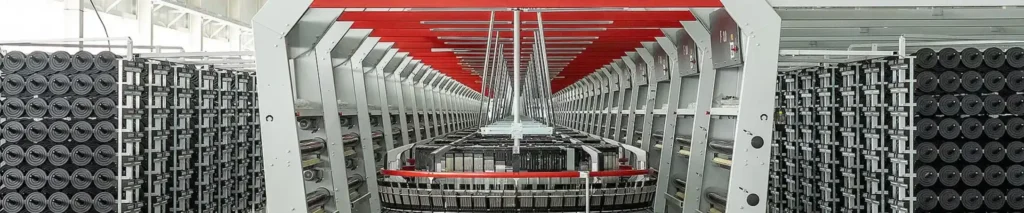
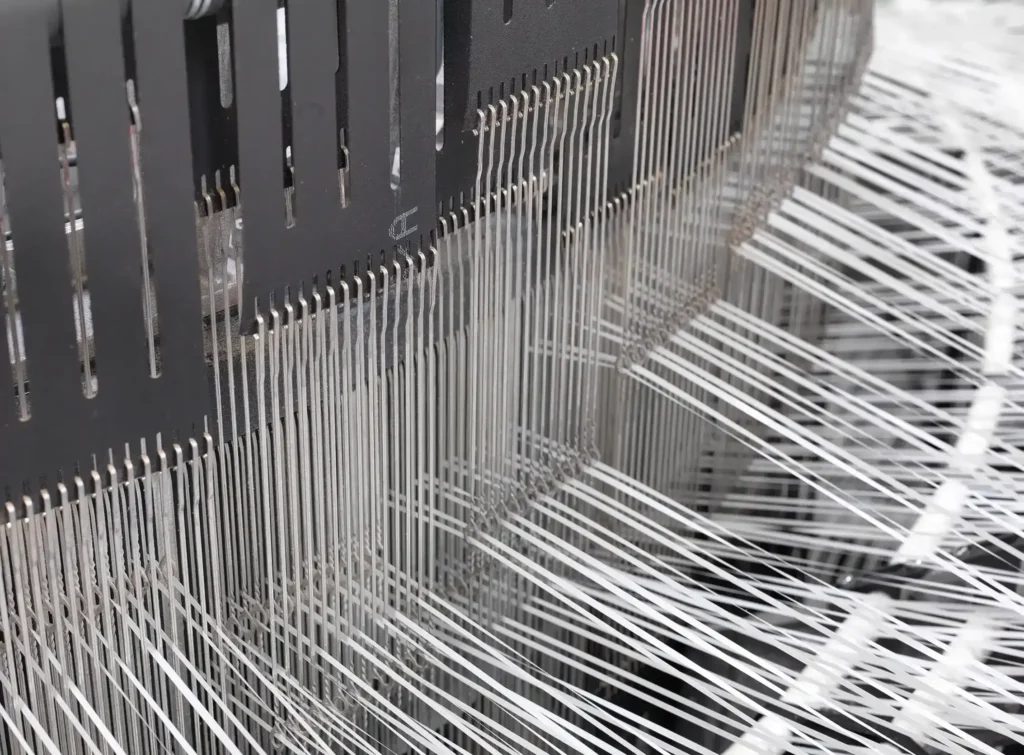
- Fabric Weaving. Circular or flat looms produce tubular/flat webs (8×8–12×12 picks/inch). Heat‑setting stabilizes shrink and shrink balance. Control points: loom speed, pick density, and tape uniformity.
- Surface Preparation. Corona or primer promotes adhesion both for film lamination and for ink anchorage when reverse printing. Control point: dyne level stability.
- Graphic Preparation. Reverse rotogravure printing on BOPP across 6–10 colors; spectral targets track Pantone or L*a*b* tolerances. Control points: viscosity, doctoring, and cylinder wear.
- Extrusion Lamination. Molten PE/PP tie layer bonds film to fabric. Control points: melt temperature, nip pressure, web tension, chill roll texture—each shaping bond strength, curl, and COF.
- Gusseting & Cutting. Side gussets increase cube efficiency; precision cut lengths match density‑specific fill mass. Control points: gusset depth vs. stack stability.
- Bag Forming. Open‑mouth, valve, or block‑bottom formats; ultrasonic corners for sift‑proofing on powders. Control points: fold accuracy and valve alignment.
- Seaming/Sealing. Sewing, heat sealing, or ultrasonic bonds selected by product flowability and required dust control. Control points: stitch density, thread spec, seal dwell.
- In‑Line QA. GSM sampling, COF checks (ASTM D1894), film tensile (ASTM D882), dart impact (ASTM D1709), fabric strip method (ASTM D5035), and drop/stack sampling. Control points: SPC charts and immediate corrective loops.
Could adhesive lamination replace extrusion lamination? Sometimes. Adhesives widen material windows but complicate end‑of‑life separation. Extrusion lamination with PP‑compatible ties favors mono‑polymer pathways and typically higher bond strength. Engineering is choice under constraint; document the trade and move on.
What Is the Application of **Industrial Woven Bags**?
Across sectors, the recurring demand is predictable protection for flowable solids, from field to factory floor to storefront.
| Use Case | Representative Structure | Design Priority | Operational Note |
|---|---|---|---|
| Moisture‑sensitive staples (rice, flour, sugar) | Woven 80–100 g/m² + BOPP 20–30 μm + PE/PP tie 20–40 μm; optional liner 30–50 μm | WVTR control; sift‑proof seams; on‑shelf finish | Balance liner gauge with gusset depth to avoid stiff stacks. |
| Abrasive granules (resins, minerals) | Woven 90–120 g/m² + laminated face or anti‑scuff zones | Tear/puncture resistance; corner durability | Specify anti‑skid coatings to hold stacks during transit. |
| Valve‑fill powders (cement, premix) | Block‑bottom with internal valve; ultrasonic corners | Cube efficiency; dust control; fast fill | UN 5H3 performance options when required. |
| Retail‑facing pet food & specialty grains | Reverse‑printed BOPP; matte/gloss zoning; carry aids | Shelf impact; scuff resistance; repeatable color | Add handles or zip reclosures for premium tiers. |
Capacity norms run 5, 10, 20, 25, 40, and 50 kg; outer dimensions often fall in the (48–55) × (75–95) cm band depending on density and filling jaws. The structure follows the SKU: the lighter the bulk density, the larger the cut; the harsher the handling, the higher the GSM.
Systems Thinking for **Industrial Woven Bags**: From Parts to Policy
Systems thinking asks three questions: What are the parts? How do they interact? Where are the feedback loops? For **Industrial Woven Bags**, the parts are materials (fabric, film, tie, liner), mechanics (seams, corners), and operations (fill line, conveyor, warehouse). The interactions show up as trade‑offs—raise barrier and stiffness rises; lower COF and pallet creep risk increases. Feedback loops run through QA dashboards: drift in COF? Expect pallet claims; loom variability? Watch seams for surprises.
| Decision Node | If You Push This… | Expect That… | Mitigation |
|---|---|---|---|
| Higher Barrier (thicker liner) | Lower WVTR and odor transfer | Stiffer folds; potential fill slowdowns | Increase gusset depth; optimize valve geometry |
| Lower COF (faster belts) | Higher throughput | More pallet creep on incline | Add anti‑skid zones; revise pallet pattern |
| Higher GSM (stronger fabric) | Better tear/puncture resistance | Heavier webs; possible fold memory issues | Use selective reinforcement; improve seam design |
Evidence Bundle for **Industrial Woven Bags**: Standards, IDs, and Methods
When a retailer or regulator asks “How do you know?”, you answer with standards, test reports, and controlled procedures:
- Food contact: FDA 21 CFR 177.1520 (olefin polymers), EU Regulation No. 10/2011 (overall/specific migration). Keep migration reports for each laminate revision.
- Quality & Food Safety Systems: ISO 9001:2015; ISO 22000:2018 or FSSC 22000.
- Mechanical & Surface Tests: ASTM D882 (film tensile), ASTM D1709 (dart impact), ASTM D1894 (static/kinetic COF), ASTM D5035 (fabric strip method).
- Transport Safety (optional): UN 5H1/5H3 woven plastics sacks for specified regulated solids.
Parameter Atlas for **Industrial Woven Bags**
| Category | Typical Options / Targets | Notes |
|---|---|---|
| Fabric (PP) | 60–120 g/m²; 700D–1000D tapes; 8×8–12×12 picks/inch | Scale GSM to fill mass and handling abuse. |
| Lamination | BOPP 18–25 μm; PE/PP tie 20–40 μm | Reverse print protects ink; tie controls bond and curl. |
| Overall Bag Size | (48–55) × (75–95) cm for 20–50 kg fills | Confirm with product density and line jaws. |
| Printing | Rotogravure 6–10 colors; matte/gloss zoning | Maintain color management across plants. |
| COF (ASTM D1894) | 0.25–0.40 | Balance throughput and pallet stability. |
| UV Stabilization | 0.3–0.5% masterbatch | Prevents embrittlement in outdoor staging. |
| Food‑Contact | FDA 21 CFR 177.1520; EU 10/2011 | Maintain migration dossiers by laminate revision. |
| UN Packaging (optional) | 5H1/5H3 | Performance testing for certain regulated solids. |
Operational Playbook for VidePak: Implementing **Industrial Woven Bags**
- Segment by risk. Cluster SKUs by moisture sensitivity and abrasion; assign base structures (liner/no‑liner, GSM bands) to each cluster.
- Define friction windows. Lock COF targets by line design and warehouse stacking; validate on real belts and pallets, not just in the lab.
- Standardize documentation. Keep ISO certificates, CoCs, and migration reports by SKU and laminate revision; make audits boring by design.
- Pilot, then scale. Run drop/stack/creep tests before rollout; freeze the spec after cross‑functional sign‑off and capture lessons learned.
- Branding templates. Standardize dielines and repeat lengths; reserve matte/gloss effects and spot varnish for hero SKUs to control cost.
What are Industrial Woven Bags?
In industrial logistics, certain products act less like accessories and more like infrastructure. Industrial Woven Bags belong to this category. They are not merely containers; they are load-bearing, risk-mitigating, information-carrying components that stabilize the flow of powders, granules, and pellets across complex supply networks. Typically fabricated from woven polypropylene (PP) or, in selected use-cases, high-density polyethylene (HDPE) tapes, Industrial Woven Bags—also recognized as PP woven sacks, woven poly bags, or industrial woven sacks—achieve an uncommon balance of tensile performance, flexural endurance, and print-ready surfaces. Their cost-to-performance ratio is attractive for 25–50 kg sacks as well as for semi-bulk and bulk formats such as FIBCs (flexible intermediate bulk containers).
Why do Industrial Woven Bags persist even as new laminates and mono-material films proliferate? Because they accommodate the messy, abrasive, and sometimes moisture-sensitive nature of real products handled in real environments. From urea to titanium dioxide, from animal feed to masterbatch resin, bagging operations must reconcile fast filling, clean discharge, pallet stability, and regulatory labeling. The woven substrate spreads point loads through an interlaced network, limiting puncture propagation and controlling elongation under stress. The result is a packaging medium that tolerates imperfect handling and still protects contents—a quality perhaps more valuable than any laboratory metric alone could capture.
It is tempting to reduce Industrial Woven Bags to a material choice, but they are better understood as a configuration space. Fabric basis weight, tape denier, pick density (PPI), coating or lamination thickness, seam type, UV stabilization, and liner selection together form a design system. That system must harmonize with the product’s particle size distribution, angle of repose, moisture activity, and electrostatic behavior; with the packer’s target throughput, spout geometry, valve type, and deaeration strategy; and with the downstream world of fork tines, stretch wrap, container condensation, and fluctuating outdoor storage conditions. In short, Industrial Woven Bags are less a thing and more a choreography—a set of interdependent choices that, when tuned, convert brittle logistics into resilient logistics.
Systems View — why this product exists
A packaging system is a multi-variable control problem masquerading as an object. To ask why Industrial Woven Bags exist is to ask what combination of constraints they uniquely satisfy: the need for high tear resistance without a weight penalty; the need for graphics that sell while seams that hold; the need for moisture defense without suffocating the packer’s hopper. Consider the interacting layers:
Material science. Polypropylene provides a favorable modulus-to-weight ratio, chemical inertness for many commodities, and a thermal behavior suited to extrusion, orientation, and lamination. HDPE tapes, occasionally blended or substituted, introduce different slip, stiffness, and environmental stress cracking resistance. Additives—UV absorbers, hindered amine light stabilizers (HALS), antistatic agents—further tune performance in hostile storage conditions.
Fabric architecture. The weave is a stress redistribution engine. Picks-per-inch and tape denier control how loads travel around snags and punctures. Higher PPI enhances dust-sift resistance; heavier tape denier boosts tensile strength. Yet neither can grow unchecked: weight increases cost, and too tight a weave can slow deaeration during high-rate fills.
Process control. Orientation ratios govern tape strength; corona treatment shifts the surface energy for ink anchorage; lamination parameters trade off heat, dwell, and nip pressure against bond integrity and curl. Statistical process control (SPC) on critical dimensions—bag length, seam allowances, valve width—reduces line stoppages and pallet instability later.
Regulatory alignment. From FDA 21 CFR 177.1520 and EU 10/2011 for food-contact PP, to ISO 21898 for FIBC safety factors, to UN codes (5H1–5H4 for woven plastic sacks; 13H series for FIBCs) guiding hazardous solids: compliance is not a bureaucratic afterthought but a design boundary. If a bag fails a drop test at low temperature, the beautiful print is an expensive distraction.
These layers interlock. Alter the resin MFI, the drawing temperature must shift; increase lamination thickness, the heat set profile must compensate; tighten PPI, the valve design may need micro-perforations for air egress. The virtue of Industrial Woven Bags is their tolerance for these trade-offs: designers can dial in a configuration that meets both legal constraints and the unglamorous realities of the filling hall.
What are the key features of Industrial Woven Bags?
Industrial Woven Bags are often praised for strength, barrier options, and print. But features are only meaningful relative to the problems they solve. Here, those problems fall into five intertwined arenas: mechanical integrity, product protection, line efficiency, brand communication, and end-of-life feasibility.
Mechanical integrity. The woven matrix resists tears by re-routing stress around damaged filaments, limiting crack growth—a behavior familiar from textile engineering and composite layups. Typical fabric weights cluster between 60–220 g/m², with tape deniers from roughly 500–1500D. At equal mass, a woven PP sack can outperform multiwall paper in puncture resistance and edge-tear strength, especially under the erratic stresses introduced by fork tines and strap tension. Ask yourself: when a pallet meets the corner of a loading bay, which structure preserves contents with fewer cascading failures?
Product protection. Powders and hygroscopic goods do not merely need containment; they need a microclimate. Optional BOPP or PE lamination introduces a moisture and dust barrier while also creating a print-grade surface. LDPE liners or valve designs with micro-perforation provide a pressure relief pathway during fast fills—air escapes without ejecting fines into the hall. Coatings and seam constructions are tuned to reduce sifting through needle holes. If protection means both keeping water out and keeping dust in, the design space makes operational sense.
Line efficiency. Bagging equipment rewards predictability: even spout entry, consistent valve opening, and stable bag stiffness that supports self-standing. Anti-slip finishes prevent pallet slippage; UV-stabilized formulations endure outdoor staging; and controlled coefficient-of-friction (COF) keeps bags moving without jamming. Each small gain—fewer misfeeds, fewer underweight rejects—compounds into hours saved and overtime avoided.
Brand communication. Industrial sacks sell as much to buyers as to inspectors. Flexographic printing up to 6–8 colors or gravure on BOPP-laminated surfaces yields graphics that survive abrasion, condensation, and sun. When the same SKU ships to multilingual markets, crisp barcode readability and regulatory panels are not optional. They are the border between a product admitted and a product detained.
End-of-life feasibility. Mono-material PP bodies with PP liners simplify mechanical recycling. Where infrastructures exist, bales of post-industrial scrap can re-enter extrusion as regrind or be upcycled to non-critical molded goods. True, recycling markets remain uneven. But a design that does not foreclose future recovery stands a better chance ethically and economically.
Data, cases, contrasts—three lenses that sharpen claims:
Data reinforcement. Operational norms matter. SWL (safe working load) for FIBCs typically spans 500–2000 kg, matching safety factors of 5:1 or 6:1 under ISO 21898. Standard sack dimensions often range 400×600 to 600×1100 mm, with tolerances of around ±5 mm depending on plant capability. Food-contact grades adhere to FDA 21 CFR 177.1520 and EU 10/2011; third-party migration tests by labs such as SGS or TÜV are widely used to verify compliance lot-by-lot. Each number is a control knob—turning it alters a risk.
Case analysis. A fertilizer producer operating in monsoon-prone regions transitioned from multiwall paper to BOPP-laminated Industrial Woven Bags. The immediate effects were fewer tears in transit and fewer moisture-caked lumps at retailers. Less visible but equally important were changes inside the plant: the laminated surface enabled higher graphic fidelity for variable QR codes linked to agronomy support; extended shelf life trimmed write-offs at season’s end. One decision touched product quality, brand experience, and inventory strategy.
Comparative study. PE film bags excel in hermetic sealing but are vulnerable under point load and rough deck plates. Paper sacks breathe naturally (a perk for some powders) yet punish any water exposure unless supplemented with expensive barriers. Industrial Woven Bags sit between: robust against tears, tolerant of scuffs, optionally barrier-enhanced, and reasonably printable. The right choice depends not on ideology but on the exact geometry of the problem one is solving: what stress states dominate? what climates prevail? what labels are mandatory?
What is the production process of Industrial Woven Bags?
Factories that build Industrial Woven Bags are closer to orchestras than to workshops: dozens of instruments must keep time. The sequence—from resin to finished bag—is less interesting as a checklist than as an assurance mechanism. Each stage inoculates the bag against a specific mode of failure down the line.
Resin selection & compounding. The journey begins with PP homopolymer or copolymer tuned for tape extrusion. Melt flow index dictates drawability; antioxidant packages preserve properties through thermal cycles; UV masterbatch anticipates months of sun. Antistatic masterbatch limits charge build-up when powders race into sacks; anti-slip additives adjust surface energy for palletization. Food-grade lots travel with documentation under ISO 9001:2015 and, in food applications, schemes such as FSSC 22000 for packaging. Without disciplined resins, later heroics will only mask avoidable variability.
Tape extrusion & orientation. Extrusion creates a film that is slit into tapes; drawing orients molecules, spiking tensile strength and adjusting elongation at break. Inline gauges monitor thickness and width to around ±5%—a practical boundary that prevents textiles from wandering out of spec. Improper draw ratios yield tapes that fray at the looms or, worse, break in service. Orientation is not a mere strength play; it influences stiffness, which in turn sets how bags behave during filling and stacking.
Circular or flat weaving. Looms convert tapes into fabric, with picks-per-inch and warp/ weft balance defining the textile. The loom room is where theoretical GSM targets meet reality. Automated end-break detection reduces defect roll length; traceability via roll barcodes relocates issues quickly when a seam failure shows up days later at a customer site. In the calculus of quality, speed is less critical than the ability to know exactly which lot did what.
Surface treatment & lamination (optional). Corona discharge raises surface energy to increase ink and adhesive wetting. Lamination—often BOPP or PE in the 15–30 μm band—provides gloss, scuff resistance, and barrier. Parameters such as web temperature, nip pressure, and line speed are balanced to prevent curl or tunnel defects. Air-permeability (ISO 9237 on uncoated fabric) is checked to ensure that later micro-perforation strategies hit their deaeration targets without inviting dust leakage.
Printing. Flexography (anilox-based) or gravure for laminated surfaces adds the communicative layer: brand graphics, hazard symbols, batch codes, and handling instructions. Managing colorimetry (∆E) via spectrophotometers and controlling dot gain via anilox selection keep print trains consistent between shifts and plants. A package must persuade and comply simultaneously; good printing is less about aesthetics than about reliable machine readability in imperfect light.
Cutting, forming, stitching. Ultrasonic or hot-knife cutting reduces fray, especially at the mouth. Chain-stitch or overlock seams, often with safety folds, offer resistance against seam peel under dynamic loads. Valve sacks and open-mouth sacks address different packer philosophies; liners may be inserted and tacked to form a composite barrier. The apparent simplicity of a seam belies a world of failure modes—needle skip, thread tension drift, malformed back-tacks—that only relentless AQL audits (per ISO 2859-1) keep at bay.
Inspection & testing. Beyond visual checks, burst and creep tests probe fabric integrity; for FIBCs, ISO 21898 imposes top-lift, tear, and topple trials, while UN Orange Book protocols drive drop and stack tests for dangerous goods bags. The shows of force are not theatrics: they calibrate safety margins. When the pallet leans on a hot afternoon, when straps bite at odd angles, these tests are the difference between drama and routine.
Process capability as strategy. Mature plants track Cp/Cpk on CTQs such as bag length/width (±5 mm) and seam allowances (±3 mm). Why fetishize small deviations? Because packers are allergic to surprises. If half a lot veers +8 mm in width, bags won’t sit in the magazine; if seam allowances drift thin, they fail at corners under compression. Capability is not a number; it is an insurance policy against overtime.
Illustrative case. A mineral processor plagued by off-center logos introduced inline vision systems to monitor print registration. The solution did not elevate tensile strength, yet it improved something equally vital: trust. Palletized bags looked uniform, scanners captured codes on the first pass, and retailers stopped quarantining misprinted lots. Quality is not only how hard a bag is to break. It is how easy it is to accept.
Contrast. Plants with in-line lamination and printing shorten handling loops, reduce surface contamination, and hold tighter lay-flat widths than plants that outsource lamination as a batch step. The trade-off—higher capital intensity—pays back through fewer defects crossing boundaries no one fully controls.
What is the application of Industrial Woven Bags?
Application is where the engineering meets friction—in the literal sense. Each sector pressures Industrial Woven Bags with unique failure modes, and each sector, in turn, teaches the bag industry new tricks.
Agriculture. Seeds, grains, and fertilizers combine sensitivity to moisture with the need for breathability during curing and storage. Laminated sacks often carry agronomic guidance and counterfeit-prevention features alongside batch data. Micro-perforation in valve sacks accelerates deaeration, shortening fill cycles without dust blooms. On farms and distribution yards, UV-stabilized fabrics shrug off days of sun between warehouse and field.
Industrial minerals. Cement, lime, TiO₂, carbon black: powders that abrade, stain, and cling. Coated woven sacks defend operators from dust plumes at seams; antistatic treatments reduce nuisance shocks; reinforced mouth constructions withstand drop impacts. Where contamination is unacceptable—white minerals into white rooms—surface cleanliness and low-shed threads minimize foreign matter risk.
Chemicals & polymers. Masterbatch and resin pellets challenge sacks with sharp edges and consistent weight requirements. Valve designs that seal cleanly, combined with calibrated liners, make downstream automation predictable. Lot traceability across bags, liners, and print plates compresses recall windows from weeks to hours when a supplier alerts a resin quality deviation.
Food & feed. Sugar and flour want stability against moisture swings; animal feed adds fat migration and odor control to the list. Compliance to FDA/EU food-contact norms is table stakes; hygienic manufacturing practices in the bag plant (e.g., pest control, dust extraction, hair containment) transform from checkboxes into money saved when customer audits go quicker and stock holds vanish.
Logistics. FIBCs handle bulk while small sacks handle retail and B2B replenishment. Safe Working Loads (500–2000 kg typical) coupled with safety factors (5:1, 6:1) formalize the common sense that cranes, not guesses, should lift big bags. In open-yard storage, UV-stabilized woven sacks retain tensile properties longer than non-stabilized film alternatives subjected to accelerated aging regimes (e.g., ASTM G154), particularly in monsoon climates with high UV indices and high humidity. The world does not care about your test method. It cares whether the bottom bag on the pallet is still a bag after three weeks of rain.
Data reinforcement. UN-certified woven plastic sacks (5H1–5H4) and FIBC classes (13H1–13H4) map risks to rules. Packing Groups for certain hazardous solids guide drop heights, stack times, and temperature ranges. These are not shackles; they are non-optional knowledge encoded in test protocols—knowledge obtained by others the hard way.
Case analysis. A seed brand faced humid harvest seasons that bloated bag air content and disrupted weight control. Switching to valve sacks with engineered micro-perforation tamed air egress, stabilized net weights, and improved pallet face flatness at retail. Bag redesign became a commercial tool: more predictable shelf presentation, fewer returns flagged as short-weights, faster checkouts thanks to scannable labels that stayed where they should.
Comparative lens. Paper’s gift is quiet breathability, plastic film’s gift is hermeticity, while Industrial Woven Bags gift robustness. No single gift suffices everywhere. But choosing woven where risk is physical—fork gouges, abrasive flows, UV—from factory to farm, from mine to port, is less a tradition than a rational choice.
Integrated solution — a systems blueprint for Industrial Woven Bags
Designing Industrial Woven Bags as a system yields fewer defects and truer costs. The blueprint below reframes familiar steps into cross-functional responsibilities, aligning procurement, R&D, operations, and quality under a shared vocabulary.
Design-for-use. Begin with the product, not the bag. Particle size distribution and shape (angular vs. rounded) inform abrasion resistance needs; moisture activity informs barrier strategy; electrostatic behavior suggests antistatic thresholds. Map these traits to fabric GSM, weave density, and lamination thickness. If flowability is poor, consider valve geometry that promotes deaeration; if caking is likely, explore liners with moisture control. The target is not elegance; it is fit-for-use.
Process capability. Lock-in tape denier and weave density via SPC, but do not stop at machine charts. Close the loop with packer feedback: jams, misfeeds, or weak gussets are data, not anecdotes. Audit lamination adhesion and color ∆E per lot; measure COF to ensure pallet stability; track bag stiffness so stacks do not slump. Where variability persists, upgrade from detection to prevention: better resins, better dies, better training.
Compliance & traceability. Harmonize ISO 9001:2015 with sector-specific expectations. Food-contact duty? Verify FDA/EU compliance on the resin and ink systems. Dangerous goods? Conform to UN performance tests, then serialize rolls and finished lots to enable precision recalls. Traceability is a form of humility: we admit that any process can err; we design so that an error is narrow, knowable, and fixable.
Sustainability pathway. Favor mono-PP structures where possible; specify recycled PP content judiciously in non-food applications; document recyclability claims against local collection and reprocessing realities. Pilot take-back programs with major customers; characterize post-use material streams; publish realistic, not idealized, end-of-life narratives. Sustainability is not a logo; it is a logistics plan with numbers.
Rhetorical challenge. If a bag claims to be sustainable yet contaminates easily with product residues, is it sustainably recyclable in practice—or only in principle? If a bag claims superior strength but fails when wet, is the claim truthful at the dock in the rain? The blueprint resists slogans by insisting on measurable premises.
Key technical parameters (typical ranges)
| Parameter | Typical Range / Options | Standards & Notes |
|---|---|---|
| Base material | PP (Homo/Random Copolymer); HDPE (selected cases) | Food-contact PP: FDA 21 CFR 177.1520; EU 10/2011 |
| Fabric weight (GSM) | 60–220 g/m² (indicative) | Balances tear resistance vs. cost and fill speed |
| Tape denier | ~500–1500D | Orientation controls tensile; affects stiffness |
| Weave | Plain, ~10×10 to 14×14 PPI (indicative) | Higher PPI improves sifting resistance |
| Lamination | BOPP/PE ~15–30 μm (optional) | Enhances moisture barrier and print quality |
| Bag sizes | ~400×600 – 600×1100 mm (sacks); FIBC custom | Typical tolerance ±5 mm |
| Printing | Flexo up to 6–8 colors; Gravure on BOPP | Color ∆E control via anilox/ink QC |
| Seams | Chain stitch / overlock with safety fold | Lot-wise verification of seam strength |
| UV stability | Additives for ~200–1500 h (accelerated) | Tested per regimes such as ASTM G154 |
| FIBC SWL & safety factor | ~500–2000 kg; SF 5:1 or 6:1 | ISO 21898 frameworks |
| Dangerous goods | UN 5H1–5H4 (sacks), 13H1–13H4 (FIBC) | UN Orange Book tests (drop/stack) |
These ranges are indicative, not prescriptive. Fit-for-use depends on product density, particle morphology, climate, and filling infrastructure. Where third-party verification is appropriate, typical practice is to use laboratories such as SGS, Intertek, or TÜV aligned to the exact specification and jurisdiction—because compliance is not universal, it is local.
In the realm of Industrial Woven Bags, quality and efficiency are paramount. At VidePak, we take pride in our ability to produce high-quality packaging solutions through the integration of cutting-edge technology and equipment. Our comprehensive approach, utilizing advanced machinery from the globally renowned supplier Starlinger, ensures that our Industrial Packaging Bags meet the highest standards of durability, performance, and production efficiency.
The Importance of Advanced Technology in Industrial Woven Bags
Industrial Woven Bags are essential in a wide range of sectors, from construction to agriculture and manufacturing. These bags need to offer exceptional strength, durability, and reliability to handle various types of industrial materials. To achieve these attributes, leveraging state-of-the-art technology is crucial.
- Raw Material Processing: The journey of producing Industrial PP Bags begins with the raw materials. We use high-quality polypropylene (PP) as the base material, which is crucial for ensuring the strength and durability of the final product. The extrusion process, where polypropylene is melted and formed into fibers, is meticulously controlled to maintain consistent quality.
- Weaving Technology: Our use of circular looms from Starlinger enables us to produce high-strength woven fabrics with precision. Circular weaving ensures uniformity in the fabric’s structure, which is essential for the bag’s load-bearing capacity and overall durability. The technology used in these looms allows for the production of various fabric types, tailored to different industrial needs.
- Printing and Branding: VidePak utilizes advanced printing technology to add branding and product information to our Woven Bags. Our printing machines can handle multi-color prints, ensuring that your bags not only perform well but also effectively communicate your brand’s message. This customization enhances the visibility of your products and supports your marketing efforts.
- Coating and Lamination: The coating and lamination processes are critical for adding protective layers to the bags. Our state-of-the-art lamination machines apply protective films to enhance the bags’ resistance to moisture, chemicals, and physical wear. This is especially important for packaging materials that need to withstand harsh environmental conditions.
- Film Extrusion and Coating: Using advanced extrusion lines, we apply various films to our Industrial Woven Sacks to improve their functionality. This includes applying moisture-resistant coatings and other specialized films that enhance the bags’ protective properties and ensure they meet specific industry requirements.
- Quality Control: From start to finish, quality control is integrated into every stage of production. At VidePak, our stringent quality control measures ensure that each bag produced meets our high standards. We conduct thorough inspections during and after production to address any issues promptly and maintain the integrity of our products.
Applications of Industrial Woven Bags
Industrial Woven Bags are versatile and can be used across various industries, including:
- Construction: These bags are commonly used for packaging materials like cement, sand, and gravel. The strength and durability of woven bags make them ideal for handling heavy and abrasive materials.
- Agriculture: For agricultural products such as seeds, fertilizers, and grains, woven bags provide the necessary protection against moisture and pests. The ability to customize the bags for different types of agricultural products enhances their usability.
- Manufacturing: In manufacturing, woven bags are used to package and transport raw materials, finished products, and other components. The durability of the bags ensures that they can handle the rigors of industrial environments.
- Chemicals: For the chemical industry, woven bags offer protection against contamination and spillage. The ability to apply specialized coatings and lamination ensures that the bags meet the stringent requirements of handling chemical substances.
VidePak’s Commitment to Excellence
At VidePak, we are dedicated to delivering the highest quality Industrial Packaging Bags by utilizing advanced technology and equipment. Our partnership with Starlinger, a leader in manufacturing machinery, underscores our commitment to excellence and innovation.
Advanced Equipment from Starlinger
- Extrusion Lines: We use Starlinger’s cutting-edge extrusion lines to produce high-quality polypropylene fibers, ensuring the strength and consistency of our woven fabrics.
- Circular Looms: Starlinger’s circular looms are integral to our weaving process, allowing for precise and durable fabric production.
- Printing Machines: Our advanced printing technology enables high-resolution and multi-color prints, enhancing both functionality and branding.
- Lamination Machines: With Starlinger’s lamination machines, we apply protective films that enhance the bags’ resistance to various environmental factors.
- Quality Control Systems: Starlinger’s quality control technologies support our rigorous inspection processes, ensuring that every bag meets our high standards.
Innovation and Sustainability
VidePak is committed to continuous innovation and sustainability in our manufacturing processes. We are constantly exploring new technologies and materials to improve the performance and environmental impact of our Industrial Woven Bags. This includes research into eco-friendly materials and more efficient production techniques to reduce waste and energy consumption.
Our dedication to sustainability extends to our efforts to minimize our environmental footprint while maintaining the highest quality standards. By investing in advanced technologies and sustainable practices, we aim to provide packaging solutions that meet the evolving needs of our customers and the global market.
The Future of Industrial Packaging
The future of Industrial Woven Bags will continue to be shaped by advancements in technology and materials. VidePak is at the forefront of these developments, leveraging our expertise and state-of-the-art equipment to deliver innovative and high-quality packaging solutions.
As we look ahead, our focus remains on providing durable, efficient, and sustainable packaging solutions that meet the diverse needs of various industries. With our advanced technology and commitment to excellence, VidePak is well-positioned to continue delivering top-tier Industrial Packaging Bags that enhance product protection and support our customers’ success.