
What are Kraft Paper Woven Bags? (Definition & Common Aliases)
Kraft Paper Woven Bags are hybrid industrial sacks that pair a high‑tenacity polypropylene (PP) woven fabric with a laminated kraft paper face to deliver strength, moisture discipline, and shelf‑ready print—all in one calibrated structure. In procurement listings they may appear as paper‑laminated woven sacks, kraft‑laminated PP woven bags, paper‑poly woven valve bags, or paper‑faced block‑bottom sacks. Many names, one principle: a textile “skeleton” carries the load, while a paper “skin” provides stiffness, printable warmth, and controlled friction for safe stacking.
Where do Kraft Paper Woven Bags fit? In lanes where product integrity, clean handling, and brand presence must advance together—cement and dry mortar, fertilizers and agro‑chemicals, seeds and grains, animal feed and pet food, salts and minerals, charcoal, specialty flours, and building chemicals. The spec is written backward from the job to be done: bulk density and mass, particle sharpness and fines %, humidity and storage time, filling speed, pallet pattern, and in‑market branding needs. For a concise overview of formats and tolerances, see Kraft Paper Woven Bags.
Behind the label sits engineering. Horizontally, these sacks borrow from textiles (denier, mesh, creep), flexible packaging (seal windows, dyne, coefficient of friction), and print science (ink systems, rub/UV endurance). Vertically, they climb a ladder—resin → tape → fabric → tie‑layer → paper laminate → print → conversion → QA. Miss a rung and the penalty arrives later as dust plumes, leaning pallets, or unreadable barcodes.
What are the Features of Kraft Paper Woven Bags?
Strength you can stack, stiffness you can trust. The woven PP core (commonly 70–120 g/m² for 10–50 kg fills) absorbs drop energy and resists tearing; the laminated kraft face (typically 60–120 g/m²) adds panel rigidity and surface friction. Result: brick‑like stacks that preserve pallet cube, reduce strap slip, and arrive straighter—because geometry isn’t décor; it’s stability.
Leak‑ and dust‑control, designed in rather than bolted on. Stitch holes at the base become leak paths, so modern Kraft Paper Woven Bags favor hot‑air welded or adhesive‑pasted block bottoms. Self‑closing valves—heat‑seal, sonic‑seal, tuck‑in, paper‑insert, or poly‑lock—meter air during filling and close on nozzle withdrawal. Internal PE liners, collar welds, or valve lips can be specified for hygroscopic products where moisture ingress must be throttled.
Paper face, print grace. Paper loves ink. High‑opacity whites and soft mattes make artwork legible even under warehouse glare; micro‑type and GS1 barcodes remain crisp when dyne and varnish are set correctly. Add rub‑resistant overprint varnish and scannability survives straps, belts, and pallets.
Friction tuned to the route. Paper raises outer COF; antiskid coatings and emboss textures can target ~0.40–0.55 to stabilize tall stacks, while the inner COF can be tuned (~0.18–0.30) to feed smoothly through formers and seal jaws. The bag glides where it should and grips where it must.
Sustainability and ethics, made practical. Paper from responsibly managed forests (FSC® options) and documented chain‑of‑custody, virgin PP contact layers for food‑adjacent builds, and pathways for post‑consumer recycled (PCR) content in non‑food exteriors where performance allows. Water‑based inks and solventless laminations reduce VOCs; documented energy profiles and waste capture close the loop from claim to evidence. Ethical manufacturing lives in audits and action: traceable lots, safe workplaces, and suppliers that pass social and environmental reviews.
Customization without chaos. Sizes range widely (layflat ~300–600 mm; lengths scaled to density), with options for handles, tear tapes, viewing windows via localized film patches, and programmable micro‑perforation bands (20–60 holes/cm²) placed above the product bed to vent headspace air without dust loss.
What is the Production Process of Kraft Paper Woven Bags?
1) Tape extrusion & orientation — the skeleton. Virgin PP is extruded into flat tapes and drawn to denier (≈600–1,200 D). Draw ratio builds tensile strength and sets creep behavior. Online denier control narrows loom variability; calm tapes make calm fabric.
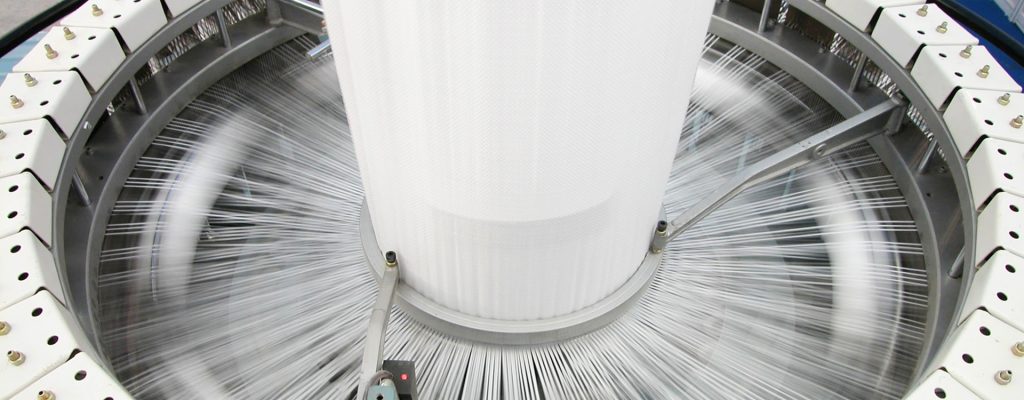
2) Weaving (tubular or flat) — the fabric. Circular looms interlace tapes into meshes typically 10×10 to 14×14. GSM is set by drop/tear targets and fold behavior at the base. Planarity here drives everything later: lamination flatness, print fidelity, and the serenity of your FFS former.
3) Surface engineering — the tie that binds. An extrusion‑coated PE tie‑layer (~20–40 μm) bridges inter‑tape pores, creates a generous heat‑seal window, and prepares the surface for paper lamination. PE/PP chemistry and coat weight are SPC‑controlled; a wandering coat becomes a wandering seal.
4) Paper lamination & conditioning — the skin. Kraft paper (60–120 g/m², white or natural) is bonded to the treated fabric via extrusion tie or solventless adhesive. Moisture conditioning prevents curl and cockle, ensuring accurate print registration and square conversion.
5) Printing — the message. Flexographic (6–8 colors) or rotogravure (up to 8–9 colors) systems deliver dense solids, fine halftones, and compliant barcodes. Rub‑ and UV‑resistant varnishes guard against strap abrasion and yard exposure. Dyne ≥38 on the print face, verified—not guessed—keeps ink where it belongs.
6) Conversion — the form. Cut to length; add side gussets for volume; apply valve patches matched to nozzle geometry; form block‑bottoms by hot‑air welding or adhesive pasting. Place micro‑perfs in a narrow top band above the settled product level to vent headspace air during fill without freeing fines.
7) Quality dossier — the proof. Thickness mapping; tensile/tear of the woven base; seal/peel strength; COF inner/outer; drop and vibration checks; WVTR targets where humidity control matters; barcode grading on the coated paper face; visual AQL. Food‑adjacent builds ship with material declarations; ethical and environmental audits (ISO 9001/14001, BRCGS Packaging Materials, SMETA/BSCI where applicable) turn philosophy into paperwork—and paperwork into trust.
Horizontal vs. vertical thinking in practice. Horizontally, these steps borrow from textiles (denier arithmetic), films (seal windows, dyne), and printing (ink holdout, rub/UV). Vertically, change at one tier echoes down the ladder: alter melt flow and you alter tape draw, denier stability, fabric planarity, coat laydown, seal latitude, and barcode behavior. A good process is a chain; a great one is a choir.
What is the Application of Kraft Paper Woven Bags?
Cement & dry mortar mixes. Abrasive powders demand welded block bottoms, upper‑band venting, and higher GSM within range. Paper faces mute scuff, preserve warning icons, and keep product claims legible after rough handling.
Fertilizers & agro‑chemicals. Hygroscopic blends in humid lanes benefit from heavier tie‑layers, optional inner liners, and paper friction that resists stack shifts. Outer COF around 0.45–0.55 curbs pallet “skating”; valve mouths slash stitch‑line leaks.
Seeds, grains & specialty flours. Paper’s natural aesthetic signals quality; square stacks ease inventory audits. Transparent windows via localized film patches enable visual inspection without sacrificing the paper look.
Animal feed & pet food. Retail‑visible SKUs value matte, photo‑sharp art and dust‑controlled seams. EZ‑open features and carry handles enhance shopper ergonomics without compromising load path.
Salts, minerals & charcoal. UV‑stabilized constructions tolerate yard storage; reinforced bases defend against impact when bags are slid or dragged. For dusty charcoals, top‑band vents keep fills quick without turning the plant into a snow globe.
Building chemicals & specialty powders. Where blend homogeneity and lot traceability matter, scannable barcodes on paper faces and stitched‑free block bottoms reduce contamination points and receipt friction.
Why VidePak for Kraft Paper Woven Bags?
Since 2008, VidePak has blended scale with craftsmanship to build export‑grade Kraft Paper Woven Bags. Our core team holds 30+ years of woven‑packaging experience; today 568 specialists operate 100+ circular looms, 16 extrusion lines, and 30+ lamination/printing machines from top‑tier suppliers such as W&H (Germany) and Starlinger (Austria). We use virgin raw materials for contact layers, support multi‑color flexo and gravure, and ship consistently to the USA, Europe, Brazil/South America, Southeast Asia, Japan, Korea, Central Asia, the MENA Region, East Africa, and South Africa. With annual sales near USD 80 million, capacity is matched by quality systems so each lot is traceable, repeatable, and on‑spec.
Ethical manufacturing isn’t a slogan for us; it’s a system. FSC® paper options with chain‑of‑custody documentation, solventless lamination where performance allows, inline waste capture and reclaim, and supplier audits that look past price to labor and environment. Pair that with engineering support—vent strategy, COF tuning, barcode optimization—and Kraft Paper Woven Bags stop being a commodity and start acting like calibrated parts of your line.
Indicative Parameters — Kraft Paper Woven Bags
| Attribute | Typical Options / Ranges | Role in Performance | Notes |
|---|---|---|---|
| Product | Kraft Paper Woven Bags | Hybrid PP‑paper industrial sacks | Paper‑laminated PP woven fabric with PE tie‑layer |
| Fabric GSM (PP) | ~70–120 g/m² (10–50 kg formats) | Drop/tear strength; base stiffness | Heavier GSM for abrasive powders |
| Mesh (warp×weft) | 10×10 to 14×14 | Porosity; lamination flatness | Finer mesh = smoother print face |
| Kraft Paper | 60–120 g/m² (white or natural) | Panel rigidity; stack friction | White lifts color density; natural signals sustainability |
| Tie‑Layer (PE) | ~20–40 μm | Sealability; bridges inter‑tape voids | Heavier tie‑layer for humid/coastal lanes |
| Valve Types | Heat‑seal / Sonic‑seal / Tuck‑in / Paper‑insert / Poly‑lock | Fill speed; dust control; post‑fill sealing | Match to filler nozzle geometry and dust profile |
| Micro‑Perforation | 20–60 holes/cm² (top band) | Headspace air release | Keep above settled product level only |
| COF (inner/outer) | 0.18–0.30 / 0.40–0.55 | Feeding vs. pallet grip | Antiskid coatings optional; emboss textures available |
| Printing | Flexo 6–8c; Gravure up to 8–9c | Brand impact; barcode legibility | Matte varnish reduces scanner glare |
| UV Stabilization | 200–1,600 h | Outdoor storage resilience | Match to yard dwell time and latitude |
| Sizes | Layflat 300–600 mm; lengths set by bulk density | Pallet fit; cube efficiency | Block‑bottom improves stacking |
| Moisture Control | WVTR targets via coat/liner selection | Caking reduction; shelf life | Specify test temp/RH to match climate |
| Compliance | ISO 9001/14001; BRCGS Packaging Materials (on request); FSC® paper | Quality & sustainability assurance | Pair with food‑contact declarations where needed |
Ranges reflect widely listed export practice on Made‑in‑China/Alibaba‑class catalogs and peer manufacturers; final set‑points depend on bulk density, fines %, climate, and handling severity. No MOQ claims are made.
- What are Kraft Paper Woven Bags? (Definition & Common Aliases)
- What are the Features of Kraft Paper Woven Bags?
- What is the Production Process of Kraft Paper Woven Bags?
- What is the Application of Kraft Paper Woven Bags?
- Why VidePak for Kraft Paper Woven Bags?
- Indicative Parameters — Kraft Paper Woven Bags
In today’s world, the growing emphasis on sustainability has transformed many industries, and packaging is no exception. One of the most prominent innovations in eco-friendly packaging is the use of Kraft paper woven bags. These bags are gaining attention for their combination of practicality, recyclability, and minimal environmental impact. As manufacturers, consumers, and governments push for more sustainable solutions, Kraft paper woven bags stand out as a key player in the evolving landscape of responsible packaging.
At the heart of this innovation lies the commitment to sustainability and ethical manufacturing practices. As brands, retailers, and consumers alike look for ways to reduce their environmental footprints, Kraft paper woven bags offer a compelling solution. In this article, we will explore the significance of these bags, the production processes involved, their sustainability benefits, and how companies like VidePak are leading the way in adopting more sustainable practices. Additionally, we will delve into product specifications and answer frequently asked questions to provide you with a comprehensive understanding of Kraft paper woven bags.
The Rise of Kraft Paper Woven Bags
Kraft paper woven bags are crafted by combining Kraft paper with woven polypropylene fabric, creating a product that boasts the strength and versatility of woven materials with the sustainability of paper. Unlike traditional plastic packaging, which can take hundreds of years to decompose, Kraft paper woven bags can be recycled more easily and are biodegradable under certain conditions. This blend of properties makes them ideal for industries looking to make a shift toward environmentally conscious packaging solutions.
The transition to Kraft paper woven bags is part of a broader global movement toward reducing plastic waste and adopting circular economy principles. For businesses seeking to align with sustainable practices and meet regulatory compliance regarding waste reduction, these bags represent an essential innovation.
Key Features of Kraft Paper Woven Bags
Kraft paper woven bags combine the robustness of woven polypropylene with the renewable nature of Kraft paper. Below, we break down some of the key features of these bags:
| Feature | Description |
|---|---|
| Material Composition | A blend of Kraft paper and woven polypropylene fabric. The outer layer of Kraft paper offers a natural look and feel, while the inner woven polypropylene fabric provides durability and strength. |
| Strength & Durability | These bags are designed to carry heavy loads while maintaining structural integrity. The woven polypropylene fibers add tensile strength, making them suitable for a wide range of applications. |
| Recyclability | Kraft paper woven bags are recyclable, reducing the environmental impact compared to single-use plastic bags. |
| Eco-Friendliness | Being made from renewable resources, Kraft paper woven bags are an environmentally friendly packaging solution. The bags are also biodegradable under the right conditions. |
| Customization | These bags can be customized with various printing options, including multi-color designs, logos, and other branding elements. |
| Versatility | They are used across various industries, including agriculture, retail, and logistics, offering solutions for packaging grains, fertilizers, construction materials, and more. |
Sustainable Manufacturing and Ethical Production
The process behind the creation of Kraft paper woven bags involves careful consideration of both environmental impact and ethical manufacturing practices. Companies like VidePak have made it a priority to not only deliver high-quality packaging but also to ensure that their operations adhere to stringent sustainability standards.
Ethical Manufacturing refers to the commitment of businesses to uphold principles of fairness, transparency, and respect for workers’ rights in every stage of the manufacturing process. From sourcing raw materials to final production, ethical manufacturing ensures that every step in the value chain promotes sustainability and social responsibility.
VidePak, for example, integrates world-renowned equipment like Starlinger machinery in their production line, ensuring a high-quality product while minimizing waste. This level of technology helps improve manufacturing efficiency, ensuring that fewer resources are used to produce each Kraft paper woven bag. Moreover, VidePak’s commitment to full compliance with international environmental regulations ensures that their manufacturing process not only adheres to ethical guidelines but also contributes to environmental protection.
Advantages of Kraft Paper Woven Bags
- Reduced Environmental Impact
The key advantage of Kraft paper woven bags is their minimal environmental footprint. They are not only biodegradable but are also produced from renewable resources. This makes them a much more sustainable option compared to conventional plastic bags. - Enhanced Strength
Unlike paper bags that may tear easily, Kraft paper woven bags offer an enhanced strength-to-weight ratio. This ensures that they can handle heavier loads without compromising their integrity. - Reusability
These bags are highly durable, and they can be reused multiple times. This quality enhances their sustainability since reusing bags reduces the need for single-use packaging. - Reduced Carbon Footprint
The process of manufacturing Kraft paper woven bags has a lower carbon footprint than traditional plastic production. By shifting to these bags, companies can lower their emissions and contribute to a reduction in global warming. - Compliance with Environmental Regulations
Many regions worldwide are increasingly introducing policies aimed at reducing plastic waste and encouraging more eco-friendly packaging options. Kraft paper woven bags not only align with these regulations but also help businesses stay ahead of evolving environmental standards.
Product Specifications
Below are the key specifications of Kraft paper woven bags offered by companies like VidePak:
| Specification | Description |
|---|---|
| Material | Kraft paper laminated to woven polypropylene fabric. |
| Weight Capacity | Ranges from 5 kg to 50 kg depending on the application and size. |
| Size Options | Custom sizes available based on customer needs (e.g., 30×40 cm, 50×70 cm). |
| Lamination | The inner lining can be made of polypropylene or other materials for added strength and moisture resistance. |
| Printing Options | Multi-color custom printing with high-quality inks for brand visibility. |
| Applications | Agricultural products, chemicals, food grains, fertilizers, construction materials. |
FAQs about Kraft Paper Woven Bags
1. Are Kraft paper woven bags fully biodegradable?
Kraft paper woven bags are biodegradable, but the rate of decomposition depends on environmental conditions. The presence of woven polypropylene fibers can slow down this process, but the bags are still considered a more sustainable option compared to plastic bags.
2. Can Kraft paper woven bags be recycled?
Yes, these bags are recyclable. The Kraft paper layer can be easily recycled, and depending on the local recycling capabilities, the woven polypropylene component can also be recycled, contributing to the circular economy.
3. What makes Kraft paper woven bags more sustainable than plastic bags?
Kraft paper woven bags are made from renewable resources, which makes them a more eco-friendly alternative to plastic bags that are derived from fossil fuels. Additionally, they are biodegradable and recyclable, while plastic bags are often non-recyclable and can contribute to long-term environmental damage.
4. Are there custom options available for Kraft paper woven bags?
Yes, Kraft paper woven bags can be customized with different sizes, colors, logos, and printing designs. This makes them suitable for various industries looking to add branding or specific design features.
5. How strong are Kraft paper woven bags?
These bags are highly durable, with the woven polypropylene providing strength and flexibility. They can handle heavy loads, which makes them ideal for agricultural and industrial use.
The Future of Sustainable Packaging
The market for sustainable packaging solutions is expected to continue growing, and Kraft paper woven bags are poised to play a significant role in this transition. With increasing pressure from consumers, regulators, and environmental advocates, companies that adopt sustainable packaging solutions will likely see greater brand loyalty and enhanced market positioning.
As a commitment to sustainability, VidePak continues to lead the industry in adopting innovative production techniques, such as utilizing Starlinger’s cutting-edge machinery, to ensure that their Kraft paper woven bags meet both high-quality and environmental standards. With growing demand for packaging that is not only functional but also ethically produced, businesses that embrace Kraft paper woven bags will help reduce the global plastic waste problem while ensuring responsible manufacturing.
For more information about Kraft paper woven bags and their role in sustainable packaging solutions, please visit VidePak’s Expertise in Kraft Paper Bags Laminated with Woven Fabric. Additionally, you can explore how companies are optimizing their packaging solutions by reading about the Role of Kraft Paper Woven Bags in Agricultural Packaging.