
What Are Kraft Paper Woven Bags: A Sustainable Solution Driving Growth and Brand Differentiation in the Chinese Market?
In China’s crowded aisles and fast‑moving job sites, packaging is expected to be two things at once: a protective shell and a persuasive stage. Kraft Paper Woven Bags: A Sustainable Solution Driving Growth and Brand Differentiation in the Chinese Market capture that dual mandate by marrying a kraft paper outer face with a polypropylene (PP) woven substrate, often through a thin polyethylene (PE) tie layer and, where needed, an inner PE liner. In practice the format goes by several working names—paper‑laminated PP woven bags, kraft‑paper poly woven sacks, paper‑faced block‑bottom woven bags—but the principle is stable: the woven PP skeleton carries the load and resists puncture; the paper face prints crisply and signals a natural, eco‑forward ethos; the functional layers tune moisture barrier and scuff durability. For brands competing in building materials, agriculture, home‑improvement, or premium staples, Kraft Paper Woven Bags: A Sustainable Solution Driving Growth and Brand Differentiation in the Chinese Market create an equilibrium where mechanical strength, sustainability cues, and retail‑ready aesthetics reinforce rather than oppose each other.
Background matters. Paper alone tells a green story, yet multi‑ply paper sacks can soften in humid warehouses and long overland transport. Woven PP alone is rugged, but a plastic gloss may mute the natural brand language Chinese consumers increasingly favor. Combine the two and you gain a composite that performs like a workhorse and presents like a boutique display. Horizontally, this format sits at the intersection of materials science (crystalline polyolefins, fiber grammage), printing technology (ink holdout on porous paper vs. film), and logistics (pallet geometry, compression loads). Vertically, decisions cascade from resin melt‑flow index and tape draw ratios, to mesh and GSM selection, to lamination windows, to top/bottom forming and quality control—each layer influencing the next so that the bag you design is the bag you actually receive.
For readers mapping this solution to related product families, see how the base woven platform underpins the composite: Kraft Paper Woven Bags: A Sustainable Solution Driving Growth and Brand Differentiation in the Chinese Market. For art‑rich packaging that still targets abrasion resistance, consider the synergy with BOPP: Kraft Paper Woven Bags: A Sustainable Solution Driving Growth and Brand Differentiation in the Chinese Market.
Features of Kraft Paper Woven Bags: A Sustainable Solution Driving Growth and Brand Differentiation in the Chinese Market
Mechanical balance—paper that behaves, woven that believes. The PP woven substrate contributes tensile strength, dimensional stability, and resistance to puncture from tile shards, fertilizer granules, or pet‑food kibbles. The kraft exterior offers a compliant, ink‑friendly surface that makes small text legible and color bands vivid. The pairing means the bag feels like paper but works like woven plastic: light in hand, heavy on performance.
Barrier by design, not by luck. Moisture is the quiet saboteur of quality—caking powders, swelling starches, fading inks. In Kraft Paper Woven Bags: A Sustainable Solution Driving Growth and Brand Differentiation in the Chinese Market, barrier can be tuned with PE extrusion lamination between paper and fabric to reduce water vapor ingress, and further reinforced with an inner PE liner (typically 20–80 μm) for fines and aroma control. Where condensate or dew is routine, topcoats and varnishes protect graphics without sacrificing the paper aesthetic.
Print that persuades and persists. The kraft face supports high‑contrast flexographic printing up to 8–10 colors with clean dot gain, allowing full‑panel branding, bilingual regulatory text, EAN/QR codes, and instruction icons that remain readable after transit and shelf rub. Spot matte/gloss interplay draws the eye; strategic white space elevates premium positioning. Need photo realism or metallic accents? A thin BOPP over‑laminate can be specified on high‑wear zones while preserving the overall paper look.
Ergonomics for line and lane. Anti‑slip textures on the fabric side, block‑bottom geometry for brick‑like pallets, and consistent mouth widths help maintain pack rates on automated lines. Easy‑open tapes, laser tear notches, and reclosure options serve DIY and e‑commerce channels where unboxing is as much experience as function. Safety is not an afterthought: UV stabilization packages support outdoor staging across China’s varied climates.
Sustainability signals that sell—without greenwashing. Paper’s visual language—wood‑pulp tone, uncoated tactility—anchors a credible narrative of care. Inside, a mono‑polyolefin system (PP/PE) simplifies downstream sorting where infrastructure exists. When policy and supply permit, post‑consumer recycled (PCR) content can be introduced in the fabric or liner path, extending circularity while protecting seam performance. In short, Kraft Paper Woven Bags: A Sustainable Solution Driving Growth and Brand Differentiation in the Chinese Market let marketers speak to values, and let operators sleep at night.
Horizontally, these features tie together polymer physics, print science, human factors, and retail psychology. Vertically, they align from substrate to closure, ensuring that buyer intent becomes plant reality and shelf impact.
Production Process of Kraft Paper Woven Bags: A Sustainable Solution Driving Growth and Brand Differentiation in the Chinese Market
Tape extrusion & orientation. The journey begins with 100% virgin PP extruded into a film, slit into tapes, and drawn to align molecular chains. Denier and draw ratios are set against target seam pull and drop‑test thresholds typical of 10–50 kg classes. Stable tapes weave into stable fabric—quality starts at the hopper.
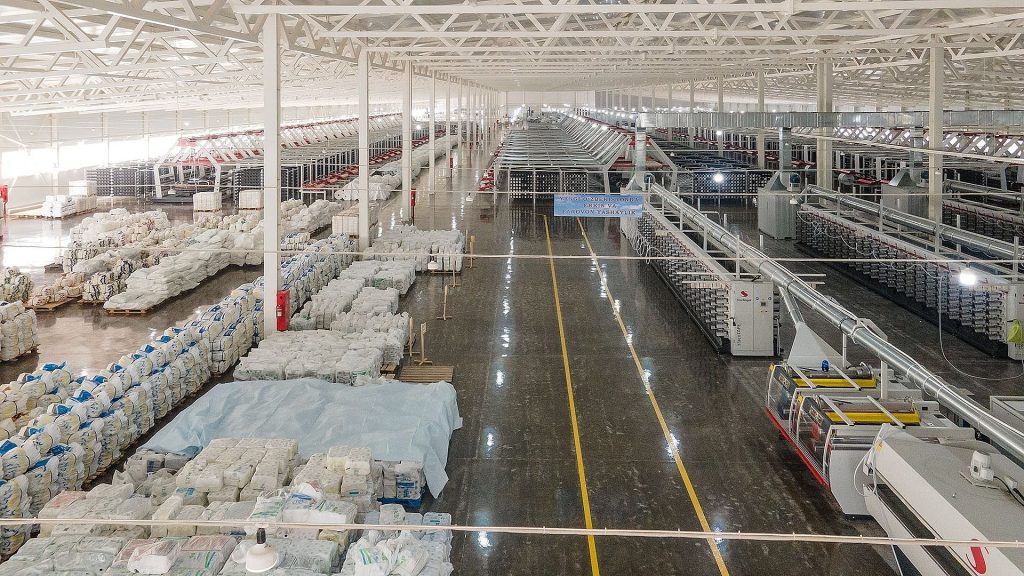
Weaving. Tapes interlace on >100 circular looms at VidePak (or flat looms for back‑seamed formats) to form the PP substrate. Mesh counts (e.g., 8×8 to 14×14) and fabric basis weights (60–120 gsm) are chosen to balance puncture resistance, print fidelity, and hand feel. More picks sharpen small pictograms; fewer picks lighten cost and improve drape.
Extrusion lamination—where paper meets polymer. A thin PE tie layer is extruded between paper and fabric, consolidating the composite without heavy adhesives. Temperature, nip pressure, and line speed are tuned to prevent paper curl and preserve lay‑flat for downstream printing. Lamination windows are validated through peel tests to ensure the paper does not delaminate under scuffing.
Printing on kraft. Flexographic presses (up to 8–10 colors) apply brand assets, product specs, and compliance data with high ink holdout. Where condensation or rough handling is expected, water‑resistant topcoats and edge‑guard varnishes may be specified. Color recipes are proofed for ΔE stability under high‑UV conditions in southern provinces and cold‑dry winters in the north.
Conversion & forming. Rolls are slit and sheeted; side gussets formed; block‑bottoms pasted for self‑standing loads that palletize square. Open‑mouth styles are hemmed or heat‑sealed; bottoms can be pasted for the classic paper finish or chain‑stitched for extra robustness. Optional inner PE liners are inserted free, spot‑tacked, or mouth‑stitched to prevent liner crawl during high‑speed filling.
Quality assurance. Routine checks cover fabric GSM and mesh uniformity, paper grammage, seam pull tests, drop heights (0.8–1.2 m typical), rub/adhesion of inks, Cobb values (paper water absorption), and lamination peel. Dimensional audits keep pallets square, case counts predictable, and forklift clearances safe. The goal is simple: every lot behaves like the last.
VidePak’s asset base—W&H (Germany) and Starlinger (Austria) lines, 16 extrusion lines, and 30+ lamination/printing machines—anchors repeatability. A core team with 30+ years of woven‑packaging know‑how translates control charts into commercial certainty.
Applications of Kraft Paper Woven Bags: A Sustainable Solution Driving Growth and Brand Differentiation in the Chinese Market
Building materials & DIY. Tile adhesive, grout, putty powder, gypsum, joint compound—SKUs that must stand tall in hardware aisles while resisting puncture and damp. The paper face communicates formulation grades and usage icons; the woven backbone survives warehousing, cross‑docking, and last‑mile courier handling.
Agriculture & feed. Seeds, premium pet foods, and fertilizers benefit from the natural look and barcode clarity on kraft, paired with liners for aroma and moisture control. For export‑oriented fertilizers, block‑bottom geometry builds dense, square pallets that pass compression tests and reduce topple events.
Household & consumer. Rice, flour blends, garden care, and charcoal leverage the paper aesthetic for rapid recognition in e‑commerce thumbnails and offline shelf sets. Easy‑open and reclosure options improve user experience and reduce product spillage at home.
Chemicals & additives. Masterbatch, resin modifiers, and mineral fillers demand sift control and clear hazard labeling—achieved on a paper‑laminated woven platform with scuff‑resistant coatings and high‑contrast print.
Across categories, Kraft Paper Woven Bags: A Sustainable Solution Driving Growth and Brand Differentiation in the Chinese Market allow marketing teams to tell a values‑driven story while operations maintain throughput and pallet stability.
Technical Specifications — Kraft Paper Woven Bags (Typical Ranges)
| Item | Typical Options / Range | Notes |
|---|---|---|
| Product | Kraft Paper Woven Bags (paper‑laminated PP woven) | Paper face + PP fabric + PE tie; optional inner liner |
| Outer Paper | Kraft 70–120 gsm (virgin or high‑strength recycled options) | Choose grammage by print coverage and scuff demand |
| PP Fabric Mesh / Denier | 8×8–14×14; 700D–1500D | Load, puncture, and print clarity trade‑off |
| PP Fabric Basis Weight (GSM) | 60–120 gsm | Typical for 10–50 kg formats |
| Lamination/Tie Layer | PE extrusion lamination | Improves moisture barrier and paper bond |
| Printing | Flexo up to 8–10 colors (paper face) | Spot varnish; water‑resistant topcoats available |
| Inner Liner (Optional) | PE 20–80 μm | Moisture/aroma control; food‑grade options |
| Structure Options | Block‑bottom open‑mouth; back‑seam tubular | Brick‑like pallets, dense cube utilization |
| Top/Bottom | Hemmed or heat‑sealed top; pasted bottom or chain‑stitched | Easy‑open tape optional |
| Common Sizes | 40×60 cm, 45×75 cm, 50×80 cm (custom) | Width ≥30 cm typical; lengths per fill weight |
| Typical Fill Weights | 10–50 kg classes (e.g., 20/25 kg standard) | Validate via seam/drop testing |
Values reflect widely used configurations in Chinese and export markets for paper‑laminated PP woven packaging.
Why VidePak for Kraft Paper Woven Bags: A Sustainable Solution Driving Growth and Brand Differentiation in the Chinese Market
Since 2008, VidePak has specialized in woven and composite packaging. With 568 employees, a core team boasting 30+ years of experience, and a footprint featuring >100 circular looms, 16 extrusion lines, and 30+ lamination/printing machines, we scale without sacrificing registration or geometry. Equipment from W&H and Starlinger underpins process stability; 100% new raw materials and RoHS/REACH‑aligned inputs support compliance across sectors. Our solutions ship across the USA, Europe, Brazil & South America, Southeast Asia, Japan, Korea, Central Asia, MENA, East & South Africa, and are tailored for Chinese retail and industrial channels alike.
Tell us your product, route‑to‑market, and shelf strategy—VidePak will engineer Kraft Paper Woven Bags: A Sustainable Solution Driving Growth and Brand Differentiation in the Chinese Market that protect, perform, and persuade.
- What Are Kraft Paper Woven Bags: A Sustainable Solution Driving Growth and Brand Differentiation in the Chinese Market?
- Features of Kraft Paper Woven Bags: A Sustainable Solution Driving Growth and Brand Differentiation in the Chinese Market
- Production Process of Kraft Paper Woven Bags: A Sustainable Solution Driving Growth and Brand Differentiation in the Chinese Market
- Applications of Kraft Paper Woven Bags: A Sustainable Solution Driving Growth and Brand Differentiation in the Chinese Market
- Why VidePak for Kraft Paper Woven Bags: A Sustainable Solution Driving Growth and Brand Differentiation in the Chinese Market
1. Introduction
In the face of escalating environmental concerns and stringent regulatory standards, the Chinese packaging industry is undergoing a profound transformation. Kraft Paper Woven Bags have emerged as a leading sustainable packaging solution, blending environmental responsibility with superior performance. This comprehensive report examines the factors fueling the growth of Kraft Paper Woven Bags in China, their role in brand differentiation, and an in-depth analysis of their health and safety performance, underscoring their significance in today’s market.
2. Market Growth and Sustainability
The shift towards sustainable packaging in China is driven by both regulatory mandates and increasing consumer awareness. Kraft Paper Woven Bags play a pivotal role in this transition by offering a biodegradable and recyclable alternative to conventional plastic bags.
Market Insights:
- Growth Projection: The sustainable packaging market in China is expected to expand at a CAGR of 10% from 2025 to 2030, with Kraft Paper Woven Bags capturing a significant market share.
- Regulatory Impact: The Chinese government has implemented stringent regulations limiting single-use plastics, encouraging industries to adopt eco-friendly alternatives like Kraft Paper Woven Bags.
- Consumer Demand: A rising segment of environmentally conscious consumers is driving demand for sustainable packaging, compelling brands to innovate and adopt greener solutions.
Key Drivers of Growth:
- Environmental Regulations: Policies such as the Plastic Ban Policy in major Chinese cities have accelerated the adoption of sustainable packaging solutions.
- Consumer Awareness: Increased awareness about environmental issues has led consumers to prefer brands that prioritize sustainability.
- Economic Incentives: Government incentives for sustainable practices have made Kraft Paper Woven Bags a financially viable option for businesses.
3. Health and Safety Performance
From a health and safety perspective, Kraft Paper Woven Bags offer numerous advantages over traditional plastic alternatives. Their composition and manufacturing processes ensure high standards of safety and hygiene, making them suitable for a wide range of applications.
Health Performance Evaluation: Kraft Paper Woven Bags are manufactured using 100% recycled kraft paper, devoid of toxic additives. This makes them ideal for applications requiring stringent hygiene standards, such as food packaging and pharmaceuticals. The absence of harmful chemicals reduces the risk of contamination, ensuring the safety of stored products.
Safety Performance Evaluation: The inherent strength and durability of Kraft Paper Woven Bags minimize the risk of product spillage and contamination during transportation. Additionally, their fire-resistant properties provide enhanced safety, particularly in industries dealing with flammable materials. The robust construction of these bags ensures they can withstand rigorous handling without compromising the integrity of the contents.
Table 1: Health and Safety Metrics of Kraft Paper Woven Bags vs. Traditional Plastic Bags
| Metric | Kraft Paper Woven Bags | Traditional Plastic Bags |
|---|---|---|
| Chemical Safety | Non-toxic, biodegradable | Potential chemical leaching |
| Fire Resistance | High | Low |
| Durability | High | Moderate |
| Recyclability | Easily recyclable | Limited recyclability |
| Hygiene Compliance | Suitable for food-grade | Not always suitable |
4. Product Parameters
Understanding the key parameters of Kraft Paper Woven Bags is crucial for businesses aiming to integrate them into their packaging strategies effectively.
Key Product Parameters:
- Material Composition: Made from 100% recycled kraft paper, ensuring sustainability and reducing environmental footprint.
- Weight Capacity: Available in various weight capacities ranging from 20 kg to 100 kg, catering to diverse industry needs.
- Dimensions: Customizable sizes allow for tailored packaging solutions to fit specific product dimensions.
- Printing Options: Advanced printing capabilities enable high-quality branding, enhancing brand visibility and recognition.
- Closure Mechanism: Multiple closure options, including drawstrings, adhesive strips, and flap closures, provide enhanced security and functionality.
5. Integration of Latest Trends
The packaging industry is continually evolving, with technological advancements shaping the future of sustainable packaging. Kraft Paper Woven Bags are at the forefront of these innovations, benefiting from several cutting-edge developments:
- Advanced Printing Techniques: Enhanced customization options allow brands to incorporate intricate designs, logos, and information, strengthening brand identity and consumer engagement.
- Lamination Technologies: Laminating kraft paper with woven fabrics improves durability and moisture resistance, expanding the applicability of these bags across various industries.
- Smart Packaging Features: Integration of QR codes and NFC technology facilitates interactive consumer engagement, product tracking, and authentication, adding value to the packaging solution.
6. External Links for Further Reading
For more insights into the technological advancements and cost-efficiency of Kraft Paper Woven Bags, visit Kraft Paper Bags Laminated with Woven Fabric: The Intersection of Technological Advancement and Cost Efficiency.
Additionally, explore the role of Kraft Paper Woven Bags in sustainable and ethical manufacturing at Kraft Paper Woven Bags: A Commitment to Sustainability and Ethical Manufacturing.
7. FAQs
Q1: Are Kraft Paper Woven Bags suitable for food packaging?
A: Yes, Kraft Paper Woven Bags are safe for food packaging as they are non-toxic and can meet high hygiene standards. They are often used for storing grains, fruits, and other food products.
Q2: How do Kraft Paper Woven Bags compare to plastic bags in terms of environmental impact?
A: Kraft Paper Woven Bags have a significantly lower environmental impact as they are biodegradable and recyclable, whereas plastic bags contribute to pollution and are less sustainable.
Q3: Can Kraft Paper Woven Bags be customized with brand logos and designs?
A: Absolutely. These bags support high-quality printing, allowing businesses to customize them with logos, designs, and other branding elements to enhance brand visibility.
Q4: What industries benefit the most from using Kraft Paper Woven Bags?
A: Industries such as retail, agriculture, food processing, and pharmaceuticals benefit significantly due to the bags’ durability, safety, and sustainability features.
Q5: Are there any limitations to using Kraft Paper Woven Bags?
A: While Kraft Paper Woven Bags are versatile, they may not be suitable for extremely wet environments unless treated with moisture-resistant coatings or laminated with waterproof materials.
8. Conclusion
Kraft Paper Woven Bags represent more than just a sustainable packaging alternative; they are a strategic asset for businesses aiming to differentiate their brands in the competitive Chinese market. Their exceptional health and safety performance, coupled with environmental benefits, make them an attractive option for a wide array of industries. As consumer preferences continue to shift towards eco-friendly products and regulatory landscapes become increasingly stringent, investing in Kraft Paper Woven Bags will not only drive growth but also enhance brand reputation and contribute to a sustainable future.
By embracing Kraft Paper Woven Bags, companies can align with global sustainability trends, meet regulatory requirements, and cater to the evolving preferences of environmentally conscious consumers. This positions them not only as market leaders but also as responsible corporate citizens committed to environmental stewardship.
References: