
Where this text says Kraft Paper Woven Bags, it refers to hybrid paper–polyolefin sacks built for heavy, abrasive, or moisture‑sensitive products in construction supply chains.
What Are Kraft Paper Woven Bags: definition, aliases, and why the hybrid matters
Kraft Paper Woven Bags are industrial sacks that combine a woven polypropylene (PP) core with one or more plies of kraft paper and, where needed, localized films or coatings. This hybrid builds on the high tensile efficiency of oriented PP tapes while exploiting paper’s stiffness, natural print aesthetics, and controllable breathability. In tenders and trade literature they appear as paper‑laminated woven PP bags, BOPP‑paper‑woven sacks, block‑bottom paper‑woven valve sacks, pinch‑top paper‑woven bags, cement bags, gypsum bags, and—in short—hybrids designed to thrive where powders punish packaging.
The materials of Kraft Paper Woven Bags: substrates, plies, films, inks, and cost levers
Design starts with the bill of materials because architecture dictates performance, recyclability, and line economics. For Kraft Paper Woven Bags, each constituent solves a specific problem and introduces a constraint that engineers must manage.
Cost levers cluster around fabric gsm, paper ply weight/count, whether you choose coating versus lamination, localized patch/liner gauges, and base glue grammage. Resin or pulp indices move, but geometry and architecture dominate life‑cycle cost once conversion is stabilized.
Stand‑out features: what Kraft Paper Woven Bags do that single‑material sacks do not
Every claim below ties a design choice to a measurable operational outcome, so teams can argue trade‑offs with data—not intuition.
| Feature | Design mechanism | Operational effect |
|---|---|---|
| High strength at low tare | Oriented PP tapes + seam architecture + base glue map | Drop survival without bloating tare; tighter pallet faces and fewer split returns |
| Dust control | Valve sleeves with auto‑close petals; coated/laminated faces | Cleaner packers and sites; fewer label‑and‑code abrasion failures |
| Moisture management | Paper breathability during fill + PE/PP patch or liner after closure | Lower caking/hydration claims in humid seasons |
| Information integrity | BOPP matte/gloss or coated PP + high‑rub inks | Readable GHS icons, mix ratios, and QR under scuff and sunlight |
| Ergonomics & pallet cube | Block‑bottom geometry with repeatable caliper | Faster handling; better trailer utilization; fewer leaning stacks |
| Recyclability pathways | Discrete paper zones + mono‑polyolefin film/fabric zones | Clearer routing into fiber or PP streams where infrastructure exists |
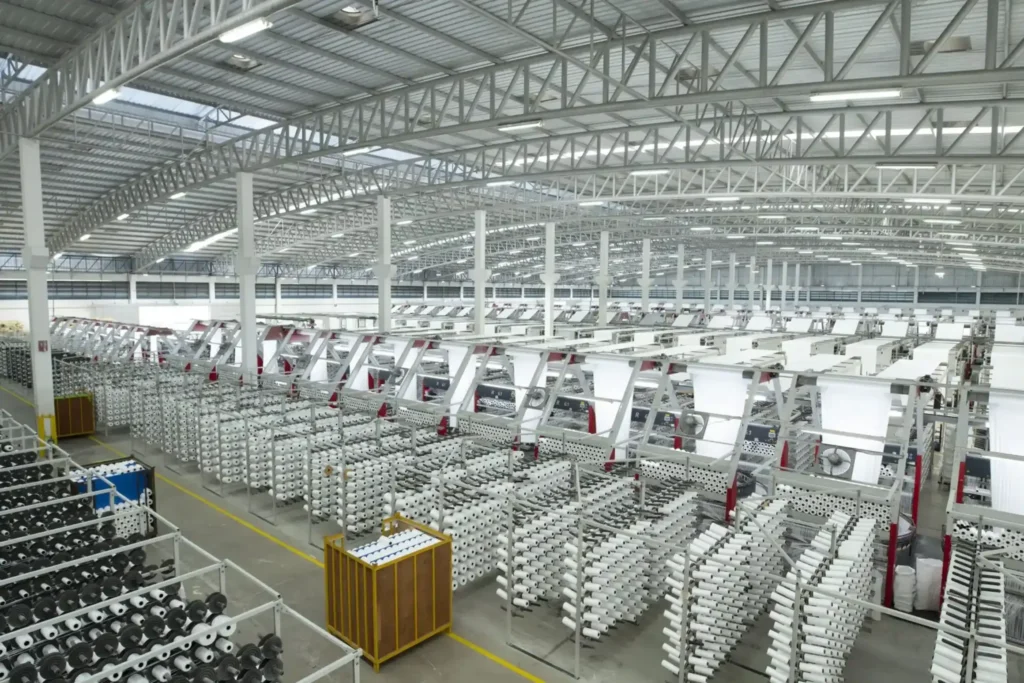
How Kraft Paper Woven Bags are manufactured: from resin and pulp to pallet
Converting theory into repeatability requires disciplined windows at each step. Deviations usually show up later as dust, delamination, rub‑off, or base peel. The process below highlights the knobs you can actually turn.
- Tape extrusion & drawing. Melt index 2–4 g/10 min; draw 5–7×; chill roll ~25–35 °C. Monitor tape gauge Cpk and fibrillation to avoid future pinholes and seam weakness.
- Weaving & heat setting. 10–16 ppi on circular/flat looms; warp tension controls dimensional drift; heat set before coating/lamination.
- Paper conditioning & pre‑print. Match reel humidity to plant climate; consider pre‑print on paper or post‑print on film depending on artwork durability and registration demands.
- Coating/lamination. PP coat 20–40 g/m² on fabric; BOPP 15–35 µm laminated to paper or fabric. Maintain surface energy ≥ 38 dyn/cm; balance nip pressure to prevent fabric show‑through.
- Printing. Flexo/gravure for volume and rub class; digital for variable data pilots. Lock anilox BCM, viscosity, and dryer curves. Use matte film where scanner glare has been a field complaint.
- Tube forming & valve insertion. Sleeve angle/length tuned to packer nozzles; micro‑perforate paper zones to vent fill air without obvious leak paths.
- Base formation. Block‑bottom glue patterns (30–60 g/m²) set peel strength and pallet geometry. Fold order matters—audit it like a critical control point.
- Closures & reinforcements. Add PE/PP heat‑seal patches at valves; double chain‑stitch where seams remain; reinforce corners for abrasive contents.
- Quality assurance. Drop tests, base peel (N/25 mm), stacking (time‑under‑load), print rub (Sutherland/ISO), barcode/QR verification after abrasion, WVTR on patches/liners (ASTM F1249/ISO 15106‑2), and valve dimension gauges.
Where they’re used: construction and adjacent sectors
Kraft Paper Woven Bags appear wherever powders are heavy, abrasive, or moisture‑sensitive. Typical cohorts: cement & blended cements, mortars/grouts/thinsets, gypsum & plaster, lime & CaCO₃ fillers, polymer‑modified blends, and specialty sands. Adjacent uses include minerals, fertilizers, and certain retail‑adjacent DIY mixes where instructional print is critical.
| Use case | Dominant risks | Recommended construction |
|---|---|---|
| Cement (25–50 kg) | Dust, drop/stack, outdoor staging | Fabric 100–140 g/m²; paper 1×90 g/m²; PP coat 25–35 g/m²; valve sleeve 80–100 µm; matte BOPP if icons must survive long haul |
| Mortar / gypsum | Moisture gain, rub‑off at depots | Dispersion‑treated kraft; PE patch 100–120 µm; micro‑perforations; valve heat‑seal; matte finish for scanner readability |
| Specialty sands | Puncture at pallet edges, scuff | Fabric 120–160 g/m²; heavier PP coating; corner boards; flat or block‑bottom per discharge |
Reasoning from the keyword: making “Kraft Paper Woven Bags: Ideal for Construction” true
A slogan becomes true when it survives the plant, the pallet, the truck, and the site. The logic map below converts the phrase into decisions you can test and audit.
- Define hazards. Particle size & abrasiveness; bulk density; moisture sorption; staging UV; ESD during fill. Decide what can fail and why.
- Map hazards to materials. Moisture → patch/liner gauge and seal recipe; dust/abrasion → coated/laminated faces + corner reinforcements; stack stability → base glue map + paper caliper + fabric gsm; compliance → current certificates and specific Declarations.
- Choose the stack. Cement: coated fabric + paper face (or BOPP‑paper), valve sleeve. Mortars/gypsum: pinch‑top or heat‑seal; dispersion‑treated paper; micro‑perforations. Sands: heavier fabric; corner tape; back‑panel coating.
- Validate. Drop/base/stack tests; WVTR & moisture‑gain simulations; rub & scan verification after abrasion; update drawings and SOPs with actual passing settings.
System thinking: decompose, control, integrate
Four subsystems drive reliability in Kraft Paper Woven Bags. Treat each as a mini‑spec with inputs, risks, and controls—then braid them back together.
| Subsystem | Objective | Key variables | Common risks | Controls |
|---|---|---|---|---|
| Mechanical envelope | Carry load through fill → stack → site | Fabric gsm/ppi; paper ply weight; base glue grammage & fold; SPI; corner reinforcements | Base peel; seam splits; puncture; lean | DOE on gsm × glue; stitch audits; corner boards; stack rules tied to duration |
| Barrier & moisture | Prevent caking/hydration | Patch/liner gauge; dispersion treatment; seal recipe; warehouse climate | Valve leaks; paper wicking; WVTR too high | ASTM F1249/ISO 15106‑2 targets; peel‑mode seals (12–18 N/15 mm); RH ≤ 65% |
| Information integrity | Keep warnings & codes readable | Ink family; varnish; film finish; code placement | Rub‑off; glare; seam scrape | Sutherland rub class; abrasion tests; matte films; code quiet zones |
| Fill/closure & dust | Hit line rate; contain fines | Valve angle/length; micro‑perf density; auto‑close petals; heat‑seal dwell/temperature | Blowback; weighment error; slow seals | Valve geometry trials; packer air curve tuning; dust flaps; PPE & extraction |
Standards, certifications, and identifiers referenced in 2024–2025
Best practice: require evidence ≤ 12 months old and scoped precisely to the supplied product family (e.g., “adhesive lamination for paper/film” rather than a generic “lamination” scope).
Engineering data tables: spec ranges you can start from
| Parameter | Cement / blends | Mortar / gypsum | Specialty sands |
|---|---|---|---|
| Fabric gsm | 100–140 | 90–120 | 120–160 |
| Paper ply (g/m²) | 1 × 80–100 face | 1–2 × 70–90 | 1 × 80–100 |
| Coating / Lamination | PP coat 25–35 g/m² or BOPP 20–30 µm | BOPP matte 20–30 µm on paper | PP coat 30–40 g/m² |
| Valve sleeve | Paper/PE or PP film 80–100 µm | PP film 90–120 µm heat‑seal | Papersleeve or PP film |
| Base style | Block‑bottom (glued) | Block‑bottom (glued) | Flat or block‑bottom |
| Micro‑perforation | Selected paper zones | Required for fast fill | Optional |
| Test / metric | Indicative target |
|---|---|
| Base peel (N/25 mm) | ≥ 20–35 (pattern dependent), cohesive or peel‑mode preferred |
| Valve seal peel (N/15 mm) | 12–18 with peel‑mode failure |
| Drop test | Survive 5–10 drops @ 0.8–1.2 m without rupture |
| Stack/compression | 30–60 days equivalent at design pallet load |
| Barcode/QR contrast | ≥ 70% at intended scan distance; quiet zone ≥ 10 mm from seams |
| Rub resistance | ≥ internal class (e.g., ≥ 200 Sutherland cycles) post‑abrasion |
Cost of quality & total cost of ownership (TCO): the four levers
Unit price is visible; hidden costs accumulate silently in claims, downtime, unstable stacks, and paperwork friction. For Kraft Paper Woven Bags the following levers dominate:
- Product protection. A 20–40 µm increase in PE/PP patch or liner often halves caking claims during humid seasons for cementitious blends.
- Uptime on the packer. Valve sleeve angle/length mismatches drive blowback and weighment error. Small geometry fixes beat heavy fabrics for OEE gains.
- Stacking stability. Glue pattern & grammage at block bottoms, paired with paper caliper, determine verticality. Corner boards slash pallet‑edge puncture.
- Documentation cadence. Certificates and DoCs older than 12 months create customs holds and detention fees. A live calendar eliminates this stealth tax.
Troubleshooting matrix: symptoms → causes → fixes
| Symptom | Likely cause | Corrective action |
|---|---|---|
| Base opens during drop | Low glue grammage; weak pattern; poor fold sequence | Increase grammage; revise pattern; adjust dwell/pressure |
| Valve dusting | Sleeve too short/steep; weak auto‑close; slow seal | Lengthen & flatten angle; add film petals; optimize heat‑seal |
| Moisture caking | Patch/liner too thin; leaky seals; humid storage | Increase gauge; double‑fin seals; enforce warehouse RH bands |
| Print rub‑off | Low surface energy; under‑cured ink; no over‑varnish | Increase corona; tune dryers; add protective varnish |
| Puncture at pallet edge | Low fabric gsm; no corner protection | Raise gsm; add corner boards; upgrade pallets |
| Scan failures | Glare on gloss film; low contrast; code near seam | Switch to matte; boost contrast; relocate codes |
Procurement‑ready specification template (edit to fit)
Title: Kraft Paper Woven Bags — 25–50 kg, block‑bottom valve, paper–film–fabric hybrid
Scope: Dry mineral powder (cementitious); indoor storage ≤ 60 days; pallet 1100 × 1100; stack 5 × 5; forklift handling
Materials
• Fabric: woven PP 110 g/m², 12 ppi, UV stabilization to 300 h equivalent
• Paper: 1 × 90 g/m² extensible kraft face, dispersion treated (Cobb target per vendor)
• Film: BOPP matte 25 µm laminated to paper; PP coating 30 g/m² on fabric back
• Valve: PP film sleeve 100 µm, length 140 mm at 30°, auto‑close petals, heat‑seal post‑fill
Conversion
• Base: glued block bottom, pattern per drawing, glue 40 g/m² nominal
• Seams: double chain stitch where present, SPI 9–10, thread PP 1,100D
Print
• 4‑color flexo/gravure on matte BOPP; barcode/QR contrast ≥ 70%; quiet zones per drawing
Performance
• Drop: 10 × @ 1.0 m (no rupture)
• Base peel: ≥ 25 N/25 mm (peel/cohesive mode)
• Valve seal peel: 14–18 N/15 mm (peel preferred)
• Stack: 60 days equivalent at design load
Compliance
• Site: ISO 9001:2015; BRCGS Packaging Materials Issue 6 where hygienic conversion intersects
• Materials: film DoC referencing applicable food‑contact/odor guidance where required; ink guidance per supplier
Change control
• 60‑day notice for resin, adhesive, paper grade, film gauge, or geometry changes; first‑article approval for critical parameters
Traceability
• Lot/date/line code; optional QR linking to batch dossier (spec, tests, certificates)
Field cases: three short, instructive examples
Case 1 — Portland cement (25 kg valve sacks). Dust at filler and code illegibility after haul. Actions: valve +12 mm length, −5° angle; film petals; matte BOPP; barcode relocated. Outcome: dust −60%; scan speed ↑; OEE +2.1%.
Case 2 — Polymer‑modified tile adhesive (25 kg pinch‑top). Caking in monsoon staging; pinch seam delamination. Actions: patch 80 → 120 µm; seal dwell tuned; dispersion‑treated kraft; warehouse RH ≤ 65%. Outcome: caking 1.7% → 0.4%; rework holds ↓.
Case 3 — Specialty sand (30 kg flat‑bottom). Punctures at pallet edges; base scuff. Actions: fabric +15 g/m²; corner boards; heavier back‑panel coating. Outcome: handling incidents ↓; stack geometry improved at 30 days.
Extended FAQ
Are Kraft Paper Woven Bags more durable than multi‑wall paper alone? Often yes, especially under long haul and abrasive powders: the woven core takes tension and puncture, paper brings stiffness and print quality. Pure paper still wins where simple fiber‑stream recovery dominates and handling is gentle.
Do I always need BOPP film? No. PP‑coated fabric plus over‑varnished paper can meet many rub targets. Choose BOPP when you need photo‑quality graphics or extreme abrasion resistance.
How do I set moisture targets? Start with allowable moisture gain over shelf life; back‑solve package‑level WVTR; validate via ASTM F1249/ISO 15106‑2 at warehouse climates that match reality, not idealism.
Will heavier fabric automatically improve drops? Not necessarily. Many drops fail at the base. Glue map, fold sequence, and seam design may move the needle more than gsm alone.
Can recycled PP be used? Yes in non‑critical zones if drawability/tenacity targets are met. Keep recycled content out of loop/seam load paths unless validated.
What about EPR & recyclability claims? Use precise language aligned with current rules. Favor mono‑polyolefin on film/fabric sides and discrete, declared paper zones. Provide separation instructions where programs exist.
90‑day action plan: from commodity to engineered bags
- Audit failure modes. Classify complaints into moisture, dust, base peel, seam, puncture, print/scan. What is unnamed cannot be improved.
- Run a mini‑DOE on base integrity. Two glue patterns × two grammages × two paper calipers. Measure peel and drop outcomes.
- Pilot valve geometry. Adjust sleeve length/angle on one line; monitor dust and weighment stability.
- A/B matte vs. gloss film. Compare scan speeds and rub legibility; choose finish that serves operations, not only aesthetics.
- Refresh documents. Ensure ISO 9001 and (where relevant) BRCGS are current; gather film/ink DoCs; publish a recyclability statement aligned with present terminology.
Kraft paper woven bags have emerged as a preferred choice for various industrial applications due to their strength and versatility. Specifically, these bags offer excellent performance in the construction industry, where they are used to transport and store a variety of building materials. This article explores the benefits of kraft paper woven bags and their applications in the construction sector, while also comparing them with other packaging solutions available in the market.
Advantages of Kraft Paper Woven Bags
Kraft paper woven bags are celebrated for their robust construction and eco-friendly characteristics. These bags are created by weaving kraft paper fibers, which are known for their durability and resistance to tearing. The woven design enhances the strength of the bag, making it suitable for handling heavy materials. Moreover, kraft paper is biodegradable and recyclable, aligning with environmental sustainability goals.
One of the main benefits of kraft paper woven bags is their ability to handle substantial loads. They are designed to endure the rigors of transportation and storage, ensuring that the contents remain secure and intact. This makes them particularly suitable for industries where bag integrity is crucial, such as construction.
Another advantage is the flexibility in customization. Kraft paper woven bags can be printed with logos, product information, and other branding elements, which is beneficial for companies looking to enhance their brand visibility. The high-quality printing options available ensure that the bags not only perform well but also promote the brand effectively.
Applications in the Construction Industry
In the construction industry, kraft paper woven bags are employed for various purposes, including the transportation and storage of materials such as sand, cement, gravel, putty powder, and gypsum powder. Their robust construction makes them ideal for holding these materials, which can be heavy and abrasive.
- Sand: Sand is a fundamental material in construction, used in concrete production, masonry, and other applications. Kraft paper woven bags are well-suited for packaging sand due to their strength and resistance to wear. The bags can handle the rough texture of sand without tearing or compromising their integrity.
- Cement: Cement is another critical component in construction. The bags need to be strong enough to hold the cement and protect it from moisture, which can affect its quality. Kraft paper woven bags offer excellent protection against moisture while maintaining their structural integrity.
- Gravel: Like sand, gravel is used in various construction applications, including concrete mix and drainage systems. Kraft paper woven bags can manage the weight and abrasiveness of gravel, ensuring safe handling and transportation.
- Putty Powder: Putty powder is used for wall finishing and surface preparation. Kraft paper woven bags provide an effective solution for packaging putty powder, protecting it from contamination and ensuring that it remains in good condition during transportation.
- Gypsum Powder: Gypsum powder is used in plaster and drywall production. The bags need to be durable and able to withstand the fine powder without breaking. Kraft paper woven bags are ideal for this application, offering the necessary strength and protection.
Comparison with Other Packaging Solutions
When comparing kraft paper woven bags to other packaging options, several factors come into play, including cost, performance, and environmental impact.
- Compared to Plastic Bags: Plastic bags, particularly those made from polyethylene, are often used for construction materials due to their moisture resistance and low cost. However, they lack the strength and environmental benefits of kraft paper woven bags. Plastic bags can also be less durable when handling heavy materials, and they are not biodegradable.
- Compared to Jute Bags: Jute bags are another alternative used in the construction industry. While jute is a natural fiber and offers good strength, kraft paper woven bags provide superior tear resistance and are more cost-effective. Additionally, kraft paper woven bags are less prone to absorbing moisture compared to jute bags.
- Compared to Multiwall Paper Bags: Multiwall paper bags are similar to kraft paper woven bags in terms of strength and durability. However, kraft paper woven bags offer better load-bearing capacity and flexibility for customization. Multiwall bags are often used for fine powders and smaller quantities, whereas kraft paper woven bags are preferred for larger volumes and heavier materials.
Industry Trends and Future Outlook
The demand for kraft paper woven bags in the construction industry is expected to grow due to increasing environmental regulations and the push for sustainable packaging solutions. Companies are increasingly opting for kraft paper woven bags as they align with their sustainability goals and provide a reliable packaging option.
Moreover, advancements in manufacturing technologies are enhancing the performance of kraft paper woven bags. Innovations such as improved fiber weaving techniques and advanced printing options are contributing to their growing popularity. As the construction industry continues to evolve, kraft paper woven bags are likely to play an essential role in meeting the demands for durable and eco-friendly packaging solutions.
Final Thoughts
Kraft paper woven bags offer a robust and eco-friendly solution for the construction industry. Their strength, durability, and environmental benefits make them an excellent choice for packaging and transporting a range of construction materials. Compared to other packaging options, kraft paper woven bags stand out for their superior performance and sustainability. As the industry moves towards more sustainable practices, kraft paper woven bags are well-positioned to meet the evolving needs of the market.