
What defines the product and why it matters now
In modern feed logistics, Kraft Paper Woven Bags sit at the crossroads of mechanical endurance and shelf-ready presentation. As composite sacks, they marry an exterior of sack kraft paper with an interior scaffold of woven polyolefin—predominantly polypropylene. This pairing yields the reassuring tactility of paper and the tensile backbone of woven plastic. The result is a package that holds form on pallets, resists the insults of forklifts and conveyor nicks, and still carries legible regulatory print after miles of rough transport. When barns are humid and warehouses dusty, when bags are handled quickly and stacked high, when the brand has to be seen and the contents must stay dry, Kraft Paper Woven Bags prove a disciplined, reliable choice.
Are these merely another variant of industrial sack? Not quite. They are, more precisely, a platform—configurable layers that engineers tune for strength, moisture control, and line compatibility. That platform logic is what makes them particularly suited to livestock feed in 10–50 kg units.
Materials, structure, and the science behind performance
“Design the layers, design the outcomes.” The construction of Kraft Paper Woven Bags is more than a bill of materials; it is a system where each layer influences drop resistance, print durability, and moisture behavior.
Sack kraft paper (outer interface)
Woven polypropylene (load-bearing core)
Interfaces and options
- Tie layer A molten LDPE layer (≈10–20 g/m²) or hot-melt/PU adhesive bonds paper to woven PP under controlled nip pressure.
- Liner Optional LDPE/LLDPE tube or loose liner (≈20–80 µm) lowers WVTR; some applications consider coextruded barriers for oxygen-sensitive blends.
- Treatment Corona discharge raises surface energy (≥38 dynes) to secure reliable adhesion and ink anchorage.
Feature set that serves real-world handling
When engineers evaluate Kraft Paper Woven Bags, they typically map features directly to pain points: split seams on conveyors, caked pellets after weeks in damp barns, sliding pallets in transit, smudged labels that compromise traceability. The following capabilities speak directly to those realities.
Mechanical strength
Oriented PP tapes in a woven grid maintain seam integrity under high-speed filling (often 8–16 bags per minute) and survive repeated drops from 1.2 m when specified correctly. The paper layer adds scuff resistance and energy absorption.
Moisture management
The PP core exhibits negligible water uptake; moisture-sized paper and optional liners extend protection in high-humidity environments, keeping water activity low and pellets intact.
Brand & compliance
Paper surfaces accept crisp, multicolor flexographic prints. Regulatory panels, barcodes, and lot codes remain legible after handling when overprint varnishes are applied.
Pallet stability
Higher COF of paper reduces interlayer slip. Gusseted geometries create brick-like packs that improve unit load compression and reduce trailer incidents.
Filling-line fit
Valve-mouth formats pair well with auger or impeller fillers; open-mouth versions support pinch-bottom or stitched closures. Heat-sealable valve sleeves minimize dust emission.
Sustainability levers
Down-gauging while preserving performance, fluorine-free barrier choices, and design-for-disassembly options help align with evolving regulations and expectations.
From resin and fiber to finished sack: a process walkthrough
The path to finished Kraft Paper Woven Bags includes polymer transformation, fabric production, lamination, converting, and quality control. Each step influences the next, and the cumulative effect defines line speed, failure rate, and field performance.
- Tape extrusion & drawing PP resin is extruded into film, slit, and drawn to orient chains. Orientation elevates tensile properties and shrinks creep under sustained load.
- Weaving Tapes are interlaced on circular or flat looms. Pick density and tape width are tuned for tear and burst requirements.
- Surface preparation Corona or flame treatment elevates surface energy to anchor adhesives and inks.
- Lamination Sack kraft is bonded to the fabric with molten LDPE or adhesive. Registration and web tension prevent curl and misalignment.
- Printing Water-based flexo delivers regulatory content and branding. An overprint varnish enhances abrasion resistance.
- Forming The web is gusseted and tubed. Bottoms are created via pinch (hot-melt) or stitching; valve sleeves are inserted for valve sacks.
- Liner integration Loose or tube liners (LDPE/LLDPE) are inserted or welded as specified.
- Inspection & testing Drop tests, WVTR, Cobb, seam efficiency, and print rub are checked against internal thresholds.
Where the format excels and where it competes
As the name suggests, Kraft Paper Woven Bags thrive in livestock and poultry feed, notably pelleted rations and mineral/vitamin premixes. The form factor also extends to seeds, grains, fertilizers, salts, charcoal, and dry building compounds where a mix of scuff resistance, moisture moderation, and print clarity is desired.
| Use case | Format notes | Preferred options |
|---|---|---|
| Pelleted livestock feed | High filling rates; robust pallet stacks | Valve sack, 70–80 g/m² woven core, 90–110 g/m² paper, tube liner in humid regions |
| Mineral & vitamin premixes | Hygroscopic; potency-sensitive | Tube liner 60–80 µm, moisture-sized paper, pinch-bottom or heat-sealed valve |
| Seeds & grains | Abrasion from kernels | Higher scuff paper, abrasion-resistant OPV, stitched or pinch-bottom |
| Fertilizers and salts | Corrosive tendency | Woven PP with chemical resistance, optional liner, robust seams |
Thinking across disciplines: from microbiology to mechanics
A packaging decision is rarely one-dimensional. It blends microbiological stability, mechanical physics, human factors, and regulatory literacy. Consider how moisture, strength, and legibility interact in Kraft Paper Woven Bags:
- Microbiology Elevated water activity accelerates mold growth and nutrient degradation. Moisture defense via liners and moisture-sized papers preserves product integrity.
- Mechanics Oriented tapes and efficient seams contain dynamic loads during drops and compressive loads during staging.
- Human factors Grippy paper surfaces reduce slip risks; brick-like geometry makes pallets predictable.
- Information Legible labels and barcodes on paper surfaces support traceability and compliance throughout the chain.
The linkages are tight: better moisture defense cuts rework and returns; higher friction reduces transport incidents; durable print reduces mispicks. Improvements compound. Incremental tweaks in GSM or liner thickness can push the whole system toward stability.
Configuration tiers for different climates and dwell times
Baseline
Dry climates, quick turnover. Outer 80–90 g/m² paper, 65 g/m² woven PP, stitched bottom, no liner. Lowest mass and cost; monitor storage humidity.
Enhanced
Temperate zones with moderate dwell. Paper 90–100 g/m², woven 70–75 g/m², pinch-bottom with hot-melt, 40–50 µm loose liner. Better seal integrity and neat pallet faces.
High protection
Humid tropics and hygroscopic blends. Paper 100–110 g/m², woven 75–80 g/m², 60–80 µm tube liner, valve mouth with heat-sealed sleeve. Fast filling and robust moisture barrier.
Premium print
When branding demands high color fidelity, retain the paper face for anti-slip and add matte OPV to resist scuff while preserving barcode readability.
Numbers that guide decisions
| Performance test | Target | Why it matters |
|---|---|---|
| Drop test | 10 drops at 1.2 m without rupture | Simulates worst-case handling across conveyor transfers and truck loading. |
| WVTR | ≤ 5 g/m²·day (38 °C/90% RH) for lined variants | Guards against pellet swelling and mold growth under humid storage. |
| Cobb (60 s) | 25–40 g/m² for outer paper | Indicates moisture sizing and surface treatment adequacy. |
| Seam efficiency | ≥ 85% | Prevents seam burst at elevated fill rates. |
| Paper-to-paper COF | ≥ 0.4 | Enhances pallet stability and worker safety. |
Common pitfalls and countermeasures
Delamination
Ensure corona ≥ 38 dynes and tie 15±3 g/m². Validate via 180° peel tests and thermal cycling.
Corner bursts
Increase adhesive penetration on pinch-bottoms or reduce stitch pitch. Use stretch-grade papers that absorb energy.
Ink scuff
Specify matte overprint varnish and confirm abrasion class with in-house rub testing.
Pallet sliding
Leverage paper’s higher COF, increase gusset width for brick geometry, and tune wrap force.
Valve leakage
Use PE-coated sleeves and verify heat-seal dwell and temperature windows at real line speeds.
Field narratives that reveal cause and effect
In coastal districts, a poultry mill traced seasonal caking to ambient humidity. Switching from stitched, linerless sacks to Kraft Paper Woven Bags with a tube liner reduced returns within weeks. In another region where roads are unpaved and pallets jolt in transit, brands found that unbleached paper faces with higher COF and interlocked stacking patterns halved trailer incidents without adding film.
Premium dairy rations demanded photographic graphics to differentiate on crowded aisles. Keeping the paper face while employing matte varnish preserved both print depth and stack security—an outcome harder to achieve with glossy film-faced variants.
From unit price to total cost: a practical lens
Unit price attracts attention; total cost decides the business. A few cent increase for a liner or a stronger seam can erase whole categories of rework, cleanup, and returns. Consider a simple model: direct materials (paper GSM, fabric mass, liner thickness, colors) plus conversion (bottom format, valve insertion), plus operational consequences (OEE, cleanup time, pallet incidents), plus quality losses (rebagging, claims). When Kraft Paper Woven Bags are tuned to climate and product, the model trends favorable, especially in humid corridors.
Specification template you can adapt
Actionable path from pilot to full rollout
- Define critical-to-quality thresholds: moisture tolerance, drop strength, pallet stability, label durability.
- Collect samples spanning the likely window of GSM and liner thickness.
- Run plant trials at live speeds; record dusting and valve seal success rate.
- Stress test with environmental chambers and route simulations.
- Score cost, performance, and compliance; select a primary and an alternate spec.
- Update SOPs—sealing temperatures, dwell times, pallet patterns, inspection checklists.
- Audit field performance for 90 days and adjust liner thickness or seam settings as needed.
Vocabulary and search phrases that align with real buying behavior
To match how professionals actually search and compare, the copy naturally includes long-tail expressions such as kraft paper laminated polypropylene feed sacks, 25 kg valve sacks for poultry feed, moisture-proof paper–poly woven bags with liners, brick-pack gusseted feed sacks, high-friction paper-faced woven bags, LDPE tube liner feed packaging, and printed paper–poly livestock sacks. These phrases mirror procurement language while keeping the prose readable.
A relevant internal link for further exploration
For readers who want to compare paper-faced laminates with alternate woven formats, see the entry on kraft-faced sacks used in similar applications. This resource helps position Kraft Paper Woven Bags beside adjacent solutions in the same family.
Closing perspective without ceremony
Walk a feed plant from filler to trailer, from trailer to barn, and back again through returns. Observe where problems cluster: moisture, seams, pallets, labels. Then adjust the layers. The beauty of Kraft Paper Woven Bags is not a single headline feature but the ability to tune paper, fabric, liner, and closure until the problems move elsewhere—ideally out of your operation. When that tuning is done with care, logistics get quieter, aisles cleaner, and product delivered as intended.
- What defines the product and why it matters now
- Materials, structure, and the science behind performance
- Feature set that serves real-world handling
- From resin and fiber to finished sack: a process walkthrough
- Where the format excels and where it competes
- Thinking across disciplines: from microbiology to mechanics
- Configuration tiers for different climates and dwell times
- Numbers that guide decisions
- Common pitfalls and countermeasures
- Field narratives that reveal cause and effect
- From unit price to total cost: a practical lens
- Specification template you can adapt
- Actionable path from pilot to full rollout
- Vocabulary and search phrases that align with real buying behavior
- A relevant internal link for further exploration
- Closing perspective without ceremony
A Dialogue with Industry Leaders
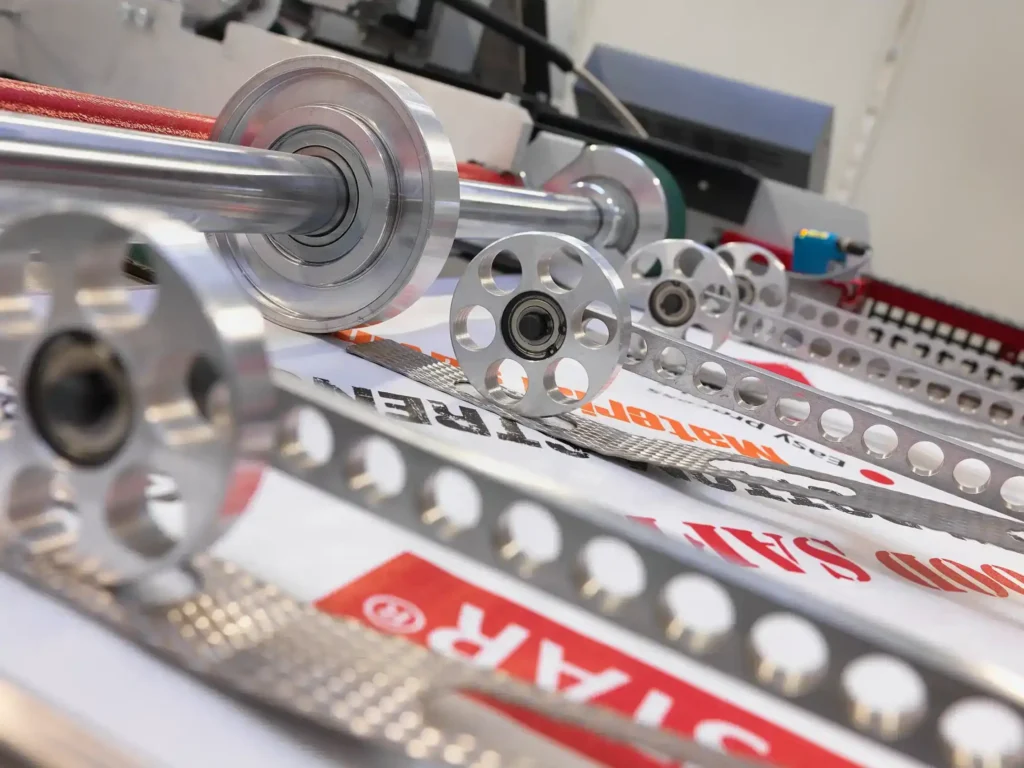
Ray, CEO of VidePak: “Kraft paper woven bags are the backbone of modern livestock feed packaging. At VidePak, we combine high-strength PP weaving with food-grade kraft paper to create solutions that balance durability, sustainability, and compliance. Our Starlinger-powered production lines ensure every bag meets global standards for feed safety and logistics efficiency.”
Dr. Emily Zhang, Agricultural Packaging Expert: “The unique hybrid structure of kraft-PP woven bags addresses critical challenges like moisture resistance, UV protection, and load capacity—making them indispensable for feed and food ingredient storage.”
This exchange highlights the report’s core thesis: Kraft paper woven bags are redefining livestock feed packaging by merging material innovation with rigorous quality control, positioning VidePak as a leader in the $3.8 billion global agricultural packaging market.
1. Application-Specific Requirements for Food Ingredients
Kraft paper woven bags are tailored to meet diverse demands across food ingredients, from livestock feed to flour and additives. Below is an analysis of key parameters:
1.1 Livestock Feed
- Load Capacity: Feed bags typically carry 25–50 kg. VidePak’s 12×12 weave density (120–150 GSM) ensures tensile strength ≥8 N/mm², preventing seam bursts during transport.
- Moisture Resistance: A PE-coated inner layer reduces water vapor transmission to ≤5 g/m²/day, critical for hygroscopic ingredients like soybean meal.
- Certifications: FDA and EU 10/2011 compliance for direct food contact, ensured by using virgin PP and food-grade adhesives.
1.2 Flour and Powdered Ingredients
- Anti-Static Properties: Flour dust requires anti-static coatings to prevent ignition. VidePak’s laminated bags integrate conductive materials, reducing static charge by 90%.
- Printing Precision: High-definition flexographic printing ensures legible batch codes and nutritional labels, with registration accuracy of ±0.1 mm.
1.3 Sugars and Additives
- UV Protection: BOPP lamination blocks 99% of UV rays, preventing crystallization in sugars stored outdoors.
- Seal Integrity: Heat-sealed valves with leak-proof thresholds ≤0.1% under ASTM D5260 testing.
Table 1: Key Parameters by Product Type
| Product Category | Thickness (mm) | GSM | Coating | Certifications |
|---|---|---|---|---|
| Livestock Feed | 0.18–0.25 | 120–150 | PE Inner Layer | FDA, EU 10/2011 |
| Flour | 0.15–0.20 | 100–120 | Anti-Static PE | ISO 22000, BRC |
| Sugar/Additives | 0.20–0.30 | 130–160 | BOPP Lamination | ASTM D5260, JIS Z 1539 |
2. Technical Design and Parameter Selection
Selecting the right kraft paper woven bag involves balancing functional needs with cost efficiency.
2.1 Structural Optimization
- Multi-Layer Construction:
- Outer Layer: 80–100 GSM kraft paper for printability and abrasion resistance.
- Middle Layer: PP woven fabric (12×12 weave) for load-bearing capacity.
- Inner Layer: 50–80 micron PE or BOPP film for moisture/UV barriers.
2.2 Cost-Effective Customization
- Bulk Orders: VidePak’s 30 lamination machines enable economies of scale, reducing unit costs by 15% for orders >100,000 bags.
- Modular Designs: Interchangeable liners (e.g., detachable PE for reuse) cut waste by 20% in the spice industry.
3. Quality Assurance and Regulatory Compliance
VidePak’s ISO 9001-certified processes ensure adherence to global standards.
3.1 In-Line Testing Protocols
- Adhesion Strength: ≥4.0 N/mm² (ASTM D903) for laminated layers, tested via peel tests every 30 minutes.
- Load Testing: Simulated 1.5x rated weight (e.g., 75 kg for a 50 kg bag) to validate seam integrity.
3.2 Sustainability Initiatives
- Recyclability: Mono-material PP/kraft designs achieve 95% recyclability, aligning with EU Circular Economy targets.
- Waste Reduction: Production scraps are repurposed into non-woven agrotextiles, diverting 800+ tons/year from landfills.
4. Case Study: VidePak’s Success in the EU Market
A Dutch feed supplier reduced spoilage rates by 18% after switching to VidePak’s BOPP-laminated kraft bags, citing superior moisture barriers and compliance with EU’s EN 277 standards.
5. Frequently Asked Questions (FAQs)
Q1: How do kraft-PP bags compare to traditional jute bags for feed storage?
Answer: Kraft-PP bags offer 3x higher moisture resistance and 50% lighter weight, reducing shipping costs by 12%.
Q2: What certifications are critical for exporting to Japan?
Answer: Prioritize JIS Z 1539 for seam strength and FSC certification for sustainable sourcing.
Q3: Can customized printing withstand outdoor storage?
Answer: Yes. UV-cured inks retain 95% color fidelity after 12 months of sun exposure.
6. Future Trends: Smart and Sustainable Packaging
- RFID Integration: Pilot projects track feed quality in real-time, reducing recall risks by 30%.
- Bio-Based Coatings: PLA-lined bags (30% bio-content) aim to cut carbon footprint by 2026.
Final Insight
As Ray of VidePak states, “The future of feed packaging lies in balancing durability with eco-innovation.” By leveraging advanced materials and global certifications, kraft paper woven bags are set to dominate sustainable agriculture logistics.
External Resources:
- Discover how multi-layer kraft paper bags enhance feed safety.
- Explore high-speed production techniques for customized agro-packaging.
This report synthesizes technical data, regulatory benchmarks, and VidePak’s operational excellence to demonstrate why kraft paper woven bags are the optimal choice for modern livestock feed packaging.