
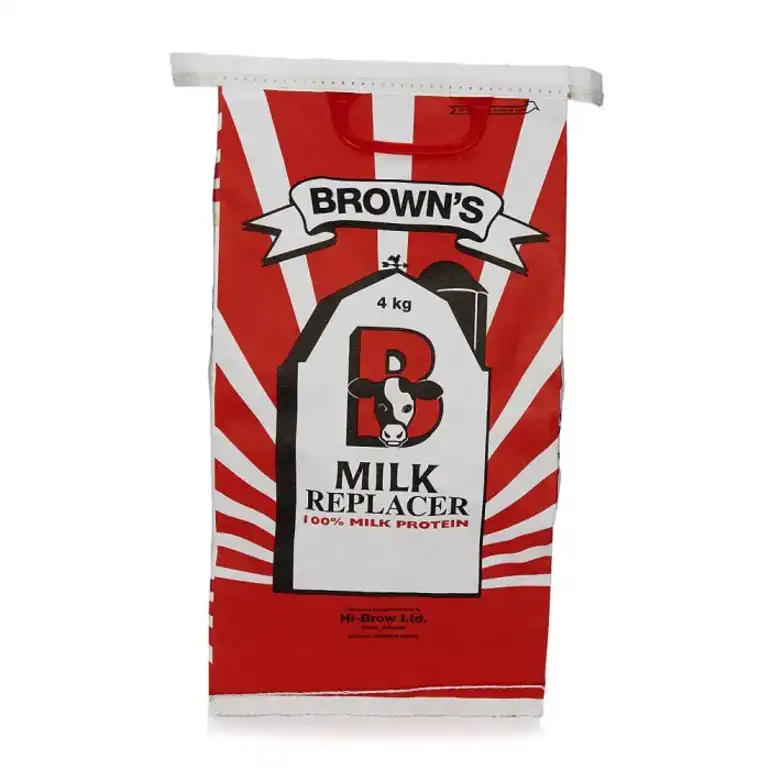
- What are Kraft Paper Woven Bags? A Practical Definition and a Strategic Rationale
- Which Names Does the Market Use for Kraft Paper Woven Bags?
- What Are the Defining Features of Kraft Paper Woven Bags?
- How Are Kraft Paper Woven Bags Produced? From Resin and Pulp to Pallets
- Where Do Kraft Paper Woven Bags Excel? Use-Cases, Environments, and Line Realities
- Standards, Certifications, and Evidence: Why the Compliance Story Matters
- Key Parameters and Options: Compact Tables for Fast Decisions
- Risk, Failure, and Countermeasures: Engineering Reliability into Kraft Paper Woven Bags
- Cost, Speed, and Cleanliness: The Operational Economics of Kraft Paper Woven Bags
- Sustainability and End-of-Life: Realistic Levers for Kraft Paper Woven Bags
- Specification Toolkit: What to Put in Your RFQ for Kraft Paper Woven Bags
- The Packaging Problem Space: Why Kraft Paper Woven Bags Matter
- Materials and Interfaces: What Bonds to What in Kraft Paper Woven Bags
- Manufacturing Pathways for Kraft Paper Woven Bags: Extrusion vs. Adhesive Lamination
- Conversion to Sacks: Printing, Slitting, Tubing, Bottoms, and Options in Kraft Paper Woven Bags
- Comparative Choice: Kraft Paper Woven Bags vs. All‑Kraft vs. Woven‑Only
- Food‑Grade Barrier Strategy: When Kraft Paper Woven Bags Need Foil Liners
- Moisture, Oxygen, Light: Barrier Math Inside Kraft Paper Woven Bags
- Operations: Filling Physics and Pallet Behavior in Kraft Paper Woven Bags
- Print and Brand Science on Kraft Paper Woven Bags
- Risks and Failure Modes: How Kraft Paper Woven Bags Break—and How to Prevent It
- Sustainability and End‑of‑Life Choices in Kraft Paper Woven Bags
- Implementation Playbook for Kraft Paper Woven Bags: From RFQ to Qualified Production
- Parameter Tables for Kraft Paper Woven Bags
- Case Vignettes that Prove Out Kraft Paper Woven Bags
- Frequently Engineered Options on Kraft Paper Woven Bags
- Specification and Ordering Template for Kraft Paper Woven Bags
- One Practical Link for Buyers Exploring Kraft Paper Woven Bags
What are Kraft Paper Woven Bags? A Practical Definition and a Strategic Rationale
Kraft Paper Woven Bags are composite sacks that integrate a printable kraft paper face with a polypropylene (PP) woven fabric backbone through a controlled lamination interface. In other words, they are not “paper bags with plastic somewhere” nor “plastic sacks wearing paper clothes,” but a deliberately engineered laminate in which the paper provides high-fidelity graphics and friction while the woven core carries tensile, tear, and impact loads across the supply chain. The result is a packaging system that can look premium in the aisle, run fast on modern filling lines, and survive humid warehouses and abrasive handling. If you are shortlisting packaging for powders, granulates, or kibbles, Kraft Paper Woven Bags deserve a rigorous evaluation because they reconcile needs that often conflict: aesthetics vs. durability, speed vs. cleanliness, barrier vs. breathability, cost vs. compliance.
Why is this structure compelling now? Supply chains are faster, store formats are brighter, and regulators are more exacting. Pure multi-wall paper excels when conditions are gentle and humidity is low; pure woven PP excels in brute strength but compromises print and long-term moisture control unless augmented. Kraft Paper Woven Bags take the middle road and strengthen it: the paper face becomes the brand canvas; the woven grid becomes the hidden skeleton; the interface between them—the lamination—becomes the hinge that lets the two act as a single body under drop, flex, and vibration. The bag is a micro-system, not a commodity: it touches resin rheology, papermaking, corona treatment, adhesive chemistry, heat history, airflow management, pallet physics, and law.
Let us state the stakes clearly. A corner burst is expensive. A rubbed, mottled front panel is invisible on shelf. Sifting dust attracts complaints and drives housekeeping costs. Oxygen ingress rancidifies fats; light bleaches vitamins. Auditors ask, “What are your conditions of use?” Operators ask, “Will it run at rate?” The promise of Kraft Paper Woven Bags is to replace those anxieties with controls: coat weights, dyne levels, peel strengths, seal windows, micro-perforation densities, and coefficients of friction you can specify, measure, and reproduce.
Which Names Does the Market Use for Kraft Paper Woven Bags?
Nomenclature shifts across regions and industries. To reduce confusion during RFQs and vendor audits, here is a compact alias map for Kraft Paper Woven Bags you are likely to encounter. Keep the variations in mind; they generally point to the same laminate family or a close cousin.
- Paper-laminated PP woven sacks
- Paper/PP composite sacks
- Paper laminated woven bags
- Paper-poly woven bags
- Composite paper–plastic sack
- PBOM (pinch-bottom open-mouth) paper laminated woven
- PVSE (pasted valve) paper laminated woven
- Block-bottom valve woven sacks with paper face
- Paper-faced laminated woven sacks
- Paper-top woven polypropylene bags
Different plants might add line-specific descriptors—“micro-perf banded,” “matte lacquered,” “EZ-open taped”—but the backbone remains the same: a kraft paper outer face bonded to a woven PP sublayer, tuned for printing, handling, and filling performance. If documentation matters (and it does), ensure your drawings and purchase specs explicitly say Kraft Paper Woven Bags and list the laminate route, coat weight, and conversion style to avoid ambiguous interpretations.
What Are the Defining Features of Kraft Paper Woven Bags?
Features, when stripped of marketing gloss, are choices with consequences. The signature traits of Kraft Paper Woven Bags revolve around structure, surface, barrier, and operations. Each is explained below in a problem–lever–result format so your team can trace the logic from need to specification to measurable outcome.
1) Structural resilience under real abuse. Logistics is a gauntlet of drops, bends, pallet rubs, and vibration. The woven grid formed by oriented PP tapes delivers tensile strength, tear resistance, and puncture mitigation. The paper face contributes abrasion damping and edge protection. The two layers share load only if the lamination interphase is ductile enough to flex without micro-cracking. Practical lever: set coat weight in the ~16–35 µm equivalent band and validate ply adhesion via comparative methods (e.g., ASTM F904). Result: higher drop survival and fewer corner bursts at similar or lower mass compared with multi-wall paper in humid chains.
2) Print quality that wins shelf attention. Premium pet foods, specialty flours, and high-end agricultural seeds rely on fine screens, rich blacks, and readable legal text. Paper accepts ink evenly and dries predictably, whereas bare PP tends to challenge both tone consistency and scuff resistance. Lever: print on the kraft face (flexo or gravure), add matte or gloss lacquer to control glare and rub, and manage curl before pasting. Result: consistent, photo-credible graphics that maintain color across production lots.
3) Tunable barrier strategy. Not all products need fortress-level barrier, yet some absolutely do. Without an inner liner or coatings, paper breathes; with foil- or coex-based liners, oxygen and moisture transmission plummet. Lever: choose PET/AL/PE or AL/PE liners where shelf-life demands near-zero OTR/WVTR; consider EVOH coex films when moderate oxygen control suffices and metal is undesirable. Result: predictable water activity (aw) trajectories, cleaner sensory curves, fewer rancidity complaints.
4) Clean, fast filling via engineered air management. Fast packers move powder and air together; back-pressure at the mouth can balloon bags, slow throughput, or drive dust leaks. Lever: place micro-perforation bands where the packer needs to exhale; adjust density to match airflow and particle fineness (impeller/air packers often sit in the 20–160 m³/h window). Result: higher stable cycle rates with lower sift on equipment and floors.
5) Pallet stability and handling safety. Sliding stacks are a silent cost: breakage, rework, and safety incidents. Lever: specify anti-slip outer lacquers targeting a coefficient of friction (COF) ≥ 0.5, especially for smooth stretch-wrap surfaces; include UV stabilizers in the woven layer if outdoor exposure is prolonged. Result: square pallets, fewer top-layer slides, calmer forklifts.
6) System cost control. Unit price is only the visible part of the iceberg. Kraft Paper Woven Bags often reduce total cost of ownership by improving packer throughput, cutting rework and returns, lowering warehouse cleaning costs, and reducing product loss due to moisture or oxidation. Lever: model cost per shipped, salable kilogram, not cost per empty bag. Result: fewer hidden costs, better contribution margins.
How Are Kraft Paper Woven Bags Produced? From Resin and Pulp to Pallets
Production is a sequence of negotiated compromises where each station preconditions the next. Understanding the workflow helps buyers write unambiguous specs and helps operators anticipate interactions that breed quality escapes.
1) PP tape extrusion and weaving. Polypropylene is melted, extruded into thin tapes, stretched (drawn) to align chains and gain tensile strength, and wound for weaving. Circular or flat looms interlace warp and weft to densities typically between 32×32 and 48×48 ends per 10 cm, chosen for desired strength and sifting resistance. Corona treatment may be applied to raise surface energy ahead of lamination.
2) Kraft paper preparation. Sack-grade kraft—commonly 80–120 gsm—arrives calendered for smoothness and may carry a primer or surface size to control adhesive wetting and ink lay. Moisture is equilibrated to avoid curl or brittle failure during lamination and folding
3) Lamination: extrusion vs. adhesive. Two principal routes create the interphase. Extrusion lamination casts a molten curtain of LDPE, EVA, or modified PP between paper and woven in a nip, freezing into a continuous layer as it cools. Adhesive lamination lays a thin film of two-part polyurethane via gravure and cures it into a network that bridges paper fibers and woven ridges. In both cases, coat weight—in the 16–35 µm equivalent band—is tuned to balance peel and flex. Dyne levels, web tension, and nip pressure are monitored; ply adhesion is validated by comparative methods.
4) Printing and slitting. The paper face receives brand artwork in flexo or gravure. Registration and slitting are critical because a millimeter lost here becomes a crooked front panel after pasting. Ink heat budgets inform whether extrusion lamination is permissible pre- or post-print.
5) Tube forming and bottom styles. Converters form tubes by back-seam stitching or hot-air welding (when coatings allow), then create bottoms: sewn open-mouth (SOM), pinch-bottom open-mouth (PBOM), pasted valve (PVSE), or block-bottom valve. Each style maps to filler type, air release strategy, and pallet geometry.
6) Options and finishing. Micro-perf bands near the valve throat, anti-slip lacquers for pallet friction, matte/gloss over-varnish for scuff and glare control, EZ-open tapes for consumer formats, UV-stabilized woven for outdoor chains—all are configured to the product, the line, and the route to market.
7) Quality gates. The process is disciplined using quantifiable tests: dyne checks before lamination, ply-adhesion comparisons (ASTM F904) after lamination, seal-strength characterization for inner liners (ASTM F88/F88M), COF tests for anti-slip targets, and environmental conditioning to validate curl/run-flat. Nonconformance risks—edge lift, corner burst, gusset pinholes—are mitigated with iterative trials and documented controls.
Where Do Kraft Paper Woven Bags Excel? Use-Cases, Environments, and Line Realities
Applications are not merely market labels; they are environments with physics, chemistry, and human factors. The following categories illustrate where Kraft Paper Woven Bags do their best work and why.
Food & feed with aroma and fat sensitivity. Pet food, roasted coffee, milk powder, nutritional blends—these products care about oxygen, moisture, and light. Pair Kraft Paper Woven Bags with PET/AL/PE or AL/PE inner liners to drive OTR and WVTR toward zero, protect aromas, and stabilize water activity. Use matte varnish to resist rub on dark panels and specify wide fin seals and generous gusset radii to avoid foil pinholes.
Abrasive minerals and building materials. Cement, gypsum, mineral powders, and hot-filled materials abrade and scuff. The woven backbone takes the beating; the paper surface spreads point loads and resists snagging. Add micro-perfs matched to packer airflow to prevent ballooning; select anti-slip lacquers to stop top-layer slides on smooth pallets and wraps.
Agricultural inputs and seeds. These markets need strong sacks that still look credible at retail. Kraft Paper Woven Bags deliver the needed stiffness and print clarity, especially for fine typography and gradients on seed brands. UV-stabilized woven exteriors withstand yard time during seasonal peaks.
Chemicals and additives. Many additives are moisture-sensitive or reactive. With appropriate liners and documented conditions of use, Kraft Paper Woven Bags reach food-contact or technical compliance, depending on the destination market, while preserving strength for 20–50 kg fills.
Export chains with variable climates. When goods cross humid tropics and cool temperate zones, pack performance depends on laminate ductility and barrier. The composite structure keeps corners intact, while liners prevent moisture drift. Anti-slip surfaces keep stacked geometry stable despite longer hauls and more forklift maneuvers.
Standards, Certifications, and Evidence: Why the Compliance Story Matters
Credible packaging is measurable packaging. The point is not to wave acronyms but to use them as operating tools. The following identifiers are frequently relevant to Kraft Paper Woven Bags and the liners/coatings that complement them:
- FDA 21 CFR 177.1520 (olefin polymers): used to qualify PP/PE components for food contact under specified conditions of use.
- FDA 21 CFR 175.105 (adhesives): covers indirect food-contact adhesives; when separated by a functional barrier, adhesives do not contact food.
- FDA 21 CFR 177.1390 (laminates/functional barrier): recognizes aluminum foil as an effective functional barrier in laminate structures.
- GB/T 8946–2013 (plastic woven sacks): a Chinese national standard that outlines technical requirements and test methods for woven sacks.
- ASTM F904 (comparative ply adhesion): used to compare bond strength in flexible laminates.
- ASTM F88/F88M (seal strength): applicable to liners to determine heat-seal strength and failure modes.
- ISO 22000:2018 / FSSC 22000 v6: food safety management systems that strengthen audit readiness in food plants.
- ISO 9001:2015: quality management that stabilizes change control and supplier oversight.
- ISO 21898:2024 (flexible intermediate bulk containers): while for bulk bags, its stacking/lift discipline informs the testing philosophy for smaller sacks.
When you request Declarations of Compliance (DoC), make sure suppliers state resin identities, laminate stacks, assumed food types (aqueous, acidic, alcoholic, fatty), migration conditions, and temperatures. For liner seals, ask for heat maps of seal strength across temperatures and dwell times. For anti-slip, insist on COF targets and test method references. In other words, translate certification numbers into plant-ready specifications for Kraft Paper Woven Bags.
Key Parameters and Options: Compact Tables for Fast Decisions
| Parameter | Typical Range / Option | Engineering Note |
|---|---|---|
| Paper face grammage | 80–120 gsm | Calendered grades stabilize fine-screen print; higher gsm raises rub resistance. |
| Woven PP density (warp×weft) | 32×32 to 48×48 per 10 cm | Tensile and anti-sift climb with density; stiffness also increases. |
| Lamination coat (extrusion/adhesive) | ~16–35 µm equivalent | Balance flex and peel; undercoating risks fold cracks. |
| Outer finish | Matte or gloss; anti-slip COF ≥ 0.5 | Anti-slip mitigates pallet slides; finish tunes shelf glare. |
| Bag formats | SOM, PBOM, PVSE, block-bottom valve | Match filler type, de-aeration needs, and pallet geometry. |
| Printing | Flexo/gravure up to 8–10 colors | Paper face enables photographic branding and fine legal lines. |
| Micro-perforation | Targeted bands at valve/fill zones | Tune density to packer airflow and powder fineness. |
| Liner Structure | Barrier Performance | Typical Use |
|---|---|---|
| PE (loose liner) | Basic moisture moderation | Dry goods with short chains |
| PE/EVOH/PE (coex) | Mid oxygen barrier, moderate WVTR | Aroma control without metal |
| AL/PE or PET/AL/PE (foil) | Near-zero OTR; sub‑0.1 g/m²/day WVTR | Coffee, milk powder, light‑sensitive or high‑fat foods |
| Compliance / Test | Identifier | Applied To |
|---|---|---|
| Food-contact plastics | FDA 21 CFR 177.1520 | PP/PE components |
| Adhesives (indirect) | FDA 21 CFR 175.105 | PU adhesive lamination |
| Functional barrier in laminates | FDA 21 CFR 177.1390 | Aluminum foil layers |
| Woven sack technical req. | GB/T 8946–2013 | Plastic woven sack body |
| Ply adhesion (comparison) | ASTM F904 | Paper-to-woven bond |
| Seal strength | ASTM F88/F88M | Liner heat seals |
Risk, Failure, and Countermeasures: Engineering Reliability into Kraft Paper Woven Bags
Every structure has characteristic ways it can fail. The advantage of Kraft Paper Woven Bags is that failure modes are well-understood and largely preventable with targeted controls.
- Delamination at folds: Mitigate by raising coat weight, optimizing cure (for adhesives), and reducing abrupt fold radii. Verify with ply-adhesion comparisons after environmental conditioning.
- Corner burst after drops: Increase fin-seal width (for liners), specify rounded gusset cutters, and validate via drop protocols across temperature bands.
- Foil pinholes in liners: Widen seal lands, round gusset tips, and avoid sharp backers during sealing. Map seal windows using ASTM F88/F88M and inspect pinholes under light tables.
- Sifting due to excessive venting: Reduce micro-perf density or relocate bands away from critical zones; audit packer airflow and adjust impeller/air settings.
- Pallet slides: Require anti-slip lacquers with COF ≥ 0.5 and verify on your actual wrap films and pallets; train forklift operators to exploit the improved friction.
Critically, countermeasures are not guesses; they are quantified interventions with testable endpoints. Build them into your RFQ and PPAP-style approvals so the gains persist through supplier and season changes.
Cost, Speed, and Cleanliness: The Operational Economics of Kraft Paper Woven Bags
Operations teams often care about three numbers: cycle rate, rework, and cleaning time. Kraft Paper Woven Bags influence all three. With tuned micro-perf bands, packers breathe and run closer to nameplate speed. With anti-slip outsides, pallets travel without reforming. With paper-face printing and matte varnish, dark graphics arrive intact, avoiding reprint or relabel labor. The cumulative effect is a lower cost per shipped kilogram, even if the bag’s unit price is higher than an all-paper baseline.
How to model it? Use a TCO sheet that counts downtime from ballooning and topple events, cleanups from sifting, returns for moisture or oxidation, and discounts from shelf scuff. Then simulate the impact of specific controls—COF targets, perf density, liner choice—on those losses. In many trials, Kraft Paper Woven Bags return more than they cost.
Sustainability and End-of-Life: Realistic Levers for Kraft Paper Woven Bags
Sustainability is neither a buzzword nor a brick wall. With Kraft Paper Woven Bags, it is a set of levers that can be pulled with eyes open. The woven backbone lifts strength-per-gram, enabling lighter paper faces than traditional multi-wall constructions. Where paper-stream recovery is a priority, specify no-foil builds with minimal polymer tie-layers and accept the trade-off in barrier. Where barrier is non-negotiable, use snap-in liners that a user can remove after emptying. Favor mono-olefin liners that align with existing recycling infrastructure. Switch to water-based inks and manage solvents responsibly to reduce VOC footprints. Sustainability here is pragmatic, measurable, and compatible with performance.
Specification Toolkit: What to Put in Your RFQ for Kraft Paper Woven Bags
When you convert interest into purchase orders, clarity wins. Use the checklist below to lock in performance without hand-waving.
- Format: SOM / PBOM / PVSE / block-bottom valve
- Dimensions: flat width × length × gusset (mm)
- Paper face: gsm, gloss/matte, ink system
- Woven core: warp×weft per 10 cm; base color; UV stabilization
- Lamination route: extrusion / adhesive; target coat thickness
- Outer coatings: anti-slip COF target; over-varnish type
- Liner: none / PE / PE-EVOH-PE / AL-PE / PET-AL-PE; seal window
- Air management: micro-perf zone and density
- Testing: ply adhesion ≥ __ N/25 mm; seal strength ≥ __ N/25 mm; drop height; COF ≥ __
- Compliance file: CFR clauses, DoC, and site certificates (ISO 22000 / FSSC 22000; ISO 9001)
- Pallet pattern: __ × __; max layers __
- Specials: EZ-open, reclose, window placement, traceability marks
The more of these items you quantify, the more repeatable your outcomes. In other words: turn desires into dials.
The Packaging Problem Space: Why Kraft Paper Woven Bags Matter
Every supply chain tries to square a circle: strong yet lightweight packaging, beautiful yet durable surfaces, breathable during filling yet tight in storage, low‑cost yet reliably compliant. Kraft Paper Woven Bags step into this tension with a deceptively simple proposition—marry a printable kraft paper face to a polypropylene (PP) woven backbone and engineer the interface so the two behave as one. What follows is not a superficial tour but an operating manual in narrative form: how the laminate is built, why it works, where it fails, and when to add barrier, coatings, or special features.
Consider the typical contradictions. Pallet drops happen; corners burst. High‑fat pet foods oxidize; labels must look premium. Warehouses sweat; forklifts scuff. Quality auditors demand documentation; production wants speed. Kraft Paper Woven Bags answer these contradictions with structure (the woven tapes carry load), surface (the paper face prints like a poster), and interface (the lamination is tuned so the whole stack flexes instead of splitting). Is this simply a bag? Hardly. It is a small system that touches resin physics, papermaking, heat transfer, airflow, and law.
If you ask, “Why not only kraft?” you already know the counterexample: multi‑wall paper shines when humidity is low and handling is gentle, but in abrasive or damp chains it fatigues. If you ask, “Why not only woven PP?” you will have seen the branding compromise and the moisture drift without a proper barrier or paper face. Kraft Paper Woven Bags take the middle road and strengthen it with data, process windows, and verifiable quality gates.
Materials and Interfaces: What Bonds to What in Kraft Paper Woven Bags
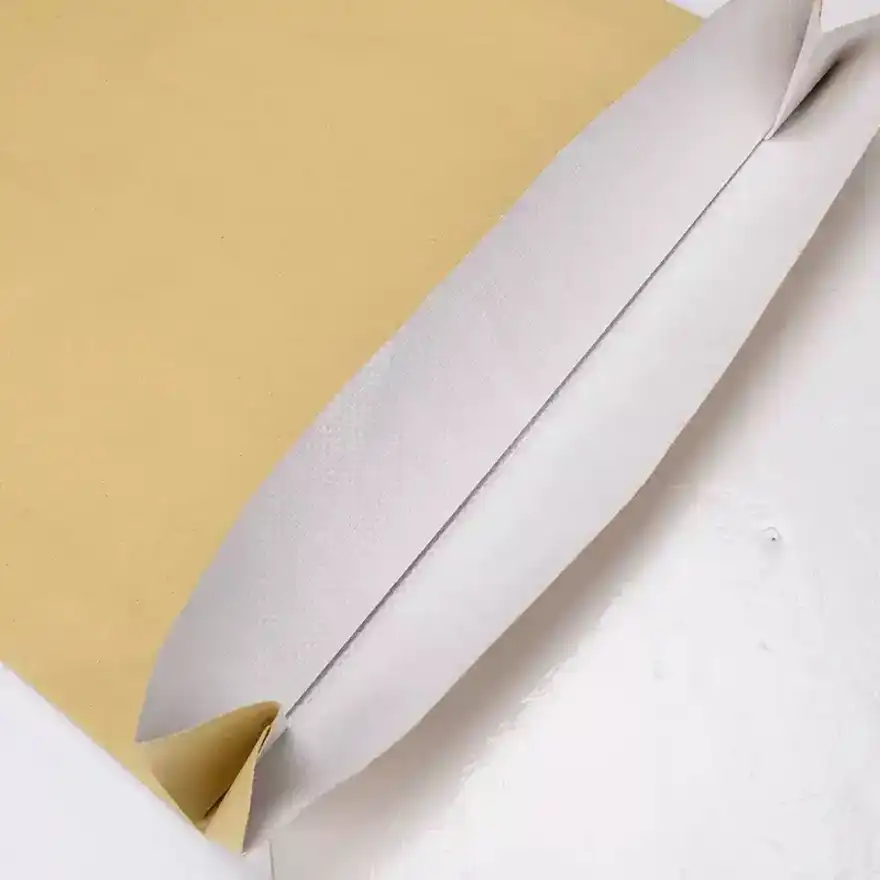
At the heart of Kraft Paper Woven Bags is a designed interface. Kraft paper is a porous mat of cellulose fibers with surface sizing that accepts inks and adhesives. PP woven fabric is a grid of oriented tapes—smooth at a distance, micro‑rough up close. Adhesion is won or lost at that micro‑scale.
On the woven side, converters often raise surface energy by corona treatment. The treatment nicks the surface, adds polar groups, and lets a tie‑resin wet into micro‑valleys. On the paper side, calendering flattens peaks, while primers control penetration so adhesive wets fibers without strike‑through. In between lies the tie‑layer—LDPE, EVA, or modified PP when extrusion lamination is used; a two‑part polyurethane when adhesive lamination is chosen. Bonding is neither magic nor glue‑and‑hope; it is wetting, heat history, and pressure.
Because Kraft Paper Woven Bags must flex, the interphase must move without micro‑cracking. Too brittle and peel strength plummets at the fold; too soft and creep lets the plies “walk.” Converters therefore set coat weights (often in the 16–35 µm equivalent band) to balance flex and adhesion, and they validate with standardized ply‑adhesion comparisons. The interface does not only carry static load; it survives bending, vibration, and drop shocks that seek the weak link.
Manufacturing Pathways for Kraft Paper Woven Bags: Extrusion vs. Adhesive Lamination
Two principal routes dominate the lamination stage of Kraft Paper Woven Bags. The extruder approach throws a molten curtain of tie‑resin between kraft and woven; the adhesive approach lays down a liquid film that cures to a solid network. Each path has strengths, sensitivities, and characteristic failure modes.
In extrusion lamination, temperature is a blade with two edges. Go too cool and wetting stalls, leaving “holidays” and dead zones that later delaminate; go too hot and paper loses moisture too fast, curling or embrittling. Line speed and nip pressure must be in tune; the web must arrive flat and leave flatter. Adhesion is established at the moment of kiss—right where molten polymer, woven ridges, and paper fibers meet under load. For Kraft Paper Woven Bags, this route is prized for dust tolerance and speed on industrial lines.
In solvent‑based PU adhesive lamination, chemistry is king. Mixing ratios, pot life, and cure temperatures drive final bond. Adhesive solids should be high enough to bridge micro‑roughness without flooding the sheet. Why pick this route? Heat‑sensitive inks, low‑gauge paper faces, or specialty primers often demand it. Its weakness is time: full cure may lag behind production, so converters protect fresh rolls from sharp turns, aggressive rewinds, or early drop tests. Both routes converge on the same goal—a ductile, continuous interphase that allows Kraft Paper Woven Bags to act as a single composite.
Conversion to Sacks: Printing, Slitting, Tubing, Bottoms, and Options in Kraft Paper Woven Bags
After lamination, Kraft Paper Woven Bags are born on the conversion floor. Paper‑side printing (flexo or gravure) lays down line screens that a poly face would struggle to hold. Slitting must preserve register so fine text survives pasting and folding. Tube forming can be sewn or hot‑air welded when coatings permit. The bottom configuration—sewn open‑mouth (SOM), pinch‑bottom open mouth (PBOM), pasted valve (PVSE), or block‑bottom valve—decides how the bag stands, how it fills, and how it breathes.
Options are not decorations; they are engineering knobs. Micro‑perforation zones ease back‑pressure during high‑speed filling. Anti‑slip lacquers lift the coefficient of friction toward 0.5 and above so pallet layers stay put during forklift yaw. Matte or gloss over‑varnishes control glare and scuff. EZ‑open tapes guide consumers and reduce blade injuries. With Kraft Paper Woven Bags, each knob maps to a failure you have likely seen: ballooning at the filler, sift on the truck floor, toppled top layers, rubbed‑off dark panels.
Comparative Choice: Kraft Paper Woven Bags vs. All‑Kraft vs. Woven‑Only
How should a buyer decide among competing structures? The lazy answer is “it depends.” The better answer is a set of concrete triggers. If your typical fill is 20–50 kg and the chain is rough, the woven backbone of Kraft Paper Woven Bags saves seams and corners. If your shelf impact demands photo‑grade print, a paper face beats bare PP. If humidity is very low and the chain is gentle, all‑kraft can be lean and recyclable to paper streams. If barrier is king—coffee, milk powder, palatant kibbles—then Kraft Paper Woven Bags with an inner foil liner earn their keep.
A cost ledger reinforces the choice. Unit price matters, but so do throughput on packers, rework rates, returns from burst or sift, pallet stability, shelf‑life scraps, and even worker safety incidents. Many buyers learn that Kraft Paper Woven Bags cut total system cost by avoiding damage and downtime, even when the bag itself is dearer.
Food‑Grade Barrier Strategy: When Kraft Paper Woven Bags Need Foil Liners
Not every product needs a fortress, yet some do. Moisture‑sensitive or light‑sensitive goods—milk powder, nutraceutical blends, roasted coffee, spice oleoresins—suffer from oxygen and water ingress. In such cases, Kraft Paper Woven Bags adopt a second interior wall, commonly PET/AL/PE or AL/PE. Aluminum foil functions as a practical functional barrier; PE provides the seal; PET adds stiffness and print alignment if needed. The liner may be an insert or a tubed inner that locks into the mouth.
Compliance is not an afterthought. Polyolefin components are selected to meet well‑defined conditions of use for food contact; indirect adhesives are either compliant on their face or physically separated from product by the foil barrier. Declarations of Compliance (DoC) state film identities, assumptions, and test conditions in plain language so auditors can follow the chain. The result: Kraft Paper Woven Bags that satisfy brand managers, plant managers, and regulators in one stroke.
Moisture, Oxygen, Light: Barrier Math Inside Kraft Paper Woven Bags
Talk of barrier often drifts into mystique. The physics is simpler: diffusion seeks equilibrium; barriers slow the march. Bare paper allows grams of water per square meter per day to pass at warm, humid conditions. Foil drives that number close to zero; oxygen ingress falls to the noise. The practical question is time. How long must the product stay within target water activity and acceptable peroxide values? How much headspace? What temperatures? Kraft Paper Woven Bags with foil liners can be modeled with Fickian approximations to estimate shelf‑life with a safety margin.
Light matters as much as molecules. Vitamins and aromatic fractions degrade under UV and blue wavelengths. The foil inner of Kraft Paper Woven Bags is, by nature, opaque: it denies photons their path. Where a transparent window is desired, converters place it on the non‑food side of the functional barrier or confine it to products that tolerate light. This is how one earns “premium” without sacrificing science.
Operations: Filling Physics and Pallet Behavior in Kraft Paper Woven Bags
Filling lines breathe. Impeller packers and air packers push product and air together; back‑pressure builds at the mouth; dust looks for an exit. Micro‑perforation is the release valve. Too few perfs and fill speed collapses; too many and sifting begins. The sweet spot depends on powder fineness and airflow, not fashion. Kraft Paper Woven Bags embrace that tunability, allowing perf bands only where the packer needs them.
Downstream, pallets have their own physics. Stretch‑wrapped columns slide unless the outer skin grips. Anti‑slip lacquers on Kraft Paper Woven Bags are a quiet form of insurance: they hold layers in turns and during braking. UV‑stabilized woven exteriors survive yards and docks better than raw paper. Forklift tine rubs, previously a nightmare for dark art on paper sacks, barely registers on a matte‑varnished paper face bonded to woven strength.
Print and Brand Science on Kraft Paper Woven Bags
Brand teams yearn for gradients, tiny legal lines, deep blacks. Paper accepts that inkscape with calm. On Kraft Paper Woven Bags, the paper face is not a cosmetic layer; it is a reliable print ground that carries fine screens and keeps color stable across runs. Matte varnish beats glare in bright aisles; gloss pops saturated hues. Rub resistance is engineered with varnish selection and post‑cure handling, saving dark areas from ghosting during transport.
When people say “bags are commodities,” show them a shelf of premium pet food or specialty flour. The ones that look like magazines are often Kraft Paper Woven Bags. They speak softly yet clearly: quality inside, care outside.
Risks and Failure Modes: How Kraft Paper Woven Bags Break—and How to Prevent It
No structure is perfect. Delamination can show at sharp folds if coat weight or cure is low. Corner bursts can appear when drop heights rise faster than seal lands widen. Foil liners may pinhole at gusset tips if radii are too tight. Sifting may haunt overly perforated zones. The countermeasures are concrete: raise coat weight or adjust cure; increase seal width or round cutters; spec wider fin‑seals; tune perf density; protect fresh laminates from tight rewinds during early cure.
Quality control is disciplined, not decorative. Ply‑adhesion comparisons benchmark the bond. Seal‑strength tests map heat windows to avoid cold‑seals (weak) and over‑seals (brittle). Coefficient‑of‑friction checks keep pallets honest. Dyne tests confirm wetting before lamination. With Kraft Paper Woven Bags, a little metrology prevents mountains of rework.
Sustainability and End‑of‑Life Choices in Kraft Paper Woven Bags
Sustainability is not a single lever. Material reduction is the first dividend of the woven backbone—strength per gram rises, allowing lighter paper faces than multi‑wall constructions. Where customers prefer recovery in paper streams, Kraft Paper Woven Bags can be specified without foil and with minimal polymer tie‑layer, accepting the trade‑off in barrier. Where barrier is non‑negotiable, snap‑in liners allow separation after emptying. Mono‑olefin liner choices align with existing recycling streams where available. Water‑based inks and controlled solvents reduce VOC footprints. The sustainability play is a portfolio, not a pledge.
Implementation Playbook for Kraft Paper Woven Bags: From RFQ to Qualified Production
A smooth launch begins with clarity. Define critical‑to‑quality metrics: target fill weight, drop heights, humidity windows, shelf‑life KPIs, print intent. Choose lamination route after confirming ink heat budgets. Select liner architecture only if barrier math demands it. Engineer airflow at the packer with trial perf densities. Specify outer coatings for COF and UV if outdoor segments exist. Assemble compliance files that explain material choices, conditions of use, and site certifications. Finally, run line trials that measure back‑pressure at the spout, dust at the hood, stack lean under wrap, and drop survival in cold and warm states. Kraft Paper Woven Bags reward this discipline with predictable results.
Parameter Tables for Kraft Paper Woven Bags
Structural and Conversion Parameters
| Parameter | Typical range / option | Practical note |
|---|---|---|
| Paper face grammage | 80–120 gsm | Calendered grades improve fine‑screen print; heavier grades raise rub resistance. |
| Woven PP density (warp×weft) | 32×32 to 48×48 per 10 cm | Higher densities lift tensile and reduce sifting, with a stiffness trade‑off. |
| Lamination coat (extrusion/adhesive) | ~16–35 µm equivalent | Balance flex against peel strength; too low risks fold‑cracks. |
| Outer finish | Matte or gloss; anti‑slip (COF≥0.5) | Anti‑slip stabilizes pallets; finish controls shelf glare. |
| Bag formats | SOM, PBOM, PVSE, block‑bottom valve | Choose by filler type and de‑aeration needs. |
| Printing | Flexo/gravure, up to 8–10 colors | Paper face enables photographic branding and tiny legal lines. |
| Micro‑perforation | Targeted bands | Align density with packer airflow and product fineness. |
Barrier and Hygiene Options (Liner)
| Liner structure | Barrier performance | Typical application |
|---|---|---|
| PE loose liner | Basic moisture moderation | Dry goods with short chains. |
| PE/EVOH/PE coex | Mid oxygen barrier, moderate WVTR | Aroma control without foil. |
| AL/PE or PET/AL/PE | Near‑zero OTR, sub‑0.1 g/m²/day WVTR | Coffee, milk powder, light‑sensitive or high‑fat foods. |
Food‑Contact, Testing, and Performance References
| Topic | Reference | Use in practice |
|---|---|---|
| Polyolefins for food contact | 21 CFR 177.1520 | Confirms PP/PE suitability under defined conditions. |
| Adhesives in food packaging | 21 CFR 175.105 | Governs indirect contact; barrier separation when applicable. |
| Foil functional barrier | 21 CFR 177.1390 | Basis for using foil to separate non‑food inks/adhesives. |
| Plastic woven sacks | GB/T 8946‑2013 | General technical requirements for woven sacks. |
| Ply adhesion (laminates) | ASTM F904 | Compares bond strength of laminated plies. |
| Seal strength (liners) | ASTM F88/F88M | Maps seal windows and failure modes. |
Size and Load Ranges (Market Examples)
| Parameter | Typical values |
|---|---|
| Nominal capacities | 10 kg, 20 kg, 25 kg, 40 kg, 50 kg |
| Flat width (open mouth) | 40–70 cm |
| Length | 58–130 cm |
| Loading capacity (woven) | Up to ~50 kg for small sacks, product‑dependent |
| Finish | Transparent/colored woven; white/natural kraft paper face |
Foil‑lined formats used for food frequently add easy‑open and reclose features with wider seal lands to survive distribution abuse.
Case Vignettes that Prove Out Kraft Paper Woven Bags
Abrasive minerals at speed. A minerals producer running hot, abrasive product saw paper sacks scuff and leak dust. Switching to Kraft Paper Woven Bags with block‑bottom valves and tuned perf bands stabilized fill rates, cut hood dust collection loads, and preserved graphic panels. Pallet stacks rode out forklift turns without top‑layer slides thanks to anti‑slip outer lacquers.
High‑fat pet food under summer humidity. A pet‑food packer replaced 3‑ply paper with loose liners by Kraft Paper Woven Bags featuring a PET/AL/PE liner and matte paper face. Wider fin‑seals and gusset radii eliminated pinholes; oxygen ingress fell; odor complaints dropped. Dark artwork arrived without rub lines.
Specialty flour that sells by the label. A premium flour brand needed magazine‑quality print and steady moisture. Kraft Paper Woven Bags with paper‑face flexo, matte varnish, and a coex barrier liner held water activity while rendering small typographic details that win shelf comparisons.
Frequently Engineered Options on Kraft Paper Woven Bags
- Block‑bottom valves that square pallets and vent air precisely.
- EZ‑open tapes and consumer reclose features for retail formats.
- Clear windows placed outside the functional barrier where appropriate.
- Matte premium print with anti‑rub varnishes to protect dark inks.
- Desiccant tabs for ultra‑dry applications.
Specification and Ordering Template for Kraft Paper Woven Bags
- Bag format: SOM / PBOM / PVSE / block‑bottom valve
- Dimensions (flat width × length × gusset): ____ × ____ × ____
- Outer face: kraft __ gsm, print __ colors (matte/gloss)
- Woven core: warp×weft × per 10 cm; base color __; UV stabilized (Y/N)
- Lamination route: extrusion / adhesive; coat target __ µm
- Coatings: anti‑slip (COF target __), matte/gloss
- Liner: none / PE / EVOH coex / AL/PE / PET/AL/PE; seal window __
- Air management: micro‑perfs (density/zone) __
- Testing: ply adhesion ≥ __ N/25 mm; seal strength ≥ __ N/25 mm; drop test __ m; COF ≥ __
- Compliance: relevant CFR clauses; DoC requested; site certificates
- Pallet pattern & stack target: __ × __, max __ layers
- Specials: EZ‑open, reclose, print finish, window, traceability
One Practical Link for Buyers Exploring Kraft Paper Woven Bags
For a concise overview and options menu, see Kraft Paper Woven Bags—use it as a quick anchor while shortlisting formats, then return to this analysis to finalize specifications.