
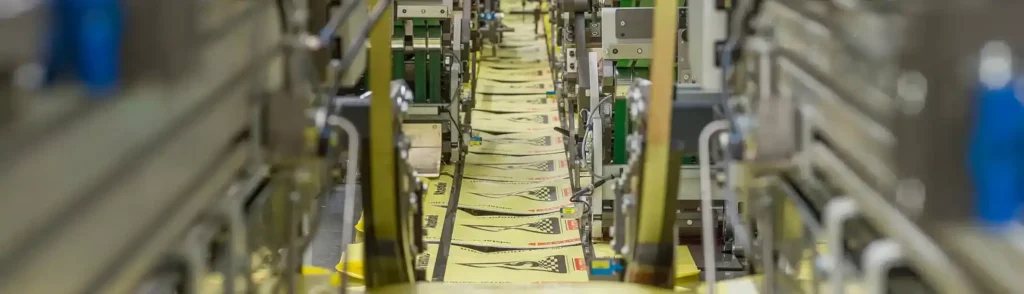
What is Kraft Paper Woven Bags?
Kraft Paper Woven Bags describe a hybrid pack format that fuses a kraft paper exterior with a polypropylene (PP) woven fabric core. The core supplies tensile strength and tear resistance; the paper face contributes stiffness, print warmth, and a natural, fiber‑based aesthetic that many brands prefer for premium grains, pet nutrition, and agri‑inputs. In some catalogs this family also appears as paper‑laminated PP woven sacks, kraft‑laminated raffia sacks, or paper‑clad woven polypropylene bags—different labels for the same systems concept. Think textile muscle wrapped in paper poise.
Background knowledge helps clarify why Kraft Paper Woven Bags emerged at the intersection of polymer science and paper converting. Drawn PP tapes, when woven, create a lattice that spreads loads and resists propagation of tears; kraft, when laminated onto this lattice, adds column strength and an ink‑friendly surface. Packaging engineers therefore treat these bags not as a single part but as an integrated system of four co‑dependent layers: materials (PP, kraft grade, additives), structure (mesh, denier, GSM, gusset geometry, seam style), process (tape extrusion, circular‑loom weaving, lamination, printing, converting), and assurance (mechanical and regulatory validation). Adjust one dial and the others respond. More mesh smooths the print but adds mass; stiffer paper sharpens stack geometry but changes fold behavior; a different lamination tie layer shifts peel strength and moisture barrier. The logic is simple yet relentless: Kraft Paper Woven Bags are tuned, not merely produced.
Horizontal thinking invites comparisons across domains. Geotextiles rely on woven PP strength; paperboard relies on caliper for rigidity; flexible packaging relies on lamination for barrier and print. Kraft Paper Woven Bags borrow a little from each—textile strength, paper tactility, film‑lamination control—and recombine them for supply chains that demand both shelf appeal and yard toughness. Vertical analysis climbs from lane conditions (humidity, stacking height, conveyor abrasion) down to microstructure (PP orientation, kraft fibers, tie‑layer thickness). Each level constrains and enables the next.
Data reinforcement · Case anatomy · Comparative lens. Representative builds combine ~80–120 gsm PP fabric with ~70–120 gsm kraft, delivering total constructions around ~150–300 gsm for common 5–50 kg programs. A rice brand that migrated from plain multiwall paper to Kraft Paper Woven Bags preserved the warm, matte look consumers trusted, while documented returns from torn sacks in humid lanes dropped. Compared with pure paper sacks, Kraft Paper Woven Bags offer better edge‑crush and scuff resistance; compared with BOPP‑laminated woven sacks, they trade gloss for tactile rigidity and eco‑coded cues.
For readers seeking a single specification source, see Kraft Paper Woven Bags.
What is the features of Kraft Paper Woven Bags?
Strength‑to‑weight balance. The woven PP backbone—often in meshes such as 10×10 to 12×12 with tape deniers around ~700–1200—delivers high tensile and tear strength at low mass. That is why Kraft Paper Woven Bags shrug off conveyor abuse and survive drop regimes that would crease or split ordinary paper.
Paper‑forward aesthetics with industrial endurance. The kraft exterior projects natural warmth, diffuses glare, and prints with rich solids and soft tonal transitions. Simultaneously, it hardens column strength so pallet edges stand crisp. Premium shelf presence without delicate handling—why choose between beauty and brawn when you can have both?
Moisture management options. Extrusion lamination or solvent‑free adhesive lamination bonds paper to PP; a light coating or an optional PE/PP liner can modulate water vapor transmission. In dusty or air‑entraining fills, micro‑perforation relieves ballooning during form‑fill and stabilizes count accuracy.
Print versatility. Flexographic and gravure systems perform reliably on the kraft face. The woven core limits stretch that could mis‑register fine graphics; the paper face offers pleasing ink holdout. Compliance panels, batch codes, and scannable barcodes occupy well‑defined spaces without smearing.
Outdoor stability. When storage moves outside, UV‑stabilized tapes and protective varnishes prolong life. A paper feel does not have to imply a paper weakness.
Sustainability pathway. Durability reduces damage. Clear material declarations aid sorting. Mono‑polyolefin cores with a paper skin keep unit mass competitive while signaling a lower‑gloss, natural stance for brand storytelling. The equation is practical, not performative.
Horizontal & vertical reasoning. Horizontally, benchmark Kraft Paper Woven Bags against paper multiwall and PE film sacks. Paper breathes but falters in wet lanes; PE seals beautifully but can underperform on drops without reinforcement. Vertically, watch how a single variable—say, kraft caliper—influences layflat at the printer, crease whitening at the folder, and edge integrity on the pallet. One dial, many consequences; many consequences, one design intent.
Data reinforcement · Case anatomy · Comparative lens. Construction totals near ~150–300 gsm cover most 5–50 kg formats. A fertilizer shipper replacing plain paper with Kraft Paper Woven Bags plus anti‑slip emboss cut pallet creep and re‑bagging incidents. Compared with glossy BOPP‑laminated woven sacks, kraft‑laminated builds emphasize rigidity and tactile cues; compared with unlaminated woven PP, they offer warmer shelf language and cleaner type legibility.
What is the production process of Kraft Paper Woven Bags?
Step 1 — PP tape extrusion & drawing. PP resin is extruded, slit into tapes, and drawn to align polymer chains. Draw ratio sets tensile strength and elongation behavior, which echo through every downstream step.
Step 2 — Circular‑loom weaving. Warp and weft tapes interlace to a target mesh and width. Loom tension, pick count, and tape denier determine baseline mechanicals—tensile, tear, and dimensional stability.
Step 3 — Kraft lamination. Kraft (often ~70–120 gsm) bonds to the woven fabric by extrusion lamination—using a molten tie layer—or by solvent‑free adhesive lamination. The choice dictates bond strength, curl tendency, and water resistance. Where fill or climate demands it, a thin inner liner or surface coating further tunes barrier.
Step 4 — Printing. The kraft face takes flexo or gravure artwork from minimalist linework to photographic imagery. Registration targets, color bars, and legal marks integrate with branding.
Step 5 — Converting. Panels are cut; tops heat‑cut or hemmed; bottoms folded and stitched (single/double fold, single/double thread). Gussets (commonly 60–250 mm) stabilize pallet geometry. Easy‑open tapes or tear strings uplift consumer experience without compromising strength.
Step 6 — QC & compliance. GSM audits, seam/tear/burst testing, transit‑simulation drops, and—if used in food chains—migration and composition checks. In China, plastics map to GB 4806.7 and paper to GB 4806.8, with additives listed under GB 9685; mechanicals reference GB/T 8946 for plastic woven sacks. Export programs align with EU 10/2011 and Framework (EC) 1935/2004, and with U.S. 21 CFR parts 176.170/176.180 (paper) and 177.1520 (PP). Third‑party labs such as SGS, TÜV, and Intertek commonly execute the methods.
Horizontal/vertical lens on process. Horizontally, the line looks like a textile mill connected to a paper‑lamination and print plant; vertically, it behaves like a cascade of tolerances. Miss draw temperature and you may chase lamination curl; mis‑set loom tension and you will fight cut skew at printing. Cause, effect, feedback—engineers carve out stability by managing the chain.
Data reinforcement · Case anatomy · Comparative lens. Kraft grades ~70–120 gsm and PP bases ~80–120 gsm dominate listings; peel tests are run before long production to validate bond windows. A pet‑food packer eliminated conveyor rub‑off by moving art to the kraft face and optimizing lamination nip and chill; scuff complaints disappeared. Adhesive vs. extrusion lamination? Adhesives run cooler with excellent layflat; extrusion delivers robust, solvent‑free bonds and moisture control—choose by print fidelity, heat budget, and desired barrier.
What is the application of Kraft Paper Woven Bags?
Kraft Paper Woven Bags serve food staples (rice, flour, sugar, pulses), pet care (kibble, litter), agri‑inputs (seed, fertilizer, feed), building materials (cement, gypsum, sand), and selected chemicals/minerals (resins, salts). Choice narrows around three variables: fill density, lane humidity, and brand ambition. Retail grains and pet treats often ride in 5–10 kg; flours, feeds, and fertilizers suit 20–25 kg; rice, cement, and bulk commodities typically use 40–50 kg. In humid corridors, kraft lamination plus an inner liner outlasts plain paper; in dusty fills, micro‑perfs vent air and hold bag shape at speed.
Data reinforcement · Case anatomy · Comparative lens. Typical width × length windows run ~400–1000 mm × 420–1150 mm; gussets 60–250 mm; printing up to 6–8 colors. A cement distributor reduced re‑bagging costs by specifying anti‑slip emboss on the kraft face and double‑thread bottoms. Against paper multiwall, Kraft Paper Woven Bags sustain stacking and resist corner tears; against PE film sacks, they offer a rigid, printable face with friendlier tactile cues.
What is the application of Kraft Paper Woven Bags (Extended)?
Premium rice & pulses. Natural or matte‑varnished kraft showcases provenance narratives while the woven core keeps pallets tidy. Easy‑open features trade frustration for delight—no tools, no fuss.
Fertilizer & seed. UV‑stabilized tapes, anti‑slip emboss, and double‑fold bottoms retain stack geometry in outdoor depots. Graphics stay legible under dust and abrasion; labels remain scannable.
Animal nutrition. Grease‑resistant varnishes on kraft preserve branding; optional liners manage aroma and oil migration. Regulatory panels fit cleanly alongside promotional claims without visual conflict.
Cement & minerals. Mesh ≥10×10 with higher deniers, reinforced seams, and gusseted forms absorb conveyor shock and dockside drops. When failure occurs here, it is dramatic; design away from drama.
Data reinforcement · Case anatomy · Comparative lens. Exposure‑class UV packages extend outdoor life; total GSM is tuned for drop regimes and stack heights. A gypsum packer cut corner blowouts by shifting to stiffer kraft grades and longer bottom folds within Kraft Paper Woven Bags—a surgical change with measurable impact.
Compliance & certification map (for buyers and auditors)
China (food‑contact where applicable). GB 4806.7 (plastics), GB 4806.8 (paper & board), GB 9685 (additives), paired to factory QA measured against GB/T 8946 for woven sack mechanics.
EU. Framework Regulation (EC) 1935/2004; Plastics Regulation (EU) No 10/2011 for PP components; national guidance for paper and board; REACH (EC) No 1907/2006 for substances of very high concern.
U.S. 21 CFR 177.1520 for PP; 21 CFR 176.170/176.180 for paper and paperboard in contact with food.
Quality systems. ISO 9001:2015 for QMS; ISO 22000:2018 for food‑adjacent plants. Independent labs (SGS, TÜV, Intertek) typically conduct migration and mechanical testing to the cited frameworks. Documentation proves the polymer; without it, risk rides along every pallet.
Quick spec table — Kraft Paper Woven Bags (representative ranges)
| Attribute | Typical Range / Option | Engineering Notes |
|---|---|---|
| Capacity classes | 5–50 kg | Map GSM, mesh, denier, and seam to product density and drop regime |
| PP woven base (fabric GSM) | ~80–120 gsm | Sets tensile/tear baseline and dimensional stability |
| Kraft paper layer | ~70–120 gsm | Adds stiffness, matte aesthetics, and print warmth |
| Total construction GSM | ~150–300 gsm (to ~350 gsm heavy‑duty) | Tune by climate humidity and target stack height |
| Mesh & denier | 10×10–12×12; ~700–1200 denier | Higher denier → higher tear resistance at added mass |
| Width × Length | ~400–1000 mm × 420–1150 mm | Add 60–250 mm gusset for pallet stability |
| Printing | Flexo/Gravure, 1–8 colors | Allocate compliance panels and barcodes with margin |
| Top finish | Heat‑cut / Hemmed / Easy‑open / Handles | Match filler hardware and consumer handling |
| Bottom seam | Single/double fold & stitch | Double thread recommended for dusty/heavy fills |
| Lamination method | Extrusion or solvent‑free adhesive | Trade bond robustness vs. heat budget & layflat |
| Optional liner | PE/PP liner as needed | Moisture/grease control; set thickness by product |
| UV stabilization | Exposure‑class options | For sun‑exposed storage yards and depots |
Numbers reflect mainstream market offerings; validate against product density, humidity cycles, and transport trials before locking specifications.
System synthesis — an integrated specification you can brief today
Objective. Launch a shelf‑worthy, humidity‑resilient 25 kg flour program that runs on existing fillers and stacks 6–8 layers without leaning.
Material & structure. Specify Kraft Paper Woven Bags with a PP woven base near ~100 gsm (mesh ~11×11, denier ~900), laminated to ~90 gsm natural kraft. Total ~190 gsm balances stiffness with carry mass.
Barrier & print. Choose solvent‑free adhesive lamination for smooth layflat on paper and apply low‑rub flexo inks finished with a scuff‑resistant matte varnish. Where ambient humidity is high, add a thin inner PE liner to hold water activity in check.
Converting. Set a gusset in the 120–160 mm window; configure a double‑fold bottom with double thread; hem the top with an easy‑open tape. Request anti‑slip emboss on the kraft face to increase pallet friction and reduce load creep.
Assurance. Require supplier documentation for GB 4806.7/4806.8/9685 (if food‑contact), GB/T 8946 mechanicals, ISO 9001 and, where applicable, ISO 22000. For export lanes, align with EU 10/2011 and 21 CFR citations. Ask for peel‑bond targets and transit‑drop test data at agreed setpoints.
Outcome. The configuration keeps graphics crisp, shields flour from ambient moisture, resists corner tears, and maintains geometry on the pallet—engineered where it counts, elegant where it sells. Throughout, the system remains adaptable: if climate, density, or brand storytelling shifts, the dials on Kraft Paper Woven Bags can be re‑tuned without rebuilding the entire line.
The packaging industry in China is undergoing significant transformation, driven by advancements in technology and evolving market demands. Among the various packaging solutions, Kraft Paper Woven Bags stand out due to their versatility and strength. However, the landscape of Kraft paper woven bag manufacturing in China is varied, with many manufacturers not fully leveraging technological innovation or focusing on brand development. VidePak distinguishes itself from these players by committing to high standards of quality, technological advancement, and brand integrity.
The Evolution of Kraft Paper Woven Bags
Kraft Paper Woven Bags combine the durability of woven fabrics with the natural strength of Kraft paper. These bags are increasingly popular for packaging products in diverse sectors, including agriculture, construction, and consumer goods. They offer several benefits:
- Strength and Durability: Kraft paper woven bags are designed to handle heavy loads, making them suitable for bulk materials.
- Eco-Friendliness: Made from recyclable materials, they are an environmentally friendly option compared to traditional plastic bags.
- Versatility: They can be customized to meet specific needs, such as moisture resistance or print branding.
Current Trends and Challenges in the Chinese Market
In China, the packaging industry is experiencing rapid growth, but not all manufacturers are keeping pace with the advancements in technology and market demands:
- Lack of Brand Focus: Many Chinese manufacturers prioritize quantity over quality and brand development. They often operate with minimal differentiation, focusing on mass production rather than building a strong brand identity.
- Technological Stagnation: While there are numerous manufacturers, few invest in advanced technology or continuous innovation. This results in outdated processes and a lack of adaptation to new market needs.
- Diverse Equipment Quality: The upstream equipment suppliers in China vary greatly in terms of quality. Many manufacturers use subpar equipment, which affects the overall quality and consistency of the end products.
- Limited Market Adaptability: Many manufacturers struggle to adapt to the diverse and evolving needs of the market. They often fail to incorporate new features or materials that could enhance product performance and meet changing consumer preferences.
VidePak: Leading the Way in Kraft Paper Woven Bags
VidePak, established over 20 years ago, stands out in the Chinese packaging industry through its commitment to quality, innovation, and brand building. Here’s how VidePak differentiates itself:
1. Commitment to Brand Development
Unlike many local manufacturers, VidePak understands the importance of brand building. We focus on creating a strong brand presence through consistent product quality, innovative solutions, and customer service excellence. Our commitment to brand integrity helps us stand out in a crowded market and build long-lasting relationships with our clients.
Key Aspects:
- Quality Assurance: We adhere to stringent quality control measures, ensuring that every bag meets high standards of durability and performance.
- Customer-Centric Approach: Our focus on understanding and meeting customer needs helps us deliver tailored solutions that enhance our brand reputation.
2. Technological Innovation
VidePak is at the forefront of technological advancement in the packaging industry. We use state-of-the-art equipment from Starlinger, a globally recognized supplier known for its high automation and efficiency.
Key Features:
- Advanced Machinery: Our production lines, equipped with Starlinger’s technology, offer high-speed and high-precision manufacturing, ensuring consistency and quality.
- Innovation-Driven: We continuously invest in technology and process improvements to stay ahead of industry trends and meet evolving market demands.
3. Superior Quality Materials
We source the highest quality raw materials to ensure that our Kraft Paper Woven Bags are robust and reliable. Our commitment to using premium materials translates into products that offer superior strength and durability.
Key Aspects:
- Premium Raw Materials: We use top-grade Kraft paper and woven fabrics to enhance the performance of our bags.
- Rigorous Testing: Our quality control process includes extensive testing for factors such as strength, durability, and environmental resistance.
4. Comprehensive Production Capabilities
Our facility is equipped to handle a wide range of customization options, including various laminations, coatings, and sizes. This flexibility allows us to produce Kraft Paper Woven Sacks tailored to specific needs and applications.
Key Features:
- Customization: We offer a range of design options, including laminated finishes, custom printing, and specialized closures.
- Efficiency: Our advanced machinery ensures efficient production processes, reducing lead times and costs.
The Future of Kraft Paper Woven Bags in China
As the Chinese packaging industry continues to evolve, Kraft Paper Woven Bags are expected to play a significant role due to their environmental benefits and versatility. The future will likely see increased focus on:
- Technological Advancements: Continued investment in advanced machinery and technology to enhance product quality and manufacturing efficiency.
- Sustainability: Growing emphasis on eco-friendly materials and practices, driven by both regulatory requirements and consumer preferences.
- Brand Differentiation: Manufacturers will increasingly need to focus on building strong brands and offering differentiated products to stand out in a competitive market.
VidePak is well-positioned to lead this transformation in the Kraft paper woven bag industry. By prioritizing technological innovation, brand development, and high-quality standards, we set ourselves apart from the competition and contribute to the advancement of the packaging industry in China.
Kraft Paper Woven Bags from VidePak are not just products; they represent a commitment to quality, innovation, and environmental responsibility. As we continue to evolve and adapt, we remain dedicated to delivering solutions that meet the highest standards and exceed our customers’ expectations.