
What is Laminated Kraft Paper Bags?
Laminated Kraft Paper Bags are multi‑layer packaging structures that fuse high‑strength kraft substrates with protective films to create a sack that fills fast, carries weight, and survives real‑world distribution. In industry parlance they are also described as laminated multiwall paper sacks, poly‑coated kraft bags, pasted‑valve kraft sacks, or laminated sewn‑open‑mouth (SOM) paper bags. Labels differ; the intent does not. The format is designed for 5–50 kg products that demand both predictable throughput and robust product protection.
At a technical level, Laminated Kraft Paper Bags sit where pulp and paper technology meets polymer film science, printing, and materials‑handling. Horizontally, the format borrows from textiles (tear propagation and fiber orientation), polymer engineering (barrier design and coefficient of friction), and logistics (pallet coupling, compression, and vibration). Vertically, it spans the stack from fiber selection and basis weight, to laminate choice and bond strength, to closure geometry and on‑line behavior. A bag may look simple; its performance is anything but. For spec exploration and adjacent formats aligned to this concept, see Laminated Kraft Paper Bags.
Systems view — sub‑problems and solution levers. Packaging choices rarely exist in isolation. Each subsystem in Laminated Kraft Paper Bags introduces both capability and trade‑off:
- Material stack. Ply count (commonly 2–4) × basis weight per ply (often 70–100 gsm) × laminate type and thickness (e.g., LDPE/PP at ~12–30 µm or printed BOPP) governs stiffness, tear path, and print character. Increase gsm and stiffness rises—but so does cost and folding work.
- Closure system. Pasted valve or SOM with single/double chain‑stitch and a turned top. Seam geometry redistributes load, mitigates sifting, and defines how forgiving the package is when fill density fluctuates.
- Barrier & hygiene. Laminate thickness, optional inner PE liner (~12.7–50 µm), and food‑contact documentation (e.g., BfR XXXVI; FDA 21 CFR 176.170) tune water‑vapor transmission, grease resistance, and compliance posture.
- Handling & COF. Surface friction (ISO 8295/ASTM D1894) plus gusset depth and bag height inform conveyor behavior, case‑packer infeed stability, and pallet cohesion.
- Mechanical integrity. Tensile, tear, and burst resistance (ISO 2759 “Mullen”) travel through plies, folds, and stitches. Ply symmetry, bottom construction, and seam tape can turn a theoretical weak link into a strength feature.
Cross‑disciplinary parallels keep the picture honest: closure selection feels like choosing weld vs. rivet; laminate choice echoes film‑packaging barrier recipes; COF targeting reads like tire compound tuning. Vertically, a single change—say, thicker lamination—improves scuff resistance yet raises COF, which then asks conveyors to adapt. Cause meets effect; spec meets shop floor.
What is the features of Laminated Kraft Paper Bags?
Throughput without drama. The open mouth or the pasted valve accepts gravity, belt, or auger fillers with minimal back‑pressure. Operators appreciate how a bag that opens wide and stays open can shorten cycle time while preserving weight accuracy. Quick in, quick out; steady, not rushed.
Strength where it counts. Kraft fibers carry tensile load and resist tear; lamination contributes scuff resistance and incidental moisture protection. Add a folded bottom and either a double chain‑stitch or a high‑integrity valve and the seam stops being a liability and starts behaving like a structural member.
Barrier by design. Hygroscopic powders—starch, flour, premixes—benefit from lamination and, when needed, an inner liner. Coarse, less sensitive products may tolerate lower barrier in exchange for breathability. Printed BOPP layers upgrade graphics while guarding against abrasion on conveyors and in transit.
Operational tunability. By dialing COF to a sensible window, choosing gusset depth for pallet cube, and picking ply/basis‑weight for stiffness, Laminated Kraft Paper Bags can be made to behave predictably on belts, under shrink, and through stacked transport. The goal is not just to move faster but to move cleaner—fewer jams, fewer reworks.
Sustainability pathways. Paper‑forward structures fit fiber recycling when kept clean; solventless adhesive lamination and water‑based inks lower VOC footprints; FSC‑certified kraft and process controls under ISO 9001 support auditable sourcing.
Background & domain context. The value of these features rests on well‑known physics: angle of repose affects dosing; dynamic COF controls sliding and shingling; compression defines pallet stability; moisture vapor transmission influences shelf life. An effective bag harmonizes these forces rather than fighting them.
Data reinforcement. Public spec sheets and B2B listings consistently show 2–4 ply builds, 5/10/15/20/25/50 kg capacities, optional PE liners (~0.5 mil ≈ 12.7 µm and above), and both SOM and valve variants. These are not outliers but mainstream choices.
Case analysis. A flour plant replaced unlaminated multiwall sacks with BOPP‑laminated kraft plus a thin PE liner. Dusting at the stitch dropped, pallet housekeeping improved, and retail scuffing complaints receded. The catalyst? Better containment at the top seam and a harder‑wearing print surface—small adjustments, big consequences.
Comparative study. Against unlaminated paper sacks, Laminated Kraft Paper Bags trade slightly higher COF for superior print fidelity and moisture resistance. Against all‑film bags, they keep a natural brand aesthetic and better stack stiffness. Against woven PP, they frequently win on print quality and shelf impact while serving the same payload bands.
Horizontally, the feature set mirrors what engineers expect elsewhere: acceleration (fill rate), resilience (mechanical strength), conditioning (barrier), and tactics (line tuning). Vertically, it connects micro‑specs—gsm, liner gauge, stitch pitch—to macro‑outcomes—OEE, complaint rates, on‑shelf appeal.
What is the production process of Laminated Kraft Paper Bags?
1) Paper making & ply selection. Converters source brown or white kraft in target basis weights—often 70–100 gsm per ply—and select 2–4 plies based on product density and stack targets. Ply symmetry steers curl; grain direction steers tear.
2) Film preparation. Films arrive as LDPE or PP extrusion‑coats, or as pre‑printed BOPP for high‑fidelity imagery. Typical thickness windows run ~12–30 µm depending on barrier, scuff resistance, and print goals.
3) Lamination. Extrusion coating or solventless adhesive lamination marries film to paper. Bond strength, lay‑flat, and COF are the control points. Too little bond and you get delam; too much and the web stiffens beyond intent.
4) Printing. Flexography balances cost with brand impact for industrial SKUs; gravure on BOPP delivers photo‑quality for retail‑facing packs. Ink systems are chosen to suit the laminate—adhesion, abrasion, and regulatory fit all matter.
5) Tubing & forming. Plies become a calibrated tube with controlled overlap; edges are trimmed; registration is held. Geometry now sets how the bag meets the filler and the pallet.
6) Bottom construction. Pasted or folded bottoms define base integrity. For SOM, the bottom is sewn during conversion, leaving a clean top for speed at fill.
7) Liner insertion (optional). PE liners (~12.7–50 µm) are inserted for extra barrier or hygiene. Length is tuned to avoid fish‑eyes at the stitch and to maintain a crisp presentation.
8) Top closure. On the line, pasted valves close under pressure; SOM tops are secured by single or double chain‑stitch with a turned hem that spreads tension across the lip.
9) QA & compliance. Burst (*ISO 2759*), tensile/tear (ISO/TAPPI), and surface friction (ISO 8295/ASTM D1894) confirm mechanical and handling behavior. For food uses, documentation tracks to BfR XXXVI and FDA 21 CFR 176.170, while quality systems are often anchored in ISO 9001.
Background & domain context. Each step in the process sets the next one up: lamination affects printing; printing and lamination affect COF; COF and stiffness affect forming and pallet stability. The chain is only as strong as its weakest handoff.
Data reinforcement. Supplier briefs commonly advertise widths compatible with 20/25/40/50 kg SKUs, support both valve and SOM styles, and offer flexo or gravure with optional UV‑resistant varnishes—evidence that the process is not bespoke but standardized.
Case analysis. A 30 kg mineral product saw seam bursts decline after a switch from single to double chain‑stitch on the SOM top. Mechanically, the wider seam path diffused stress; operationally, returns and rework fell.
Comparative study. Extrusion‑coated LDPE typically builds robust bonds and a simpler material stack; BOPP maximizes shelf presence but may raise stiffness and COF. The right choice depends on whether the brief prioritizes graphic excellence, mono‑material ambitions, or conveyor temperament.
What is the application of Laminated Kraft Paper Bags?
Industry coverage. Food ingredients (flour, sugar, starch, premixes), agriculture (seeds, feed, additives), building materials (cement, tile adhesives, gypsum), chemicals (catalysts, pigments, specialty powders). Laminated Kraft Paper Bags balance fill rate, seam integrity, and moisture control for these use cases—not in theory but at scale.
Line integration. Gravity, belt, or auger dosing feed the bag; clamps and guides present the mouth; sewing heads or valve closers finish the package. Palletizers favor gusseted geometry for cubic strength and predictable interlayer friction.
Risk controls. For food contact, specify materials supported by BfR XXXVI and 21 CFR 176.170 and keep migration summaries at hand. For dusty powders, turn‑top hems and crepe tapes reduce sifting. For outdoor yards, UV‑tolerant varnishes and covers slow chalking and fiber fatigue.
Background & domain context. Applications live at the intersection of product rheology, environmental exposure, and retail handling. The bag must negotiate all three without complaint.
Data reinforcement. Platform listings routinely cite 5–50 kg capacities, 2–4 plies, valve or SOM options, and print surfaces suitable for high‑contrast branding.
Case analysis. A fertilizer packer with sun‑exposed storage switched to laminated kraft with a UV‑resistant over‑varnish. Seasonal rejects dropped; graphics stayed legible; pallets held up under shrink.
Comparative study. Against woven PP, paper‑laminate constructions can project a warmer aesthetic and superior ink laydown. Against plain kraft, they resist abrasion on high‑throughput conveyors and preserve graphics longer. Trade‑offs are explicit; decisions become easier.
What is the application of Laminated Kraft Paper Bags? (Retail & logistics lens)
Channel fit. Club and DIY retail often select 20–25 kg formats with photographic BOPP graphics; wholesale and foodservice lean on 15–25 kg plain or 2‑color flexo; e‑commerce sampling uses 5–10 kg short runs with quick plate changes. Laminated Kraft Paper Bags adapt across these channels without changing the core architecture.
Logistics behavior. COF can be tuned to prevent shingling on steep infeeds while guarding pallet stability. Gusset depth and height settings align with tier‑sheet strategies. Corners that resist scuffing under shrink wrap keep the aesthetic intact from plant to aisle.
Audit readiness. Keep change‑control and supplier DoCs current; reference ISO methods (e.g., ISO 2759) and customer‑specific drop/compression protocols; preserve hygiene records where food is involved. Audits should feel like confirmation, not discovery.
Background & domain context. Retail is unforgiving: packages are handled by many and judged by more. The best defense is a spec that anticipates touch, friction, and light.
Data reinforcement. Published specs identify 25 kg/50 lb as common waypoints and document gravure printing on BOPP laminates for abrasion‑resistant, high‑saturation imagery that survives the last mile.
Case analysis. Narrowing the COF window on a high‑angle infeed eliminated bag “skiing,” raising OEE without any hardware changes—proof that small spec levers can unlock large operational gains.
Comparative study. For premium shelf sets, BOPP‑laminated kraft typically outperforms plain kraft on scuff and color hold. For fast‑moving industrial SKUs, extrusion‑coated LDPE keeps a pragmatic balance between barrier and cost.
Key parameters & compliance snapshot
| Attribute | Typical option / range | Why it matters |
|---|---|---|
| Format & capacity | Open‑mouth (SOM) or pasted valve; 5/10/15/20/25/50 kg | Aligns with common filling equipment and pallet patterns. |
| Ply count | 2–4 plies kraft, brown or white | Tunes stack strength and tear behavior; supports clean graphics. |
| Kraft basis weight | ~70–100 gsm per ply | Sets stiffness and hand‑feel; higher gsm improves cube retention. |
| Laminate | LDPE/PP ~12–30 µm or printed BOPP | Controls moisture and COF; enables durable, high‑fidelity branding. |
| Inner liner (optional) | PE ~12.7–50 µm (0.5–2 mil) | Elevates barrier for hygroscopic powders; adds hygiene protection. |
| Closure | Double chain‑stitch (SOM) or pasted valve; folded bottom | Distributes seam loads; reduces sifting and burst risk. |
| Printing | Flexo (2–6 colors) or gravure on BOPP (up to 8) | Balances cost vs. image richness and abrasion resistance. |
| COF reference | ISO 8295 / ASTM D1894 (film surfaces) | Tunes line flow and pallet stability to your conveyors. |
| Burst/Tensile tests | ISO 2759 (Mullen); ISO/TAPPI tensile & tear | Verifies mechanical integrity against specification. |
| Food‑contact | BfR XXXVI; FDA 21 CFR 176.170 | Establishes a regulatory foundation for food applications. |
| Quality systems | ISO 9001 at converter level | Ensures repeatability, change‑control, and audit readiness. |
Integrated, end‑to‑end solution (VidePak view)
Define the SKU’s physics—net weight, bulk density, particle size, hygroscopicity, storage time, and whether pallets live indoors or under sun. Specify a material stack for Laminated Kraft Paper Bags that reflects that reality: for example, a 3‑ply kraft build at ~80–90 gsm per ply with an LDPE coating around 25 µm, plus an optional PE liner near 20 µm for moisture‑sensitive formulations. Engineer the closure deliberately—double chain‑stitch with a turned top for SOM, or a high‑integrity pasted valve—to spread loads and curb sifting. Set a COF target with the test method named, then validate it with filled‑bag line trials rather than just reading datasheets. Lock compliance by collecting supplier Declarations of Compliance for BfR XXXVI and 21 CFR 176.170, and keep lab reports for ISO 2759 burst and COF on file. Choose graphics with intent: flexo for cost‑optimized industrial runs, gravure/BOPP when retail storytelling must endure abrasion.
The practical payoff is visible—cleaner fills, steadier pallets, quieter audits. Above all, the package keeps its promise. Laminated Kraft Paper Bags move quickly through production, resist scuff and moisture on the road, and arrive looking like they were meant to be there.
In today’s global packaging industry, the demand for high-quality, durable, and versatile packaging solutions has never been greater. Laminated Kraft Paper Bags stand out as a superior choice for businesses seeking reliable, eco-friendly options that combine the strength of woven materials with the protective qualities of aluminum foil. At VidePak, we are committed to producing these top-tier bags using state-of-the-art technology sourced from renowned equipment supplier Starlinger, ensuring unparalleled product quality and production efficiency.
The Versatility and Strength of Laminated Kraft Paper Bags
Laminated Kraft Paper Bags offer a unique blend of durability, flexibility, and protection, making them suitable for a wide range of industries. These bags are constructed by laminating kraft paper with woven polypropylene (PP) or other materials, and in some cases, aluminum foil, to create a multi-layered barrier that protects the contents from moisture, light, and other environmental factors. The result is a packaging solution that is both strong and versatile, capable of withstanding the rigors of transport and storage while keeping products safe and intact.
These bags are particularly favored in industries where both the protection of goods and sustainability are paramount. From food products to industrial materials, Laminated Kraft Paper Bags offer the perfect solution for businesses looking to balance performance with environmental responsibility. The inclusion of aluminum foil in some variants further enhances the barrier properties, providing additional protection against moisture and oxygen, which is especially important for preserving the freshness and quality of food products.
Advanced Production Techniques with Starlinger Equipment
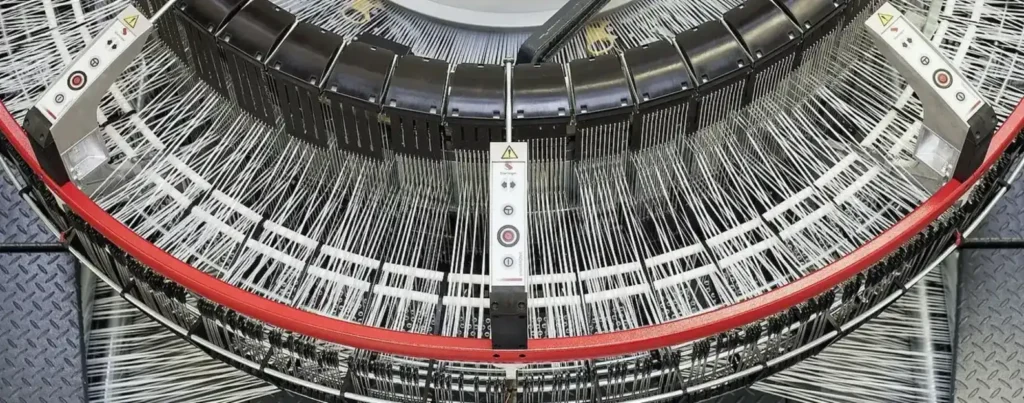
At VidePak, the production of Laminated Kraft Paper sacks is carried out using cutting-edge technology from Starlinger, a world leader in machinery for woven plastic packaging. Our production line is equipped with the latest equipment, including extruders, circular looms, printing machines, coating lines, and laminating machines, all designed to maximize efficiency and ensure the highest quality standards.
1. High-Quality Extrusion
The production process begins with the extrusion of high-strength polypropylene fibers, which form the basis of the woven structure of the bags. Starlinger’s advanced extruders allow us to produce fibers with consistent thickness and strength, ensuring that every bag meets stringent performance criteria. This consistency is crucial for creating bags that can handle heavy loads without tearing or losing their integrity.
2. Precision Weaving
Once the fibers are extruded, they are woven into fabric using high-speed circular looms. Starlinger’s weaving machines are renowned for their precision and efficiency, producing uniform woven fabric that is both lightweight and exceptionally strong. This woven fabric forms the core structure of our multi-wall woven bags, providing the strength and durability needed to withstand the demands of various applications.
3. Sophisticated Printing and Coating
To meet the diverse needs of our customers, we offer a range of printing options, from simple logos to complex multicolor designs. Starlinger’s printing machines are capable of producing high-definition prints with vibrant colors and sharp details, ensuring that your brand stands out on the shelf. Additionally, our coating and laminating lines allow us to apply protective layers to the woven fabric, enhancing the barrier properties of the bags and extending their lifespan.
4. Efficient Lamination and Foil Application
One of the key features of our Laminated Kraft Paper Bags is the lamination process, where kraft paper is bonded to the woven fabric to create a strong, multi-layered structure. For bags that require additional protection, such as those used in the food or chemical industries, we incorporate aluminum foil into the lamination process. This adds an extra layer of protection against moisture, light, and oxygen, ensuring that the contents remain fresh and uncontaminated.
Meeting the Demands of Modern Industry
The use of Laminated Kraft Paper Bags spans across various industries, each with its own set of requirements and challenges. These bags are not only known for their strength and durability but also for their ability to protect the contents from environmental factors. Here are some key industries where these bags play a crucial role:
1. Food and Beverage Industry
The food and beverage industry demands packaging that can preserve the freshness and quality of products while also offering convenience and durability. Laminated Kraft Paper Bags with aluminum foil linings are particularly suited for packaging products such as coffee, tea, snacks, and powdered goods. The multi-layer construction provides excellent protection against moisture, light, and oxygen, keeping products fresh for longer periods.
2. Industrial and Chemical Sectors
In the industrial sector, where the packaging of chemicals, fertilizers, and other hazardous materials is common, the durability and protective qualities of Laminated Kraft Paper sacks are indispensable. The aluminum foil layer provides an additional barrier against moisture and contaminants, while the woven structure ensures that the bags can withstand heavy loads and rough handling during transport.
3. Construction Materials
Laminated Kraft Paper Bags are also widely used in the construction industry for packaging materials such as cement, plaster, and other dry goods. The strength of the woven fabric combined with the protective properties of the kraft paper and aluminum foil ensures that these materials are kept dry and free from contamination, even in harsh environments.
Environmental Responsibility and Sustainability
As the world becomes increasingly aware of the environmental impact of packaging, there is a growing demand for solutions that are both effective and sustainable. At VidePak, we are committed to producing packaging that not only meets the highest standards of quality but also aligns with global efforts to reduce waste and promote recycling.
Laminated Kraft Paper Bags are designed with sustainability in mind. The kraft paper used in these bags is biodegradable and can be recycled along with the woven polypropylene, making them an eco-friendly choice for businesses looking to reduce their environmental footprint. Additionally, the use of aluminum foil in some bags does not compromise their recyclability, as the materials can be separated and processed individually.
Moreover, the efficiency of our production process, powered by Starlinger’s advanced machinery, ensures minimal waste and energy consumption. By optimizing every stage of production, from extrusion to printing, we are able to produce high-quality bags while minimizing our impact on the environment.
The Future of Packaging with VidePak
As a leading Laminated Woven Bags manufacturer, VidePak is at the forefront of innovation in the packaging industry. We understand that the needs of our customers are constantly evolving, and we are committed to staying ahead of the curve by investing in the latest technology and continuously improving our production processes.
In the future, we anticipate further advancements in the materials and techniques used in the production of Laminated Kraft Paper Bags. This includes the development of new, more sustainable materials and the implementation of smarter, more efficient production methods. As regulations around packaging and waste management become stricter, we are also prepared to help our customers navigate these challenges by providing solutions that meet both their operational needs and regulatory requirements.
Conclusion
VidePak’s Laminated Kraft Paper Bags are more than just packaging solutions—they are a testament to our commitment to quality, efficiency, and sustainability. By leveraging the latest technology from Starlinger, we are able to produce bags that are not only strong and durable but also environmentally responsible. Whether you are in the food, industrial, or construction sector, you can trust VidePak to deliver packaging that protects your products, promotes your brand, and supports a sustainable future.