
What are Laminated Woven Bags for Food Packaging and what are they also called?
Laminated Woven Bags for Food Packaging are engineered, load-bearing systems that preserve the sensory, nutritional, and regulatory integrity of edible products across filling, transport, and display. Their structural backbone is a tape‑woven polypropylene fabric that delivers high specific strength and puncture resistance, while a functional laminate—commonly polyethylene (PE), biaxially oriented polypropylene (BOPP), or tailored co‑extruded films—controls barrier, print fidelity, and thermal sealing behavior.
In purchasing notes and technical RFQs, the same family may appear as BOPP‑laminated PP woven food sacks, food‑grade laminated PP fabric bags, paper‑faced laminated woven food sacks, block‑bottom laminated food bags, and laminated valve‑style food sacks. Geometry (open‑mouth vs. valve, pinch‑bottom vs. block‑bottom) and the outer skin (paper vs. BOPP) change the look and line integration, yet the system intent remains constant: separate duties by layer; hold each duty within measurable tolerances; and make behavior predictable from filler head to the last pallet in the DC.
Callout — Why start with the system?
Because food supply chains punish casual design. Hygroscopic powders cake; crystalline edges abrade; oily particulates can bleed; aroma‑sensitive goods degrade with oxygen ingress; DCs reject poorly scanning codes. A bag that performs on a benchtop but fails on a clamp truck becomes overhead, not value. Laminated Woven Bags for Food Packaging answer with disciplined duty separation: structure carries load; laminate moderates moisture and oxygen; printable skin anchors color and codes; geometry governs speed and squareness; surface friction stabilizes pallets.
Key features of Laminated Woven Bags for Food Packaging that matter in the real world
Feature 1 — Strength‑to‑mass efficiency
Drawn polypropylene tapes (typical draw 5–7×) woven at 48–72 ends × 48–72 picks/10 cm create anisotropic load paths: strength aligns with tape orientation while the laminate stabilizes the surface for seals and print. For 20–50 kg formats, export‑oriented targets of ≥ 1200 N/5 cm (MD) and ≥ 600 N/5 cm (CD) under ASTM D5035 are routine. Compared with mono‑film sacks of similar drop rating, mass reductions of 12–25% are achievable—less resin shipped, less waste, more safety margin at corners under clamp pressure.
Feature 2 — Barrier governance that doesn’t suffocate the line
Fast filling aerates powders. Random pin‑holes vent quickly but punch leak paths that degrade WVTR and, for certain SKUs, oxygen transmission. Engineered vent channels built into the laminate allow air to escape away from the product path while liner or film recipes hit WVTR windows like ≤ 1.0–2.5 g/m²·day at 38 °C/90% RH (ASTM E96). For oxygen‑sensitive products, PA/PE co‑extrusions temper OTR; for dry grains, PE‑rich films support mono‑material pathways where infrastructure exists.
Feature 3 — Print fidelity & scannable data at speed
Pre‑print surface energy ≥ 38–42 dynes plus closed‑loop register (≤ ±0.2 mm) enable vivid color and reliable codes. With abrasion‑resistant topcoats, ISO/IEC 15416 barcode grades B–A are typical—even in low light.
Feature 4 — Pallet stability via friction & geometry
Surface COF held within 0.25–0.45 (ASTM D1894) cuts tilt and overwrap. Block‑bottom architecture with disciplined fold radii spreads loads into planes. Zero‑overhang pallet plans and corner protection complete the stack stability story.
Rhetorical checkpoint
If the stack leans, the code won’t scan; if the code won’t scan, the truck won’t leave; if the truck won’t leave, everyone pays. Pallet behavior is not a cosmetic add‑on—it is downstream risk control.
Production process of Laminated Woven Bags for Food Packaging — from pellet to pallet
- Incoming qualification. Polypropylene for tapes accepted within melt‑flow 2–4 g/10 min (230 °C/2.16 kg). Film resins filtered to low gel counts; tie‑layer pellets (EVA/EAA) validated for peel and flex‑fatigue. Optional paper skins arrive with basis‑weight certificates (70–120 g/m² per ply). Nonconforming lots are quarantined to stop variability at the gate.
- Tape extrusion & orientation. Cast sheet is slit and drawn 5–7×; denier (commonly 900–1200 D) is SPC‑tracked with Cv% alarms so tape scatter does not become fabric scatter. Annealing stabilizes residual shrink for later lamination and printing.
- Circular weaving. Ends/picks per 10 cm tuned (48–72 typical) to stiffness vs. drape; broken‑end detection and loom analytics reduce defects that would telegraph through laminates and disturb print flatness or seal windows.
- Extrusion lamination / coating. A tie layer bonds films to the woven backbone. Online gauges hold 20–60 μm/side to ±2–3 μm, stabilizing seal windows and layflat. Where filler speed demands air relief, vent channels are engineered inside the laminate—never punched through the product path.
- Printing & protective finishes. Pre‑print dyne checks verify ≥ 38–42 dynes. CI flexo or gravure lays down 6–10 colors; register is held ≤ ±0.2 mm. Topcoats (matte, gloss, scuff‑resistant) are selected to the route and shelf goals.
- Liner strategy & barrier panels. Based on hygroscopicity and oxygen sensitivity, specify PE or PA/PE liners (40–90 μm). Validate WVTR at 38 °C/90% RH (ASTM E96) and peel after flex cycles to emulate port humidity and clamp handling.
- Conversion geometry. Precision cutting, gusset control, and block‑bottom formation (or pinch/open‑mouth/valve variants) determine how the bag behaves at fill and on pallets. Valve pockets and clearances are calibrated to admit spouts cleanly and to self‑close without trapping air.
- QA release & palletization. ASTM/ISO panels confirm tensile/tear/WVTR/COF; ISO/IEC 15416 grades barcodes. Pallets follow zero‑overhang plans with documented wrap settings. Lot → machine center → QA panel → pallet label traceability is held 24–36 months.
Horizontal linkages
Composite design logic: woven tapes carry load; laminates manage the environment; coatings defend graphics—each domain borrowing from aerospace, film science, and print engineering.
Vertical dependencies
Tape denier → fabric density → laminate gauge → seal window → pallet COF. Small drifts early become costly at the dock door.
Resulting control loop
SPC + audited methods (ASTM/ISO) translate into repeatable speed, barrier, and scan reliability across seasons and runs.
Application map for Laminated Woven Bags for Food Packaging
Rice, pulses, and grains
Moisture moderation first; print scuff a close second; long inland hauls common. Recommended: PE‑rich laminates 25–40 μm/side; optional inner liner 40–60 μm; COF 0.30–0.45; matte topcoat for scuff masking; block‑bottom geometry for squareness.
Flour, premixes, cereal blends
Fine powders entrain air; oxygen affects flavor stability; codes must scan in low light. Recommended: laminate‑embedded vents; PA/PE liners where OTR moderation is required; dyne ≥ 40; register ≤ ±0.2 mm; abrasion‑resistant coats.
Sugar & salt
Hygroscopicity varies; crystalline edges abrade. WVTR targets ≤ 1.0–2.0 g/m²·day; smooth BOPP skins; route‑specific scuff coats; COF tuned to pallet plan.
Pet nutrition & treats
High‑oil formulations challenge oxygen and odor budgets. PA/PE liners 50–80 μm; BOPP facestock for photo‑grade art; dyne ≥ 40; topcoats calibrated to clamp cycles.
Dehydrated vegetables, spices, specialty foods
Volatile aromatics are brand equity. Opaque or matte BOPP; PA/PE or EVOH‑coextruded liners where justified; controlled vent paths that protect barrier.
Data reinforcement • Case analysis • Comparative study
Laminated Woven Bags for Food Packaging routinely operate within audited ranges published by export‑grade suppliers: fabric tensile ≥ 1200/600 N per 5 cm (MD/CD), laminate 20–60 μm/side, liner 40–90 μm, COF 0.25–0.45, dyne ≥ 38–42, barcode Grade B–A to ISO/IEC 15416. These values match third‑party lab panels (ASTM/ISO) and real‑plant acceptance bands. Below, three decision snapshots show the problem → method → outcome chain.
Case A — Dust‑limited flour line
Problem: hood alarms at 1,500–1,700 bags/h. Method: replace random micro‑perforation with laminate‑embedded vent channels; tighten valve clearances; add anti‑static package to liner. Result: airborne dust −35% and throughput +15% while WVTR stayed inside a 1.2 g/m²·day target.
Case B — Barcode exceptions on pet blends
Problem: mis‑scans in dim depots. Method: hold dyne ≥ 40; register ≤ ±0.2 mm; specify a scuff‑resistant topcoat. Result: codes improved to Grade B–A consistently and ASN/EDI exceptions dropped materially.
Case C — Corner splits on rice routes
Problem: clamp‑only depots produced edge‑tear at stack corners. Method: increase ends/picks by ~10%; reinforce block‑bottom fold radius; verify COF 0.30–0.40; add corner boards for tall stacks. Result: claims fell ~0.4%/quarter and wrap breaks decreased.
Quality governance & certification stack for Laminated Woven Bags for Food Packaging
Laminated Woven Bags for Food Packaging fit cleanly into audit frameworks, translating technical performance into approvable documentation:
- ISO 9001:2015 for process control, CAPA rigor, and document discipline.
- ISO 22000:2018 / FSSC 22000 for food‑safety management where end use requires it.
- BRCGS Packaging Materials Issue 6 alignment for hygiene and foreign‑body control.
- EU 10/2011 and FDA 21 CFR 177.1520 for food‑contact polymer components when applicable; REACH (EC 1907/2006) SVHC screening via accredited labs.
- ASTM anchors: D5035 (fabric tensile), D2261 (tongue tear), D882 (film tensile), D1709 (dart impact), E96 (WVTR), D1894 (COF); ISO/IEC 15416 for barcode grading.
Execution mechanics
- Incoming control: melt index certificates, film profile reports, basis‑weight certificates for paper.
- In‑process SPC: denier Cv% monitoring; online laminate gauge control at ±2–3 μm; pre‑print dyne checks; register alarms at ±0.2 mm; seal‑window validation across seasonal ambients.
- Release: AQL on dimensions, peel/burst, barcode grades, COF checks, WVTR panels; traceability retention for 24–36 months.
Outcome coupling: the same controls that raise filler speed—vent channels, flat laminates, dyne stability—also raise audit confidence and reduce claims. Rigor is not bureaucracy; it is an insurance policy that pays both operationally and reputationally.
Specification table — buyer‑auditable values for Laminated Woven Bags for Food Packaging
Problem → Solution → Result snapshots
PSR‑1 — Dust‑limited filler
Problem: hood alarms at 1,400–1,600 bags/h; operators throttle speed. Solution: laminate‑embedded vent channels + anti‑static liner + SOP for spout depth. Result: dust −30–40%; throughput +12–18%; WVTR stayed within spec.
PSR‑2 — Leaning pallets & wrap breaks
Problem: tilt events and overwrap in humid depots. Solution: COF 0.30–0.45; zero‑overhang pallet plan; corner protection; disciplined fold radii. Result: fewer lean events; reduced wrap consumption; cleaner receiving.
PSR‑3 — Barcode misreads
Problem: low grades delayed receiving. Solution: pre‑print dyne ≥ 40; register ≤ ±0.2 mm; scuff‑resistant topcoat. Result: Grade B–A achieved and ASN/EDI exceptions fell materially.
Supplier evaluation checklist — convert into your RFQ annex
- Equipment & controls: online laminate gauges (±2–3 μm), register automation, broken‑end detection, SPC on denier and layflat.
- Certificates: ISO 9001:2015; ISO 22000:2018/FSSC 22000 where relevant; BRCGS Packaging alignment; REACH SVHC statements; EU 10/2011 and FDA 21 CFR 177.1520 migration dossiers if applicable.
- Test discipline: ASTM D5035/D2261/D882/D1709/D1894/E96; ISO/IEC 15416; ISO 535/2758 if paper facings are used.
- Pallet plan & COF: zero‑overhang patterns; documented wrap settings; arrival COF verification; corner protection for clamp routes.
- Traceability & escalation: lot → machine center → QA panel → pallet label; 24–36 month retention; defined containment timelines.
Systems synthesis — why Laminated Woven Bags for Food Packaging earn durable shelf, route, and audit performance
Laminated Woven Bags for Food Packaging treat packaging as a governed system, not a single material choice. Oriented tapes carry the load with less mass; laminates protect moisture and oxygen budgets while enabling fast, clean filling; geometry and COF keep pallets square; surface energy and register keep art and codes honest; certifications translate performance into approvals. The result is speed at the filler, stability on the pallet, credibility in audits, and clarity on the shelf—a repeatable outcome in a demanding market.
- What are Laminated Woven Bags for Food Packaging and what are they also called?
- Key features of Laminated Woven Bags for Food Packaging that matter in the real world
- Production process of Laminated Woven Bags for Food Packaging — from pellet to pallet
- Application map for Laminated Woven Bags for Food Packaging
- Data reinforcement • Case analysis • Comparative study
- Quality governance & certification stack for Laminated Woven Bags for Food Packaging
- Specification table — buyer‑auditable values for Laminated Woven Bags for Food Packaging
- Problem → Solution → Result snapshots
- Supplier evaluation checklist — convert into your RFQ annex
- Systems synthesis — why Laminated Woven Bags for Food Packaging earn durable shelf, route, and audit performance
- H2: Global Market Characteristics and Regional Insights
- H2: China’s Manufacturing Dominance: A Four-Pillar Advantage
- H2: VidePak’s Strategic Positioning
- H2: Future Trends and Challenges
“Why are laminated woven bags becoming the backbone of modern food supply chains?” asked Ray, CEO of VidePak, during a recent industry conference. The answer lies in their unmatched durability, cost-efficiency, and alignment with global food safety standards—qualities that position Chinese manufacturers like VidePak as leaders in this critical sector. This report examines the global market dynamics, regional manufacturing trends, and China’s competitive advantages in producing laminated woven bags for food packaging.
H2: Global Market Characteristics and Regional Insights
H3: Regional Demand and Regulatory Landscapes
The laminated woven bag market varies significantly by region due to differing regulatory frameworks and consumer preferences:
- European Union: Strict compliance with the EU Food Contact Materials Regulation (EC 1935/2004) drives demand for high-barrier laminated bags with certified recyclability. Manufacturers like Germany’s Louis Blockx focus on BOPP-laminated designs with anti-static coatings for sensitive products like powdered ingredients.
- United States: The USDA and FDA mandate food-grade PP materials, while logistics optimization demands lightweight designs (e.g., 0.08mm thickness) to reduce shipping costs. U.S. brands prioritize QR-code-enabled traceability systems, as seen in trials by Intertek.
- Asia-Pacific: Rapid urbanization fuels demand for bulk packaging, with India’s Extended Producer Responsibility (EPR) policies pushing manufacturers toward reusable laminated bags. China dominates production, supplying 65% of global demand.
H3: Competitive Analysis of Global Manufacturers
- European Producers: High labor costs (€25–€35/hour) and emphasis on sustainability limit scalability. For example, Dutch firm Louis Blockx charges €0.45–€0.60 per bag for small orders.
- North American Manufacturers: Focus on niche markets like pet food packaging, with prices averaging $0.20–$0.30 per unit. However, limited extrusion line capacity (typically 5–10 machines per facility) restricts bulk order fulfillment.
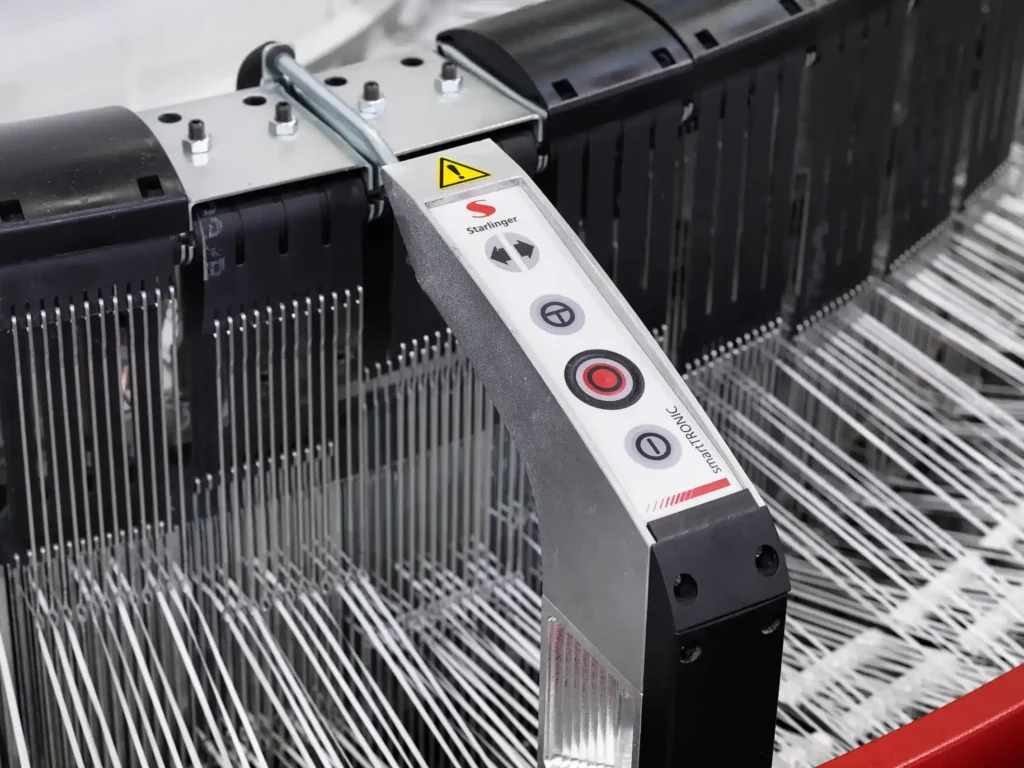
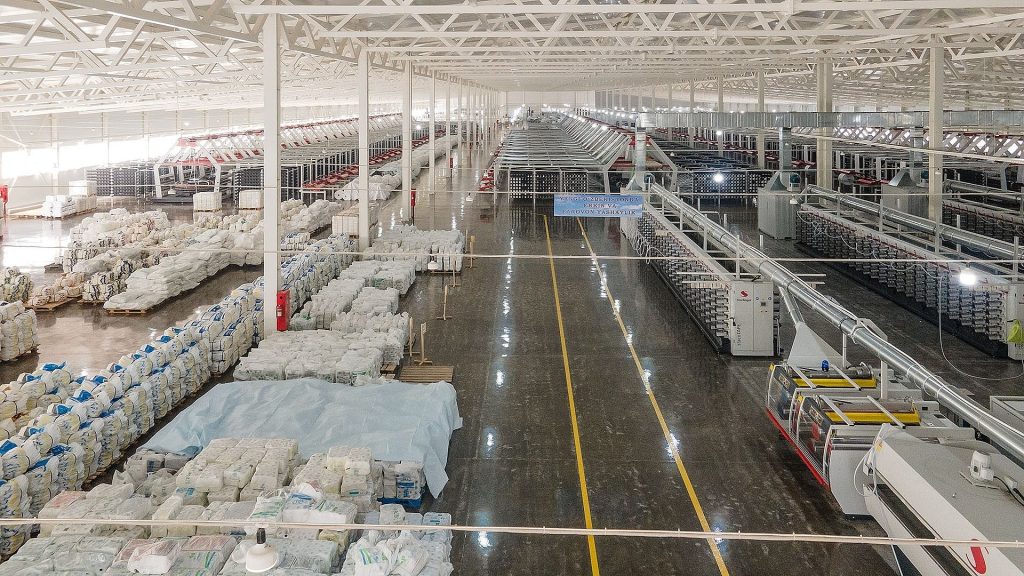
- Chinese Suppliers: Leveraging economies of scale, companies like VidePak achieve 40% lower production costs than Western counterparts. With 100+ Starlinger circular looms, VidePak delivers 10M+ units/month at $0.07–$0.15 per bag, meeting urgent timelines (10–14 days).
H2: China’s Manufacturing Dominance: A Four-Pillar Advantage
H3: Quality Assurance Through Advanced Technology
Chinese manufacturers utilize cutting-edge equipment like Austria’s Starlinger looms and ultrasonic seam sealers to achieve:
- Tensile Strength: 80–120 N/cm², exceeding ASTM D5264 standards by 25%.
- Barrier Performance: PE/PP lamination reduces moisture permeability to ≤0.5% (DIN 53122), critical for rice and flour packaging.
Case Study: VidePak’s BOPP-laminated bags for a Thai rice exporter reduced spoilage rates by 18% during monsoon transit, saving $120,000 annually in waste costs.
H3: Price Competitiveness and Scalability
China’s integrated supply chain—from virgin PP resin production to automated printing—lowers costs:
| Factor | China (VidePak) | EU Competitor |
|---|---|---|
| Labor Cost | $4.50/hour | $28/hour |
| Production Speed | 40 bags/minute | 15 bags/minute |
| MOQ Flexibility | 5,000 units | 20,000 units |
| Data sourced from Made-in-China and DirectIndustry market reports. |
H3: Agile Global Supply Chain Networks
VidePak’s partnerships with 30+ logistics firms enable door-to-door delivery in 21 days to Europe and 15 days to North America. Real-time IoT tracking reduces shipment delays by 35%.
H3: Customization Capabilities
With 30+ printing machines, VidePak offers:
- FDA-compliant inks for direct food contact.
- Multi-language safety labels adhering to REACH and CLP regulations.
- QR-code integration for batch tracing, as piloted with a Brazilian coffee exporter.
H2: VidePak’s Strategic Positioning
H3: Technological Leadership
VidePak’s 16 extrusion lines and 30 lamination machines enable:
- Ultra-thin films (0.08mm) without compromising load capacity (up to 50kg).
- Recyclable seams via Starlinger’s RECO system, aligning with the EU’s 2030 Circular Economy Plan.
FAQs:
Q: How does VidePak ensure food safety in laminated bags?
A: All bags undergo Intertek-validated Raman spectroscopy tests to detect additive migration, ensuring compliance with FDA and EU standards.
Q: Can VidePak handle custom designs for organic certifications?
A: Yes, our 8-color gravure printing supports USDA Organic and EU Ecolabel branding.
H3: Sustainability Initiatives
- Solar-powered production: 2MW rooftop panels cover 40% of energy needs, reducing CO₂ emissions by 1,200 tons/year.
- Post-consumer recycling: Partnering with German recycler EcoCycle, VidePak achieves 30% recycled PP content in 2025 batches.
H2: Future Trends and Challenges
H3: Smart Packaging Integration
VidePak is piloting IoT-enabled bags with embedded humidity sensors, relaying real-time data via NFC chips. Early adopters in Japan’s sushi supply chain reported a 22% reduction in spoilage.
H3: Tariff and Trade Dynamics
While China’s dominance persists, rising U.S. tariffs (up to 25% under Section 301) push manufacturers like VidePak to establish ASEAN hubs. A new Vietnam facility will cut delivery times to Australia by 40% by 2026.
“In food packaging, innovation isn’t optional—it’s survival,” concluded Ray. By merging cost leadership with technological rigor, VidePak exemplifies how Chinese manufacturers are redefining global standards.
For further insights, explore our resources on food-grade packaging innovations and high-volume production strategies.