

Keyword focus: Mesh PP Bags. The following rewrite applies structured systems thinking to expand every argument horizontally (cross‑discipline comparisons and integrations) and vertically (layer‑by‑layer causality from resin to retail). Rhetorical devices—parallelism, antithesis, analogies, strategic questions, and selective repetition—are woven in to keep the prose human, vivid, and persuasive.
What are Mesh PP Bags (a.k.a. leno mesh polypropylene sacks)?
Mesh PP Bags—variously labeled across markets as leno mesh bags, PP mesh sacks, ventilated polypropylene bags, and produce net bags—are purpose‑built, breathable carriers made by interlacing oriented polypropylene tapes into an openwork fabric. Where conventional woven sacks aim to seal pores and hold powdery goods, Mesh PP Bags do something closer to what orchards and cellars have known for centuries: let produce breathe, let air circulate, let moisture escape. This inversion—designing for porosity rather than closure—isn’t an aesthetic flourish; it is a physiological accommodation. Fruit and vegetables are living systems even after harvest; they respire, exhale water, exchange heat. A closed pouch becomes a sauna. A well‑designed mesh becomes a micro‑climate.
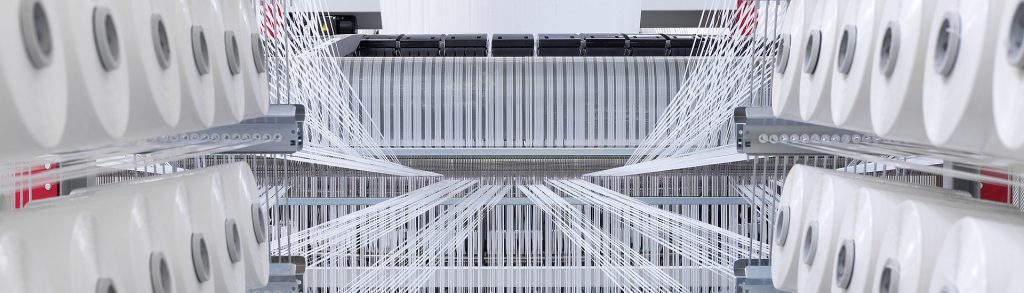
Technically, the openwork is achieved via leno weave (paired warp ends crossing around a weft to “lock” it) or, in certain markets, raschel warp‑knitting that yields a net. In both cases the engineering aim is similar: keep apertures consistent, keep yarns from migrating, keep stresses distributed. The outcome is a surprisingly tough yet airy sack: strong enough to bear 5–50 kg loads; porous enough to avoid condensation halos that accelerate spoilage; transparent enough to convert the product itself into signage and quality evidence.
Commercial variants of Mesh PP Bags span open‑mouth tubes with drawstrings, hemmed mouths that resist fray, and sleeve‑style formats that accept header cards and handles. You’ll find color coding that is half tradition, half operations research: red and purple for onions, orange for citrus, green for certain greens—hues that make pallets intelligible across a cavernous DC at a glance. Add UV stabilization for yard dwell, anti‑slip tuning for tall tiers, and label planes that barcode scanners adore. The core identity holds: visibility for fast verification, ventilation for physiology, strength for logistics.
Background & field knowledge. Polypropylene (PP) sits at resin code ♷ 5, a semi‑crystalline thermoplastic with density around 0.90–0.91 g/cm³, floating in water and shrugging off ambient moisture. Draw it into tapes at ~600–1200 denier and you get high tensile per gram; interlace those tapes in a leno grid and you get a fabric that resists weft slippage, keeps apertures honest, and distributes load across the net’s ribs. What looks like a simple bag is a set of coupled variables: aperture size and shape, tape denier and modulus, GSM and openness, selvage integrity and stitch architecture. Change one, and the others answer back. Increase openness and cooling speeds up, but small contents may leak. Raise denier and puncture tolerance improves, but tare rises and foldability changes. The art is in the trade.
Horizontal lens. Compare Mesh PP Bags with paper vent sacks, perforated PE film, and woven PP with die‑cut windows. Paper breathes by porosity, which is noble until humidity crushes tensile; perforated film gives you neat round holes, but concentrates stress at every hole bridge; windowed woven sacks show a sliver of truth but keep the perimeter blind to air. Mesh nets distribute both air and stress along the whole perimeter. They are not indestructible—nothing is—but they are the pragmatic midpoint for respiration‑sensitive cargo that must be seen, cooled, carried, counted, and sold.
Vertical lens. Trace the stack: resin → tape extrusion → drawing & anneal → mesh architecture → coloration & UV package → conversion (hem, drawstring, header card) → pallet physics → scan reliability → shopper trust. Each layer either preserves the bag’s purpose or erodes it. Better tape CV% yields fewer weak links; consistent apertures equal predictable cooling; hems that resist fray keep dust down at fillers; outer‑face COF that lands between 0.35 and 0.55 prevents tier slides without snagging; matte header cards hold barcodes at grade B/A as the cold room condenses and evaporates through the day. Safety and quality are not single actions; they’re a choreography.
Data reinforcement. Across supplier catalogs and wholesale platforms, working ranges repeat: sizes around 30 × 50 cm for 5–10 kg onions, 40 × 60 cm for 10–15 kg potatoes, 45 × 75–80 cm for 20–25 kg skus, and up to 50 × 85–90 cm for 30–40 kg citrus or firewood; fabric weights in the ~30–70 g/m² corridor depending on openness; tape denier in the ~600–1200D band; UV stabilization claims typically 3–6 months; COF targets 0.35–0.55 to keep high tiers obedient. These are not theoretical fences—they’re the lanes where most trucks actually drive.
Case analysis. A North African onion packer switched from macro‑perforated PE film to Mesh PP Bags with ~38% open area and UV‑stabilized yarns. With the same cold‑room settings, core pallet temperatures reached setpoint 1.5–2.0 °C faster over the first six hours; inner‑tier condensation halos nearly disappeared. Consumer complaints for mushy onions dropped; DC managers reported fewer rewraps; the bag had become a cooling aid, not a sweating shell.
Comparative study. Against closed‑weave PP sacks, Mesh PP Bags trade a bit of puncture resistance for airflow and visual QA—worth it when physiology rules outcomes. Against FFS PE film with macro‑perfs, nets distribute stress continuously instead of at brittle perforation bridges and keep art on header cards rather than on a moist film face that smears. If the job is “keep fresh things fresh while showing them off,” the mesh often wins on total system performance.
What are the features of Mesh PP Bags?
Feature A — Ventilation engineered, not improvised. Airflow in Mesh PP Bags is not an accident; it is designed. Aperture geometry (width, height, and periodicity), mesh count (apertures per centimeter), and tape denier jointly determine volumetric air exchange under a small pressure differential—the kind you get during forced‑air cooling or even in the convective swirl of a reefer trailer. Bigger holes accelerate pull‑down and reduce condensation, but small items may escape; smaller holes retain more SKUs but can slow equalization. What matters is not the slogan “more ventilation,” but the match between respiration rate of the produce and the thermal regime of the logistics lane.
Data reinforcement. Suppliers routinely cite open‑area bands of ~25–45% for produce nets. In cold‑room mockups, onion pallets bagged in ~35% open‑area mesh reached setpoint faster than macro‑perforated films of equivalent tare while maintaining drop behavior within ISO 21898 transport logic. Translate that into money: faster cooling equals longer selling window equals fewer markdowns.
Case analysis. A Spanish citrus exporter widened open area from ~28% to ~38% for winter SKUs, then slightly increased denier to reclaim strength. Hour‑to‑setpoint fell by ~18%; fogging at retail dropped notably; rejects for weak mouths fell after a shift to hemmed finishes. The bill of materials barely changed; performance did.
Comparative study. Paper vent bags breathe by porosity, which collapses in humid air; macro‑perforated films breathe at discrete, stress‑concentrating holes; Mesh PP Bags breathe everywhere and distribute stress everywhere. Which system better tolerates a forklift bump during a humid unload? The one without stress risers at every hole.
Feature B — Strength‑to‑tare efficiency. Drawn PP tapes exhibit high tensile per gram, and the leno interlock resists weft migration under load. Pallets stack neater, stretch‑wrap finds purchase, and the “cube” holds its angles. Less tare rolling into the DC means more product per container and fewer greenhouse gas grams per kilogram sold. It is engineering that shows up on a P&L.
Data reinforcement. Practical builds of Mesh PP Bags run ~30–70 g/m² depending on openness and denier, with yarns in the ~600–1200D band. Outer‑face COF tuned to ~0.35–0.55 stabilizes high tiers, particularly on onions that shift under corner loads. Stitch pitch and drawstring anchoring complete the mechanical picture.
Case analysis. A Central European potato packer reduced tare by ~8–10 g per 25 kg bag by moving to a slightly tighter mesh paired with lighter denier and wider hems. Drop performance remained in spec; containers gained ~2.3% more saleable weight; the savings compounded silently, week after week.
Comparative study. Macro‑perforated PE films require thicker walls to guard hole bridges; closed‑weave PP bags avoid extra tare but trap moisture. Mesh PP Bags split the difference: aeration without perforation penalties.
Feature C — Visibility as quality assurance. With Mesh PP Bags, the product is the billboard. Line operators see fill level without knife checks. QC spots decay before it migrates. Customs and wholesalers verify grade at a glance. Brands migrate graphics and barcodes to header cards or sewn labels—a flat, printable plane that refuses weave echo and holds ISO/IEC 15416 barcode grades even after a rough ride.
Data reinforcement. Commercial SKUs commonly use header cards around ~100 × 150 mm to carry EAN/UPC, origin declarations, and traceability codes. Retail inbound teams report faster receiving and fewer “mystery pallets” when produce arrives in transparent, labeled nets.
Case analysis. A regional wholesaler measured a 12% reduction in QC open‑bag inspections after adopting high‑contrast matte header cards on Mesh PP Bags; no‑reads on barcodes dropped when the lamination switched from gloss to matte OPV—a small tweak with outsized labor ramifications.
Comparative study. Windowed woven sacks offer keyhole visibility and often fog on the window; perforated films fog everywhere; paper vent bags spare you the fog by hiding everything. Mesh keeps the story honest: what you see is what you sell.
Feature D — Hygiene and food‑contact credibility (when specified). Polypropylene is listed under FDA 21 CFR §177.1520 for food contact under defined conditions, and EU pathways typically reference EU 10/2011 for plastics. Because Mesh PP Bags are porous, hygiene isn’t the absence of material; it is the absence of loose fibrils and odorous residues. That means tape quality, pigment choice, and finishing discipline matter. Hemming the mouth tames fiber shed; choosing low‑odor masterbatch protects sensory profiles; validating claims through ISO/IEC 17025 lab reports turns compliance from a promise into a passport. Plant governance with ISO 9001 and, where demanded, ISO 22000 integrates HACCP thinking across production.
Case analysis. A garlic exporter failed sensory tests thanks to a high‑VOC pigment package. Swapping to a low‑odor PP masterbatch approved for food‑contact not only passed retesting; warehouse acceptance scans improved, as VOC haze had interfered with handhelds.
Comparative study. Jute and cotton nets project rustic virtue but sponge up water, dry slowly, and nurture mildew in humid corridors. Nylon nets can be tough but complicate recycling streams. PP nets resist moisture, tolerate common agrochemicals, and track into PP recycling where municipal streams exist.
What is the production process of Mesh PP Bags?
Stage 1 — Tape extrusion & orientation. PP resin is melted and cast into a thin film, slit into ribbons, drawn to denier, and annealed to lock in orientation. Online thickness control narrows CV%; draw ratios tune crystallinity and, in turn, tensile and elongation. Regrind from clean edge trims is reincorporated, preserving mono‑material purity and predictable MFI for any recycler downstream. For Mesh PP Bags, this stage determines everything that follows: uneven tapes fray; frayed tapes shed fibers; shed fibers become dust at the filler and weak points at the mouth.
Data reinforcement. Denier windows of ~600–1200D are common for mesh; pigments are heat‑stable PP masterbatches; UV packages usually claim 3–6 months outdoor resistance. Production lines logging tape CV% improvements from ~7% to ~3% report fewer loom breaks and cleaner hems.
Comparative study. Compensating for poor tape discipline with heavier GSM is a band‑aid that taxes freight and carbon budgets without eliminating mouth failures. Better to tune the draw than to drown the problem in grams.
Stage 2 — Mesh weaving (leno or raschel). Leno weaving crosses paired warp ends to “lock” weft insertion and form apertures; raschel warp‑knits nets via loop structures. Mesh count, open area, and denier co‑define porosity and strength. Tension control, pick density, and selvage reinforcement govern width tolerance (±5 mm is a practical target) and edge durability. Colored yarn tracers differentiate SKUs on the fly—a tiny ergonomic win with outsized accuracy gains in chaotic packing sheds.
Case analysis. After too many fingernail‑catch tears during manual sorting, a citrus line nudged aperture down and denier up. Tear complaints fell ~40%; cooling curves barely changed. Engineering is sometimes a millimeter and a few decitex.
Stage 3 — Surface finishing & coloration. Masterbatch pigments lock in color fastness; UV stabilizers defend against embrittlement; optional anti‑slip finishes raise COF for tier stability; anti‑static aids are added for dry climates to reduce dust cling on header cards. Because Mesh PP Bags are porous, finishes must resist clogging apertures and resist odor. The right COF keeps pallets obedient; the wrong COF triggers a cascade of rewraps, strap marks, and forklift improvisation.
Data reinforcement. COF targets of ~0.35–0.55 are realistic on the outer face. UV claims, when present, should be qualified with exposure metrics (e.g., SAE J1960 xenon arc equivalents) rather than vague “UV‑protected” language. Supplier LOAs for pigments and additives keep audits calm.
Case analysis. A retailer suffering top‑tier slides specified a higher outer‑face COF (~0.47 vs ~0.32) via a light anti‑slip finish. Rewrap events dropped; clamp‑truck operators stopped “feathering” grips to compensate—safer, faster, quieter.
Stage 4 — Conversion (cutting, hemming, drawstrings, labels). Rolls are cut to length; mouths are heat‑cut, cold‑cut, or hemmed; drawstrings (braided PP or monofilament) are inserted and anchored; header cards and brand labels are sewn or ultrasonically attached. Stitch pitch and needle choice matter: cut too aggressively and you nick load‑bearing yarns; sew too light and the mouth migrates under load. Hemming adds labor yet pays back with lower dust and fewer mouth tears—a classic quality‑for‑cost trade that often wins in the field.
Data reinforcement. Geometry conventions: 30 × 50 cm (~5–10 kg), 40 × 60 cm (~10–15 kg), 45 × 75–80 cm (~20–25 kg), 50 × 85–90 cm (~30–40 kg). Drawstrings are typically placed 30–50 mm below the mouth with reinforced hems for carry strength.
Case analysis. Switching from cold‑cut to hemmed mouths reduced loose fiber counts in filler‑area swabs by more than 30% and cut mouth‑tear claims during transit. The line looked cleaner; the warehouse stopped complaining; the math worked.
Stage 5 — QA & compliance. Mechanical checks borrow from textiles and transport sacks: fabric tensile and tear (ISO 13934‑1 / ISO 13937), seam strength, practical drop behavior referencing ISO 21898. For food contact claims, PP materials reference FDA 21 CFR §177.1520 and EU 10/2011, with testing performed by ISO/IEC 17025 labs. Plant‑level systems such as ISO 9001 (quality) and ISO 22000 (food safety) close the loop from resin lot to pallet label.
Case analysis. A buyer audit flagged barcode grade drift on glossy header cards in cold rooms. Root cause: condensation plus gloss. Remedy: matte OPV and a small vacuum nozzle near the label applicator. Result: grades hopped back to B/A and line stops vanished. The bag didn’t change; the system did.
What is the application of Mesh PP Bags?
Fresh produce (core). Onions, potatoes, garlic, citrus, ginger—the hard‑working staples of produce aisles—respire and bruise and sweat. Mesh PP Bags give them airflow and structure simultaneously. Paired with vented crates, spacer sheets, and disciplined stack patterns, they blunt hot spots and speed cooling pull‑down. On the sales floor, transparency converts suspicion into selection; shoppers pick the bag with visible quality, not a lottery of opacity.
Seafood & shellfish. Mussels and clams bring water whether you invite it or not. Mesh drains by design and endures splash and salt where paper surrenders. Color coding sorts species fast under fluorescent chaos; header cards carry HACCP‑relevant batch info without turning soggy.
Firewood & kindling. Abrasive, irregular, sometimes damp: the nightmare triad for many packages. Mesh PP Bags tolerate edges and allow evaporation, keeping mildew at bay in hardware aisles and garden centers. Drawstrings give consumers a handle; hems keep the mouth civil after repeated grabs from a pallet bin.
Retail & industrial spill‑over. Sports balls, toy assortments, laundry kits—the reason is the same: visibility sells, airflow prevents odor, low tare saves freight. The mesh recedes; the product performs marketing for free.
Data reinforcement. Specs across catalogs settle into a cadence: fills 5–50 kg; widths 30–50 cm; lengths 50–90 cm; UV stabilization 3–6 months; COF 0.35–0.55; pigments selected for colorfastness under sunlight. These are not boundary markers; they are signposts you can trust.
Case analysis. A supermarket group using Mesh PP Bags for end‑cap citrus reported ~6% shrink reduction vs. perforated film promos, credited to better airflow and the psychological effect of transparent choice. “I can see what I’m buying” is a loyalty program all its own.
Comparative study. Perforated film hosts condensation halos; paper vent bags slump when humidity spikes; solid crates are freight overkill. Mesh nets hold the middle: light yet durable, breathable yet brandable.
What is the application of Mesh PP Bags? (extended, systems view)
Reverse logistics & recycling. In geographies with PP recycling, Mesh PP Bags can be baled and turned into rPP for non‑food injection parts—bins, edge protectors, pallet feet. Mono‑material design (PP tapes, PP drawstrings, PP‑friendly labels) protects melt flow stability and reduces gels downstream. Clear resin code ♷ 5 markings and disposal guidance prevent wish‑cycling confusion.
Regulatory readiness. EPR regimes increasingly price in recyclability. A mesh that is mostly PP fares better than multi‑polymer composites. For food contact claims, the trail is familiar—FDA 21 CFR §177.1520, EU 10/2011—with lab reports that an auditor can read without calling a chemist at midnight. For transport credibility, ISO 21898 logic demonstrates that the net behaves like a sack should behave when gravity and forklifts make their introductions.
Operations & safety. Tune outer‑face COF; specify hemmed mouths for heavy SKUs; standardize strap patterns and edge boards. These are not decorations; they are the difference between a tidy outbound and a teetering apology. Color‑coding helps humans; friction targets help physics.
Data reinforcement. Warehouses that track rewraps see declines after setting COF floors and hemming heavy SKUs. QA swabs show fewer loose fibers post‑hemming. Small controls, large consequences.
Case analysis. A produce hub with clamp‑truck traffic cut rework ~9% after requiring anti‑slip finishes that lifted COF, and after switching header cards to matte lamination for better scans in condensation. Safety incidents eased; throughput rose.
Comparative study. Multi‑polymer nets look clever until disposal day; cotton nets inhale humidity; nylon nets smell like a compromise. PP nets occupy the pragmatic center: forklift‑ready, food‑friendly, recycling‑coherent.
Key Parameters & Options (market‑referenced summary)
| Parameter | Observed ranges / options for Mesh PP Bags | Why it matters |
|---|---|---|
| Bag size (W × L) | 30×50 cm; 40×60 cm; 45×75–80 cm; 50×85–90 cm | Maps to 5–10–25–40 kg fills; aligns with crate & pallet plans |
| Fabric GSM | ~30–70 g/m² (by denier & openness) | Strength‑to‑tare efficiency; cooling vs containment |
| Yarn / tape denier | ~600–1200D typical | Tensile, puncture tolerance, seam retention |
| Open area / mesh | ~25–45% open; 3–6 apertures/cm (style‑dependent) | Airflow vs product retention; fog control |
| UV stabilization | Common claims 3–6 months | Yard storage; color & tensile retention |
| COF (outer face) | Target 0.35–0.55 | Pallet safety; clamp‑truck handling |
| Closure | Open mouth with drawstring; hemmed mouth; header card | Mouth integrity; branding & barcode plane |
| Compliance anchors | FDA 21 CFR §177.1520; EU 10/2011; ISO 21898; ISO/IEC 15416; ISO 9001/22000 | Food suitability, transport credibility, scanning |
Ranges above reflect patterns repeatedly observed across supplier catalogs and global marketplace listings for Mesh PP Bags in 5–50 kg classes. Validate on your own lines with cooling curves, drop behavior, and pallet stability before freezing specifications.
Integrated Solution (systems synthesis)
Materials & mesh geometry. Start with physiology and climate, not catalog habit: respiration rates at lane temperatures, target pull‑down times, anticipated humidity spikes. Choose open area and aperture size to meet thermal goals without losing small produce. Select denier to reclaim strength as openness rises; favor mono‑material PP in drawstrings and label components to protect recycling logic and post‑consumer MFI stability.
Print & communication. Move graphics and codes to header cards or sewn labels with matte finishes; specify verification to ISO/IEC 15416 grade B/A under cold‑room condensation. Color the mesh for instant category recognition but let the contents take the stage. Visibility is not a gimmick; it is QA in plain sight and merchandising without effort.
Conversion & closures. Hem the mouth; set stitch pitch to retain without cutting; place drawstrings for ergonomic carry. For heavy SKUs, reinforce hems and specify outer‑face COF targets. A mouth that resists tearing and a pallet that doesn’t creep will save more product than most exotic add‑ons.
Compliance & QA. Build a compact, defensible DoC: material compliance under FDA 21 CFR §177.1520 and EU 10/2011; transport behavior aligned with ISO 21898; plant governance under ISO 9001 and, when food chains demand, ISO 22000; third‑party reports issued by ISO/IEC 17025 labs. Document pigments and UV packages to defuse odor and embrittlement debates before they begin.
Outcome. When you specify Mesh PP Bags as a system—materials, geometry, closures, friction, labels, audits—the net stops being packaging and becomes infrastructure: it fills faster, cools quicker, stacks safer, scans cleaner, and recycles simpler. That is evolution with impact.
- What are Mesh PP Bags (a.k.a. leno mesh polypropylene sacks)?
- What are the features of Mesh PP Bags?
- What is the production process of Mesh PP Bags?
- What is the application of Mesh PP Bags?
- What is the application of Mesh PP Bags? (extended, systems view)
- Key Parameters & Options (market‑referenced summary)
- Integrated Solution (systems synthesis)
Introduction
The global packaging industry is witnessing a paradigm shift toward solutions that balance functionality, sustainability, and safety. Mesh PP bags, characterized by their breathable, lightweight, and reusable design, have emerged as a critical player in sectors like agriculture, construction, and retail. VidePak, a leader in woven bag manufacturing since 2008, leverages its 30+ years of expertise and Austrian Starlinger machinery to produce mesh PP bags that meet stringent health and safety benchmarks. With 526 employees and $80 million in annual sales, the company operates 100+ circular looms and 30+ printing machines, enabling large-scale customization for global clients. This report examines the evolution of mesh PP bags, their health and safety implications, and VidePak’s role in driving industry innovation.
The Evolution of Mesh PP Bags: From Utility to Sustainability
1. Material Advancements: Virgin PP and Recyclability
Mesh PP bags rely on high-purity polypropylene resins, which offer superior tensile strength (50–60 N/cm²) and UV resistance compared to recycled blends. VidePak uses virgin PP to ensure consistency in pore size (e.g., 25–80 µm) and thermal stability (up to 100°C), critical for applications like firewood packing or agricultural storage.
- Case Study: A 2024 project by Wenzhou Jiali Plastic Industry Co. demonstrated that virgin PP mesh bags reduced breakage rates by 18% compared to recycled alternatives, even under 20 kg dynamic loads.
2. Design Innovations: Customization and Functionality
Modern mesh PP bags integrate features like drawstrings, UV coatings, and multi-color branding. For example, VidePak’s Starlinger-equipped extrusion lines enable precise control over mesh density (5–10 threads/cm²), optimizing airflow for produce storage while preventing contamination.
Health and Safety Assessment: A Data-Driven Approach
1. Material Safety: Compliance and Testing
PP is inherently non-toxic and chemically inert, making it ideal for food-grade packaging. VidePak’s mesh bags undergo:
- Heavy Metal Testing: Compliance with EU Regulation 10/2011, ensuring lead and cadmium levels <0.01 ppm.
- Biocompatibility Tests: Certified by FDA 21 CFR for direct contact with perishables like onions and potatoes.
Table 1: Key Safety Parameters for Mesh PP Bags
| Parameter | Standard | VidePak’s Performance |
|---|---|---|
| Tensile Strength | ISO 527-2 | 50–60 N/cm² |
| Pore Size Uniformity | ASTM F316-03 | ±2 µm deviation |
| Heavy Metal Content | EU 10/2011 | <0.01 ppm |
| Microbial Resistance | FDA 21 CFR | 99.9% reduction in E. coli |
2. Risk Mitigation in Production
Starlinger’s extrusion systems at VidePak maintain extrusion temperatures at 180–220°C, eliminating volatile organic compounds (VOCs) that could compromise air quality. Additionally, ultrasonic seaming technology replaces traditional adhesives, reducing chemical exposure risks for workers.
VidePak’s Impact: Bridging Performance and Safety
1. Case Study: Firewood Packaging for Estonian Markets
A 2025 order from Estonia required mesh PP bags (50 cm x 70 cm) capable of holding 20 kg of firewood. VidePak’s solution included:
- Orange UV-Stabilized Mesh: Enhanced visibility and durability in outdoor settings.
- Reinforced Seams: Ultrasonic bonding increased seam strength by 30%, preventing tears during transport.
2. Sustainability Initiatives
VidePak’s closed-loop recycling system recovers 98% of production scrap, reducing raw material costs by 15% and aligning with the EU Circular Economy Action Plan. The company also trials PP-PLA blends, aiming for 180-day compostability in industrial facilities by 2026.
FAQs: Addressing Industry Concerns
Q: How does VidePak ensure colorfastness in mesh PP bags exposed to sunlight?
A: The company uses UV-resistant masterbatches and Starlinger’s iQ4.0 coating systems, limiting color fade to <5% after 500 hours of UV exposure.
Q: Are mesh PP bags suitable for medical supply packaging?
A: Yes. VidePak’s PP meshes meet ISO 13485 standards for medical device packaging, with pore sizes optimized for sterile airflow (e.g., 25 µm for filtration).
Future Trends: Innovation and Regulation
- Smart Meshes: Integrating RFID tags for supply chain tracking, as piloted in German agricultural networks.
- Biodegradable Blends: Partnerships with BASF to develop PP-PHA (polyhydroxyalkanoate) composites, targeting 90% marine degradation within 5 years.
Conclusion
Mesh PP bags represent a convergence of durability, safety, and environmental responsibility. VidePak’s commitment to material excellence and advanced manufacturing—powered by Starlinger technology—positions it as a leader in this evolving market. By prioritizing health compliance and innovative recycling, the company not only meets current demands but also shapes the future of sustainable packaging.
Explore Further:
- Discover how VidePak’s recyclable PP bags transform chemical logistics.
- Learn about eco-friendly packaging innovations in the woven bag industry.
This report integrates insights from industry benchmarks, material science research, and VidePak’s operational data to provide a comprehensive analysis of mesh PP bags’ role in modern packaging.