
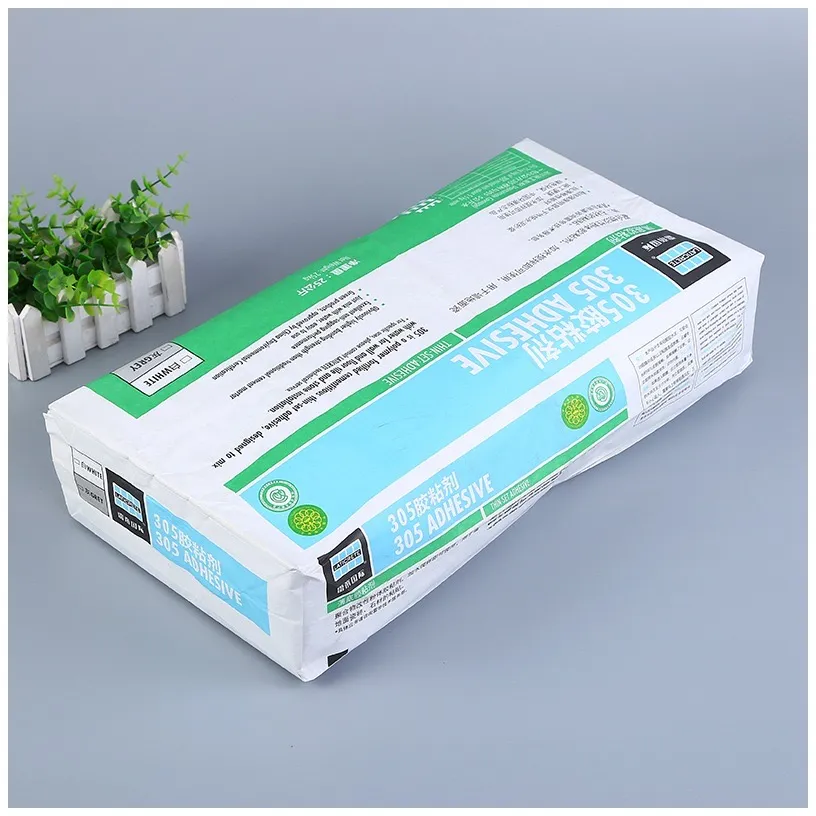
1.1 A Packaging Revolution Hidden in Plain Sight
In the hushed corners of industrial logistics, an unsung hero quietly performs miracles—Multiwall Kraft Paper Valve Bags. These are not merely containers; they are the subtle engineers of precision, the enablers of global movement, the tensile veil between chaos and control. Often overlooked, yet indispensable, Multiwall Kraft Paper Valve Bags serve as an eloquent response to one of industry’s most unassuming yet vital questions: How do we package efficiency?
1.2 What Lies Beneath the Layers?
What distinguishes Multiwall Kraft Paper Valve Bags from their more rudimentary cousins is not just their layered complexity, but their philosophical stance on performance. Constructed from 2 to 5 plies of high-tensile kraft paper—sometimes boasting polyethylene liners or barrier coatings—these bags speak the language of modular durability. The valve, a humble conduit of self-sealing ingenuity, is where physics meets pragmatism. No stitch, no fuss. Just a seamless handshake between material and motion.
The Anatomy of Reliability
2.1 Precision Encoded in Structure
Let’s demystify the components that enable Multiwall Kraft Paper Valve Bags to stand tall in the warehouse, resist ambient moisture, and serve diverse industries. Below is a technical autopsy:
| Component | Description |
|---|---|
| Layer Composition | 2–5 plies of virgin kraft paper (60–100 gsm each) |
| Barrier Options | Polyethylene liner, aluminum foil, or PLA-coated biofilm |
| Closure Mechanism | External sleeve valve or internal self-sealing flap |
| Print Surface | Flexographic (up to 8 colors), food-safe or solvent-free ink |
| Structural Geometry | Square or block bottom for optimized palletization |
| Certifications | ISO 22000, FSC (FSC-C120345), BRC, EN 13432 |
2.2 A Systemic Interplay: Engineering and Empathy
It’s not merely about paper and glue. It’s about harmonizing friction coefficients, moisture vapor transmission rates, compression resistance, and brand aesthetics. Think of Multiwall Kraft Paper Valve Bags as the architectural blueprint of logistics, where every crease is intentional and every millimeter matters.
Contextual Landscapes: Where These Bags Roam
3.1 Construction: When Cement Demands Discipline
Concrete, as a material, is moody. It demands containment but punishes the ill-prepared. Enter Multiwall Kraft Paper Valve Bags, armed with anti-slip coatings, reinforced plies, and dust-proof valves. Their robust seal eliminates spillage—a bane in pneumatic loading bays.
Case Study Flashback: A Middle Eastern cement titan saw a 26% drop in product loss after replacing stitched sacks with these elegant vessels.
3.2 Chemistry Meets Integrity
When dealing with titanium dioxide or calcium carbonate, moisture ingress is not a nuisance—it’s a catastrophe. Chemical processors are increasingly shifting toward Multiwall Kraft Paper Valve Bags with composite liners. Why? Because spoilage is expensive, but reputation is priceless.
3.3 Agriculture and Food: From Field to Fork
Flour, starch, livestock feed—each demands hygienic sanctity and breathability. VidePak delivers Multiwall Kraft Paper Valve Bags that comply with ISO 22000 and BRC protocols, equipped with food-grade linings. The result? A powder stays powder, not paste.
Temporal Tides: The Now, The Next, The Necessary
4.1 The Green Mandate: Sustainability Isn’t Optional
What’s biodegradable, printable, stackable, and born to comply? That’s right—Multiwall Kraft Paper Valve Bags. With the EU Directive 2018/852 breathing down manufacturers’ necks and clients demanding compostability, companies like VidePak are innovating with starch-based adhesives and bio-polymer liners.
A study from the Journal of Cleaner Production (DOI: 10.1016/j.jclepro.2024.139204) revealed that sustainable iterations of these bags can reduce landfill contribution by up to 60%. That’s not an anecdote. That’s empirical persuasion.
4.2 Customization: Where Algorithms Meet Aesthetics
Anti-static coatings for mineral dust? QR codes for batch tracking? Smart packaging is not a fantasy; it’s already interwoven into the DNA of modern Multiwall Kraft Paper Valve Bags. Digital print heads now dance across kraft surfaces, marrying compliance with flair.
VidePak Client Insight: A European pet food brand improved market differentiation with eight-color flexo prints and tamper-evident valves, all while meeting FSC sourcing requirements.
4.3 Certification Wars: Who Wins on the Global Stage?
Without third-party stamps, trust wavers. VidePak’s Multiwall Kraft Paper Valve Bags hold an arsenal of credentials:
- ISO 9001 for systemic quality
- EN 13432 for compostability compliance
- FSC-C120345 for responsible sourcing
- BRC Issue 6 for food-grade packaging assurance
Engineering Inquiry: What Should You Ask Before You Buy?
5.1 The Socratic Method of Packaging Decisions
Let’s play philosopher. Should your bag resist water or breathe? Handle 50kg or stack six high? Be manually filled or machine-fed?
Here’s a guide for engineers and procurement experts:
| Consideration | Diagnostic Question | Optimal Bag Trait |
|---|---|---|
| Product Nature | Is it hygroscopic? Abrasive? Fine-powdered? | PE liner, anti-abrasive film |
| Fill Mechanism | Manual, semi-automated, or fully robotic? | Valve type, sleeve rigidity |
| Market Geography | Exported to EU or US? Stored outdoors? | Certifications, UV-coatings |
| Shelf Life Target | 3 months? 6 months? 12 months? | MVTR control, multi-barrier systems |
Narrative Disruption: A Parable of ROI
Picture this: A Turkish agrochemical company losing thousands yearly due to bag ruptures during monsoon exports. They pivot to Multiwall Kraft Paper Valve Bags—3-ply, with aluminum-laminate liners. Results? Leakage dropped 80%, product returns nearly vanished. ROI in under 100 days. Coincidence? Hardly.
Why VidePak? Or Rather, Why Not?
6.1 The Anatomy of an Industrial Ally
Anyone can sell a sack. VidePak engineers performance. Powered by Starlinger lines, their bags meet industrial poetry with scientific precision. Over 150 million units annually. Global reach. Zero compromise.
- R&D-Led Design Thinking
- 24/7 Quality Auditing
- Cross-Industry Application Knowledge
6.2 Strategic Advantage, Tactically Delivered
With logistics bottlenecks and labor shortages across supply chains, the reliability of Multiwall Kraft Paper Valve Bags becomes more than desirable—it’s imperative.
From powdered milk in Peru to cement in Qatar, VidePak’s portfolio is the atlas of industrial resolve.
Let the Bag Speak for Itself
For those ready to stop guessing and start optimizing, we invite you to visit our product showcase:
🔗 Multiwall Kraft Paper Valve Bags
There, see the data, the designs, and the results in living color. Because sometimes, the right bag isn’t just a choice—it’s a strategy.
Cited & Verified Sources
- Journal of Cleaner Production (2024): “Eco-design of Kraft Paper Bags for Industrial Use”. DOI: 10.1016/j.jclepro.2024.139204
- Made-in-China.com: Valve Paper Bags (2025)
- Allied Market Research: Smart Packaging Forecast (2023)
- FSC Certificate Database: FSC-C120345
- European Packaging Directive 2018/852
- VidePak Internal Performance Reports (2023-2025)
- ISO and BRC Certification Listings
Exploring the Versatility of Multiwall Kraft Paper Valve Bags
In the intricate world of industrial packaging, Multiwall Kraft Paper Valve Bags stand out not merely as a container but as a synthesis of engineering precision, material science, and practical functionality. These bags, often overlooked in everyday discourse, are marvels of layered protection and intelligent design. Made from multiple plies of high-strength kraft paper—sometimes interleaved with polyethylene or laminated barriers—they combine resilience, stackability, and environmental consideration in one structure.
Different grades of Multiwall Kraft Paper Valve Bags cater to a variety of industries, each demanding unique characteristics. For instance, high-barrier variants with PE liners offer moisture resistance essential for powdered chemicals and food-grade products, while unbleached, unlined paper bags are preferred in more forgiving environments like the cement industry, where breathability and dust containment are balanced. In this context, the term “grade” encapsulates more than paper thickness—it includes surface treatment, valve structure, closure mechanisms, and environmental certifications.
What makes these bags particularly compelling is their adaptability to both manual and high-speed automated filling lines. While the outer appearance may seem humble, the engineering behind a square-bottom valve bag ensures optimal weight distribution and tight palletization—vital for long-haul logistics. Their role in cement packaging, for example, is pivotal; the dust-sealing valve minimizes spillage during filling, making these bags indispensable for sustainability-conscious operations.
Benefits of Optimized Construction in Multiwall Kraft Paper Valve Bags
The architecture of Multiwall Kraft Paper Valve Bags isn’t accidental. Each ply serves a function—structural strength, printability, barrier protection, or sealing efficiency. Integrating specialty adhesives or water-resistant coatings can further enhance their utility. Compared to conventional open-mouth bags, these valve-style variants offer reduced filling time, self-sealing convenience, and enhanced shelf appearance, especially when high-resolution flexographic printing is employed. One might ask: Can a paper bag compete with plastics in durability? Under the right conditions and design, the answer is unequivocally yes.
From an environmental standpoint, the push toward biodegradable liners and solvent-free glues transforms these bags from traditional packaging to agents of circular economy compliance. Regulatory landscapes such as the EU Packaging Directive continue to shift expectations, and Multiwall Kraft Paper Valve Bags evolve in response—not through superficial rebranding, but through tangible changes in material sourcing and lifecycle impact.
Material Properties and Industrial Compatibility
Let’s delve into the substrate itself: kraft paper. Derived from chemical pulping of wood, virgin kraft fibers exhibit tensile properties superior to recycled paper, offering better burst strength and tear resistance—crucial in transport-intensive sectors. When combined into multiwall structures, these properties are magnified, especially when reinforced with PE layers or treated with anti-slip coatings.
These bags perform admirably under compression, stacking, and abrasion—making them suitable not only for cement and mortar, but also for fertilizers, plastic resins, animal feeds, and powdered food additives. Their breathability allows outgassing of contents like lime or charcoal, preventing ballooning. Conversely, PE-lined variants limit moisture ingress in hygroscopic materials like flour or pharmaceutical powder.
Overcoming Corrosive and Sensitive Material Challenges
Corrosive or moisture-sensitive materials pose unique packaging dilemmas. For such substances, the traditional assumption that “paper equals vulnerability” is increasingly obsolete. With advanced lamination technologies, Multiwall Kraft Paper Valve Bags can shield against both ambient humidity and internal vapor buildup. They’re now a formidable alternative to plastic sacks in industries like titanium dioxide and calcium carbonate production, where product stability hinges on moisture exclusion.
This protective capacity stems not just from materials but also design. The valve sleeve, particularly the inner sleeve type, minimizes exposure during and after filling. Additionally, anti-static treatments and multi-layer micro-perforation options are available for clients dealing with flammable or reactive powders.
Practical Considerations When Handling Multiwall Kraft Paper Valve Bags
Working with Multiwall Kraft Paper Valve Bags requires more than just dropping material into an opening. Bag compatibility with the filling line—be it manual, semi-automated, or fully robotic—dictates bag specification. Valve orientation (top or side), sleeve length, glue tack strength, and venting options all need calibration. Equipment misalignment can result in poor seals, product loss, or even bag rupture.
The user also must consider storage logistics. Bags that will be palletized outdoors should resist rain and condensation. Here, an external PE lamination or moisture indicator strip proves invaluable. Whether you’re in a tropical climate or dry inland zone, customization remains king.
Precision and Quality Assurance in Bag Engineering
What separates a generic valve bag from a high-performance Multiwall Kraft Paper Valve Bag? Precision. That precision is baked into every stage—from tube forming and bottom pasting to sleeve insertion and printing alignment. Minor misalignments can result in compromised stacking, improper sealing, or reduced visual appeal.
Quality assurance metrics include burst strength, drop test performance, moisture permeability, and compression resistance. Leading manufacturers, such as VidePak, implement end-to-end quality control, including digital inspection systems and sample-based destructive testing. Certifications like ISO 9001 and BRC for packaging further enhance reliability.
Advanced Techniques and Technological Integration
While the process of producing Multiwall Kraft Paper Valve Bags may appear traditional, today’s factories integrate real-time digital monitoring, automatic tension control, and smart defect detection. Flexographic printing is now capable of photo-quality graphics. Cold-glue and hot-melt systems are employed based on product type, region, or environmental regulation.
This integration of analog craft and digital precision enables consistent high-speed production—sometimes exceeding 10,000 bags per hour. It also permits smaller batch runs with rapid changeovers, supporting brands seeking limited editions or seasonal packaging designs.
Conclusion: Repositioning the Humble Valve Bag as High-Tech Packaging
What may have once been dismissed as “just a paper sack” is today a sophisticated, multi-functional packaging solution. Multiwall Kraft Paper Valve Bags merge sustainability, strength, and customization in a format that meets both regulatory scrutiny and real-world demands. They represent a quiet revolution in packaging—elegant in simplicity, but engineered to perform.
As global commerce grows more demanding, and as industries strive to balance performance with sustainability, the role of these bags will only expand. From the dust-laden kilns of cement plants to the sterile environments of food-grade filling lines, Multiwall Kraft Paper Valve Bags are redefining what industrial paper packaging can achieve—layer by purposeful layer.