
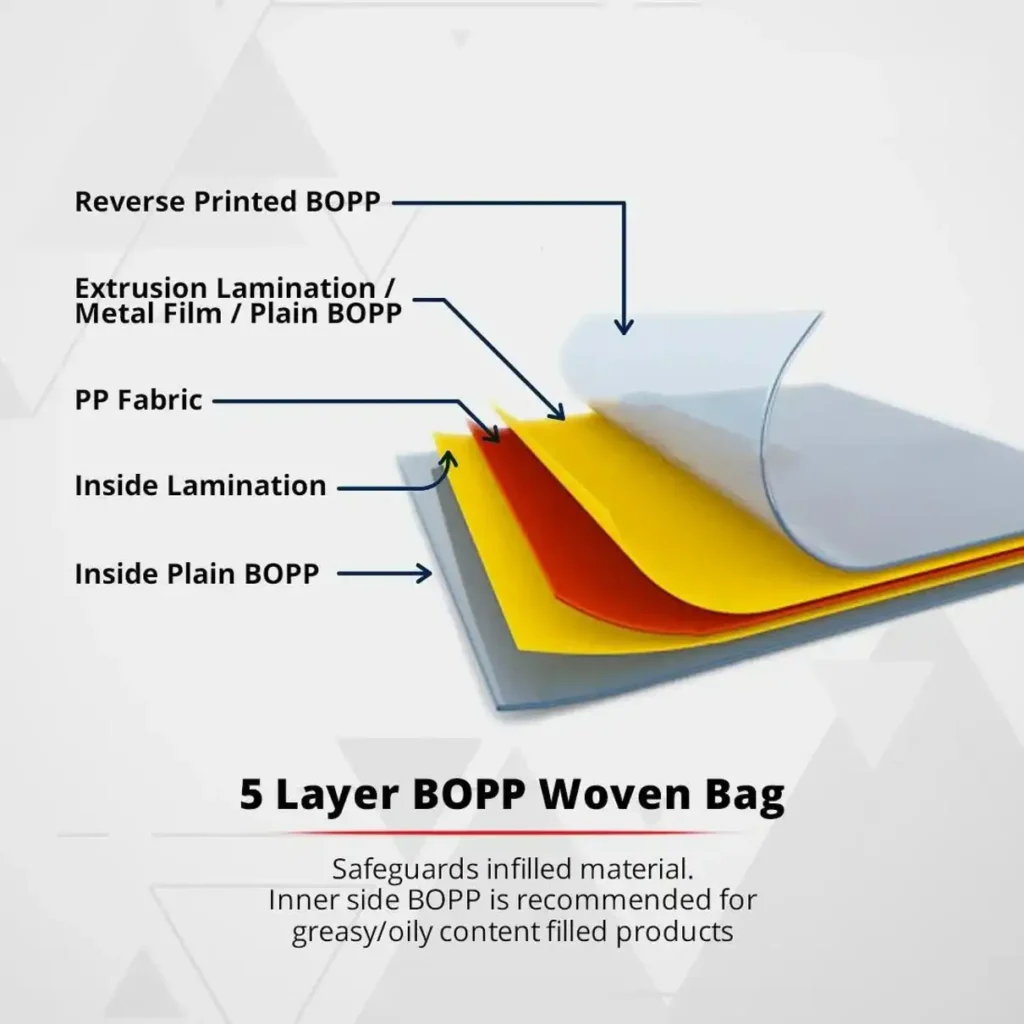
What is Multiwall Laminated Woven Bags?
Multiwall Laminated Woven Bags are composite sacks that integrate a woven polypropylene (PP) fabric substrate with one or more functional layers—typically a printed BOPP/PP laminate, plus optional kraft paper plies or PE liners—to deliver high drop resistance, sift‑proof seams, and retail‑grade graphics for 5–50 kg payloads. In procurement and export documentation they also appear as paper‑laminated PP woven sacks, Kraft‑laminated woven bags, paper‑plastic composite bags, BOPP‑laminated woven sacks, and, when configured for fast filling, block‑bottom valve bags. In short: woven muscle, laminated armor, paper‑grade print—one structure.
Treat Multiwall Laminated Woven Bags as a coupled system with four subsystems that must be tuned together: (A) mechanical strength (fabric GSM, denier, seam geometry), (B) barrier & leak‑proofing (lamination thickness, liner design, micro‑perfs), (C) automation fit (roll geometry, COF, valve sleeve design), and (D) compliance & sustainability (food‑contact, transport marks, recycling pathways). Overbuild one lever and another complains—stiff laminates scuff on shoulders, ultra‑open weaves sift powders, glossy varnish can lower pallet friction. Durability is not a single attribute; it’s an equilibrium.
Horizontally, Multiwall Laminated Woven Bags borrow from textile engineering (tape orientation ↔ tensile modulus), flexible packaging (reverse printing ↔ scuff resistance), and paper science (ply order ↔ crease behavior). Vertically, design decisions cascade from polymer grade → tape draw ratio → mesh density → laminate peel strength → closure architecture → pallet stability. Change one and the entire stack renegotiates its performance.
Why this matters—social and economic angles. Packaging is often the “hidden factory.” When Multiwall Laminated Woven Bags cut product loss (less dusting, fewer ruptures), supply chains waste less energy and labor; when pallets stand straighter, fewer reworks are needed on the dock; when graphics remain legible, brands sell more with the same transport input. Fewer damages mean fewer returns; fewer returns mean fewer truck miles and fewer overtime shifts fixing preventable problems. The social impact is tangible: safer handling (anti‑slip exteriors), cleaner air for warehouse staff (lower dust), steadier jobs in regional converting plants; the economic benefit is measurable: lower total cost of ownership (TCO) and higher overall equipment effectiveness (OEE).
For a category touchpoint aligned to this format, see the anchor: Multiwall Laminated Woven Bags.
Data reinforcement | Case analysis | Comparative study. Commercial windows commonly quoted on industry marketplaces show woven fabric weights ~70–120 g/m²; BOPP/PP lamination 18–25 µm for print and abrasion; optional PE liners 25–60 µm for moisture control; safe loads 10–50 kg with appropriate seams. A rice brand that switched from paper multiwall to Multiwall Laminated Woven Bags reported a double dividend: pallet lean incidents dropped in humid months (COF‑targeted finishes), while shelf sell‑through rose due to photographic graphics protected under BOPP. Versus paper‑only sacks, these bags shrug off humidity and edge chipping; versus plain woven PP, they add billboard‑grade print and better sift‑proofing; versus PE film FFS, they improve puncture/drop tolerance at similar mass.
What is the features of Multiwall Laminated Woven Bags?
Feature stack as engineering levers (with impact lenses).
- Fabric backbone. Woven PP in ~70–120 g/m² with 10×10–14×14 mesh; higher GSM and denier elevate tensile and seam retention, while tighter mesh reduces porosity before coating. Economic angle: fewer split seams → fewer repacks and credits. Social angle: stronger bags reduce dock injuries from burst spills.
- Lamination architecture. Reverse‑printed BOPP/PP, typically 18–25 µm, bonded via extrusion coating to the raffia; optional matte/gloss or anti‑scuff varnish. Economic angle: print longevity cuts reprint scrap and protects brand equity; social angle: low‑odor inks/adhesives chosen for food lanes improve air quality.
- Liner & barrier control. PE inner tubes (25–60 µm) or co‑extruded PE/EVOH/PE where aroma or oxygen control matters; micro‑perforations allow air evacuation without dusting. Economic angle: less moisture pickup reduces caking and write‑offs; social angle: lower dust means cleaner, safer packout.
- Closures & bottoms. Pinch‑bottom hot‑melt, heat‑sealed tops, or valve sleeves for high‑rate fillers; anti‑sift seam tapes protect stitch penetrations if stitching is retained. Economic angle: faster clean seals shorten cycle time; social angle: sealed seams reduce airborne particles around operators.
- Surface engineering. Anti‑slip exteriors target COF ≥ 0.5 for pallet stability; easy‑open tapes improve user ergonomics; optional UV stabilization extends yard life for fertilizers. Economic angle: fewer toppled pallets → fewer claims; social angle: easier handling reduces strain injuries.
Horizontal & vertical synthesis. Horizontally, these levers echo outdoor‑gear logic (denier for endurance, coatings for weather, seam engineering for leak control). Vertically, alter lamination thickness and you change formability, COF, and peel; adjust micro‑perfs and you influence throughput and dust. The best Multiwall Laminated Woven Bags behave like tuned machines, not chance assemblies.
Data reinforcement | Case analysis | Comparative study. Specifications frequently reference 8–10‑color gravure under BOPP, seal windows around 140–180 °C when a PE skin is present, and puncture resistance ≥ ~85 N for fabrics in the 70–110 g/m² band. A pet‑food packer that introduced anti‑slip emboss on the laminated face reduced shrink‑wrap consumption and recorded fewer pallet reworks. Compared with paper‑only PBOM, the laminated‑woven stack offers higher tear‑through resistance after rain exposure; compared with uncoated woven, it offers cleaner plots on hygiene audits thanks to sift‑proof seams.
What is the production process of Multiwall Laminated Woven Bags?
From pellets and pulp to pallet—an integrated chain.
- Tape extrusion & orientation. PP is extruded into film, slit, and stretch‑oriented into high‑tenacity tapes. Orientation locks in the tensile modulus that underwrites drop survival. (Economic benefit: less fabric over‑spec to hit strength targets.)
- Weaving. Circular or flat looms produce a 10×10–14×14 fabric with controlled warp/weft tension and porosity. (Social benefit: stable weaving jobs in regional plants; noise and dust lower than some film slitting operations.)
- Printing & lamination. Reverse gravure prints on BOPP/PP; extrusion lamination bonds the film to the woven substrate; optional kraft‑paper outer can be laminated for a paper look with woven strength. (Economic benefit: protected graphics reduce returns for label damage.)
- Liner conversion (optional). PE or co‑ex liners are tubing‑inserted or tab‑fixed. Micro‑perfs are tuned to the product’s air release profile. (Social benefit: fewer airborne fines around fillers.)
- Conversion & bottoming. Pinch‑bottom hot‑melt, valve sleeve formation, or hybrid stitched/heat‑seal constructions; anti‑sift tapes applied where needed. (Economic benefit: cleaner seams → fewer shutdowns.)
- Roll build & registration (for FFS formats). Roll width (often 400–650 mm), splice protocols, and eye‑marks are controlled for VFFS/HFFS lines. (Economic benefit: higher OEE; Social: fewer manual interventions.)
- QA & compliance. Filled‑bag drop tests, seam tensile and peel curves, dart impact on laminates, COF checks, and food‑contact migration testing where applicable. If routed for dangerous goods, the design is qualified to the appropriate UN sack type depending on predominant construction—5H1/5H2/5H3 for woven‑plastic predominance, or 5M1/5M2 for multi‑wall paper predominance—per UN Model Regulations and 49 CFR Subpart M.
Regulatory anchors & traceability. Plastic layers can be specified to FDA 21 CFR 177.1520 (olefin polymers) and EU 10/2011 (plastics in food contact); paper components can align with FDA 21 CFR 176.170/176.180, EU 1935/2004, EU 2023/2006 (GMP), and BfR XXXVI. Documentation—Declarations of Compliance, migration data, and UN test reports—moves from burden to asset when it speeds retailer onboarding.
Data reinforcement | Case analysis | Comparative study. Plants instituting lamination peel audits at the rewinder catch tie‑layer drift before it becomes scuff complaints. One fertilizer exporter moving to valve‑style Multiwall Laminated Woven Bags cut line labor by eliminating inner liners on coarse granules while retaining sift control via coating + seam tape—a net OEE gain.
What is the application of Multiwall Laminated Woven Bags?
Where they win (sector by sector).
- Food grains & staples. Reverse‑printed BOPP delivers shelf impact while liners tame moisture; anti‑slip exteriors calm pallets. Impact: fewer torn sacks in stores, fewer cleanup hours.
- Pet food. Scuff‑resistant faces, easy‑open features, and optional aroma barriers keep kibbles fresh. Impact: fewer returns for bag scuff/tear, happier retailers.
- Fertilizers & salts. UV‑stabilized fabrics and robust bottoms survive wet yards; barrier options reduce caking. Impact: less product wasted, lighter environmental footprint.
- Industrial minerals & pigments. Sift‑proof seams and puncture resilience protect powders; embossed surfaces improve handling. Impact: cleaner air on packout lines, fewer downtime events.
Data reinforcement | Case analysis | Comparative study. Safe‑load ranges of 10–50 kg align with typical woven strengths and seam specs; FFS‑capable formats run ~25–35 m·min⁻¹ when roll geometry is in spec; COF ≥ 0.5 reduces pallet slides in humid warehouses. Compared with paper multiwall, Multiwall Laminated Woven Bags exhibit better wet‑weather drop survival; compared with PE film sacks, they maintain branding under abrasion while tolerating rougher yard handling.
What is the application of Multiwall Laminated Woven Bags? (Extended mapping)
Compliance‑led routing and social outcomes.
- Transport safety. Classify per predominant construction and qualify to UN design types 5H1/5H2/5H3 (woven plastic) or 5M1/5M2 (multi‑wall paper), testing per UN Model Regulations and 49 CFR Subpart M (drop, stacking/compression, leakproofness where applicable). Social outcome: fewer ruptures in transit reduce roadside cleanup risks and driver exposure.
- Food‑contact & retail. Plastics per FDA 21 CFR 177.1520 and EU 10/2011; paper per FDA 176.170/176.180, EU 1935/2004, EU 2023/2006, BfR XXXVI. Economic outcome: faster retailer QA approvals shorten time‑to‑shelf; social outcome: safer contact materials for consumers.
- Sustainability signals. Paper‑faced variants enable paper‑stream recovery where facilities exist; PP‑dominant builds can enter PP recycling streams or controlled down‑cycling. Anti‑slip finishes reduce stretch‑wrap usage. Outcome: lower material intensity per delivered kilogram.
Case analysis | Comparative study. A sugar packer replaced paper‑only PBOM with Multiwall Laminated Woven Bags featuring a thin PE liner and anti‑slip exterior: moisture pickup fell during port dwell, pallet interventions declined, and worker cleanup time dropped measurably. In tropical lanes, laminated‑woven outperformed paper‑only on post‑rain drop tests; in dry, short‑haul lanes with high recycling mandates, paper‑faced laminates simplified material sorting.
Key Technical Specs (reference ranges)
The following table summarizes widely available, field‑proven ranges for Multiwall Laminated Woven Bags. Final targets should be tuned to product granularity, moisture sensitivity, drop height, and line conditions.
| Parameter | Typical Options / Ranges | Engineering Notes | Standards / QA Hooks |
|---|---|---|---|
| Woven fabric weight | 70–120 g/m² | Higher GSM lifts tear & seam retention; pair with mesh | GB/T 8946 (tensile/seam) |
| Mesh density | 10×10–14×14 | Tighter mesh reduces porosity pre‑coating | Factory QC |
| Lamination thickness | 18–25 µm (BOPP/PP) | Reverse‑printed for scuff resistance & color depth | Internal peel/adhesion |
| Liner thickness | 25–60 µm (PE or PE/EVOH/PE) | Choose higher end for hygroscopic powders | Seal/peel curves; ASTM D1709 |
| Surface COF | ≥ 0.5 (anti‑slip) | Stabilizes pallet stacks in humid lanes | ASTM D1894 |
| Puncture resistance | ≥ ~85 N (70–110 g/m² fabric band) | Supports rough yard handling | Customer spec; dart impact |
| Throughput (FFS) | ~25–35 m·min⁻¹ | With correct roll build & register | Line OEE logs |
| UN design type* | 5H1/5H2/5H3 or 5M1/5M2 | Select by predominant construction & route risk | UN Model Regs; 49 CFR Subpart M |
| Food‑contact | FDA 21 CFR 177.1520; EU 10/2011; FDA 176.170/.180; EU 1935/2004; 2023/2006; BfR XXXVI | Supplier DoC + migration data | DoC + accredited lab reports |
Classify to woven‑plastic (5H) or multi‑wall paper (5M*) based on the bag’s dominant structure and test plan.
Certification & Test Anchors (for RFQs and datasheets)
- Transport safety: UN design types 5H1/5H2/5H3 (woven plastic) or 5M1/5M2 (multi‑wall paper), tested per UN Model Regulations and 49 CFR Subpart M (drop, stacking, leakproofness where applicable).
- Food contact: Plastics—FDA 21 CFR 177.1520, EU 10/2011; Paper/adhesives—FDA 21 CFR 176.170/176.180, EU 1935/2004, EU 2023/2006 (GMP), BfR XXXVI.
- Functional QA: Lamination peel curves, seam tensile, dart impact, COF checks, Cobb60 (if kraft‑faced), and filled‑bag drop testing (ASTM D5276) with defined conditioning.
Copy Block (ready for brochure or PDP)
Multiwall Laminated Woven Bags put rugged PP fabric under a print‑perfect laminate and, when needed, a smart liner. The results are practical and visible: fewer burst events, cleaner docks, calmer pallets, sharper brands. Specify anti‑slip exteriors for humid lanes, pick PE/EVOH liners for aroma‑sensitive goods, and select pinch‑bottom or valve formats to match your filler cadence. Strong, clean, compliant—and economically sensible for teams who count every spill, every hour, every mile.
In the modern era, sustainability and environmental consciousness are critical factors driving the evolution of packaging solutions. Multiwall Laminated Woven Bags are at the forefront of this movement, combining robust functionality with eco-friendly attributes. As a leader in the industry, VidePak not only excels in producing high-quality Multiwall Laminated Woven Bags but also embraces innovative practices that contribute to environmental protection and economic efficiency.
Understanding Multiwall Laminated Woven Bags
Multiwall Laminated Woven Bags are engineered with multiple layers of woven fabric, typically polypropylene (PP), and laminated with additional coatings for enhanced durability and functionality. These bags are widely used for packaging various products due to their strength, moisture resistance, and versatility. The multi-layer design provides robust protection for the contents while also offering a surface that can be printed with high-resolution graphics, making them ideal for both functional and promotional purposes.
Environmental Impact and Sustainability
One of the standout features of Multiwall Laminated Woven Bags is their environmental friendliness. The use of recyclable polypropylene material is a significant step towards reducing the ecological footprint of packaging products. Here’s how these bags contribute to environmental sustainability:
Recyclability
Polypropylene, the primary material used in these bags, is fully recyclable. This means that once the bags have reached the end of their lifecycle, they can be collected and processed to create new products, thereby reducing the need for virgin materials and minimizing waste. VidePak’s commitment to using recyclable PP material ensures that their products align with global recycling initiatives.
Reduced Environmental Impact
The laminated coating on Multiwall Laminated Woven Bags not only extends the bag’s lifespan but also enhances its resistance to environmental factors like moisture and UV radiation. This durability reduces the frequency of replacements and waste generation. Additionally, the efficient use of materials and energy in the production process helps to lower the overall environmental impact.
Economic Benefits
The economic advantages of Multiwall Laminated Woven Bags are as compelling as their environmental benefits. Here’s how these bags deliver value:
Cost-Efficiency
Due to their durability and strength, Multiwall Laminated Woven Bags offer long-term cost savings. They are less likely to tear or degrade, reducing the frequency of product losses and minimizing the need for additional packaging. Their ability to withstand harsh conditions during transport and storage also helps in maintaining the quality of the products inside, thereby enhancing overall operational efficiency.
Enhanced Product Appeal
The high-quality laminated finish and customizable printing options enhance the aesthetic appeal of Multiwall Laminated Woven Bags. This not only aids in branding and marketing but also adds value to the product by making it stand out in a competitive market. A well-presented product can attract more consumers and potentially increase sales.
Compliance with Regulations
As regulations around environmental sustainability tighten, using recyclable and eco-friendly materials helps companies like VidePak stay ahead of compliance requirements. This proactive approach not only avoids potential fines but also positions the company as a responsible and forward-thinking industry leader.
Future Trends in Environmental Protection
Looking ahead, the future of Multiwall Laminated Woven Bags is likely to be shaped by ongoing advancements in environmental protection and sustainability. Here are some key trends to watch for:
Innovative Recyclable Materials
The development of new, more sustainable materials is a major trend in packaging. Innovations such as biodegradable polypropylene and other eco-friendly polymers are being explored to further reduce the environmental impact. These materials aim to provide the same level of durability and functionality while offering improved environmental benefits.
Enhanced Recycling Systems
Building comprehensive recycling systems for Multiwall Laminated Woven Bags is becoming increasingly important. Companies are investing in technologies and infrastructure to ensure that these bags are effectively collected, sorted, and recycled. Enhanced recycling systems will facilitate a circular economy, where materials are continuously reused and repurposed.
Integrated Sustainability Practices
The integration of sustainability practices across the entire supply chain is another emerging trend. This includes adopting energy-efficient production methods, reducing carbon emissions, and sourcing materials responsibly. By focusing on these areas, companies can further minimize their environmental impact and contribute to a more sustainable future.
VidePak’s Role in Promoting Sustainability
VidePak is committed to advancing sustainability through its production of Multiwall Laminated Woven Bags. The company’s dedication to using recyclable PP materials and implementing eco-friendly practices underscores its role as an industry leader in environmental stewardship. By continuously exploring new technologies and materials, VidePak aims to stay at the forefront of sustainable packaging solutions.
Research and Development
VidePak invests in research and development to enhance the environmental performance of its products. This includes exploring new laminating techniques and recyclable materials that align with global sustainability goals. The company’s R&D efforts ensure that its products not only meet current standards but also anticipate future trends.
Partnerships and Collaborations
Collaborating with industry partners and organizations focused on sustainability helps VidePak stay informed about best practices and innovations. These partnerships facilitate the sharing of knowledge and resources, contributing to the development of more effective and environmentally friendly packaging solutions.
Education and Advocacy
VidePak is also involved in educating its clients and the broader industry about the benefits of sustainable packaging. By advocating for best practices and promoting the use of recyclable materials, the company helps drive positive change within the industry.
Multiwall Laminated Woven Bags represent a significant advancement in packaging technology, offering both practical benefits and environmental advantages. VidePak’s commitment to using recyclable materials and embracing sustainability initiatives highlights the company’s dedication to creating a more sustainable future. As the industry continues to evolve, VidePak remains at the forefront of innovation, driving positive change and contributing to environmental protection.
Multiwall Laminated Woven Bags