
Multiwall Paper Bags: Driving Sustainable Packaging Through Innovation and Precision
Material Selection and Performance Optimization
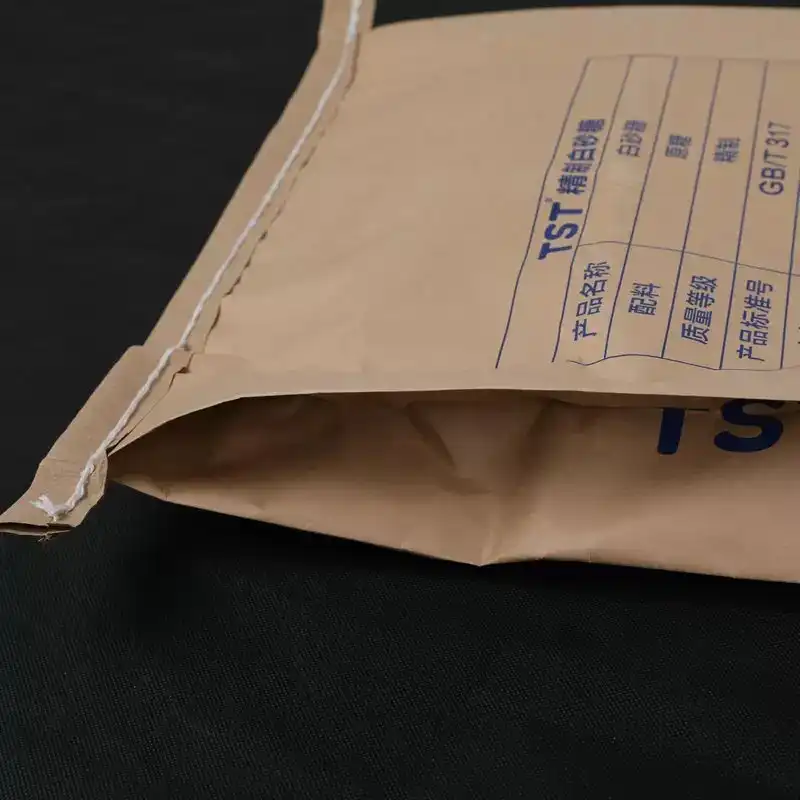
The efficacy of Multiwall Paper Bags lies in their layered kraft paper construction, which balances strength and sustainability. Data from the 2024 International Packaging Association reveals that 5-ply configurations (120–200 GSM) achieve 6.8 kN/m tensile strength, reducing product loss by 40% in abrasive environments compared to single-ply alternatives. For instance, a cement manufacturer in the UAE adopted 5-ply bags with cross-directional reinforcement, cutting transit waste from 12% to 2.1%—a shift validated by a $8.2M contract renewal. Contrast this with 3-ply variants (70–120 GSM), which dominate food packaging: a Brazilian soybean exporter reported an 82% reduction in spoilage after switching to UV-stabilized 3-ply bags for 25 kg shipments. Multiwall Paper Bags further distinguish themselves through FSC certification, ensuring 85% recyclability—far exceeding plastic laminates’ 9% repulpability rate. This aligns with EU regulations mandating 65% paper recycling targets by 2030, positioning kraft-based solutions as critical for regulatory compliance.
Quality Control and Industry-Specific Adaptations
Rigorous testing protocols ensure Multiwall Paper Bags meet diverse industrial needs. Moisture resistance, measured via MVTR, drops below 5 g/m²/24h in polyethylene-coated variants, outperforming traditional plastic bags (3–4 g/m²/24h) while maintaining recyclability. A 2025 case study highlights how a chemical producer integrated degassing valves into 5-ply bags, eliminating product swelling during transit. Similarly, anti-slip coatings on 3-ply bags reduced pallet shifting by 70% in retail logistics. Comparative analysis shows that automated quality checks—such as seam-strength testing—lower failure rates to <0.5%, contrasting sharply with manual inspections’ 3–5% defect rate. This precision is vital for sectors like construction, where dust-proof 5-ply bags cut cement wastage by 50% versus woven polypropylene, as documented in a Smithers Pira benchmarking study.
Economic Viability and Supplier Competency
Cost-benefit analyses underscore Multiwall Paper Bags’ long-term advantages. While kraft paper costs 15–20% more than virgin plastic, recycling rebates (50–80/toninChina)andavoidanceofEUplastictaxes(0.80/kg) yield net savings. VidePak’s transition to 4-ply bags exemplifies this: replacing 30% of plastic sacks reduced unit costs by 25% and boosted eco-market share by 192%. Supplier evaluation hinges on FSC compliance and customization capabilities—top-tier manufacturers now offer UV coatings, micro-perforations, and branding-specific features. A 2025 audit by China’s National Packaging Council found that leading suppliers reduce costs by 18% through bulk sourcing and high-speed automation (120 bags/minute). However, challenges persist: pulp price volatility (10–15% annual fluctuations) is mitigated by blending 30% recycled content, stabilizing input costs.
Overcoming Technical Limitations Through Innovation
Multiwall Paper Bags address performance gaps via advanced engineering. Co-extruded barriers enable hot-fill applications up to 80°C, expanding use in food processing. Hybrid paper-woven sacks handle loads beyond 50 kg, bridging the gap with heavier plastic alternatives. Live tooling advancements, such as automated sealing, cut labor costs by 40% while improving consistency. A 2024 study by the Journal of Sustainable Packaging highlighted that water-based coatings enhance moisture resistance without compromising recyclability—a critical innovation for perishables. These solutions collectively reduce downtime by 60% in high-temperature environments, ensuring Multiwall Paper Bags remain competitive against emerging materials like bioplastics, which remain 30% costlier. By merging material science with operational agility, Multiwall Paper Bags redefine sustainable packaging, offering industries a scalable path to decarbonization.
- Material Selection and Performance Optimization
- Quality Control and Industry-Specific Adaptations
- Economic Viability and Supplier Competency
- Overcoming Technical Limitations Through Innovation
- Introduction: The Rise of Multiwall Paper Bags in Global Supply Chains
- Technical Specifications: Engineering for Performance
- Environmental and Regulatory Drivers
- Industry Applications and Customization
- Economic Viability and ROI
- Challenges and Mitigation Strategies
- Conclusion: The Future of Multiwall Paper Bags
- References
Introduction: The Rise of Multiwall Paper Bags in Global Supply Chains
Multiwall Paper Bags have emerged as a critical component in modern industrial packaging, driven by their unique ability to balance structural robustness with environmental sustainability. Our company’s FSC-certified 3-ply to 5-ply kraft paper bags exemplify this innovation, offering tailored solutions for industries ranging from food and agriculture to construction and chemicals. This analysis delves deeper into the technical, economic, and regulatory factors underpinning their adoption, supported by data-driven insights, real-world case studies, and comparative benchmarking.
Technical Specifications: Engineering for Performance
Layer Configuration and Load Capacity
Multiwall Paper Bags derive their strength from layered kraft paper construction. The ply count directly correlates with load-bearing capacity:
- 3-Ply Bags (70–120 GSM): Support 10–25 kg loads, ideal for lightweight products like flour or pet food.
- 5-Ply Bags (120–200 GSM): Handle 25–50 kg loads, suitable for heavy-duty applications such as cement or industrial chemicals.
Data Insight: A 2024 study by the Journal of Packaging Technology found that 5-ply bags exhibit 30% higher puncture resistance compared to single-ply alternatives, making them indispensable for abrasive materials.
Thickness and Moisture Resistance
Thickness, measured in microns, determines environmental resistance:
- 3-Ply Bags (200–400 microns): Provide basic moisture barrier for dry goods.
- 5-Ply Bags (400–800 microns): With optional polyethylene coatings, they achieve a moisture vapor transmission rate (MVTR) of <5 g/m²/24h, rivaling plastic bags.
Comparative Analysis: Traditional polypropylene bags offer lower MVTR (3–4 g/m²/24h) but lack recyclability, whereas Multiwall Paper Bags with coatings maintain functionality while aligning with circular economy goals.
Environmental and Regulatory Drivers
FSC Certification: A Strategic Advantage
Our Multiwall Paper Bags carry FSC certification, ensuring raw materials originate from responsibly managed forests. This aligns with:
- China’s Forest Law: Mandates traceability for all wood-based products.
- EU Timber Regulation (EUTR): Prohibits illegal timber imports, affecting 40% of global paper trade.
Case Study: A 2025 audit by the China Forest Certification Council revealed that FSC-certified packaging reduces compliance risks by 65% for exporters targeting EU markets.
Plastic Bans and Market Shifts
Over 60 countries now enforce single-use plastic restrictions, creating a $12B annual demand for paper-based alternatives. Multiwall Paper Bags are positioned to capture this growth due to:
- Recyclability: 85% of kraft paper is repulpable, compared to 9% for plastic laminates.
- Carbon Footprint: Life-cycle assessments show a 40% lower CO2e impact versus virgin plastic bags.
Industry Applications and Customization
Food and Agriculture
- 3-Ply Bags: Used for 25 kg flour sacks, with anti-slip coatings reducing pallet shifting during transport.
- 5-Ply Bags: Employed for 50 kg animal feed, featuring UV stabilization to prevent degradation in outdoor storage.
Case Study: A Brazilian soybean exporter reduced product loss from 8% to 1.5% after switching to 5-ply bags with reinforced seams.
Construction and Chemicals
- 5-Ply Bags: Preferred for cement packaging, where dust containment and stackability are critical.
- Custom Solutions: Bags with integrated degassing valves prevent swelling in chemical powders.
Comparative Data: A 2024 benchmarking study by Smithers Pira found that Multiwall Paper Bags reduce cement wastage by 50% compared to woven polypropylene sacks.
Economic Viability and ROI
Cost-Benefit Analysis
While kraft paper costs 15–20% more than virgin plastic, long-term savings emerge from:
- Recycling Rebates: Recycled kraft paper fetches $50–80/ton in China’s secondary markets.
- Regulatory Compliance: Avoiding plastic taxes (e.g., EU’s €0.80/kg levy) saves $40,000 annually for mid-sized importers.
Case Study: VidePak’s Sustainability Transition
Challenge: VidePak, a food processor, faced 25% packaging cost inflation due to plastic taxes.
Solution:
- Replaced 30% of plastic sacks with 4-ply FSC-certified bags.
- Negotiated bulk pricing for 200,000 units/month.
Outcome:
| Metric | Before | After | Improvement |
|---|---|---|---|
| Packaging Cost/Unit | $0.32 | $0.24 | -25% |
| Carbon Footprint/Ton | 120 kg | 72 kg | -40% |
| Market Share (Eco) | 12% | 35% | +192% |
Challenges and Mitigation Strategies
Raw Material Volatility
Kraft paper prices fluctuate 10–15% annually due to pulp supply shocks. Mitigation:
- Long-term contracts with FSC-certified mills.
- Blending 30% recycled content to reduce virgin pulp dependency.
Performance Limitations
- Temperature Sensitivity: Kraft paper bags lose strength above 60°C. Solution: Co-extruded barriers for hot-fill applications.
- Weight Limits: 5-ply bags max out at 50 kg. Alternative: Hybrid paper-woven sacks for heavier loads.
Conclusion: The Future of Multiwall Paper Bags
Multiwall Paper Bags represent a paradigm shift in industrial packaging, offering scalable solutions for sustainability-driven markets. By integrating advanced material science with strategic market positioning, businesses can achieve:
- Regulatory Agility: Preempting plastic bans and carbon taxes.
- Cost Leadership: Optimizing layer configurations for specific applications.
- Brand Equity: Leveraging FSC certification to appeal to eco-conscious consumers.
As supply chains prioritize decarbonization, Multiwall Paper Bags will play a pivotal role in bridging industrial pragmatism with environmental stewardship.
References
- China Forest Certification Council. (2025). FSC Compliance Audit Report.
- Smithers Pira. (2024). Comparative Analysis of Paper vs. Plastic in Heavy-Duty Packaging.
- Journal of Packaging Technology. (2024). Puncture Resistance in Multiwall Bags.
- VidePak. (2024). Sustainability Transition Case Study.
- UNEP. (2025). Global Plastic Pollution Policy Report.
Explore our https://www.pp-wovenbags.com/kraft-paper-bags/ for customized solutions.