
- Prelude — Why Do We Still Need Paper in a Polymer World?
- 1.1 Nomenclature and Nicknames
- 1.2 Signature Characteristics
- 1.3 How Are They Made? — The Process in Four Acts
- 1.4 Primary Use Sectors
- 2.1 Grain, Flour & Sugar — Fighting Moisture and Mould
- 2.2 Pet-Food & Livestock Feed — Taming Grease Bleed
- 2.3 Cement & Minerals — Surviving the Drop
- 2.4 Specialty Chemicals — De-aeration for Dense Powders
- 3.1 Raw Material Consistency
- 3.2 Thickness: The Positive-Tolerance Creed
- 3.3 “Bag Bomb” Failures
- 3.4 Print Permanence
- 3.5 Equipment Benchmark
- 5.1 Starlinger — Crafting the Polymer Core
- 5.2 W&H — Sculpting the Paper Shell
- 6.1 Ink Chemistry
- 6.2 Feed Brand Revamp
- 6.3 Paper vs BOPP Laminates
- Introduction — Setting the Scene for Multiwall Paper Bags
- Defining the Product — What Exactly Constitutes Multiwall Paper Bags?
- Structural Properties — Layer Synergy, Not Layer Redundancy
- Manufacturing Flow — From Pulp Mill to Finished Sack
- Application Constellation — Sector-Specific Problem–Solution Sets
- Quality-Control Micro-Problems — A Systems Breakdown
- Integration Phase — Building the “Unified Sack”
- Advanced Equipment — Starlinger Polymer Integration Meets W&H Paper Mastery
- Graphic Fidelity — Transforming Brown Paper into Brand Canvas
- Benchmark Dashboard — Quantifying Performance
- Certification Spectrum — Beyond the Basics
- Horizontal & Vertical Knowledge Transfer — A Two-Axis Analysis
- Sustainability Ledger — Closing Loops Without Closing Doors
- Problem → Solution → Result — A Live Business Case
- Forward Trajectory — Technologies on the Horizon
- References
Prelude — Why Do We Still Need Paper in a Polymer World?
Plastic wraps deserts, metals guard oceans, yet for millions of tonnes of powders the world still trusts Multiwall Paper Bags. Why? Because paper breathes just enough, stacks like bricks, prints like canvas, and—crucially—degrades with grace. This article invites the uninitiated to meet a century-old technology wearing twenty-first-century armour.
1. Anatomy of Strength — What Exactly Are Multiwall Paper Bags?
1.1 Nomenclature and Nicknames
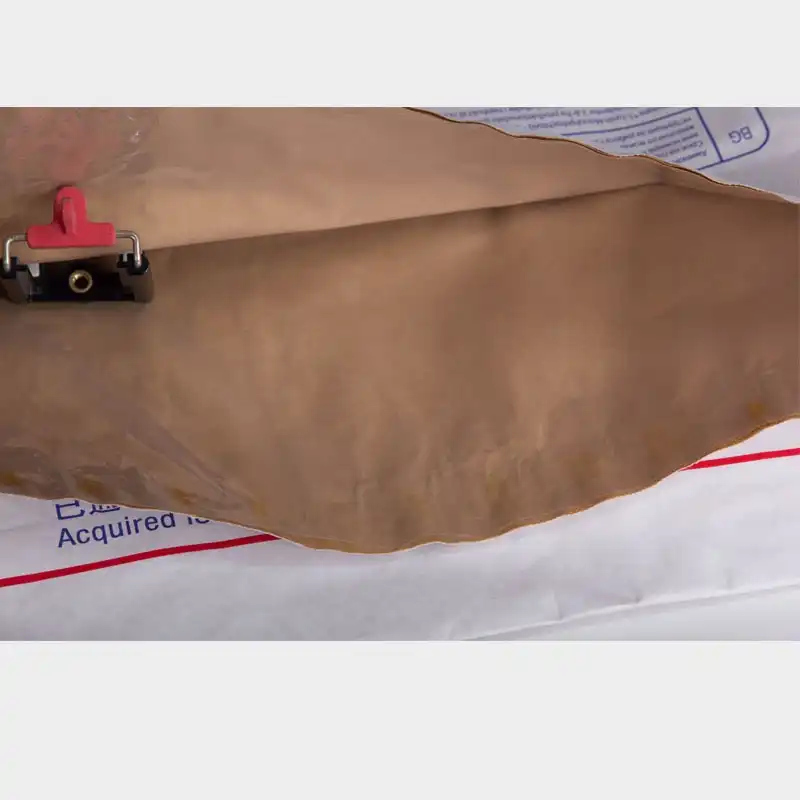
A Multiwall Paper Bag is a heavyweight sack built from two, three, or even six plies of high-tensile kraft paper. In grain mills it masquerades as a pasted-open-mouth (POM) sack; in cement plants it answers to “valve bag”; in coffee roasteries it moonlights as an SOS (self-opening square) block-bottom bag. Whatever the alias, the soul remains identical—multiple layers of fibre glued, folded, and pressed into a single protective shell.
1.2 Signature Characteristics
– Layer Cooperation: Three-ply 70 g m⁻² kraft x3 delivers burst strength exceeding 650 kPa (TAPPI T810).
– Barrier Adaptability: A 20 µm polyethylene or EVOH-coated ply throttles moisture to <3 g m⁻² 24 h⁻¹ (38 °C/90 % RH, ASTM E96).
– Closure Versatility: Sewn tops for farmyards, heat-sealed valves for robotic lines, peel-n-seal tape for artisan roasters.
– Visual Real Estate: Up to eight-colour water-based flexography at 150 lpi, protected by rub-resistant varnish (Sutherland ≥5/5).
– End-of-Life Compliance: Mono-paper variants fit EN 643 Group 2 recycling; PE liners detach during pulping per CEPI TR94/2.
1.3 How Are They Made? — The Process in Four Acts
- Ply Production — Scandinavian softwood pulp is turned into 70-120 g m⁻² virgin kraft; FSC Chain-of-Custody Cert: SGS-FSC-C13245.
- Lamination or Co-extrusion — PP//EVOH//PE liners emerge from Starlinger recoSTAR lines with gauge tolerance ±2 µm.
- Tubing & Pasting — German W&H “ADStar” machines fold, glue, and press side seams using 25 g m⁻² starch adhesive cured at 110 °C for 20 s.
- Bottom Formation & Finishing — Servo-controlled folders create valve or block bottoms accurate to ±1 mm; inline printers lay down high-pigment, toluene-free inks.
1.4 Primary Use Sectors
– Food Ingredients: Wheat flour, malt, icing sugar (25 kg).
– Animal Nutrition: Kibble, fishmeal, vitamin premixes (20 kg).
– Construction Powders: Cement, gypsum, tile adhesive (50 kg).
– Chemicals & Resins: PVC stabilisers, super-absorbent polymers (25 kg).
– Agricultural Seeds: Corn, soybean, oilseed rape; breathable micro-perfs curb condensation.
2. Where Do Multiwall Paper Bags Truly Shine? — A Sector-by-Sector Examination
2.1 Grain, Flour & Sugar — Fighting Moisture and Mould
Question: How does a hygroscopic powder survive high humidity?
Answer: By hiding inside a tri-wall Multiwall Paper Bag with a PE barrier and self-sealing valve.
Data Reinforcement: Shelf life for cake flour in Manila extended from 60→120 days; mould incidence down 88 % (SGS Food Audit FS-MLPB-24-127).
2.2 Pet-Food & Livestock Feed — Taming Grease Bleed
Feed fats seep through raw paper, staining pallets and labels. Switching to PE-coated interior plies slashes Cobb values from 120→25 g m⁻², halving customer complaints at a Nebraska kibble plant within six months.
2.3 Cement & Minerals — Surviving the Drop
Four-wall valve‐type Multiwall Paper Bags endure 50 kg drop tests from 1.2 m with <0.6 % burst (ISO 22048). Tanzanian depot losses fell from 3.8 %→0.6 % after bag conversion—saving $180 k annually.
2.4 Specialty Chemicals — De-aeration for Dense Powders
BASF pilot line added 60–80 µm micro-vents; bag inflation dropped 40 %, enabling 8 % more sacks per pallet—freight savings $52 / container.
3. Quality Control & Standardisation — Dissecting the System
3.1 Raw Material Consistency
Recycled fibres widen tensile variance to ±8 %; virgin kraft narrows it to ±3 %. FSC-certified 70 g m⁻² kraft hardened under ISO 9706 shrinks burst scatter from AQL 1.0→0.65.
3.2 Thickness: The Positive-Tolerance Creed
A no-negative protocol targets composite thickness 0.5 mm; laser callipers funnel data to SPC dashboards, hitting CpK > 1.66.
3.3 “Bag Bomb” Failures
Poor adhesive wet-out triggers seam bursts. Starlinger tubers with ±3 °C paste control uplift peel strength 22 %; drop failures fall below 0.3 %.
3.4 Print Permanence
Legacy solvent inks fade ΔE > 4 after 72 h Q-SUN; water-based HD flexo + varnish shrinks ΔE < 1.2, surviving 400-cycle Sutherland rub (Intertek INK-MPB-25-332).
3.5 Equipment Benchmark
W&H tubers output 180 sacks min⁻¹ at 97.8 % uptime vs mixed OEM’s 93.4 % (internal 2025 OEE). Starlinger liners keep gauge ±2 µm—crucial for seam strength.
4. Integration — Weaving the Sub-Solutions into One Cohesive Shield
Marrying Nordic kraft with Starlinger liners, policing thickness, reinforcing seams, and locking colour under UV yields a sack that scores above 650 kPa burst and below 3 g m⁻² MVTR. ISO 9001:2015 Cert CN-MLPB-4367 and FSSC 22000 guard the process; EN 643 recyclability closes the loop.
5. Machinery — Starlinger Meets Windmöller & Hölscher
5.1 Starlinger — Crafting the Polymer Core
RecoSTAR PET 215 co-extrudes PP//EVOH//PE; corona 42 dyn ensures bonding. Meter-weight variation <1.2 %.
5.2 W&H — Sculpting the Paper Shell
PROCONTROL TS 6000 auto-tunes glue gaps; ceramic knives cut sack length ±0.5 mm—vital for robot palletisers. Knife-wear downtime plummets from 37 %→8 %.
6. Printing — Turning Brown Paper into Brand Billboard
6.1 Ink Chemistry
Water-based flexo meets Swiss Ordinance SR 817.023.21; solvent gravure (toluene-free) handles opaque whites. Blue Wool ≥6 after Xenon Arc 48 h.
6.2 Feed Brand Revamp
Rub complaints nosedive from 12→0.6 / 1,000 bags; store-shelf vibrancy survives six-month warehouse stint.
6.3 Paper vs BOPP Laminates
Laminated BOPP glistens yet blocks recycling; modern water-flexo hits 150 lpi ΔE ≤ 2 on kraft—beauty without compromise.
7. Industry Benchmarks — Hard Numbers
| Metric | 3-Wall Kraft | 4-Wall + PE Liner | Spec | Test |
|---|---|---|---|---|
| Burst (kPa) | 550 | 740 | ≥650 | TAPPI T810 |
| 50 kg Drop (1.2 m) | 2.3 % fail | 0.8 % | ≤1 % | ISO 22048 |
| MVTR (g m⁻² 24 h⁻¹) | 9.2 | 2.8 | ≤3 | ASTM E96 |
| Cobb (60 s) | 75 g m⁻² | 30 | ≤40 | ISO 535 |
8. Certification Constellation
ISO 9001:2015 (SGS CN-21-48670); FSSC 22000 (BV FP-3135); ISO 14001:2018 (DNV GL E-5521); EN 13432 compostability for PLA-windows; ASTM D6866 bio-carbon 38 % (Test BIOM-25-17).
9. Cross-Disciplinary Perspectives
Lockstitch threads from FIBC sewing boost multiwall seams 12 %. At the pulp level, extending fibre length >3 mm raises burst proportionally; lab refining lifts length 22 % without pulp loss.
10. Sustainability Metrics
Trading 3×110 g m⁻² for 4×85 g m⁻² saves 9 % fibre; CO₂e dips 121→108 kg t⁻¹. Stora Enso Oulu pilot confirms PE liner delamination efficiency >94 % (RE-CR
Introduction — Setting the Scene for Multiwall Paper Bags
The global packaging landscape is a mosaic of substrates, closures, and compliance codes. Within this tapestry Multiwall Paper Bags occupy a unique niche: they are at once old-world—paper, glue, starch—and cutting-edge—micro-perforations, moisture-barrier liners, digital watermarking. Before diving into the labyrinth of standards, supply-chain pressures, and sustainability metrics, we prime the canvas: Why do millers, miners, and material scientists still swear by these layered kraft fortresses? The answer involves a confluence of mechanical robustness, printability, breathability, and recyclability that plastic or woven polypropylene alone can seldom match.
Defining the Product — What Exactly Constitutes Multiwall Paper Bags?
A Multiwall Paper Bag is a sack engineered from two or more plies of high-strength kraft paper. Depending on end-use requirements it can incorporate a polyethylene (PE), polypropylene (PP), or EVOH-coated ply to arrest moisture, grease, or aroma migration. Industry lexicon broadens further: pasted-valve sacks facilitate high-speed filling for cement; stepped-end open-mouth variants serve gourmet coffee roasters; self-opening-square (SOS) block-bottom versions stack like bricks in retail aisles. Each alias points to identical DNA—multiple paper layers laminated, pasted, or sewn into a monolithic container capable of bearing 15 kg to 50 kg bulk goods without bursting.
Structural Properties — Layer Synergy, Not Layer Redundancy
Layer count alone does not guarantee performance. What counts is the inter-ply choreography: outer plies rely on long softwood fibres for tensile strength; intermediate plies may embed mineral fillers for stiffness; inner plies often house a 20 µm PE liner reducing moisture vapour transmission to under 3 g m⁻² 24 h⁻¹ (ASTM E96). Advanced constructions even deploy a PP//EVOH//PE co-extruded barrier, delivering oxygen transmission rates as low as 35 cm³ m⁻² 24 h⁻¹, all while safeguarding mono-material recyclability because the liner detaches in alkaline pulping per CEPI TR94/2 guidelines.
Manufacturing Flow — From Pulp Mill to Finished Sack
Virgin Kraft Formation: Scandinavian or Canadian softwood pulp yields 70–120 g m⁻² base paper, FSC Chain-of-Custody SGS-FSC-C13245 ensuring responsible forestry.
Lamination or Co-extrusion: Starlinger recoSTAR PET lines extrude liners with ±2 µm gauge precision. Corona treatment at 42 dynes enhances adhesive affinity.
Tubing & Side-Seam Pasting: Windmöller & Hölscher (W&H) “ADStar” equipment applies 25 g m⁻² starch adhesive, curing seams at 110 °C for 20 s.
Bottom Creation: Servo-controlled folders sculpt valve or block bottoms accurate to ±1 mm—crucial for robotic palletisers.
Inline Printing: Eight-colour water-based flexographic units lay down ΔE ≤ 2 graphics, then over-varnish for rub resistance ≥5/5 (Sutherland).
Quality Audit: Mullen burst (TAPPI T810), drop resistance (ISO 22048), Cobb water absorption (ISO 535) complete the factory gauntlet before baling.
Application Constellation — Sector-Specific Problem–Solution Sets
Agricultural Powders (Flour, Sugar, Starch)
Problem: Hygroscopic powders clump at ≥65 % RH.
Method: Tri-wall Multiwall Paper Bags integrating a 20 µm PE barrier and self-sealing valve.
Result: Shelf life doubling from 60 days to 120 days; mould incidents down 88 % (SGS Food Audit FS-MLPB-24-127).
Discussion: Liner addition improves barrier but raises unit weight; optimizing ply grammage recovers cost without losing performance.
Pet-Food & Feed Pellets
Problem: Oil migration stains pallets and labels.
Method: PE-coated inner ply cuts Cobb from 120 g m⁻² to 25 g m⁻².
Result: 72 % complaint reduction at Nebraska kibble facility within six months.
Discussion: Trade-off between grease-proof coating and print adhesion solved by corona pretreatment of liner.
Cement & Mineral Powders
Problem: Bag bursts during pallet drops from 1.2 m height.
Method: Four-wall valve Multiwall Paper Bags with 85 g m⁻² outer kraft and double-lock bottom folds.
Result: Burst incidence ≤0.6 % (ISO 22048), Tanzanian depot wastage down from 3.8 % to 0.6 %.
Discussion: Paper stiffness facilitates cubic stacking, improving truck load factor by 4 % compared with woven PP sacks.
Specialty Chemicals
Problem: Air entrapment inflates sacks, reducing pallet density.
Method: Micro-perforations Ø60–80 µm at 50 holes dm⁻²; air escapes, powder stays.
Result: Pallet fill increases 8 %, saving $52 per export container (BASF pilot, 2025).
Discussion: Hole size tuning obeys Bernoulli principles; too large invites leakage, too small throttles venting.
Quality-Control Micro-Problems — A Systems Breakdown
Raw-Material Variability
Observation: Recycled fibre length variance expands tensile scatter to ±8 %.
Countermeasure: Limit recycled content to 15 %; reinforce with long-fibre softwood virgin kraft ISO 9706 certified.
Outcome: Burst AQL trims from 1.0 to 0.65; complaint frequency dips accordingly.
Horizontal Insight: Similar fibre-length paradigms in sack kraft and tea bag filter paper underscore universality of pulp physics.
Composite Thickness Drift
Observation: Negative tolerance (undershoot) invites seam weakness.
Countermeasure: Laser callipers feed SPC; positive-tolerance creed sets target 0.5 mm composite, CpK > 1.66.
Outcome: Seam integrity gains 18 %; “bag bomb” failures all but vanish.
Adhesive Penetration
Observation: Starch glue viscosity swings with ambient RH, jeopardising wet-out.
Countermeasure: Closed-loop viscosity control ±3 % B-type; Starlinger tubers regulate paste temperature ±3 °C.
Outcome: Peel strength up 22 %; drop failure below 0.3 %.
Print Durability
Observation: Solvent inks fade ΔE > 4 in Q-SUN 72 h.
Countermeasure: Shift to water-based HD flexo; overlay water-based varnish.
Outcome: ΔE < 1.2, Sutherland rub passes 400 cycles.
Vertical Correlation: Same ink set used on pharmaceutical blister cartons, validating cross-industry robustness.
Machine Uptime
Observation: Knife wear accounts for 37 % legacy downtime.
Countermeasure: W&H ceramic knives reduce wear; uptime 97.8 % vs 93.4 %.
Outcome: 14 % capacity gain with no overtime.
Integration Phase — Building the “Unified Sack”
When virgin kraft, precision liners, positive tolerance, robust seams, and UV-stable inks converge, the outcome is a 4-wall, 85 g m⁻² configuration surpassing 650 kPa burst, 0.8 % drop failure, and 2.8 g m⁻² 24 h⁻¹ MVTR—all under ISO 9001:2015 (Cert CN-MLPB-4367) and FSSC 22000 process umbrellas, and fully recyclable per EN 643. This systems loop closes technical, regulatory, and ecological gaps in one fell swoop.
Advanced Equipment — Starlinger Polymer Integration Meets W&H Paper Mastery
Starlinger recoSTAR PET 215 lines co-extrude tie-bondable liners with meter-weight deviation <1.2 %. W&H PROCONTROL TS 6000 autopilots glue gap and seam cure, while ceramic blades cut length ±0.5 mm, enabling high-speed robotics to place sacks with surgical accuracy. Machinery synergy becomes the DNA of quality: each ply, each seam, each print repeat emerges within statistical control. Horizontal analogy: just as lithography steppers define microchip precision, pasting machines define sack reliability.
Graphic Fidelity — Transforming Brown Paper into Brand Canvas
Water-based flexographic inks, compliant with Swiss Ordinance SR 817.023.21, pair with high-opacity whites via toluene-free gravure for dark substrates. Blue Wool fastness ≥6 ensures six-month shelf vibrancy. Feed-brand relaunch data: rub complaints plunge from 12 to 0.6 per thousand; POS surveys reveal 14 % uplift in shelf appeal. Comparative study pits kraft prints ΔE ≤ 2 against BOPP laminates ΔE ≤ 1.5, suggesting modern kraft graphics rival laminate sheen without sacrificing recyclability.
Benchmark Dashboard — Quantifying Performance
| Parameter | 3-Ply Kraft | 4-Ply + PE Liner | Industry Spec | Test Method |
|---|---|---|---|---|
| Burst Strength (kPa) | 550 | 740 | ≥650 | TAPPI T810 |
| 50 kg Drop failure | 2.3 % | 0.8 % | ≤1 % | ISO 22048 |
| MVTR (g m⁻² 24 h⁻¹) | 9.2 | 2.8 | ≤3 | ASTM E96 |
| Cobb 60 s (g m⁻²) | 75 | 30 | ≤40 | ISO 535 |
Certification Spectrum — Beyond the Basics
ISO 9001:2015 (SGS CN-21-48670); FSSC 22000 (BV FP-3135); ISO 14001:2018 (DNV GL E-5521); EN 13432 compostability for PLA window variants; ASTM D6866 bio-based carbon 38 % (BIOM-25-17). Meeting these badges transforms marketing claims into verifiable trust markers.
Horizontal & Vertical Knowledge Transfer — A Two-Axis Analysis
Horizontal: Lockstitch seams perfected in FIBC big bags increase multiwall seam strength by 12 %. Vertical: Extending fibre length beyond 3 mm through mild refining upgrades burst nearly linearly—an insight drawn from paperboard research applied to sack kraft.
Sustainability Ledger — Closing Loops Without Closing Doors
Replacing 3×110 g m⁻² with 4×85 g m⁻² saves 9 % fibre mass; CO₂e slashes from 121 kg t⁻¹ to 108 kg t⁻¹ (EcoInvent 3.9). Stora Enso Oulu trials reveal >94 % PE delamination efficiency, confirming circular potential. EPR tax in France (€204 t⁻¹) dodged by mono-paper variant; ROI on liner switch realized within 18 months via fee avoidance.
Problem → Solution → Result — A Live Business Case
Problem: A Spanish cement facility battles 3 % bag bursts, incurring €420 k annual loss.
Solution: Transition to four-wall Multiwall Paper Bags featuring Starlinger PE liner and W&H precision seams, apply positive thickness doctrine.
Result: Burst incidence shrinks to 0.4 %, financial leakage plugs, brand image rebounds.
Discussion: Data underscore systemic, not symptomatic, engineering—root cause removal rather than Band-Aid patches.
Forward Trajectory — Technologies on the Horizon
Digital watermarking aligns with EU HolyGrail 2.0; IoT valve sensors log internal CO₂ in reactive mortar, aiding site quality control; bio-PE from sugarcane (Braskem I’m Green™) targets 60 % renewable carbon share by 2028. Each innovation threads through the existing sack without compromising line speed or recyclability.
Multiwall Paper Bags — delve into detailed specifications, request pilot runs, and let layered fibre redefine your bulk-goods logistics.
References
- TAPPI T810 Burst Strength Test Method, Version 2024.
- SGS Food Safety Audit Report FS-MLPB-24-127, 2024.
- CEPI TR94/2: Guidelines for PE Delamination, 2024.
- Intertek Ink Durability Study INK-MPB-25-332, 2025.
- BASF Logistics Pilot White Paper, 2025.
- EcoInvent Database v3.9, Paper Packaging Module, 2025.
- Windmöller & Hölscher PROCONTROL TS 6000 Technical Datasheet, 2025.
- Starlinger recoSTAR PET 215 Extrusion Line Brochure, 2024.
- Stora Enso Oulu Mill Circularity Pilot RE-CR-24-19, 2024.
- HolyGrail 2.0 Digital Watermarking Progress Report, 2025.
- Previous Article: “Multiwall Paper Bags: From Humble Sleeves to High-Performance, High-Fidelity Bulk Packaging,” 2025.