
What Are BOPP Laminated Valve Woven Bags: Meeting Global Market Demands with Innovation?
BOPP Laminated Valve Woven Bags: Meeting Global Market Demands with Innovation refers to a family of heavy‑duty polypropylene (PP) woven sacks that combine three purposeful elements: a PP woven fabric for tensile strength, a BOPP (biaxially oriented polypropylene) laminate for high‑definition graphics and surface durability, and a valve inlet that enables fast, clean filling and self‑closure. In everyday purchasing language, you’ll also hear BOPP‑laminated PP valve sacks, block‑bottom valve woven bags, BOPP printed valve sacks, and laminated valve PP bags—different labels that all point to the same idea: a square‑shouldered bag that fills fast, protects better, and sits neatly on a pallet.
When we write BOPP Laminated Valve Woven Bags: Meeting Global Market Demands with Innovation, we mean more than a material stack. We mean a system that links film science to warehouse logistics: high‑tenacity tapes that arrest tears, reverse‑printed BOPP that guards your brand artwork under a clear shield, valve geometries that shut cleanly, and block‑bottom forms that stack like bricks. The result is a package that travels straighter, stores tighter, and scans faster. To explore the material platform in depth, see BOPP Laminated Valve Woven Bags: Meeting Global Market Demands with Innovation.
What Are the Features of BOPP Laminated Valve Woven Bags: Meeting Global Market Demands with Innovation?
Strength you can load. Woven PP tapes (typically 600–1500 denier in 8×8 to 14×14 meshes) distribute point loads and prevent split propagation. That’s why BOPP Laminated Valve Woven Bags: Meeting Global Market Demands with Innovation can comfortably handle 10–50 kg SKUs in demanding routes.
Graphics that sell—and survive. The BOPP film (about 15–35 μm) is reverse‑printed, so inks live under the film, not on it. Photographic detail? Yes. Rub resistance? Also yes. Scuffs meet plastic, not pigment.
Valve performance that speeds the line. A properly engineered sleeve—film gauge, friction, flap angle—lets air exit while product enters, then self‑seats to minimize dust. Fewer leakers; cleaner mouths. Your OEE stops whispering and starts singing.
Block‑bottom geometry for square stacks. A carton‑like base yields tidy columns, better tilt‑table scores, and less stretch‑wrap consumption. Less wobble, more confidence.
Surface friction tuned for reality. We aim for a healthy gap between static COF (to grip pallets) and kinetic COF (to glide on conveyors). It’s the difference between a pallet that holds and an infeed that hums.
Options that fit your category. Anti‑slip patches, matte or pearlized finishes, micro‑venting for powders, UV packages for outdoor storage, and tamper‑evident features for audited chains. Because BOPP Laminated Valve Woven Bags: Meeting Global Market Demands with Innovation should fit the product—not the other way around.
Designed with end‑of‑life in mind. A mono‑polyolefin build (PP fabric + BOPP + PP extrusion coat) aligns with PP recycling where infrastructure exists. Adhesives, inks, and labels can be specified to PP‑compatible sets to keep the story clean.
What Is the Production Process of BOPP Laminated Valve Woven Bags: Meeting Global Market Demands with Innovation?
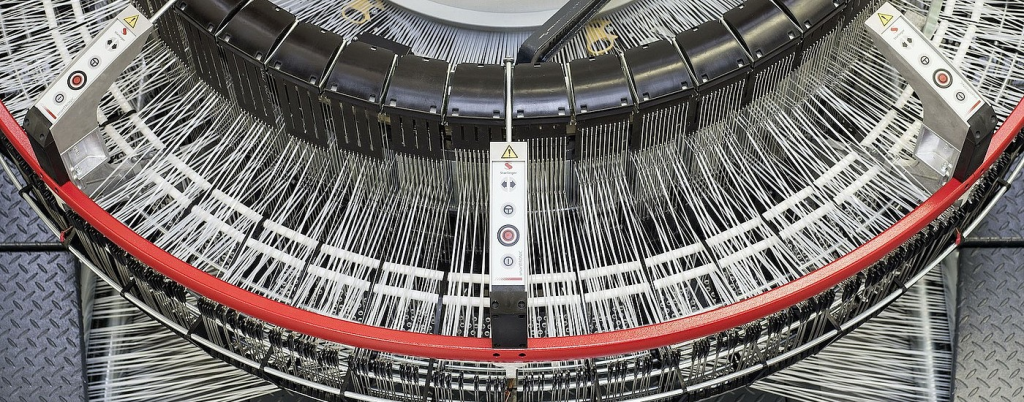
At VidePak, equipment pedigree meets process discipline. Founded in 2008, staffed by 568 people with a core team holding 30+ years of woven packaging experience, we run top‑tier machinery from Windmöller & Hölscher (Germany) and Starlinger (Austria). Capacity is real: 16 extrusion lines, 100+ circular looms, and 30+ lamination/printing machines.
1) Tape (flat yarn) extrusion. Virgin PP is extruded, slit, and drawn to target tenacity. Draw ratio and tape denier are controlled so the fabric weaves cleanly and resists tear propagation.
2) Weaving. Circular or flat looms build a fabric typically 55–120 g/m². Stable warp/weft tension reduces waviness—critical for a smooth laminate and a crisp print.
3) BOPP printing. Your artwork is reverse‑printed on 15–35 μm BOPP (gloss, matte, or pearlized). Inks sit under the film for long‑haul rub endurance. Barcodes are placed in high‑contrast zones to scan on the first try.
4) Lamination. PP extrusion coating (usually 18–30 g/m²) bonds BOPP to the woven substrate, yielding an all‑polyolefin composite. Peel strength is validated (ASTM F904 logic) so panels don’t blister in the field.
5) Tubing, slitting & creasing. The laminate is slit to width, tubed, and creased to pre‑form the block‑bottom panels. Registration is camera‑checked to keep cuts true.
6) Valve insertion. Sleeve material (PE/PP‑compatible film) is welded or sewn in, with flap geometry tuned for your packer (air or impeller). Optional labyrinth vents purge air without dragging dust through the mouth.
7) Bottom forming. Hot‑air folding or ultrasonic tacks close the base into a square footprint. Geometry is matched to fabric stiffness so stacks stay flat.
8) QA & release. We record thickness (ASTM D6988/ISO 4593), tensile & tear (ASTM D882/D1922/D1938), dart impact (ASTM D1709), COF (ASTM D1894), print ΔE*/YI (ASTM E1164/E313), and sack performance per ISO 21898 (drop/stack). Each lot ships with a COA.
This is how BOPP Laminated Valve Woven Bags: Meeting Global Market Demands with Innovation go from resin to retail‑ready stacks without surprise. For valve architecture specifics, see BOPP Laminated Valve Woven Bags: Meeting Global Market Demands with Innovation.
What Is the Application of BOPP Laminated Valve Woven Bags: Meeting Global Market Demands with Innovation?
Agriculture & fertilizers. Moisture‑tolerant faces, bold color coding, and valve convenience make BOPP Laminated Valve Woven Bags: Meeting Global Market Demands with Innovation the default choice for NPK blends, urea, and soil amendments.
Animal nutrition. Feeds and premixes appreciate dust‑managed valves and anti‑slip surfaces; brands appreciate photo‑grade front panels and consistent barcode readability.
Food staples & agri‑commodities (where regulations allow). Rice, grains, pulses, sugar, and seeds benefit from square stacks and durable, printable surfaces.
Chemicals & minerals. Resins, masterbatch, gypsum, lime, fillers—abrasive routes where woven PP’s textile‑like tear resistance plus BOPP’s scuff shield earn their keep.
Retail display SKUs. Block‑bottom forms stand tall on shelves and in big‑box aisles—neat faces, tidy corners, less “bag slouch.”
Across these categories, the equation repeats: tighter cubes, cleaner mouths, fewer damages—BOPP Laminated Valve Woven Bags: Meeting Global Market Demands with Innovation turn packaging into a performance lever.
Why VidePak for BOPP Laminated Valve Woven Bags: Meeting Global Market Demands with Innovation?
Global coverage you can count on. USA, Europe, Brazil, South America, Southeast Asia, Japan, Korea, Central Asia, the MENA region, East Africa, and South Africa—our logistics map matches your sales footprint.
Scale without shortcuts. Over 100 circular looms, 16 extruders, and 30+ lamination/printing systems keep lead times low while maintaining repeatability. Annual sales stand around USD 80 million—capacity proven in the market.
Materials discipline. We use 100% virgin PP unless recycled content is requested. Additive packages are screened for low odor and recyclability alignment.
Design agility. Multi‑color printing, anti‑slip lacquers, micro‑vents, tamper‑evident tapes, and custom valve sleeves. Your density, your route, your look—your bag.
This combination—people, plant, process—puts real weight behind BOPP Laminated Valve Woven Bags: Meeting Global Market Demands with Innovation.
Typical Parameters — BOPP Laminated Valve Woven Bags: Meeting Global Market Demands with Innovation
| Parameter | Specification Window (Reference Ranges) | Notes for BOPP Laminated Valve Woven Bags: Meeting Global Market Demands with Innovation |
|---|---|---|
| Fabric GSM | ~55–120 g/m² | Heavier fabrics for 50 kg or abrasive products |
| Mesh / Denier | 8×8–14×14 / 600–1500D | Higher denier arrests tears in rough handling |
| BOPP Laminate | 15–35 μm (gloss/matte/pearl) | Reverse‑printed for photo‑grade branding |
| Extrusion Coat (PP) | ~18–30 g/m² | All‑polyolefin bond; peel validated (ASTM F904 logic) |
| Valve Sleeve | PE or PP/PE film; custom flap angle | Tuned for air/impeller packers; dust‑managed |
| Bag Size (flat width) | 300–600 mm | Length 500–1100 mm; gusset per volume |
| Capacity | 10–50 kg | 25 kg is the global workhorse |
| Printing | Up to 6–8 colors | High contrast for GS1 codes (ISO/IEC 15416) |
| COF Targets | Static ≥ 0.5; kinetic controlled | Pallet grip vs conveyor glide (ASTM D1894) |
| Performance | ISO 21898 drop/stack | Route‑risk validation on your lanes |
All values reflect commonly published ranges on global B2B platforms and VidePak trials; final specs are confirmed through your line tests and route simulations.
Quality & Compliance — BOPP Laminated Valve Woven Bags: Meeting Global Market Demands with Innovation
We anchor claims in standards so audits are short and confidence is long. Mechanical testing follows ASTM D882/D1922/D1938/D1709; surface friction per ASTM D1894; thickness by ASTM D6988/ISO 4593; print color by ASTM E1164/E313; bag performance by ISO 21898. For food‑adjacent programs, we align materials with EU 10/2011 (plastics), 21 CFR 177.1520, and conduct EN 1186 migration testing when required. Forestry or sustainability documents (e.g., FSC® for paper components in hybrid builds; ISO 18604 for material recycling memos) are available on request.
Seaworthy Packing & Global Delivery — BOPP Laminated Valve Woven Bags: Meeting Global Market Demands with Innovation
Ocean freight is unforgiving; our unit loads are prepared accordingly. Pallets are matched to container footprints—1200×1000 mm (ISO), 1100×1100 mm (Asia), or 1200×800 mm (Euro)—to maximize cube without overhang. Finished bags move in multi‑ply corrugated master cartons with edge protectors, locked by 3 horizontal × 3 vertical PET straps. A full stretch‑wrap shroud plus voyage‑sized desiccant packs mitigate container “rain.” Labels carry lot IDs that link resin to extrusion to conversion, so receiving is fast and traceability is clean.
This logistics discipline keeps BOPP Laminated Valve Woven Bags: Meeting Global Market Demands with Innovation looking like marketing intended—straight, dry, and scan‑ready
- What Are BOPP Laminated Valve Woven Bags: Meeting Global Market Demands with Innovation?
- What Are the Features of BOPP Laminated Valve Woven Bags: Meeting Global Market Demands with Innovation?
- What Is the Production Process of BOPP Laminated Valve Woven Bags: Meeting Global Market Demands with Innovation?
- What Is the Application of BOPP Laminated Valve Woven Bags: Meeting Global Market Demands with Innovation?
- Why VidePak for BOPP Laminated Valve Woven Bags: Meeting Global Market Demands with Innovation?
- Typical Parameters — BOPP Laminated Valve Woven Bags: Meeting Global Market Demands with Innovation
- Quality & Compliance — BOPP Laminated Valve Woven Bags: Meeting Global Market Demands with Innovation
- Seaworthy Packing & Global Delivery — BOPP Laminated Valve Woven Bags: Meeting Global Market Demands with Innovation
- Conclusion
The global packaging industry has witnessed rapid advancements over the past decade, driven by increasing demand for durability, customization, and aesthetic appeal. Among the versatile solutions available today, BOPP Laminated Valve Woven Bags stand out as a pivotal product. These bags offer not just superior functionality but also the flexibility to cater to diverse market needs.
Key Features of BOPP Laminated Valve Woven Bags
BOPP (Biaxially Oriented Polypropylene) laminated valve woven bags have gained global recognition for their strength, aesthetic possibilities, and eco-friendliness. Below, we delve into their key attributes:
- Customization Options
- Size and Thickness: Customizable dimensions and thickness levels allow clients to tailor the product to specific requirements, from heavy-duty industrial packaging to lightweight consumer goods.
- Printing Techniques: These bags support multi-color printing, including CMYK, Pantone, and RAL systems. High-definition graphics and full-surface printing ensure visually striking results.
- Laminated Coating: Enhances moisture resistance, increasing product shelf life and ensuring quality during storage and transportation.
- Durability and Functionality
Constructed from polypropylene, these bags exhibit superior tensile strength, making them ideal for storing bulk commodities like chemicals, fertilizers, and animal feed. - Sustainability
The recyclability of BOPP laminated valve woven bags aligns with the global push towards environmentally responsible packaging solutions.
Industry Trends Driving Demand
1. Growth in Industrial Packaging
According to a 2023 market report, industrial packaging is expected to grow at a CAGR of 6.5% between 2023 and 2028, driven by rising construction and agricultural activities globally. BOPP woven bags are increasingly favored due to their robustness and versatility.
2. Aesthetic Packaging in Consumer Goods
In a competitive retail environment, packaging serves as a critical marketing tool. Customizable designs and vibrant printing make these bags appealing to brands looking to elevate their market presence.
3. Sustainability Initiatives
Governments and corporations worldwide are focusing on sustainable solutions. The recyclability and reusability of BOPP woven bags make them a preferred choice for eco-conscious businesses.
Customization Parameters
| Parameter | Description |
|---|---|
| Size | Fully customizable to meet specific volume requirements. |
| Thickness | Options range from lightweight (50 GSM) to heavy-duty (200 GSM and above). |
| Printing | Full-surface, multi-color printing (CMYK, Pantone, RAL systems). |
| Laminations | Glossy, matte, or anti-skid finishes available. |
| Valve Options | Custom valve designs for efficient filling and sealing processes. |
Use Cases and Benefits
- Agricultural Sector: Suitable for fertilizers and seeds, these bags ensure protection from moisture and physical damage.
- Chemical Industry: Their durability and resistance to chemical degradation make them ideal for storing raw materials.
- Food Packaging: From grains to sugar, the moisture-resistant laminate ensures product safety during transit.
Addressing Common Customer Concerns (FAQs)
- Can the bags support high-resolution printing for branding purposes?
Yes, BOPP laminated bags support high-definition printing using CMYK and Pantone color systems, ensuring vivid and durable designs. - How do these bags ensure product safety in extreme conditions?
The laminated surface provides excellent moisture resistance, while the polypropylene material ensures durability and resistance to tears. - Are these bags eco-friendly?
Absolutely. BOPP woven bags are fully recyclable and support sustainability initiatives. - What industries use BOPP laminated valve woven bags?
They are widely used in agriculture, chemicals, construction, and consumer goods industries.
Recommendations for Global Markets
To meet diverse market demands, manufacturers should focus on:
- Expanding customization capabilities, including advanced printing techniques and innovative valve designs.
- Investing in sustainability through improved recyclability and renewable materials.
- Collaborating with global distributors to tap into emerging markets in Southeast Asia, Africa, and South America.
Key Insights from Related Resources
- Enhancing Global Packaging: BOPP Laminated Valve Woven Bags – The Pinnacle of Efficient and High-Quality Packaging highlights the evolving role of BOPP bags in meeting diverse industrial needs.
- Customization Trends: Customizing Printed Woven Bags to Meet Diverse Market Demands – A Comprehensive Approach by VidePak explores innovative customization options to enhance brand visibility.
Conclusion
BOPP laminated valve woven bags are not merely a packaging solution but a testament to innovation in materials science and market responsiveness. Their durability, customization potential, and sustainability align with global trends, making them indispensable in modern supply chains. By continuously evolving and addressing client-specific needs, businesses can unlock new opportunities in the competitive packaging industry.