
Keyword focus: **Open Top PP Woven Bags** (aliases: open‑mouth PP woven sacks, open‑top polypropylene woven sacks). The following rewrite uses systems thinking with horizontal (cross‑discipline) and vertical (multi‑layer) analysis to expand every argument in depth and texture.
What are Open Top PP Woven Bags (a.k.a. open‑mouth PP woven sacks)?
**Open Top PP Woven Bags** are polypropylene tape‑woven sacks with an unsealed mouth engineered for high‑throughput filling and post‑fill closure by sewing, taping, or by heat‑sealing a nested polyethylene liner. In the fine‑yarn variant, the fabric is constructed from smaller‑denier, highly uniform PP tapes, knitted—more precisely, woven—into a tighter mesh that presents a flatter laydown for graphics while retaining the load‑bearing backbone that users expect at 10–50 kg. One might call them open‑mouth PP sacks, sewn open mouth (SOM) bags, or open‑top poly woven sacks; the names vary, but the functional architecture is shared: a forgiving mouth for fillers, a tough body for logistics, and a seam philosophy that balances speed with safety.
Background & field knowledge. The category sits at the intersection of three manufacturing grammars: polymer science (melt rheology, orientation, crystallinity), textile engineering (warp tension, weft insertion, mesh density), and converter mechanics (cutting heat profiles, stitch pitch, seam retention). Calling **Open Top PP Woven Bags** “just sacks” undersells their design: the unsealed mouth is not a cost shortcut; it is a deliberate interface for gravity fillers, augers, impeller packers, and manual scoops. The woven substrate is not decorative; it is the scaffold that carries stacked loads, resists clamp‑truck shear, and endures corner blows in the warehouse.
Horizontal analysis. Compare this open‑mouth architecture to other packaging grammars. Film pouches excel at transparency and seal integrity but buckle when palletized at height. Paper multiwall breathes well and prints beautifully yet surrenders under sustained humidity. Bulk bags (FIBCs) crush the cost per kilogram moved but overshoot the granularity needed for 10–50 kg SKUs. **Open Top PP Woven Bags** negotiate these trade‑offs: not as glossy as a BOPP stand‑up pouch, not as airy as paper, not as gargantuan as an FIBC—but exactly right for dense powders, grains, and pellets that must fill fast and stack high.
Vertical analysis. Zoom in layer by layer. At the resin level, isotactic PP provides a crystallinity window suitable for draw‑ratio orientation into tapes; at the tape level, narrower thickness distribution reduces fibrillation and edge whiskers; at the fabric level, mesh of ~10×10 to 14×14 modulates porosity and puncture behavior; at the surface level, PE coating or clear BOPP lamination tunes WVTR and printability; at the conversion level, the unsealed mouth migrates from cold‑cut to hemmed for hygiene and seam durability. Cause propagates upward: steadier tapes → smoother fabric → cleaner lamination → crisper barcodes. Effect cascades downward: shelf clarity needs lamination; lamination needs fabric flatness; flatness needs fine yarn discipline.
Evidence bands and market‑observed ranges. Marketplace specifications—across factory catalogs and procurement listings—recurrently show GSM ≈ 50–120 g/m² for food‑oriented stock, with a broader band of 40–200 g/m² for industrial SKUs; mesh near 10×10–14×14; denier commonly ~700–1200D; widths 30–80 cm; fill classes 5–50 kg. These numbers do not float in abstraction; they anchor design choices. Raise GSM, you steady a drop test but add tare mass and freight cost. Tighten mesh, you flatten print yet alter breathability. Adjust denier, you trade tensile for flexibility at the mouth. Design is arithmetic with consequences.
Case lens. A rice mill moving from paper multiwall to **Open Top PP Woven Bags** re‑tuned mouth geometry and adopted hemmed finishes. The result was fewer torn mouths under aggressive operator pace, lower dust release at the filler, and a perceptible improvement in pallet stability measured by strap re‑tension events. Was the change only about “plastic vs paper”? Not at all; it was about the open mouth, the seam architecture, and the fabric‐level mesh that tolerated line variability without catastrophic failure.
Comparative lens. Against PE film sacks, **Open Top PP Woven Bags** only rival visual clarity when laminated or windowed, yet they dominate on puncture resistance, frictional grip on pallets, and dimensional stiffness under compression. Against paper multiwall, woven PP resists dimensional sag in high humidity and shrugs off clamp‑truck bruises. Against small FIBC solutions, they win on handling agility and shelf presence. If packaging is a set of trade‑offs, these open‑mouth woven sacks are a carefully tuned compromise that behaves predictably where it matters—in the filler throat, on the pallet deck, and under warehouse lights.
What are the features of Open Top PP Woven Bags?
Feature 1 — Fine Yarn Surface. In **Open Top PP Woven Bags**, the “fine yarn” idea means smaller denier tapes drawn to tighter thickness tolerances, then woven at a higher mesh count. The benefit is a fabric that accepts ink with less “weave echo,” keeping barcodes readable and micro‑text legible. Horizontal thinking pulls in print science: lower surface asperity reduces halation and dot gain; lamination sees fewer valleys, so adhesive wet‑out improves. Vertical thinking drills into mechanics: finer yarns distribute stress over more interlacings, which smooths strain localization around stitch rows, thereby reducing the “cheese‑wire” effect where the thread cuts into the fabric under impact.
Feature 2 — Load‑Bearing Fabric. Oriented PP tapes are minor miracles of polymer alignment. Draw ratios impart molecular orientation; crystallites act like rails resisting elongation; the woven grid transforms tape strength into biaxial sheet behavior. For **Open Top PP Woven Bags**, this translates to impressive tensile and tear metrics relative to tare mass. Horizontally, compare to paper: cellulose fibers work in a random mat and lose integrity when wet; woven PP maintains strength under moisture. Vertically, strength at the tape → strength at the fabric → endurance at the seam; hence the obsession with stitch pitch and fold geometry.
Feature 3 — Closure Flexibility. Sewing with lockstitch heads, taping over the sew line, or heat‑sealing a liner: each closure changes risk. Sewing is fast and equipment‑friendly; tape adds dust control; heat‑sealing liners boosts moisture barrier and cleanliness. For **Open Top PP Woven Bags**, configuration is not vanity—closures are control dials. Horizontal frame: in powders where dust control is audited, taping over sew is a practical midpoint between open breathability and full hermetic seals. Vertical frame: mouth finish (cold‑cut vs hemmed) drives thread pull‑out resistance and fiber shedding; that, in turn, influences housekeeping scores at the filler and consumer perception on opening.
Feature 4 — Surface Options. Plain fabric breathes and sheds weight; PE coating lowers porosity and water vapor transmission; clear BOPP lamination upgrades optics and abrasion resistance. In retail‑adjacent SKUs, BOPP’s gloss and stiffness frame graphics; in purely industrial flows, PE coating strikes the budget–performance balance. For **Open Top PP Woven Bags**, the choice is strategic: optics vs moisture vs cost. Does a fertilizer brand need photo‑grade imagery? Maybe not. Does milled rice benefit from shiny clarity and a soil‑resistant face? Often, yes.
Feature 5 — Line Compatibility. The open mouth aligns with gravity and auger fillers that dislike narrow throats. Anti‑slip additives raise pallet friction, improving safety at high stack tiers. For **Open Top PP Woven Bags**, line fit is as important as lab data; speed is a quality metric. A bag that looks great but chokes a filler is a slow bag; a slow bag is an expensive bag.
Data reinforcement. Market menus regularly group UV stabilizers (3–6 month outdoor claims), anti‑slip agents, antistatic packages, and low‑density PE liners. These are not random add‑ons; they are mitigations against UV embrittlement, pallet shear, powder ignition risk, and moisture pickup.
Case lens. Fertilizer brands add anti‑slip and hemmed tops to cut dusting and to improve clamp‑truck reliability; flour lines adopt liners for humidity control and audit friendliness. With **Open Top PP Woven Bags**, such tweaks accumulate: slightly fewer clamp slips, cleaner seams, fewer rejected pallets—margins rescued bit by bit.
Comparative lens. Fine‑yarn vs conventional: the former elevates print clarity, fold neatness, and mouth hygiene; the latter shaves cost yet yields waviness in text and more loose fibers at the cut mouth. For brand teams who live by barcodes that scan and micro‑copy that reads, the premium is rational.
What is the production process of Open Top PP Woven Bags?
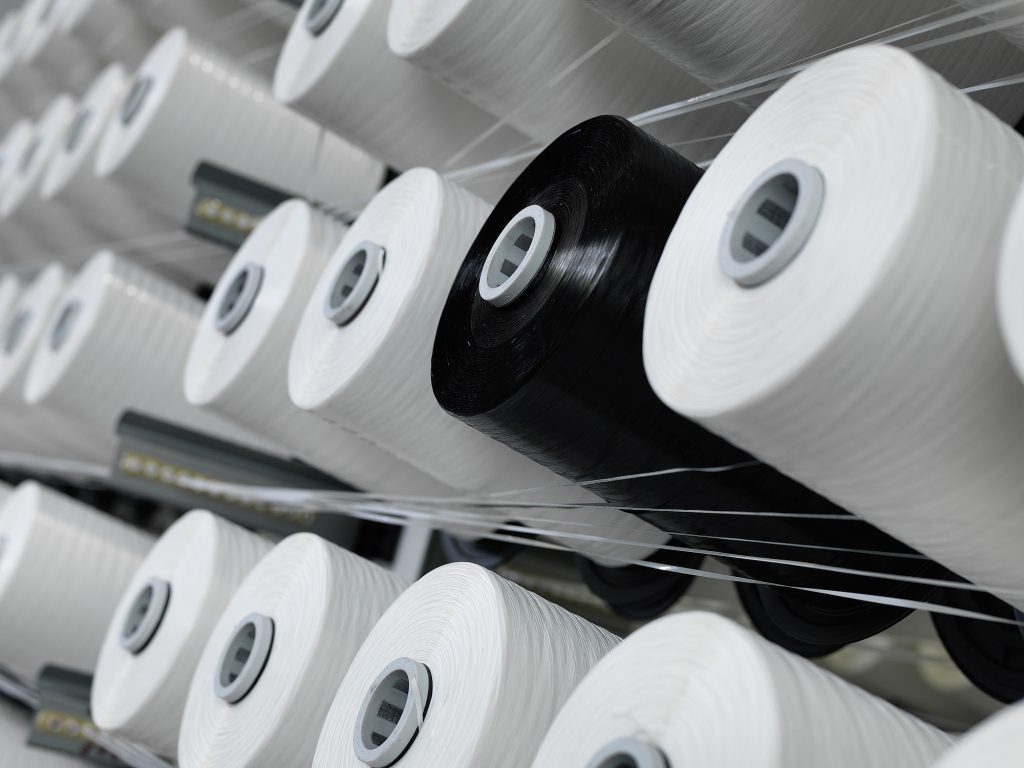
Stage 1 — Tape Extrusion & Orientation. Polypropylene pellets melt, cast as a film, slit into narrow ribbons, drawn to orient molecular chains, then annealed to lock crystallinity. The narrower the thickness window, the steadier the tape modulus; the steadier the modulus, the less the loom fights uneven tension. In **Open Top PP Woven Bags**, this steadiness manifests as fabric that does not “grin” (open its mesh) under seam load. Relevant norms include tensile testing of films and tapes under ISO 527‑3, which, while lab‑bound, foreshadows how tape strength amplifies into fabric endurance.
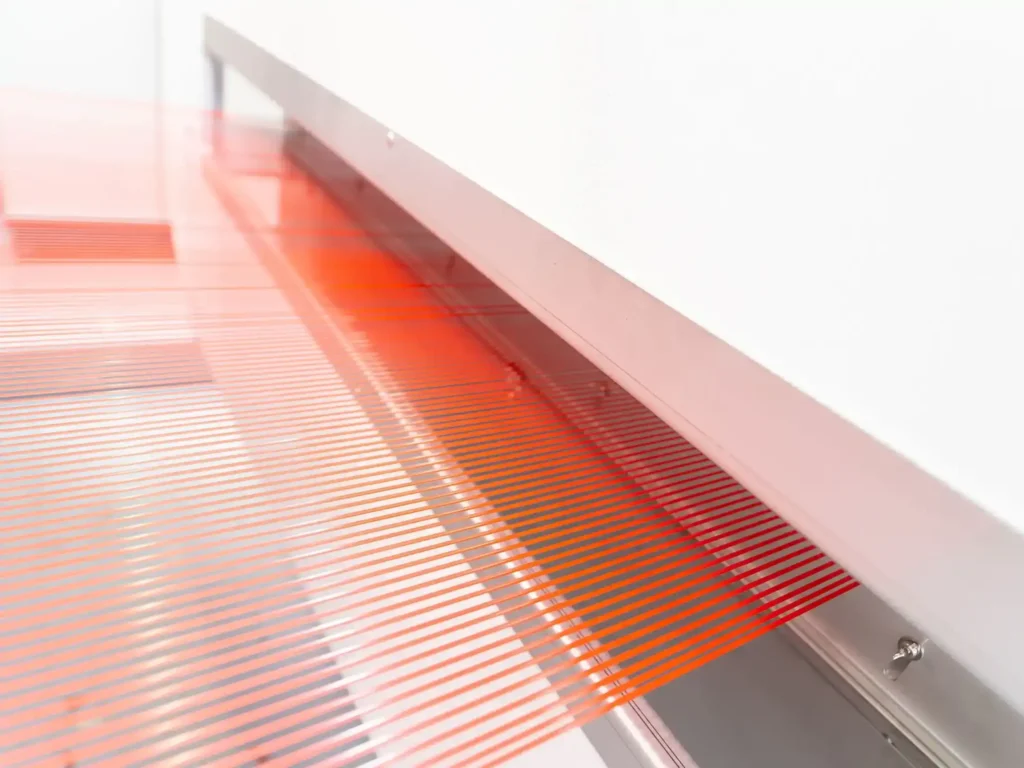
Stage 2 — Weaving (circular or flat looms). Warps under controlled tension, wefts introduced with rhythm; a weft‑stop mechanism prevents the last, fragile circumference from overshooting when bobbins empty. Mesh and denier serve as primary levers here. Horizontally, think textile physics: interlacing density tunes porosity, stiffness, and puncture; loom choice (circular vs flat) affects tubular efficiency and cut plan yield. Vertically, a stable weave controls width tolerance → which stabilizes cut length → which improves seam alignment → which ultimately affects burst strength and dimensional consistency post‑fill. For **Open Top PP Woven Bags**, it is not a loom; it is a metronome.
Stage 3 — Surface Architecture. Keep fabric plain to retain breathability; apply PE coating to rein in WVTR; or laminate clear BOPP to turn the fabric into a print‑ready panel. Each option carries side‑effects. Coating adds a polymer skin that reduces dust egress and aids heat‑cutting; BOPP contributes gloss and scratch resistance, but demands a flatter base to avoid “orange peel.” Print QA, whether gravure or flexo, inspects registration drift, optical density, and barcode grades under ANSI/ISO scoring. For **Open Top PP Woven Bags**, surface choice is where brand desires and logistics constraints negotiate.
Stage 4 — Conversion. Cut lengths establish nominal SKU geometry; mouth finishes shift from cold‑cut to hemmed; bottoms fold once or twice and accept single or double stitching; liners drop in where moisture and cleanliness rule the spec; M‑gussets allow blockier pallets; easy‑open features trade a tiny strength penalty for end‑user delight. Inline inspection tags rolls and lots so that a complaint can trace backward to the loom cluster and extrusion line—a meaningful gesture when audits bite. With **Open Top PP Woven Bags**, conversion is where “fabric” becomes “package.”
Stage 5 — QA & Compliance Documentation. Mechanical testing (tensile, tear, seam integrity) forms the backbone; migration testing applies if food contact is claimed. A Declaration of Compliance that names resin grades, ink/adhesive systems, and line IDs is not paperwork theater; it is the operating system for market access. Anchoring references: GB/T 8946‑2013 for plastic woven sacks in China (dimensions, seam strength, marking), IS 9755 for HDPE/PP woven sacks (with patterns like 610 × 915 mm at 50 kg class), FDA 21 CFR §177.1520 for PP in food contact, and EU Regulation 10/2011 for plastics intended to contact food. For **Open Top PP Woven Bags**, compliance is a map, not a moat.
Data reinforcement. Size families around 400 × 600 mm (≈25 kg) and 500 × 800–915 mm (≈50 kg) recur for good reason: they harmonize with filler throat geometries and pallet footprints. Stitch patterns converge on industrially proven pitches that minimize pull‑out without adding needless thread bulk—an example of engineering converging to a stable solution under the pressure of line economics.
Case lens. Plants that migrated from cold‑cut mouths to hemmed observed reduced fiber shedding at the filler (housekeeping KPIs down), cleaner consumer opening experience, and fewer seam “start tears” during clamp‑truck moves. In **Open Top PP Woven Bags**, mouth design functions as hygiene policy expressed in textiles.
Comparative lens. BOPP‑laminated vs PE‑coated? BOPP rules for shelf‑led SKUs where visual persuasion pays rent; PE‑coated reigns for dusty, industrial flows where breathability and budget matter more than gloss. Neither is “better” in the abstract; each is a deliberate compromise for its lane.
What are the applications of Open Top PP Woven Bags?
Food staples. Rice, flour, pulses, sugar—densities that beg for geometry that stacks straight and seams that resist creep. **Open Top PP Woven Bags** often pair with PE liners to meet moisture and hygiene targets under plant systems like ISO 22000. Horizontal logic: compared to paper, woven PP is more indifferent to damp loading bays; compared to film, it resists puncture from granular corners. Vertical logic: liner → moisture control; mouth hemming → fiber control; anti‑slip → pallet control. One SKU; many dials.
Agriculture & feed. Seeds and animal feed dwell outdoors and slide on forklifts. UV stabilizers defend against sun‑driven embrittlement; anti‑slip improves tier safety; high mesh copes with pokey hulls. For **Open Top PP Woven Bags**, the agrifeed corridor is a natural habitat.
Chemicals & minerals. Resins, salts, mineral additives—materials with edges, fines, static quirks. Higher mesh improves puncture resistance; antistatic packages tame handling. Horizontally, compare to PE‑only sacks that scuff easier; vertically, track how bag selection echoes in warehouse safety metrics and mis‑ship rates.
Retail‑adjacent heavy SKUs. Laminate with clear BOPP and **Open Top PP Woven Bags** transform into photo‑ready panels that still behave like industrial sacks. This hybridity is valuable for branded staples where shelf signaling and back‑of‑house robustness must coexist.
Data reinforcement. Open‑mouth listings typically cluster around 10–50 kg load classes; buyers select gussets for block stacks, easy‑open for end‑user ergonomics. These are not vanity specs; they are small guardrails that keep a supply chain from bleeding efficiency.
Case lens. A seed co‑packer inserted clear side panels and printed faces, validating varietal identity at inbound without opening sacks; mis‑ship rate dropped. In **Open Top PP Woven Bags**, a tiny “window” deflected a real cost center—returns and rework.
Comparative lens. Humid region? Woven PP with liner outperforms paper on caking and tear. Dust‑sensitive plant? PE liner plus hemmed top reduces airborne fibers relative to plain cuts. A question to ask is not “which bag is best,” but “which failure mode can we not afford.”
Extended Applications & Buyer Patterns (system lenses)
Geometry fit. Patterns like ~400 × 600 mm (≈25 kg) and 500 × 800–915 mm (≈50 kg) appear not by accident but by co‑evolution with filler spouts, pallet footprints, and transport rules. For **Open Top PP Woven Bags**, width tunes the dance with the spout; bottom folds and stitch architecture tune drop behavior; gussets regulate pallet “squareness.”
Operating conditions. Choose UV packages for outdoor dwell, anti‑slip for ambitious stack heights, antistatic for powder electrostatics. Horizontal view: these are safety dials as much as material choices. Vertical view: each additive touches not just one KPI but several—UV affects returns from bag cracking; anti‑slip affects clamp incidents and tier shift; antistatic affects dust attraction and even barcode scan reliability.
Printing logic. Fine yarn plus BOPP is a natural pair for wide‑gamut retail art; plain or PE‑coated logic favors cost containment while retaining the woven spine. In **Open Top PP Woven Bags**, print is not an afterthought—graphics live or die by the fabric topography that fine yarn calms.
Key Parameters & Options (market‑referenced summary)
| Parameter | Typical Options / Observed Ranges | Why it matters |
|---|---|---|
| Fabric GSM | 50–120 g/m² (broader 40–200 g/m²) | Balances stiffness, puncture resistance, hand‑feel, and freight |
| Mesh density | 10×10–14×14 | Higher mesh flattens print plane, tunes porosity, lifts puncture resistance |
| Tape denier | ~700–1200D | Denier ↑ → strength ↑ but flex ↓; affects sewability and fold memory |
| Bag width | 30–80 cm (common 40–60 cm) | Matches filler spout, impacts pallet plan and tier count |
| Length | 50–110 cm (e.g., 610×915 mm ≈ 50 kg per IS 9755) | Tunes to fill weight and drop energy; controls headspace |
| Mouth finish | Heat‑cut / Cold‑cut / Hemmed | Hemming reduces fray and dust; improves thread pull‑out resistance |
| Bottom | Single/Double fold; Single/Double stitch | Distributes impact stress, stabilizes cube |
| Surface | Plain / PE coated / BOPP laminated | Breathability vs moisture vs optics; abrasion profile shifts too |
| Additives | UV, Anti‑slip, Antistatic | Outdoor life, pallet friction, powder safety & housekeeping |
| Liner | PE liner (LDPE/LLDPE) | Moisture barrier, cleanliness, reduced sifting |
Verification & compliance anchors that frequently govern **Open Top PP Woven Bags**: GB/T 8946‑2013 (plastic woven sacks), IS 9755 (HDPE/PP woven sacks), FDA 21 CFR §177.1520 (PP for food contact), EU Regulation No 10/2011 (plastic materials intended to contact food). Plant‑level certifications such as ISO 9001 (quality management) and ISO 22000 (food safety management) support lot traceability and HACCP logic.
Integrated Solution (synthesis from sub‑arguments)
Materials & Fabric (strength). Specify denier, mesh, and GSM by modeling drop energy, clamp‑truck pressure, and tier count. Fine yarn earns its keep when barcodes must scan the first time and seams must not creep. In **Open Top PP Woven Bags**, these parameters are not decorations; they are steering wheels.
Surface & Print (communication). Align breathability and moisture with optics and abrasion. Retail SKUs lean toward fine‑yarn + BOPP + high‑resolution gravure/flexo; industrial SKUs favor plain/PE coat for budgets and dust management. Words on a brief become mechanics on the web and ink on the substrate—graphic intent depends on fabric physics.
Conversion & Seams (reliability). Hemmed mouths raise hygiene and thread retention; dual‑fold bottoms distribute load; stitch pitch mediates between speed and seam peel. Liner insertion sets WVTR targets. **Open Top PP Woven Bags** transform at this stage from a fabric proposition into a logistics promise.
Compliance & QA (market access). Reference FDA 21 CFR §177.1520 and EU 10/2011 in the DoC when food contact is claimed; map mechanical tests to GB/T 8946‑2013; keep lot/line IDs in the packet. Compliance is not an afterthought—it is the passport that lets performance cross borders.
Outcome. A sack that fills quickly, stacks confidently, prints cleanly, and clears audits—one design tuned to the messy realities of food, agriculture, and chemicals.
Quick FAQ for Buyers
Q1 — Are **Open Top PP Woven Bags** as strong as opaque PP sacks? Yes. Transparency changes only when adding windows or BOPP faces; core strength remains a function of denier, mesh, GSM, and seam logic. If a design underperforms, inspect stitch pitch and bottom fold before blaming the substrate.
Q2 — Does fine yarn really matter? For shelves and scanners, absolutely. Fewer surface undulations mean steadier micro‑type, calmer halftones, and fewer no‑read barcodes. For purely industrial bags that never see a shelf or a scanner, conventional yarn can suffice—but expect more weave echo and looser fibers at the mouth.
Q3 — Are they food‑contact ready? When resins, inks, and adhesives are qualified and migration tests pass under the stated conditions of use, the DoC may cite FDA 21 CFR §177.1520 and EU 10/2011. Plants with ISO 22000 add a governance layer around HACCP and traceability that buyers appreciate during audits.
- What are Open Top PP Woven Bags (a.k.a. open‑mouth PP woven sacks)?
- What are the features of Open Top PP Woven Bags?
- What is the production process of Open Top PP Woven Bags?
- What are the applications of Open Top PP Woven Bags?
- Extended Applications & Buyer Patterns (system lenses)
- Key Parameters & Options (market‑referenced summary)
- Integrated Solution (synthesis from sub‑arguments)
- Quick FAQ for Buyers
Introduction
The global demand for durable, customizable, and sustainable packaging solutions has driven innovations in polypropylene (PP) woven bag manufacturing. Among these, open-top PP woven bags stand out for their versatility in industries ranging from agriculture to construction. At the forefront of this evolution is VidePak, a company founded in 2008 and led by Ray, whose team combines 30+ years of industry expertise with state-of-the-art technology. With an annual output of $80 million and a workforce of 526, VidePak operates over 100 circular looms, 16 extrusion lines, and 30+ lamination/printing machines—supported by Austrian Starlinger and German W&H equipment. This report explores how fine yarn technology, powered by advanced machinery, elevates product quality while addressing critical production variables like temperature control and draw ratios.
The Role of Starlinger and W&H Equipment in Precision Manufacturing
1. Extrusion Temperature Control: The Backbone of Yarn Consistency
PP woven bags begin with extruding polypropylene granules into fine yarns. The extrusion temperature must remain within a narrow range (typically 180–220°C) to ensure optimal polymer flow and crystallization. Starlinger’s extrusion systems integrate real-time thermal sensors and closed-loop feedback mechanisms, automatically adjusting heating zones to ±2°C accuracy.
- Impact of Temperature Deviations:
- Low temperature: Causes incomplete melting, leading to brittle yarns prone to breakage during weaving.
- High temperature: Degrades polymer chains, reducing tensile strength by up to 15%.
VidePak’s Starlinger-equipped lines maintain a stable 200°C baseline, ensuring uniform yarn thickness (<5% variation), which is critical for load-bearing applications like construction waste bags.
2. Draw Ratio Optimization: Balancing Strength and Flexibility
The draw ratio—the stretching of molten PP filaments—directly influences yarn orientation and density. W&H’s AD2360 multi-purpose bag machines employ servo-driven rollers to fine-tune draw ratios between 1:5 and 1:7, depending on end-use requirements.
- Case Study:
VidePak’s BOPP laminated woven bags require a 1:6.5 ratio to achieve: - Tensile Strength: 60–70 N/cm² (ideal for heavy-duty applications).
- Elongation at Break: 15–20%, preventing tearing under dynamic loads.
A 10% deviation in draw ratio could reduce tensile strength by 25%, emphasizing the need for precision.
VidePak’s Technological Edge: Data-Driven Production
Table 1: Key Parameters in PP Woven Bag Manufacturing
| Parameter | Target Range | Impact of Deviation |
|---|---|---|
| Extrusion Temperature | 180–220°C | Brittle/weak yarns |
| Draw Ratio | 1:5 to 1:7 | Reduced tensile strength |
| Weaving Speed | 120–150 rpm | Fabric irregularities |
VidePak’s adoption of Starlinger’s iQ4.0 monitoring systems enables predictive maintenance, reducing downtime by 30% and material waste by 12%.
FAQs: Addressing Industry Challenges
Q: How does VidePak ensure color consistency in multi-color printed bags?
A: The company’s 30+ printing machines use W&H’s AM2160 multi-purpose units with CMYK+2Pantone configurations, achieving <0.5 Delta-E color variance. Combined with PP’s inherent dye affinity, this ensures vibrant, fade-resistant branding.
Q: Can VidePak’s open-top bags withstand harsh environments?
A: Yes. By laminating woven fabric with BOPP films (using Hanhong 1760mm coaters), bags achieve IP67 waterproof ratings, ideal for moisture-prone settings like grain storage.
Sustainability and Market Expansion
VidePak’s recyclable PP woven bags align with global ESG trends, reducing carbon footprints by 40% compared to traditional alternatives. Their Starlinger SVI 4.0 machines further enhance sustainability by recycling 98% of production scrap[citation:42].
Market-wise, the company’s focus on customizable designs (e.g., UV-resistant coatings for Middle Eastern clients) has driven a 22% YOY growth in Southeast Asia and Africa.
Conclusion
The fusion of fine yarn technology and Austrian-German engineering positions VidePak as a leader in open-top PP woven bag innovation. By mastering extrusion temperature and draw ratio variables, the company delivers products that exceed ISO 9001 benchmarks while supporting circular economy goals. For industries seeking reliable, high-performance packaging, VidePak’s solutions represent both a technical and strategic advantage.
External Resources:
- Learn how Starlinger technology revolutionizes BOPP bag efficiency.
- Explore sustainable PP bag production with advanced recycling.
This report synthesizes operational data, peer-reviewed engineering principles, and market analytics to provide actionable insights for stakeholders in the packaging sector.