
What Are Woven Bags with PE Liners: Optimizing Retail Packaging for Enhanced Protection?
Woven Bags with PE Liners: Optimizing Retail Packaging for Enhanced Protection—shorthand Woven Bags with PE Liners—are dual‑layer sacks that pair a high‑tensile polypropylene (PP) woven exterior with an integrated polyethylene (PE) inner liner. Industry friends may call them “PP‑PE Combo Sacks” or “Lined Woven Retail Bags,” but the mission is the same: protect moisture‑sensitive or odor‑rich goods while preserving the stacking muscle of woven PP. The PE liner is either loose‑inserted or extrusion‑fusion‑bonded, creating a hermetic cocoon within a rugged shell—think raincoat inside a Kevlar vest.
Stand‑Out Features of Woven Bags with PE Liners: Optimizing Retail Packaging for Enhanced Protection
- Moisture & Aroma Barrier – 40 µm food‑grade PE liner drives WVTR below 0.5 g m⁻² 24 h⁻¹ and locks in volatile flavors—ideal for coffee beans or specialty pet food.
- High Tensile Backbone – 65 × 65 ppi woven PP fabric delivers ≥90 N warp tensile (ASTM D5034), shrugging off conveyor knocks and warehouse drops.
- Multilayer Print Canvas – Eight‑colour flexographic graphics can be applied either on the outer PP or on a trapped BOPP layer for scratch‑free retail appeal.
- Easy‑Open & Re‑close Options – Tear‑tapes, Velcro® strips, or slide zippers integrate seamlessly, turning bulk packaging into pantry‑friendly formats.
- Sustainability Footprint – Both PP shell and PE liner belong to the polyolefin family, enabling mono‑stream recycling after simple delamination in float‑sink systems.
How VidePak Manufactures Woven Bags with PE Liners: Optimizing Retail Packaging for Enhanced Protection
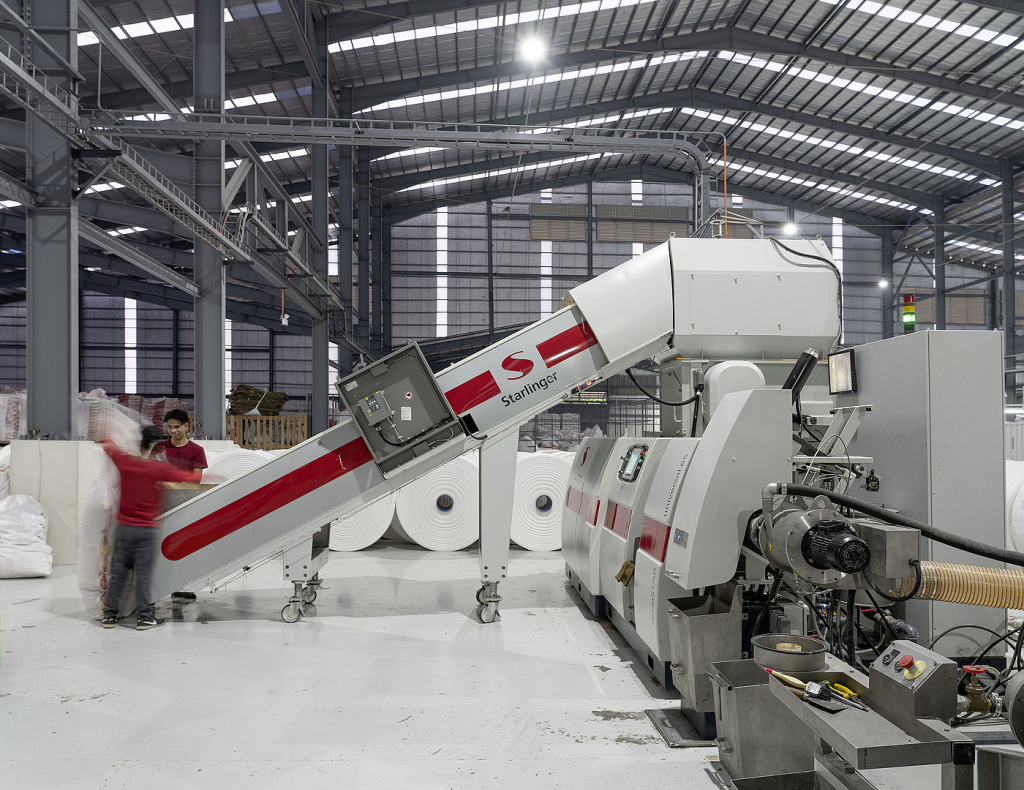
- Woven Fabric Creation – Virgin PP resin becomes 2.5 mm slit tapes on 16 Starlinger FX 6.0 extrusion lines; over 100 circular looms weave the tapes into 50–70 ppi fabric.
- Liner Fabrication – Food‑grade LDPE pellets are blown into 40 µm tubular film, corona‑treated to 38 dyn cm⁻¹ for anti‑blocking and printing adhesion.
- Integration – Option A: Loose liner inserted and cuffed during bag conversion; Option B: PE film extrusion‑bonded to fabric under 300 °C melt at 4 bar nip pressure, creating a 3‑layer composite.
- Printing & Finishing – W&H Miraflex presses lay down 8‑colour, low‑VOC inks; anti‑slip varnish is added inline; tear‑tapes or zippers heat‑sealed post print.
- Quality Gate – Burst tests (≥95 N), drop tests (ASTM D5276, 1.2 m), and QUV aging (200 kLy) ensure every batch meets VidePak’s ISO 9001:2015 and ISO 22000:2018 benchmarks.
Where Woven Bags with PE Liners: Optimizing Retail Packaging for Enhanced Protection Excel
| Sector | Typical Fill | Advantage of Woven Bags with PE Liners: Optimizing Retail Packaging for Enhanced Protection |
|---|---|---|
| Gourmet Coffee | Whole beans 1–5 kg | Aroma‑lock liner preserves roast notes; resealable zipper adds consumer convenience |
| Premium Pet Food | High‑fat kibble 8–20 kg | Grease barrier prevents seep‑through; matt BOPP graphics elevate shelf appeal |
| Rice & Grains | Basmati rice 10 kg | Liner stops ambient humidity; clear window strip showcases grain quality |
| Fertilizer Retail Packs | 5 kg garden fertilizer | Liner avoids nutrient caking; UV inks survive outdoor garden‑center racks |
| Parameter | Woven Bags with PE Liners | Test Method |
|---|---|---|
| Fabric Density | 65 × 65 ppi | ASTM D3775 |
| Shell Tensile Strength | ≥90 N warp / ≥80 N weft | ASTM D5034 |
| Liner Thickness | 40 µm ± 3 µm | Micrometer stack |
| Moisture Barrier | <0.5 g m⁻² 24 h⁻¹ | ASTM F1249 |
| Drop Resistance | Pass 1.2 m, 5 faces | ASTM D5276 |
| UV Endurance | 200 kLy | QUV Accelerated |
Backed by VidePak’s 568‑person workforce and 30 years of accumulated expertise, Woven Bags with PE Liners: Optimizing Retail Packaging for Enhanced Protection ship from our W&H‑ and Starlinger‑equipped facility to over 40 countries, driving a USD 80 million annual turnover while keeping beans crisp, kibble fresh, and fertilizers free‑flowing.
- What Are Woven Bags with PE Liners: Optimizing Retail Packaging for Enhanced Protection?
- Stand‑Out Features of Woven Bags with PE Liners: Optimizing Retail Packaging for Enhanced Protection
- How VidePak Manufactures Woven Bags with PE Liners: Optimizing Retail Packaging for Enhanced Protection
- Where Woven Bags with PE Liners: Optimizing Retail Packaging for Enhanced Protection Excel
- Benefits of Woven Bags with PE Liners
- Innovations in Packaging Efficiency
- How These Innovations Benefit Retailers
- Product Parameters and FAQ
- Conclusion
In the retail industry, packaging is more than just a protective cover for products—it’s a critical part of the customer experience and a key factor in operational efficiency. Among the various packaging options, woven bags with polyethylene (PE) liners are becoming increasingly popular for their durability, moisture resistance, and cost-effectiveness. This article explores the advantages of using woven bags with PE liners in retail packaging, along with how advanced packing techniques are optimizing logistics.
Benefits of Woven Bags with PE Liners
Woven bags made from polypropylene (PP) are known for their strength and flexibility. By adding a PE liner, these bags become even more versatile, offering additional protection and extending their usability for a range of retail products. Let’s break down the key benefits:
1. Moisture Protection
One of the main advantages of woven bags with PE liners is their ability to protect products from moisture. The PE liner acts as a barrier, preventing moisture from entering the bag, which is particularly important for sensitive products like fertilizers, grains, or pet food.
For example, a pet food manufacturer uses woven bags with PE liners to ensure that their product stays dry during storage and transportation. This moisture barrier prevents contamination, keeps the food fresh longer, and helps maintain the product’s quality.
2. Increased Strength and Durability
The combination of a woven fabric and a PE liner enhances the strength and durability of the bag. Woven polypropylene is already strong enough to handle heavy goods, but when paired with a PE liner, it can withstand even more stress without breaking or tearing.
This is especially beneficial for bulk packaging. Take, for example, a company that ships construction materials or chemicals. By using woven bags with PE liners, they ensure the safety of the contents, even during long and rough shipping journeys. These bags can hold up under pressure and reduce the risk of damage to the products inside.
3. Customization for Branding
Woven bags with PE liners also offer customization options, allowing businesses to print logos, brand colors, and product information on the exterior. This makes the packaging more attractive and helps in promoting the brand at retail locations.
For instance, a company selling organic grains might use woven bags with vibrant, eco-friendly prints, while ensuring the product inside remains protected by the PE liner. The result is a visually appealing package that also serves as an effective marketing tool on store shelves.
Innovations in Packaging Efficiency
The efficiency of the packing process is just as important as the durability of the packaging itself. Innovations in packing machines and techniques are significantly improving how woven bags are used in retail packaging.
1. 200-Ton Packing Machines
One of the most significant advancements in packaging is the use of 200-ton packing machines. These machines are designed to optimize space in containers by packing more goods into each shipment, reducing the number of containers required and lowering transportation costs.
For example, imagine a retailer shipping woven bags filled with flour. Using a 200-ton packing machine, they can pack more bags into each container, reducing the number of containers needed for the shipment. This leads to lower freight costs and improves overall logistics efficiency.
2. Pallets and Stretch Film
Another innovation that optimizes the retail packaging process is the use of pallets and stretch film. Pallets allow for easier handling and stacking of bags, while stretch film provides extra protection during transit by securing the bags together and preventing shifting.
Take a scenario where a company is shipping bags of pet food. By stacking the bags on pallets and wrapping them with stretch film, the goods stay stable and protected, even during long-distance transportation. This method reduces the chances of damage during transit, ensuring the products reach their destination safely.
How These Innovations Benefit Retailers
The combination of woven bags with PE liners and advanced packing techniques offers several benefits for retailers and businesses alike:
1. Improved Logistics Efficiency
Using advanced packing machinery and techniques such as 200-ton packing machines, pallets, and stretch film results in faster loading times and reduced transportation costs. Retailers can ship more products in fewer containers, cutting down on freight costs and improving delivery times.
2. Cost Savings
By increasing the number of products per shipment and optimizing the packing process, retailers can significantly reduce their shipping expenses. The durability and moisture protection offered by woven bags with PE liners also help prevent damage and product loss, leading to fewer returns and less waste.
For example, a company selling bulk grains can save money on freight by using efficient packing techniques, while ensuring that the grains remain fresh and safe during transit. This results in both lower costs and higher customer satisfaction.
3. Sustainability
As environmental concerns grow, businesses are increasingly seeking ways to make their packaging more sustainable. Woven bags with PE liners are made from recyclable materials, which helps companies meet sustainability goals. Additionally, by optimizing packing processes, companies can reduce the carbon footprint associated with shipping.
For instance, using fewer containers thanks to better packing efficiency not only cuts costs but also reduces the number of emissions from transportation.
Product Parameters and FAQ
To better understand the specifics of woven bags with PE liners, here are some key product details and frequently asked questions (FAQs):
| Product Type | Material | Weight Capacity | Key Features | Common Applications |
|---|---|---|---|---|
| Woven Bags with PE Liner | Polypropylene + PE Liner | 10-50 kg | Moisture resistance, durability, customizable | Fertilizers, pet food, chemicals |
| Woven Bulk Bags with PE Liner | Polypropylene + PE Liner | 100-200 kg | Strength for bulk goods, water-resistant | Construction materials, grains |
FAQs:
Q1: Why is a PE liner used in woven bags?
A1: The PE liner provides moisture protection, ensuring that the contents of the bag remain dry and free from contamination, which is particularly important for sensitive products.
Q2: How do 200-ton packing machines improve efficiency?
A2: These machines allow for more efficient use of space in containers, enabling businesses to pack more goods per shipment and reduce the number of containers needed, which saves on transportation costs.
Q3: Are woven bags with PE liners strong enough for heavy products?
A3: Yes, woven bags with PE liners are designed to carry heavy goods, with the combination of polypropylene and the PE liner providing extra durability and strength.
Q4: How do pallets and stretch film improve the packaging process?
A4: Pallets make it easier to stack and transport goods, while stretch film ensures that the bags stay in place and are protected from damage during shipping.
Conclusion
Woven bags with PE liners offer a range of benefits for retail packaging, including moisture protection, enhanced durability, and customizable branding options. When combined with advanced packing techniques such as 200-ton packing machines and the use of pallets and stretch film, these bags provide an efficient and cost-effective solution for businesses looking to streamline their packaging process.
For more on optimizing packaging efficiency, check out this article on enhancing logistics and learn about the role of Kraft Paper Woven Bags in retail packaging.