
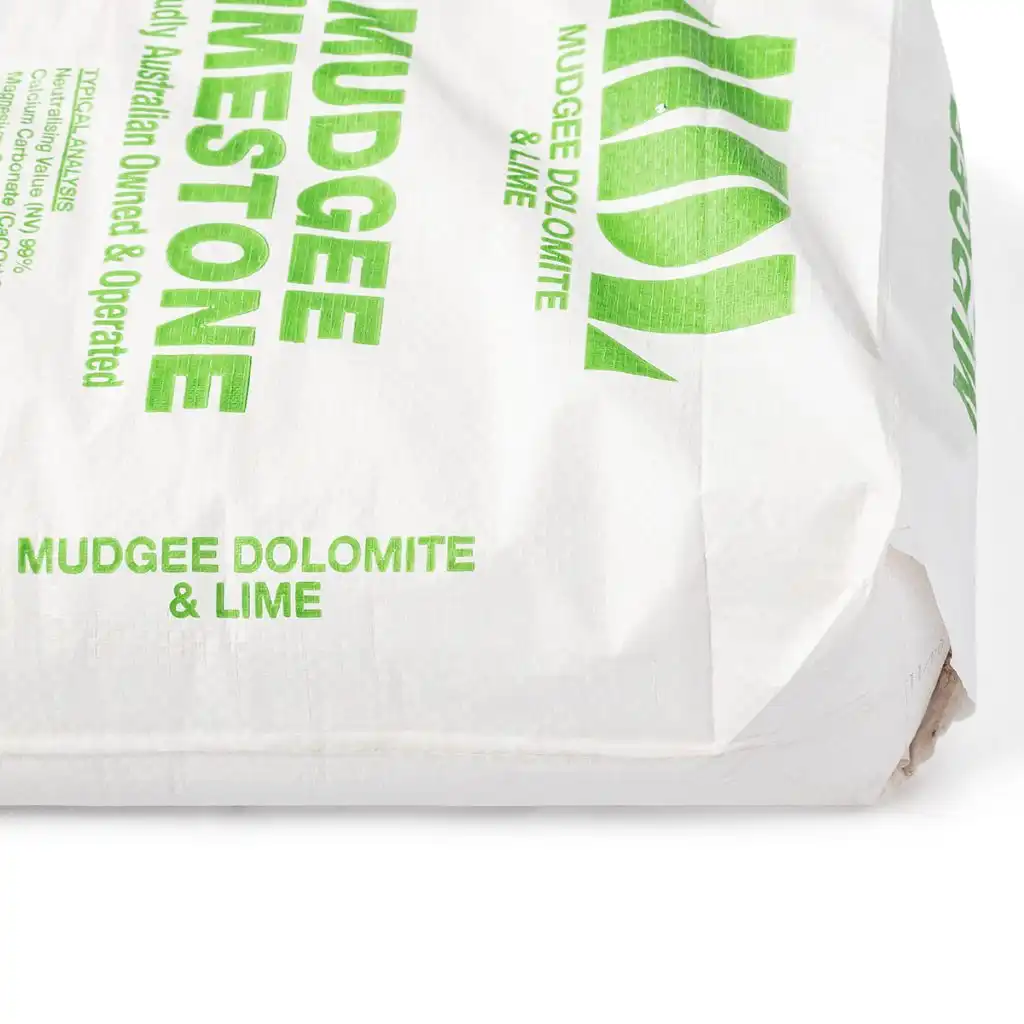
Paper or plastic? It’s a familiar question that extends beyond the grocery store and into the realm of industrial packaging. In bulk material handling, paper valve bags and PE (polyethylene) valve bags stand out as two pivotal solutions. Each offers a self-closing “valve” design for fast, efficient filling and sealing. Yet each brings its own material advantages, performance characteristics, and ideal use cases. Understanding their differences is not just a technical exercise – it’s key to choosing the right packaging for your product’s integrity and your business’s success.
Paper Valve Bags: Traditional Strength and Versatility
Paper valve bags (often called multi-wall paper sacks or pasted valve bags) are the traditional workhorse of many industries. These are the stout paper bags you’ve seen holding cement, flour, fertilizer, animal feed, and countless other dry bulk goods. They might look simple on the outside, but their construction is a refined blend of engineering and material science.
Structure and Materials of Paper Valve Bags
A paper valve bag is typically made from multiple layers of kraft paper, hence the term multi-wall. High-performance paper sacks usually have 2 to 5 plies (layers) of heavy-duty paper, which together give the bag its strength. Each layer is commonly a tough kraft paper (natural brown or bleached white), produced via the kraft process for strong fibers. The layers are glued (pasted) together at the ends to form a sturdy block-bottomed sack that is closed on both ends except for a small opening – the valve.
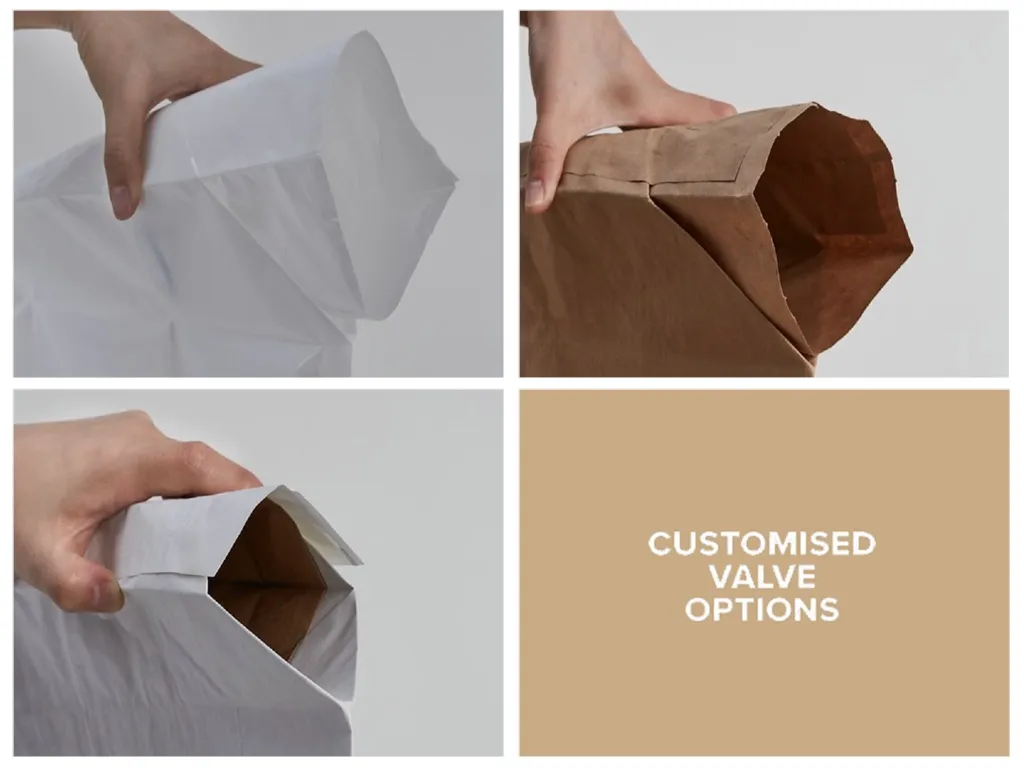
Valve Design: The valve is a small sleeve or opening in one corner of the bag, through which the product is filled. Once the bag is filled to capacity, the internal pressure of the product and sometimes a self-closing flap cause the valve to shut. In many paper valve bags, this closure is achieved simply by the folded paper sleeve and the weight of the contents (self-sealing by friction). However, some designs allow additional closure methods: for example, ultrasonic or heat-sealable valves where a thin plastic film is incorporated in the valve sleeve to weld it shut after filling, or tuck-in valves that can be manually folded in for extra security. This variety of valve types means paper bags can be tailored to different needs for leak-proofness and cleanliness.
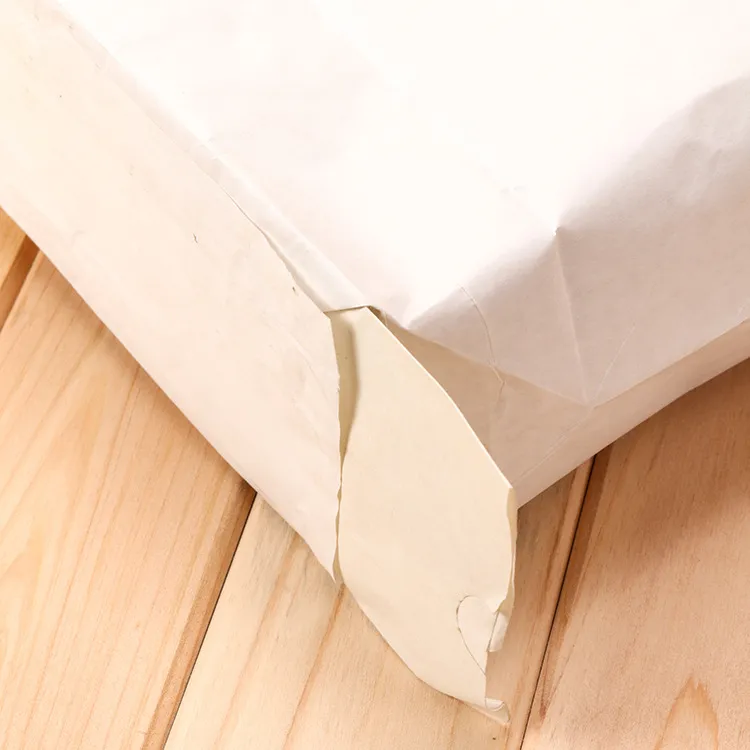
Block Bottom Construction: Both ends of a paper valve bag (the bottom end and the top end around the valve) are usually block-bottomed and sealed by pasting (gluing) the paper layers together in overlapping patterns. This creates a brick-shaped bag that sits flat and stacks well. The block bottom and multi-ply walls give the bag a rigid, square shape when filled, aiding optimal palletization (neat stacking with minimal wasted space). The seams created by pasting are very strong when done correctly – in fact, the filled bag often can withstand significant weight and pressure without bursting, as the load is distributed across the block bottom and side seams.
Optional Liners and Coatings: Paper, being porous, can absorb moisture or let fine powders sift out. To extend its capabilities, VidePak can integrate plastic films or coatings into paper bags when needed. For example, a thin HDPE or LDPE liner can be inserted as one of the inner plies, or an inner ply might be poly-coated (a layer of polyethylene bonded to the paper). These additions act as a moisture barrier and greatly improve the bag’s resistance to humidity or oil/grease, while still allowing the outer paper layers to provide strength and a printable surface.
Perforations for Venting: When filling a paper valve bag with fine powder at high speed, air gets trapped and needs to escape. Paper bags often feature micro-perforations – tiny pinholes in selective areas of the bag – to allow air to quickly evacuate during filling without letting too much product dust out. Because the paper itself is porous (especially through the seams and natural fiber gaps), it actually “breathes” more than a plastic bag. This breathability can be an advantage for fast filling and settling of contents. Some paper bags have full-body perforations or vent strips to further assist de-aeration for very fast packer machines or very fine powders. Once the product settles, the pores and perforations are small enough that significant leakage of product is minimal (and any very fine dust that does escape typically stays within acceptable limits for many industrial settings). In sensitive environments, though, additional valve sealing or liners are chosen to minimize dust.
In essence, the construction of paper valve bags is about layering and smart design: layers of strong paper for strength, clever folding/pasting for shape and closure, and optional plastic elements for barrier or sealing. The result is a tough, stackable package that has been the go-to solution for heavy, dry products for decades.
Performance Characteristics of Paper Valve Bags
Paper valve bags have earned their reputation by performing reliably in a wide range of conditions. But like any material, paper has its strengths and its limitations:
Strength and Durability: Multi-wall paper sacks are remarkably strong in tensile and burst strength. The multi-layer structure means even if one layer gets a small puncture, the others still hold the product. They can endure the weight of heavy contents (25kg, 50kg sacks are common) and tolerate reasonable drops or bumps. In fact, for impact resistance, a well-made paper bag can survive drops from a meter or more when filled, without bursting, especially if dropped on its flat side. The block-bottom design helps distribute impact forces. However, compared to polyethylene film, paper is less puncture-resistant to sharp objects. A nail or splinter on a pallet might puncture a paper bag more readily. Paper also has low stretch – it doesn’t elongate much under stress – which is a double-edged sword: it holds shape (good for stacking), but if overloaded or sharply impacted, it can tear rather than flex.
Moisture Sensitivity: Here lies the classic drawback of paper. Paper is hydrophilic – it absorbs moisture from the environment. In humid conditions or if exposed to water, a paper bag can weaken; the fibers lose strength when wet, and layers can delaminate if soaked. A small amount of moisture (like occasional high humidity) might just make the bag softer, but significant moisture can be catastrophic (think of a wet paper sack falling apart). To combat this, as mentioned, many paper valve bags for moisture-sensitive uses come with plastic liners or moisture barriers. These hybrid bags greatly improve moisture resistance, but they also increase cost and complicate recyclability slightly (since it’s mixed materials). Still, even with liners, you generally wouldn’t submerge a paper bag or leave it in the rain. In applications like cement or chemicals, users ensure the bags are kept on pallets with stretch hooding or in covered storage to prevent water exposure. So, in dry conditions, paper bags perform excellently; in very damp conditions, caution or additional protection is necessary.
Dust and Sift Resistance: A well-made paper valve bag with proper valve closure is fairly sift-resistant, but not 100%. Fine powders can find their way out of microscopic gaps or through the valve if not fully sealed. If you slap a filled paper bag, you might see a small puff of powder escape from the valve or a pore – that’s the “sifting”. For many industrial goods (cement, minerals, etc.), a small amount of dusting is acceptable and expected. However, in cleaner environments or with hazardous powders, this is a concern. Paper bags can be fitted with sift-proof valve designs (like a double-trap or a sleeve that folds deeper) and even sealed valves using ultrasonic welding of a plastic insert, as some modern designs allow. These features significantly reduce leaking of product. Still, PE valve bags inherently have the edge in achieving near zero dust leakage (we’ll discuss that soon). Paper’s slight permeability means it will never be as perfectly tight as a welded plastic film, but the trade-off is that this permeability helped it fill quickly.
Stackability and Handling: Paper valve bags are excellent for palletizing. Their textured paper surface and squarish shape means bags grip each other and stay put. Warehouses have long appreciated that paper sacks stack high without sliding. Also, paper bags are less slippery to handle manually – operators can grab and maneuver them without the bag sliding out of their hands. This can improve safety and ergonomics in manual bag handling. On the flip side, because paper doesn’t slip easily, the exterior can scuff or tear if bags are dragged across each other with force. Some paper sacks include anti-slip coatings that also add a bit of abrasion resistance, striking a balance between grip and toughness.
Printing and Appearance: Modern paper valve bags accept high-quality printing, up to 6-8 colors with crisp logos and text. Paper provides a matte, natural finish that some brands prefer for an eco-friendly or traditional look. Graphics on paper can be very attractive (think of the vibrant logos on flour bags or pet food paper sacks). One advantage is that paper doesn’t stretch or distort prints; what you print is what you get in shape. However, if the bag gets wet or very scuffed, the print can smear or scratch since it’s on the outer paper layer. Also, very fine photographic images are sometimes better rendered on a laminated plastic surface, but paper does a great job for most branding needs, with rich solid colors and sharp detail achievable.
Environmental Aspect: Paper bags are made from a renewable resource (trees) and are generally biodegradable. This gives them an eco-friendly image. They can often incorporate recycled paper in the inner plies (though the outer ply is usually virgin for strength and print quality). After use, a pure paper bag (no liner) is recyclable or compostable. If it has a plastic liner, recycling is trickier (it would need the liner separated or it may end up in landfill). Still, many customers consider paper sacks as a sustainable choice, especially if the product inside isn’t sensitive to moisture or if it’s used quickly. It’s worth noting, however, that the durability trade-offs exist – using a paper bag where a plastic one is needed could result in more product waste or spillage, which is its own environmental cost. Thus, “right material for the job” is the sustainable choice.
Typical Applications of Paper Valve Bags
Paper valve bags have been around longer than their PE counterparts and are deeply entrenched in various industries. Some common applications and scenarios include:
Building Materials: The quintessential example is Portland cement (usually 50kg in many markets). Paper valve bags have been the standard for cement for decades. They also package dry mortar, gypsum, plaster, sand, and other construction materials. These products are heavy and somewhat moisture-sensitive, but the trick is they are often used soon after delivery and typically stored indoors, so paper bags perform well. Plus, on construction sites, workers appreciate that paper bags will degrade rather than leaving plastic debris; any spillage of cement with paper bits can be cleaned or even mixed in small amounts (paper fibers in cement are negligible and often tolerated). Concrete companies like the ease of paper sacks that fill fast and breathe out the air from cement (cement is aerated when packed to make filling easier).
Chemicals and Minerals: Many industrial chemicals in powder or granular form (e.g., carbon black, titanium dioxide, various clays, mineral ores, salts, fertilizer etc.) have traditionally been shipped in multi-wall paper sacks. If the chemical is moisture sensitive (like some fertilizers that cake with humidity), either the bags are lined or careful handling ensures they stay dry. Fertilizers are a mixed case – some are in paper, some in plastic, depending on climate and product. Many mining products or minerals (like bentonite, drilling mud powders, etc.) go in paper sacks for cost-effectiveness, unless they will see harsh weather.
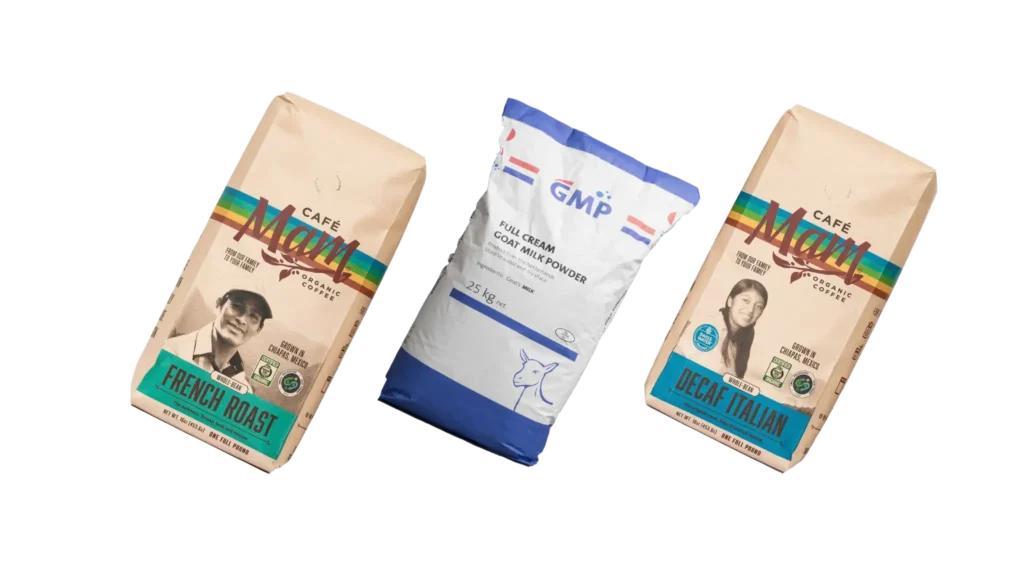
Food and Feed Products: Large bags of animal feed, pet food, seeds, flour, sugar, milk powder, coffee beans and similar items have utilized paper valve or open-mouth bags. Where hygiene standards allow and moisture is not extreme, paper is preferred for its natural image. For example, a 25kg bag of flour or sugar can be a multi-ply paper bag with a valve or an open top. Animal feed like poultry feed or dog food often comes in multi-wall paper sacks (sometimes with a thin liner to keep oils from seeping out). The breathability of paper can help prevent mold by letting the product “breathe” a little, which is useful for some organic materials. However, for very fine food powders, companies might add liners or use plastic if needed to meet food-contact regulations and keep things absolutely dry. Paper bags suitable for food use are usually made from virgin fiber and certified (e.g., FDA compliant or meet EU food packaging standards). VidePak’s facilities are able to produce food-grade paper bags, with clean-room production environments and safe inks, for clients that need them.
Agriculture and Commodities: Products like seeds, grains, soy meal, rice, and other agricultural commodities are often shipped in paper valve bags (or sewn open-mouth bags). The reason is often cost and tradition – paper is economical and these products are sold in bulk where a few lost kernels or a bit of moisture absorption is not usually critical if the supply chain is managed. Additionally, farmers and distributors appreciate that paper bags can be easily slit open or even biodegrade if left in the field by accident.
Cautions and Special Cases: While paper valve bags are widely used, certain scenarios are less suitable for them. For instance, if a product must be stored outdoors for an extended time, paper is risky (unless each pallet is very well protected by waterproof stretch hood and even then). Or if the product is extremely fine and hazardous (imagine a very fine chemical powder that is combustible or toxic if inhaled), any dust leaking is unacceptable – in those cases, plastic bags with heat seals might be chosen for extra safety. But such cases aside, paper bags dominate an array of everyday industrial packaging needs thanks to their balance of strength, cost-effectiveness, and adaptability with liners or coatings.
In summary, paper valve bags are a proven, reliable packaging solution. They have a rugged charm – simple materials doing a tough job well. They excel in cost-effectiveness, stacking strength, and quick filling, and with a few enhancements can tackle moderate moisture and cleanliness requirements. However, when moisture, absolute leak-proofing, or maximum toughness are top priority, one starts to consider the modern alternative: PE valve bags.
PE Valve Bags: Modern High-Performance Packaging
Structure and Materials of PE Valve Bags
A PE valve bag might look similar in shape to a paper bag when filled (often a brick-like block bottom), but its construction is entirely different. It’s a single-material bag made from layers of plastic film rather than layers of paper. Key points about its structure:
Coextruded Polyethylene Film: Most PE valve bags are made from multi-layer coextruded film, typically 2 to 5 layers of polyethylene blended for different properties. For example, VidePak produces PE bags using a combination such as HDPE (high-density PE) or MDPE for outer layers and LLDPE (linear low-density) or mLLDPE (metallocene LLDPE) for inner layers. The outer layers (HDPE/MDPE) give the bag stiffness and abrasion resistance, so it holds shape and resists scuffing. The inner core layers (LLDPE) provide toughness and flexibility, so the bag doesn’t tear easily and can absorb impacts. These layers are all bonded as a single film tube during extrusion – meaning, when you look at the bag, you won’t peel apart “layers” like paper; it feels like one thick plastic sheet, but internally the composition varies across the thickness. The overall film thickness for a PE valve bag is often in the range of 100 to 180 microns (0.10 to 0.18 mm), depending on bag size and strength needs. This thick film is what allows the bag to carry heavy loads without puncture. Yet, even at that thickness, the bag is usually lighter than an equivalent multi-wall paper bag, because plastic has a lower density than paper and because you typically need fewer total millimeters of material to achieve strength.
Sealed Seams and Block Bottom: Unlike paper bags which are glued, plastic valve bags are sealed by heat welding. During manufacturing, the coextruded film is formed into a tube (either in-line during extrusion or later on a conversion line). That tube is then cut to size and the bottoms are sealed using heat (thermal welding) or sometimes by ultrasonic sealing. The bottom of a PE valve bag can be made in a block-bottom style as well: the film is folded into flaps and then those flaps are heat-sealed flat, creating a rectangular bottom. Properly sealed, this bottom is extremely strong and entirely leak-proof (no pinholes, since the plastic melts into a continuous joint). There is also typically a back seam running vertically where the film’s edges were joined, unless the bag is formed seamless from a blown film tube. This back seam is also welded. All seals are as strong as the film itself when done correctly, meaning there’s no weak point where glue might fail – it’s all one homogeneous plastic structure at the joints.
Valve Sleeve and Closure: The valve on a PE bag is usually an internal plastic sleeve that is part of the bag’s construction. It might be made of a slightly stiffer plastic or just the same film folded to create a sleeve. During filling, the valve sleeve allows the spout to enter and then product flows in. Once the bag is filled and dropped off the spout, the valve is designed to pinch shut (the pressure of product forces the sleeve closed). Many PE bags use a self-sealing valve that achieves a decent seal just from that pressure and friction. However, one of the big advantages of PE valve bags is the option for welded valve sealing after filling. Using heat or ultrasonic energy, the valve opening can be permanently sealed in a second or two. For instance, an ultrasonic sealer can be mounted at the packer so that right after the bag is filled, the protruding bit of the valve (if any) is vibrated and fused shut. This creates a truly dust-tight, airtight closure. No paper bag can match that – even if you glue a paper valve shut, it’s not as hermetic as a welded plastic seam. This sealed valve is a game-changer for keeping the product in and everything else (moisture, contaminants) out. Not every user needs to heat-seal the valves, but the capability is there for those who do (such as for hazardous powders, food-grade products, or long storage requirements).
Venting Technology: As plastic film is not porous, PE valve bags have to incorporate venting solutions to allow air to escape during high-speed filling. There are a couple of methods: micro-perforations (like tiny needle holes in specific areas of the bag) and vent strips or channels. Some PE bags have a patch of microperfs, often on the back seam or near the valve area, which let air out quickly during filling but are small enough that product particles largely stay in. Another method is a venting channel integrated into the bag structure – essentially a small channel in the back seam that stays open just long enough for air to exit and then closes up. VidePak’s PE bags are engineered with carefully designed vent patterns so that filling rates can approach those of paper sacks. We balance the hole size and count to ensure the bag doesn’t puff up like a balloon or slow down filling, but at the same time we minimize those apertures so that after filling, dust leakage and moisture ingress through them are extremely low. Additionally, once the valve is sealed, any residual paths for air/dust are basically eliminated. The result is that a properly vented PE bag can fill nearly as fast as a paper bag while still behaving like a sealed container after the fill.
Surface Texture and Anti-Slip: Polyethylene is naturally a bit slippery (think of a typical plastic film surface). For valve bags, especially when stacking many heavy sacks, we add anti-slip features. One common technique is embossing – during or after film production, patterns (like a sand-like texture or raised dots) are embossed onto the film in strategic zones. These embossings increase friction between bags. Another approach is using a matte film for the outer layer or a special anti-slip additive in the resin that makes the surface less glossy and more tacky. VidePak’s PE valve bags can include a “sanded” finish on one or both sides, giving them a feel almost like fine sandpaper. This dramatically raises the stacking angle (bags won’t slide off each other easily). So even though you’re dealing with smooth plastic, we ensure the final bag grips well on pallets, equaling or even surpassing the stability of paper stacks.
Transparency or Opaqueness and Colors: One unique aspect of plastic bags is that they can be translucent or opaque depending on preference. If you want to see the product inside (for quick identification or level checking), a clear or translucent bag can be made. Alternatively, colored films (by adding pigments to the resin) can produce a fully opaque bag in any color – white, black, blue, etc. We even offer UV-resistant additives if the bags might be stored in sunlight, so the contents and the bag itself don’t degrade. And as noted, the film can be printed in up to 8-10 colors with high-definition graphics. Because the surface is uniform and non-porous, printing on plastic can achieve excellent detail, even fine gradients or photographic images, if desired. The ink is usually applied on the outside and then a coating or corona treatment ensures it adheres firmly (so it doesn’t rub off).
In summary, the structure of a PE valve bag is monolithic polyethylene, engineered into a shape that functions like a heavy-duty sack. It’s watertight where sealed, tough yet flexible, and customizable in looks. Essentially, it’s taking the concept of a valve bag and executing it with polymer science to improve performance.
Performance Characteristics of PE Valve Bags
PE valve bags have several standout performance benefits, thanks to their material, but also a few considerations to keep in mind:
Outstanding Moisture Barrier: Perhaps the biggest advantage of polyethylene bags is their inherent resistance to water and moisture vapor. The plastic film is effectively waterproof; it doesn’t absorb water and has a very low water vapor transmission rate (WVTR). This means if you have a hygroscopic product (one that sucks moisture from the air, like cement, salt, certain chemicals), a PE bag will dramatically slow down that moisture uptake. Products stay drier and free-flowing longer in humid conditions when packed in PE. Also, if bags are briefly exposed to rain or sit on a slightly damp surface, a plastic bag will likely protect the contents just fine whereas a paper bag might be ruined. For example, imagine palletized bags stored in a tropical climate – PE bags provide confidence that even after weeks, the innermost product remains as dry as when it was packed. The moisture barrier extends to other vapors and aromas too: a plastic bag can keep external odors out and internal smells in (important for things like chemicals or pet foods that have odors; you don’t want a warehouse full of a strong smell, and conversely you don’t want a food product picking up a chemical odor from the environment). Overall, when it comes to moisture protection, PE valve bags are the clear winner over paper.
Superior Sift & Leak Protection: A properly sealed PE valve bag can be almost 100% dust-tight. The seams are welded shut, and if the valve is ultrasonically sealed, there is virtually nowhere for product to escape. Customers who switch from paper to PE often notice a huge drop in dust on their packaging lines and in transport. No more puffs of powder when a bag is dropped; no more fine layer of product collecting on the warehouse floor or delivery truck. This cleanliness is a major reason industries handling fine powders (like carbon black, titanium dioxide, or food powders) love PE bags. Product loss is minimized – every grain stays in the bag, which is especially crucial for expensive materials or hazardous substances. Additionally, the lack of dust means better hygiene and potentially improved safety (dust from things like flour or cement can even be a combustion hazard in large quantities; containing it is safer). It’s worth noting that even if micro-perforations are used for venting, these holes are tiny and usually self-close under internal pressure once filling is done, so they let out air but not significant powder. In short, PE valve bags excel at containment.
High Strength and Durability: Polyethylene is tough. PE valve bags have excellent tensile strength and tear resistance. Unlike paper, which can tear suddenly, plastic film tends to stretch under stress. This gives the bag a degree of flexibility and shock absorption. For example, if a filled PE bag is dropped, the film can deform slightly on impact and rebound, whereas a paper bag might split at a seam if the force is high. In standardized tests, PE bags often achieve high dart drop impact resistance (meaning they resist puncture when a weighted dart is dropped on them) and strong Elmendorf tear results (meaning even if a tear starts, it won’t easily propagate across the bag). One practical benefit is in rough handling scenarios: if a pallet tips or a fork tine accidentally grazes a bag, the PE bag is more forgiving. They don’t mind a bit of compression or bending either – the material doesn’t crease and weaken like paper can. Additionally, PE bags maintain their strength in wet conditions. If they get wet, they dry off with no loss of integrity, whereas a wet paper bag is often permanently weakened. However, it’s fair to note: at extremely high temperatures, plastic will soften (a PE bag would start deforming in very hot conditions, above ~80°C/176°F, and melt not far above 110°C depending on the blend). Paper can handle higher temps briefly (it will scorch/burn eventually, but it doesn’t melt). In most typical use cases, extreme heat isn’t a factor, but for, say, packing something that is above boiling temperature, paper might hold up where PE might not. For the vast majority of industrial uses, though, PE’s strength and resilience outclasses paper’s under stress.
Consistent Shape and Stackability: When filled, a PE valve bag forms a nice brick shape with a flat bottom, very much like a paper bag. With the anti-skid features we apply, stacking performance is on par. Some users even find that because PE bags can be made with extremely uniform dimensions (due to precision welding and no material variation like paper thickness differences), they stack more uniformly. There is also no risk of bag “breathing” out air after stacking (sometimes paper bags, if not perfectly sealed, might slowly leak a bit of air or shift as the product settles, which can loosen a stack). Once sealed, a PE bag is essentially a tight, slight vacuum pack around the product (especially if air was vented out), so the filled bag volume remains stable. This can lead to very secure pallet loads that arrive intact. One nuance: because plastic surfaces are smoother, one should ensure either the bags have anti-slip embossing (which we provide) or use tier sheets or stretch wrap effectively; otherwise, plain plastic bags could slide. But as discussed, we address that with surface texturing. So, with proper design, PE valve bags palletize just as confidently as paper ones, bringing the best of both worlds (tight seal and stable stacking).
Filling Speed and Line Adjustments: Early adopters of PE bags sometimes worried that they’d have to sacrifice filling speed (since the bags aren’t breathable on their own). However, modern venting designs mean high-speed filling is achievable. Many of VidePak’s clients run PE valve bags on their existing valve packing machines (impeller packers, air packers, etc.) at comparable speeds to paper after a bit of tuning. Sometimes a slight reduction in bags per minute is a trade-off – for instance, maybe you fill 8 bags/min with paper and 7/min with plastic – but often the difference is negligible. In some cases, by optimizing venting and perhaps using a slightly larger valve opening, customers hit the same throughput. It’s important to acknowledge that switching to PE bags may require minor equipment adjustments: tweak the packer’s air settings or impeller speed to account for the different airflow, possibly adjust the filling algorithm because the bag doesn’t start venting until microperfs engage. Our engineers at VidePak often assist customers in this transition, suggesting perf patterns or valve tweaks to achieve optimal results. Once dialed in, operators appreciate that PE bags fill cleanly – since any dust is contained, the machine area stays cleaner, and there is less downtime for housekeeping or cleaning sensors. So while paper might have had a natural edge in “breathing out” during fill, PE has closed that gap technologically.
Product Visibility and Branding: With PE bags, clients enjoy more flexibility in design. Want a window on the bag to see the contents? We can make a portion of the bag clear or translucent. Want a glossy, high-impact graphic? Plastic film prints beautifully and can have either a shiny finish or a matte finish depending on the aesthetic. Logos, hazard warnings, usage instructions – all can be printed durably on the bag (the ink won’t dust off like it sometimes can on paper if abraded, since on plastic it adheres firmly). Also, barcodes and QR codes can be printed with clarity and protected by a thin overcoat if needed, ensuring scannability even after handling. These might seem like small details, but for some customers, the packaging appearance and information legibility are crucial (for example, in retail or in exports where the packaging is part of the customer’s first impression). PE valve bags deliver on that front with crisp visuals.
Environmental Considerations: The debate of paper vs plastic often centers on the environment. PE valve bags are made from petroleum-based resin (though polyethylene is one of the simpler plastics, often with a smaller carbon footprint per bag than multi-wall paper once you factor in production and transport). One clear advantage is that PE valve bags are 100% recyclable as monomaterial plastics. If there is a collection system, they can be recycled and turned into new plastic products (or even new bags). They don’t biodegrade in the environment, which is a downside if improperly disposed, but when recycled, they contribute to a circular economy. In contrast, paper bags are from renewable sources and biodegrade, but multi-wall bags can be hard to recycle because of product contamination or any plastic layers. From a waste perspective, a torn or leaking paper bag can lead to product spillage – which is wasteful – whereas a PE bag’s strength can prevent that loss. There’s also the factor of lightweighting: because plastic bags can sometimes achieve the same job with less total material mass, they might result in lower transportation emissions (you’re shipping slightly less packaging weight). Both types of bags can be designed with sustainability in mind (e.g., using recycled content in paper, or using bio-based PE made from sugarcane, etc.). At VidePak, we work on sustainable options for both categories – such as certified sustainable kraft paper or recyclable PE with recycled resin content. Ultimately, the environmental impact will depend on the entire lifecycle and end-of-life handling. We advise customers to consider how the bags will be disposed or reused in their region when making a choice. One thing is clear: in terms of product protection, PE bags can reduce waste of the product itself by preventing damage, and often the product’s environmental footprint dwarfs the packaging’s. So protecting that product with the right bag is an environmental good in itself.
Typical Applications of PE Valve Bags
PE valve bags shine brightest in applications where their unique strengths meet specific needs. Over the years, more industries have begun adopting them, especially as the cost gap narrows and the need for better protection rises. Here are some common and growing use cases:
Chemicals and Resin Products: Many chemical powders, pellets, and resins have moved to PE bags. For instance, polyethylene and PVC resins (ironic but true, plastic pellets often shipped in plastic bags), engineering polymers, and masterbatch compounds often utilize PE valve bags. These materials are sensitive to moisture or very valuable, so the moisture barrier and zero-leak packaging are huge advantages. Carbon black, used in rubber and plastics, is a classic example: it’s extremely messy and fine – in paper bags it would leak dust and stain everything. In PE valve bags, carbon black can be contained without turning the warehouse black. Additionally, some PE bags can be made as batch inclusion bags – low-melt bags that can be thrown directly into a mixing process (the bag melts and becomes part of the formulation, as with some rubber or plastics additives). Paper cannot do that (paper would contaminate or not melt uniformly). So for additives that need to be incorporated whole, only PE bags work.
Food and Feed Ingredients: There is a trend toward using PE valve bags for certain food industry applications. For example, dairy powder (like milk powder or whey protein) sometimes uses PE bags because it’s very hygroscopic and needs strong moisture protection. Also, for products that require absolutely sanitary conditions – a sealed plastic bag keeps out pests and contaminants better than paper which might have tiny gaps. Pet food and animal feed – high-end pet foods or vitamin-fortified feeds – sometimes prefer PE bags to ensure vitamins aren’t degraded by moisture and to keep rodents or insects from smelling and infiltrating the product. (A plastic bag is a better odor barrier, which can literally make it less attractive to pests). That said, food is an area where tradition holds strong with paper, especially for commodities, due to cost and consumer perception. But where shelf life and cleanliness are paramount, PE is making inroads. And importantly, our PE bags can be made food-grade, using FDA-approved resins and additives, produced on dedicated equipment with proper certifications (VidePak follows stringent protocols when producing any food-contact packaging).
Pharmaceuticals and Fine Powders: Some fine powders like pharmaceutical intermediates, specialty chemicals, or nutraceuticals require packaging that keeps them dry and uncontaminated. PE valve bags, especially with sealed valves, are ideal here. Think of a scenario: a fine powdered ingredient for drugs needs to be kept potent; a paper bag might allow moisture that degrades it, whereas a PE bag preserves it. Also, when the end user opens the bag in a clean facility, a plastic bag will emit far less dust into the air (and can even be resealed or fully emptied without fibres shedding). Pharmaceutical plants often prefer packaging that doesn’t introduce paper fibers or dust into their cleanrooms, so a sealed plastic bag is much cleaner to handle.
Cement and Building Materials in Tough Conditions: While paper dominates cement in many markets, some have shifted to PE valve bags for cement, tile adhesives, plaster, etc., particularly where the climate is wet. In parts of Southeast Asia, for example, monsoon rains can wreak havoc on paper sacks at construction sites. A plastic bag with high seal integrity ensures the cement stays dry until use. Also, when bags are stored outdoors temporarily, plastic holds up. Some cement companies also market the fact that customers get full weight without loss (no powder leaked in transit). It’s a different approach – plastic bags for cement need very good venting design because cement is a dense, powdery product that traps a lot of air. But they have been successfully implemented. For instance, one might fill a 40kg cement bag in a PE valve bag and then heat-seal the valve; that bag can practically sit in a puddle and the cement remains usable. So in high humidity or export markets (long transit times) for building materials, PE bags are chosen to ensure quality on delivery.
Fertilizers and Agrochemicals: Many fertilizers are somewhat water-sensitive (they clump up). PE valve bags are used for certain fertilizers and agrochemicals like pesticides in powder form, herbicides, etc. This protects the product from rain exposure during distribution and protects the environment from the product (some fertilizers can be pollutants if they leak, so containing them well is important). Moreover, fertilizer often has some corrosive qualities; plastic handles that better (paper and the glue in it can degrade if in contact with certain fertilizer chemicals, whereas polyethylene is inert to most of those).
Long Supply Chains and Export: If a product is going to be shipped internationally, enduring long transit times, fluctuating temperatures, and humidity changes, PE bags provide peace of mind. For example, an exporter of specialty clay from a humid country sending to a dry country found that with paper bags, by the time the shipment arrived, some product had absorbed moisture and caked. Switching to plastic valve bags eliminated that problem. Anytime you need a package to perform consistently over time and through rough handling, the plastic bag is a strong candidate.
To summarize, PE valve bags are selected for high-value, moisture-sensitive, or particularly messy products, and whenever a company wants the ultimate assurance that what’s inside stays inside (and stays dry). They represent a modern solution aligning with more automated, clean, and globalized supply chains.
Head-to-Head Comparison: Key Differences Between Paper and PE Valve Bags
Now that we’ve looked at each type individually, let’s compare paper vs. PE valve bags directly across the dimensions most critical to decision-makers: performance features, application suitability, cost factors, and material/structural differences. This side-by-side perspective will clarify how the two differ and help you weigh which factors matter most for your use case.
Performance and Protection Differences
Moisture Resistance: Paper Valve Bags – Naturally porous and will absorb moisture unless a liner is used. Even with a liner, the outer paper can weaken with exposure to water. Best used in controlled dry conditions. PE Valve Bags – Virtually waterproof and vapor-proof. They excel in high humidity, outdoor exposure, or any scenario where keeping the product bone-dry is critical. Difference: If your product fears water (caking, spoiling, etc.), PE offers far superior protection. Paper can be reinforced but is inherently vulnerable to water.
Dust Tightness & Cleanliness: Paper Bags – Generally have good containment for coarse products, but fine powders may leak traces of dust. The valve closure on paper (without special sealing) is not 100% tight, and micro-perforations/porosity can let out a small amount of product. Expect a bit of “shedding” over time. PE Bags – Can be made essentially dust-free. With heat-sealed valves and non-porous film, they keep even talcum-fine powder completely enclosed. Work areas and transport remain much cleaner. Difference: PE provides a cleaner solution with near-zero product loss, ideal for hygienic operations or hazardous powders. Paper is usually acceptable when a slight dust layer is not a big issue or can be managed with housekeeping.
Strength & Durability: Paper Bags – Strong in static load and stacking. Multi-wall construction resists tears to a point, but abrupt forces (sharp punctures or high drops) can tear or burst them. Paper’s strength drastically drops if it gets wet or is creased hard. It has low elasticity, so it doesn’t stretch to absorb energy. PE Bags – Very tough and impact-resistant. They won’t rip easily even if poked or dropped; the plastic stretches to absorb shocks. No loss of strength when wet. Handles compression and vibration well (e.g., long truck rides). Difference: In abusive handling conditions (forklift jabs, drops, clamp trucks squeezing pallets), PE bags have a higher survival rate. In routine gentle handling (conveyor to pallet to warehouse), both perform well, with paper being sufficiently strong if kept dry.
Breathability & Filling Speed: Paper Bags – Paper walls naturally let air escape; combined with micro-perforations, they vent exceptionally well, enabling rapid filling cycles on high-speed packers. They naturally “burp” out excess air as the product settles, which can shorten filling time. PE Bags – Not breathable on their own; require engineered venting (micro holes or channels). With the right design, they can fill nearly as fast, but initial setup is critical. They may need a slightly longer fill time or a pause to let air out before sealing. Difference: Paper has a slight edge in simplicity here (plug and play on filling lines). PE can match it, but it might take some tweaking. If maximum packing speed is your top priority and you can tolerate some dust, paper is a straightforward choice. If you want cleanliness and are willing to optimize the line for it, PE will reward you with both speed and cleanliness.
Temperature Tolerance: Paper Bags – Can handle somewhat higher fill temperatures (some industrial powders are filled hot). Paper doesn’t melt, but it can char or scorch if extremely hot product is added. It provides a bit of insulation too (multiple layers). PE Bags – Softens at high temperatures; not ideal for hot fills above ~80°C. However, for typical uses at or near room temperature, this is a non-issue. In cold conditions, PE remains flexible even in freezing temperatures (whereas very cold paper might become brittle). Difference: For most ambient applications, temperature isn’t a deciding factor. If your product is hot when packed (say 70-90°C range), paper might hold shape better until it cools, whereas you’d need a special high-temp plastic or use paper. Conversely, in freezing conditions, plastic won’t crack whereas a frozen paper bag could possibly become less pliable. Evaluate your specific thermal scenario, but for 99% of cases in standard packaging, both are fine.
Product Compatibility: Paper Bags – Being inert cellulose, they work with almost all dry products. However, extremely fine particles can embed in paper fibers or find their way out. Also, very oily or fatty products can soak into paper (rancidity or weakening the bag). PE Bags – Chemically inert to most substances; oils or greases won’t penetrate. Fine powders don’t get trapped in fibers (there are none), and they won’t leak out if the bag’s sealed. For static-sensitive powders, plastic can accumulate static unless anti-static additives are used (which we include as needed). Paper dissipates static more naturally. Difference: If static or fines are a concern, paper is anti-static by nature but leaky; plastic contains better but might need anti-static features. If oils/fats are present (like some feed or foods), plastic doesn’t absorb them at all, while paper might need special greaseproof liners.
Application Scenario Differences
Short-Term Use vs Long-Term Storage: If your product is going from factory to end-use quickly (e.g., cement bags used within weeks at a construction site, or flour delivered to a bakery next week), paper bags often suffice and provide an economical solution. They protect the product for that short journey and are then disposed of. However, if your filled bags might sit in a warehouse for months, through seasons, or be shipped overseas, PE bags offer confidence that over time the product will remain as packaged (no gradual moisture gain, no pests chewing through, etc.). For long shelf-life requirements, plastic is advantageous.
Controlled Environments vs Harsh Environments: In a clean, indoor, temperature-controlled environment (say an indoor factory to indoor storage to indoor use), paper bags perform very well. There’s no rain or mud to worry about, and any slight dust is manageable. In harsh environments – outdoor storage, rainy or humid climates, dirty industrial settings where bags might sit on the ground – PE bags show their strength. For example, bags of material left at a construction site exposed to weather: a plastic bag can be tarped and survive a rainstorm, a paper bag likely not. Or bags in a fertilizer plant warehouse that occasionally gets mist from processes: plastic shrugs it off, paper might not.
Regulatory and Hygiene Needs: In industries with strict hygiene rules (certain food ingredients, pharma, or even some specialized chemicals), PE valve bags can make compliance easier. A sealed plastic bag is tamper-evident (you’d notice a puncture) and keeps contaminants out. Paper bags can shed fibers or paper dust, which some GMP (Good Manufacturing Practice) environments dislike. Moreover, if the product must remain absolutely pure, plastic’s inertness and sealability ensure nothing unwanted gets in or reacts. Paper is also safe (food-grade paper is common), but there’s a higher chance of something like a fiber or a bit of glue ending up mixed in, which could be a concern for ultra-pure applications. So, for cleanroom or high-purity scenarios, plastic wins out.
Disposal Preferences: Think about your customer or end-user. If they strongly prefer packaging that’s easily recyclable or disposable in a certain way, that might influence choice. For instance, farmers might prefer paper bags that they can tear open and let biodegrade in the field (for non-toxic products). On the other hand, a manufacturing plant that accumulates empty bags might prefer plastic bags which they can bale and send to a recycler (many plastic recyclers will take clean polyethylene film). If the bags are one-way and likely to become waste, paper’s biodegradability is a plus. But if there’s a recycling program, plastic’s high residual value (it can be recycled into new plastics) is an advantage. Application context matters: are these going to consumers (who might be more eco-conscious about plastic) or to industrial users (who prioritize performance and have means to recycle)? This can tilt the decision based on the scenario of use and after-use.
Visibility of Contents: In some applications, being able to see the product through the bag is useful. For example, if you’re packaging something like specialty coffee beans or certain food ingredients where visual inspection is important, a clear PE bag allows that without opening. Paper bags obviously hide the contents (unless a window is cut and a plastic window put in, which is another complication). So, in scenarios where the user benefits from seeing what’s inside (even simple things like seeing fill level, or distinguishing products by color), PE bags offer that transparency option. Paper would not, unless modified.
Branding and Customer Perception: This is a subtle but real factor. In some markets, a paper bag connotes tradition and naturalness. For instance, a customer might psychologically trust flour in a paper sack more than in a plastic sack, associating paper with “old-school quality” or eco-friendliness. On the flip side, an electronics chemical in a plastic bag might signal “high-tech and moisture-proof” which is reassuring in that context. So think about what your customers expect: If you’re supplying high-end baking mixes to artisan bakeries, they might expect multi-wall paper packaging. If you’re supplying high-tech polymer additives to a manufacturing plant, they might expect a sleek plastic packaging. VidePak can print and finish either type to look professional, but the tactile and visual feel of paper vs plastic is different and might align better with different brand images.
Cost Considerations
Per Unit Bag Cost: Generally speaking, paper valve bags are more affordable than PE valve bags on a per unit basis. Multi-wall paper (even with a liner) tends to cost less than a coextruded heavy plastic film bag. The difference can be significant – often plastic valve bags can cost anywhere from 30% up to 100% more than a comparable paper bag, depending on features and order volume. The raw material (polyethylene resin) and the extrusion process add cost, and if you’re adding special features like embossing, that’s an extra step too. Paper, by virtue of being a commodity material produced in huge volumes, is quite cost-effective, especially for plain unlined sacks.
Economies of Scale: Both types benefit from ordering in bulk, but paper bags are often produced in extremely high volumes by paper bag converters, which keeps their prices competitive. PE bags, while also produced in large volume nowadays, sometimes have less manufacturing competition (fewer suppliers specialized in them) which can keep prices a bit higher. However, it’s worth noting that as PE valve bags become more common, their price has been gradually coming down. And if your application allows you to eliminate a liner and go to a single plastic layer (monomaterial), you might simplify your packaging supply chain too (instead of buying paper sacks and separate poly liners, you just buy one kind of bag).
Filling and Handling Costs: Consider the operational costs around the bag. Paper bags might cause more downtime for cleaning or more product loss (which is a cost). If a paper bag breaks, you not only lose product but also have cleanup and maybe a safety incident. Those costs, while indirect, can tilt the economics. PE bags virtually eliminate spillage loss and are less likely to break, so less downtime and waste. There is also the factor of disposal cost: used paper bags may require a waste removal service (and if they’re contaminated with product, recycling might not be possible, so they go to landfill which may cost by weight). Used PE bags can be recycled which might even generate a small rebate or at least free removal if a recycler collects them, or they compress tightly to take less dumpster space. If you’re an end user, these downstream costs matter over thousands of bags.
Product Protection Value: Sometimes, spending more on packaging saves money on the product. Imagine you sell a specialty chemical at $5 per kg. A bag holds 25 kg, that’s $125 of product per bag. If a bag fails and you lose even 10% of it or have to rework a spill, that’s significant. Paying maybe $0.50 more for a better bag (just an example figure) is absolutely worth the prevention of a $12.50 loss, not to mention the potential loss of reputation or customer dissatisfaction if they receive damaged goods. In this sense, PE bags can be cost-effective when you consider the total value protected. Paper is perfectly fine for many products of course (billions of paper sacks prove that), but for high-value content, the packaging cost as a percentage of product cost might be trivial. Luxury goods or high-grade materials lean towards better packaging even if it costs more, whereas low-margin commodities lean towards cost-cutting.
Storage and Shipping Efficiency: One sometimes overlooked cost factor is how the packaging affects logistics. Empty PE bags are usually thinner and lighter in bulk than empty multi-wall paper bags. This could mean lower freight costs when shipping pallets of empty bags to your plant (more bags per pallet due to thinner stacking). It also can mean less storage space needed at your facility for the same number of bags. That said, the difference isn’t massive because paper bags are nested tightly too, but it’s there. On the outbound side, both types of filled bags have the same weight (since that’s product) but if one type allows you to stack or stabilize pallets higher, you might ship more product per truck. For example, if PE bags allow a stack of 10 layers high vs paper 8 layers high due to stability concerns, you might fit more product on a pallet or in a container, affecting freight efficiency. These calculations are quite case-specific, but they can factor into cost when optimized.
Bagging Equipment Costs: If you are newly setting up a filling line, note that most valve bag machines can handle both paper and PE, but some might require optional attachments for heat sealing, etc. If you commit to PE, you may invest in a valve sealer (heat sealer or ultrasonic sealer unit on the packer). That’s an upfront equipment cost that you wouldn’t need for paper (unless you want to glue valves shut, which is uncommon). Maintaining heat seal equipment is also a minor ongoing cost (energy, upkeep). Conversely, paper bags might require you to periodically clean up more dust in the machine, which is a maintenance cost in time. In summary: factor in any additional equipment or operational tweaks required by each bag type as part of the cost equation. Often these are small per bag, but they matter for a holistic view.
In cost alone, paper bags tend to win on price tag; PE bags are a premium product. But the calculus can change when you include the value of better protection, reduced waste, and improved logistics. The right approach is to evaluate cost per delivered functional unit – that means considering how many bags actually make it intact, how much product is delivered without loss, and any savings in handling. Many customers find that for certain products, the extra upfront cost of PE bags is justified by downstream savings. For others, it may not be necessary.
Having gone through these points, it’s clear that paper and PE valve bags differ fundamentally, yet they share the same goal: protecting and transporting goods effectively. Neither is categorically “better” in all respects – each excels under certain conditions. The differences outlined above provide a roadmap to deciding which bag type aligns with your priorities:
- If moisture is a top concern – lean toward PE valve bags.
- If lowest cost and proven tradition matter more – paper valve bags may be the choice.
- If you need absolute cleanliness and strength – PE wins out.
- If you value sustainability through biodegradability – paper has an edge.
- If you need high-speed filling with minimal adjustments – paper is slightly simpler.
- If you want advanced features like batch melting, transparent windows – PE provides those.
It’s often about striking the right balance for your product and supply chain.
Conclusion: Choosing the Right Valve Bag for Your Needs
Paper vs. PE, traditional vs. modern, fiber vs. film – the comparison reveals a landscape of trade-offs rather than a one-size-fits-all answer. Much like a well-matched pair of tools, each type of valve bag has its purpose:
Paper valve bags are the sturdy veteran, delivering reliability, affordability, and ease of use. They shine in dry, controlled settings and for products where a bit of breathability and a lower cost are more important than high-tech barrier properties. The feel of paper, its stackability and natural image, align with many industries where it has been trusted for generations. One might say a paper bag succeeds through simplicity – multiple layers of strong paper ingeniously folded and glued can meet a surprisingly wide range of packaging challenges.
PE valve bags are the innovative contender, offering cutting-edge performance and protection for when you need that extra margin of safety. They are the go-to when moisture, dust, and rough handling are persistent enemies to your product’s quality. These bags let you push the boundaries – storing goods longer, shipping further, complying with stricter cleanliness standards, and even streamlining processes (imagine not having to double-bag or add liners, or being able to include the packaging in your product mix directly). A PE bag succeeds through sophistication – engineered layers, sealed closures, and precision design give it the upper hand in challenging environments.