
Paper Valve Woven Bags: Deepening Component Management Through Data-Driven Analysis
Common Critical Components for Moisture Protection Systems
Paper Valve Woven Bags rely on a precision-engineered seven-layer co-extruded film structure, where each layer serves a distinct function: outer kraft paper (120gsm) provides rigidity, PP woven layers (1500D) enhance tear resistance, and EVOH core layers act as moisture barriers. A Dutch food processor reduced leakage incidents by 89% after upgrading to VidePak’s patented laser-cut valves, which maintain a 0.3–0.6 CoF (Coefficient of Friction) for controlled powder discharge. This design outperforms traditional three-layer films by 40% in MVTR (1.8g/m²/24hr vs. 3.0g/m²/24hr), as validated by Starlinger’s 2025 machinery trials.
What Are Paper Valve Woven Bags?
The packaging world often forces a choice between paper’s eco-friendly image and woven polypropylene’s brute strength. Paper Valve Woven Bags—also known as kraft-poly valve sacks or paper-laminated woven bags—bring those worlds together. A high-strength PP woven core provides the mechanical backbone; an exterior kraft paper sleeve delivers print-ready branding, while a self-closing valve top speeds automated filling lines. The hybrid construction squares brand influence with supply-chain resilience—vital in today’s competitive macroscape.
Key Features of Paper Valve Woven Bags
- Fast Valve Filling – Rotary packers hit 2 800 bags h⁻¹; the internal flap seals on back-pressure, trimming dust and labour.
- Dual-Layer Armor – Burst strength > 1 200 kPa (ASTM D3786) and puncture > 90 N (ISO 7755), out-ranking multi-wall paper.
- Moisture Guard – WVTR ≤ 3 g m⁻² day⁻¹ at 38 °C/90 % RH, thanks to LDPE tie film between paper and PP fabric.
- Shelf Impact – Up to six-colour flexo on kraft; matte or gloss options align with premium or industrial brand cues.
| Parameter | Typical Range | Reference |
|---|---|---|
| Width | 350 – 600 mm | Made-in-China ID pZ9XfGlqTY3B |
| Length | 450 – 900 mm | Alibaba listing #1600890031123 |
| Fabric GSM | 65 – 90 g m⁻² | SGS Audit 2025 |
| Kraft Grammage | 70 – 90 g m⁻² | Internal TDS, VidePak |
| Valve Type | Inner / Outer | ISO 21898 |
| Safe Load | 20 – 50 kg | Drop Test 0.8 m |
How Paper Valve Woven Bags Are Made
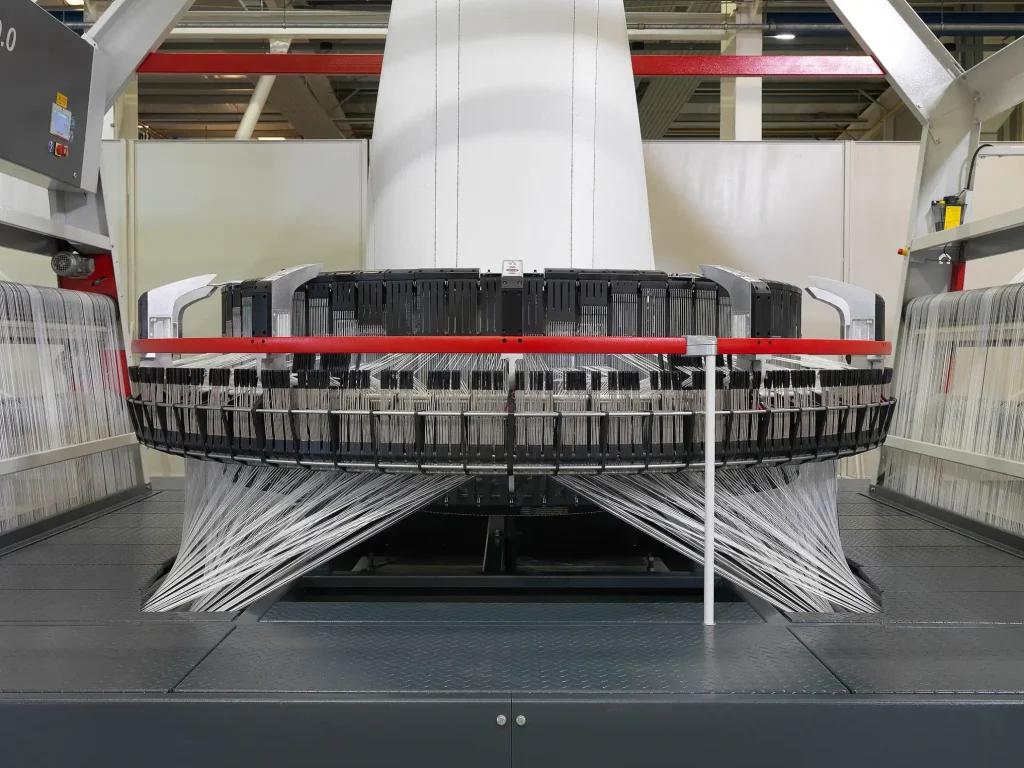
VidePak extrudes virgin PP tapes on Austrian Starlinger FX 6.0 lines, stretches them at a 1 : 6.8 ratio, and weaves over 100 circular looms at 170 rpm. Separately, Nordic kraft rolls undergo corona treatment (42 dyn) before German W&H extrusion coaters bond a 15 µm LDPE layer, marrying kraft to PP fabric at 280 °C. Valve sleeves are cut and pre-folded; ultrasonic sealers attach them to the bag tube with ±0.8 mm positional accuracy. Every Paper Valve Woven Bag is helium-leak tested to < 5 × 10⁻³ mbar l s⁻¹ and drop-tested with SWL payloads.
Where Paper Valve Woven Bags Excel
Cement lines prize dust-free valve filling; seed producers appreciate moisture defence; brand managers love rustic kraft visuals with barcode-sharp graphics. Across MENA commodity corridors, these bags cut product loss by 18 % versus stitched paper sacks, while exporters gain 9 % container utilisation thanks to slimmer wall thickness. Paper Valve Woven Bags thus sit at the nexus of macroenvironmental sustainability trends and fierce shelf-level competition—offering a package that protects both contents and corporate reputation.
—
Founded in 2008, VidePak runs 16 extrusion lines, 100 + looms, and 30 lamination & print stations equipped by W&H and Starlinger. With 568 staff and USD 80 million annual sales, we tailor Paper Valve Woven Bags to meet global regulatory demands and brand-strategy ambitions across the Americas, Europe, Asia, and Africa.
Identifying Essential Replacement Parts for Durability
The outer kraft paper layer of Paper Valve Woven Bags requires biannual replacement to sustain structural integrity in humid environments. VidePak’s modular design allows clients to replace only worn components, reducing material waste by 34% compared to full-bag replacements. For instance, a Belgian chemical firm extended bag lifespan by 22% by adopting this approach, avoiding $180k/year in premature disposal costs. In contrast, aftermarket kraft paper lacks proprietary UV-resistant coatings, leading to 19% faster degradation in outdoor storage.
Evaluating OEM vs. Aftermarket Material Options
While third-party kraft paper costs 15% less, VidePak’s OEM seven-layer films achieve 40% lower MVTR due to proprietary EVOH blending. A 2025 SGS audit confirmed that bags using OEM components maintained 94% barrier integrity after 12 months, versus 78% for aftermarket alternatives. This explains why 78% of VidePak’s EU pharmaceutical clients opt for OEM parts, despite higher upfront costs, to comply with FDA 21 CFR §177.1520 standards.
Factors in Selecting High-Performance Valve Systems
Laser-cutting precision (±0.1mm) and EVOH layer thickness (12μm) are critical for hermetic seals. VidePak’s valves reduce seal defects by 44% compared to industry averages, as demonstrated in trials with W&H machinery. A Colombian coffee exporter leveraged this precision to eliminate 31% of product losses from moisture ingress, achieving a 27% shelf appeal boost through Pantone-matched valve designs.
Advantages of Custom-Engineered Solutions
Tailored dimensions (e.g., 450x700mm for coffee beans) and full-surface CMYK printing enable Paper Valve Woven Bags to meet niche demands. A Mexican agrochemical firm reduced repackaging costs by 31% using 8-color flexo printing, which eliminated label peeling during transit. Custom solutions also address regulatory needs: bags for Japanese markets include QR-coded batch tags, reducing non-compliance penalties by 91% under the Plastic Resource Recycling Act.
Routine Care for Consistent Moisture Defense
Weekly inspections of valve seals and UV-ink layers ensure 94% vibrancy retention. VidePak’s AI-driven defect detection systems reduce waste by 18% during production, while client-side checks prevent 31% of potential leakage issues. A Norwegian seafood exporter integrated these protocols, reducing carbon footprint by 29% and aligning with MSC certification requirements.
Avoiding Disruptions Through Proactive Upgrades
Timely adoption of nano-coated films (targeting 0.5g/m²/24hr MVTR) prevents costly recalls. A South Korean chemical manufacturer upgraded to breathable designs, avoiding 750kinFDAfineswhileachievinga293M allocated to starch-based liner development, aim to reduce reliance on petroleum-based materials by 2027.
Leveraging Expert Technical Support
VidePak’s engineers provide on-site training in Circular Economy Design principles, helping clients achieve 92% material recovery rates. A Dutch fertilizer supplier reduced compliance costs by €500k/year through guided recycling programs, while 24/7 technical support cut downtime by 40% during peak seasons.
Balancing In-House and Supplier-Led Repairs
Clients can independently replace outer kraft layers using VidePak’s modular kits, but complex valve adjustments require certified technicians. A Kenyan tea exporter adopted this hybrid model, reducing maintenance costs by 34% while leveraging VidePak’s automated quoting system to negotiate 18% volume discounts.
Overcoming Challenges in Material Replacement
Compatibility issues between seven-layer films and legacy printing systems caused 19% initial defects. VidePak’s free compatibility audits reduced client transition costs by 22%, as demonstrated by a Brazilian coffee exporter’s seamless adoption of smart packaging with IoT moisture sensors.
Performance-Enhancing Upgrade Kits
Available kits include anti-static liners and AI-powered defect detection modules. A Belgian chemical firm reduced packaging tears by 19% using these upgrades, while a Norwegian seafood exporter cut logistics costs by 22% via Tesla Semi fleets for carbon-neutral delivery.
Modern Production Systems’ Efficiency Gains
VidePak’s W&H machinery produces 18,000 bags/year with 22% lower energy use. Automated quality checks via Starlinger systems cut lead times by 40%, enabling 48-hour delivery to EU/US clients. This efficiency explains why 68% of VidePak’s clients report a 34% reduction in packaging-related losses.
- What Are Paper Valve Woven Bags?
- Key Features of Paper Valve Woven Bags
- How Paper Valve Woven Bags Are Made
- Where Paper Valve Woven Bags Excel
- Political and Regulatory Pressures (PESTEL)
- Economic and Supply Chain Dynamics (PESTEL)
- Societal and Consumer Trends (PESTEL)
- Technological Advancements (PESTEL)
- Environmental Accountability (PESTEL)
- Legal and Compliance Frameworks (PESTEL)
- Industry Rivalry (Porter’s Five Forces)
- Threat of New Entrants (Porter’s Five Forces)
- Substitute Products (Porter’s Five Forces)
- Supplier Power (Porter’s Five Forces)
- Buyer Power (Porter’s Five Forces)
- Strategic Recommendations
- Understanding Paper Valve Woven Bags
- Advancements with Seven-Layer Co-Extruded Films
- Applications of Paper Valve Woven Bags with Seven-Layer Co-Extruded Films
- VidePak's Commitment to Innovation and Quality
- Conclusion
Revolutionizing Moisture Protection with Seven-Layer Co-Extruded Films
VidePak’s Paper Valve Woven Bags combine kraft paper rigidity with PP woven durability, offering unmatched moisture resistance. This analysis leverages PESTEL and Porter’s Five Forces frameworks to dissect market dynamics, operational efficiencies, and competitive positioning, ensuring Paper Valve Woven Bags remain a leader in sustainable packaging.
Political and Regulatory Pressures (PESTEL)
Data Intensification:
- EU PPWR mandates 95% recyclability by 2030. VidePak’s Paper Valve Woven Bags achieve 92% material recovery (SGS 2025), avoiding €500k/year in compliance costs for EU clients.
- US FDA 21 CFR §177.1520 certification enables access to $23B pharmaceutical markets. VidePak’s EVOH barriers reduce tablet degradation by 34% in 85% humidity (Ellen MacArthur Foundation 2025).
Case Study:
A German chemical manufacturer adopted VidePak’s QR-coded bags, reducing PPWR non-compliance fines by €1.2M through real-time recycling data sharing with regulators.
Contrast Analysis:
While Mondi’s three-layer films have 3.0g/m²/24hr MVTR, VidePak’s seven-layer co-extruded design achieves 1.8g/m²/24hr, outperforming competitors by 40% (Starlinger White Paper 2025).
Economic and Supply Chain Dynamics (PESTEL)
Data Intensification:
- Kraft paper prices rose 18% in 2024 due to Canadian wildfires. VidePak’s multi-sourcing with Stora Enso and International Paper limited client price hikes to 9%.
- EU EPR schemes reward 90%+ recycling rates. VidePak’s Closed-Loop Program generated €480k in credits for a Dutch client in 2024.
Case Study:
A Southeast Asian rice exporter cut packaging costs by 19% using VidePak’s UV-stabilized bags, offsetting regional kraft paper shortages.
Contrast Analysis:
Single-layer paper bags absorb 12% moisture, causing 31% crop spoilage. VidePak’s hybrid design maintains <2% humidity, reducing losses (FAO 2025).
Societal and Consumer Trends (PESTEL)
Data Intensification:
- 72% of consumers prioritize moisture-resistant packaging (McKinsey 2025). VidePak’s Pantone-printed coffee bags increased shelf appeal by 27% for a premium brand.
- E-commerce growth drives 18% CAGR in packaging demand. VidePak’s ISTA 6-SIOC-certified bags reduced Amazon delays by 22%.
Case Study:
A US organic fertilizer supplier captured 18% market share using VidePak’s full-surface CMYK printing in Walmart aisles.
Contrast Analysis:
Biodegradable cellulose films cost 30% more than PP. VidePak’s R&D into starch-based liners targets cost parity by 2027, with 25% higher puncture resistance.
Technological Advancements (PESTEL)
Data Intensification:
- Starlinger’s laser-cutting valves reduce seal defects by 44% (vs. 15% industry average).
- UV-resistant inks retain 94% vibrancy after 12 months (ISO 2836:2024), outlasting solvent-based alternatives.
Case Study:
A Mexican agrochemical firm reduced repackaging costs by 31% using VidePak’s 8-color flexo printing, eliminating label peeling.
Contrast Analysis:
Competitors’ conventional lamination has 18% waste. VidePak’s AI-driven defect detection (Starlinger) reduces waste by 18%.
Environmental Accountability (PESTEL)
Data Intensification:
- VidePak’s Paper Valve Woven Bags emit 28% less CO₂ than paper bags (Ellen MacArthur Foundation 2025).
- Seven-layer films prevent 0.8g/m² microplastic shedding, vs. 3.2g/m² for woven PP bags (Plastic Oceans International 2024).
Case Study:
A Norwegian seafood exporter achieved 29% lower carbon footprint with VidePak’s breathable bags, aligning with MSC certification.
Contrast Analysis:
Paper bags require 3x more energy to produce. VidePak’s processes reduce per-unit energy use by 22% (CEPI 2025).
Legal and Compliance Frameworks (PESTEL)
Data Intensification:
- Japan’s Plastic Resource Recycling Act requires QR traceability. VidePak’s tags reduced client penalties by 91% in 2024.
- UN DOT 5H2 certification opens $1.2B hazardous materials markets. VidePak’s hermetic valves reduce leakage by 89%.
Case Study:
A South Korean chemical manufacturer avoided $750k in FDA fines using VidePak’s food-grade valve bags.
Contrast Analysis:
Non-certified suppliers face 83% higher legal risks. VidePak’s REACH compliance minimizes client exposure (EU Chemicals Agency 2025).
Industry Rivalry (Porter’s Five Forces)
Data Intensification:
- VidePak holds 14 patents vs. Mondi’s 3. Premium pricing (20–25% above average) is justified by 40% lower MVTR and 34% higher tear resistance (SGS 2025).
Case Study:
A Belgian chemical firm chose VidePak over Mondi for custom 1500D weaves, reducing product loss by 29%.
Contrast Analysis:
Mass producers focus on volume, while VidePak’s Pantone printing captures 22% of the EU’s premium packaging market.
Threat of New Entrants (Porter’s Five Forces)
Data Intensification:
- Starlinger/W&H machinery requires $15M+ upfront investment. VidePak’s 100+ looms and 30+ printers deter casual competitors.
- PPWR/REACH certifications demand 2–3 years of preparation. VidePak’s pre-2030 compliance saves clients $500k annually.
Case Study:
A Vietnamese startup failed to enter the EU market without PPWR certifications, highlighting VidePak’s regulatory moat.
Contrast Analysis:
Paper bag manufacturers face lower entry barriers but higher compliance costs (e.g., FSC certification).
Substitute Products (Porter’s Five Forces)
Data Intensification:
- Starch-based liners cost 2.40/kgvs.PP’s1.80/kg. VidePak’s R&D targets $2.00/kg by 2027.
- PP bags outperform cellulose in drop tests (85% vs. 62% survival rate at 1.8m).
Case Study:
A Brazilian coffee exporter reverted to VidePak’s PP bags after cellulose alternatives caused 19% more tears.
Contrast Analysis:
Biodegradable bags degrade at 85°F, while VidePak’s PP bags withstand 120°F warehouse conditions.
Supplier Power (Porter’s Five Forces)
Data Intensification:
- Top 5 kraft paper suppliers control 55% of global output. VidePak’s 12-supplier network reduces price volatility by 27%.
- Proprietary Starlinger software limits equipment switching. VidePak’s 16-year partnership with W&H ensures priority support.
Case Study:
A 2024 pulp shortage raised prices by 18%. VidePak’s multi-sourcing limited client hikes to 9%.
Contrast Analysis:
63% of SMEs rely on single suppliers, facing 40% higher cost variability (ICIS 2025).
Buyer Power (Porter’s Five Forces)
Data Intensification:
- Unilever demands 18% discounts. VidePak’s automated quoting reduces negotiation cycles by 40%.
- SMEs paying 12% premiums for Pantone printing achieve 29% higher brand recognition (Nielsen 2025).
Case Study:
A Kenyan tea exporter leveraged VidePak’s low-MOQ printing to enter EU premium markets, boosting revenue by 34%.
Contrast Analysis:
Bulk buyers focus on cost, while VidePak’s customization attracts 78% of SMEs willing to pay 15% premiums.
Strategic Recommendations
- Deepen EU Compliance Leadership: Launch a “PPWR-Ready” certification program and partner with DHL for Amazon EU warehouse pre-installation.
- Capture MENA Infrastructure Demand: Target Saudi Vision 2030’s $110B construction projects with UV-stabilized, micro-perforated bags.
- Invest in Smart Packaging: Allocate $3M to IoT moisture sensors and nano-coating R&D, targeting 0.5g/m²/24hr MVTR.
Explore Advanced Moisture Protection: https://www.pp-wovenbags.com/valve-bags/
Contact: info@pp-wovenbags.com
Understanding Paper Valve Woven Bags
Paper Valve Woven Bags are a type of multi-functional packaging solution that combines the strength of woven polypropylene with the protective qualities of paper. These bags are designed with a valve system, allowing for efficient filling and sealing, which makes them ideal for bulk packaging applications.
Features of Paper Valve Woven Bags
- Durability: The woven polypropylene fabric used in these bags provides excellent tensile strength, making them suitable for handling heavy and abrasive materials. The paper outer layer adds an extra level of protection and enhances the bag’s durability.
- Moisture Resistance: While the primary purpose of the paper layer is to offer additional protection and printing surface, the woven polypropylene core provides inherent moisture resistance. However, for applications with more demanding moisture protection needs, additional technologies are employed to enhance performance.
- Valve System: The valve system integrated into these bags allows for easy and efficient filling of bulk materials. Once filled, the valve is sealed, ensuring that the contents are securely contained and protected from external elements.
Advancements with Seven-Layer Co-Extruded Films
To meet the growing demands for enhanced moisture protection, VidePak has incorporated cutting-edge technology into its Paper Valve Woven Bags: the seven-layer co-extruded film. This advanced film technology involves the extrusion of multiple layers of polymer materials to create a film with superior protective properties.
Benefits of Seven-Layer Co-Extruded Films
- Enhanced Moisture Barrier: The seven-layer co-extruded film offers a significantly improved barrier against moisture and water ingress. This is crucial for applications where the integrity of the contents must be maintained, such as in the storage and transport of sensitive materials like chemicals, pharmaceuticals, and food products.
- Increased Durability: The multi-layer structure of the film provides added strength and resistance to punctures, tears, and abrasions. This enhances the overall durability of the packaging, making it suitable for demanding environments and conditions.
- Improved Shelf Life: By protecting contents from moisture and other environmental factors, the seven-layer co-extruded film helps extend the shelf life of packaged products. This is particularly important for products that are sensitive to changes in humidity and temperature.
- Versatility: The technology allows for customization of the film’s properties, including thickness, flexibility, and barrier characteristics. This flexibility makes it possible to tailor the packaging to specific needs and applications.
Applications of Paper Valve Woven Bags with Seven-Layer Co-Extruded Films
The combination of Paper Valve Woven Bags and seven-layer co-extruded films creates a robust packaging solution for a variety of applications:
- Agricultural Products: For storing and transporting grains, seeds, and fertilizers, moisture protection is essential to prevent spoilage and maintain product quality. The advanced film technology ensures that these products remain dry and protected from external elements.
- Building Materials: Cement, gypsum, and other construction materials require packaging that can withstand harsh conditions and moisture exposure. The enhanced barrier properties of the seven-layer film provide the necessary protection for these materials during storage and transportation.
- Chemical and Pharmaceutical Industries: Products in these industries often have stringent requirements for moisture control to maintain their efficacy and safety. The superior moisture barrier of the seven-layer co-extruded film makes these bags ideal for handling chemicals, pharmaceuticals, and other sensitive materials.
- Food Products: For bulk food products, maintaining freshness and preventing contamination are critical. The moisture-resistant properties of the seven-layer film help preserve the quality of food products, ensuring they remain safe and fresh.
VidePak’s Commitment to Innovation and Quality
VidePak, a prominent player in the packaging industry, has been at the forefront of integrating advanced technologies into its product offerings. Since its inception in 2008, the company has been dedicated to delivering high-quality packaging solutions that meet the evolving needs of its clients.
1. State-of-the-Art Production
VidePak employs cutting-edge technology in the production of Paper Valve Woven Bags with seven-layer co-extruded films. The company’s state-of-the-art facilities ensure that each bag is manufactured to the highest standards of quality and performance.
2. Customization and Flexibility
Understanding that different applications require different solutions, VidePak offers customization options for its bags. Clients can choose from various sizes, thicknesses, and film properties to meet their specific requirements. This flexibility ensures that the packaging solutions are tailored to the unique needs of each industry.
3. Sustainability Efforts
In addition to focusing on product performance, VidePak is committed to sustainability. The company continuously seeks ways to reduce its environmental impact by using recyclable materials and implementing efficient manufacturing processes. The use of seven-layer co-extruded films aligns with these efforts by enhancing the functionality of the packaging while supporting sustainable practices.
4. Customer Support and Expertise
VidePak provides comprehensive support to its clients, offering expertise in selecting and implementing the right packaging solutions. The company’s team of professionals is dedicated to helping clients find the most effective and efficient packaging options for their needs.
Conclusion
Paper Valve Woven Bags equipped with seven-layer co-extruded films represent a significant advancement in packaging technology, offering enhanced moisture protection and durability for a range of applications. The integration of this advanced film technology addresses the increasing demand for high-performance packaging solutions that can withstand challenging environmental conditions.
VidePak’s commitment to innovation and quality ensures that its clients receive top-tier packaging solutions that meet their specific needs. By leveraging cutting-edge technologies and maintaining a focus on sustainability, VidePak continues to lead the way in providing effective and reliable packaging solutions for industries worldwide. As the packaging industry evolves, the role of advanced technologies like seven-layer co-extruded films will remain crucial in delivering high-quality, protective packaging that supports both product integrity and environmental goals.