
- What is Pasted Open Mouth Paper Bags?
- Why the Architecture of Pasted Open Mouth Paper Bags Matters
- Closure Strategies for Pasted Open Mouth Paper Bags and Where Each Excels
- Manufacturing Workflow and Quality Gates for Pasted Open Mouth Paper Bags
- System Thinking: From Product Risk to Bag Design in Pasted Open Mouth Paper Bags
- Barrier Engineering Inside Pasted Open Mouth Paper Bags
- Printing, Branding, and Regulatory Marking on Pasted Open Mouth Paper Bags
- Technical Specification Summary for Pasted Open Mouth Paper Bags
- Application Playbook: Problem → Solution → Result with Pasted Open Mouth Paper Bags
- ESG Integration at VidePak for Pasted Open Mouth Paper Bags
- FAQ for Engineers and Buyers of Pasted Open Mouth Paper Bags
- How to Determine the Right Size for Pasted Open Mouth Paper Bags
- Which Suppliers Are Most Reliable for Pasted Open Mouth Paper Bags?
- What Custom Forms Can Be Built with Pasted Open Mouth Paper Bags?
- How Do You Request a Quote for Custom Pasted Open Mouth Paper Bags?
- What Are the Benefits of Custom Pasted Open Mouth Paper Bags?
- Which Materials Are Best for Pasted Open Mouth Paper Bags?
- How Do Different Materials Affect Pasted Open Mouth Paper Bags Performance?
- What Defines Popular Configurations of Pasted Open Mouth Paper Bags?
- What Types of Products Can Be Packed in Pasted Open Mouth Paper Bags?
- How Do I Order Pasted Open Mouth Paper Bags in Bulk?
- What Is the Difference Between PBOM, Sewn Open‑Mouth, and Valve Formats?
- Can I Customize the Design of Pasted Open Mouth Paper Bags?
- Technical Snapshot (Selected Targets for Pasted Open Mouth Paper Bags)
- References
What is Pasted Open Mouth Paper Bags?
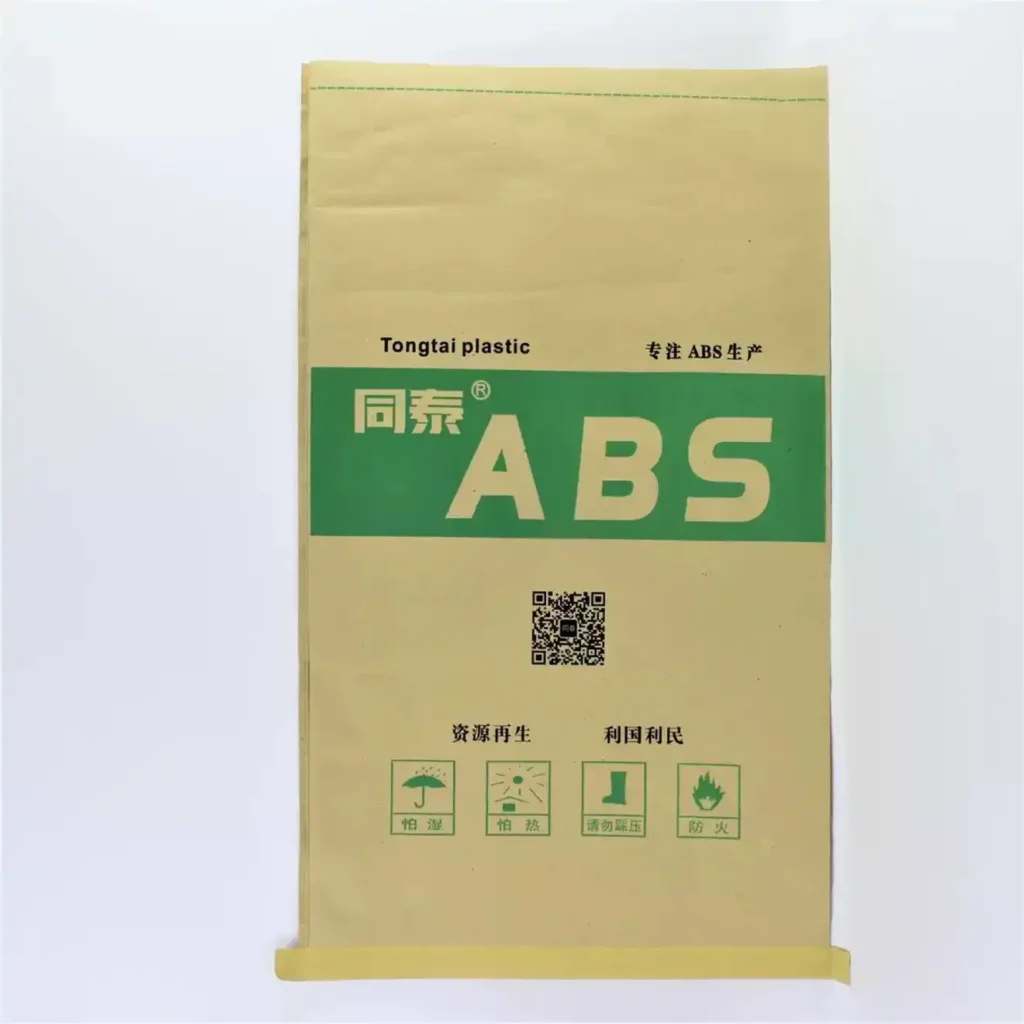
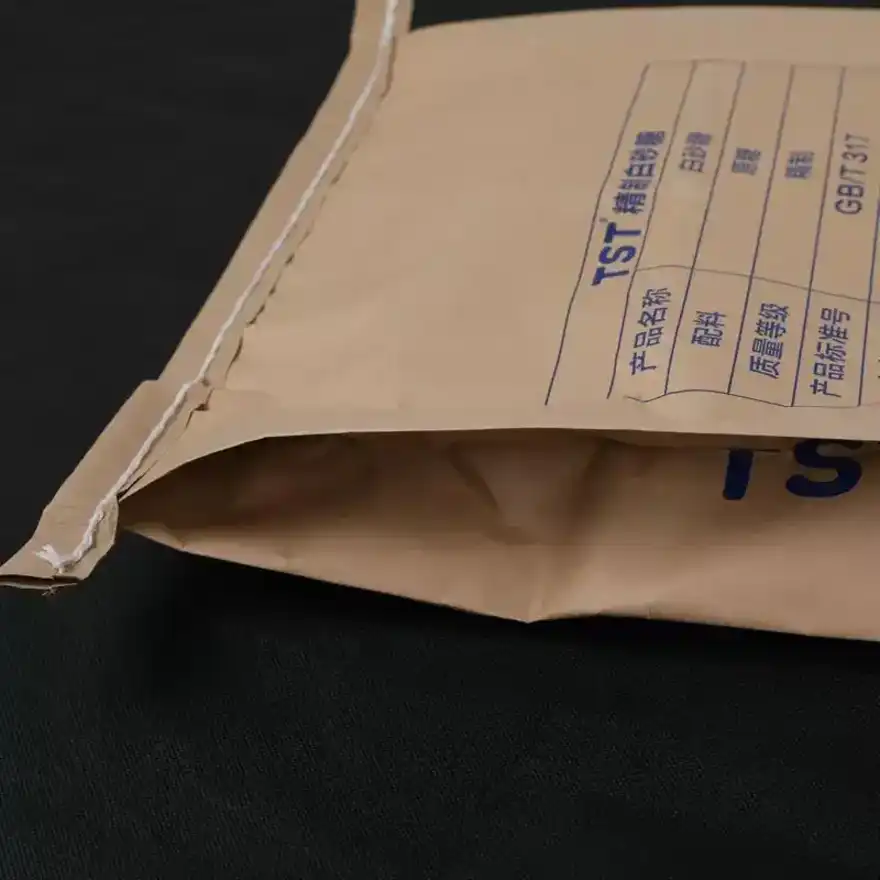
Pasted Open Mouth Paper Bags are multi‑ply kraft paper sacks supplied with an open filling mouth and a factory‑pasted bottom. The open top accelerates gravity, screw, or auger filling, while the pasted bottom offers a flat, sift‑resistant base with high integrity. If you are comparing families, think of three close cousins: SOM (Sewn Open Mouth), POM (Pasted Open Mouth Paper Bags), and PBOM (Pinch‑Bottom Open Mouth). Pasted Open Mouth Paper Bags occupy the practical middle ground—the mouth is open at delivery for flexible closing options, while the bottom is pre‑formed and glue‑sealed for cleanliness and stacking strength.
Also known as: multiwall paper sacks, open mouth sacks, pasted‑bottom paper sacks, block‑bottom paper bags (when supplied with a square, self‑standing base), and powder paper sacks. For product exploration and related formats, see this internal link: Pasted Open Mouth Paper Bags.
Features of Pasted Open Mouth Paper Bags
- Multi‑ply durability (2–5 plies) with engineered grammage for tear, burst, and tensile balance.
- Sift‑proof construction via glue‑sealed seams and pasted bottoms; optional liners for fine powders.
- High‑coverage flexographic printing with water‑based inks for brand presence and regulatory markings.
- Fast, compatible filling on open‑mouth packers with easy integration of closers (tape, stitch, pinch, or liner heat‑seal).
- Paper‑forward design that supports recycling streams when liners are separable.
How they are produced (manufacturing outline)
Paper reels are printed (flexography), laminated or paired with barrier plies if required, then longitudinally glued into a multi‑ply tube. One end is squared, skived, and pasted to form the flat bottom. Options—hand holes, micro‑perforations, anti‑slip coatings, and easy‑open tapes—are added during conversion. Finished Pasted Open Mouth Paper Bags undergo grammage, Cobb, tensile, tear, burst, seam‑strength, drop, and palletization checks before dispatch.
Where they are used (primary uses)
Food ingredients, animal nutrition, seeds & agriculture, chemicals & minerals, biomass & fuels, construction dry mixes. In general: powders, granules, and pellets that benefit from sift‑proof containment, clean presentation, and strong stackability adopt Pasted Open Mouth Paper Bags.
Why the Architecture of Pasted Open Mouth Paper Bags Matters
We can ask: why not sew every bag? Why not use a valve format for everything? Because packaging is not a monolith. Different fill behaviors, cleanliness expectations, and shelf demands require different trade‑offs. Pasted Open Mouth Paper Bags balance three tensions—speed vs. cleanliness, strength vs. cost, recyclability vs. barrier—by combining an open, adaptable mouth with a robust glued bottom.
In stitched formats, needle perforations can become leak vectors for fine powders. Valve bags, while fast on impeller packers, complicate post‑fill inspection when you need in‑line checkweighing or metal detection through the open mouth. Pasted Open Mouth Paper Bags split the difference: open‑mouth QA, pasted‑bottom strength, closure choice to tune sift‑proofness.
Rhetorically: If powder dusting is the enemy of both safety and brand, what makes more sense than sealing the weakest points—the mouth and the base—with a geometry that resists stress concentration and a glue line that doesn’t fray?
Closure Strategies for Pasted Open Mouth Paper Bags and Where Each Excels
Tape or Crepe‑Tape — Simple, serviceable, budget‑friendly. Suitable for coarse products (rice, sugar, pellets) where dust is modest. Quick to change over and repair. It is not the champion of ultra‑fine powders, yet it wins on low CAPEX and familiarity.
Stitched + Crepe Tape — Mechanical security with a universally understood workflow. Great for pet food, seeds, and heavier granules where mouth strength is paramount. The caveat: needle holes can transmit trace fines unless combined with tape overlays.
PBOM (Pinch‑Bottom, Hot‑Melt) — The go‑to for fine, sensitive powders (milk powder, cocoa, white mineral fines). The pinch fold and heat‑activated adhesive create a near‑hermetic mouth. Shelf presentation is sharp; tamper evidence is inherent. Requires precise fold alignment and heat control.
Liner Heat‑Seal + Outer Fold — When oxygen or moisture are foes, a heat‑sealed PE or biopolymer liner combined with an outer fold balances barrier with a paper exterior. End‑of‑life is cleaner if liners are separable.
A thought experiment: which closure would you trust for a 200 μm dairy powder through a tropical monsoon? Your mind likely landed on PBOM with a heat‑sealed liner—a choice that Pasted Open Mouth Paper Bags support without sacrificing printing or pallet performance.
Manufacturing Workflow and Quality Gates for Pasted Open Mouth Paper Bags
Production is not a black box. It is a sequence of decisions and verifications that turn reels into reliable packaging.
1) Paper selection and conditioning
Choose kraft grades (70–120 g/m²) by balancing tear and stiffness; tune moisture content to minimize curl and ensure stable glue penetration. Virgin outer plies resist scuffing; recycled inner plies reduce cost without compromising face aesthetics.
2) Printing
Flexographic presses with water‑based inks minimize VOCs and enable high‑area graphics. Plate calibration, anilox selection, and viscosity control keep line weights consistent. Barcodes and regulatory text can be proofed with camera systems in‑line.
3) Tube formation and ply engineering
Longitudinal gluing creates a multi‑ply tube. At this stage, options are set: interleaved glassine for grease resistance, HDPE/LLDPE film for moisture barrier, or porous papers to aid de‑aeration. The gusset width determines stand‑up performance after fill.
4) Bottom pasting
Skiving removes excess thickness so folds lie flat. Hot‑melt or cold glue is applied, the bottom is squared, and pressure is held until set. A well‑made pasted bottom is the unsung hero of Pasted Open Mouth Paper Bags—it spreads impact loads and resists corner splits.
5) Options & conversion
Add micro‑perforations where air evacuation is needed; cut hand holes for retail carry; apply anti‑slip coatings to stabilize pallets. Pre‑crease the mouth to accelerate automatic closing.
6) Quality checks
Run grammage (ISO 536), Cobb water absorptiveness (ISO 535), tensile (ISO 1924‑2), Elmendorf tear (ISO 1974), and burst (ISO 2758). Verify seam strength and bottom adhesion; do filled‑bag drops across faces and corners; audit pallet patterns for compression and slip.
If any gate fails, the remedy is systematic: revisit ply order, adjust glue weight, alter skive dimensions, or retune the perforation density. Quality is engineered, not hoped for.
System Thinking: From Product Risk to Bag Design in Pasted Open Mouth Paper Bags
Complexity becomes manageable when decomposed. Below, we break the selection problem into interlocking themes and push each beyond the surface with data, cases, and comparisons; we then synthesize toward field‑ready specifications.
Containment & Strength
Data reinforcement: MD/CD tensile, burst, and tear targets correlate with real‑world splitting on drops. For a 25 kg mineral fill, aiming for ≥ 6.0 kN/m MD tensile on the outer ply and robust CD tear reduces corner failures.
Case: A minerals shipper moved from 2‑ply (80/80) to 3‑ply (80/80/90), cutting split rate from 2.3% to 0.4% across 50,000 consignments with ~6% material cost increase.
Comparison: Stitched SOM bags concentrate stress at the sewn line; Pasted Open Mouth Paper Bags distribute it over glued areas, reducing stress risers at the base.
Synthesis: Specify ply grams by bulk density and drop height; select block‑bottom geometry for tall pallets; define a 5‑drop pass/fail criterion.
Sift‑Proofness & Cleanliness
Data reinforcement: Appropriate glue weights (≈12–18 g/m² hot‑melt at the mouth and bottom folds) and continuous glue lines curb powder escape below 0.1 g during a 30‑minute vibration test for fine powders.
Case: A cocoa processor eliminated stitch‑hole leakage by switching to PBOM closure on their Pasted Open Mouth Paper Bags, reducing housekeeping labor by roughly one‑third.
Comparison: Valve bags excel at closed‑system filling; open‑mouth formats rival valve performance when a pinch fold and liner seal are used.
Synthesis: For <200 μm powders, combine PBOM with a liner heat‑seal; restrict perforations away from the mouth line.
Moisture & Oxygen Control
Data reinforcement: Cobb60 ≤ 35 g/m² on the outer ply provides moderate rain splash resistance; liners measured by WVTR/O₂TR define shelf‑life under humidity.
Case: A dairy cooperative added a 60 μm LLDPE liner and cut moisture complaints by ~78% during monsoon shipments.
Comparison: Full‑plastic FFS has very low WVTR but less pallet friction and more puncture sensitivity in mixed loads; paper + liner in Pasted Open Mouth Paper Bags balances barrier with handling.
Synthesis: Pair outer ply Cobb targets with liner thickness and a double‑fold hot‑melt mouth when humidity threatens.
Throughput & Line Compatibility
Data reinforcement: Mouth width should exceed spout OD by 5–10 mm; correct perforation density (e.g., 50–100 μm holes at 8–16 holes/cm²) accelerates air release without losing fines.
Case: Switching from SOM to block‑bottom Pasted Open Mouth Paper Bags increased automatic bag‑placer speeds from ~13 to ~20 BPM thanks to more stable mouth opening and base stance.
Comparison: Valve bags may run faster on impeller packers, but open mouths simplify post‑fill QA such as checkweighing and metal detection.
Synthesis: Engineer mouth geometry, pre‑crease lines, and de‑aeration strategy to your filler; validate with on‑line trials.
Sustainability, Compliance & Brand Integrity
Data reinforcement: Quality/environment/occupational health systems (ISO 9001/14001/45001) and FSC‑STD‑40‑004 chain‑of‑custody strengthen audit outcomes; food‑contact compliance (FDA 21 CFR 176.170/176.180; EU 1935/2004) underpins safe use.
Case: A snack brand secured retailer approvals faster after standardizing declarations of compliance and third‑party migration tests for inks and adhesives used on Pasted Open Mouth Paper Bags.
Comparison: Paper‑outer designs with separable liners achieve higher fiber recovery than multilayer plastic laminates in many MRFs.
Synthesis: Package documentation with each spec: DoCs, MSDS, certificates, and test reports.
Cost, Risk & Supply Resilience
Data reinforcement: Pulp indices can move 10–25% over 12–18 months; dual‑qualifying mills for each ply reduces disruption.
Case: A pet‑food brand adopted virgin outer/recycled inner plies and index‑linked quarterly pricing, flattening variance by ~7% YoY without compromising shelf look.
Comparison: At low volumes, FFS films may be cheaper per unit, yet the print agility and recovery rates of Pasted Open Mouth Paper Bags can lower total landed cost.
Synthesis: Keep A/B ply recipes and plate‑ready artwork to pivot production in hours, not weeks.
Barrier Engineering Inside Pasted Open Mouth Paper Bags
Not every product needs a liner; not every liner needs to be thick. The art is to tune barrier without overspecifying.
- PE/PP liners (25–120 μm) — robust moisture control; heat‑sealable; widely available.
- Biopolymer liners (certified to EN 13432/ASTM D6400 when required) — compostable scenarios; check heat resistance on sealing jaws.
- Glassine or greaseproof interleaf — for fatty powders; improves grease resistance without a full liner.
- Porous papers — encourage de‑aeration where fast filling meets air‑entrained powders.
A recurring question: “Can I make it all‑paper?” Sometimes yes—when particle size is large and humidity exposure is brief. When risk rises, the liner is an insurance policy that Pasted Open Mouth Paper Bags integrate with elegance.
Printing, Branding, and Regulatory Marking on Pasted Open Mouth Paper Bags
Your bag is a billboard in the warehouse and a certificate at the receiver’s dock. Water‑based flexographic inks support bright graphics while reducing VOCs. Add handling pictograms, batch/lot QR codes, recycling cues, and mandatory statements (net weight, origin, contact). For food contact, keep Declarations of Compliance at hand and align with FDA 21 CFR 176.170/176.180 or EU 1935/2004 as your markets demand.
From a brand perspective, block‑bottom Pasted Open Mouth Paper Bags stand taller and often ship cleaner; anti‑slip coatings keep pallet faces aligned so your message remains legible after long transit.
Technical Specification Summary for Pasted Open Mouth Paper Bags
Ranges below reflect widely used industry configurations. Final values should be validated against your product density, drop‑test matrix, and humidity profile.
| Parameter | Typical Options / Range | Test / Standard |
|---|---|---|
| Bag type | Pasted Open Mouth Paper Bags (pasted bottom, open mouth); PBOM (pinch‑bottom open mouth); SOM (sewn open mouth) | — |
| Dimensions (flat width × length × gusset) | 350–600 mm × 600–1,100 mm × 80–180 mm | — |
| Nominal fill weight | 5–50 kg (10/20/25 kg common) | Handling & drop tests |
| Plies | 2–5 plies | — |
| Paper grammage (outer/inner) | 70–120 g/m² kraft (virgin/recycled mix to suit) | ISO 536 |
| Cobb60 (outer ply) | ≤ 35 g/m² (≤ 30 g/m² for higher splash resistance) | ISO 535 |
| Tensile strength (per ply) | Define MD/CD thresholds by product & drop height | ISO 1924‑2 |
| Tear resistance | Engineer MD/CD targets for abrasion profile | ISO 1974; TAPPI T 414 |
| Bursting strength | Target per bag design and fill pressure | ISO 2758; TAPPI T 403 |
| Liners (optional) | Loose or tube‑attached PE/PP 25–120 μm; biopolymer liner on request | ASTM F1249 (WVTR); ASTM D3985 (O₂TR) |
| Mouth closure | Tape; stitched + crepe tape; PBOM hot‑melt; liner heat‑seal + outer fold | Internal SOP; tamper checks |
| Printing | Flexographic 1–6 colors; water‑based inks | DoC per FDA 21 CFR 176; EU 1935/2004 |
| Pallet pattern | 5×10 to 8×8 layers; pallet height 1.0–1.5 m | ISTA‑style stack & compression |
| Compliance frameworks | ISO 9001/14001/45001; FSC‑STD‑40‑004; food‑contact declarations | Certificates/DoC |
For quick decision‑making, a second lens compares closures to their sweet spots:
| Closure Method | Best‑fit Products | Advantages | Considerations |
|---|---|---|---|
| Tape / Crepe‑Tape | Coarse grains, rice, pellets | Low CAPEX, fast changeover | Not ideal for very fine powders |
| Stitched + Crepe | Pet food, seeds, heavy granules | Strong mouth, ubiquitous equipment | Stitch holes may vent fines |
| PBOM Hot‑Melt | Fine powders (milk, cocoa, minerals) | Sift‑proof, premium look, tamper evidence | Needs heat activation and alignment |
| Liner Heat‑Seal + Fold | Hygroscopic/oxidation‑sensitive powders | Barrier + paper exterior | Multi‑material; design for liner separability |
Application Playbook: Problem → Solution → Result with Pasted Open Mouth Paper Bags
Scenario 1 — Fine food powders
Problem: Dusting at the mouth and moisture ingress during humid transit.
Solution: PBOM closure with pre‑applied hot‑melt; 60 μm LLDPE tube liner heat‑sealed; outer ply Cobb60 ≤ 30 g/m²; perforations away from the mouth.
Result: Housekeeping hours dropped by roughly a third; caking complaints fell below 0.2% of shipments; cases presented uniformly on pallets.
Scenario 2 — Pet food kibbles
Problem: Edge scuff and occasional base splits after 0.9 m drops on 25 kg fills.
Solution: Upgrade to 3‑ply (90/80/90 g/m²); add anti‑slip outer coating; choose stitched + crepe tape; specify block‑bottom geometry.
Result: Pallet stability improved; split rate fell under 0.5% across 60,000 bags; graphics stayed readable after handling.
Scenario 3 — Seeds
Problem: Dust in conditioning rooms and traceability pain on mixed pallets.
Solution: PBOM closure with tear‑tape easy‑open; 6‑color flexo for QR lot IDs; mouth pre‑crease to stabilize opening on the placer.
Result: Cleaner rooms, faster scans at receiving, fewer relabels.
Scenario 4 — White mineral fines (TiO₂, CaCO₃)
Problem: Fines leakage through micro‑gaps leads to product loss and complaint risk.
Solution: PBOM with full glue line and optional inner liner; increase CD tear targets; ensure mouth alignment sensors on closers.
Result: Measurably lower dust on pallet tops and reduced rejected loads.
Scenario 5 — Charcoal and wood pellets
Problem: Abrasion in transit scuffs artwork; dust can dirty containers.
Solution: Heavier outer ply with scuff‑resistant varnish; stitched closure for mouth strength; optional inner ply of recycled kraft for cost control.
Result: Cleaner containers, fewer returns for bag damage, stable print legibility.
ESG Integration at VidePak for Pasted Open Mouth Paper Bags
What an ESG report is: A structured disclosure of environmental, social, and governance practices—how energy is sourced and used, how people are treated, and how management systems ensure accountability. Frameworks such as GRI 2021, SASB for Containers & Packaging, and TCFD for climate risk guide the metrics buyers expect.
How VidePak embeds ESG in manufacturing:
- 2 MW rooftop solar supplies a significant portion of the plant’s electricity, translating to approximately 2.4–3.2 GWh per year depending on insolation. That power runs presses, tube formers, and pasters making Pasted Open Mouth Paper Bags; it also reduces scope‑2 emissions by an estimated 1,700–2,200 tCO₂e annually, subject to grid emission factors.
- Materials stewardship prioritizes responsibly sourced fiber (FSC‑aligned chain‑of‑custody on request), water‑based inks, and starch‑based adhesives when performance permits. Designs emphasize liner separability to improve fiber recovery rates.
- Respect for labor and community includes adherence to ILO principles and attention to the wellbeing and schooling of workers’ children from low‑income regions—because safer homes and stronger schools map to safer, steadier factories.
- 5S and certified management systems (Sort, Set in order, Shine, Standardize, Sustain; ISO 9001/14001/45001) reduce hazards, prevent contamination, and codify corrective actions. Audits are welcomed; dashboards are shared.
This is not ornamentation. It is operational discipline that improves quality yields and purchaser confidence in every batch of Pasted Open Mouth Paper Bags.
FAQ for Engineers and Buyers of Pasted Open Mouth Paper Bags
Are these bags recyclable?
The paper plies are generally recyclable where paper streams accept multiwall sacks, especially when liners are separable. Always check local MRF guidance.
When should PBOM be preferred over tape?
When fines control, tamper evidence, and premium presentation matter—milk powder, cocoa, mineral fines. PBOM elevates sift‑proofness and shelf appearance.
Can my existing open‑mouth packer run them?
Nearly always. Ensure mouth width matches the spout, add mouth pre‑crease if needed, and tune de‑aeration with perforation density or porous plies.
How do they compare to valve bags?
Valve formats may run faster on certain packers; open‑mouth designs simplify post‑fill QA and broaden closure choices. Choose based on your bottleneck and cleanliness goals.
What printing is safest for food?
Water‑based flexographic inks supported by current Declarations of Compliance and third‑party migration tests.
What about dust explosions?
Conduct ATEX/DSEAR assessments if powders are combustible. Bag selection interacts with dust control, but primary mitigations are process‑side (grounding, extraction, housekeeping).
How do I start a specification?
Share product density, particle size, intended fill mass, highest drop height, humidity window, and pallet format. We will recommend ply stack, liner strategy, mouth closure, and test thresholds tailored to your line.
How to Determine the Right Size for Pasted Open Mouth Paper Bags
Problem. Buyers often overspec or underspec bag dimensions, causing under‑fill voids, split seams, or unstable pallets.
Method. Start with product bulk density (g/L), target net weight, and desired pallet height. Convert weight to required internal volume, then choose flat width × gusset × length to achieve a filled cross‑section that stands without bulging. For powders, allow headspace for de‑aeration (2–5% of volume). Cross‑check mouth width against filler spout OD (+5–10 mm) and set block‑bottom geometry where pallet tiers exceed 1.2 m.
Result. A bag that fills cleanly, closes reliably, and stacks square—exactly what Pasted Open Mouth Paper Bags are engineered to do.
Discussion (Horizontal & Vertical). Horizontally, sizing links materials science (paper stiffness) with operations (line BPM) and logistics (pallet compression). Vertically, size → fill behavior → closure integrity → pallet stability form a causal chain; tuning any node improves downstream outcomes.
Which Suppliers Are Most Reliable for Pasted Open Mouth Paper Bags?
Problem. Reliability isn’t a logo; it’s a system. How do you vet it?
Method. Evaluate management certifications (ISO 9001/14001/45001), fiber chain of custody (FSC‑STD‑40‑004), and food‑contact documentation (FDA 21 CFR 176.170/176.180; EU 1935/2004). Ask for recent third‑party test reports (tensile/tear/burst, Cobb, migration). Verify process discipline via 5S audits and CAPA logs.
Result. A shortlist of producers whose Pasted Open Mouth Paper Bags perform consistently across seasons and SKUs.
Discussion. Horizontally, compliance bridges quality, safety, and sustainability. Vertically, governance → process control → repeatable bag mechanics → fewer field failures.
What Custom Forms Can Be Built with Pasted Open Mouth Paper Bags?
Problem. One mouth doesn’t fit all; powders, granules, and pellets behave differently.
Method. Choose among block‑bottom (self‑standing), pillow (cost‑lean), and pinch‑bottom open mouth (PBOM) closures. Specify micro‑perforation for de‑aeration; add hand‑holes, easy‑open tapes, anti‑slip coatings, or inner liners (loose/tube‑attached PE or certified biopolymer).
Result. Pasted Open Mouth Paper Bags that match product rheology and retail presentation.
Discussion. Horizontal: blend fluid dynamics (air escape) with ergonomics (carry) and branding (print panels). Vertical: geometry → fill speed → seal quality → shelf look.
How Do You Request a Quote for Custom Pasted Open Mouth Paper Bags?
Problem. Vague RFQs yield vague pricing and risky lead times.
Method. Provide density, particle size, target fill mass, monthly volume, pallet pattern, drop height, humidity exposure, and food‑contact needs. Attach artwork and ask for ISO/TAPPI targets. Request two options: cost‑lean (recycled inner plies) and performance‑max (higher tear/CD, PBOM closure).
Result. Comparable quotes for Pasted Open Mouth Paper Bags with clear pass/fail criteria.
Discussion. Horizontal: purchasing, QA, and operations collaborate up‑front. Vertical: better inputs → tighter specs → fewer change‑orders.
What Are the Benefits of Custom Pasted Open Mouth Paper Bags?
Problem. Generic bags leak value—literally (dust) and figuratively (brand).
Method. Engineer ply stack for your abrasion profile; align closure to powder fineness (tape/stitched/PBOM/liner heat‑seal); optimize print for scanning (QR/GS1) and handling cues.
Result. Cleaner lines, lower split rate, faster receiving, improved brand presence—all within a paper‑forward, recyclable exterior.
Discussion. Horizontal: quality, marketing, and EHS win together. Vertical: materials → mechanics → productivity → perception.
Which Materials Are Best for Pasted Open Mouth Paper Bags?
Problem. Overbuilding wastes fiber; underbuilding fails in transit.
Method. Mix virgin kraft outer plies (scuff resistance) with recycled inner plies (cost, sustainability). Target 70–120 g/m² per ply based on drop tests. Add liners only when WVTR/O₂TR demands it; consider glassine interleaf for fatty powders.
Result. Pasted Open Mouth Paper Bags that hit strength and barrier targets without overspec.
Discussion. Horizontal: sustainability meets mechanics. Vertical: fiber grade → tear/burst → drop survival.
How Do Different Materials Affect Pasted Open Mouth Paper Bags Performance?
Problem. Same look, different physics.
Method. Tune MD/CD tensile with ply orientation; increase CD tear for abrasive fills; select Cobb60 ≤ 35 g/m² on the outer ply for splash resistance. For humidity routes, specify 40–90 μm PE liners; for compostable programs, certify biopolymer liners to EN 13432/ASTM D6400.
Result. Measurable gains in drop test pass rates and reduced dusting.
Discussion. Horizontal: paper science integrates with barrier science. Vertical: micro‑properties (Cobb, tensile) roll up into macro‑outcomes (stack height, return rates).
What Defines Popular Configurations of Pasted Open Mouth Paper Bags?
Problem. Too many options stall decisions.
Method. Use archetypes: 25 kg block‑bottom, 3‑ply (90/80/90), stitched + crepe tape for kibbles; 20–25 kg PBOM with 60 μm liner for fine food powders; 10 kg pillow 2‑ply for coarse grains.
Result. Fast specification of proven Pasted Open Mouth Paper Bags patterns.
Discussion. Horizontal: product families map to repeatable SKUs. Vertical: archetype → predictable CAPEX/OPEX.
What Types of Products Can Be Packed in Pasted Open Mouth Paper Bags?
Problem. Mismatch between product and bag invites leakage or spoilage.
Method. Align to classes: food ingredients (flour, sugar, cocoa, milk powder), animal nutrition (pet food, premixes), agriculture (seeds, fertilizers), chemicals/minerals (CaCO₃, TiO₂—use liner), biomass/fuels (charcoal, pellets), construction (dry mixes).
Result. Portfolio clarity for Pasted Open Mouth Paper Bags across powder, granule, and pellet applications.
Discussion. Horizontal: regulatory regimes differ by class; design accordingly. Vertical: class → closure/barrier → artwork/compliance text.
How Do I Order Pasted Open Mouth Paper Bags in Bulk?
Problem. Scale amplifies both savings and mistakes.
Method. Lock quarterly index‑linked pricing; qualify two paper mills per ply; book plate‑ready artwork. Pilot 1–2 pallets per spec, then ramp after drop/pallet tests. Plan buffers around print plate changes and liner film lead times.
Result. Stable supply, predictable cost, and smooth changeovers for Pasted Open Mouth Paper Bags.
Discussion. Horizontal: procurement, planning, and production calendars sync. Vertical: sourcing → conversion → logistics.
What Is the Difference Between PBOM, Sewn Open‑Mouth, and Valve Formats?
Problem. Choosing the wrong architecture bottlenecks lines or degrades cleanliness.
Method. PBOM (pinch‑bottom) with hot‑melt yields near‑hermetic mouths for fine powders; sewn open‑mouth maximizes mouth strength but can vent fines via needle holes; valve formats excel on impeller packers but complicate post‑fill QA.
Result. For many sensitive powders, PBOM within Pasted Open Mouth Paper Bags offers the best dust control while retaining open‑mouth flexibility.
Discussion. Horizontal: match format to filler type and QA flow. Vertical: architecture → closure integrity → audit speed.
Can I Customize the Design of Pasted Open Mouth Paper Bags?
Problem. Off‑the‑shelf bags rarely fit unique hazards or brand goals.
Method. Yes—specify ply count/order, liner type, mouth pre‑crease, tear‑tape, anti‑slip coatings, hand holes, and 1–6 color flexographic printing with water‑based inks. For guidance and related formats, see Pasted Open Mouth Paper Bags.
Result. Bespoke Pasted Open Mouth Paper Bags that fill fast, seal clean, and ship beautifully.
Discussion. Horizontal: combine safety, speed, and storytelling. Vertical: feature → test method → field performance.
Technical Snapshot (Selected Targets for Pasted Open Mouth Paper Bags)
- Paper grammage per ply: 70–120 g/m² (ISO 536)
- Cobb60 (outer ply): ≤ 35 g/m² (ISO 535)
- Tensile: set MD/CD thresholds by drop height (ISO 1924‑2)
- Tear: engineer CD > MD for abrasive products (ISO 1974; TAPPI T 414)
- Burst: per design pressure (ISO 2758; TAPPI T 403)
- Closures: tape; stitched + crepe; PBOM hot‑melt; liner heat‑seal + outer fold
References
- ISO 535: Paper and board — Determination of water absorptiveness (Cobb method).
- ISO 536: Paper and board — Determination of grammage.
- ISO 1924‑2: Paper — Determination of tensile properties — Part 2.
- ISO 1974: Paper — Determination of tearing resistance (Elmendorf method).
- ISO 2758: Paper — Determination of bursting strength.
- TAPPI T 410/T 414/T 403 — Grammage, internal tearing resistance, and bursting strength.
- FDA 21 CFR 176.170/176.180; EU Regulation No 1935/2004 — Food‑contact frameworks for paper and board.
- FSC‑STD‑40‑004 v3.1 — Chain‑of‑Custody standard for FSC‑certified materials.
- EN 13432 / ASTM D6400 — Requirements for packaging recoverable through composting and biodegradation.