
VIDEPAK Valve bags Solutions: Pasted Paper Valve Bags VS PP Valve Bags
Industrial packaging has one clear job: it must move a product from the filling spout to the customer with as little loss, dust, damage, delay, and confusion as possible. Yet the best bag is never chosen by material name alone. It is chosen by matching the product, the filling line, the closure method, the storage climate, the transport route, and the brand goal. That is why VIDEPAK develops both Pasted Paper Valve Bags and PP Valve Bags, then adjusts each structure around the real operating conditions of the buyer. Both product families are made for fast spout filling, stable pallet formation, and efficient industrial handling, but they solve risk in different ways.
The central idea: Choose Pasted Paper Valve Bags when controlled paper porosity, multi-ply flexibility, a firm paper feel, and a traditional industrial appearance lead the decision. Choose PP Valve Bags when moisture resistance, tear strength, rough logistics, outdoor exposure, or high-impact laminated graphics matter more. Neither answer is automatic. The right answer is engineered.
How Valve Packaging Works
Fast Filling, Controlled Air Release, Compact Closure
A valve bag has a small sleeve or opening, usually positioned near a corner, that fits over a filling spout. Dry powder or granules enter through this valve. After filling, the internal pressure of the packed product helps flatten and close a standard self-closing sleeve; when tighter containment is needed, the valve can be designed for manual tucking, heat sealing, or ultrasonic sealing. This layout can remove a separate sewing step, reduce handling around the bag mouth, and support cleaner, faster filling when the spout, valve size, product flow, and deaeration system are correctly matched.
The bag body and the valve must work as one system. A bag may have excellent tensile strength yet fill poorly because air cannot leave quickly enough. Another may vent well yet release dust because the valve does not fit the spout. A third may close well but produce an unstable pallet because its filled dimensions are wrong. Industry guidance for dust control therefore links valve fit, paper or fabric airflow, filling-spout design, drop height, sack dimensions, closure structure, and pallet pattern. One part cannot rescue every other part.
Fill
Match product bulk density, particle size, flow behavior, and retained air with the filler and valve opening.
Close
Choose self-closing, tuck-in, heat-sealable, or ultrasonic-sealable closure according to dust and barrier targets.
Move
Design filled shape, friction, strength, and surface protection for conveyors, pallets, warehouses, trucks, and containers.
The Practical Buying Rule
Start with the packed product, not with a favorite bag. Fine cement, flour, mineral powder, fertilizer, resin, seed, feed, and chemical granules can all behave differently during filling and transport. Ask five questions: How much dust is created? How quickly must air escape? How sensitive is the product to humidity? How severe is the route? How important is the printed appearance? These questions point toward the correct body, valve, barrier, and finish far more reliably than price per empty bag alone.
Pasted Paper Valve Bags: Flexible Multi-Ply Engineering
What Pasted Paper Valve Bags Are
Pasted Paper Valve Bags are normally built from one or more plies of sack kraft paper formed into a tube, pasted at the ends, and equipped with an integrated filling valve. In heavy industrial use, two to four plies are common, while special designs may use fewer or more layers. Each ply can perform a different task: the outer ply supports printing and scuff resistance; middle plies add tensile and tear strength; the inner ply manages contact, dust, and airflow; and an optional film or coated paper layer improves moisture protection. Industry terminology recognizes pasted valve sacks as a core paper-sack construction, and current dimensional standards cover details such as sack length, width, bottom width, valve width, valve position, ply grammage, and print position.
The main advantage of Pasted Paper Valve Bags is tunability. Paper grade, basis weight, stretch, porosity, number of plies, perforation pattern, barrier placement, valve insert, adhesive layout, and surface treatment can be changed without losing the familiar paper-sack form. Natural kraft creates a direct, industrial look. White kraft gives stronger print contrast. Extensible sack paper can absorb more energy and support efficient air release. Coated or film-lined structures add protection where humidity is a risk. Paper is the visible face; engineering is the hidden core.
Valve and Closure Options for Pasted Paper Valve Bags
These names may vary across markets, but the functional logic is stable: reinforce the valve, increase sift resistance, add a mechanical tuck, or create a sealed closure. A standard self-closing valve is fast and economical, yet it should not be described as fully airtight. A sealable sleeve can improve closure integrity, but it also requires compatible sealing equipment, controlled sleeve dimensions, and a validated process window.
Typical Design Envelope for Pasted Paper Valve Bags
| Parameter | Published VIDEPAK Range or Common Starting Point | Selection Note |
|---|---|---|
| Flat Width | About 180–740 mm | Must match filled volume, filler, and pallet plan. |
| Length | About 250–1,310 mm | Longer is not always better; shape after settling matters. |
| Bottom or Gusset Depth | About 70–250 mm | Controls block shape and stacking geometry. |
| Paper Plies | About 1–6; often 2–4 for industrial duty | Choose by load, abrasion, drop risk, and barrier need. |
| Paper Grammage per Ply | About 50–170 g/m²; 70–100 g/m² is common in many 25 kg concepts | Strength depends on grade and stretch, not grammage alone. |
| Nominal Fill | About 5–50 kg | Final size must be calculated from bulk density and aeration. |
| Printing | Up to 8-color flexographic options in published ranges | Artwork should respect folds, paste zones, and valve position. |
These figures are design envelopes, not a universal specification. A 25 kg flour bag and a 25 kg mineral bag may need different dimensions because bulk density, particle shape, retained air, and drop risk differ. The correct specification is confirmed through product data, sample making, filling trials, and transport tests.
Where Pasted Paper Valve Bags Perform Well
Pasted Paper Valve Bags are widely suited to cement, dry mortar, gypsum, minerals, flour, starch, food ingredients, feed, seed, and selected chemicals, provided the paper, barrier, inks, adhesives, and valve are approved for the intended product. They are especially attractive when the buyer wants a rigid, squared pack, controlled deaeration, a familiar kraft appearance, and easy adjustment of paper plies. Properly designed paper porosity can release air without relying only on large perforations, while anti-slip treatment can improve pallet stability. Cleaner sacks also support safer handling, lower product loss, less cleaning, and a better printed appearance.
Paper does not mean unprotected. Pasted Paper Valve Bags can include coated paper, film barriers, internal liners, under-valve ventilation, micro-perforation, anti-slip treatment, easy-open features, and sealable sleeves. The key is to add only the functions the product truly needs.
PP Valve Bags: Woven Strength for Demanding Routes
What PP Valve Bags Are
PP Valve Bags are usually made from woven polypropylene tapes that are coated or laminated, printed, cut, and converted into a rectangular block-bottom sack with an integrated valve. The tapes are oriented during production to raise tensile performance, then woven into a light but strong fabric. Coating helps bind the fabric surface and improve containment; micro-perforation can release filling air; a BOPP film can carry reverse-printed graphics; and an optional liner can add another barrier layer. Official equipment literature describes this format as a coated woven polypropylene block-bottom valve sack for free-flowing bulk and powdered goods, with designs ranging from nearly airtight to highly air-permeable.
The difference between PP Valve Bags and ordinary sewn woven sacks is structural, not cosmetic. A valve format requires accurate top and bottom patching, block-bottom formation, valve placement, hot-air or welded bonding, and controlled perforation. The filled bag becomes more brick-like, which can improve stack use and presentation, while the woven body provides resistance to tearing and rough handling. It is a different production route and a different packing experience.
Performance Options for PP Valve Bags
Coated Woven Body
Supports strength, moisture hold-out, dust control, and reliable conversion into a block-bottom shape.
BOPP Lamination
Adds sharp graphics, scuff protection, and a cleaner consumer-facing surface while keeping the woven base.
Micro-Perforation
Creates controlled air paths so powder can fill quickly without turning the whole fabric into an open sieve.
Valve and Liner Upgrades
Standard internal valves, tuck-in sleeves, sealable extensions, and PE liners can be combined around the risk profile.
For brand-driven products, laminated PP Valve Bags can carry high-resolution graphics that remain protected beneath the film surface. For industrial products, a simpler flexographic print may be enough. For dusty powders, controlled micro-perforation and a well-fitted valve are essential. For humid routes, coating, lamination, and liner choices become central. For outdoor storage, UV stabilization may be considered, although the required exposure period, climate, pigment, and performance target must be defined before production.
Typical Design Envelope for PP Valve Bags
Published ranges help early planning, but the final PP Valve Bags specification must be based on product weight, bulk density, drop height, conveyor speed, pallet pattern, container loading, humidity, and filling-spout dimensions. A heavy fabric cannot correct a poorly placed valve; a strong valve cannot correct excessive trapped air. Balance wins.
Where PP Valve Bags Perform Well
PP Valve Bags are a strong choice for cement, dry building mixes, fertilizer, minerals, chemicals, resin pellets, sugar, flour, feed, and other dry bulk products that face demanding handling or moisture exposure. Their woven structure gives high strength at low package weight, while coating and lamination can improve containment and surface protection. They are especially useful where a buyer wants industrial durability and a clean rectangular pack, or where the package must travel farther, face more transfers, or carry brighter graphics.
Why Polypropylene Matters
A Light Polymer That Becomes Stronger Through Orientation and Weaving
Polypropylene is a thermoplastic polymer with a density around 0.9 g/cm³ and a melting point around 165°C. It is insoluble in water and less dense than water. In bag production, melted polypropylene is extruded into flat tapes; these tapes are stretched so the polymer chains become more aligned, then woven into fabric. This sequence turns a common resin into a high-strength packaging substrate with a favorable strength-to-weight balance.
The value of polypropylene in PP Valve Bags comes from the full structure, not from resin identity alone. Tape width, draw ratio, denier, weave density, fabric grammage, coating adhesion, patch bonding, perforation, and valve geometry all influence performance. Additives may be used to support processing, color, anti-static behavior, or UV resistance, yet every additive must be selected for the application and regulatory market. Material science sets the potential; process control delivers the result.
Important sustainability point: A mostly mono-material polypropylene structure may be technically recyclable, but actual collection and recycling depend on local systems, contamination, labels, inks, liners, and end-market demand. A resin code does not guarantee local acceptance. VIDEPAK therefore recommends discussing end-of-life goals at the start of design, not after the artwork is finished.
What Buyers Should Specify About Polypropylene
Ask whether virgin or recycled content is required, whether direct food contact applies, whether odor or migration limits are relevant, how long outdoor exposure may last, what color is needed, whether the bag will be laminated, and whether the final structure should remain as close as possible to a mono-material concept. Recycled content can be useful in suitable industrial applications, but its use should be qualified against tensile strength, color, odor, process stability, and customer regulations. For sensitive goods, the approved resin and additive package should be documented before production.
Comparing Pasted Paper Valve Bags and PP Valve Bags
There is no universal winner. Pasted Paper Valve Bags often lead when a buyer values a paper surface, multi-ply adjustment, familiar handling, and controlled paper breathability. PP Valve Bags often lead when the route is humid, the handling is rough, the package may be stored outside, or the design needs a protected photographic print. Both can use self-closing or sealable valves. Both can include air-release features. Both can form stable pallets. The best choice is the one that fails less often under the buyer’s real conditions.
A simple contrast: Pasted Paper Valve Bags behave like an adjustable paper system. PP Valve Bags behave like a rugged woven shell. Paper can be reinforced; woven polypropylene can be ventilated. The border between them is not a wall. It is a design choice.
What a Professional Supplier Must Control
A Supplier Should Sell a Qualified System, Not an Empty Bag
A capable Supplier begins with questions. What is the product name and bulk density? Is it fine, abrasive, dusty, hygroscopic, food-grade, or hazardous? What filler and spout are installed? What is the target bags-per-hour rate? How will the filled bags drop, settle, travel, stack, and unload? What are the warehouse temperature and humidity? What is the maximum outdoor exposure? What pallet size, layer count, and container pattern are used? Without these facts, even a technically good bag can become the wrong bag.
VIDEPAK positions itself as an industrial packaging Supplier with both paper and woven-plastic production capability. The company states that it was founded in 2008, exports to more than 70 countries, employs more than 500 people, and operates more than 100 circular looms, 16 extrusion lines, and more than 30 lamination and printing machines. Its valve-bag page states annual production above 100 million pieces and lists customization for valve type, material, printing, size, thickness, bottom pattern, liners, perforation, handles, and easy-open functions.
Quality Control Expected from a Supplier
For Pasted Paper Valve Bags, the control plan should cover paper grammage, moisture, tensile and tear properties, air permeance, water absorption where relevant, dimensions, valve position, glue pattern, valve bond, print registration, and filled-bag performance. ISO publishes test methods for paper grammage, water absorptiveness, tensile strength, tear resistance, and air permeance, while sack standards address dimensional tolerances including valve and print position. These methods provide a common language, but acceptance limits still need to be agreed for each project.
For PP Valve Bags, the control plan should cover resin identity, tape consistency, fabric grammage, weave density, coating weight, bond quality, perforation, patch position, bottom geometry, valve dimensions, print registration, seam or weld integrity, and drop performance. A responsible Supplier should also retain samples, trace raw-material lots, approve artwork against a signed proof, and define an inspection plan that separates critical, major, and minor defects. VIDEPAK states that it works under ISO 9001:2015 quality management and applies ASTM, EN, JIS, and ISO methods according to product needs.
VIDEPAK Project Flow
↓
↓
↓
↓
↓
VIDEPAK offers reference samples for quick material and print review and custom mock-up samples for closer one-to-one confirmation. Its published standard minimum order is 10,000 pieces per specification, with stated standard bulk-order lead times commonly around 15–25 business days, subject to quantity and requirements. Because these figures can change with material, season, capacity, and destination, they should be reconfirmed in the commercial quotation.
Building the Right VIDEPAK Specification
Information to Provide Before Quotation
A complete request should include the product name, safety data where applicable, particle size, bulk density, moisture sensitivity, target net weight, current bag dimensions, filler model, spout diameter, filling method, desired speed, closure method, pallet size, bags per layer, layers per pallet, warehouse climate, route, outdoor exposure, print files, regulatory market, and annual volume. It should also state whether a liner, coating, lamination, anti-slip treatment, easy-open feature, handle, or sealable valve is required. Good data shortens development. Vague data lengthens it.
How VIDEPAK Can Configure Pasted Paper Valve Bags
For Pasted Paper Valve Bags, VIDEPAK can adjust natural or white kraft paper, paper grade, ply count, basis weight, barrier layer, valve insert, tuck-in or sealable sleeve, body or under-valve ventilation, anti-slip coating, printing, and easy-open design. A moisture-sensitive powder may use a film barrier between plies. A fast-filling mineral may need high-porosity paper and carefully placed air release. A premium food ingredient may favor a white outer ply and cleaner graphics. The same bag family can look simple or sophisticated because the structure changes beneath the surface.
How VIDEPAK Can Configure PP Valve Bags
For PP Valve Bags, VIDEPAK can adjust polypropylene fabric weight, weave, coating, BOPP lamination, micro-perforation, valve structure, liner, UV package, anti-slip surface, print method, easy-open function, and block-bottom geometry. A cement pack may prioritize air release, drop strength, and pallet stability. A fertilizer pack may prioritize moisture control and outdoor durability. A branded ingredient pack may prioritize laminated graphics and clean closure. One body, many roles.
Final selection checklist: The chosen bag should fill without excessive dust, release air without losing product, close with the available equipment, survive the handling route, form a stable pallet, protect the product through storage, present the brand clearly, and meet the agreed inspection limits. When all eight conditions are met, the package is not merely acceptable. It is ready.
VIDEPAK’s role as a Supplier is to turn these conditions into a repeatable production specification. The choice may be Pasted Paper Valve Bags. It may be PP Valve Bags. It may require paper with a film barrier, or woven polypropylene with precise ventilation. The material matters, the valve matters, the line matters, and the route matters. Strong packaging is never one feature shouting louder than the rest; it is many features working in rhythm—fill well, close well, stack well, travel well.
Pasted Paper Valve Bags and PP Valve Bags are designed for high-speed spout filling, and both can self-close after filling, and both can be upgraded with sealable sleeves, liners, perforation, and anti-slip features. The real choice turns on five questions: How dusty is the product? How sensitive is it to moisture? How hard is the logistics route? How much brand impact is required? And what does the filling line already do well? If the main priority is moisture resistance, higher burst strength, rough handling, outdoor storage, or stronger laminated graphics, PP Valve Bags are usually the better fit. If the priority is a paper-faced industrial package, flexible multi-ply paper engineering, controlled breathability for powders, and the familiar look of a traditional sack, Pasted Paper Valve Bags are usually the better fit. Put another way, paper wins when the package should behave like an engineered paper structure; polypropylene wins when the package should behave like a rugged performance shell.
- VIDEPAK Valve bags Solutions: Pasted Paper Valve Bags VS PP Valve Bags
- How Valve Packaging Works
- Pasted Paper Valve Bags: Flexible Multi-Ply Engineering
- PP Valve Bags: Woven Strength for Demanding Routes
- Why Polypropylene Matters
- Comparing Pasted Paper Valve Bags and PP Valve Bags
- What a Professional Supplier Must Control
- Building the Right VIDEPAK Specification
- Comparison of Pasted Paper Valve Bags and PP Valve Bags
- Details of Pasted Paper Valve Bags
- Details of PP Valve Bags
Comparison of Pasted Paper Valve Bags and PP Valve Bags
In real sourcing, buyers do not usually choose between dozens of completely different bodies. They choose between a few stable bag architectures and then customize valve design, closure method, paper or polypropylene construction, barrier level, perforation, printing, and pallet behavior. That is why the terminology can look inconsistent at first. One guide classifies by “paper insert” or “poly-lock,” another by “standard internal valve” or “tuck-in sleeve,” and another by “self-sealing” versus “ultrasonic sealing.” Different words, same engineering logic. The exact labels are not fully standardized across suppliers, but the functional families are highly consistent.
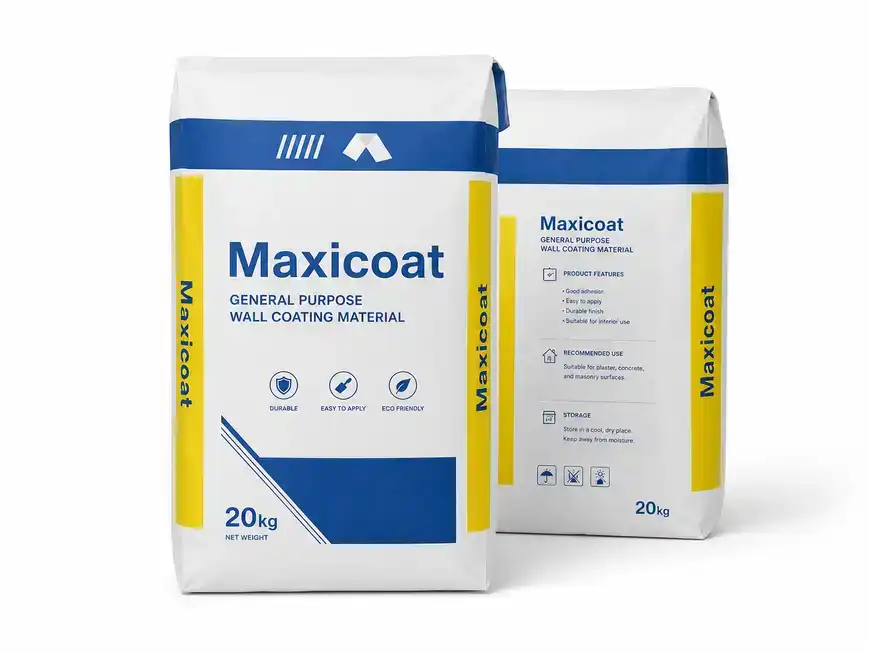
Details of Pasted Paper Valve Bags
Closure methods come before valve names
Before comparing valve sleeves, it helps to separate closure method from valve construction. The paper-valve guides divide closure logic into self-sealing, heat sealing, ultrasonic sealing, and manual sealing. Self-sealing relies on pressure from the packed contents. Heat sealing uses external heat. Ultrasonic sealing is aimed at a tighter, cleaner, more airtight pack. Manual sealing remains relevant where an outer flap or sleeve is closed by hand after filling.
Valve types for Pasted Paper Bags
| Valve type | Structure and behavior | Best when | Main watch-out |
|---|---|---|---|
| Paper Insert | Paper strip pasted into the valve opening to reinforce it | Cost discipline and standard sift resistance matter most | More basic than film-reinforced or sealable designs |
| Double Trap | Offset paper plus plastic film pieces in the valve opening | Better anti-sifting performance is needed | Sleeve construction is more complex |
| Reinforced Poly-Lock | PE film pasted into the valve opening for a rigid, sift-resistant mouth | Leakage control needs to improve without moving to sealable sleeves | Adds plastic to the valve zone |
| Reduced Valve | Valve tube opening smaller than the bag top and bottom width | Tighter, more controlled fill opening is preferred | Less forgiving if the spout-bag match is poor |
| Tuck-In Sleeve | Outer sleeve extension tucked in by hand after filling | Simple post-fill closure is acceptable | Manual handling is usually required |
| Sonic-Seal Sleeve | Film-coated sleeve extension designed for ultrasonic hermetic sealing | Cleanliness, contamination control, or airtightness are critical | Higher converting and line-complexity requirement |
The kraft paper options
| Paper options | Core behavior | Typical use logic |
|---|---|---|
| Traditional kraft paper | Strength through basis weight; lower porosity; heavier, coarser sheet | Heavier-duty multi-ply constructions |
| Extensible paper | Higher stretch, better energy absorption, higher porosity, fewer plies needed | High-speed filling and strong bags with lower ply count |
| Unbleached brown kraft paper | Natural appearance, strong fibers, tear resistance | Construction, feed, industrial powders, natural-looking branding |
| Bleached white kraft paper | Cleaner appearance, stronger print contrast, premium visual presentation | Food, retail-facing, cleaner-brand-image applications |
| PE-coated kraft paper | Added moisture and dust barrier | Humidity-sensitive powders and agricultural goods |
| PP laminated kraft paper | Added toughness, moisture protection, and fast-filling customization | Heavy-duty applications needing paper appearance plus polymer support |
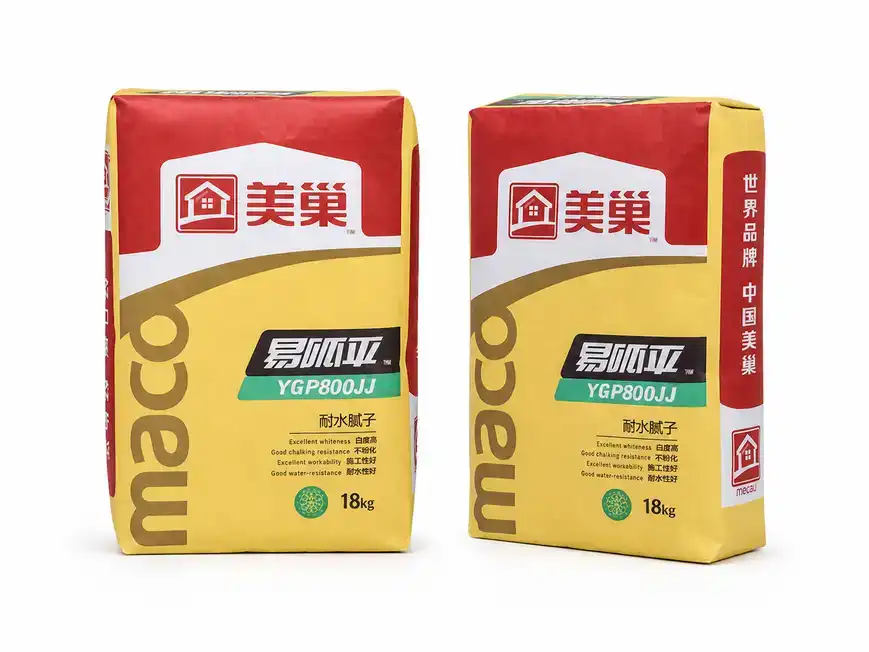
Details of PP Valve Bags
PP Valve Bags, polypropylene valve bags, and PP woven valve Bags are typically block bottom sacks made from woven polypropylene tapes, often coated or laminated with BOPP film, and designed for filling through a corner valve on spout equipment. The reviewed polypropylene pages describe them as suitable for fine and granular powders, with anti-skid surfaces, micro-perforated breathability, and moisture resistance strong enough for demanding industrial handling. Starlinger’s AD*STAR literature frames the format as a coated woven PP block-bottom valve sack designed for bulk and powdered goods.
That flexibility explains their growth. These bags can be light yet strong, printable yet rugged, breathable yet moisture-resistant when engineered correctly. And because the body is built from woven PP tapes rather than paper plies, the mechanical feel changes from the moment the bag is lifted. Less “fiber-first.” More “performance-first.” That is why these sacks are common in cement, fertilizers, chemicals, resins, seeds, flour, sugar, animal feed, and other dry bulk applications.
The common PP valve types
In commercial practice, PP valve terminology is usually simpler than paper-valve terminology. The reviewed polypropylene sources repeatedly return to three common valve structures: standard internal valve, tuck-in sleeve, and sonic seal sleeve. Around those three, buyers also talk about self-closing behavior and heat- or ultrasonic-sealable valve tops.
| Valve type | Structure and behavior | Best when | Main watch-out |
|---|---|---|---|
| Standard Internal Valve | Reinforced strip of woven poly material in the valve opening; typically self-closing under product pressure | Cost-effective PP valve construction with reliable sift resistance | Less airtight than sealable-sleeve systems |
| Tuck-In Sleeve | Outer sleeve extension tucked manually after filling | Extra security without moving to a sealable valve | Manual or assisted tucking is usually required |
| Sonic Seal Sleeve | Poly extension made from spunbond PP or PE for ultrasonic sealing | Cleaner closure, better dust and contamination control | Higher conversion and sealing complexity |
| Heat- or Ultrasonic-Sealable Valve Top | Sealable extension additionally closed by heat or ultrasonic energy | Moisture-sensitive or tamper-sensitive applications | Depends more heavily on sealing equipment integration |