
PE Coated Valve Woven Bags — Advanced Materials & Production Techniques
As a VidePak marketing specialist, this playbook puts PE Coated Valve Woven Bags at the center of a quality‑by‑design system. We connect resin and additive selection, tape‑fabric mechanics, PE coating physics, valve architecture, micro‑perforation logic, printing, conversion, and compliance into one auditable pathway. The aim is not a prettier brochure; it is safer pallets, cleaner fills, and repeatable costs.
What are PE Coated Valve Woven Bags? (a.k.a. PP valve sacks with PE coating / coated block‑bottom valve bags)
PE Coated Valve Woven Bags are polypropylene (PP) tape‑fabric sacks with an exterior or interior polyethylene (PE) coating that tightens porosity, improves abrasion resistance, and enables controlled surface friction. They are fitted with a self‑closing valve sleeve for fast, low‑dust filling on legacy valve packers or modern automated lines. Also known as PP valve sacks with PE coating, coated block‑bottom valve bags, or coated woven valve sacks, they are engineered for powders and granulates in the 10–50 kg class—cement, mortar, tile adhesive, fertilizers, salts, starches, feed, polymer pellets.
Background and domain context. Mechanically, the substrate is a woven lattice of oriented PP tapes; denier, mesh density, and GSM determine base strength. The PE coating (typically extrusion‑applied) modifies surface energy, moisture hold‑out, and coefficient of friction (COF). The valve introduces a controlled filling interface—a sleeve that opens under nozzle pressure and collapses to limit backflow. Operationally, PE Coated Valve Woven Bags must survive high‑g turns on conveyors, clamp‑truck yaw, and pallet compression while keeping faces legible and seams intact. Horizontally, the product combines geotextile load paths (weave), film science (coating), and powder handling (valve + micro‑perfs). Vertically, performance ladders resin → tape → weave → PE coat → valve sleeve → block‑forming → testing → compliance.
Horizontal & vertical reasoning. Horizontally, compare three worlds: geotextile weaving that carries load, film rheology that controls lay‑flat and COF, and industrial engineering that sets fill speeds. Vertically, move from granule morphology to pallet geometry: better resin draw → more uniform tapes → steadier weave → smoother coat → faster venting → squarer pallets. Cause links to effect, step by step.
Data reinforcement. Credible market ranges for PE Coated Valve Woven Bags: fabric ~80–130 g/m², mesh ~10×10–12×12, tape ~800D–1200D; PE coating ~15–30 g/m²; common sizes ~50×80 cm (50 kg) and ~40×60 cm (25 kg); valve sleeve internal diameter ~35–55 mm (liner, ultrasonic, or hot‑melt options). These numbers are not decoration—they are levers for drop energy, stack height, and fill velocity.
Case analysis. A mortar brand moved from paper valve sacks to PE Coated Valve Woven Bags with engineered micro‑perfs and a PE‑lined valve sleeve. Dust at the packer fell visibly, target weights stabilized faster, and pallets gained one additional tier thanks to squarer faces.
Comparative study. Versus paper valve sacks: higher wet strength and puncture resistance with less corner scuffing under clamps. Versus tubular PE FFS film: better pallet friction and stack geometry with equivalent print legibility when matte inks are used on coated faces.
What are the features of PE Coated Valve Woven Bags?
Valve that accelerates, sleeve that seals. The valve sleeve—PE‑lined, ultrasonic, or hot‑melt self‑closing—enables high‑speed filling with reduced spillage. Under internal pressure, the sleeve collapses and limits backflow; pick‑up dust decreases; line rhythm improves.
Coating that controls the surface. Extrusion‑coated PE (e.g., ~15–30 g/m²) tightens porosity, elevates rub resistance, and tunes bag‑to‑deck COF to the ~0.40–0.55 range. Anti‑slip masterbatches can be metered into the coat for tall stacks without sacrificing conveyor feed.
Geometry that stacks. Block‑bottom forming creates a rectangular footprint—more brick, less balloon. Pallets build higher and travel flatter; display faces present cleanly.
Air that exits on your terms. Micro‑perforation maps (line, scatter, or area arrays) evacuate entrained air during fill, fixing bag dimensions quickly. The result is denser palletization and fewer “soft” corners.
Surfaces that carry brand and codes. Coated faces accept flexo or gravure. Matte inks control glare under LED lighting; gloss over‑varnish can be limited to non‑bruise zones. GS1 barcodes and QR codes grade consistently when quiet zones are kept away from clamp arcs.
Horizontal integration. Materials science shows how higher mesh densities yield smoother coat laydown; printing science links smoother laydown to reduced dot gain and higher barcode grades; warehouse safety ties tuned COF to fewer clamp slips. Three disciplines, one outcome: faster, cleaner flow.
Vertical logic. Adjust resin MFI → improve tape draw → stabilize weave → smooth coating → reduce lay‑flat waviness → keep faces legible → reduce mis‑picks. Adjust seam pitch → spread bottom strain → cut drop failures → lower pallet rework. Small inputs cascade.
Data reinforcement. 50 kg cement‑class SKUs commonly specify fabric ~90–120 g/m², mesh ~10×10–12×12, PE coat ~20–25 g/m², valve ID ~40–50 mm, and COF targets ~0.45–0.55 depending on deck material.
Case analysis. A fertilizer co‑packer added anti‑slip to the PE coat and widened valve ID by 3 mm to match a new auger spout. Result: fewer line stoppages, cleaner faces, and reduced top‑layer creep during trucking.
Comparative study. PE Coated Valve Woven Bags vs. plain woven valve sacks: better moisture control, more stable print, and higher abrasion resistance at the face with a modest mass increase. vs. laminated BOPP valve sacks: less optical gloss but faster, simpler coating and robust COF tuning.
What is the production process of PE Coated Valve Woven Bags?
1) PP granules selection & compounding. Choose raffia‑grade PP with MFI ~2–4 g/10 min (230 °C/2.16 kg, ISO 1133) and density ~0.90–0.91 g/cm³. Add UV stabilizers for yard exposure; antistatic for powders; slip/anti‑block in coat as needed. Resin quality governs tape drawability and seam retention.
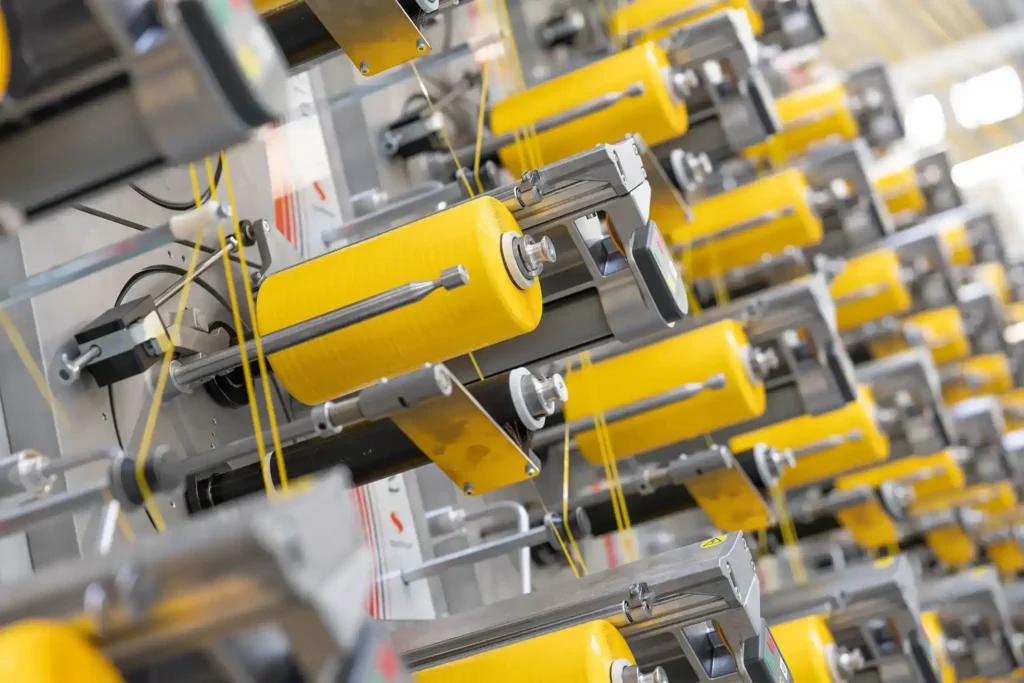
2) Tape extrusion & orientation. Melt → cast → slit to tapes → stretch/anneal to align chains. Online thickness gauges hold modulus and width dispersion tight; uniform tapes weave predictably.
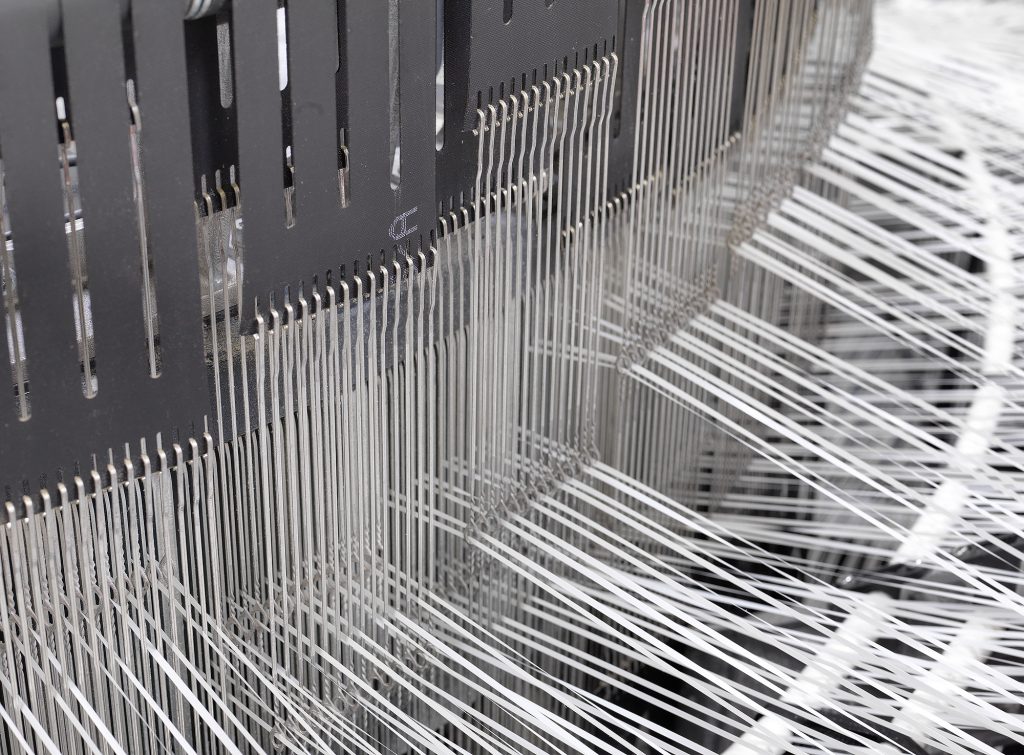
3) Weaving (circular or flat looms). Interlace tapes to target mesh/GSM under controlled warp tension. Weft‑stop and warp‑break detection localize defects, preserving width tolerance—a prerequisite for square block‑forming and stable print.
4) PE coating & surface tuning. Extrusion coat ~15–30 g/m² on one or both faces. Control melt temperature, die gap, and nip pressure to avoid orange‑peel and maintain flexibility. COF is tuned via masterbatch loading; matte inks or micro‑texture add scuff tolerance on the front panel.
5) Printing. Flexo (4–6 colors) handles commodity art efficiently; gravure (8–10 colors) supports photo‑rich branding. Set dyne levels ~38–42 dynes post‑corona for ink anchorage; position codes away from seam zones and clamp paths.
6) Valve sleeve insertion. PE/PP co‑extruded sleeves (often 3–5 layers) are welded or stitched. Options include internal flaps, ultrasonic seams, or hot‑melt features that self‑seal under product pressure.
7) Block‑bottom forming & stitching. Fold and stitch bottoms (single/double fold; single/double stitch) to distribute impact loads; corner gussets build the brick geometry. Stitch pitch and thread denier are matched to drop height and product abrasiveness.
8) Micro‑perforation strategy. Laser or needle maps are tuned to bulk density and fill speed—enough venting for fast dimensioning, not so much as to compromise dust hold‑out or rain resistance.
9) QA & compliance. Mechanical: tensile/tear, seam, and burst; ASTM D5276 (drop). Friction: ASTM D1894 (COF). Barrier (if required): ASTM E96 (WVTR) and ASTM D3985 (OTR). Food‑contact variants reference Regulation (EU) No 10/2011 and FDA 21 CFR §177.1520 with a Declaration of Compliance (DoC). Quality systems: ISO 9001:2015; many buyers add BRCGS Packaging or ISO 22000:2018.
Data reinforcement. Plants targeting cement‑class output often specify servo‑controlled block formers and automated width control at the loom; this tightens base skew and reduces lamination/print registration drift.
Case analysis. Introducing double‑fold/double‑stitch bottoms cut bottom failures in a tile‑adhesive program and improved needle‑hole coverage—evidence that seam geometry is a first‑order lever, not an afterthought.
Comparative study. Solventless lamination (BOPP) vs. PE extrusion coat: the former wins on photographic optics; the latter excels in speed, robustness, and COF tunability—especially where dust control and yard friction dominate the brief.
What is the application of PE Coated Valve Woven Bags?
Powders and granulates (25–50 kg). Cement, plaster, grout, and tile adhesive benefit from the square block base and micro‑perfs. PE Coated Valve Woven Bags stabilize quickly after fill, stack cleanly, and keep floors cleaner.
Fertilizers & agriculture. Urea, NPK blends, and feed: UV‑stabilized fabrics survive yard storage; anti‑slip coats reduce pallet shear; valve sleeves align with legacy nozzles for fast changeovers.
Food‑adjacent commodities. Salt, sugar blends, starches (with DoC and migration evidence): matte inks preserve legibility; PE coat lifts moisture resistance and rub durability.
Chemicals & resins. Pellets and powders: antistatic packages tame charge; engineered valve IDs match auger geometry to reduce fugitive dust.
Data reinforcement. 50 kg formats typically run fabric ~90–120 g/m², mesh ~10×10–12×12, widths ~50–80 cm, PE coat ~20–25 g/m², and valve IDs ~40–50 mm.
Case analysis. A salt producer added inner liners and specified matte inks on the coated face. Clumping declined; labels stayed readable after long hauls; pallets arrived drier post‑exposure events.
Comparative study. PE Coated Valve Woven Bags vs paper valve: superior wet‑chain survival, better clamp handling, and less edge fray. vs tubular PE FFS: woven wins on pallet friction and brick geometry; film may win on absolute line speed.
What is the application of PE Coated Valve Woven Bags? (sector‑specific deployment)
Food‑contact & retail. When contact is intended, specify materials to EU 10/2011/FDA 177.1520 with full DoC. Matte inks reduce glare over fine print; hemmed tops project a clean shelf edge.
Yard storage & outdoor cycles. UV packages maintain fabric integrity; anti‑slip coat raises COF on wood or plastic decks; bold corner marks aid pallet counting under sun glare.
High‑drop & abrasive duty. Raise GSM/denier; use double‑fold/double‑stitch bottoms; favor matte inks to conceal scuffs in minerals and construction routes.
ESD‑sensitive powders. Antistatic additives and liners mitigate charge relative to plain PE film while preserving woven strength and COF critical for clamp‑truck safety.
Cross‑disciplinary lens. Increase GSM and drop endurance rises—but mass and freight follow. Increase COF and stacks grip—but conveyors may need tuning. Expand valve ID and fill velocity jumps—but sleeve collapse behavior changes. The winning spec is negotiated between brand, safety, and line engineering—not copied.
Compliance & testing (numbers that open doors)
- EU: Regulation (EU) No 10/2011 for plastics in contact with food (overall migration ≤ 10 mg/dm²; SML/QM as listed). Maintain a DoC.
- US: FDA 21 CFR §177.1520 (olefin polymers) for PP/PE layers under stated conditions of use.
- CN: GB/T 8946‑2013 (general technical requirements for plastic woven sacks: dimensions, seam strength, marking, inspection rules).
- QMS: ISO 9001:2015 for resin‑to‑pallet traceability; many buyers also request BRCGS Packaging or ISO 22000:2018.
- Methods: ASTM D5276 (drop), ASTM D1894 (COF), ASTM E96 (WVTR), ASTM D3985 (OTR if barrier stacks used), tensile/tear and seam strength per woven‑sack norms; laminate adhesion by T‑peel.
Rhetorical check. Is compliance a brochure ornament? No. It is the handshake between engineering and law—the step from “works on our line” to “cleared to ship across borders.”
Key Parameters & Options (market‑referenced)
| Parameter | Typical Range / Option | Field Purpose | Notes |
|---|---|---|---|
| Fabric GSM | ~80–130 g/m² | Balance drop/stack vs mass | Cement class often ~90–120 g/m² |
| Mesh density | ~10×10 – 12×12 | Surface smoothness & puncture | Denser mesh → flatter print/coat base |
| Tape denier | ~800D – 1200D | Clamp‑truck tolerance & impact | Interacts with GSM; validate on line |
| PE coating | ~15–30 g/m² | Moisture/rub & COF tuning | Anti‑slip masterbatch lifts COF |
| Width × Height | ~40×60 cm (25 kg); ~50×80 cm (50 kg) | Filler/pallet alignment | Block‑bottom increases tiers |
| Valve sleeve | ~35–55 mm ID (PE/PP liner) | Clean, fast fill; self‑closure | Ultrasonic, hot‑melt, or flap options |
| Micro‑perforation | Pattern tuned to bulk density | Vent air during fill | Balance venting vs dust hold‑out |
| COF (bag/deck) | ~0.40–0.55 | Feed vs stack stability | Set via coat texture & additives |
| Printing | Flexo 4–6c / Gravure 8–10c | Branding & code legibility | Keep codes off clamp arcs |
| Additives | UV / antistatic / anti‑slip | Exposure & powder behavior | Match to climate and route |
Integrated solution (synthesis for VidePak buyers)
Design to ship, not to hope. Start with stabilized PP that draws into uniform tapes; weave to a controlled mesh/GSM; extrusion‑coat PE at measured coatweights with tuned COF; print for legibility and rub life; insert a valve sleeve that self‑seals under product pressure; micro‑perf to vent air without leaking fines; form a square block bottom with double‑fold/double‑stitch where drops are harsh; verify with COF, drop, seam, WVTR/OTR, and migration data under ISO 9001 governance. For buyers who want a direct category bridge, explore PE Coated Valve Woven Bags—an intentional anchor from this specification language to proven SKUs ready for line trials.
- PE Coated Valve Woven Bags — Advanced Materials & Production Techniques
- What are PE Coated Valve Woven Bags? (a.k.a. PP valve sacks with PE coating / coated block‑bottom valve bags)
- What are the features of PE Coated Valve Woven Bags?
- What is the production process of PE Coated Valve Woven Bags?
- What is the application of PE Coated Valve Woven Bags?
- What is the application of PE Coated Valve Woven Bags? (sector‑specific deployment)
- Compliance & testing (numbers that open doors)
- Key Parameters & Options (market‑referenced)
- Integrated solution (synthesis for VidePak buyers)
Introduction
In an era where packaging must balance strength, sustainability, and adaptability, PE coated valve woven bags have emerged as a versatile solution for industries ranging from construction to agriculture. These bags, featuring a PP woven base laminated with PE film, excel in moisture resistance, tear strength, and customization. For VidePak, a company with 30+ years of industry experience and a global footprint, the integration of advanced materials and region-specific designs ensures compliance with diverse market regulations while maintaining cost efficiency. This report explores how VidePak’s PE coated valve bags address global challenges through material innovation, production excellence, and strategic market alignment.
Material Innovation: The Science Behind PE Coating
The synergy between PP and PE creates a hybrid material with unmatched performance:
- Moisture Barrier: PE coatings reduce water vapor transmission rates (WVTR) to <5 g/m²/day, critical for hygroscopic materials like cement or fertilizers.
- Abrasion Resistance: PP’s tensile strength (8–12 N/mm²) combined with PE’s flexibility allows bags to withstand 50 kg loads and rough handling during transport.
- Cost Efficiency: PE lamination adds only $0.02–$0.05 per bag, making it 20% cheaper than aluminum foil alternatives while maintaining 90% moisture protection.
Case Study: A German construction firm reduced waste bag replacement costs by 35% after switching to VidePak’s 120 GSM PE coated bags, which endured 1,500+ filling cycles without rupture.
Production Techniques: Precision at Scale
VidePak’s Starlinger machinery and 30+ lamination lines enable high-volume production with stringent quality control:
- Extrusion Coating: Molten PE is evenly applied to PP fabric at 200–300°C, ensuring adhesion strength >4 N/cm².
- Multi-Color Printing: Up to 8-color CMYK printing meets branding needs for sectors like retail, where visual appeal drives sales.
| Parameter | Specification |
|---|---|
| PE Coating Thickness | 15–30 microns |
| Bag Dimensions | 40–100 cm (width), 50–150 cm (height) |
| Production Speed | 1,000–1,500 bags/hour |
| Certifications | ISO 9001, FDA, REACH, GB/T 8946-2013 |
Market-Specific Customization
1. Europe: Sustainability-Driven Designs
EU regulations like the Circular Economy Action Plan mandate recyclability. VidePak’s “EcoShield” line uses 30% recycled PP and biodegradable PE coatings, reducing carbon footprint by 25%.
Dialogue Example:
Q: “How do your bags comply with EU’s single-use plastics directive?”
A: “Our PE coatings are chemically modified for faster degradation in industrial composters, meeting EN 13432 standards.”
2. Asia: Cost-Effective Solutions for Agriculture
In markets like India, farmers prioritize affordability. VidePak offers 80 GSM bags with minimal PE coating (15 microns), cutting costs by 18% while protecting rice and grains from monsoon humidity.
3. North America: Hazardous Material Compliance
For chemical transport, VidePak integrates anti-static additives into PE layers, achieving surface resistivity of 10⁶–10⁹ Ω/sq to prevent explosions.
FAQs: Addressing Industry Concerns
Q1: How does PE coating affect recyclability?
A: VidePak’s PE-PP separation technology allows 100% material recovery, aligning with U.S. EPA guidelines.
Q2: What thickness is ideal for construction debris?
A: 120–150 GSM bags with 25-micron PE coatings balance durability and cost for sharp materials like concrete fragments.
Competitive Edge: Certifications and Global Reach
VidePak’s 800+ certifications, including ISO 9001 and FDA compliance, enable seamless entry into regulated markets. Its 2024 partnership with a Brazilian agrochemical giant showcased:
- Localized Design: Green PE coatings for sugarcane fertilizer bags, resisting UV degradation in tropical climates.
- Rapid Delivery: 15-day turnaround for bulk orders, leveraging 100+ circular looms and regional warehouses.
Sustainability and Future Trends
The global PE coated bag market is projected to grow at 5.8% CAGR through 2030, driven by construction and agriculture. VidePak’s R&D focuses on:
- Bio-Based PE: Derived from sugarcane, reducing fossil fuel dependency.
- Smart Packaging: QR codes for waste tracking, complying with EU’s CPR regulations.
Conclusion
PE coated valve woven bags are not merely containers but engineered systems that address regional, regulatory, and environmental demands. VidePak’s fusion of Starlinger precision, material innovation, and market agility solidifies its role as a global packaging pioneer. As industries prioritize sustainability and automation, the company’s commitment to R&D ensures it remains at the forefront of the $12 billion industrial packaging sector.
External Links:
- Explore how PE coatings enhance durability in construction waste management.
- Learn about customized solutions for diverse market needs.