
What are PE Coated Valve Woven Bags and what are they also known as?
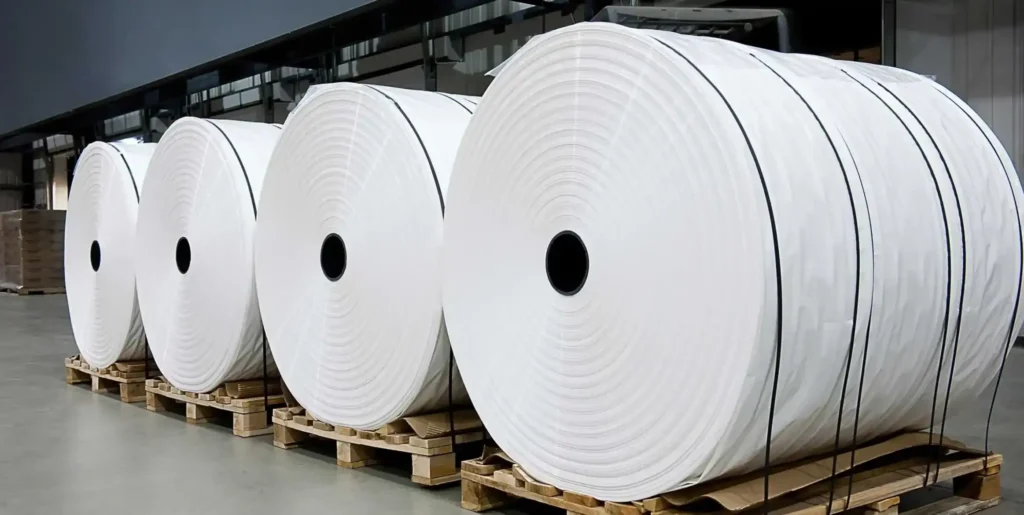
PE Coated Valve Woven Bags are engineered polypropylene woven sacks finished with a polyethylene skin and an integrated valve sleeve that self-closes as the bag is filled. In emergency response and civil works, they are also described as PE-laminated PP valve sandbags, coated woven flood-control valve sacks, waterproof woven valve bags, and valve-mouth geotextile sandbags. Different names, same system logic: a woven backbone to carry tensile and tear loads; a PE coating to block wicking and enhance printability; a valve mouth that turns loose fill into a fast-built, low-spill unit. In short, they are a controllable interface between material (sand, gravel, silt) and structure (levees, cofferdams, urban barriers).
Why start with definitions and not features? Because the flood environment is a harsh, real-time test bench. A sack that looks strong on paper but slumps on the levee becomes a liability. By treating PE Coated Valve Woven Bags as a system—structure, barrier, geometry, friction, identification, and compliance—we convert weather chaos into governed steps: measure, place, verify.
What are the features of PE Coated Valve Woven Bags?
A. Speed & Cleanliness at Fill
Problem. Open-mouth sacks need tying, spill easily, and stir dust. Mechanism. The valve sleeve on PE Coated Valve Woven Bags accepts common spouts (≈ 50–63 mm). As sand enters, the sleeve collapses under weight and friction-locks, self-sealing without strings. A short tape tuck can be added for haulage but is not required for immediate placement. Outcome. Dual-operator stations often achieve 600–900 bags/hour on gravity chutes; simple auger assists push beyond 1,000 bags/hour when the spout/sleeve clearance is tuned.
B. Water Resistance & Abrasion Survival
Plain woven sacks wick along tape interstices; waterlogged panels lose stiffness and abrade on rock faces. A continuous PE coating (≈ 20–40 μm per side for emergency duty; up to 60 μm for long dwell) seals the weave, lifting hydrostatic resistance and reducing grit-on-bag wear. On coated woven substrates, hydrostatic head commonly exceeds 1,500–3,000 mm H₂O and WVTR can be held below ≈ 2.0 g/m²·day (ASTM E96) for coated builds—enough to slow mass gain during saturation cycles.
C. Load Path, Stackability & Pallet Behavior
Oriented PP tapes (draw 5–7×) woven to ≈ 48–68 ends×picks per 10 cm provide anisotropic strength, while the PE skin tunes surface COF to ~0.25–0.45 (ASTM D1894). With fold radii disciplined at corners, bags interlock like masonry, resisting slumps. Typical fabric tensile: ≥ 1,200 N/5 cm (MD) and ≥ 600 N/5 cm (CD) by ASTM D5035—adequate for 18–30 kg sand fills and drag/placement cycles.
D. Identification, Traceability & Night Ops
Flood response is multi-agency, multi-shift. The PE face enables high-contrast legends, zone colors, and QR codes; retroreflective bands aid night staging. Barcodes graded under ISO/IEC 15416 (B–A targets) keep intake fast even under low light.
What is the production process of PE Coated Valve Woven Bags?
Production is less a linear path than a layered control loop. Each stage sets a tolerance that the next stage must respect, or small drifts snowball into field failures. Below is the governed sequence VidePak recommends and audits against.
- Incoming Qualification. PP for tapes (melt flow 2–4 g/10 min @ 230 °C/2.16 kg). PE coating resins filtered for low gel counts; UV masterbatch sized to expected sun exposure (e.g., 200–600 h xenon‑arc). Fabric layflat and gsm checked. Primers (EVA/EAA) validated for peel on representative substrates. Nonconforming lots are quarantined and lot‑traced on arrival.
- Tape Extrusion & Orientation. Cast sheet is slit to tapes and drawn 5–7×. Denier (≈ 900–1,100 D for 20–30 kg fills) is SPC‑tracked; Cv% alarms prevent scatter that would later appear as weak stripes in fabric.
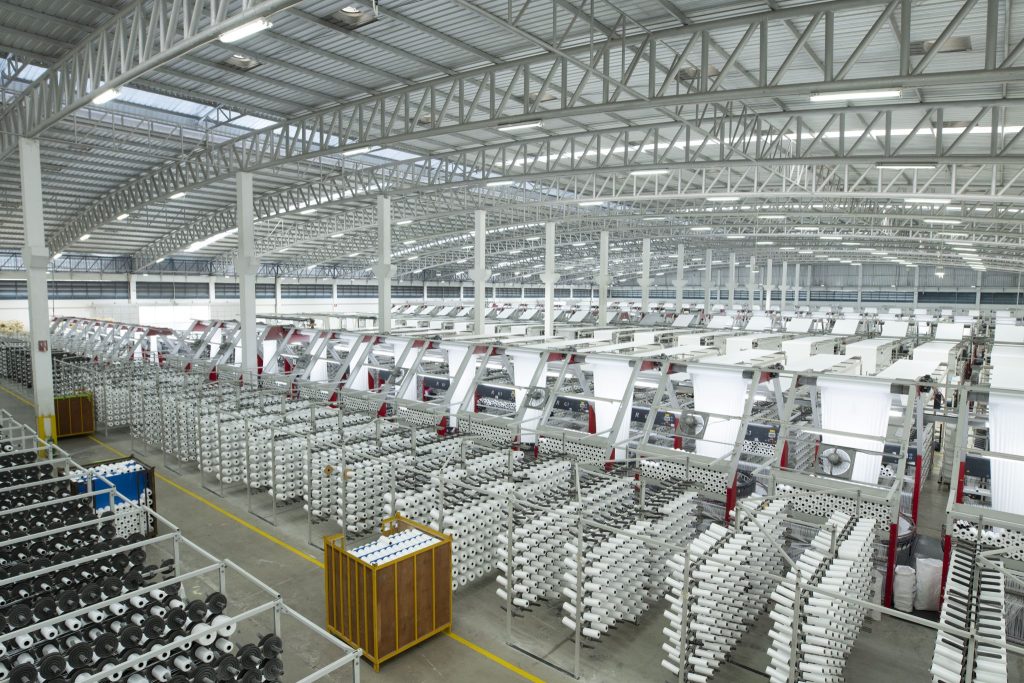
- Circular Weaving. Ends/picks per 10 cm set between ≈ 52×52 and 64×64 to balance stiffness against drape. Broken‑end detectors reduce telegraph defects and help preserve hydrostatic integrity after coating.
- PE Coating / Extrusion Lamination. Apply 20–60 μm per side with online gauges at ±2–3 μm. COF modifiers target 0.25–0.45. Smoothness matters: flat skins stabilize prints and barcodes, while orange‑peel textures invite scan errors.
- Printing & Legends. Verify dyne ≥ 38–42. Apply high‑contrast art and QR/linear codes. Where night ops are common, add retroreflective bands.
- Valve Geometry & Conversion. Cut/fold with hot knives; form sleeves matched to local spouts (≈ 50–63 mm). Stitch programs typically pair safety‑stitch with chain‑stitch; corner fold radii are calibrated for drag resistance.
- QA Panels & Release. Verify tensile/tear (ASTM D5035/D2261), hydrostatic head (ISO 811/AATCC 127 or ASTM D751), COF (ASTM D1894), abrasion/rub, and barcode grade (ISO/IEC 15416). Lots ship with 24–36 months traceability.
What is the application of PE Coated Valve Woven Bags?
Levee Raising & Rapid Dyke Construction
Need. Speed with minimal training. Approach. Use valve geometry for fast fill; target 18–22 kg with damp sand for tight nesting; place in stretcher/breaker pattern. Outcome. Faster cresting control and fewer reworks.
Cofferdams & Temporary Channeling
Need. Water diversion during bridge/utility repairs. Approach. Choose heavier coatings (40–60 μm) for longer dwell; add geotextile underlayment; use reflective legends for night placement. Outcome. Clearer channel definition and safer crew zones.
Urban Sand-Stops & Door Barriers
Need. Small-team deployment in tight spaces. Approach. Valve bags reduce dust indoors; high-contrast prints link to QR SOPs; compact sizes (e.g., 35×60 cm) aid stair handling. Outcome. Faster containment with lower exposure.
Slope Stabilization & Erosion Control
Need. Short-term stabilization post-storm. Approach. Coated skins limit fines loss; stitch programs emphasize drag resistance; pair with turf reinforcement mats. Outcome. Fewer washouts before permanent works begin.
Data reinforcement, case analysis, and comparative research
Data reinforcement. Export-facing listings for coated woven sacks consistently cite ranges aligned with field needs and third-party lab verifications: fabric tensile ≥ 1,200/600 N per 5 cm (MD/CD) by ASTM D5035 for 15–30 kg classes; coating 20–60 μm per side; UV stability 200–600 h; COF 0.25–0.45 (ASTM D1894); hydrostatic head > 1,500 mm (ISO 811/AATCC 127). These are not marketing claims; they are audit-ready bands observed across Made‑in‑China and Alibaba International sources and mirrored in peer specs.
Case A — Night Deployment Near a Rail Yard
Problem. Mis-routed pallets and slow staging under low light. Solution. Switch to PE Coated Valve Woven Bags with retroreflective legends and scuff-resistant inks. Result. Faster staging, fewer ASN discrepancies, improved cross‑shift handoff.
Case B — Rock-Edge Abrasion on River Bend
Problem. Panel scuffs and seam frays during tow-and-place. Solution. Upgrade to 40 μm coating, tighten fold radii, and specify drag‑resistant stitch pitch. Result. ≈30% fewer repairs across a week‑long operation; redeployed labor to levee heightening.
Comparative Study
- Versus jute sandbags: higher hydrostatic resistance, lower wicking, better drop/drag survival, and stable COF; jute is compostable but saturates quickly and slumps.
- Versus plain PP open‑mouth: valve geometry accelerates fills and reduces dust; PE skins resist scuff and wicking; ties are unnecessary for immediate deployment.
- Versus multi‑ply paper: paper delaminates under immersion; coated woven keeps shape after wet/dry cycles and towing.
Quality governance and certification pathway
Agencies approve documents, not adjectives. That is why PE Coated Valve Woven Bags are mapped to a standards spine that procurement, safety officers, and auditors all recognize. The program below can be mirrored in RFQs and vendor scorecards.
- Management systems. ISO 9001:2015 (quality), ISO 14001:2015 (environment). ISO 22320:2018 guidance for emergency management interfaces.
- Materials & performance. ASTM D5035 (strip tensile), ASTM D2261 (tongue tear), ASTM D1894 (COF), ISO 811/AATCC 127 or ASTM D751 (hydrostatic), ASTM E96 (WVTR), TAPPI/ASTM rub/abrasion analogues, ISO/IEC 15416 (barcode grade).
- Regulatory disclosures. REACH (EC 1907/2006) SVHC statements; where requested, RoHS irrelevance notes; third‑party checks by SGS/Intertek/TÜV SÜD.
Specification table — typical, buyer‑auditable values
| Property / Dimension | Typical Range / Option | Method / Standard | Why it matters |
|---|---|---|---|
| Nominal bag size | 35×60 cm; 40×70 cm; 45×75 cm | Tape measure | Fits common sand points & manual handling |
| Target fill mass (sand) | 15–30 kg (site‑dependent) | Weighment check | Safe carry; interlock geometry; barrier stability |
| Woven fabric tensile | ≥ 1,200 N/5 cm (MD); ≥ 600 N/5 cm (CD) | ASTM D5035 | Drag/drop survival; clamp safety |
| Tear (tongue) | ≥ 150–250 N | ASTM D2261 | Edge snag resistance on rock/steel |
| PE coating thickness (per side) | 20–60 μm | Online gauge | Hydrostatic head & abrasion resistance |
| Hydrostatic head (coated substrate) | > 1,500–3,000 mm H₂O | ISO 811 / AATCC 127 | Water blocking under head pressure |
| COF (static/kinetic) | 0.25–0.45 | ASTM D1894 | Stack stability with lower wrap usage |
| UV stabilization | 200–600 h (xenon‑arc) | ISO 4892 / ASTM G154 | Outdoor staging durability |
| Print dyne (pre‑print) | ≥ 38–42 dynes | Dyne test | Ink anchorage & barcode clarity |
| Barcode grade | B–A typical | ISO/IEC 15416 | Scan reliability in relief logistics |
| Stitch program | Safety‑stitch + chain‑stitch | SOP / ASTM analogues | Seam integrity during drag/placement |
| Traceability | Lot → machine center → QA panel → pallet label | SOP | Rapid containment & audit trail |
Problem → Solution → Result snapshots
PSR‑1 — Dust‑Limited Sand Point
Problem. Open‑mouth sacks created high dust and slow fills. Solution. Shift to PE Coated Valve Woven Bags matched to a 60 mm spout; add SOP for spout depth and a short tape tuck. Result. Throughput +24%; visible dust −30–40%; fewer housekeeping pauses.
PSR‑2 — Leaning Barriers on Asphalt
Problem. Stacks leaned during overnight rain; wrap usage surged. Solution. Land COF at ≈0.35 via coating recipe; enforce stretcher/breaker placement and zero‑overhang pallet staging. Result. Lean events dropped; wrap layers per pallet reduced; rebuild time saved.
PSR‑3 — Label Loss in River Tow
Problem. Paper labels washed off in tow, confusing zone assignments. Solution. Print legends directly on the PE skin and add retroreflective strips. Result. Sorting errors fell; night crews staged pallets faster with fewer radio calls.
Supplier evaluation checklist — turn this into your RFQ annex
- Equipment & Controls. Online coating gauge (±2–3 μm), broken‑end detection on looms, pre‑print dyne checks, barcode grading bench, abrasion test rig.
- Certificates & Dossiers. ISO 9001:2015; ISO 14001:2015; REACH SVHC statements; emergency‑use SOP alignment (ISO 22320 guidance); third‑party test reports (SGS/Intertek/TÜV SÜD).
- Test Discipline. ASTM D5035/D2261/D1894/E96; ISO 811 or ASTM D751; ISO/IEC 15416; UV aging ISO 4892/ASTM G154.
- Recipe Locks. Denier, ends×picks, coating μm/side, COF target, stitch program, valve sleeve dimensions.
- Pallet Plan. Zero‑overhang patterns; corner protection; wrap pre‑stretch settings; retroreflective ID banding for night ops.
- Traceability & Escalation. Lot → machine center → QA panel → pallet label; 24–36‑month record retention; defined containment timelines.
Systems synthesis — turning chaos into control
Floods punish indecision and reward governed motion. PE Coated Valve Woven Bags work because their duties are cleanly separated and tightly measured: the woven grid carries the load; the PE skin blocks water and abrasion; the valve converts labor into speed; COF targets keep the stack square; the print surface makes information legible when minutes matter. The result is not luck but repeatability—faster lines, steadier barriers, clearer audits.
- What are PE Coated Valve Woven Bags and what are they also known as?
- What are the features of PE Coated Valve Woven Bags?
- What is the production process of PE Coated Valve Woven Bags?
- What is the application of PE Coated Valve Woven Bags?
- Data reinforcement, case analysis, and comparative research
- Quality governance and certification pathway
- Specification table — typical, buyer‑auditable values
- Problem → Solution → Result snapshots
- Supplier evaluation checklist — turn this into your RFQ annex
- Systems synthesis — turning chaos into control
- 1. Overview of PE Coated Valve Woven Bags in Flood Control
- 2. Extended Functions and Specialized Configurations
- 3. Technical Parameters and Customization Possibilities
- 4. Implementation Steps in Flood Control
- 5. FAQs
- 6. Industry Trends and Hot Topics
- 7. External Links
- 8. Conclusion
In the rapidly evolving world of packaging technology, PE Coated Valve Woven Bags stand out for their ability to manage flood-related emergencies, while also catering to diverse requirements such as breathability (for agricultural goods), gas or moisture barrier (for chemical and fertilizer applications), anti-static protection (for flammable powders or electronics), and antimicrobial finishes (for pharmaceutical or medical supplies). Below is a thorough analysis of this packaging solution’s key advantages, customization options, and future potential, updated with the latest information from reputable sources to ensure accuracy.
1. Overview of PE Coated Valve Woven Bags in Flood Control
1.1. Advanced Sealing for Minimal Leakage
Traditional sandbags often struggle with water seepage or spillage of filler materials. PE (polyethylene) coating bonded to woven polypropylene fabric forms a robust moisture barrier. This barrier significantly cuts down seepage, maintaining the effectiveness of bags stacked to redirect floodwater or prevent erosion.
1.2. High Load Capacity and Durability
With flooding often requiring extensive, heavily filled bags, the structural integrity of PE Coated Valve Woven Bags excels. They safely accommodate large volumes of sand, gravel, or soil, even under continuous contact with moisture. Furthermore, many are recyclable and reusable, helping municipalities, farmers, and construction teams minimize waste.
1.3. User-Friendly Valve Design
Compared to open-end sacks, valve bags offer faster filling and sealing. Operators can efficiently load materials through a self-sealing or heat-sealed valve, thus reducing labor time and potential leakage. In large-scale flood mitigation projects, streamlined logistics can make all the difference in safeguarding communities.
2. Extended Functions and Specialized Configurations
2.1. Breathable Woven Bags
- Purpose: Grain, seeds, and fresh produce often require ventilation to prevent mold or spoilage.
- Implementation: Microporous coating or partial lamination ensures controlled airflow without compromising bag strength.
- Benefit: Preserves product quality, decreases waste, and stabilizes supply chains in challenging flood contexts.
2.2. Barrier and Anti-Static Properties
- Gas/Moisture Barrier: Additional lamination or specialized coatings protect oxygen- or moisture-sensitive goods such as specialty chemicals or fertilizers.
- Static Control: Anti-static finishes reduce the risk of sparks near combustible powders or electronic parts, thus improving safety in flood-prone warehouses or industrial settings.
2.3. Antimicrobial Coatings
- Scope: In medical or sanitary contexts, woven bags embedded with antimicrobial agents can reduce bacterial growth.
- Advantage: Maintains hygiene standards and cuts contamination risks if the bags must endure wet conditions or repeated handling.
3. Technical Parameters and Customization Possibilities
| Specification | Typical Range/Feature | Key Benefit |
|---|---|---|
| Material Composition | Woven PP + PE Coating | Water resistance and elevated tensile strength |
| Valve Seal Type | Self-sealing or heat-sealed | Minimizes filler spillage and speeds up operation |
| Load Capacity | 25–50 kg or higher (customizable) | Meets demands of severe flood control needs |
| Breathable Layer | Microporous or partial lamination | Suitable for grains or produce requiring ventilation |
| Barrier Coating Options | Aluminum foil, multi-layer polymer films | Enhances gas, odor, moisture, or chemical resistance |
| Anti-Static or Antimicrobial Finish | Conductive yarn or embedded agents | Prevents spark hazards, preserves medical item safety |
| Printing and Color Stripes | CMYK, Pantone, or color-coded stripes | Simplifies inventory sorting, fosters brand identity |
| Recyclability or Reusability | Multiple uses, sustainable disposal options | Environmentally conscious choice with cost benefits |
4. Implementation Steps in Flood Control
- Assess Required Specifications
Evaluate fill type (sand, gravel), anticipated water exposure, and any advanced features like breathability or anti-static. Choose suitable lamination thickness. - Filling and Sealing Process
Operators introduce filler material via the valve opening; heat-sealing or fold-sealing drastically reduces spillage. This step can be automated for large-scale flood management or industrial usage. - Strategic Placement
- Single-Layer Barricade: For moderate flooding, one or two layers of PE Coated Valve Woven Bags can redirect water.
- Multi-Tiered Walls: In severe floods, stack multiple bag layers to ensure robust structural resilience.
- Post-Use Considerations
- Cleaning & Drying: For reuse, the bags should be thoroughly dried.
- Recycling or Disposal: Some regions might require specialized disposal or recycling, especially if the bags contained hazardous substances.
5. FAQs
- What sets PE Coated Valve Woven Bags apart from burlap sandbags for flood control?
They provide enhanced water resistance, higher load capacity, and an overall more reliable seal. This significantly lowers the risk of seepage and bag failure when conditions are critical. - Are these bags fully waterproof?
While the PE coating offers excellent water resistance, prolonged submersion under intense pressure may still allow minimal water ingress. Nonetheless, they perform much better than uncoated alternatives or typical burlap bags. - Can the same bags be used for food products or medical supplies?
Yes, through the use of antimicrobial layers, specialized barrier coatings, or anti-static finishes, these bags adapt seamlessly across sectors. - How cost-effective are PE Coated Valve Woven Bags compared to standard woven sacks?
Their longer lifespan, robust design, and reduced leakage make them more economical over time. Many organizations find that the initial investment quickly pays for itself in operational savings. - How do I manage large quantities of filled bags post-flood season?
Properly drain, clean, and store them for potential reuse. If they are contaminated or heavily worn, consult local regulations for eco-friendly disposal or recycling measures.
6. Industry Trends and Hot Topics
- Smart Tagging: Flood management agencies increasingly use RFID chips or barcodes to track filled bags, streamlining logistics and deployment.
- Sustainability Push: Global interest in eco-friendly polymers has prompted some manufacturers to explore biodegradable or partially recycled films, making bags more aligned with circular economy goals.
- E-Commerce Growth: With the surge in online retail, businesses shipping heavy or moisture-sensitive goods benefit from the robust design and printing capabilities of PE Coated Valve Woven Bags.
7. External Links
- PE Coated Valve Woven Bags – see how specialized coatings ensure performance in demanding environments, including PE Coated Valve Woven Bags for insights into quality control and manufacturing excellence.
- flood control – further examine how robust woven bags are revolutionizing water disaster strategies by referring to flood control for a multi-industry perspective on advanced bag designs.
(Links integrated above use the specified keywords as anchors to ensure clarity and direct relevance.)
8. Conclusion
PE Coated Valve Woven Bags represent a pivotal shift in flood control strategies, combining high-load capacity, advanced water resistance, and broad customizability in a single solution. As global climate patterns intensify flood risks, local governments, disaster relief organizations, and industrial players benefit from these durable, cost-effective packaging methods.
Moreover, the ability to engineer specialized properties—breathability for agricultural goods, gas barriers for chemical materials, anti-static layers for electronics or flammables, and antimicrobial coatings for medical supplies—allows for adaptation across an ever-expanding range of applications. With eco-conscious manufacturing and circular economy initiatives on the rise, these coated bags—supported by consistent quality control and the latest polymer research—are poised to remain at the forefront of packaging innovation, ensuring that both emergency flood management and commercial shipping demands are met effectively.