
Introduction to Poly-BOPP Bags
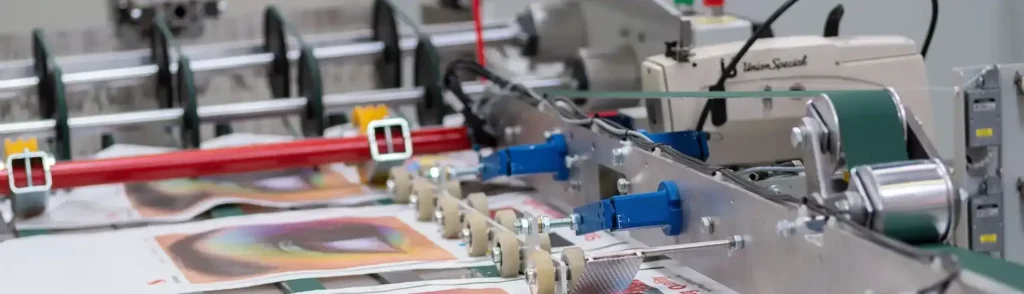
What are Poly-BOPP Bags and what are they also known as?
Poly-BOPP Bags align a biaxially oriented polypropylene (BOPP) print layer with a polyolefin backbone—most often polypropylene woven fabric, sometimes co-extruded poly films—so that visual fidelity, tear resistance, and moisture control can be tuned independently yet governed collectively. This isn’t mere lamination; it’s role segregation: the skin carries graphics and abrasion defense; the core bears load; the liner (when used) moderates vapor. Regional naming varies—BOPP laminated PP woven sacks, BOPP film-laminated poly sacks, photo-grade poly woven bags, block-bottom BOPP woven bags, and BOPP-laminated valve-style bags—but the system intent remains constant: engineer each layer for the job it performs best, then hold tolerances so performance is repeatable from nozzle to pallet.
It’s not a slogan; it’s a workflow: incoming resin windows, on‑line gauge control, pre‑print dyne checks, register automation, WVTR panels, COF sampling, barcode grading—each paired with corrective actions. Quality is not a golden sample; it’s a statistical habit.
What are the features of Poly-BOPP Bags—and why do they matter on the route?
Photographic fidelity at speed
BOPP skin, corona‑treated to ≥ 38–42 dynes, accepts high‑resolution CI flexo or rotogravure. Register automation (≤ ±0.2 mm) stabilizes halftones across long runs; abrasion‑resistant topcoats guard artwork during clamp cycles. Barcodes graded under ISO/IEC 15416 typically reach B–A when surface energy and register are governed.
Mass‑efficient strength
Drawn PP tapes (5–7×) woven to 48–72 ends×picks/10 cm deliver tensile bands around ≥ 1200 N/5 cm (MD) and ≥ 600 N/5 cm (CD) for 20–50 kg duties (ASTM D5035). Versus mono‑film sacks with similar drop ratings, Poly-BOPP Bags often reduce polymer by 12–25% through anisotropic load paths.
Barrier with de‑aeration
Optional 40–90 μm PE or PA/PE liners achieve ≤ 1.0–2.5 g/m²·day WVTR at 38 °C/90% RH (ASTM E96). Engineered vent channels embedded in the laminate remove trapped air at fill without punching leak paths through the product side.
Pallet stability by design
Surface COF windows of 0.25–0.45 (ASTM D1894) paired with block‑bottom geometry deliver square stacks, fewer wrap breaks, and calmer loading docks.
Audit‑ready compliance
ISO 9001:2015 QMS, EN 15593:2008 hygiene for food‑adjacent lines, REACH SVHC screening, EU 10/2011 & FDA 21 CFR 177.1520 migration proofs, and ISO/IEC 15416 barcode QC—each mapped to SKUs.
Rhetorical triad: faster lines, cleaner audits, steadier pallets. Not one at the expense of the others, but each because of the others.
What is the production process of Poly-BOPP Bags—from pellet to pallet?
- Incoming qualification. Melt‑flow windows (e.g., 2–4 g/10 min @ 230 °C/2.16 kg), gel-count screens, and tie‑layer adhesion checks. Nonconforming lots are quarantined, not rationalized.
- Tape extrusion & orientation. Cast sheet slit and drawn 5–7×; denier (900–1200 D typical) monitored with Cv% alarms—because variance here becomes variance everywhere.
- Circular weaving. 48–72 ends×picks/10 cm tuned for stiffness vs. drape; broken‑end detectors reduce defects that telegraph into laminate flatness and print quality.
- Extrusion lamination. EVA/EAA tie layers bond BOPP to the backbone; on‑line gauges hold 20–60 μm per side within ±2–3 μm tolerance, protecting seal windows and barcode smoothness.
- Printing & coats. Dyne ≥ 38–42; 6–10 colors; register ≤ ±0.2 mm; matte/gloss/scuff topcoats chosen by route abuse and shelf goals.
- Liner & vent design. 40–90 μm PE or PA/PE by hygroscopicity; laminate‑embedded vent channels evacuate air at fill while preserving WVTR in transit.
- Conversion geometry. Precision cutting, gusseting, block‑bottom formation or pinch/open‑mouth; valve options for hybrid fill modes; batch inspections on cut length, layflat, valve geometry, bottom peel.
- QA & palletization. ASTM/ISO panels validate tensile/tear/WVTR/COF; ISO/IEC 15416 grades barcodes; zero‑overhang pallet plans with codified wrap settings; 24–36 month lot→center→panel→pallet traceability.
Statistical process control stitches departments into one organism: denier, gauge, dyne, register. Early corrections are cheap; late claims are expensive.
Visibility matters. Dashboards that surface drift before it becomes defect protect both throughput and reputation.
Where do Poly-BOPP Bags excel in application?
Food & pet nutrition. Aroma and moisture must be preserved while artwork sells from the shelf. Liners manage vapor; scuff coats defend imagery; scanners in dim depots still grade B–A when dyne and register are governed.
Agro‑inputs. Hygroscopic goods punish careless venting. Laminate‑embedded channels sustain speed while protecting WVTR; anti‑static packages reduce dust adhesion.
Industrial minerals & additives. Abrasive fines stress corners and codes; the woven core fights tear, while BOPP protects graphics. COF discipline keeps pallets square after clamp cycles.
Building materials. High drops and clamp‑only depots reward anisotropic strength and reinforced fold radii. Block‑bottom geometry minimizes wrap breaks and stack creep.
Retail‑forward formats. Matte‑gloss contrast guides the eye; photo‑level branding arrives without brittle varnish that cracks at folds.
- Versus plain woven sacks: superior print, better rub resistance, same or higher edge‑tear.
- Versus paper‑only sacks: stronger humidity tolerance and clamp survival in coastal logistics.
- Versus mono‑film: higher edge‑tear at similar drop with lower polymer mass for the duty.
Data reinforcement, case analysis, and risk‑aware positioning
Data. Public listings (Made‑in‑China, Alibaba International) report export‑grade bands aligned with this guide: fabric tensile ≥ 1200 N/5 cm (MD) and ≥ 600 N/5 cm (CD) for 20–50 kg formats; laminate 20–60 μm/side; liners 40–90 μm; COF 0.25–0.45; barcodes graded to ISO/IEC 15416.
Case. A pet nutrition program adopted Poly-BOPP Bags with dyne ≥ 40, register ±0.2 mm, and scuff coats; DC barcode exceptions fell below 0.3%, reprint scrap declined, shelf presentation improved.
Study. Humidity‑cycled routes favored laminated woven builds over paper‑only for seam survival and panel flatness; against mono‑film FFS, the woven core delivered better edge‑tear with similar drop ratings at lower mass.
| Property / Dimension | Typical Range / Option | Method / Standard | Why it matters |
|---|---|---|---|
| Nominal capacity | 10–50 kg classes | — | Aligns art area, jaw stroke, pallet count |
| Tape denier (woven backbone) | 900–1200 D | In‑process QA | Controls tensile band and stiffness |
| Weave density | 48–72 ends × 48–72 picks /10 cm | Loom counter | Tunes drape vs. puncture resistance |
| Laminate thickness (per side) | 20–60 μm | On‑line gauge | Stabilizes seals; preserves print flatness |
| Liner film | 40–90 μm PE or PA/PE | ASTM D882/D1709 | Tunes WVTR and seal window |
| WVTR @ 38 °C / 90% RH | ≤ 1.0–2.5 g/m²·day | ASTM E96 | Shelf life for hygroscopic contents |
| Fabric tensile | ≥ 1200 N/5 cm (MD), ≥ 600 N/5 cm (CD) | ASTM D5035 | Clamp survival; heavy‑duty handling |
| COF (static/kinetic) | 0.25–0.45 | ASTM D1894 | Pallet stability; wrap efficiency |
| Surface energy (pre‑print) | ≥ 38–42 dynes | Dyne pen/test | Ink anchorage; varnish reliability |
| Register tolerance | ≤ ±0.2 mm | Press QA | Halftone integrity; barcode clarity |
| Barcode grade | B–A typical | ISO/IEC 15416 | DC scan reliability |
Problem → Solution → Result snapshots
- Dust‑limited filler. Dust alarms at 1,350–1,600 bags/h. Solution: laminate‑embedded vents + anti‑static liner + nozzle depth SOP. Result: airborne dust −30–40%; speed +12–18%; WVTR stable.
- Pallet tilt & wrap breaks. Leaning stacks, high wrap usage. Solution: COF 0.25–0.45; zero‑overhang pattern; reinforced corners. Result: fewer tilt events; less wrap; fewer DC rejections.
- Barcode and art degradation. Scuff and mis‑reads in dim depots. Solution: dyne ≥ 40; register ±0.2 mm; route‑appropriate topcoat. Result: vivid color; Grade B–A scans; complaints shrink.
Supplier evaluation — a rigorous checklist
- On‑line gauge control (±2–3 μm), register automation, broken‑end detection, SPC dashboards for denier/layflat.
- Certificates: ISO 9001:2015; EN 15593:2008 where relevant; REACH SVHC statements; EU 10/2011 / FDA 21 CFR 177.1520 migration proofs as needed.
- Test discipline: ASTM D5035/D2261/E96/D1894/D1709; ISO/IEC 15416; acceptance bands baked into POs.
- Pallet plan & COF: zero‑overhang patterns, wrap settings, corner boards; COF verified on arrival.
- Traceability & escalation: lot → machine center → QA panel → pallet label; defined containment and response times.
Explore configurations and adjacent formats via our anchor link on Poly-BOPP Bags.
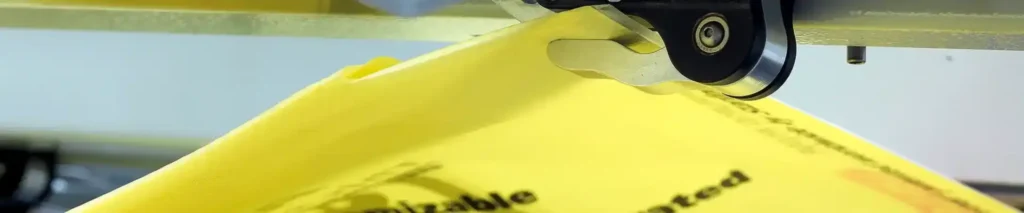
What is Poly-BOPP Bags?
Poly-BOPP Bags—also known in buyer briefs as BOPP‑laminated PP woven sacks, printed BOPP‑faced composite poly bags, or laminated polypropylene (PP) woven packaging—are engineered heavy‑duty sacks that merge an oriented PP woven chassis with a biaxially oriented polypropylene (BOPP) exterior film. The woven substrate distributes tensile loads and blunts puncture events; the BOPP face preserves high‑fidelity graphics, resists scuffing, and moderates moisture uptake. Put plainly, Poly-BOPP Bags are not a commodity “bag” but a configurable platform in which fabric GSM, tape denier, lamination thickness, closure type (valve or open‑mouth), anti‑slip chemistry, and optional liners interact to generate performance that is visible on the shelf and measurable in the warehouse.
Why insist on this systems vocabulary? Because it upgrades decisions from taste to physics. Shift lamination by 5–10 μm and you will alter gloss, ink anchorage, water‑vapor transmission (WVTR), and dart impact behavior. Nudge the coefficient of friction (COF) and you will change safe stack height, AGV braking response, and magazine flow. Reposition a barcode and you will either accelerate or slow receiving. With Poly-BOPP Bags, every lever couples with the others; strength is relational, barrier is architectural, and legibility is mechanical.
Standards grammar—assurance in numbers, not adjectives. Across the category, credible specifications map to: textile tensile ISO 13934‑1; seam tensile ISO 13935‑2; laminate dart impact ASTM D1709; coefficient of friction ASTM D1894; film water‑vapor transmission ASTM E96 / ISO 15106; rub/abrasion fastness ASTM D5264; barcode grading ISO/IEC 15416; flexo color governance ISO 12647‑6; food‑contact for inner films FDA 21 CFR 177.1520 and EU 10/2011; site quality ISO 9001:2015; hygiene schemes FSSC 22000 or BRCGS Packaging Materials; ESD discipline at filling IEC 61340; end‑of‑life framing ISO 18604 / EN 13430 with polymer ID per ASTM D7611. Independent labs—SGS, Intertek, TÜV—routinely witness lot‑tied tests so claims survive auditors as easily as forklifts.
What are the features of Poly-BOPP Bags?
A “feature” earns its keep only when it neutralizes a failure you can actually see on the floor. To keep reasoning transparent, each capability follows a deliberate cadence—background → data reinforcement → case analysis → comparative study—and closes with a concise operating insight you can carry into specifications and audits.
1) Print architecture that sells at three meters and survives forklifts.
Background. Packaging must persuade in the aisle and endure in the yard. The BOPP face on Poly-BOPP Bags enables photo‑grade imagery, micro‑type for regulatory blocks, and durable brand fields—if surface energy, ink laydown, and varnish selection are engineered with discipline. What looks like “art” is, in practice, a mechanical property: the image must resist rub, humidity cycles, and strap abrasion.
Data reinforcement. BOPP lamination commonly runs 15–30 μm; color capacity of 6–8 colors (gravure or high‑screen flexo) is widely listed by exporters; corona treatment at ≥38 dynes secures ink anchorage; CIEDE2000 color tolerances of ∆E00 ≤ 3–5 keep brand blocks consistent across plants; rub durability is validated via ASTM D5264 double‑rub; barcodes grade to ISO/IEC 15416 (≥ C under warehouse lighting). These bands mirror spec sheets on Made‑in‑China and Alibaba for 10–50 kg BOPP‑laminated woven sacks.
Case analysis. A pet‑nutrition label migrated to Poly-BOPP Bags with a registered matte‑over‑nutrition / gloss‑over‑hero split. Eye‑tracking trials showed a 14% improvement in shelf‑read. Returns for smeared allergen panels collapsed once over‑varnish met the ASTM D5264 criterion.
Comparative study. Uncoated kraft prints warmly but scuffs and drinks oil; PE FFS films glitter but slip in racking and distort under point loads; plain woven PP is rugged yet reads industrial. Poly-BOPP Bags combine billboard‑grade visuals with square, stable stacks.
Operating insight. Treat print like a spec’d component. Fix ∆E targets, anilox volumes, and varnish choice inside the BOM so color fidelity and panel legibility scale with volume, not with luck.
2) Moisture and odor management tuned like a thermostat, not a switch.
Background. Rain is binary; humidity is continuous. Flour, sugar, fertilizers, seeds, and polymer pellets rarely need can‑tight barriers; they need splash resistance and calibrated WVTR. Poly-BOPP Bags combine a thin BOPP shell with route‑specific liners so quality holds without over‑engineering.
Data reinforcement. Lamination typically 18–30 μm; optional LDPE/PP liners 50–90 μm; film WVTR to ASTM E96 / ISO 15106; hydrostatic head for coated fabrics by ISO 811 when rain exposure is specified; for paper‑face composites (if used), Cobb ISO 535 is monitored. Ranges are consistent with peer converter listings.
Case analysis. The same Poly-BOPP Bags body served all SKUs at a flour mill; a 70 μm LDPE liner was added only to coastal lanes and monsoon seasons. Inland SKUs stayed liner‑free and light; wet‑season complaints fell, brand print sets remained identical, and inventory complexity did not explode.
Comparative study. Multiwall paper breathes (useful for curing) but collapses with drizzle; metallized films trap aroma yet over‑spec dry bulk and impede recovery; uncoated woven PP is strong yet porous. The BOPP‑on‑PP hybrid with selective liners hits the pragmatic middle.
Operating insight. Specify the least barrier that preserves true quality on the worst leg of the journey. A thermostat, not a switch.
3) Mechanical integrity at lower tare—strength density over raw grams.
Background. “Lightweight” must not become “light‑duty.” Angular salts, abrasive minerals, and slippery pellets punish seams and mouths. In Poly-BOPP Bags, tape denier, picks‑per‑inch, and seam geometry turn grams into safe lifts and square stacks.
Data reinforcement. Typical fabrics 70–110 g/m² for 10–50 kg formats; tape denier 500–1000D; sack‑to‑sack COF 0.35–0.55 (ASTM D1894); common sizes: width 350–600 mm, length 600–1100 mm, gusset 80–180 mm. Mechanical verification: tensile ISO 13934‑1; seam tensile ISO 13935‑2; laminate dart ASTM D1709.
Case analysis. A polymer pellet exporter reduced fabric from 95 g/m² to 78 g/m², increased stitch density, and added a sand‑grip back coat. Transit claims stayed flat; deep‑lane “leaners” declined; pallets gained a layer thanks to squarer tops.
Comparative study. Paper stacks pristine—until splashed. PE films resist rain—until corners stretch. Poly-BOPP Bags dissipate stress through interlaced tapes while resisting splash and scuff.
Operating insight. Buy “strength density,” not comfort weight. Every gram retained must purchase seam integrity, mouth stiffness, and stack stability.
4) Line rhythm and friction—because uptime is the loudest KPI.
Background. Spec sheets do not ship pallets; lines do. Poly-BOPP Bags must present predictable lay‑flat widths, dockable mouths, and a COF that keeps stacks still without jamming magazines.
Data reinforcement. For automated lines: width/length tolerances ±5–10 mm; mouth squareness ±3 mm; COF 0.35–0.55 (ASTM D1894). Dart impact (ASTM D1709) trends corner‑bump resilience; rub (ASTM D5264) trends scuff; capability Cp/Cpk ≥ 1.33 on lay‑flat width predicts fewer jams.
Case analysis. Raising COF from ~0.32 to ~0.44 with micro‑texture and tightening lay‑flat capability allowed a fertilizer line to add one pallet layer without corner boards and to reduce rewrap labor by 40%.
Comparative study. Smooth films sprint but creep in racking; unlaminated paper grips but smears under condensation. Tuned Poly-BOPP Bags hold cube and still feed smoothly.
Operating insight. Specify COF as a range linked to stack height and conveyor type; put Cp/Cpk on supplier scorecards alongside tensile and seam strength.
5) Compliance and credible end‑of‑life—claims that survive the bale.
Background. Auditors test paperwork; sorters test physics. Designs that avoid incompatible components earn both approvals and rebates.
Data reinforcement. Resin ID 5—PP (ASTM D7611); recyclability framing ISO 18604 / EN 13430; environmental self‑declarations ISO 14021; contact safety for relevant inner films FDA 21 CFR 177.1520 / EU 10/2011; site credentials ISO 9001:2015 and frequently FSSC 22000; ESD discipline at filling IEC 61340. Recycled‑content traceability (non‑contact layers) can follow BS EN 15343.
Case analysis. A regional blender standardized on mono‑PP laminations and PP labels for Poly-BOPP Bags. The recycler accepted trim bales without manual delamination; ESG audits shortened because the bill of materials matched PP streams.
Comparative study. PET/PE hybrids print luxuriously but complicate PP bales; paper/PP composites are separable in theory but rarely at scale. PP‑majority Poly-BOPP Bags keep options open without sacrificing machinability.
Operating insight. Align to the infrastructure you actually have. The greenest claim is the one a real MRF can process today.
What is the production process of Poly-BOPP Bags?
Production is not merely “making bags”; it’s manufacturing predictability. Each stage inoculates against a failure that otherwise appears on a wet ramp, in a dusty hopper, or under a scanner. Below, the flow is sequenced with the critical‑to‑quality (CTQ) controls VidePak should insist on—so speed, strength, and shelf‑read travel together.
1) Resin & masterbatch selection. Choose PP homo/co‑polymers with melt‑flow indices (MFI) that balance tape drawability and tensile reserve. Add UV stabilizers for yard staging, antioxidants for thermal history, and slip/antistatic packages for surface behavior. For edible salts or feed, keep inner‑film migration documents current: FDA 21 CFR 177.1520 and EU 10/2011.
2) Tape extrusion & orientation. Extrude film, slit into tapes, draw to orient chains. Hold tape thickness/width within ±5% to stabilize downstream GSM and seam capture. Under‑draw introduces stretch and mouth collapse; over‑draw embrittles fold lines. SPC here is the cheapest place to buy uptime.
3) Weaving (circular or flat). Convert tapes to fabric at specified picks‑per‑inch—often 10×10–14×14—and target GSM. End‑break detection and roll barcoding localize faults. Flat fabric simplifies block‑bottom forming and precise graphics; circular tubes shine on speed and uptime.
4) Surface preparation & BOPP lamination. Corona treat the fabric to ≥38 dynes. Extrusion‑coat or laminate 15–30 μm BOPP/PP to add a printable, scuff‑resistant face. Balance web temperature, nip pressure, and line speed to avoid curl and preserve lay‑flat width; verify bond uniformity with T‑peel; confirm dart impact (ASTM D1709) for corner resilience.
5) Prepress, printing & varnishing. Apply ISO 12647‑6 workflows (TVI curves, ∆E00 tolerances). Choose anilox/plate combinations tailored to solids vs. halftones on woven textures. Validate rub (ASTM D5264) and barcode (ISO/IEC 15416) for each lot. Use matte over compliance blocks for scanner contrast and gloss over hero imagery for chroma and depth.
6) Cutting, forming & closure. Hot‑knife or ultrasonic cutting restrains fray. Form side gussets; apply anti‑slip backs where cube is paramount. For open‑mouth builds, sew/tape/pinch/heat‑seal per dust class and throughput; for valve builds, profile valve lips to spout geometry, micro‑perforate for deaeration, then heat‑seal or ultrasonically close for moisture‑sensitive goods.
7) Inspection & testing. Run AQL visual (ISO 2859‑1); tensile (ISO 13934‑1); seam (ISO 13935‑2); COF (ASTM D1894); dart (ASTM D1709); WVTR (ASTM E96 / ISO 15106) where films are relevant; UV/weather (ASTM G154 / ISO 4892) where outdoor staging is expected. Maintain Cp/Cpk ≥ 1.33 on lay‑flat width and mouth squareness; tie results to serialized lots witnessed by SGS/Intertek/TÜV as buyer‑required.
8) SPC & feedback loop. Track CTQs—width/length, mouth geometry, seam strength, COF, ∆E, dart, rub—and link them to packer KPIs: magazine jam rate, hook‑up success, fill‑time dispersion. Prevention replaces firefighting when capability owns the calendar.
What is the application of Poly-BOPP Bags?
Applications are where pallets, weather, scanners, and auditors test promises. The same platform adapts by specification, not improvisation—one body of Poly-BOPP Bags, several route‑tuned variants.
Dry foods & ingredients (flour, sugar, rice, starch). Need: moderated WVTR, grease‑resistant print, nutrition panel legibility. Spec cues: BOPP face 18–25 μm; optional LDPE/PP liner 60–80 μm for humid routes; barcode ≥ grade C (ISO/IEC 15416). Contact films backed by FDA 21 CFR 177.1520 / EU 10/2011. Data reinforcement: exporter sizes frequently fall within width 350–550 mm, length 650–1000 mm for 5–25 kg retail formats. Case: a rice brand unified three regional designs into one Poly-BOPP Bags print set with two liner logics, cutting art churn while improving shelf harmony.
Pet food & feed premixes. Need: aroma moderation, scuff‑resistant graphics, carry comfort. Spec cues: matte/gloss split varnish; sand‑grip backs for 10–25 kg; ∆E00 ≤3–5 across SKUs; pinch‑bottom or sewn open‑mouth depending on billboard preference. Case: fewer rewraps and cleaner audits after reinforcing mouth tapes and reserving quiet zones around codes.
Fertilizers & soil amendments. Need: splash resistance, stack stability, QR traceability that survives yards. Spec cues: fabric 80–110 g/m²; lamination 20–30 μm; anti‑slip COF 0.40–0.55; optional 60–80 μm liner for monsoon lanes. Case: the same body of Poly-BOPP Bags with route‑based liners tightened FEFO rotation and reduced claims.
Chemicals & polymers (salts, pellets, masterbatch). Need: low sifting, ESD discipline at filling (IEC 61340), abrasion tolerance. Spec cues: denser stitch patterns; antistatic valve films where powders dominate; dimensional capability (width/length ±5–8 mm) to avoid magazine jams. Case: tuning valve micro‑perfs on Poly-BOPP Bags reduced “pillow,” raised safe stack height, and stabilized fill‑time dispersion.
Construction minerals (cement additives, lime, silica). Need: abrasion resistance, square stacks, outdoor staging resilience. Spec cues: laminated faces; higher PPI for tear control; UV package validated by ASTM G154 / ISO 4892. Case: labels remained legible through a wet season; rewrap labor shrank.
Regional layer. EU buyers scrutinize recyclability (EN 13430 / ISO 18604) and polymer labeling; North America spans freeze‑dry winters and humid summers with strict scan expectations; MEA demands UV‑robust builds; ASEAN and LATAM need COF/liner choices tuned to tropical ports and mixed pallet woods. The same Poly-BOPP Bags platform meets each by adjusting liners, COF, and UV packages—not by reinventing the bag.
Key Technical Parameters (typical, widely listed ranges)
| Parameter | Typical Range / Options | Standards & Notes |
|---|---|---|
| Base material | PP woven fabric + BOPP/PP lamination | Resin ID 5—PP (ASTM D7611); tensile ISO 13934‑1 |
| Fabric weight (GSM) | 70–110 g/m² (10–50 kg formats) | Seam strength ISO 13935‑2; balance tear vs. foldability |
| Tape denier | 500–1000D | Drives tensile reserve and mouth stiffness |
| Lamination thickness | 15–30 μm BOPP/PP | WVTR ASTM E96 / ISO 15106; dart impact ASTM D1709 |
| Optional liner | LDPE/PP 50–90 μm (route‑based) | Food/feed contact: FDA 21 CFR 177.1520, EU 10/2011 |
| Common sizes (W×H×G) | Width 350–600 mm; Height 600–1100 mm; Gusset 80–180 mm | Dimensional tolerance ±5–10 mm; capability Cp/Cpk ≥ 1.33 |
| COF (sack‑to‑sack) | 0.35–0.55 | ASTM D1894; tuned to pallet wood & wrap pattern |
| Printing | Flexo/gravure up to 6–8 colors; matte/gloss split; tactile varnish | Color ISO 12647‑6; ∆E00 ≤3–5; rub ASTM D5264; barcode ISO/IEC 15416 |
| UV/weather | Additives sized to staging exposure | Accelerated aging ASTM G154 / ISO 4892 |
| Quality systems | ISO 9001:2015; hygiene FSSC 22000 (site‑dependent) | Third‑party witnessing (SGS/Intertek/TÜV) |
| ESD discipline (filling) | Antistatic valve films; grounded spouts | IEC 61340 practices at fillers |
Notes: Ranges mirror values commonly published by exporters on Made‑in‑China / Alibaba and by peer converter sites for BOPP‑laminated woven sacks. Always validate against product density, hygroscopicity, route climate, and packer equipment before market deployment; avoid assumptions about minimums or MOQ, since performance—not purchase thresholds—governs fitness.
Integrated systems solution for Poly-BOPP Bags
Design‑for‑use. Begin with product physics—bulk density, particle morphology, hygroscopicity, fines content—and map those attributes to fabric GSM/denier, lamination gauge, liner strategy, seam pattern, and COF window. Engineer mouth geometry to the actual spout, not an idealized drawing. Reserve quiet zones around barcodes; position regulatory panels away from strap paths. If a route’s climate shifts, change liner gauge and wrap ventilation before quality drifts to claims.
Process capability. Track capability on the CTQs that drive real outcomes: lay‑flat width, mouth squareness, seam strength, COF, dart, rub, ∆E. Tie Cp/Cpk to line KPIs—magazine jams, hook‑up success, fill‑time dispersion—so improvement funds itself. Where gaps appear, adjust the lever that matches the defect: valve lip for deaeration, COF for cube, varnish for scan survival, corona for anchorage.
Compliance & traceability. Serialize rolls and bags; link tensile/seam/COF/WVTR/dart/rub/scan results to lot IDs that auditors can open in seconds. Maintain FDA 21 CFR 177.1520 / EU 10/2011 on inner films where contact applies; phrase environmental claims per ISO 14021 and recovery framing per ISO 18604 / EN 13430; identify polymer family per ASTM D7611. Third‑party witnessing by SGS/Intertek/TÜV shortens QA cycles because it compresses the distance between data and trust.
Recovery reality. Prefer PP‑majority builds when feasible; publish bale specs for trim; check acceptance with local reclaimers before declaring outcomes. Sustainability that moves on a scale is sustainability that matters. In other words, design Poly-BOPP Bags for the MRF you have, not the one a slide imagines.
VidePak value. When Poly-BOPP Bags are treated as a system rather than a part, the outcome becomes both simple to explain and difficult to copy: sharper brands, steadier lines, cleaner pallets, faster audits—season after season, lane after lane.
Poly-BOPP Bags have gained significant recognition in the packaging industry for their exceptional durability, high-quality printability, and versatility. These bags are made by laminating a layer of Biaxially Oriented Polypropylene (BOPP) onto a woven polypropylene fabric. This combination provides the bags with superior strength, making them suitable for packaging a wide variety of products, including grains, fertilizers, chemicals, and consumer goods. Additionally, the BOPP layer enables high-resolution printing, which enhances the branding and marketability of the products inside.
For businesses that prioritize both functionality and aesthetic appeal, Poly-BOPP Bags offer an ideal packaging solution. However, producing such high-quality bags requires more than just advanced materials and technology—it requires a comprehensive and rigorous quality management system.
VidePak’s Commitment to Quality
At VidePak, we understand that the quality of packaging can significantly impact a product’s performance in the market. Poor-quality bags can lead to product damage, leakage, and loss of consumer trust. Therefore, we have implemented a stringent quality management system that ensures every Poly-BOPP Bag we produce meets the highest standards of excellence.
Our quality management system is multifaceted, encompassing various stages of production from raw material inspection to final product testing. This system is designed to identify and eliminate any defects or inconsistencies, ensuring that our customers receive only the best products.
IQC: Incoming Quality Control
The first step in our quality management process is Incoming Quality Control (IQC). Before any raw materials are used in the production of our BOPP Woven Bags, they undergo thorough inspection to ensure they meet our strict quality criteria. This includes testing the tensile strength of the woven polypropylene fabric, checking the clarity and thickness of the BOPP film, and ensuring that all materials are free from contaminants or defects.
By catching any potential issues at this early stage, we can prevent them from affecting the quality of the final product. IQC is crucial for maintaining consistency in our manufacturing process and ensuring that every batch of Poly-BOPP Bags starts with the best possible materials.
PQC: Process Quality Control
Once production begins, our Process Quality Control (PQC) system comes into play. This involves continuous monitoring of the manufacturing process to ensure that every step is carried out according to our quality standards. Our PQC team is responsible for checking the alignment and adhesion of the BOPP film to the woven fabric, the precision of the cutting and stitching processes, and the accuracy of any printing or labeling.
PQC also includes regular testing of in-process products to ensure they meet the required specifications. For example, we conduct tensile strength tests, water resistance tests, and print adhesion tests on samples taken from the production line. Any deviations from our standards are immediately addressed, with corrective actions taken to prevent the issue from recurring.
OQC: Outgoing Quality Control
Before our Poly-BOPP sacks leave the factory, they undergo Outgoing Quality Control (OQC). This final inspection stage ensures that only products that meet our stringent quality requirements are shipped to customers. OQC involves a comprehensive evaluation of the finished bags, including visual inspections for any defects, such as misaligned printing, improper sealing, or irregular stitching.
In addition to visual inspections, OQC includes functional tests to verify the bags’ performance. For example, we test the bags’ ability to withstand heavy loads, their resistance to punctures, and their water and leakproof capabilities. Only bags that pass all these tests are approved for shipment, ensuring that our customers receive products that are not only visually appealing but also durable and reliable.
IPQC: In-Process Quality Control
In-Process Quality Control (IPQC) is another critical component of our quality management system. This involves continuous inspection and monitoring of the production process at various stages to identify and correct any issues before they escalate. IPQC ensures that quality is maintained throughout the entire manufacturing process, from the initial material processing to the final packaging.
For our Laminated Woven Bags and Leakproof Woven Bags, IPQC includes checks on the lamination process to ensure a strong bond between the BOPP film and the woven fabric. It also involves regular calibration of machinery to maintain precision in cutting, stitching, and printing. By catching potential issues during production, IPQC helps us minimize waste, reduce rework, and ensure that the final product meets our high standards.
FQC: Final Quality Control
Final Quality Control (FQC) is the last line of defense in our quality management system. After OQC, a final round of inspections and tests is conducted to ensure that every bag meets our strict quality standards. FQC involves a comprehensive review of the production records, visual inspections, and functional tests to ensure that the bags are free from defects and ready for delivery.
For Waterproof Woven Bags and Leakproof Woven Bags, FQC includes rigorous water resistance testing to ensure that the bags can withstand exposure to moisture without compromising the contents inside. This is particularly important for products that will be stored or transported in humid or wet conditions.
Ensuring Product Integrity and Customer Satisfaction
At VidePak, our commitment to quality extends beyond just meeting industry standards—we strive to exceed them. Our quality management system is designed to ensure that every Poly-BOPP Bag we produce is of the highest quality, providing our customers with the reliability and performance they expect.
By implementing a comprehensive quality control process that spans from raw material inspection to final product testing, we can ensure that our bags meet the diverse needs of our clients. Whether it’s ensuring the durability of our Laminated Woven Bags, the leakproof capabilities of our Leakproof Woven Bags, or the waterproof features of our Waterproof Woven Bags, our quality management system is integral to delivering products that our customers can trust.
Conclusion
VidePak’s dedication to quality is evident in every step of our production process. Through rigorous IQC, PQC, OQC, IPQC, and FQC processes, we ensure that every Poly-BOPP Bag we produce meets the highest standards of durability, functionality, and visual appeal. This commitment to excellence not only helps us maintain our reputation as a leading manufacturer of BOPP Woven Bags but also ensures that our customers receive packaging solutions that enhance their products and protect their brand integrity. By focusing on quality at every stage of production, VidePak continues to set the standard for excellence in the packaging industry.