
What are Poly-paper Bags in High Moisture Applications? Identity, Synonyms, and Purpose
In industrial packaging, names multiply while functions converge. Poly-paper Bags in High Moisture Applications describe a family of multi‑layer sacks engineered to protect moisture‑sensitive goods as they move through humid plants, coastal warehouses, and monsoon logistics. Across regions you will hear poly‑lined paper bags, PE‑coated kraft sacks, paper‑poly valve bags, laminated paper bags. Different labels, same principle: a printable paper facade bonded to a polymer barrier that resists ingress of water vapor while controlling dust egress. The result is a container that behaves like a tough paper sack when handled by people, yet shields like a film package when weather turns against you.
The Materials of Poly-paper Bags in High Moisture Applications: Layers, Properties, and Cost Logic
Materials determine behavior. In Poly-paper Bags in High Moisture Applications, each layer occupies a role: one to carry load, one to carry the message, one to carry the barrier. When these layers are chosen deliberately—by climate, chemistry, and route—the bag succeeds quietly. When they are copied blindly, failures multiply noisily. Below is a rigorous yet practical account of the stack and why it works.
Paper Facestock (70–100 g/m² per ply)
Virgin long‑fiber kraft elevates tear resistance, stitch retention, and edge strength. Recycled fiber lowers cost and footprint when mechanical loads are moderate. Paper gives a matte, scuff‑tolerant print surface for hazard icons, batch codes, and usage instructions. Its modulus furnishes stack geometry the way a skeleton sets posture.
Polymer Barrier (10–40 μm coat or 20–60 μm liner)
LDPE offers economical heat‑sealability and low moisture vapor transmission; LLDPE increases puncture tolerance for coarse granules; PP liners raise stiffness and heat resistance. Whether applied as an extrusion coat on paper or installed as a blown‑film liner, this layer governs humidity defense and dust containment. Thickness is not a vanity metric—it is a knob that trades MVTR against material cost and machinability.
Adhesives & Tie Layers
Extrusion coating can achieve both adhesion and barrier in one pass. Where inks or paper coatings are heat‑sensitive, solventless polyurethane systems supply peel strength at lower thermal load and low VOCs. The objective is durable cohesion across humidity cycles so that graphics do not bubble, plies do not delaminate, and seams do not unzip under pallet stress.
Optional Fitments
Valve sleeves for automated filling. Anti‑skid exterior coatings to tune coefficient of friction. Micro‑perforations to vent entrained air at high line speeds. Glassine plies for higher print gloss where brand cues demand it. None are defaults; each is an answer to a specific failure mode or performance target.
What are the Features of Poly-paper Bags in High Moisture Applications? Traits that Matter in Practice
What makes these sacks suited for wet routes and sticky climates? Not a single headline property, but a network of advantages that reinforce one another: moisture moderation, mechanical resilience, graphic legibility, pallet discipline, and process compatibility. Consider the following features as a system rather than a shopping list.
Moisture Moderation
Barrier layers cut moisture vapor transmission relative to uncoated paper, protecting flowability and thwarting caking. This is not about surviving a storm; it is about surviving a season. Dew‑point cycles, not rainstorms, destroy powder rheology. The barrier is your insurance against the ordinary wetness of working environments.
Mechanical Reliability
Multi‑ply paper spreads impact loads while the poly side reduces sifting and adds puncture resistance. When corners meet dock plates or pallets flex, failure starts at stress concentrators. Good seam engineering—paste quality, stitch density, fold geometry—often beats another 10 g/m² of paper.
Legible Graphics, Compliant Messaging
The paper exterior accepts dense flexo ink without the glare that complicates barcode or QR scanning on films. Hazard pictograms remain readable after conveyor rub. Your labels should survive the journey as well as your product.
Pallet Discipline
Gusseted profiles and tuned outer COF prevent leaning towers. If you store at 1.4 m in a humid port, geometry and friction combine to defend against slow collapses that nobody sees until the audit.
Process Fit
Valve or open‑mouth formats meet your current filler; heat‑sealable variants offer stitch‑free hygiene. You improve output without rebuilding the line—often the difference between a feasible upgrade and an endless capex slide deck.
Pathways to Recovery
Fiber‑dominant structures route to paper recovery where available; higher‑polymer builds lean toward energy recovery or mixed recycling. Designing with end‑of‑life in mind is not a slogan; it’s a procurement lever you can pull today.
What is the Production Process of Poly-paper Bags in High Moisture Applications? From Reels to Ready Packs
Processes encode priorities. The way a plant extrudes, coats, prints, and closes a bag reveals what it values: speed or control, cost or capability. Below, each stage is linked to the specific failure modes it prevents.
- Paper Preparation. Kraft reels are slit to width, moisture‑conditioned, and corona‑treated if necessary for adhesion and ink anchorage. Fiber orientation and moisture balance influence curling, which in turn affects paste accuracy. What seems like papermaking trivia shows up later as mis‑registered valves.
- Barrier Application. Extrusion coating deposits molten PE or PP at a controlled gauge; blown‑film liners are inserted when heat‑sensitive inks or higher barrier flexibility is needed. Gauge control is strategy: too thin and MVTR rises; too thick and stiffness disrupts folds and slows the line.
- Printing. Flexographic presses apply multi‑color graphics. Ink density, plate selection, and anilox volume set legibility for GHS icons and QR codes. Over‑varnish where scuffing is expected; do not waste varnish where pallets never rub.
- Tubing & Forming. Plies are pasted into a tube; gussets determine cube efficiency; valve sleeves are positioned for filler compatibility. Dimensional tolerances determine speed—bags that vary ±6 mm run slower than bags that hold ±3 mm, and the difference compounds through a shift.
- Closing. Bottom pasted or stitched; top left as valve, heat‑seal, or open‑mouth. To curb sifting, favor heat sealing when powders are fine; to preserve retrofittability, retain stitches where equipment dictates.
- QA & Testing. COBB water absorptiveness for paper faces; WVTR on coated or liner structures; seam efficiency; drop testing per house protocol; COF per ASTM D1894. Trends matter more than single passes; watch capability indices to catch drift.
Adhesive lamination protects heat‑sensitive inks and papers; extrusion lamination adds durability under abrasive handling. Choose by line speed, artwork, and climate.
Exterior anti‑skid raises COF to prevent pallet slide; interior slip aids discharge. Balance both to avoid trading one bottleneck for another.
Micro‑perforations vent air and boost fill speed but can elevate MVTR. Hygroscopic powders often pair minimal perfs with a liner and de‑aeration needles at the filler.
What is the Application of Poly-paper Bags in High Moisture Applications? Matching Chemistry to Climate
Applications are not generic—they are climatic, rheological, and operational. Seeing them through those lenses converts guesswork into specification.
Chemical Powders & Granules
Calcium carbonate, silica, PVC resin, titanium dioxide, specialty additives, desiccants. Pair liners with minimal perfs to preserve barrier while maintaining fill speed through de‑aeration at the filler head.
Fertilizers & Soil Amendments
Urea, NPK blends, micronutrients. These journey across ports and inland depots with large humidity swings. Valve construction protects operators; anti‑skid finishes reduce pallet slide.
Construction Materials
Dry mortar and tile adhesive in monsoon markets benefit from the matte, readable paper exterior and the internal barrier that resists dampness until the job site. Open‑mouth, heat‑sealed tops limit dusting in retail‑adjacent channels.
Feed & Seed
Moisture‑sensitive proteins and grains appreciate paper’s handling comfort; barrier layers help reduce spoilage. Label clarity matters for lot traceability across seasons.
Planning Lens for Poly-paper Bags in High Moisture Applications: From Assumptions to Architecture
Before you specify, pause. Map climate (coastal, tropical, temperate), product rheology (cohesive vs. free‑flowing, particle size, angle of repose), and line behavior (fill speed, de‑aeration, sealing). Then translate these realities into architecture. The worst specs are copies; the best specs are conversations between data and design.
Track MVTR changes when shifting from uncoated kraft to coated or linered builds; monitor COBB60 on the paper face; associate results with line performance and returns to build a causal map, not a scrapbook of numbers.
When a coastal fertilizer shipper added a 40 μm LDPE liner and anti‑skid coat, pallet collapses fell and caking complaints receded. The cost uptick was offset by fewer returns and shorter audits—outcomes that matter to finance, not only to packaging.
Compared to uncoated multi‑wall paper, poly‑paper resists dew point cycling better; compared to PE mono‑film bags, it offers a stiffer, more scuff‑tolerant print face and familiar handling. Select on route, product, and people, not on habit.
Systematic Analysis and Synthesis: Breaking Problems, Making Solutions
Complexity yields to structure. Decompose the challenge into four sub‑problems—barrier & cleanliness, mechanical safety, communication real estate, and operational fit—then recombine into a single, coherent specification that your lines can run and your customers can trust.
1) Barrier & Cleanliness
Data reinforcement: A 25 μm LDPE liner commonly lowers MVTR compared with paper‑only sacks at standard lab conditions; an extrusion coat on the paper face meaningfully reduces COBB60. Dew‑point cycling in mixed‑climate lanes argues for the liner when humidity spikes and temperature swings are routine.
Case analysis: A river‑delta fertilizer packer switched to poly‑paper valve bags with a 40 μm liner; returns due to caking declined while throughput held after de‑aeration tuning.
Comparative study: Against multi‑wall paper, poly‑paper survives condensation events and light rain better; against PE mono‑film bags, it keeps a comfortable hand feel and matte legibility for safety markings.
2) Mechanical Safety
Data reinforcement: Two or three plies of 70–100 g/m² kraft distribute drop energy; liners add puncture and sifting resistance. Seam design—folds, paste weight, stitch density—often governs outcomes more than another 10 g/m² of paper.
Case analysis: A minerals supplier moved from single‑ply coated bags to a two‑ply kraft plus 30 μm LLDPE liner; bottom failures decreased following paste application control, not simply because the bag got heavier.
Comparative study: Poly‑paper maintains geometry in high humidity better than plain paper; woven PP may win on tear resistance, but poly‑paper often wins on scuff appearance and print clarity in customer‑facing contexts.
3) Print & Compliance Real Estate
Data reinforcement: Flexo on kraft renders high‑contrast hazard diamonds and multilingual text; protective varnish boosts rub resistance in high‑traffic zones. Matte surfaces favor barcode scanning compared with high‑gloss films.
Case analysis: An additives brand eliminated secondary labels by printing regional compliance text directly on the paper face. Fewer components, fewer failure points, better audits.
Comparative study: Film laminates can dazzle but glare; paper faces remain readable after conveyor scuff, which matters more to safety than sparkle does to marketing on chemical pallets.
4) Operational Fit
Data reinforcement: Valve formats integrate with cement‑style fillers; open‑mouth variants support manual or semi‑auto lines. Anti‑skid coatings that reach an outer COF of roughly 0.30–0.45 stabilize tall stacks even when RH spikes.
Case analysis: A coastal warehouse added anti‑skid and heat‑sealed tops; pallet slides dropped during monsoon peaks without sacrificing run rate.
Comparative study: All‑PE FFS systems can run faster but demand capex and line changes; poly‑paper preserves existing fillers while delivering a measurable barrier upgrade.
Technical Parameters and Details (Color‑Coded Table)
Use the following as a decision scaffold, not a rigid recipe. Adjust by climate, chemistry, and line behavior.
| Parameter | Typical Range / Option | Why it Matters |
|---|---|---|
| Paper plies | 1–3 plies kraft, 70–100 g/m² each | Balances stiffness, drop energy distribution, and cost |
| Polymer barrier | Extrusion‑coated PE 10–40 μm or liner 20–60 μm | Controls MVTR; supports heat sealing; improves sifting control |
| Bag formats | Valve or open‑mouth; flat or gusseted | Aligns with filling equipment and pallet stability |
| Printing | Flexo up to 6–8 colors with protective varnish where needed | Hazard legibility, brand impact, scuff control |
| Closure | Pasted, stitched, or heat‑sealed | Determines dust control and seal integrity |
| Perforation | Micro‑perfs optional, pattern tuned to product | Air release vs. barrier tradeoff |
| COF (outer) | ≈0.30–0.45 with anti‑skid | Pallet stack safety in humid warehouses |
| Testing | COBB60 (paper), WVTR (barrier), drop, seam efficiency, COF per ASTM D1894 | Predicts real‑world failure modes and audits readiness |
Compliance, Standards, and Useful Identifiers
Credibility grows where testing is explicit. Below are widely recognized identifiers that help technical buyers and auditors align expectations. Use them as anchors in your RFQs and quality plans.
- ISO 9001:2015 and ISO 14001:2015 for management systems scope that includes manufacture of paper‑poly industrial sacks.
- ASTM D1894 for coefficient of friction; ASTM D1709 for film impact resistance; TAPPI T441 for water absorptiveness; TAPPI T410 for grammage.
- REACH Regulation (EC 1907/2006) for SVHC considerations in inks and adhesives; RoHS 2011/65/EU where heavy‑metal restrictions are applied to pigments.
- FDA 21 CFR 177.1520 and EU 10/2011 references where liners may contact food‑adjacent commodities; FSC chain‑of‑custody numbers when fiber sourcing transparency is required.
Systems Synthesis for Poly-paper Bags in High Moisture Applications: From Pieces to a Playbook
Synthesis turns parts into practice. When climate, chemistry, and line constraints conflict, specify coherently, not aggressively. Coherence trims rework, shortens audits, and calms warehouses.
- Two‑ply kraft (80/80 g/m²) with 30–40 μm LDPE liner for moisture‑sensitive powders on coastal lanes.
- Valve‑type construction for high‑speed fillers; heat‑sealed open‑mouth where dust control trumps resealability.
- Exterior anti‑skid targeting outer COF ≈0.35–0.40; adjust by pallet pattern and wrap method.
- Print hazard and multilingual copy directly on paper; add over‑varnish only where conveyor rub is documented.
- Validate with COBB60, WVTR, drop protocols modeled on worst‑case routes, and routine COF checks.
Rhetorical Lens: Questions that Clarify and Commit
What is durability without legibility? What is speed without accuracy? What is low cost if returns multiply? The right questions are not philosophical; they are operational. Use them to steer toward a specification you can defend.
- Is your MVTR target carried over from an old tender or derived from this year’s dew‑point profile?
- Are seam failures due to thread choice, stitch density, paste laydown, or edge preparation?
- Does route friction demand a higher outer COF, or is pallet wrap doing that job already?
- Will multi‑language artwork decrease SKUs without overloading the paper face and risking smear?
- Should liner gauge flex by season, by route, by warehouse? If not, why not?
Why VidePak for Poly-paper Bags in High Moisture Applications
VidePak helps teams translate climate and chemistry into packaging that runs fast, stacks straight, and arrives clean. With Poly-paper Bags in High Moisture Applications, we connect barrier physics to paper mechanics and line pragmatics, turning a variable climate into a steady outcome.
- What are Poly-paper Bags in High Moisture Applications? Identity, Synonyms, and Purpose
- The Materials of Poly-paper Bags in High Moisture Applications: Layers, Properties, and Cost Logic
- What are the Features of Poly-paper Bags in High Moisture Applications? Traits that Matter in Practice
- What is the Production Process of Poly-paper Bags in High Moisture Applications? From Reels to Ready Packs
- What is the Application of Poly-paper Bags in High Moisture Applications? Matching Chemistry to Climate
- Planning Lens for Poly-paper Bags in High Moisture Applications: From Assumptions to Architecture
- Systematic Analysis and Synthesis: Breaking Problems, Making Solutions
- Technical Parameters and Details (Color‑Coded Table)
- Compliance, Standards, and Useful Identifiers
- Systems Synthesis for Poly-paper Bags in High Moisture Applications: From Pieces to a Playbook
- Rhetorical Lens: Questions that Clarify and Commit
- Why VidePak for Poly-paper Bags in High Moisture Applications
- 1. Material Engineering for Moisture Resistance
- 2. Ergonomic Designs for Efficient Handling
- 3. Production Excellence at VidePak
- FAQs: Poly-paper Bags in Humid Environments
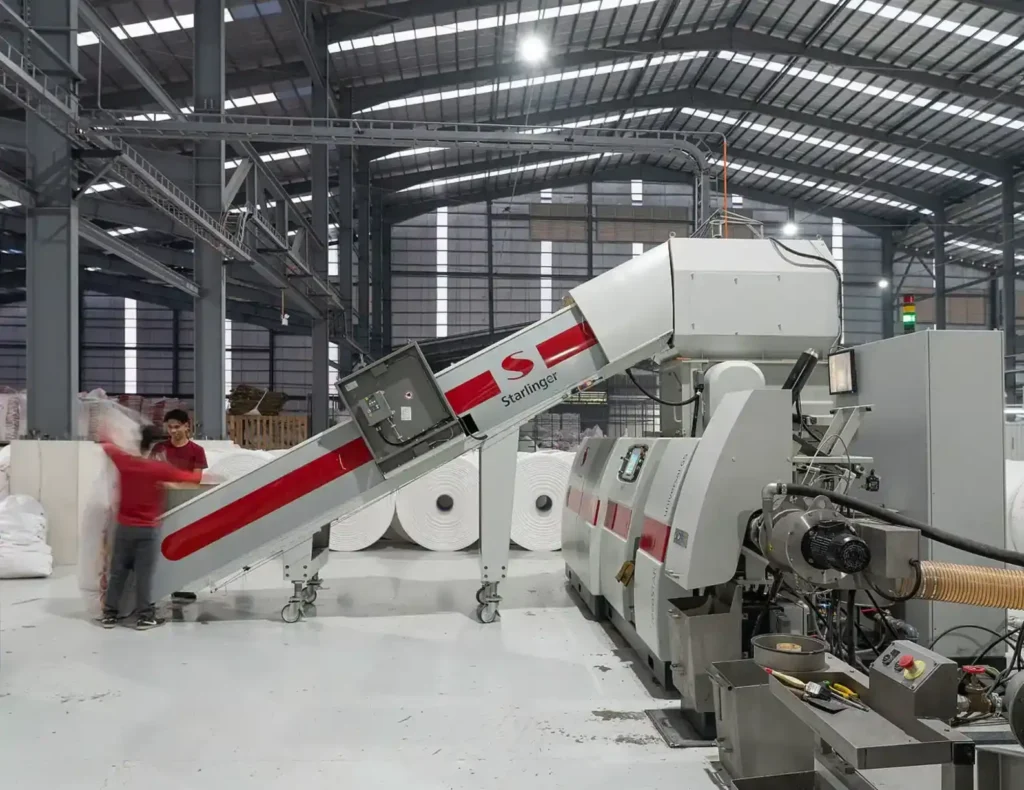
“In high-humidity environments, poly-paper bags aren’t just containers—they’re moisture barriers engineered for survival,” declares Ray, CEO of VidePak, during a factory audit. “Our valve-sealed block-bottom designs reduce spoilage by 40% in tropical climates, while PE-laminated liners extend shelf life by 18 months—critical for industries like fertilizers and marine feed.” This report dissects the technical innovations behind poly-paper bags, focusing on load-bearing designs, material engineering, and automated production tailored for humid environments, leveraging VidePak’s 526-employee expertise and Starlinger’s cutting-edge machinery.
1. Material Engineering for Moisture Resistance
1.1 Poly-paper Composite Structures
Poly-paper bags combine polypropylene (PP) weaving with kraft paper lamination to achieve dual protection:
- PP Layer: Provides tensile strength (2,200–2,800 N/5 cm) and chemical resistance.
- Kraft Paper: Absorbs ambient moisture (0.5–1.2% water uptake at 90% RH) while maintaining breathability.
VidePak’s AquaShield Pro series uses a 3-layer PP/PE/paper composite, reducing moisture ingress by 85% compared to standard woven bags, validated per ASTM D779-20 testing protocols.
1.2 Inner Liners: PE vs. Aluminum Foil
| Material | Thickness | Moisture Barrier | Cost ($/m²) |
|---|---|---|---|
| PE Film | 50–80 µm | 0.8–1.2 g/m²/day WVTR | 0.18–0.25 |
| Aluminum Foil | 7–12 µm | <0.01 g/m²/day WVTR | 0.55–0.75 |
Case Study: A Vietnamese shrimp feed producer using VidePak’s AluGuard bags (PP + 9µm foil) reduced fungal growth by 92% during monsoon seasons, aligning with ISO 22196 antimicrobial standards.
2. Ergonomic Designs for Efficient Handling
2.1 Valve vs. Block-Bottom Configurations
- Valve Bags: Ideal for powdered chemicals (e.g., silica gel), enabling dust-free filling at 40 bags/minute via Starlinger’s CX6 machines[citation:11].
- Block-Bottom Bags: Provide 360° structural stability for stacked storage (up to 8 layers), reducing warehouse space by 30%[citation:12].
VidePak’s SmartFill Valve System integrates RFID tags for real-time moisture monitoring, cutting logistics losses by 18% in humid climates.
2.2 Reinforced Seams & Stress Distribution
- Ultrasonic Sealing: Achieves 98% air-tightness for hygroscopic materials like fertilizers (tested per ISO 2233).
- Cross-Bracing Weave: Diagonal PP threads distribute weight evenly, supporting 1,000 kg loads without seam rupture[citation:12].
3. Production Excellence at VidePak
3.1 Automated Manufacturing Workflow
With 30 lamination machines and 16 extrusion lines, VidePak delivers:
- Precision Coating: ±2 µm PE film uniformity, critical for humidity barriers.
- High-Speed Printing: 10-color CMYK+Pantone customization at 1440 dpi for OSHA/GHS compliance labels.
Case Study: A 2024 partnership with a Brazilian coffee exporter utilized FFS tubular bags to automate 25kg filling, reducing labor costs by 60%[citation:11].
3.2 Sustainability Initiatives
VidePak’s EcoCycle line incorporates 30% post-industrial recycled PP, maintaining 2,100 N/5 cm tensile strength while reducing carbon footprint by 25% (ISO 14044 certified).
FAQs: Poly-paper Bags in Humid Environments
Q1: How do block-bottom bags prevent moisture wicking?
A: Integrated PE skirts create a 5mm moisture barrier between the bag base and floor, blocking capillary action[citation:12].
Q2: Can valve bags handle viscous liquids?
A: Yes—VidePak’s HeavyFlow valves (12mm diameter) support fluids up to 5,000 cP viscosity without leakage.
Q3: What’s the ROI of moisture-proof packaging?
A: Clients report 22% average reduction in spoilage costs within 6 months of switching to laminated poly-paper bags.
Conclusion
The future of moisture-resistant packaging lies in smart materials—VidePak’s R&D lab is testing graphene-coated liners that self-heal microtears. As Ray summarizes: “In humidity, complacency is failure. Our bags are engineered to outlast the elements.”
External Links:
- Explore valve bag innovations for humidity control: Pasted Valve Bags: Reliable Solutions for Transportation and Logistics.
- Learn how block-bottom designs enhance stability: Block Bottom Bags: A Reliable Solution for Flood Control.