
What is PP Woven Bags?
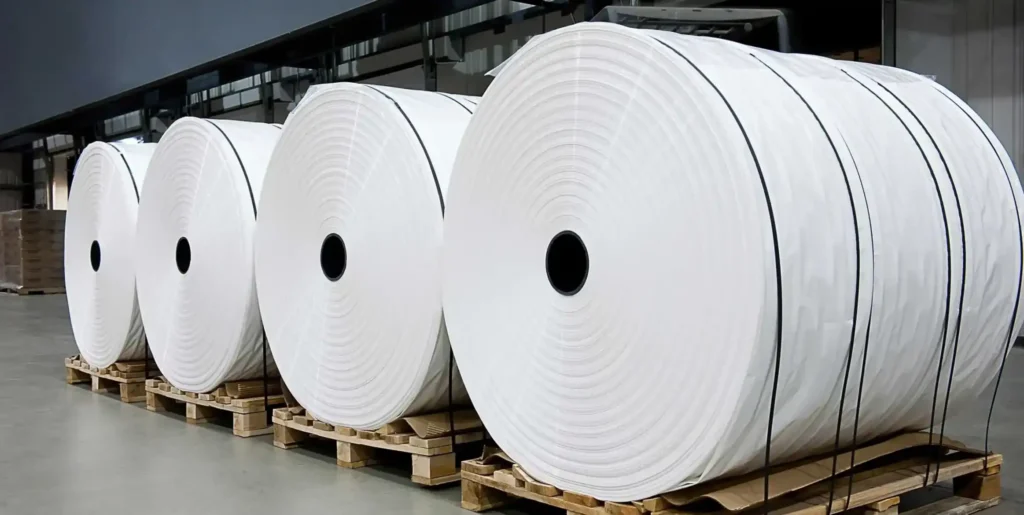
PP Woven Bags are industrial sacks engineered from interlaced polypropylene tapes that transform tensile strength into day‑to‑day reliability: crisp stacking, cleaner filling, and fewer transit surprises. In different channels they’re also described as polypropylene woven sacks, industrial PP woven packaging, **valve PP Woven Bags (when a valve sleeve is integrated), or—when a graphics layer is added—**BOPP‑laminated PP Woven Bags. The short version? The woven fabric carries the load, the geometry preserves the cube, and optional layers—coatings, liners, valves, finishes—fine‑tune performance for powder, granule, or pellet.
Viewed through systems thinking, PP Woven Bags are not inert containers but active interfaces where polymer science, converting geometry, and line operations interlock. Horizontally, they sit between multi‑wall paper sacks (warm print, humidity sensitivity) and PE film FFS bags (fast sealing, scuff exposure). Vertically, small upstream choices—resin grade → tape draw ratio → denier → pick count → coating weight → closure type → vent strategy—cascade into very visible outcomes: dust at the spout, drop survival on the truck, label legibility on the pallet, complaint rates in the ERP. For a concise taxonomy and sourcing context, see PP Woven Bags.
What is the features of PP Woven Bags?
System view. Performance is never an accident; it’s the deliberate interaction of materials × structure × operations. Each feature below sets the background, then strengthens the case with data reinforcement, a case analysis, and a comparative study—so the argument travels from principle to practice.
- Strength‑to‑Weight Advantage & Corner Toughness
Background. Drawn polypropylene tapes deliver high tensile strength and exceptional tear‑propagation resistance. Couple those tapes with squared bottoms and you get brick‑like stacks that survive clamp trucks and long hauls.
Data reinforcement. Common fabric bases run 70–110 g/m² with meshes 10×10–14×14; mainstream sacks occupy W 350–600 mm × L 400–910 mm × B 80–180 mm windows for 10–50 kg fills. Free‑fall drop sequences in the ≤50 kg class serve as the practical gatekeeper for transit robustness.
Case analysis. A regional mortar brand moved from 3‑ply paper to PP Woven Bags specified at 90 g/m² with a block bottom; corner‑puncture claims fell across mixed routes without altering pallet patterns.
Comparative study. Paper prints warmly yet softens on damp pallets; thin FFS films seal fast yet scuff and slump. PP Woven Bags retain panel flatness and resist edge abrasion, protecting both product and presentation. - Moisture & Sift Control—without over‑engineering
Background. Hygroscopic powders fail silently through humidity; fines escape invisibly through fabric interstices and stitch holes. The remedy is architectural: close pathways, control capillaries, preserve line speed.
Data reinforcement. Extrusion coats of 15–30 g/m² (PP/PE) sharply reduce air permeability; optional liners (LDPE 50–120 μm, barrier when required) add humidity defense. Localized micro‑perforations near the fill area (e.g., 50–80 holes/100 cm²) vent packing air without turning the pack room into a dust storm.
Case analysis. A gypsum filler added a ~20 g/m² internal coat and widened the bottom patch; wet‑weather claims receded while cycle time held steady.
Comparative study. Paper breathes yet absorbs; monolayer film resists rain yet scuffs. PP Woven Bags achieve a practical middle ground: keep water out, keep fines in, keep the cube. - Valve‑Led Throughput & Cleaner Filling
Background. A pasted‑in or welded valve sleeve—PP, PE, or paper/PE—interfaces with impeller or air packers. As product enters, engineered perfs vent the air; as product settles, the valve throat collapses and self‑retains.
Data reinforcement. Rotary valve lines routinely post 5–12% faster cycles after harmonizing valve diameter and sleeve stiffness with bulk density and particle size; dust monitors at the spout verify the housekeeping dividend.
Case analysis. A cement line standardized valve IDs across a family of SKUs and localized perfs to the valve panel; spout dust fell and OEE ticked upward.
Comparative study. Open‑mouth formats leak more during fill and add sewing or hot‑bar steps; valve PP Woven Bags fold closure into the filling event. - Print‑Forward Branding with Real‑World Durability
Background. When the pallet becomes the billboard, graphics must endure forklifts, straps, and rain. Reverse‑printed BOPP (typically 15–35 μm) shields ink behind the film; direct flexo on coated fabric remains a rugged choice for purely industrial channels.
Data reinforcement. Surface treatment ≥38 dyn/cm maintains ink anchorage; rub/scuff tests and GS1 barcode verification keep typography readable and codes scannable after miles of handling.
Case analysis. A fertilizer SKU adopted matte/gloss BOPP windows over PP Woven Bags; audits reported longer eye‑tracking dwell and a drop in “print rub‑off” tickets.
Comparative study. Corrugated outers hide the primary pack and add labor; film prints can haze or crease. Laminated PP Woven Bags keep artwork crisp from plant to pallet to point of sale. - Compliance & Sustainability that Scale
Background. Specifications have meaning only when they’re auditable. Woven sack baselines align to recognized norms; food‑adjacent versions select compliant resins, inks, and adhesives. Single‑polyolefin (mono‑PP) designs simplify end‑of‑life within polyolefin‑friendly recycling streams.
Data reinforcement. Converters operating under quality and hygiene frameworks issue batch‑level documentation—dimensions, GSM, coating weight, seal pulls—so procurement and QA speak the same language.
Case analysis. A sugar packer implemented mono‑PP PP Woven Bags with food‑grade inks/adhesives and an inner valve sleeve; lint and contamination complaints faded, while pallet tidiness improved in humid storage.
Comparative study. Ad‑hoc containers may look cheap on paper; audit findings are expensive in practice. Documented compliance buys trust—and time.
What is the production process of PP Woven Bags?
From pellets to pallets, small settings create large consequences—change a gram of coating, change a claims curve.
Tape Extrusion & Stretching. PP pellets are extruded into films, slit, and stretched into high‑tenacity tapes. Draw ratio governs tensile/elongation; denier sets panel modulus and seam behavior. Stiffer tapes → squarer faces → tougher corners.
Weaving (Circular or Flat Looms). Warp and weft tapes interlace into fabric. Pick count and loom tension hold width tolerance within a few millimeters—critical for lay‑flat quality, accurate printing, and consistent block‑bottom formation.
Coating/Lamination (Optional). Extrusion‑coat 15–30 g/m² PP/PE to close interstices, or laminate BOPP 15–35 μm for protected graphics and scuff resistance. Uniformity matters: over‑coating stiffens folds; under‑coating leaves capillary paths.
Printing. Direct flexo or gravure on coated fabric, or reverse print under BOPP. Press proofs confirm color, rub/scuff, and barcode grades before the production run.
Conversion & Bottoming. Tubing, side‑gusseting, and bottom formation—fold‑over sewn, pasted block bottom, or square‑fold constructions. Corner patches distribute impact loads and reduce puncture risk.
Valve Sleeve Insertion (If Specified). Paper/PE, PP, or PE‑coated paper sleeves are pasted or welded into the mouth; valve ID and stiffness are matched to bulk density and particle morphology for clean engagement and self‑closure.
Perforation & Finishing. Localized micro‑perfs (50–80 holes/100 cm²) around the valve or fill panel vent air efficiently. Anti‑slip lacquers or micro‑emboss textures increase pallet friction coefficients, often reducing stretch‑wrap.
Testing & Release. Dimensions follow a common sack vocabulary; free‑fall drops in the ≤50 kg class validate transit robustness; seal pulls (where heat sealing is used) and coupon tests for moisture/oxygen transmission document functional performance. COAs record GSM, dimensions, coating weight, seal strength, and visual AQL.
What is the application of PP Woven Bags? (Industrial & Building Materials)
Cement & Dry Mortar (25–50 kg). Valve PP Woven Bags reduce spout dust and create brick‑stable pallets. Typical 50 kg references: ~37 × 49 × 11 cm; fabric 80–100 g/m²; coating ~20–30 g/m²; mesh 10×10–12×12. Data reinforcement: multi‑drop and humidity dwells correlate strongly with field survival. Case analysis: extending a diamond bottom patch cut corner breaks across mixed routes. Comparative study: open‑mouths require sewing; FFS sacks slump; valve blocks stay square.
Gypsum, Lime, Pigments, Minerals. Abrasive or angular particles reward laminated skins and sealed seams; selective perfs prevent ballooning at the packer; anti‑slip exteriors stabilize mixed‑SKU pallets.
Resins & Additives. Stiffer panels improve container cube; reverse‑print options protect hazard pictograms and brand blocks from pallet rub.
What is the application of PP Woven Bags? (Food‑Adjacent & Consumer Goods)
Sugar, Salt, Starches (where permitted). With compliant resins/inks and food‑grade adhesives, PP Woven Bags heat‑seal cleanly (liner or coated mouth) and palletize into tidy cubes. Batch‑wise declarations keep audits predictable.
Rice, Pulses, Seeds. Reverse‑printed BOPP enables vibrant branding and optional clear windows; moisture‑managed interiors protect quality over long distances. Serialization beneath film supports anti‑counterfeit programs.
Pet Nutrition & Garden Inputs. Aroma‑sensitive blends benefit from laminated barriers; matte/gloss effects drive shelf recognition in DIY and agri channels; anti‑slip finishes reduce over‑wrapping.
Integrated Solution (System Thinking Synthesis)
Objective: increase throughput, reduce dust and damage, and pass audits—without inflating total cost of ownership. Treat PP Woven Bags as a closed‑loop program.
Diagnose. Map SKUs to failure modes: sifting index, humidity softening, corner puncture, barcode rub‑off. Instrument fillers (dust counters, cycle‑time histograms) and warehouses (humidity/temperature loggers). Ask: where do losses begin—at the spout, at the seam, or at the stack?
Design. Choose fabric GSM and mesh; set coating weight 15–30 g/m²; specify liner gauge 50–120 μm where needed; select valve ID/sleeve material; position micro‑perfs 50–80 holes/100 cm² at the fill panel; define print route (reverse BOPP or direct flexo), anti‑slip finish, and pallet pattern. Balance every parameter horizontally (across departments) and vertically (from resin to retail).
Validate. Execute drop series at agreed heights; confirm seal peels where heat‑sealing applies; run humidity dwell and coupon tests for coated/laminated builds; audit barcode grades and rub resistance. Validation is not a ceremony; it’s a filter for weak links.
Deploy. Lock packer recipes by product family; train operators on valve seating and seam/patch inspection; add inline vision for print register and valve insertion; standardize pallets and corner protection.
Improve. Review claims quarterly; right‑weight GSM where safety margins allow; adjust perf density; refresh recycling/handling guidance; keep supplier lot traceability tight under your quality system.
Key Specifications & Options (Typical Ranges)
| Attribute | Typical Options / Range | Why it Matters |
|---|---|---|
| Style | Open‑mouth or valve PP Woven Bags; fold‑over sewn, pasted, or block‑bottom | Controls leak paths and closure speed |
| Nominal capacity | 10–50 kg (density‑dependent) | Aligns with building materials, minerals, foods |
| Dimensions | W 350–600 mm × L 400–910 mm × B 80–180 mm | Fits mainstream converting lines & pallets |
| Fabric | Woven PP 70–110 g/m²; mesh 10×10–14×14 | Governs tear resistance and panel stiffness |
| Coating/Lamination | Extrusion coat 15–30 g/m² PP/PE; BOPP film 15–35 μm (reverse print) | Water repellency, scuff resistance, print fidelity |
| Liner (optional) | LDPE 50–120 μm; barrier where needed | Extra humidity control and odor management |
| Perforation | Local micro‑perfs (~50–80 holes/100 cm²) at the valve/fill panel | Air release without dust escape |
| Printing | Flexo/gravure 1–8 colors; matte/gloss effects; anti‑slip varnish | Shelf impact; pallet friction |
| Compliance anchors | Recognized sack measurement vocabulary; free‑fall drop testing (≤50 kg); applicable food‑contact rules (when specified); QA documentation | Audit‑ready specs & governance |
Note: Ranges reflect widely published supplier data on international B2B marketplaces and peer converter disclosures; tune to product density, climate, dwell time, and filler type. Validate—don’t assume.
Professional Identifiers & Why They Matter
- ISO‑style sack measurement vocabulary — Aligns drawings with deliveries so tolerances mean the same thing to buyer and maker.
- Free‑fall drop testing in the ≤50 kg class — A pragmatic proxy for transport shocks that lowers claims and rework.
- Applicable food‑contact anchors (e.g., CFR/EU plastics & adhesive rules) — Enable dry food or pet‑adjacent builds when specified.
- Quality & hygiene schemes (e.g., ISO 9001 / BRCGS Packaging Materials) — Turn specifications into repeatable runs with full traceability.
- Responsible film/fiber sourcing (e.g., FSC® CoC for any kraft components) — Supports sustainability narratives for hybrid constructions.
Copy Blocks You Can Reuse (Brand Voice Ready)
- Value line. Stronger stacks, cleaner fills, fewer claims—PP Woven Bags turn every pallet into a reliable, retail‑ready unit.
- Proof point. Woven PP strength with tuned coatings, valves, and micro‑perfs—validated on free‑fall drops and measured to a shared sack vocabulary—keeps product in and dust down.
- Sustainability note. Right‑weight fabrics, specify mono‑PP where feasible, and publish clear disposal guidance so PP Woven Bags perform in use and at end‑of‑life.
- What is PP Woven Bags?
- What is the features of PP Woven Bags?
- What is the production process of PP Woven Bags?
- What is the application of PP Woven Bags? (Industrial & Building Materials)
- What is the application of PP Woven Bags? (Food‑Adjacent & Consumer Goods)
- Integrated Solution (System Thinking Synthesis)
- Key Specifications & Options (Typical Ranges)
- Professional Identifiers & Why They Matter
- Copy Blocks You Can Reuse (Brand Voice Ready)
The Key Answer: PP woven bags are a cornerstone of global packaging, offering tailored solutions for industries ranging from agriculture to hazardous material transport. Through specialized designs—such as breathable structures for grain storage, composite barriers for gas resistance, anti-static coatings for electronics, and antimicrobial treatments for food safety—these bags achieve 20–30% higher efficiency than traditional alternatives, with a global market projected to grow at 5.2% CAGR through 2030.
Introduction: Versatility Meets Precision Engineering
Polypropylene (PP) woven bags are a linchpin of modern logistics and industrial packaging, combining durability, adaptability, and sustainability. Their production integrates advanced technologies like ultrasonic sealing and multi-layer lamination, enabling customization for niche applications. For instance, Shandong GreenPack Co. reported a 25% reduction in spoilage for rice exports after adopting breathable PP bags with micro-perforated designs. This report explores how PP woven bags are engineered to meet diverse industrial demands, from moisture control to explosion prevention.
Industry Expert Insight:
“The future of PP woven bags lies in functional specialization. Whether it’s blocking methane in mining or preventing bacterial growth in pharmaceuticals, these bags are no longer passive containers—they’re active safeguards.” — 2025 Global Packaging Trends Report.
Functional Designs: Tailoring Bags to Industry Needs
1. Breathable Designs for Agricultural and Food Packaging
Breathable PP bags leverage woven structures and micro-perforations to regulate airflow, critical for preserving grains and fresh produce.
Key Features & Data:
- Porosity: 80–120 GSM fabric with 0.5–1.0mm pores enables 15–20% faster moisture evaporation.
- Case Study: Vietnam Rice Exporters reduced mold growth by 30% using breathable PP bags for jasmine rice storage.
Product Parameters
| Parameter | Specification | Application |
|---|---|---|
| Material | PP woven fabric + PE coating | Grains, potatoes, textiles |
| Pore Density | 50–100 pores/cm² | Prevents condensation |
| Moisture Evaporation | 0.8–1.2 g/m²/hour | Extends shelf life by 10–15 days |
2. Barrier Designs for Gas and Odor Resistance
Multi-layer laminates (e.g., PP/PE/Aluminum foil) block oxygen, moisture, and volatile compounds.
Example: Qingdao RAJ Packaging developed aluminum-composite PP bags for coffee beans, reducing oxygen ingress by 90% and preserving freshness for 18 months.
Technologies:
- Co-extrusion: Combines PP with EVOH layers for gas barrier properties (OTR <0.5 cm³/m²/day).
- Seam Sealing: Ultrasonic welding ensures airtight closures, critical for chemical transport.
3. Anti-Static Designs for Hazardous Environments
Anti-static PP bags prevent electrostatic discharge in flammable or electronic settings.
Key Innovations:
- Conductive Additives: Carbon-black or metallic threads reduce surface resistance to <1×10⁸Ω.
- Case Study: Shenzhen Petrochemical eliminated fire risks in solvent transport using anti-static bags with copper grids.
Performance Metrics:
| Metric | Standard PP | Anti-Static PP |
|---|---|---|
| Surface Resistance | >1×10¹²Ω | 1×10⁶–1×10⁸Ω |
| Charge Dissipation Time | >60 seconds | <2 seconds |
4. Antimicrobial Designs for Food and Pharma
Antimicrobial PP bags inhibit bacterial growth through silver-ion coatings or embedded biocides.
Applications:
- Food Packaging: Reduces spoilage by 40% in meat and dairy products.
- Medical Supplies: Prevents contamination in sterile instrument packaging.
Example: Ganyu New Concept Plastic Co. introduced PP bags with Ag-based coatings for poultry feed, cutting bacterial load by 99%.
Production Processes and Quality Assurance
1. Advanced Manufacturing Techniques
- Circular Looms: High-speed machines produce 200–300 bags/hour with consistent weave density.
- Coating Systems: PE or BOPP lamination enhances barrier properties and printability.
2. Rigorous Testing Protocols
- Leak Testing: Air pressure tests at 30 kPa for 5 minutes ensure seam integrity.
- Anti-Static Validation: ASTM D257 standards verify surface resistance.
FAQs: Addressing Industry Concerns
Q: How to choose between breathable and barrier designs for agricultural products?
A: Breathable bags suit grains and fresh produce requiring airflow, while barrier bags are ideal for hygroscopic materials like fertilizers. For example, potato storage bags use micro-perforations to prevent rot.
Q: Can anti-static bags be reused?
A: Yes. Bags with permanent anti-static additives (e.g., carbon-black PP) withstand 5–7 reuse cycles without losing conductivity.
Market Trends and Future Innovations
- Smart Packaging: RFID tags enable real-time tracking in logistics, reducing loss by 25%.
- Biodegradable Blends: PLA-PP composites aim to cut carbon footprints by 50% by 2030.
- AI-Driven Production: Predictive maintenance systems reduce downtime by 40% in automated lines.
Conclusion
PP woven bags are evolving from simple carriers to multifunctional solutions, driven by innovations in material science and smart manufacturing. By adopting designs like breathable weaves or anti-static coatings, industries can enhance safety, efficiency, and sustainability. For deeper insights into advanced PP technologies, explore Moisture-Proof Woven Bags: Custom Solutions for Optimal Protection and Anti-Static FIBC Bags: Enhanced Protection and Versatility.
Data synthesized from the 2025 Global Packaging Trends Report, ASTM International standards, and case studies by Ganyu New Concept Plastic Co. and Qingdao RAJ Packaging.