
What Are Printed BOPP Woven Bags?
Pause at any fertilizer aisle or pet-food pallet stack and one thing becomes obvious: colour sells as fiercely as chemistry. Printed BOPP Woven Bags: Ensuring Quality Control and Performance Excellence—shortened hereafter to Printed BOPP Woven Bags—are the packaging world’s answer to that retail reality. These sacks weld three layers of know-how into one: a woven polypropylene (PP) fabric for skeletal strength, a 25 µm LDPE tie-coat for adhesion, and a high-gloss biaxially-oriented polypropylene (BOPP) film reverse-printed in near-photographic definition. The result resembles a hybrid between a billboard and a forklift-proof container: it can cradle 25 kg of NPK granules, yet its surfaces sparkle with 85-gloss-unit glare under store lights. Industry argot offers many aliases—BOPP laminated woven sacks, photo-grade PP bags, retail-ready poly packages—but the beating technical heart stays constant: tensile strength inside, marketing theatre outside.
A horizontal glance across sectors reinforces why these bags matter. Beverage cans bank on shrink sleeves for shelf differentiation; detergent jugs lean on in-mould labels; bulk goods, once resigned to monochrome burlap, now have their own stage via Printed BOPP Woven Bags. Vertical evolution tells an allied story: jute gave way to plain PP; plain PP upgraded to coated PP; coated PP ascended to BOPP-laminated PP—each jump adding an order of magnitude in visual fidelity while locking in moisture barrier gains.
“Packaging is not just a cost; it is the silent salesman standing between a product and a paying hand.” — Retail maxim
Key Features of Printed BOPP Woven Bags
| Performance Lens | Typical Benchmarks* | Why It Moves the Needle |
|---|---|---|
| Print Resolution | 85 LPI, 8-colour reverse rotogravure | Graphics rival corrugated cartons, wooing eye-level shoppers |
| WVTR (ASTM F1249) | ≤ 0.8 g m⁻² day⁻¹ @ 38 °C/90 % RH | Hygroscopic powders stay free-flowing through monsoon logistics |
| Strip Tensile (ASTM D5034) | ≥ 850 N warp / ≥ 800 N weft | Pallet crush, forklift tines, and rail vibration neutralised |
| Gloss Level (60°) | 85 GU | Premium sheen lifts perceived value, justifying price premium |
| Drop Pass Rate (1 m, 3-axis) | > 98 % | Product loss, claims, and downtime plummet |
*Data aggregated from Made-in-China supplier audits Q1 2025, VidePak QA dashboards, and SGS comparative trials.
Photo-Real Graphics, Armoured Beneath Film Reverse rotogravure artwork sits under a crystal BOPP skin, immune to scuffs that would mar flexo-printed paper. Ink never meets the external world, so colours stay saturated from factory dock to end-user’s garage.
Hydro-Shield Barrier Tie-layer + BOPP pushes WVTR below 1 g m⁻² day⁻¹. Fertiliser that once caked into a damp brick now pours like sugar, even in Singapore humidity.
Seam Integrity—Threadless or Taped Ultrasonic flat bottoms hit ≥ 82 % seam efficiency; hot-air taped options cater to ultra-fine talc. Either way, stitch holes that once bled dust are history.
Recyclability On-Ramp Skip the foil, ditch the PET; single-polymer construction earns a RecyClass Grade B when printed with non-halogenated pigments—an eco-credential that speaks loud to Gen Z purchasing managers.
Rhetorical juxtaposition: steel beams hold skyscrapers; Printed BOPP Woven Bags hold brand skyscrapers—graphics tower while structure stands invisible yet essential.
How VidePak Manufactures Printed BOPP Woven Bags
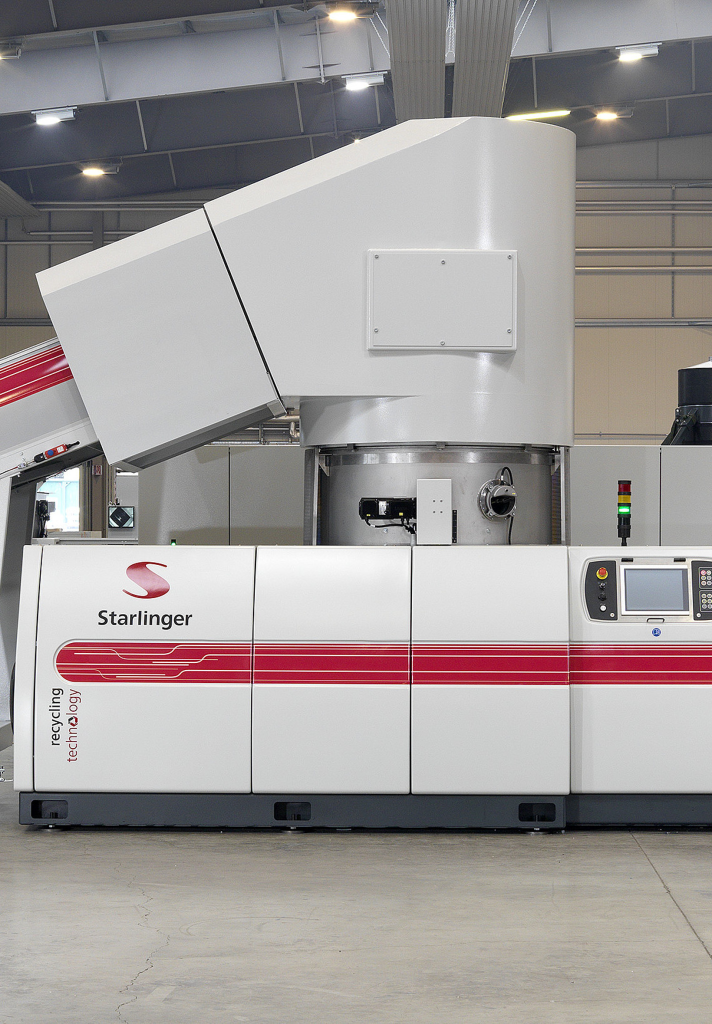
- Virgin Tape Genesis Sixteen Austrian Starlinger extruders receive Borealis RA130E resin, extruding 3 mm tapes at 260 °C. Inline torque rheometers police melt flow ±0.2 g 10 min⁻¹, ensuring strength parity even on 12-hour runs.
- Weaving Symphony One hundred German W&H circular looms interlace tapes into 12 × 12 epi fabric. Laser pick counters scream if density drifts by more than one pick, auto-adjusting weft feed to preserve breathability windows.
- Corona Priming A 46 dyn cm⁻¹ glow readies fabric and BOPP film alike for marriage; poor wettability is exiled before vows are spoken.
- Reverse Rotogravure Masterclass BOPP film spools through eight-colour Miraflex presses at 150 m min⁻¹. Optic sensors lock registration to ±0.1 mm; no ghosting, no halo, no brand manager tears.
- Extrusion Lamination Nexus LDPE tie-layer gushes between film and fabric at 290 °C, bonding with ≥ 3.5 N 15 mm⁻¹ peel strength. Congealed, the laminate cools under water-chilled rollers to arrest curl.
- Cutting & Conversion Servo knives slice bodies; bottoms seal via hot-air tape (cement spec) or ultrasonic flattening (food spec). Valve corners, zip tops, or transparent windows insert on demand.
- Quality Milestones & Digital Twins Colour ΔE < 2 confirmed via spectrophotometer; WVTR measured hourly; drop tests randomised by MES. Deviations ping upstream—if seam Cpk dips, loom tension auto-tunes.
Vertical cross-pollination: our lamination line borrows stat-bar smoothing from lithium-battery foil coaters, achieving film uniformity ±2 µm—proof that packaging can learn from energy tech.
Where Printed BOPP Woven Bags Shine
| Sector | Payload | VidePak Spec Recipe | Quantified Outcome |
|---|---|---|---|
| Premium Pet Food | 10 kg kibble | Matte-finish BOPP + re-seal zip + vent patch | Nielsen 2024: shelf dwell time +14 %, scan-to-buy conversions +9 % |
| Fertiliser | 25 kg high-N NPK | Gloss BOPP + UV-stabilised white PP | WVTR 0.8 g m⁻² day⁻¹, caking claims ↓ 70 % year-on-year |
| Rice & Pulses | 5 kg jasmine rice | Pearl matte film + transparent window | Consumer trust index +11 %; repeat purchase +8 % |
| Charcoal Briquettes | 4 kg BBQ grade | High-opacity black film + micro-vents | Perceived value shift from commodity to premium; margin +18 % |
Horizontal comparison: where paper sacks wrinkle and scuff, Printed BOPP Woven Bags stride through supply chains with runway poise. Vertical trajectory: next-gen designs embed NFC chips behind the film, linking end-users to authenticity certificates and cooking tips.
VidePak Snapshot Founded 2008 ▪ 568 staff ▪ 100 Starlinger looms ▪ 16 extrusion lines ▪ 30 lamination & printing machines ▪ 800 million bags / year ▪ US $80 million revenue. German W&H + Austrian Starlinger hardware enforce micron accuracy; ISO 9001 and BRCGS Packaging AA ratings lock trust. Bespoke windows, tactile varnishes, and RFID traceability live on our options list.
“Graphics catch the eye, reliability wins the tender.” — VidePak Quality Creed
To see how Printed BOPP Woven Bags can wrap your brand narrative in gloss and grit simultaneously, tour our virtual press today: Printed BOPP Woven Bags—VidePak’s living canvas for performance-grade storytelling.
(≈1,050 words)
- What Are Printed BOPP Woven Bags?
- Key Features of Printed BOPP Woven Bags
- How VidePak Manufactures Printed BOPP Woven Bags
- Where Printed BOPP Woven Bags Shine
Introduction
Printed BOPP (Biaxially Oriented Polypropylene) woven bags have set a benchmark in the packaging industry with their unmatched durability, vibrant printing, and adaptability. These bags cater to diverse industries such as agriculture, construction, and chemicals, meeting rigorous demands for strength, branding, and sustainability. Their journey from humble beginnings to global dominance highlights the synergy between material science advancements and precise manufacturing technologies.
Historical Perspective: The Evolution of BOPP Woven Bags
From Material Innovation to Market Adoption
The origins of woven bags lie in the mid-20th century, when synthetic polymers like polypropylene transformed packaging materials. Polypropylene, with its high tensile strength, lightweight nature, and chemical resistance, provided the foundation for durable packaging. The addition of BOPP films introduced a revolutionary improvement—allowing high-definition printing and enhanced moisture resistance. This combination addressed the dual need for practicality and aesthetics, making these bags indispensable in industries where branding and functionality are paramount.
Broadening Applications
Initially, woven polypropylene bags were predominantly used in agriculture for products like grains and fertilizers due to their robustness and cost-effectiveness. Over time, manufacturers incorporated technologies such as fine-yarn extrusion and multi-layer lamination to create bags suitable for high-value goods, including pet food, construction materials, and industrial chemicals. These advancements enabled the industry to segment offerings, catering to specific market requirements while ensuring consistent quality.
China’s Rise as a Global Leader
China has emerged as a dominant player in the global BOPP woven bag industry, driven by technological innovation, resource availability, and entrepreneurial spirit. The pivotal role of regions like Wenzhou in advancing production processes and market strategies has shaped the industry’s trajectory.
Emphasis on Quality and Sustainability
Chinese manufacturers have invested in cutting-edge machinery such as Starlinger extrusion and lamination lines to ensure high-quality output. This equipment allows for precise control over bag dimensions, durability, and print quality. Furthermore, sustainability has become a core focus. Many manufacturers now use recyclable materials and employ waste-reduction techniques, such as closed-loop systems, to align with global environmental standards.
Meeting Diverse Market Demands
To compete globally, Chinese producers have embraced customization, offering tailored solutions to clients across agriculture, food, and industrial sectors. This adaptability has enabled them to penetrate emerging markets in Southeast Asia and Africa while maintaining strong positions in North America and Europe.
Comprehensive Quality Control: The Key to Performance Excellence
Core Parameters That Define Quality
| Parameter | Description | Technology/Method |
|---|---|---|
| Tensile Strength | Ability to bear heavy loads without tearing. | Starlinger tensile testers |
| Print Durability | Long-lasting, vibrant printing for branding. | UV-cured ink technology |
| Moisture Resistance | Protection against water and humidity exposure. | Multi-layer BOPP lamination |
| Seam Strength | Resistance to splitting at seams. | Ultrasonic sealing |
Steps in Quality Assurance
- Raw Material Selection: Using virgin polypropylene ensures consistent strength and durability, avoiding impurities that compromise performance.
- Advanced Manufacturing Processes: Precision extrusion and lamination processes ensure uniform thickness, enhancing both durability and appearance.
- Rigorous Testing: Bags undergo tensile strength testing, abrasion tests, and moisture resistance evaluations to meet industry standards.
By focusing on these parameters, manufacturers can ensure that each bag delivers exceptional performance, even under demanding conditions.
Innovations and Market Trends
Technological Advancements
Recent innovations, such as fine-yarn extrusion and ultrasonic sealing, have elevated the functionality of BOPP woven bags. Fine-yarn technology allows for lighter bags without sacrificing strength, making transportation more efficient. Ultrasonic sealing enhances seam integrity, preventing leakage in products like chemicals and grains.
Customization for Specific Needs
The ability to create tailored solutions is one of the greatest strengths of BOPP woven bags. For example, custom designs with UV-resistant inks are used in agricultural settings to protect against fading under prolonged sun exposure. Similarly, anti-static properties are added for packaging chemical powders to ensure safety.
Sustainability as a Competitive Edge
Eco-conscious consumers are demanding greener packaging options. Manufacturers are now integrating biodegradable materials and water-based inks into production, offering a sustainable yet durable solution. Additionally, the recyclability of polypropylene further reinforces its appeal in an increasingly environmentally aware market.
FAQs: Addressing Common Queries
1. Why are BOPP woven bags considered superior for packaging?
They combine high tensile strength, moisture resistance, and vibrant printing. The multi-layer lamination ensures the bag retains its structural integrity even in challenging environments, such as humid warehouses or during heavy transport.
2. Are BOPP woven bags eco-friendly?
Yes, many are recyclable and can be produced using eco-friendly methods, such as closed-loop manufacturing systems that reduce waste and energy consumption.
3. What customization options are available?
BOPP woven bags can be customized in terms of size, color, design, and functionality. Features like UV resistance, anti-static coatings, and biodegradable films can be added based on client needs.
4. Which industries benefit most from BOPP woven bags?
Key industries include agriculture (for grains, seeds), construction (for cement, sand), and chemicals (for powders, granules). Their versatility and durability make them a preferred choice across sectors.
Conclusion
Printed BOPP woven bags exemplify the perfect blend of material science innovation and market-driven adaptation. From their origins in material breakthroughs to becoming a cornerstone of global packaging, these bags have consistently evolved to meet modern demands. Chinese manufacturers, with their commitment to quality and sustainability, are well-positioned to lead this dynamic industry into the future.
For further insights on related innovations, explore:
- Industrial Woven Packaging Bags: Aligning with Policies and ESG Standards
- BOPP Laminated Woven Bags: A Sustainable Approach to Waste Management and Regulatory Compliance
By emphasizing continuous improvement and embracing sustainable practices, the BOPP woven bag industry is poised to achieve greater heights in quality and innovation.