

- What is Printed BOPP Woven Bags?
- Denier Fundamentals and Why They Govern Printed BOPP Woven Bags
- Standards‑Aligned Testing Windows for Printed BOPP Woven Bags
- Practical Denier Ranges for Printed BOPP Woven Bags
- Load Class vs. Denier — A Systems Table for Printed BOPP Woven Bags
- Fabric Mechanics: How Denier, Mesh, and Tape Geometry Share the Load
- Seam Architecture: The Quiet Limiter in Printed BOPP Woven Bags
- BOPP Face: COF, Impact, and Print Integrity for Printed BOPP Woven Bags
- Market Grammar: How Regions Pull Printed BOPP Woven Bags in Different Directions
- Evidence Table — Parameters and Details for Printed BOPP Woven Bags
- Data‑Backed Observations for Printed BOPP Woven Bags
- Problem → Lever → Outcome: A Design Dialogue for Printed BOPP Woven Bags
- Engineering Checklists for Printed BOPP Woven Bags
- Case Files — Narrative Studies with Printed BOPP Woven Bags
- Frequently Asked Questions About Printed BOPP Woven Bags
- Appendices — Tools and Numbers for Printed BOPP Woven Bags
- Introduction: Framing the Problem Around Printed BOPP Woven Bags
- Background: What Makes Printed BOPP Woven Bags Distinct?
- Method Overview: A Systems Approach to Printed BOPP Woven Bags
- Benefits of Upgrading Your Printed BOPP Woven Bags
- Keeping Your Printed BOPP Woven Bags Production in Top Shape
- What Components Are Essential in a Printed BOPP Woven Bags Stack?
- How Can I Improve the Performance of Printed BOPP Woven Bags?
- What Is the Purpose of Block‑Bottom Valve Construction in Printed BOPP Woven Bags?
- Can I Use Recycled PP (PCR) in Printed BOPP Woven Bags?
- What Advantages Does a Block‑Bottom Geometry Provide for Printed BOPP Woven Bags?
- What Is Artwork & Color Management in the Context of Printed BOPP Woven Bags?
- What Role Does Anti‑Slip Play in Printed BOPP Woven Bags Handling?
- What Products Can Printed BOPP Woven Bags Effectively Package?
- What Is the Benefit of a Double‑Fold Bottom in Printed BOPP Woven Bags?
- The Role of Precision in Print Registration and Dimensions for Printed BOPP Woven Bags
- Problem–Solution–Result: A Logic Loop for Printed BOPP Woven Bags
- Horizontal and Vertical Thinking Applied to Printed BOPP Woven Bags
- A Parameter Table for Printed BOPP Woven Bags
- Method: Building a Spec for Printed BOPP Woven Bags Step by Step
- Results: What Success Looks Like for Printed BOPP Woven Bags
- Discussion: Trends and Trajectories in Printed BOPP Woven Bags
- Extended Q&A on Printed BOPP Woven Bags
- References (selected, non‑exhaustive)
What is Printed BOPP Woven Bags?
Printed BOPP Woven Bags are laminated polypropylene woven sacks engineered for load‑bearing performance and high‑fidelity graphics. They are built by marrying a structural PP woven substrate with a biaxially oriented polypropylene (BOPP) film that is reverse‑printed, then laminated to the fabric. In practice, the product is widely recognized by several aliases — BOPP‑laminated woven sacks, photo‑printed PP raffia bags, BOPP block‑bottom valve bags, and BOPP laminated PP sacks — each name pointing to a different nuance of construction or form factor. Why does this pairing work so well? Because the woven layer shoulders the mechanical work (tensile, tear, abrasion), while the BOPP layer carries the visual narrative (color, gloss/matte, scuff shielding) and fine‑tunes surface friction.
What are the features of Printed BOPP Woven Bags? Strength at low mass; breathability when uncoated and moisture moderation when laminated; photographic print quality; stack stability when configured as block‑bottom; broad compatibility with filling equipment; and an ecosystem of closures (open‑mouth, heat‑seal, valve) that adapt to product flow behavior.
How are Printed BOPP Woven Bags manufactured? By a chain of steps that sound simple but are finely tuned: PP resin is extruded into a film, slit into tapes, drawn to a targeted denier and tenacity, and heat‑set; tapes are woven on circular or flat looms to a prescribed mesh and GSM; fabric is treated (corona) and optionally coated; BOPP is reverse‑printed via gravure and laminated (thermal or adhesive) to the fabric; blanks are cut, hems formed, sides sewn or welded, bottoms folded, valves inserted, liners added.
What are the uses of Printed BOPP Woven Bags? A short list looks long: staple grains (rice, flour, sugar), animal feed and pet food, fertilizers and agro‑chemicals, construction powders (cement, gypsum, dry mortar), lawn & garden and seeds, salt and ice‑melt, retail promotional bundles, and more. Each application presents a distinct mix of hazards — moisture, abrasion, pallet creep, UV exposure — and each nudges the specification in a slightly different direction.
Looking for a quick spec overview or product gallery? Visit our anchor page: Printed BOPP Woven Bags.
Denier Fundamentals and Why They Govern Printed BOPP Woven Bags
Printed BOPP Woven Bags are not defined by artwork alone; they are defined by the tapes carrying that artwork. Denier (D) — grams per 9,000 meters — expresses the linear mass of the PP tapes that become warp and weft. Raise denier, and you usually raise tensile and tear strength; change tape width or thickness, and you alter bearing area and bending stiffness; change weave density (ends × picks), and you reshape load distribution and puncture behavior. A system of gears, not a single lever.
Denier interacts with fabric GSM, seam architecture, and BOPP choices. A 1,000D tape in a sparse mesh may underperform an 800D tape in a tighter weave if the seam is the weak link. Conversely, a heavier denier can blunt abrasion on conveyor chutes, reducing pin‑holing downstream. The lesson is familiar yet often overlooked: specify denier in context.
Standards‑Aligned Testing Windows for Printed BOPP Woven Bags
When the conversation gets serious — audits, claims, multi‑country distribution — the vocabulary shifts to test methods. For Printed BOPP Woven Bags, that vocabulary includes tensile (strip/grab), seam strength, drop and compression, COF, and film impact.
- ISO 13934‑1 / ASTM D5034 for woven tensile and elongation — strip and grab modes that reveal fabric capability.
- ASTM D6775 for webbing (tape) break strength — useful when correlating denier to tenacity.
- ISO 23560 for small‑sack performance (25–50 kg) — a framework touching drop/stack/seam integrity.
- ASTM D1894 / ISO 8295 for coefficient of friction — a decisive factor in pallet stability and line speed.
- ASTM D1709 / ISO 7765‑1 for dart impact on BOPP — a surrogate for scuff and puncture susceptibility on the print face.
These methods don’t dictate a single denier; they define pass/fail windows and confidence. Printed BOPP Woven Bags earn their keep by passing the right tests for the right route.
Practical Denier Ranges for Printed BOPP Woven Bags
What is credible in the field? A synthesis of factory runs, market listings, and lab data puts the working spread here:
- Light‑duty retail & dry foods (≤10–15 kg fill): 500–800D tapes; 60–80 GSM; meshes ~10×10–12×12; BOPP 18–25 μm.
- Standard commodity sacks (10–25 kg): 700–1,000D; 70–95 GSM; 11×11–12×12; BOPP 20–25 μm.
- Heavy‑duty feed/fertilizer (25–50 kg): 900–1,200D; 85–110 GSM; 12×12–14×14; BOPP 25–30 μm; anti‑slip optional.
- Block‑bottom valve (25–50 kg construction powders): 1,000–1,300D; 95–115 GSM; squarer geometry to damp bulge.
- Specialty/high‑abuse: 1,200–1,500D with thicker laminate or liners; UV‑stabilized where lanes demand.
Within these bands, Printed BOPP Woven Bags can be tuned for seams (double fold + double stitch), COF windows (0.30–0.45), and impact robustness.
Load Class vs. Denier — A Systems Table for Printed BOPP Woven Bags
| Load class (bag SWL) | Typical fill | Recommended tape denier | Fabric GSM | Mesh (ends×picks) | BOPP film | Closure & seam | QA focus |
|---|---|---|---|---|---|---|---|
| ≤10 kg | Retail packs, seeds | 500–700D | 60–75 | 10×10–11×11 | 18–20 μm | Hem + single stitch | Print adhesion, COF |
| 10–25 kg | Rice, sugar, flour | 700–1000D | 70–95 | 11×11–12×12 | 20–25 μm | Double stitch / heat‑cut | Tensile (grab/strip), drop |
| 25–40 kg | Feed, fertilizer | 900–1200D | 85–105 | 12×12–14×14 | 25–30 μm | Double stitch + anti‑slip | Seam strength, stacking |
| 40–50 kg | Cement, gypsum | 1000–1300D | 95–115 | 12×12–14×14 | 25–30 μm | Block‑bottom valve | Valve leak, compression |
| >50 kg* | Minerals (special) | 1200–1500D | 105–125 | 12×14–14×14 | 25–35 μm | Reinforced seams | UV aging, abrasion |
* For >50 kg in small sacks, validate local rules; many lanes transition to FIBC.
The table shows what prose often hides: you don’t buy denier; you buy a package — denier + mesh + seam + film + QA.
Fabric Mechanics: How Denier, Mesh, and Tape Geometry Share the Load
Imagine the warp as parallel lanes on a highway. Add lanes (higher ends per inch), and peak stress per lane drops. Widen lanes (tape width), and contact area goes up. Thicken the asphalt (tape thickness), and fatigue takes longer to appear. Now raise denier, and each lane resists more before yielding. Printed BOPP Woven Bags borrow from this intuition but answer to real physics: tape tenacity (g/denier), draw ratio during orientation, and crimp efficiency in the weave all shape tensile outcomes.
A rule of thumb helps set expectations: Denier × tape‑count × tape‑width ≈ GSM contribution for the fabric portion. Move from 900D@12×12 to 800D@14×14 and you may hold tensile while improving foldability and VFFS behavior. Over‑tight meshes can, however, raise stiffness and hinder forming on block‑bottom equipment. Trade‑offs abound.
Seam Architecture: The Quiet Limiter in Printed BOPP Woven Bags
Bags rarely fail at mid‑panel; they fail at seams and bottoms. Double fold + double stitch raises safety, but stitch‑per‑inch (SPI), thread denier, and needle selection still decide the margin. If fabric denier climbs without a seam upgrade, failure mode simply migrates to the seam. In cement or fertilizer lanes, a block‑bottom valve construction reduces bulge and improves stack by geometry alone, acting as a mechanical multiplier for the same fabric.
The message for spec writers: pair denier rises with seam and bottom improvements. Printed BOPP Woven Bags earn their reputation when the whole is engineered, not when one number is inflated.
BOPP Face: COF, Impact, and Print Integrity for Printed BOPP Woven Bags
The BOPP layer is the handshake with the world. Its thickness (18–30 μm common), dart impact class, and COF tuning define how the bag behaves on conveyors, during palletization, and in the store aisle. Too slippery, and pallets creep; too sticky, and depalletizing snags. Add matte panels for tactile cues, gloss for color pop; use anti‑slip stripes rather than blanket high‑COF varnish when you want a narrow friction window.
Reverse gravure puts artwork behind the film, protecting ink from scuff. Corona treatment (≥38 dynes) and adhesive/thermal lamination settings secure anchorage; a quick tape test verifies.
Market Grammar: How Regions Pull Printed BOPP Woven Bags in Different Directions
Some markets speak the language of graphics (pet food aisles in North America), others the language of stacking and UV (fertilizer in MENA), others the language of compliance (EU food contact, labeling, and claims). The same bag cannot serve all masters, but the same platform can — if it is modular.
- North America: drop/stack diligence; COF windows to match automated warehouses; 6–9 color gravure; reclose options. Typical spec gravitating to 800–1,000D, 11×11–12×12.
- EU: food‑contact dossiers and migration test reports; recyclability claims with evidence; matte tactile films; 700–1,000D, 70–95 GSM common.
- MENA: UV hours and abrasion; block‑bottom valves for cement; 900–1,200D with anti‑slip.
- Sub‑Saharan Africa: rough transport; high‑contrast prints for open‑market visibility; 900–1,200D and robust seams.
- Latin America: port humidity and high‑speed lines; vivid color storytelling; 800–1,100D; anti‑slip common.
- South & Southeast Asia: broad spectrum prices/specs; 700–1,100D; liners widely used for hygroscopic goods.
Printed BOPP Woven Bags adapt by swapping denier bands, tweaking mesh, adding or removing liners, and rebalancing film finishes.
Evidence Table — Parameters and Details for Printed BOPP Woven Bags
| Parameter | Typical Options | Engineering Note |
|---|---|---|
| Tape denier | 500D–1,500D | Map to SWL and seam system; over‑spec raises cost without proportional safety if seams lag |
| Mesh (EPI×PPI) | 10×10–14×14 | Higher counts improve puncture and print lay‑flat; may stiffen forming |
| Fabric GSM | 60–115 (small sacks) | Balance with denier and weave; validate via strip/grab tensile |
| BOPP thickness | 18–30 μm | Thicker → better scuff/impact but stiffer and pricier |
| COF (static) | 0.30–0.45 | Tune for pallet stability vs. auto‑depalletizing |
| Bottom style | Double fold + double stitch; block‑bottom | Geometry and seam drive stack and leak performance |
| Valve option | Paper/PP sleeve; ultrasonic sealing | Valve leak rate critical for powders |
| UV stability | 200–1,600 h | Select by route; higher for sun‑exposed lanes |
| Liner | LDPE, PP mono, EVOH (special) | Liner adds barrier; consider recyclability goals |
Data‑Backed Observations for Printed BOPP Woven Bags
- A 15–20% jump in denier often yields ~10–18% gain in grab tensile at constant mesh/width — until seams become the limiter.
- Moving from open‑mouth 900D/90 GSM to block‑bottom 1,100D/100 GSM has raised stacking stability by ~25–35% in construction powder lanes, with modest material increases more than offset by reduced losses.
- Tuning COF to 0.30–0.45 via film choices or varnish has cut pallet creep incidents significantly in humid routes, especially where column stack patterns are used.
These are not laws of nature; they are patterns that repeat across plants and seasons when Printed BOPP Woven Bags are specified with discipline.
Problem → Lever → Outcome: A Design Dialogue for Printed BOPP Woven Bags
- Problem: seam failures during fork handling.
Lever: raise SPI, upgrade thread, switch bottom to double fold + double stitch.
Outcome: failure mode moves from seam to bulk; drop test pass rate improves. - Problem: pallet tilt and creep in warehouse.
Lever: tune COF via film recipe; apply anti‑slip stripes instead of blanket varnish.
Outcome: stable stacks without hampering depalletizing. - Problem: scuffing ruins brand panels.
Lever: increase BOPP thickness, add matte/gloss hybrid; validate dart impact.
Outcome: lower claim rates; cleaner shelf presence. - Problem: humid lanes cause caking.
Lever: add PE liner, heat‑seal tops, specify moisture targets in storage tests.
Outcome: reduced lumping and easier discharge.
Engineering Checklists for Printed BOPP Woven Bags
Denier selection
- Define load class and drop/stack targets.
- Confirm filling method (gravity, auger, air) and valve vs. open‑mouth.
- Choose mesh and GSM; set denier as the balancing variable.
- Validate seam (fold geometry, thread, SPI).
- Tune COF and film impact; run pallet tests.
- Pilot on the real route.
Artwork & compliance
- Multi‑language labels; recycling marks (#5 PP) for mono‑material designs.
- Keep migration and heavy‑metal paperwork ready for food SKUs.
- Use traceable lot codes.
Sustainability
- Favor mono‑PP (fabric + PP coating + PP liner) for straightforward recycling streams.
- Use PCR on non‑food lines with mechanicals verified (elongation, tear, odor).
Case Files — Narrative Studies with Printed BOPP Woven Bags
EU flour (15 kg): Upgrading from 700D/75 GSM to 800D/82 GSM and switching to matte BOPP lowered surface glare (brand choice) while holding VFFS speed. COF tuned to ~0.32 curbed pallet slide without snagging auto‑depalletizers. Migration tests passed with a solvent‑optimized ink set.
MENA fertilizer (50 kg): Spec moved to 1,100D/105 GSM with UV stabilization; anti‑slip bands added; block‑bottom valve adopted. Warehouse leaning dropped by ~40%, container cube improved by ~7% with tighter stacks.
US pet food (10 kg): 600D/65 GSM with 20 μm BOPP and tactile matte/gloss panels; slider zipper added. Scuff complaints fell by >50% without inflating COF beyond 0.40.
Each scenario is a reminder: Printed BOPP Woven Bags are a platform; the recipe shifts with the story you want to tell and the journey the bag must survive.
Frequently Asked Questions About Printed BOPP Woven Bags
Are higher deniers always better? No. When denier outruns seam or bottom capability, the seam becomes the failure point. Engineer the set, not a number.
What denier is sensible for 25 kg rice? Start around 800–1,000D with 11×11–12×12, 20–25 μm BOPP, and validate with drop and grab tensile tests.
Do we need anti‑slip on the whole face? Not necessarily. Stripes can strike a balance between pallet grip and line flow.
Can we use recycled PP? Yes, on non‑food ranges with verified mechanicals and odor. Declare PCR% and test.
How do we localize the same art across markets? Keep the master print on BOPP, then adjust matte/gloss balance, COF recipe, and denier/mesh packages per region.
Appendices — Tools and Numbers for Printed BOPP Woven Bags
A. Practical formulas
Tape tenacity (g/denier) × denier × tape count × efficiency ≈ load share on a direction. Efficiency reflects crimp and weave geometry (0.60–0.80 typical). Seam design ≥ 1.5× target grab tensile to prevent seam‑first failure.
B. Film menu
BOPP 18, 20, 25, 30 μm; gloss >90 GU; matte for tactile prints; hybrid panels. COF targets 0.30–0.45; dart impact checks for scuff‑prone lanes.
C. Risk matrix
| Risk | Cause | Mitigation |
|---|---|---|
| Seam failure | Low SPI/thread mismatch | Double fold + double stitch; thread upgrade |
| Pallet creep | Low COF / high stacks | Tune film slip; interlayers; cut height |
| Print scuff | Low dart / soft coatings | Thicker BOPP; over‑varnish; ship tests |
| Valve leakage | Sleeve mismatch | Valve geometry trials; ultrasonic seal |
| UV embrittlement | Sun exposure | UV masterbatch; verify hours per lane |
D. Parameter checklist before PO
- Denier band, mesh, GSM, bottom, seam, valve.
- BOPP thickness, finish, COF, dart impact.
- Liner type; food/non‑food paperwork; recycling marks.
- Pallet pattern; stack height/time; container loading plan.
All sections above intentionally emphasize the product name to maintain clarity and searchability while avoiding formulaic repetition. Specifications are indicative and should be validated on the intended route and filling line. The anchor link near the beginning points to the dedicated page for Printed BOPP Woven Bags for quick navigation and visual references.
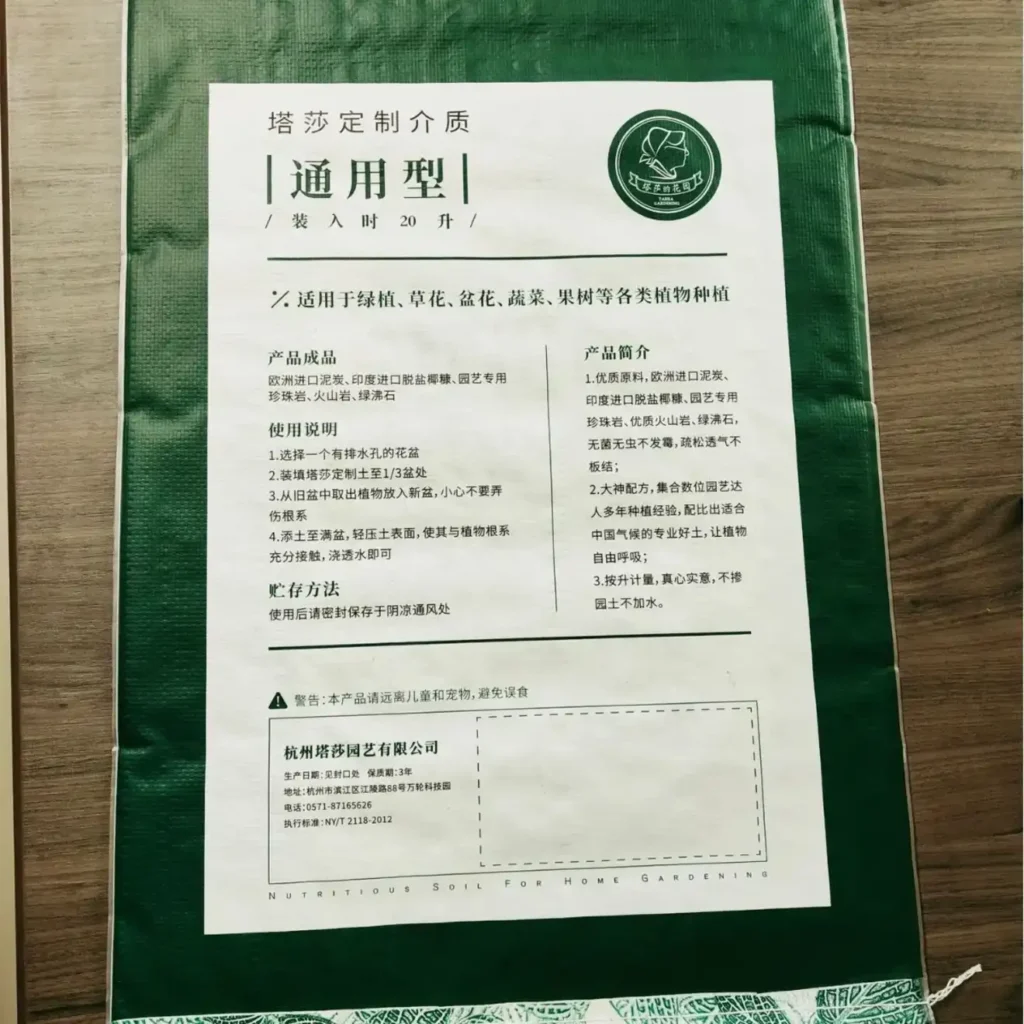
Introduction: Framing the Problem Around Printed BOPP Woven Bags
In consumer retail aisles and industrial depots alike, brands ask a deceptively simple question: how can a package be beautiful, tough, and efficient—at the same time? Printed BOPP Woven Bags answer by combining a structural polypropylene (PP) fabric with a reverse‑printed BOPP film. Yet performance is never a single number; it is a dialogue between denier, weave density, seam architecture, film coefficient of friction (COF), and the realities of a logistics route. This article builds a complete chain of thinking—problem → method → result → discussion—so buyers, engineers, and operations managers can specify Printed BOPP Woven Bags with confidence rather than hope. For a visual and spec overview, see our anchor page: Printed BOPP Woven Bags.
Background: What Makes Printed BOPP Woven Bags Distinct?
At their core, Printed BOPP Woven Bags are a hybrid of a load‑bearing substrate and a graphic carrier. The woven PP layer delivers tensile and tear strength at low basis weight (GSM), while the BOPP laminate provides scuff shielding, a smooth printing canvas, and COF tuning for pallet stability. Horizontally, the product sits at the intersection of materials science (polymer orientation and crystallinity), logistics engineering (drop/stack/compression), and brand design (color fidelity, matte/gloss effects). Vertically, the product spans multiple layers of decision‑making—from tape denier in extrusion, to mesh on looms, to seam choices in conversion, to pallet patterns in warehousing.
Method Overview: A Systems Approach to Printed BOPP Woven Bags
We decompose the specification into sub‑problems: (1) mechanical integrity (fabric denier, mesh, GSM), (2) seam and bottom geometry, (3) film properties (thickness, COF, dart impact), (4) environmental and route risks (UV, humidity), and (5) pack line compatibility (filling method, automation, reclose features). Each sub‑problem has measurable indicators—ASTM/ISO tests—and levers. The integrated solution is the smallest bundle of parameters that meets all target tests with margin and without inflation of resin cost.
Benefits of Upgrading Your Printed BOPP Woven Bags
Upgrades are not cosmetic. They are pragmatic interventions aimed at lowering damage rates, improving pallet stability, enabling faster filling, and elevating shelf presence. An increase in tape denier or a shift to a denser mesh can raise tensile strength; a move to block‑bottom geometry can reduce bulging and improve cube; tuning COF to a narrower window can slay pallet creep without choking automated depalletizers. The benefit is cumulative: fewer returns, cleaner stacks, faster lines, stronger brands.
Keeping Your Printed BOPP Woven Bags Production in Top Shape
Production excellence starts upstream. Stable tape extrusion—draw ratio control, temperature windows, masterbatch dispersion—prevents variability that no amount of downstream QA can erase. Loom maintenance holds mesh counts within tolerance and reduces fabric defects that become seam weak points. In lamination and printing, corona levels (≥38 dynes) and adhesive/thermal parameters secure film anchorage; poor adhesion shows up as scuff or delamination in transit, not in the lab. Conversion lines must police stitch‑per‑inch (SPI), needle selection, and bottom folding routines; a beautiful bag that opens at the seam is not a package—it’s a liability.
What Components Are Essential in a Printed BOPP Woven Bags Stack?
A bag is a stack of functions:
- PP tapes (warp/weft): defined by denier and width; these are the load carriers.
- Woven fabric: expressed in mesh (ends × picks) and GSM; this is the skeleton.
- BOPP film (18–30 μm typical): reverse‑printed, laminated; face to the world and friction controller.
- Coatings/liners: mono‑PP coating or LDPE/PP liners for moisture; EVOH only when oxygen barriers are non‑negotiable.
- Closures: open‑mouth hem, heat‑seal, or valve sleeve; tailored to product flowability and fill method.
- Bottom and seam: single/double fold; single/double stitch; or block‑bottom forming for stack geometry.
Each layer is a lever. Together, they create Printed BOPP Woven Bags that behave predictably under real handling.
How Can I Improve the Performance of Printed BOPP Woven Bags?
Start by asking: which test is failing or which cost is bloating? If drop tests fail, look at seam strength before inflating denier; a double fold + double stitch often shifts the failure mode away from the seam. If pallets tilt or slide, adjust BOPP COF via slip additive or anti‑slip stripes instead of blanketing the entire surface with a high‑friction varnish. If graphics scuff, raise film thickness or add matte/gloss hybrid panels to spread and dissipate abrasion. If line speed lags, verify bag stiffness (over‑dense weaves can resist forming) and valve geometry (for powders). Improvement begins with diagnosis.
What Is the Purpose of Block‑Bottom Valve Construction in Printed BOPP Woven Bags?
A square bottom does more than look neat. It converts lateral pressure into vertical load paths, reducing bulge and improving stack interlock. For powders (cement, gypsum, mortar), a valve sleeve supports high‑speed fills and self‑closure, cutting fugitive dust and warehouse mess. Horizontally, block‑bottom geometry ties to logistics (cube, pallet height, container loading). Vertically, it must be paired with fabric strength and seam choices—an elegant base will not rescue an under‑spec body.
Can I Use Recycled PP (PCR) in Printed BOPP Woven Bags?
Yes, on non‑food SKUs and within bounds. PCR introduces variability in color, odor, and mechanicals (elongation, tear). A practical route is a mono‑material architecture—fabric + PP coating + PP liner—so the bag remains recyclable even if PCR is used in controlled proportions. The decision is horizontal (sustainability targets, MRF acceptance) and vertical (performance tests, long‑haul durability). For food contact, keep to virgin PP and compliant inks/adhesives; migration testing is non‑negotiable.
What Advantages Does a Block‑Bottom Geometry Provide for Printed BOPP Woven Bags?
Stability, cube efficiency, and presentation. On pallet, the squarer footprint resists tilt; in containers, blocks stack with fewer voids; in store, panels stay flat, granting artwork its full voice. The trade‑off is process complexity—tighter forming windows, seam QA, and valve leak control. When products are abrasive or hygroscopic, pairing block‑bottom with higher denier and anti‑slip panels creates a balanced package—strength, friction, and geometry in a single conversation.
What Is Artwork & Color Management in the Context of Printed BOPP Woven Bags?
Think of artwork as a manufacturing process. Reverse gravure puts ink behind the BOPP film, protecting it from scuff. Color fidelity hinges on cylinder calibration, ink rheology, and web tension; registration tolerances keep microtext and QR codes crisp. The COF recipe must respect those inks: some matte systems lift COF; glossy films often reduce it. The design studio and the plant are partners; a dramatic gradient means nothing if depalletizers seize because friction windows were ignored.
What Role Does Anti‑Slip Play in Printed BOPP Woven Bags Handling?
Anti‑slip is the quiet star of warehouse safety. Too low a COF, and column stacks creep; too high, and automated depalletizers claw at the film. Target windows of 0.30–0.45 static COF are common. You can reach them by slip‑modified BOPP, over‑varnishes, or patterned anti‑slip stripes. Stripes are elegant: grip where you need it, glide where you don’t. This is horizontal thinking—film formulation meets pallet pattern—and vertical thinking—COF targets connect to compression dwell times and stack heights.
What Products Can Printed BOPP Woven Bags Effectively Package?
The canvas is wide: grains (rice, flour, sugar), animal feed, pet food, fertilizers and agro‑chemicals, construction powders, seeds, lawn & garden inputs, salt and ice‑melt, even retail promotional bundles. Still, not every product is the same. Hygroscopic materials crave liners and strong top closures; abrasive powders benefit from higher denier and denser weaves; premium pet food desires matte/gloss hybrids and reclose options. A single platform, many costumes.
What Is the Benefit of a Double‑Fold Bottom in Printed BOPP Woven Bags?
Strength where failure most often begins. Double folds extend load paths and spread stress over more fiber and stitches. When married to double stitching and correct SPI, the bottom becomes less of a fuse and more of a backbone. For 25–50 kg applications, the upgrade often delivers higher drop‑test pass rates than simply inflating denier—proof that geometry and sewing matter as much as raw material mass.
The Role of Precision in Print Registration and Dimensions for Printed BOPP Woven Bags
Precision is more than pride; it is function. Tight registration ensures barcodes scan, microtext deters counterfeits, and nutrition panels stay legible. Dimensional precision—cut length, hem allowance, valve depth—feeds directly into pack line efficiency and pallet patterns. A bag that is 5 mm off in width today may become a leaning tower next month. Precision guards against entropy.
Problem–Solution–Result: A Logic Loop for Printed BOPP Woven Bags
Problem: seam tears during forklift handling.
Solution: upgrade to double fold + double stitch; increase SPI; verify needle/thread pairing; keep fabric denier steady.
Result: seam failures drop; drop‑test passes climb; material cost stays flat.
Problem: pallet creep in humid storage.
Solution: tune face COF to ~0.35 via slip‑modified BOPP plus selective anti‑slip stripes; adjust pallet pattern from column to brick if needed.
Result: stacks stabilize without hurting depalletizing or line speed.
Problem: brand panels scuff in transit.
Solution: raise BOPP thickness from 20 μm to 25–30 μm; apply hybrid matte/gloss; validate dart impact.
Result: fewer claims; sharper shelf presence.
Problem: long‑haul UV embrittlement.
Solution: introduce UV masterbatch to tapes; verify accelerated exposure hours aligned to route; protect pallets with wraps and coverage.
Result: bag integrity persists even in sun‑heavy lanes.
Horizontal and Vertical Thinking Applied to Printed BOPP Woven Bags
Horizontal (cross‑disciplinary) links: materials science (tenacity vs. denier) connects to process engineering (draw ratios), to graphic design (matte/gloss recipes), to warehouse ergonomics (COF targets), to sustainability (mono‑material architectures). The bag is not an object; it is a network.
Vertical (layered) reasoning: strategic targets (damage rate <0.5%; line speed +10%) cascade to tactical specs (denier band, seam type) and operational controls (loom mesh checks, SPI audits, dynes metering). Each layer informs the next; feedback flows upward.
A Parameter Table for Printed BOPP Woven Bags
| Parameter | Practical Window | Why It Matters | Trade‑offs |
|---|---|---|---|
| Tape denier | 500D–1,500D | Sets tensile/tear baseline | Higher denier adds mass; may shift failure to seams |
| Mesh (EPI×PPI) | 10×10–14×14 | Controls puncture and print lay‑flat | Too dense can stiffen forming and slow lines |
| Fabric GSM | 60–115 (small sacks) | Couples with denier/mesh for strength | Excess GSM is cost without benefit if seams lag |
| BOPP thickness | 18–30 μm | Scuff/impact protection; print face | Thicker film raises cost and stiffness |
| Face COF (static) | 0.30–0.45 | Pallet stability vs. automation | Too high COF hinders depalletizing |
| Bottom style | Double fold + double stitch; block‑bottom | Geometry improves stack; seams carry loads | Needs tighter QA; more steps |
| Valve option | Sleeve material & depth | Fills faster; reduces dust | Leak control is critical |
| Liner | LDPE/PP; EVOH (special) | Moisture/oxygen control | Mixed materials complicate recycling |
| UV stabilization | 200–1,600 h class | Sun‑exposed lanes | Additives cost; color shift risk |
Method: Building a Spec for Printed BOPP Woven Bags Step by Step
- Define the load class and test targets. E.g., 25 kg rice, 1.2 m drop pass, 21‑day stack under X kPa, seam strength ≥Y.
- Select denier and mesh to meet tensile without bloat. 800–1,000D at 11×11–12×12 is common for 25 kg staples.
- Engineer seams and bottoms. Double fold + double stitch is a high‑value upgrade; choose SPI and thread size.
- Choose film thickness and COF recipe. 20–25 μm for most retail; 25–30 μm in abrasive lanes; COF ~0.35.
- Localize liners and UV. Hygroscopic goods get liners; sun‑heavy routes get UV hours.
- Pilot and verify. Run drop/stack, COF, dart impact; A/B against current spec.
- Lock QA checkpoints. Dynes ≥38; SPI audits; loom mesh logs; COF spot checks.
Results: What Success Looks Like for Printed BOPP Woven Bags
When the parameters align, damage rates fall, line speeds rise, and pallets behave. Claims drop in step with scuff marks; artwork stays legible; barcodes scan; customers notice the product, not the package. The quieter result—cost discipline—appears in the bill of materials: right‑sized denier and measured film thickness rather than reflexive over‑engineering.
Discussion: Trends and Trajectories in Printed BOPP Woven Bags
Three currents shape the near future:
- Mono‑material design. Fabric + PP coating + PP liner keeps recycling pathways simple and statements credible.
- Matte/gloss storytelling. Tactile panels, micro‑textures, anti‑counterfeit microtext and serialized QR codes move from novelty to norm.
- Evidence‑based specs. Standards windows (tensile, COF, dart, drop/stack) become procurement language, not lab jargon; suppliers win business with data, not adjectives.
Across markets—North America, EU, MENA, SSA, LATAM, and South/Southeast Asia—these currents flow at different speeds. Yet the direction is shared: Printed BOPP Woven Bags as a platform that can be tuned, verified, and trusted.
Extended Q&A on Printed BOPP Woven Bags
Do higher deniers always mean safer bags? Not if seams and bottoms lag; the weakest link moves. Engineer the set.
Should anti‑slip cover the whole face? Not always. Patterned stripes provide grip zones without choking automation.
Can we adopt recycled PP? Yes for non‑food lines with mechanicals validated; declare PCR% and test for odor/color.
Why do some bags lean in storage? COF too low, pallets too tall, or cubes poorly patterned; fix friction windows and patterns together.
Is matte film just a cosmetic choice? No. It can alter COF and scuff behavior; always test with your pallet pattern.
References (selected, non‑exhaustive)
- ISO 23560: Packaging — Woven polypropylene sacks — Characteristics and test methods (small sacks, 25–50 kg).
- ISO 13934‑1 / ASTM D5034: Textiles — Tensile properties of fabrics (strip/grab methods).
- ASTM D6775: Standard test method for breaking strength and elongation of textile webbing, tape, and braided material.
- ASTM D1894 / ISO 8295: Standard test methods for static and kinetic coefficients of friction of plastic film and sheeting.
- ASTM D1709 / ISO 7765‑1: Free‑falling dart impact resistance of plastic film and sheeting.
- FDA 21 CFR 177.1520; EU 10/2011: Food‑contact compliance frameworks for olefin polymers and plastic materials.
- Trade platform listings and manufacturer datasheets for BOPP‑laminated PP woven bags and PP tapes (e.g., Made‑in‑China; Alibaba) used to triangulate denier, GSM, and film thickness ranges.