
What Are Printed Woven Bags and Why Do They Matter Now?
Within modern packaging, the phrase Printed Woven Bags refers to a family of polypropylene-based formats where a woven PP fabric provides load-bearing strength and a printable surface—either directly via CI-flexo or indirectly through a laminated film such as BOPP—delivers brand visuals and regulated information. In trade catalogs you will also encounter aliases such as PP Woven Printed Sacks, BOPP‑Laminated Woven PP (when biaxially oriented polypropylene is printed and bonded to the fabric), and Printed Polypropylene Sacks. Different names, one essence: a structural textile made of oriented PP tapes, engineered to carry heavy weights while acting as a canvas for high-fidelity graphics.
Why do they matter now? Because the shelf is crowded, distribution is unforgiving, and environmental disclosure is inevitable. A package must capture attention in seconds, withstand compression for months, and explain its material choices in ways that supply chains, auditors, and consumers understand. Printed Woven Bags sit exactly at this intersection: robust enough for 25–50 kg payloads, printable enough for photographic branding and micro-security, and clean enough in material composition to support mono-PP narratives where appropriate recycling streams exist.
- In this article, Printed Woven Bags covers woven PP bases that are either printed directly or laminated with printed BOPP.
- For a practical catalog view, see Printed Woven Bags — a reference collection aligned with the technologies discussed below.
- We use a systems lens: materials, graphics, compliance, and operations must be co-engineered; isolating them leads to beautiful failures or sturdy eyesores.
Framed this way, the question is no longer “Can we print on woven PP?” It is: “How do we orchestrate polymer physics, print science, quality systems, and logistics constraints so that Printed Woven Bags deliver value throughout their lifecycle?” That is the work of integration, not improvisation.
What Are the Features of Printed Woven Bags?
Feature lists become persuasive when tethered to evidence. Below, each capability is expanded across three lenses: data signals, case anatomy, and comparative reasoning.
Visual performance. Laminated BOPP films typically accommodate eight to ten gravure colors or six to eight CI-flexo stations, with commodity halftone screens around 120–150 lpi. Those numbers are not decorations; they are constraints that influence prepress (trap, overprint, total ink limit), plate or cylinder decisions, and finishing (matte vs. gloss vs. hybrid varnish). The goal is not merely “sharp images,” but stable registration over a substrate that—being a woven textile—breathes and flexes. Precision here is partly mechanical: web tension regimes, corona treatment windows, and lamination bond uniformity prevent orange-peel telegraphing and seam-adjacent distortion.
- Rotogravure: 8–10 colors common; CI‑flexo: 6–8 colors; 120–150 lpi screens in commodity configurations.
- Hybrid varnishes: localized matte-over-gloss patterns add tactile cues and counterfeit friction without new substrates.
- Outcome signals: moving from kraft to BOPP-laminated Printed Woven Bags raises perceived gloss and color gamut; microtext plus register-accurate varnish windows complicate low-cost counterfeiting.
Mechanical strength. Typical bases for 5–50 kg fills fall within 60–120 g/m² with 10×10 to 14×14 picks per inch. But averages are never specific. A 20–25 kg pet-nutrition line in a humid region benefits from ~80 GSM fabrics, double-chain bottom stitching, and crepe tape to reduce powder leakage. Why? Because failures concentrate at seams and fold radii where stress accumulates; switching stitch architecture alters the failure mode from catastrophic bottom-open events to benign edge tears that do not spill product.
Barrier and hygiene. Flour cakes; sugar bridges; seed coatings flake—moisture is the quiet saboteur. BOPP lamination lowers water vapor ingress relative to unlaminated woven fabric. True, PET/Alu laminates beat mono‑PP on barrier, but complicate end‑of‑life. If policy and collection systems favor PP streams, mono‑PP (fabric + BOPP) offers a cleaner narrative with adequate moisture moderation for most dry goods. Hygiene is verified, not assumed: migration testing follows FDA 21 CFR 177.1520 and EU 10/2011 under defined simulants and time/temperature profiles, typically via accredited labs (SGS, Intertek).
Sustainability posture. Eco-credibility does not mean perfection; it means specificity. A mono‑PP bag simplifies declarations, lowers separation overhead in recycling, and offers high strength-per-gram. But the right choice is situational: if a commodity demands oxygen barrier beyond BOPP’s envelope, then a multilayer design may be justified—provided the end-of-life story is not greenwashed. The best sustainability is the one that prevents product loss; the cleanest bag that fails is dirtier than a complex bag that works.
What Is the Production Process of Printed Woven Bags?
Production is a chain of interfaces—resin to yarn, yarn to fabric, fabric to print, print to laminate, laminate to converted bag. Every interface is a potential loss of control if parameters are implicit, and a lever for performance if parameters are explicit.
A. Yarn & fabric (woven base). Polypropylene homopolymer is extruded into films, slit into tapes, and drawn for orientation. Tapes are woven on circular or flat looms into fabrics specified by GSM and pick density. Heat-setting stabilizes dimensions. Operators in good plants read machines by sound and vibration long before gauges drift; this craft layer complements data, not contradicts it.
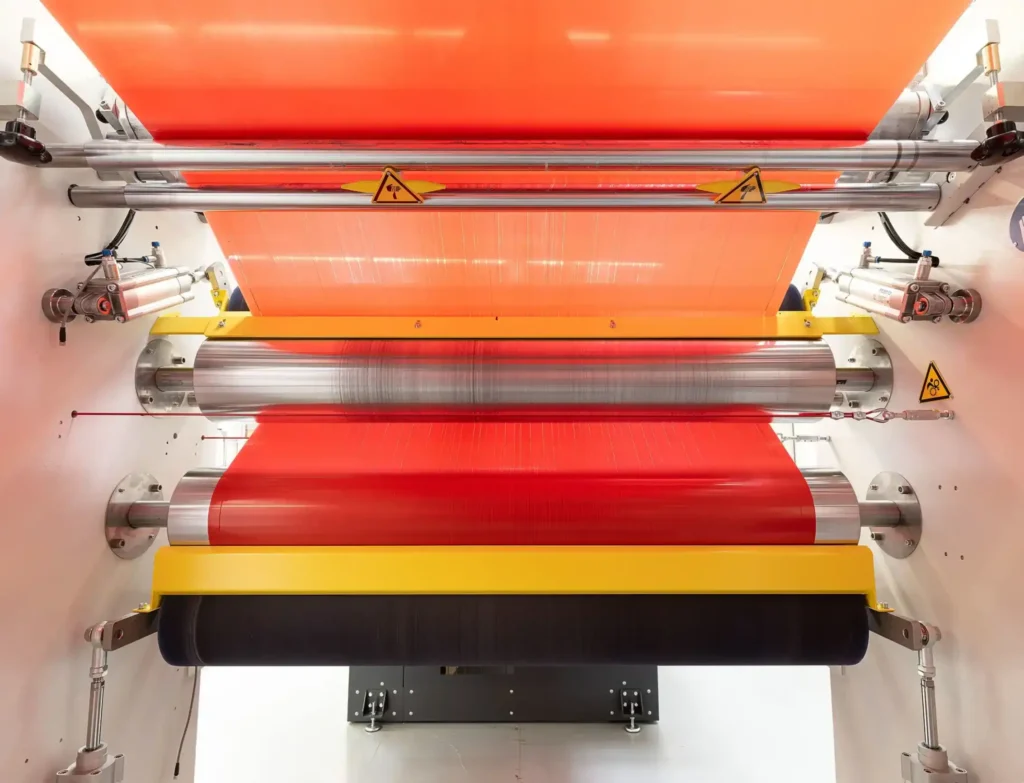
B. Printing & lamination. BOPP, typically 18–25 µm, is printed by gravure when tonal precision is king, or CI‑flexo when agility and cost matter. Prepress sets trap and total ink, controls minimum positive and negative text, and safeguards barcode integrity. Corona treatment improves surface energy; dry lamination fuses the web into a printable, scuff-resistant skin. Bond uniformity, validated by peel tests and accelerated aging, keeps the bag visually calm months after production.
C. Converting & QA. Tubing and back seams determine 3D behavior; gussets change cube efficiency; valve sleeves or open mouths adapt to fillers; bottom stitching defines ultimate load paths. QC closes the loop through drop tests, seam tensile checks (ASTM D5035 / ISO 13934‑1), register audits, and ISTA 1A/2A transit sequences. For food contact, FDA 21 CFR 177.1520 and EU 10/2011 migration tests via SGS/Intertek shift a claim to evidence.
What Is the Application of Printed Woven Bags?
Applications are best understood as risk profiles rather than shopping lists. Each category below bundles the product hazard, logistics exposure, and shopper expectations to show why configuration details matter.
- Staple foods (5–50 kg). Rice, flour, sugar, pulses: moisture moderation and label clarity are non-negotiable. BOPP lamination reduces caking; high-contrast nutrition panels survive scuffing.
- Pet & animal nutrition. Matte BOPP tames glare; microtext and serialized QR codes raise the bar for counterfeiters; seams are tuned for conveyor drop energies.
- Home & garden. Fertilizers and soil blends need photos that sell and surfaces that shrug off dew; anti-slip varnish reduces pallet slide.
- Retail & promo. Non-woven totes prioritize hand feel and repeat branding; handle geometry is comfort engineering, not decoration.
- Industrial. Resins and construction chemicals want ruggedness first; print legibility is a safety feature for quick identification.
- Marketplace listings (Alibaba / Made‑in‑China) regularly show 20–50 kg loads, 70–100 GSM fabrics, and up to 8 colors on BOPP. These are not theoretical ceilings; they are shipped products.
- Seed distributors using matte‑BOPP with anti‑slip reported fewer returns and improved outdoor readability—evidence that varnish maps and finish choices matter in real depots.
- In wet climates, non‑woven PP totes retain color vibrancy longer than kraft and hold their geometry after repeated use.
From Talking Points to Architecture — An Integrated Plan for Printed Woven Bags
Turning intent into repeatable supply means designing a system, not a one-off. Below is a blueprint that has proven resilient across categories and regions.
- Diagnostics. Start with a SKU census: net weights, fill temperatures, humidity exposure, drop heights, retailer codes of practice. For food contact, map FDA 21 CFR 177.1520 and EU 10/2011 scenarios. Build a risk register: seam failure, caking, scuffing, counterfeit risk.
- Material design. Select GSM/pick density to match load class; specify BOPP thickness (20–25 µm) and finish (matte, gloss, hybrid). Add anti-slip varnish where palletization or high-speed conveying demands friction control. Choose seam architectures (single vs. double chain, with/without crepe tape) explicitly in drawings.
- Print engineering. Gravure for hero SKUs needing photographic smoothness; CI‑flexo for agile, cost-sensitive runs. Define ink migration limits, microtext floors, barcode grades, and register tolerances. Printing is an information system masquerading as decoration.
- Qualification. Lab tests (ASTM/ISO), line trials, and ISTA transit sequences validate the envelope. Require third‑party migration reports from SGS/Intertek, not just supplier letters. Convert defect Pareto charts into revised tolerances.
- Ramp & control. Run SPC on register deviation and bond peel values; gate incoming fabric by GSM and pick density; audit against ISO 9001/22000 and BRCGS Packaging on a cadence aligned to risk.
Key Specifications & Options for Printed Woven Bags
| Category | Typical / Available Range | Notes |
|---|---|---|
| Fabric (woven PP) | 60–120 g/m²; 10×10–14×14 picks/inch | Higher GSM for >25 kg; verify pick density on receipt. |
| BOPP laminate | 18–25 µm; matte / gloss / hybrid | Corona treatment; bond uniformity validated by peel tests. |
| Printing | Gravure 8–10 colors; Flexo 6–8; 120–150 lpi | Control total ink; define minimum positive/negative text. |
| Bag sizes | 5–50 kg fill classes | Valve or open‑mouth; gusset options for cube efficiency. |
| Seams | Single / Double chain; lock seam | Crepe tape optional; specify stitch density and tape width. |
| Testing | ASTM D882; ASTM D5035 / ISO 13934‑1; ISTA 1A/2A | Tailor to route‑to‑market; track failure modes over time. |
| Food contact | FDA 21 CFR 177.1520; EU 10/2011 | Require third‑party migration reports (SGS/Intertek). |
| Certifications | ISO 9001:2015; ISO 14001:2015; ISO 22000:2018 / FSSC 22000; BRCGS Packaging | Supports retailer acceptance and audit readiness. |
| Sustainability | Mono‑PP design; PP‑stream compatibility; PCR‑PP options | Balance barrier with stream compatibility; disclose additives. |
Deepening the Claims — Background, Cases, Contrasts for Printed Woven Bags
This section interrogates earlier statements across three modes: data signals (what’s measured), case anatomy (what happened), and comparative reasoning (what’s better or worse under which conditions).
Visuals, revisited. Background: pre-attentive perception in retail is biased toward edges, contrast, and specular highlights. On BOPP, oriented surface modulus holds type edges under stress, while hybrid varnish patterns produce subtle tactile contrasts that human fingers register instantly. Case: a regional rice brand’s move to gravure-printed BOPP increased planogram presence in high-traffic aisles; counterfeiters struggled with microtext thresholds and guilloché tiling that revealed photocopy artifacts. Contrast: PE film sacks accept ink well but stretch, smearing fine detail; paper has superb ink holdout yet wilts in humidity, dulling gloss and buckling panels.
Strength, revisited. Background: woven fabrics distribute load through orthogonal tapes; failure nucleates at stress concentrators—stitch holes, fold radii, and misaligned gussets. Case: changing from single to double-chain bottom stitching migrated failure from catastrophic opens to controlled edge tears, cutting claims below 0.5%. Contrast: paper sacks rely on fiber pull-out; once a notch forms, propagation accelerates. Woven PP re-directs energy along tape axes, buying time and protecting contents.
Barrier & hygiene, revisited. Background: WVTR is a system property of film, adhesive, seam porosity, and pallet wrap regime. Case: pairing BOPP lamination with anti-slip varnish reduced both moisture uptake and pallet shear, lowering caking returns at a flour mill. Contrast: PET/Alu excels at barrier but complicates recycling streams; a mono‑PP story is cleaner where PP collection exists.
Compliance, revisited. Background: regulators interrogate migration, not marketing. Case: a pet-food exporter aligning to BRCGS Packaging with EU 10/2011 reports sailed through retailer audits because evidence existed—GMP records, traceability maps, and lab certificates. Contrast: self-declarations without lab attachments invite customs delays and rework.
Design Grammar — From Brand Brief to Print‑Safe Artwork on Printed Woven Bags
A bag is a 3D object pretending to be a 2D poster; seams and folds are editorial decisions in disguise. This grammar translates brand direction into art that survives converting.
- Type & microtext. Keep microtext above empirically proven floors (often ≥3.5 pt gravure, ≥4.5 pt flexo). Avoid hairline knock‑outs across back seams. Barcodes deserve protection zones.
- Photos & gradients. Prefer gravure for deep tonal ramps; in flexo, use controlled gradient ramps and line screens that the supplier actually runs. Soft-proofing is cheaper than press-proofing.
- Color & traps. Respect total ink limits; trap values should reflect substrate compliance. Beauty inside physics beats beauty against physics.
- Seams & die‑cuts. Place critical marks away from fold radii and punch paths; on retail totes, validate handle ergonomics with real weights and carry durations.
Operations View — Running Printed Woven Bags on Real Lines
Filling equipment responds to friction, static, geometry, and timing—not to brand guidelines. Bags fail to run when slip angles are off, gussets spring back, seams are too stiff, or valve sleeves wander out of tolerance. Solve these in drawings; confirm them in FAT/SAT trials; measure them during ramp.
- Friction management. Anti-slip coatings lift static/dynamic coefficients into pallet-safe windows; too little and stacks slide, too much and magazines jam.
- Static control. BOPP is insulative; seasonal dryness increases double feeds. Ion bars and humidity control are throughput tools, not luxuries.
- Dimensional control. Width, length, sleeve IDs: hold them in the window the filler expects. Repeatability is productivity.
Risk Ledger — What Can Go Wrong with Printed Woven Bags and How to Preempt It
| Risk | Mechanism | Preventive Control |
|---|---|---|
| Bottom‑open in transit | Seam architecture underestimates stack pressure | Double‑chain stitching; seam tape; ISTA drops/compression validation |
| Scuffed imagery | High‑gloss fields abrade in pallet shuffle | Matte varnish on high-contact zones; adjust wrap tension |
| Caking of powders | Humidity ingress over shelf life | BOPP lamination; seam leakage control; WVTR monitoring |
| Counterfeiting | Low‑fidelity replication | Microtext, pattern tiling, serialized QR; tight register specs |
| Filler jams | Out‑of‑tolerance dimensions; low slip | SPC on cut length/width; target COF window; SAT sign‑off |
Sustainability Dial — Making Printed Woven Bags Explainable
Sustainability lands when it is explainable. Mono‑material declarations, disclosed additive packages, and compatibility with PP collection streams build credibility. If a higher barrier is necessary, acknowledge the trade-off and present the performance rationale alongside end‑of‑life guidance. Specific beats generic; numbers beat adjectives.
Procurement Intelligence — Buying Printed Woven Bags Without Surprises
Price is an outcome, not a spec. Smart buyers request three bundles: (1) drawings with seams, stitch density, and tolerances; (2) a quality plan with tests, frequencies, and acceptance criteria; (3) compliance documentation with certificates and migration reports. Pilot with quantities large enough to learn, small enough to pivot. After that, let SPC do the quiet work of stability.
- Ask suppliers to add print control strips to back panels and retain them on lot samples.
- Specify BOPP thickness and finish in micrometers and gloss units, not adjectives.
- Use FAT/SAT milestones to freeze filler angles, bag magazines, and anti-slip targets.
Closing the Loop — Turning Field Data into Better Printed Woven Bags
Once shipments start, listening begins. Claim files expose seam or scuff patterns; store audits document shelf wear; filler logs capture downtime linked to packaging variance. Treat each bag as a sensor whose scars tell a story. Feed those stories into revised GSM choices, varnish maps, and seam settings. Over quarters, costs fall because waste falls.
- What Are Printed Woven Bags and Why Do They Matter Now?
- What Are the Features of Printed Woven Bags?
- What Is the Production Process of Printed Woven Bags?
- What Is the Application of Printed Woven Bags?
- From Talking Points to Architecture — An Integrated Plan for Printed Woven Bags
- Key Specifications & Options for Printed Woven Bags
- Deepening the Claims — Background, Cases, Contrasts for Printed Woven Bags
- Design Grammar — From Brand Brief to Print‑Safe Artwork on Printed Woven Bags
- Operations View — Running Printed Woven Bags on Real Lines
- Risk Ledger — What Can Go Wrong with Printed Woven Bags and How to Preempt It
- Sustainability Dial — Making Printed Woven Bags Explainable
- Procurement Intelligence — Buying Printed Woven Bags Without Surprises
- Closing the Loop — Turning Field Data into Better Printed Woven Bags
- Company Overview: VidePak’s Expertise in Sustainable Manufacturing
- Quality Control and Standardization: The Pillars of Durability
- Eco-Friendly Advantages: Beyond Compliance
- Market Performance and Client Success Stories
- FAQs: Addressing Key Concerns
- Conclusion
“Why should businesses switch to printed woven bags?”
A procurement manager from a global retail chain recently posed this question during an industry conference. The answer is clear: Printed woven bags, when manufactured with advanced eco-friendly materials and precision-driven processes, offer unmatched durability, brand visibility, and environmental compliance—positioning them as the future of sustainable packaging.
VidePak, a leader in woven bag production since 2008, exemplifies this shift. With 526 employees and a $80 million annual revenue, the company leverages cutting-edge technology and rigorous quality standards to deliver solutions that align with global sustainability goals.
Company Overview: VidePak’s Expertise in Sustainable Manufacturing
Founded in 2008 and now led by Ray, the founder’s son, VidePak combines three decades of industry experience with innovation. The company specializes in BOPP woven bags, valve bags, and kraft paper composite bags, serving clients across agriculture, construction, and retail sectors. Key operational strengths include:
- Production Scale: Over 100 circular looms, 16 extrusion lines, and 30+ lamination/printing machines.
- Technology Partnership: Exclusive use of Austria’s Starlinger machinery, renowned for precision and automation[citation:14][citation:42].
- Customization: Multi-color printing and tailored designs to enhance brand identity.
Quality Control and Standardization: The Pillars of Durability
1. Material Excellence: Virgin PP/PE and Positive Tolerance Standards
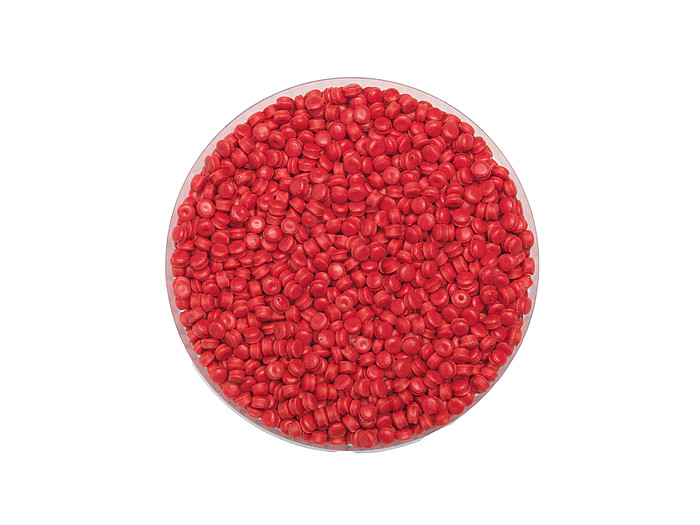
VidePak’s bags utilize 100% virgin PP/PE granules, ensuring consistent tensile strength and resistance to environmental stressors. Unlike recycled materials, virgin polymers prevent “炸包” (bursting) by maintaining uniform thickness—averaging 120–150 GSM with a +5% tolerance to exceed industry benchmarks[citation:14][citation:37].
Case Study: A fertilizer manufacturer reported a 40% reduction in transport damage after switching to VidePak’s bags, attributed to the reinforced material structure.
2. Advanced Printing Technologies
The company employs UV-resistant inkjet and flexographic printing, achieving fade-resistant designs even after prolonged sun exposure. For instance, a retail client’s logo remained vibrant after 12 months of outdoor storage, showcasing >90% color retention—a critical metric for brand consistency[citation:14][citation:42].
3. Starlinger Machinery: Precision in Every Stitch
Starlinger’s automated systems enable <0.5% defect rates through real-time monitoring. Features include:
- Auto-thread detection to eliminate weaving errors.
- Lamination consistency of ±2 microns for moisture-proof barriers[citation:42].
Eco-Friendly Advantages: Beyond Compliance
Printed woven bags reduce plastic waste through:
- Recyclability: PP/PE materials are 100% recyclable, diverting 15,000+ tons/year from landfills (based on VidePak’s production data).
- Carbon Footprint Reduction: Compared to single-use plastics, woven bags cut CO2 emissions by 30% over their lifecycle[citation:14][citation:37].
Industry Trend: The global eco-friendly packaging market is projected to grow at 6.8% CAGR through 2030, driven by regulations like the EU’s Single-Use Plastics Directive[citation:37].
Market Performance and Client Success Stories
VidePak’s solutions have been adopted by:
- Agriculture: A Southeast Asian rice exporter reduced packaging costs by 25% using VidePak’s BOPP laminated bags with anti-fungal coatings.
- Retail: A European supermarket chain achieved a 50% boost in customer engagement via custom-printed woven totes.
| Product Parameter | VidePak Standard | Industry Average |
|---|---|---|
| Tensile Strength (N/cm²) | 45–55 | 30–40 |
| Print Durability (months) | 24+ | 12–18 |
| Thickness Tolerance | +5% | ±10% |
FAQs: Addressing Key Concerns
Q: How does VidePak ensure color consistency in bulk orders?
A: Automated color-matching systems and ISO 9001-certified workflows guarantee <2% deviation across batches.
Q: Are these bags suitable for heavy-duty applications?
A: Yes. VidePak’s block-bottom valve bags withstand up to 50 kg loads, ideal for construction waste[citation:44].
Q: What certifications does VidePak hold?
A: Certifications include ISO 9001, ISO 14001, and compliance with FDA food-grade standards.
Conclusion
VidePak’s fusion of eco-conscious materials, Starlinger-driven precision, and client-centric innovation positions it as a trailblazer in sustainable packaging. As industries pivot toward ESG commitments, printed woven bags are not just a product—they are a strategic asset for brands aiming to balance profitability and planetary health.
For deeper insights into automated production with Starlinger equipment, explore our analysis on optimizing storage with poly-woven bags. Additionally, learn how advanced quality control systems ensure product reliability.