
What are Recyclable PP Bags?
Recyclable PP Bags are industrial sacks engineered from polypropylene tapes woven into a robust fabric and, where needed, finished with laminates or liners to balance strength, barrier, and printability. In plain terms, they are the workhorses of powder and granule logistics—built to shoulder abrasive, high‑density building materials such as cement, mortar, gypsum, tile adhesive, and calibrated sands—while resisting tears, scuffs, moisture, and UV. In commercial parlance they travel under many aliases: polypropylene bags, PP woven sacks, raffia bags, polywoven sacks, and—in automated plants—block‑bottom valve bags. But the family resemblance is clear: mono‑material polypropylene structures designed for repeatable, safe handling in heavy‑duty environments. If a single phrase must carry the meaning and the mission, it is this: Recyclable PP Bags place performance and circularity on the same pallet.
Why does that juxtaposition matter? Because packaging for building materials operates at the intersection of materials science, supply‑chain engineering, and environmental stewardship. A sack must be light yet strong; printable yet scuff‑resistant; breathable during filling yet tight enough to contain fines during transit. It must endure palletization, belt conveyors, side‑grip forklifts, open‑air yards, and long‑haul shipping. And it must now answer a tougher question: after the last kilogram is dispensed, where does the package go? With polypropylene (resin code #5), a mature recycling stream and established reprocessing methods already exist in many regions, allowing a credible pathway beyond single use. To anchor this discussion within a practical context, see Recyclable PP Bags, a format widely adopted in cement and dry‑mix operations worldwide.
From a horizontal perspective, Recyclable PP Bags share their mission with other industrial sacks—multi‑wall kraft paper, PE form‑fill‑seal (FFS) tubular films, even FIBCs (bulk bags)—yet they solve the performance‑versus‑weight equation differently. Paper offers breathability and print warmth but can struggle in wet yards; PE films seal cleanly but may slip on pallets without anti‑skid features. Polypropylene woven structures, by contrast, translate molecular orientation into tape tenacity, tape tenacity into fabric modulus, and fabric modulus into pallet‑wide stability: a chain of cause and effect that is as technical as it is tangible. Vertically, the logic cascades from polymer chemistry (isotactic PP’s crystallinity) to process physics (draw ratio, annealing, orientation) to the operational metrics that matter on a filling line (deaeration time, residual dust, stitch efficiency, drop performance). The result is a system where design decisions at the micro level—tape width, weave density, laminate thickness—govern macro outcomes like loss ratios, customer complaints, and brand presentation.
What are the features of Recyclable PP Bags?
The hallmark is strength‑to‑weight efficiency. Oriented PP tapes carry load through aligned polymer chains, allowing a fabric that weighs a fraction of the product it secures to withstand drop shocks, punctures from angular aggregates, and continuous compressive stress in stack storage. That isn’t marketing flourish; it is mechanics. In bending and shear, the woven architecture redistributes localized stress, which is why Recyclable PP Bags remain intact after the sixth warehouse drop when lesser sacks have already burst. Do they eliminate all risk? Of course not. They minimize it—predictably.
Moisture and dust management is the second signature. Building powders must flow during filling and stay stable on the road. A paradox? Only if you ignore process sequencing. During high‑speed filling, entrained air must escape; after sealing, water vapor must be resisted. The solution is a toolkit: micro‑perforation patterns sized to vent quickly without tearing artwork; BOPP or PE laminations that tune water vapor transmission; optional liners for hygroscopic products. The trade‑offs are real. More perforations accelerate deaeration yet can reduce barrier; thicker laminates shield better yet may stiffen the bag’s mouth for heat sealing. Horizontal thinking compares these levers with those available in paper sacks (sleeve valves, venting patches) and PE FFS films (pin‑perfs, degassing valves), clarifying how Recyclable PP Bags achieve an equivalent end with a different means.
Outdoor durability forms the third pillar. UV‑stabilized PP fabrics retain a greater percentage of initial tensile properties after prolonged sunlight exposure, a decisive advantage for yards where pallets queue in open air. Consider the vertical stack of decisions involved: additive chemistry (HALS packages and UV absorbers), tape production (draw ratio’s effect on crystallinity), fabric finishing (lamination acting as a sacrificial shield). Each layer contributes to a practical outcome—fewer split sacks after a sudden downpour and a week of glare.
Print fidelity is the fourth virtue. The same surface that guards against scuffs also presents graphics crisply. Whether via multi‑color flexography on treated PP or via high‑gloss BOPP lamination, Recyclable PP Bags can carry dense barcodes, hazard pictograms, batch codes, and brand visuals without bleeding. The irony is pleasant: a rugged industrial sack doubling as a mobile billboard. And why not? On a crowded merchant’s floor, sharp art can be the quiet difference between a glance and a purchase.
Finally, recyclability and mono‑material integrity are not afterthoughts but design constraints from the outset. Keeping the structure predominantly polypropylene—fabric, tapes, and, where feasible, laminate—simplifies post‑use sorting and reprocessing. Does infrastructure vary by market? Certainly. Yet a mono‑material substrate is the most universal passport a package can carry.
What is the production process of Recyclable PP Bags?
The journey begins in extrusion, where virgin—or quality‑controlled recycled—polypropylene is melted, slit, and drawn into tapes. Draw ratios typically in the neighborhood of 5:1 to 7:1 align chains and elevate tenacity; annealing stabilizes this orientation. Tape widths commonly span 2.5–5 mm depending on target weave density and desired handfeel. The physics is elegant: stretch to strengthen, cool to set, anneal to keep.
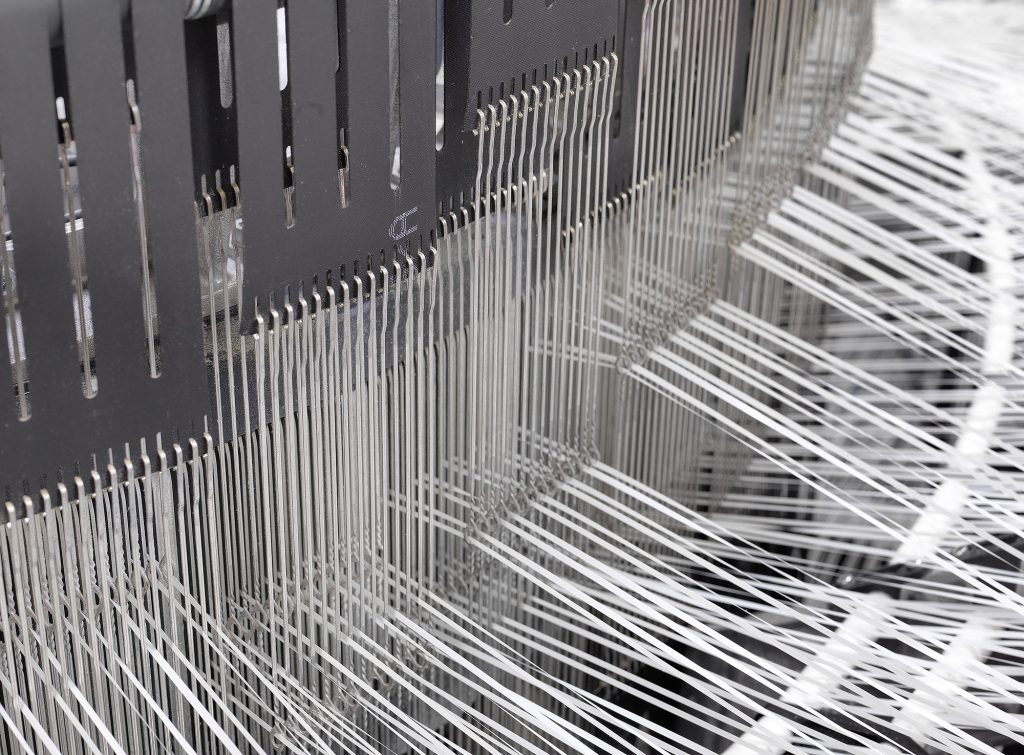
Those tapes enter circular looms, interlacing into a fabric whose density (often 10×10 to 14×14 threads per inch) shapes both mechanical properties and surface for printing. Denser weaves distribute impact more uniformly and reduce sift‑out of fines. At this stage, anti‑skid textures may be embossed or woven patterns selected to heighten pallet friction, curbing the hazard of shifting stacks in transit.
Surface engineering follows. Lamination with PE or BOPP, typically 15–30 µm, raises moisture resistance, upgrades print gloss, and protects inks. Where high‑speed filling meets air‑laden powders, micro‑perforation—hole diameters around the half‑millimeter class with defined pitch—creates preferential vents so air exits without ballooning the sack. Liners made from LDPE or HDPE, in the 20–80 µm region, are inserted when barrier targets tighten or when regulatory regimes for food and feed apply.
Printing and coding transform the sack into a compliant, traceable asset. Flexographic or rotogravure presses deliver multi‑color registration while abrasion‑resistant ink systems endure conveyor rub. Batch and QR codes enable lot tracking; hazard diamonds and instruction panels support safety audits. The conversion line then formats the fabric: open‑mouth with stitched or heat‑sealed bottoms for manual or semi‑automatic operations, or block‑bottom valve geometry for fully automated lines. Valve dimensions are tuned to spout sizes and product aeration behavior to avoid backflow and ensure clean cuts.
Quality assurance is continuous rather than episodic. Seam efficiency, tensile and burst strength, drop performance, stitch integrity, and UV retention are not ceremonial tests; they are statistical checkpoints feeding back into process windows. If seam efficiency drifts, tension on the sewing heads is recalibrated; if drop failures rise, weave density or laminate thickness may be adjusted. Vertical thinking connects these diagnostics back upstream to extrusion and weaving, keeping the system in a closed loop of improvement.
What is the application of Recyclable PP Bags?
In building materials, Recyclable PP Bags excel with cement grades (32.5/42.5/52.5), dry‑mix mortars, gypsum plasters, tile adhesives, grouts, and specialty mineral fills. What unites these products is a demand for clean filling, low loss in distribution, and tidy discharge at the jobsite. Valve bags thrive in high‑throughput terminals—fast filling, sharp edges, brick‑like pallet faces—whereas open‑mouth formats fit manual depots favoring versatile closures.
Beyond construction, agriculture and chemicals lean on the same properties for fertilizers, seeds, resins, masterbatch, and mined minerals like barite or bentonite. Food and feed applications are feasible with the right liners and compliance controls, turning a tough exterior into a hygienic package within. The horizontal comparison with multi‑wall kraft paper is instructive: paper breathes naturally and prints warmly, but it can wick water if pallets sit on damp ground; woven PP repels moisture better when laminated and maintains stitch integrity after multiple handling cycles. Against PE FFS, woven PP offers superior anti‑slip behavior and drop resilience at equivalent mass, particularly when anti‑skid textures and gusset geometries are optimized.
From procurement’s vantage point, the choice is not merely about unit price but about system cost: product loss from ruptures, downtime from spills, insurance claims from forklift mishaps, and customer perception when sacks arrive smudged or split. The warehouse manager asks for stability; the brand manager asks for print quality; the sustainability officer asks for recyclability. Recyclable PP Bags answer all three without asking for a compromise that hurts the others.
Typical Parameters for Recyclable PP Bags
The ranges below align with widely adopted specifications in the industrial sacks market. Select to suit filler design, powder rheology, climate, and logistics.
| Parameter | Typical Options / Range |
|---|---|
| Product | Recyclable PP Bags (open‑mouth or block‑bottom valve) |
| Fabric (GSM) | ~70–110 g/m² woven PP (application‑specific ranges available) |
| Weave density | 10×10 to 14×14 (warp×weft, threads/inch) |
| Bag capacity | 5–50 kg common (cement/gypsum typically 25–50 kg) |
| Common size (50 kg cement) | ~50 × 80 cm (±1–2 cm, by filler specification) |
| Lamination | PE 15–30 µm or BOPP laminate; matte or gloss; micro‑perforated optional |
| Valve opening (block‑bottom) | Approx. 10–17 cm (set by spout and product aeration) |
| UV stabilization | Options up to ≈3000 h; matched to yard storage profile |
| Printing | Flexo / Gravure, multi‑color, high coverage; barcode/QR capable |
| Liners | LDPE/HDPE liners (e.g., 20–80 µm) for barrier/dust control |
| Closures | Heat‑cut/hemmed top; single/double fold bottom; chain/lock stitching |
| Options | Anti‑skid textures, easy‑open tape, tear notch, gussets, batch coding |
Why VidePak for Recyclable PP Bags
VidePak’s proposition knits technology, scale, and geography into a single promise. Founded in 2008 and staffed by a core team with more than three decades in woven packaging, the company operates with 568 employees and annual sales around US$80 million. Capacity is not a slogan but a machine list: over 100 circular looms, 16 extrusion lines, and more than 30 lamination and printing machines, anchored by top‑tier German W&H and Austrian Starlinger equipment. That mix produces stable gauge control, crisp registration, reliable seam efficiency, and reproducible venting—attributes that matter at 2,400 bags per hour as much as they do at 400.
Materials policy is equally direct: 100% virgin PP for structural components unless a customer requests—and local rules allow—controlled recycled content, always with an eye on mechanical targets and food/feed compliance where applicable. Customization is routine rather than exceptional: multi‑color graphics, gloss or matte BOPP, micro‑perf patterns tailored to your powder’s aeration, liners cut to viscosity and moisture profiles, valve geometries tuned to your spouts.
Global reach closes the loop. VidePak supplies to the United States, Europe, Brazil and wider South America, Southeast Asia, Japan, Korea, Central Asia, the MENA region, and East and South Africa. Different climates, different regulations, different warehouse practices; one product family that adapts without losing its identity. When operations demand pallet stability, the weaving and gusseting respond; when marketing demands shelf presence, the printing and lamination deliver; when sustainability demands mono‑material accountability, the structure obliges. That is the practical meaning of choosing Recyclable PP Bags with a partner who treats the sack not as a commodity but as a system.
- What are Recyclable PP Bags?
- What are the features of Recyclable PP Bags?
- What is the production process of Recyclable PP Bags?
- What is the application of Recyclable PP Bags?
- Typical Parameters for Recyclable PP Bags
- Why VidePak for Recyclable PP Bags
As the building materials industry continues to evolve, one of the most significant changes is the growing emphasis on sustainability. A key element in achieving sustainability goals is optimizing packaging solutions. Traditionally, packaging materials have been a source of waste, contributing significantly to environmental concerns. However, the introduction of recyclable polypropylene (PP) bags presents a promising shift towards more eco-friendly practices. This blog explores how recyclable PP bags serve as an ideal sustainable packaging solution for the building materials industry.
The Importance of Sustainability in Packaging for Building Materials
The building materials industry is vast, encompassing everything from cement and sand to insulation and roofing materials. Traditionally, these products have been packaged in various forms of plastic, paper, and even metal, many of which are not recyclable or reusable. As the industry seeks to reduce its carbon footprint and embrace more sustainable practices, recyclable PP bags are becoming an increasingly popular choice for packaging materials.
PP bags are a robust, lightweight, and cost-effective solution that can be used for packaging a wide range of building materials, such as aggregates, dry mix products, and insulation materials. Moreover, these bags can be designed to offer superior protection against moisture, dust, and other environmental factors, which makes them ideal for construction sites and other outdoor storage settings.
Advantages of Recyclable PP Bags in the Building Materials Industry
1. Recyclability and Reduced Environmental Impact
One of the most significant advantages of PP bags is that they are made from polypropylene, a highly recyclable plastic. Unlike conventional packaging materials that contribute to long-term waste in landfills, PP bags can be recycled into new bags or even other products, reducing waste and the need for virgin materials.
- Recycling Process: Polypropylene bags can be collected, cleaned, and reused to create new PP products. This not only reduces the volume of waste sent to landfills but also decreases the need for raw material extraction.
- Environmental Benefits: The shift to recyclable PP bags supports circular economy principles, helping companies meet sustainability targets and comply with increasingly stringent environmental regulations.
2. Durability and Protection
PP bags offer excellent strength and durability, which is crucial for packaging building materials. They can withstand heavy loads, abrasive surfaces, and exposure to harsh environmental conditions, ensuring that the products inside remain safe and intact.
- Moisture Resistance: Many building materials need to be protected from moisture during storage and transportation. Recyclable PP bags are designed to be water-resistant, providing essential protection for materials like cement and plaster.
- Resilience: PP bags are highly resistant to tears, punctures, and other forms of damage, which makes them an ideal packaging solution for bulk materials that are typically transported over long distances.
3. Customization and Branding
Recyclable PP bags offer a high degree of customization, allowing companies to print their logos, product information, and sustainability messaging on the bags. This feature is especially beneficial for brand building and promoting eco-friendly practices to customers.
- Multi-color Printing: These bags can be printed in a variety of colors, providing a visually appealing way to market building materials and raise awareness about a company’s commitment to sustainability.
- Custom Sizes and Designs: PP bags can be designed in various shapes and sizes to accommodate specific product requirements, such as large bulk bags for aggregates or smaller bags for dry mix products.
4. Cost-Effective Solution
In comparison to other packaging materials, recyclable PP bags offer a cost-effective alternative. They are cheaper to produce and require less energy during the manufacturing process, making them a budget-friendly option for companies looking to reduce packaging costs.
- Efficient Use of Resources: Since PP bags are lightweight, they help reduce shipping costs by minimizing transportation weight. This not only lowers costs but also reduces the carbon footprint associated with logistics.
5. Compliance with Industry Standards
As the building materials industry faces increasing pressure to comply with environmental regulations, recyclable PP bags help companies meet sustainability requirements set by governmental bodies, environmental groups, and customers.
- Eco-Certifications: Many PP bags come with eco-certifications, signaling that they have been produced in an environmentally responsible manner, further enhancing a company’s reputation as an environmentally conscious brand.
Key Product Parameters for Recyclable PP Bags
To help you better understand the technical specifications of recyclable PP bags, here is a breakdown of the key parameters that are important for the building materials industry.
| Parameter | Description |
|---|---|
| Material | Made from 100% polypropylene (PP), ensuring durability and recyclability. |
| Size | Available in various sizes, from small 25 kg bags to large 1-ton bulk bags. |
| Strength | High tensile strength, able to carry heavy loads without tearing. |
| Water Resistance | Moisture-resistant, ideal for storing sensitive materials like cement. |
| Customization | Custom sizes, colors, and printing options for branding and product info. |
| Weight | Lightweight, reducing shipping costs and environmental impact. |
| Recycling Rate | 100% recyclable, supporting circular economy principles. |
Frequently Asked Questions (FAQs)
1. Are PP bags biodegradable? No, PP bags are not biodegradable. However, they are highly recyclable, making them a more sustainable alternative to single-use plastics.
2. Can PP bags be reused? Yes, PP bags can be reused multiple times, further extending their lifespan and reducing waste.
3. How do I ensure the PP bags I buy are recyclable? Look for bags that are labeled with recycling symbols and certifications, indicating they are made from recyclable materials. You can also work with suppliers who offer bag recycling programs.
4. Can PP bags be used for all types of building materials? PP bags are versatile and can be used for a wide range of building materials, including cement, sand, dry mixes, and insulation products. However, for certain hazardous materials, additional precautions may be needed.
5. How do PP bags compare to other packaging materials? PP bags offer several advantages over other materials like paper or plastic, including superior durability, lower cost, and easier recycling. They are also lighter, which helps reduce transportation costs and environmental impact.
The Future of Recyclable PP Bags in the Building Materials Industry
As the world increasingly shifts towards sustainable practices, recyclable PP bags are likely to play a central role in the future of packaging within the building materials industry. The demand for eco-friendly solutions is expected to rise, driven by stricter environmental regulations, consumer preferences, and the push for corporate social responsibility.
The building materials industry has a unique opportunity to lead the way in adopting circular economy principles through the widespread use of recyclable PP bags. By embracing this packaging solution, companies can contribute to environmental conservation while also benefiting from reduced costs, increased product protection, and enhanced brand reputation.
For companies interested in exploring the potential of recyclable PP bags, understanding the full range of customization options and production processes is essential. Companies like VidePak, a leader in woven packaging solutions, are continuously innovating to offer high-quality, eco-friendly packaging solutions that meet the needs of the construction and building materials sector.
Explore VidePak’s commitment to environmental sustainability to see how the company is leading the way in sustainable packaging.
For more information on the diverse applications of PP woven bags, check out this detailed guide on laminated woven bags.
By switching to recyclable PP bags, the building materials industry can take significant strides toward a more sustainable future while still maintaining the efficiency, durability, and cost-effectiveness that the sector demands.