
What is Sewn Open Mouth (SOM) Polypropylene (PP) Bags?
Sewn Open Mouth (SOM) Polypropylene (PP) Bags are a family of PP‑woven sacks with an open top that is folded and stitched after filling—simple in appearance, sophisticated in engineering. In different markets they are also known as SOM PP woven sacks, sewn‑top PP bags, or open‑mouth woven polypropylene sacks. At their core, Sewn Open Mouth (SOM) Polypropylene (PP) Bags are fabricated from oriented polypropylene tapes woven into a stable fabric that pairs low mass with high tensile strength. The format runs clean on manual, semi‑automatic, and fully automated sewing stations, enabling rapid fills, secure closures, and pallets that withstand the rough choreography of transport.
From a packaging‑engineering lens, orientation is destiny. During tape drawing, polymer chains align; aligned chains increase specific strength; higher specific strength permits thinner tapes without surrendering stiffness. The cross‑weave distributes load paths, so a puncture tries to propagate and finds resistance in orthogonal tapes. This is why Sewn Open Mouth (SOM) Polypropylene (PP) Bags behave like industrial gear while presenting as retail‑capable packaging. And sustainability? It is not a slogan here but a structure: PP is widely recyclable where infrastructure exists, and optimized grammage means resin is placed on actual load paths rather than in decorative overbuild. For readers comparing categories, Sewn Open Mouth (SOM) Polypropylene (PP) Bags sit between multi‑wall paper (attractive but humidity‑sensitive) and mono‑film heavy‑duty PE (fast to run but prone to creep and scuff), taking the spine of woven sacks and the brand canvas of printable faces.
Horizontally, the format connects disciplines: polymer science (chain orientation) meets textile mechanics (weave architecture) meets print technology (surface energy and ink holdout). Vertically, the logic is sequential: resin → tape → fabric → finish → print → conversion → QA → pallet. Change a variable at the top and you will meet its echo at the dock. That is the promise and the warning embedded in Sewn Open Mouth (SOM) Polypropylene (PP) Bags.
What is the features of Sewn Open Mouth (SOM) Polypropylene (PP) Bags?
A bag’s feature list can look like a parts catalog; more instructive is what each feature prevents: seam bursts, pallet slides, color drift, moisture creep. Sewn Open Mouth (SOM) Polypropylene (PP) Bags are tuned against those exact failure modes.
Strong woven substrate. Typical tape denier targets 700D–1000D, with fabric weights of 60–120 g/m². The orthogonal weave shares stress across warp and weft, limiting tear propagation from corner impacts and resisting puncture from angular granules. What reads as “toughness” on the line is, in fact, load sharing in a cross‑hatched network.
Open‑mouth convenience. The open top speeds filling and simplifies changeovers. Single‑ or double‑fold hems stitched by single‑ or double‑needle chain or lock stitches (PP/HDPE thread) tune seam efficiency, needle‑hole density, and re‑openability. Need clean tear access for downstream users? EZ‑open tapes can be integrated without compromising transport integrity.
Surface choices for performance and expression. Uncoated fabric breathes—ideal for hot fills and off‑gassing materials. PE/PP extrusion coats reduce dusting and moderate humidity; laminated faces in BOPP or kraft elevate print fidelity and scuff resistance for retail channels. Anti‑slip emboss targets a stack‑safe COF window so stretch wrap is not forced to do all the work. UV‑stabilized packages extend life in open yards and sun‑lit depots. Each lever solves a real‑world problem; together they read as reliability.
Brand‑true printing. Corona‑treated surfaces accept high‑linecount CI flexo or gravure. Registration stability depends on tension control; color consistency rides on ΔE discipline. When brand teams ask, “Will our orange be the same orange next month?”, Sewn Open Mouth (SOM) Polypropylene (PP) Bags have a process‑based answer.
Protection packages that act like insurance. Micro‑perforation patterns vent entrained air on fast lines; loose or tubular PE liners (20–40 µm) protect hygroscopic powders and aromas; food‑contact ink systems and low‑VOC solvents support compliance. Not every product needs every option, but every hazardous path has a countermeasure.
Horizontally, place these features against neighboring formats: paper‑only sacks excel at the “natural” story yet falter when humidity swells fibers; mono‑films seal perfectly yet stretch in tall stacks and advertise scuffs; heavier woven sacks endure but may spend polymer where performance does not demand it. Sewn Open Mouth (SOM) Polypropylene (PP) Bags reconcile the triad—printable façade, woven spine, right‑sized mass. Vertically, align features with lifecycle gates: incoming QC (mesh, GSM), printing (ink holdout, register), conversion (stitch integrity), filling (de‑aeration, mouth geometry), warehousing (COF, creep), retail (colorfastness, scuff). Each gate validates a different promise.
What is the production process of Sewn Open Mouth (SOM) Polypropylene (PP) Bags?
Manufacturing is choreography. In Sewn Open Mouth (SOM) Polypropylene (PP) Bags, that choreography is visible in performance metrics.
1) PP tape extrusion & drawing. Virgin PP is extruded to a film, slit into narrow tapes, then hot‑drawn to align polymer chains. Draw ratio controls tensile strength and elongation; die gap, quench rate, and anneal temperature stabilize tape width and crystallinity. The goal is not simply “strong,” but predictably strong.
2) Weaving on circular looms. Over 100 circular looms interlace warp and weft into meshes typically 7×7 to 14×14. Balanced loom tensions reduce skew and unlock dimensional stability so conversion and printing behave as planned. Woven regularity is not cosmetic; it is a precondition for downstream accuracy.
3) Optional coating/lamination. A PE/PP melt coat (≈ 18–30 g/m²) can be applied to contain dust and moderate humidity ingress. For premium faces, reverse‑printed BOPP (≈ 18–25 µm) or kraft paper is laminated to the fabric. Adhesion windows are monitored: too cool starves bonds; too hot embrittles paper or distorts fabric. The lamination layer is the handshake between worlds—structural and aesthetic—and it must be firm.
4) Printing. Corona‑treated surfaces lift surface energy so inks wet and anchor. High‑linecount CI flexo or gravure delivers saturated solids and crisp microtext. ΔE color checks maintain brand hue; tension‑controlled web paths keep images in register, so what you proof is what you ship.
5) Conversion. Fabric becomes bag: lengths are cut, gussets formed, bottoms sewn or hemmed to spec, edges trimmed. The mouth is folded (single/double) and prepared for on‑line stitching at the customer’s filler. Needle profile, stitch density, and fold geometry tune seam strength and leak behavior—millimeters that decide whether a pallet looks tidy two thousand kilometers later.
6) Quality assurance. Routine tests include fabric tensile/tear, seam strength, COF, dimensions, print quality, and drop tests on filled samples. Lightweight never equals fragile; it means mass is placed where it carries load.
VidePak orchestrates this flow with top‑tier equipment from W&H (Germany) and Starlinger (Austria), backed by scale: 16 extrusion lines, 100+ circular looms, and 30+ lamination/printing machines. Documented process windows keep adhesion, registration, and stitch integrity inside narrow bands, so each production lot of Sewn Open Mouth (SOM) Polypropylene (PP) Bags behaves like the last.
What is the application of Sewn Open Mouth (SOM) Polypropylene (PP) Bags?
Applications are where design meets forklift, dust, heat, and shelf lights. The versatility of Sewn Open Mouth (SOM) Polypropylene (PP) Bags makes them first‑line solutions across demanding sectors:
Agriculture & staples. Rice, grains, flour, sugar, and seeds often benefit from breathable builds that minimize caking after hot fills. Anti‑slip finishes stabilize tall stacks, while optional liners protect aromas and edible oils.
Animal nutrition. Pet food and feed premixes demand puncture resistance and clean closures. Laminated faces support high‑impact graphics that must survive store handling without scuffing.
Minerals & chemicals. Fertilizers, salt, calcium carbonate, titanium dioxide—dense, sometimes hygroscopic, frequently abrasive. Coated or laminated versions curb dust and moderate humidity uptake during long marine legs, while seam designs hold under drop tests.
Construction materials. Sand, aggregates, specialty cement blends push fabric and seams hard. UV‑stabilized packages and reinforced bottoms endure yard handling and short‑term outdoor storage.
Charcoal & wood pellets. Abrasion‑tolerant weaves and robust stitches maintain integrity through repeated forklift touches and conveyor transfers. Printed faces carry brand and regulatory marks with clarity.
Global routes—US, Europe, Brazil and South America, Southeast Asia, Japan, Korea, Central Asia, the MENA region, East and South Africa—impose temperature swings, humidity spikes, UV intensity, and mechanized handling. Sewn Open Mouth (SOM) Polypropylene (PP) Bags meet these with tunable levers: mesh for tear paths, coating weight for humidity, UV packages for sunlight, COF for stacking behavior. Where speed and dust control push buyers toward valves, adjacent formats are natural companions: many teams evaluate Sewn Open Mouth (SOM) Polypropylene (PP) Bags alongside valve systems to align filling KPIs with cleanliness goals.
Typical Parameters for Sewn Open Mouth (SOM) Polypropylene (PP) Bags
The ranges below reflect widely available, real‑world specifications; VidePak provides application‑specific customization.
| Parameter | Typical Range / Option | Notes (for Sewn Open Mouth (SOM) Polypropylene (PP) Bags) |
|---|---|---|
| Fabric mesh | 7×7 – 14×14 | Balances strength with print base smoothness |
| Fabric weight (GSM) | 60 – 120 g/m² | Selected by fill weight and drop performance targets |
| Tape denier | 700D – 1000D | Correlates with tensile and puncture resistance |
| Bag width | 350 – 600 mm | Wider formats available for 40–50 kg classes |
| Bag length | 500 – 1100 mm | Tuned to bulk density and filler setup |
| Closure (mouth) | Single/double fold; chain or lock stitch | PP/HDPE thread; EZ‑open optional |
| Finish | Uncoated / Extrusion‑coated / Laminated (BOPP or kraft) | Choose breathability vs. moisture/print performance |
| Printing | Flexo up to 6 colors; gravure with film lamination | Registration stabilized by tension control |
| COF (stacking) | ≈ 0.5 – 0.7 | Anti‑slip emboss/spray to target value |
| UV stability | 200 – 400 hours (typical) | Package tailored to outdoor exposure |
| Liner options | Loose/tubular PE liner 20–40 µm | Powders, aroma, moisture control |
| Load capacity | 10 – 50 kg | Depends on GSM, seam type, safety factor |
Why VidePak
Founded in 2008, VidePak’s core team brings 30+ years of woven‑packaging experience and a workforce of 568 employees. We specialize in BOPP woven bags, valve bags, and kraft‑paper woven bags, and—critically for sustainable operations—Sewn Open Mouth (SOM) Polypropylene (PP) Bags produced with 100% new raw materials for consistent mechanical properties and print outcomes. With global coverage across the US, Europe, Brazil & South America, Southeast Asia, Japan, Korea, Central Asia, the MENA region, East & South Africa, we pair capacity with responsiveness. Our equipment platform—W&H and Starlinger—anchors process stability; our asset base—16 extrusion lines, 100+ circular looms, 30+ lamination/printing machines—keeps lead times competitive. Annual sales of USD 80 million reflect repeat business from brands that ship far and expect pallets to arrive intact.
Whether your priority is pallet stability, print impact, cleaner filling, or fewer seam failures, specify Sewn Open Mouth (SOM) Polypropylene (PP) Bags with VidePak. Share your current dimensions, fill weights, and handling conditions—our team will engineer a like‑for‑like match or a measured performance upgrade and provide the test data to prove it.
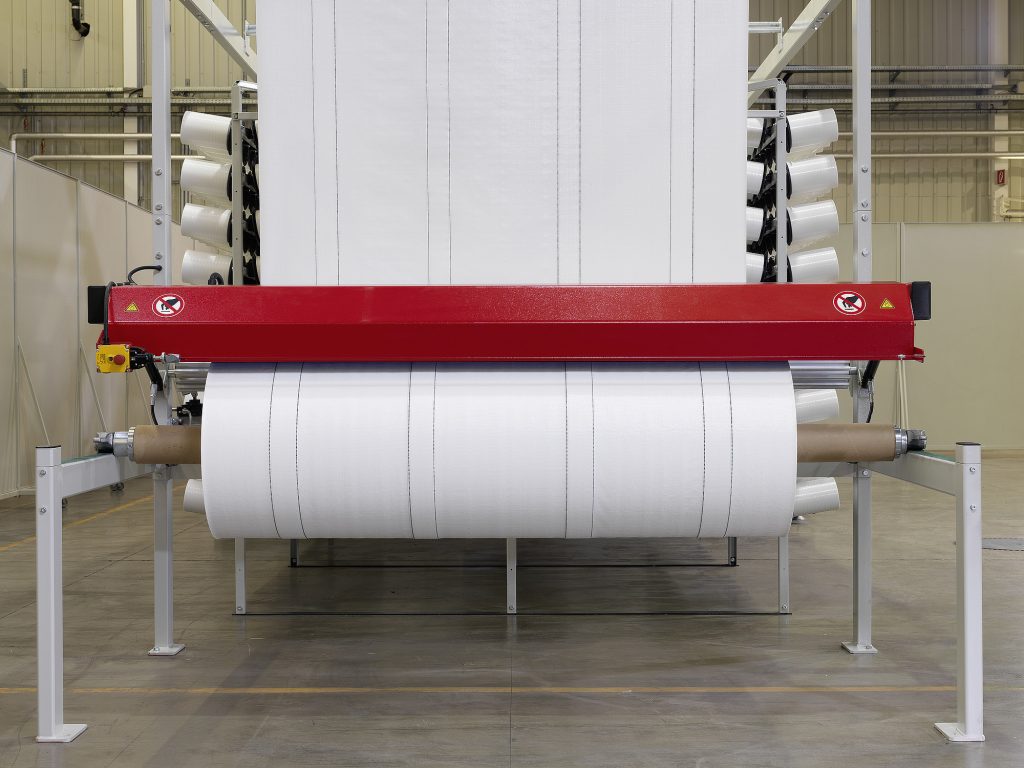
Sewn Open Mouth (SOM) Polypropylene (PP) bags have become a cornerstone in the packaging industry, particularly for agricultural products such as seeds, nuts, grains, rice, soybeans, wheat, corn, coffee beans, and starches. Their durability, versatility, and cost-effectiveness make them an ideal choice for various applications. Recent innovations have further enhanced their sustainability and functionality, aligning with global environmental goals and industry demands.
Applications and Specific Requirements
Different agricultural products necessitate specific packaging features to maintain quality and ensure safe transportation. Below is an analysis of the requirements for various products:
| Product | Insect Protection | Moisture Resistance | Breathability | Ease of Transport and Stacking | Impact of Bag Permeability on Seed Viability | Recommended Bag Specifications | |—————-|——————-|———————|—————|——————————-|———————————————|——————————————————————————————————————| | Seeds | High | High | Moderate | High | Critical | Thickness: 80-100 microns; Weight: 80-100 g/m²; Size: 50×80 cm; Outer Coating: Yes; Inner Liner: Yes | | Nuts | Moderate | High | Low | High | Not Applicable | Thickness: 70-90 microns; Weight: 70-90 g/m²; Size: 50×70 cm; Outer Coating: Yes; Inner Liner: Optional | | Grains | Moderate | Moderate | Moderate | High | Not Applicable | Thickness: 60-80 microns; Weight: 60-80 g/m²; Size: 60×90 cm; Outer Coating: Optional; Inner Liner: Optional | | Rice | Low | High | Low | High | Not Applicable | Thickness: 70-90 microns; Weight: 70-90 g/m²; Size: 60×90 cm; Outer Coating: Yes; Inner Liner: Optional | | Soybeans | Moderate | Moderate | Moderate | High | Not Applicable | Thickness: 60-80 microns; Weight: 60-80 g/m²; Size: 60×90 cm; Outer Coating: Optional; Inner Liner: Optional | | Wheat | Moderate | Moderate | Moderate | High | Not Applicable | Thickness: 60-80 microns; Weight: 60-80 g/m²; Size: 60×90 cm; Outer Coating: Optional; Inner Liner: Optional | | Corn | Moderate | Moderate | Moderate | High | Not Applicable | Thickness: 60-80 microns; Weight: 60-80 g/m²; Size: 60×90 cm; Outer Coating: Optional; Inner Liner: Optional | | Coffee Beans | Low | High | Low | High | Not Applicable | Thickness: 70-90 microns; Weight: 70-90 g/m²; Size: 50×70 cm; Outer Coating: Yes; Inner Liner: Optional | | Starch | Low | High | Low | High | Not Applicable | Thickness: 70-90 microns; Weight: 70-90 g/m²; Size: 50×70 cm; Outer Coating: Yes; Inner Liner: Yes |
Key Considerations for Packaging
- Insect Protection: For products like seeds, implementing inner liners and ensuring proper sealing can prevent insect infestation.
- Moisture Resistance: Coated outer layers and inner liners are essential for products susceptible to moisture, such as rice and coffee beans.
- Breathability: Seeds require moderate breathability to maintain viability, while nuts and coffee beans benefit from low permeability to preserve freshness.
- Ease of Transport and Stacking: Uniform bag sizes and appropriate thickness contribute to efficient stacking and transportation.
- Impact of Bag Permeability on Seed Viability: Proper permeability levels are crucial for seeds to prevent mold growth and maintain germination rates.
Innovations in Sustainability
The packaging industry is witnessing a shift towards sustainable materials and processes. Manufacturers are developing eco-friendly PP bags that are recyclable and incorporate biodegradable additives, reducing environmental impact. Additionally, advancements in production techniques have led to reduced energy consumption and lower carbon footprints.
Selecting Appropriate Bag Specifications
Choosing the right bag specifications is vital for product preservation and operational efficiency. Consider the following factors:
- Thickness and Weight: Heavier products or those requiring extra protection benefit from thicker and heavier bags.
- Size: Selecting the appropriate size ensures optimal filling and reduces material waste.
- Outer Coating: An outer coating enhances moisture resistance and durability.
- Inner Liner: Inner liners provide additional barriers against moisture and pests, essential for sensitive products.
Frequently Asked Questions (FAQs)
- What are Sewn Open Mouth PP Bags? Sewn Open Mouth PP Bags are durable packaging solutions made from polypropylene fabric, featuring an open top for easy filling and a sewn bottom for secure closure.
- How do I choose the right bag for my product? Consider factors such as product sensitivity to moisture, required breathability, weight, and transportation needs to determine the appropriate bag specifications.
- Are these bags environmentally friendly? Yes, modern innovations have led to the development of recyclable and biodegradable PP bags, aligning with sustainability goals.
- Can these bags be customized? Absolutely. Bag thickness, size, coatings, and liners can be tailored to meet specific product requirements.
- What industries commonly use Sewn Open Mouth PP Bags? These bags are widely used in agriculture, food processing, and industrial sectors for packaging products like grains, seeds, nuts, and more.
Conclusion
Sewn Open Mouth PP Bags offer a versatile and sustainable packaging solution for a wide range of products. By understanding the specific requirements of each product and leveraging recent innovations, businesses can enhance product preservation, ensure efficient logistics, and contribute to environmental sustainability.
For more information on moisture-proof woven bags, you can refer to this resource: [Moist